Parckfarm
Basic information
Project Title
Full project title
Category
Project Description
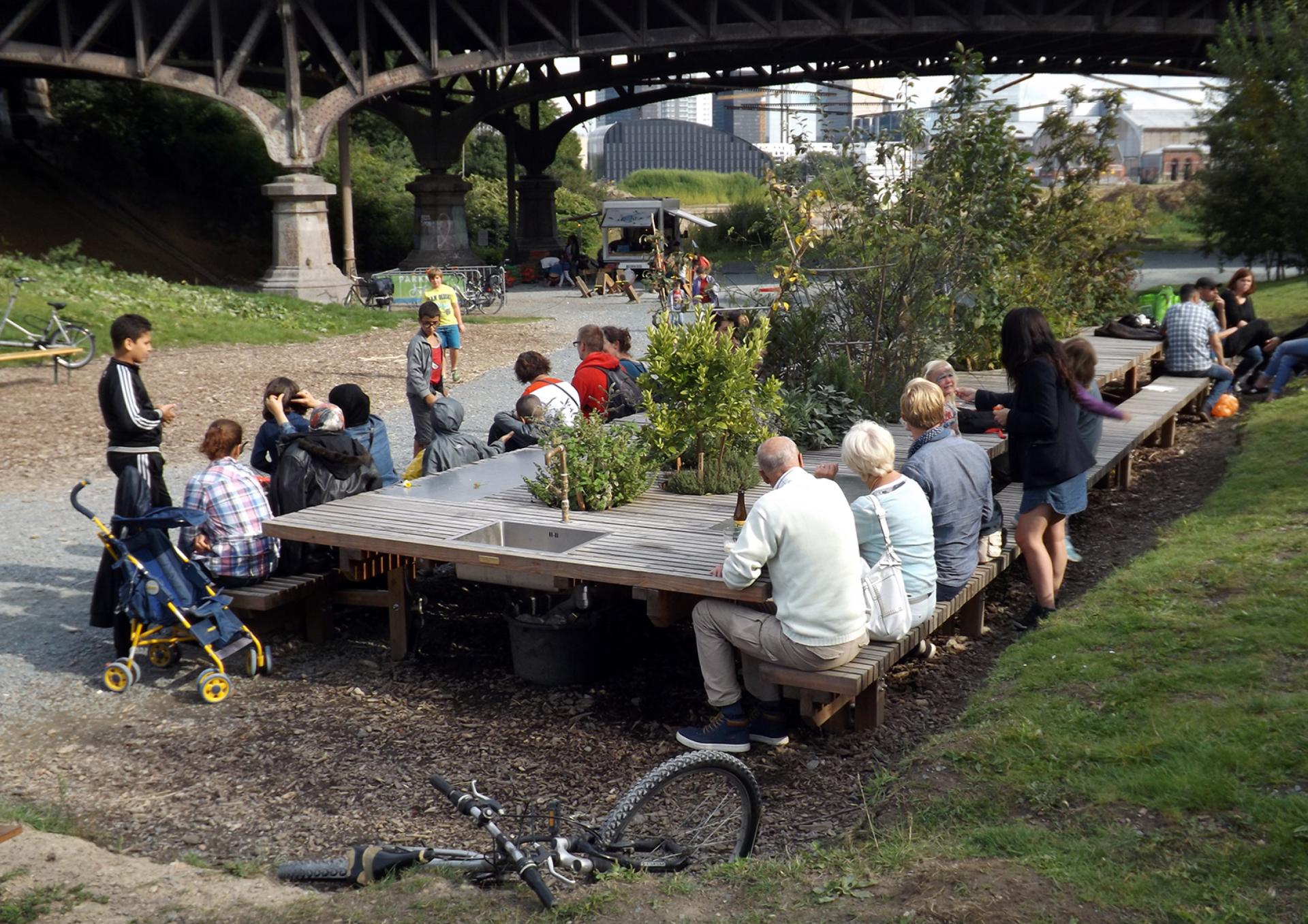
The curators of Parckdesign 2014: Parckfarm expanded the discipline of architecture from built space to lived space, stimulating social life in the new Thurn & Taxis park in Brussels - Molenbeek. When developing the new park in such an undervalued neighborhood, the gentrification of the surrounding area is unavoidable, reason why the team stimulated the local economy through the project. Thanks to its success, the project originally foreseen to last was 5 months became in 2018 permanent.
Project Region
EU Programme or fund
Description of the project
Summary
STIMULATE THE EXISTING
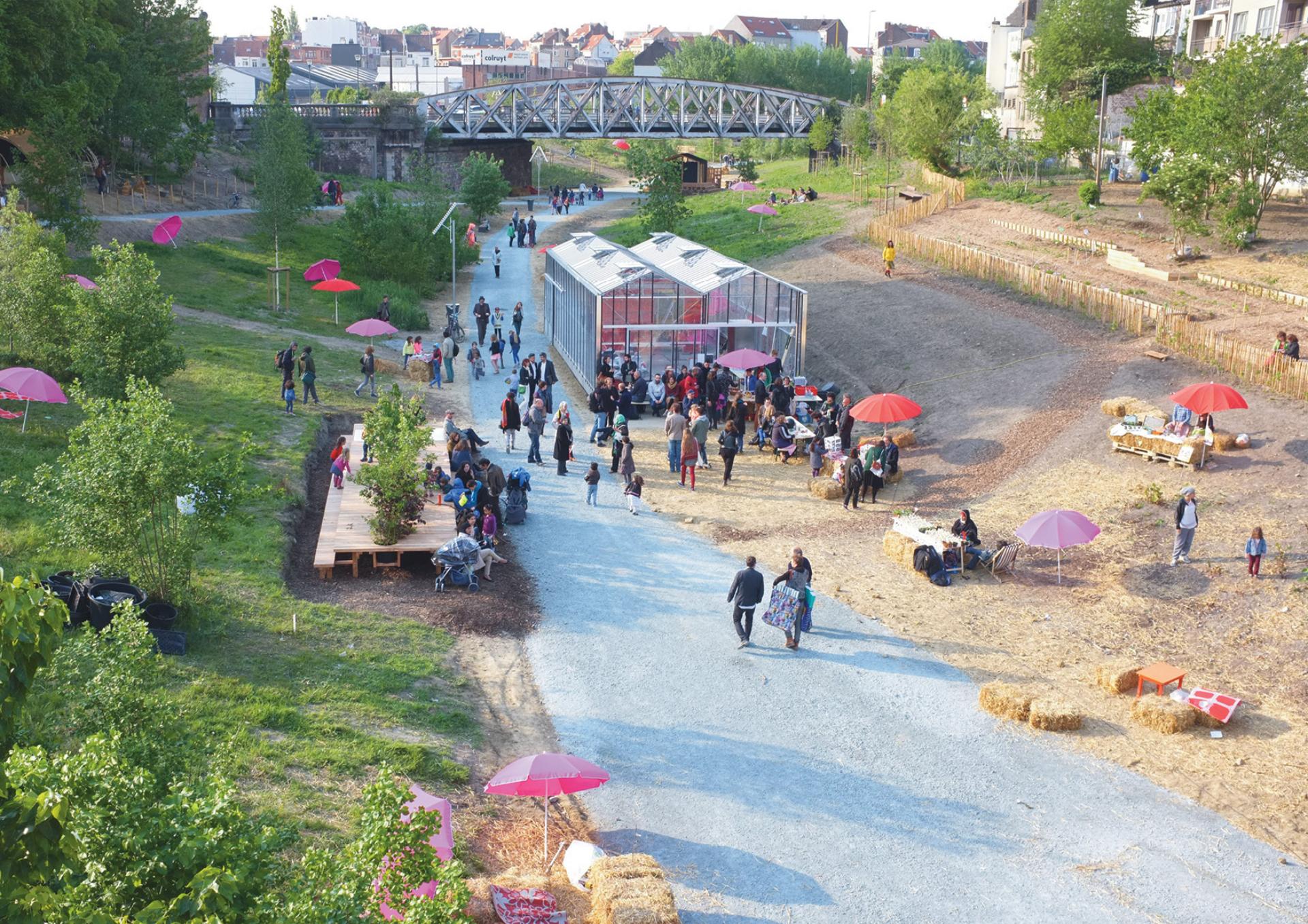
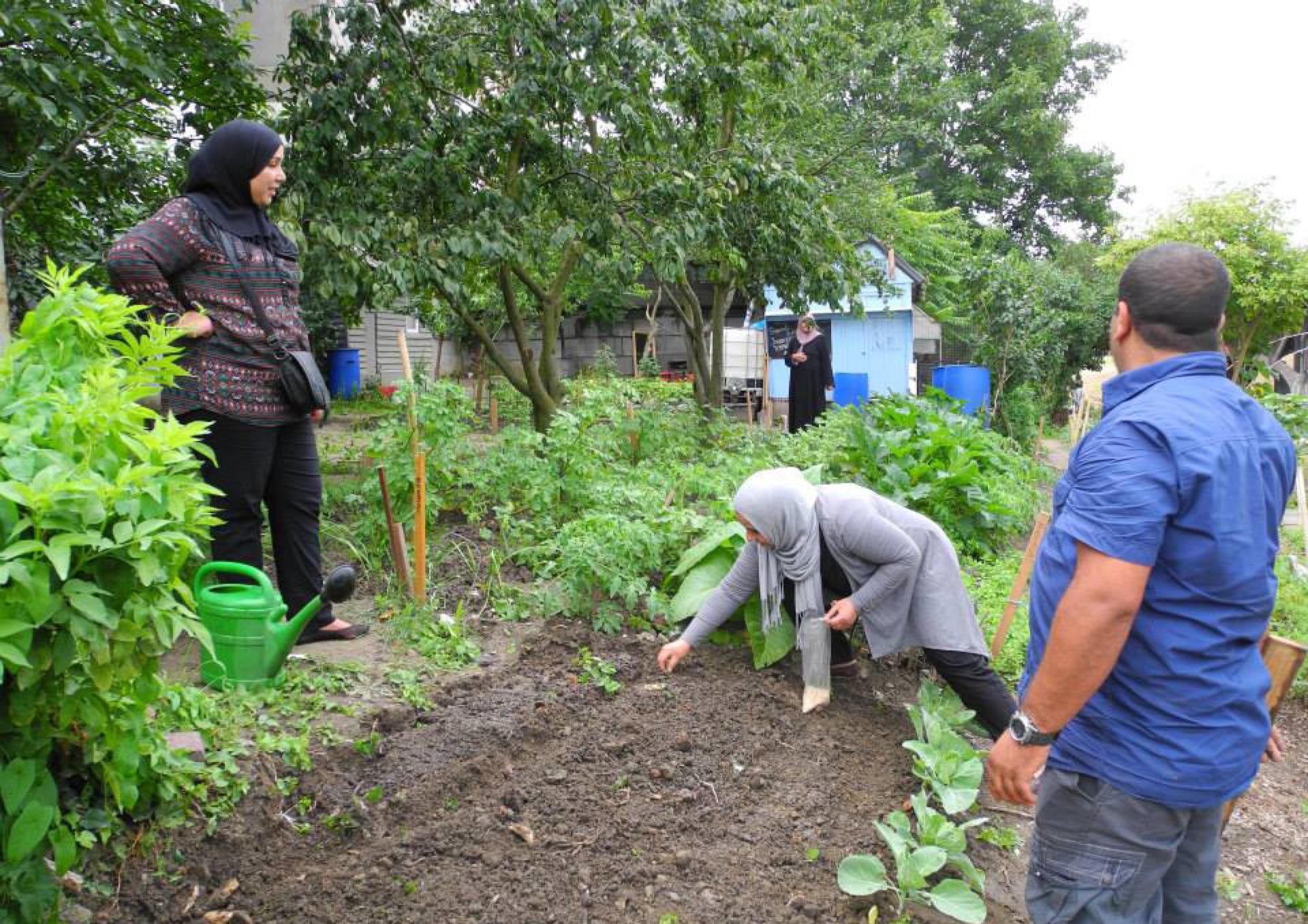
The Parckfarm project is based on the observation of existing socio-spatial values on and around the site, at the pivotal location between three municipalities. We spotted a vegetable garden managed by a living on the land, a dovecote managed by a homeless man living on site as well as a henhouse started by a neighbor. Our proposal encouraged recognition and support of these practices in the development of a fleet of new typology: Parck + Farm = Parckfarm.
THE LOCAL HOST
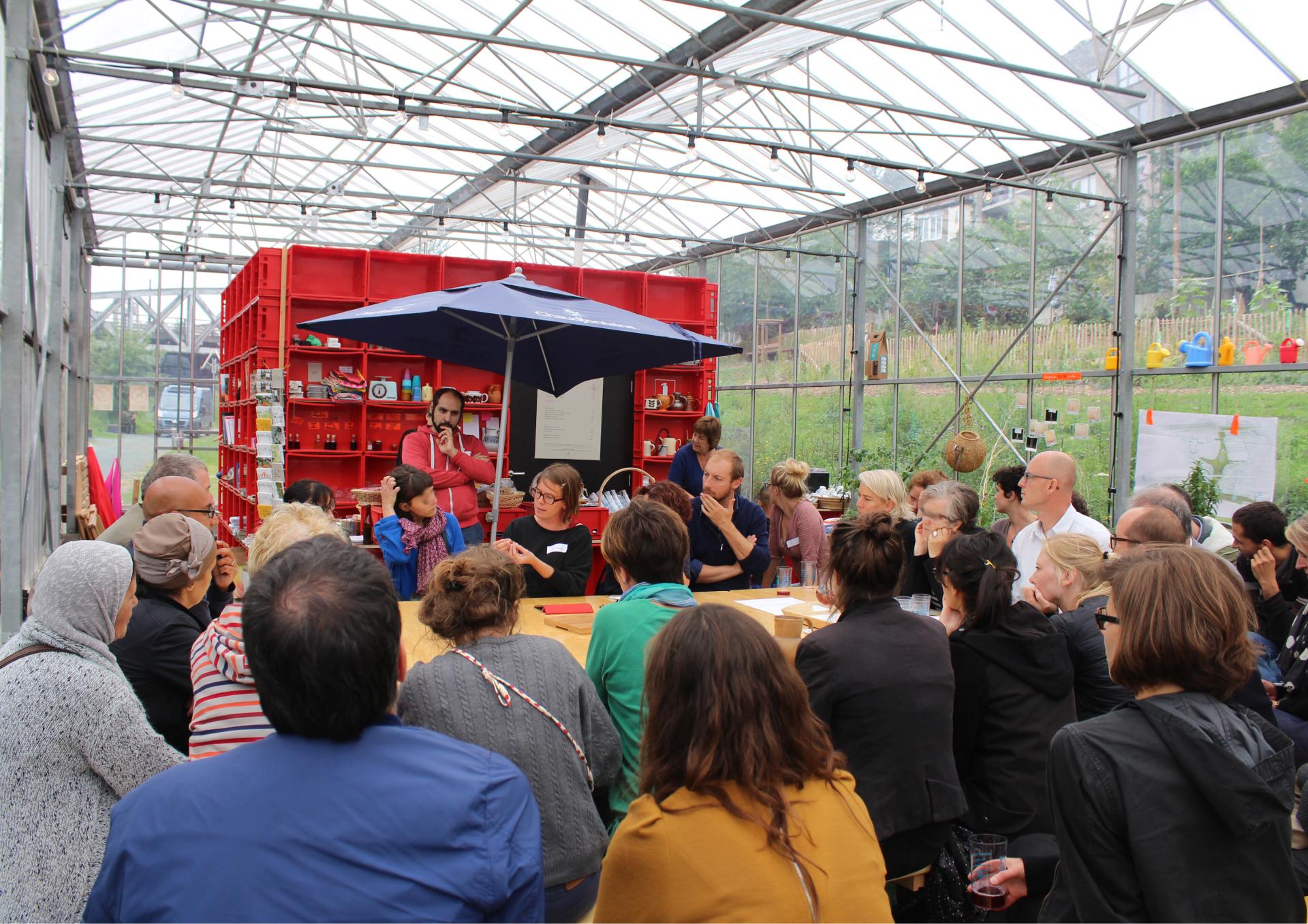
For our monthly meetings with the community during the preparation of the festival we chose Momo’s café strategically located next to the Parckfarm. Considered for many as a men café during this process Momo has been generously welcoming the artists, politicians and inhabitants to the café Pannenhuis to discuss the future of the site. For this he received some recognition by selling drinks and it improved his economic situation but above all changed the public image of his café.
THE DESIGNER, THE LOCAL, THE FARMER
Within the framework of an international biennale we aimed to partly stimulate the talents from the neighborhood. We called for mixed teams that would combine the expertise of the designer, the local and the farmer. This is how the KotKot project was born, an animal farm
designed by a regional architect, run by a collective of inhabitants that collaborates with the regional Maximilian Farm. The local architecture office 1010 a&u had some help of young volunteers from the region to construct the building of the Farmhouse that is up to today activated by the local farmers. This is how part of the public money of the festival was stimulating the local economy.
LOCAL INITIATIVES
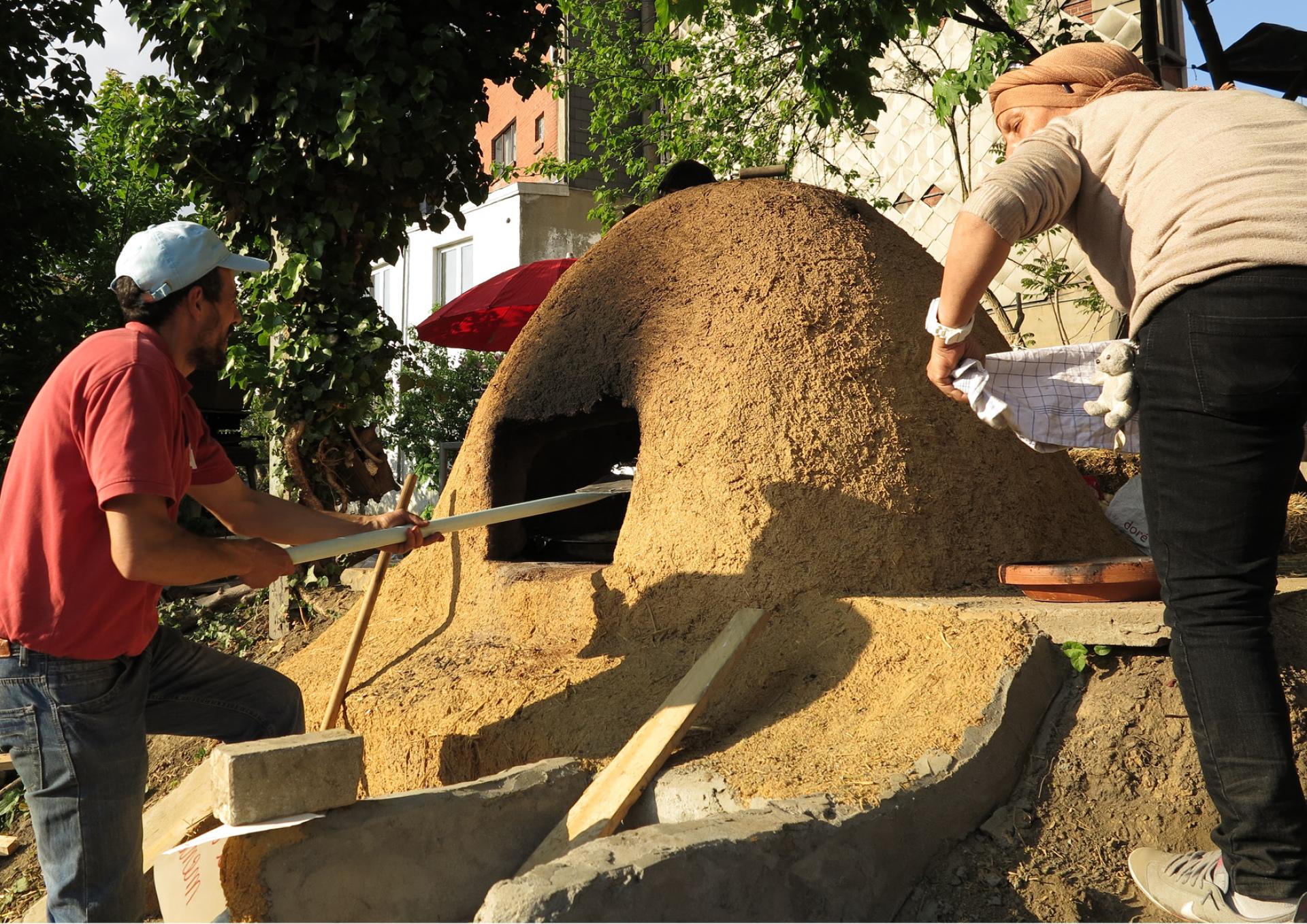
A further part of the Festival’s financial envelope was spent upon catalyzing and fostering local initiatives. This is how the bread oven was born. Abdel who initiated and built the oven is heating it up on Saturdays and Sundays, inviting everyone to bake their bread.
Key objectives for sustainability
LOCAL EMPLOYMENT
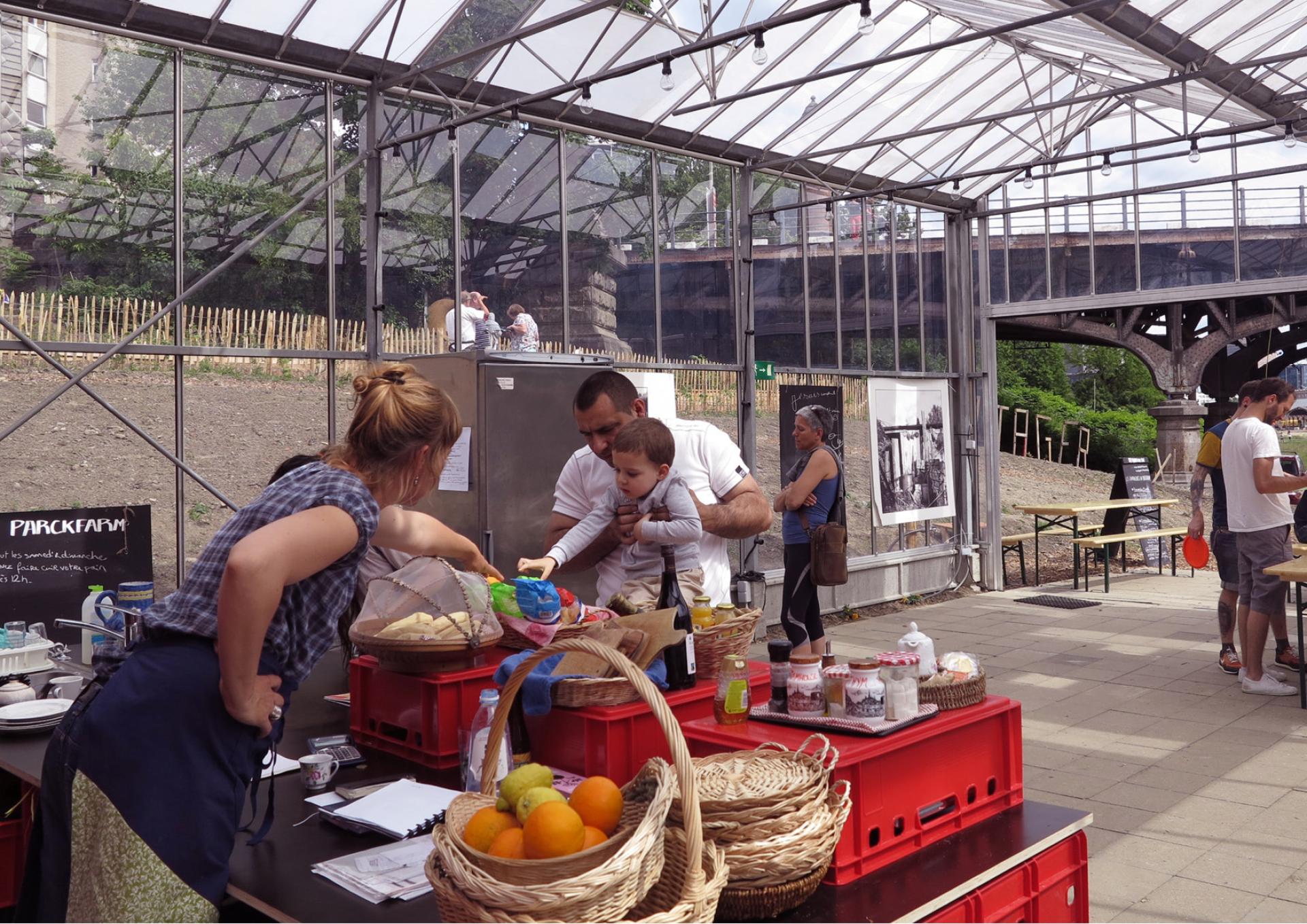
Finally we founded a local association to ensure that the income entering in the Farmhouse through selling drinks, food or organizing workshops would increase employment in the neighborhood. We employed three farmers of whom two are local inhabitants, to sell food
and snacks from the Parckfarm and from the bakery in the neighborhood in the Farmhouse. Today only local actors are running the Farmhouse canteen.
EXCHANGE OF KNOWLEDGE
During the festival up to today the new local farmers are involved into the project. Through the exchange with farms in the Brussels region, thanks to the Farmtruck generating links between the Parckfarm and other farms in the region, they could learn from existing experts, generating an improvement of the local bank of talents.
USE OF LOCAL RESSOURCES
The collaboration of the Parckfarm T&T association with local shops as the bakery also contributed to stimulate the local economy. This collaboration among local entrepreneurs advocated during the festival and up to today the use of local resources. Furthermore in the Farmhouse, the monthly run talent bank is a platform to stimulate encounters and job opportunities.
Key objectives for aesthetics and quality
PARCKFARM AS A BORDER CONDITION
If we consider the site of Parckfarm as a social, physical and cultural border condition the concept of the Locals welcoming their Guests tackles gentrification process as a possible leverage. It allows it on one side to increase the local economy and on the other side and to take and share ownership of the public realm in their neighborhood. Ultimately, empowering
the local community to become involved and recognized in the production and maintenance of the Parckfarm generates a durational social impact upon the public realm. In the intersection of top down and bottom up approaches it defend an alternative approach of making city in Brussels.
DIFFERENT PUBLICS - DIFFERENT AESTHETICS - SHARED EXPERIENCE
The approach of top down & bottom up approaches gives a hunch on the aesthetics and quality of experience that is strongly built upon what we consider as LIVED SPACE that is embedded within the landscape of the park. The appropriation and use of the Parckfarm generates the quality of experience of sharing a moment with others. The fact that for the locals the Parckfarm is too beautiful, for designers it could have been even more beautiful tackles the approach of a common approach where people from difference backgrounds may engage with each other.
Key objectives for inclusion
CO-DESIGN & CO-PRODUCTION
Too often design biennials are aimed only at an insider audience. We have championed an approach of co-production of the space through a call for projects audience based on collaboration between different areas of expertise (designers, local actors and farmers) while stimulating local initiatives. During the six months of preparation, we have organized monthly meetings between the multiple actors at Momo, a Moroccan café in the neighborhood. The second Tuesday of each month, each team presented the progress of his projects while the actors of the district proposed initiatives, such as the bread oven, built and managed by Abdel, still active today.
SOCIAL ECONOMY
Located in a precarious urban context characterized by a strong unemployment rate, we stimulated the economy local by initiating the Parckfarm T&T non-profit organization, whose main mission is the activation of the Farmhouse. In this versatile space, local farmers invite visitors to discover the products of the Parckfarm and the district and organize courses of kitchens, green Wednesdays and various types of meetings. The Farmhouse becomes a showcase of the know-how of the district.
INCLUSIVE CITY
The experiment made it possible to question the ways of doing things the city and invent a new type of park in Brussels. The co-production of Parckfarm by many experts has resulted in a park appreciated by many visitors origins. The success of this public space during its test convinced the client to extend the project beyond its temporary phase. Today the Parckfarm is activated by the non-profit Parckfarm T&T.
Results in relation to category
FROM EPHEMERAL TO DURATIONAL LIVED SPACE
Parckdesign is a festival that took place in 2012, 2014 and 2016 and that is foreseen to take place for a duration of 5 months. Because of the success of the project, judged by the local actors (inhabitants & commerces), it was important to expand the duration of the project from an ephemeral project to a durational impact. To allow for such extension we founded the association PARCKFARM T&T (https://parckfarm.be/fr/) that is managed by local actors at the beginning of the festival. Today the association is running the project successfully where the local is welcoming the guest to enjoy the Parckfarm and share a moment together.
As such it is generating local employment, exchange of knowledge and any extension is done through the use of local ressources.
How Citizens benefit
CAFE CHEZ MOMO
The participative process started during our meetings at Momo's place where we caught up with the local citizens every first Tuesday per month. Momo served tea while the local association asiz prepared food for this event. The crowd of participants grew from September 2013 to Mai 2014 from 5 participants to 120 participants. The local initiatives (+/- 5000 Euros each) gave opportunities to everyone to contribute to co-construct the Parckfarm. This process was crucial in order to allow for the appropriation of the project and to allow the inhabitants to be part of constructing their new park in Brussels - just next to the Tour & Taxis site and where the site is owned by Tour & Taxis while maintained by Brussels Environnement in collaboration with the association Parckfarm T&T.
Innovative character
EXTRACT OF DESCRIPTION 'PRIJS PUBLIKE RUIMTE 2015'
‘The challenge for designers is to accept spontaneous participation initiatives, to recognize their added value and to give them a place in the design process. In that respect Parckfarm stands head and shoulders above the rest. We have never experienced anything like this in Belgium on this scale. It is a signal that we need to start thinking differently about public space. "
The farm was selected by a jury of experts from more than fifty candidates from Flanders and Brussels. With the annual prize, the Infopunt Publieke Ruimte honors the client for the best realization in the field of public space. Four other projects from Flanders were also nominated for the prize, but Parckfarm in Brussels came out on top. The city farm is located under the Jubelfeestbrug, near Tour & Taxis. The green area includes a large conservatory that is used as a canteen, a large vegetable garden and some animals. Dozens of volunteers are responsible for the management of Parckfarm. The entire project was realized thanks to the biennial Parckdesign of the Brussels Region. There, projects are rewarded in which people dedicate themselves to upgrading a forgotten corner of the city. ‘Participation will be given a clearer place in the design process and will not necessarily be organized from above,’ says jury chairman Jan Vilain.