Renovation of a cultural heritage
Basic information
Project Title
Full project title
Category
Project Description
Kaunas University of Technology implemented the Project “Renovation of a cultural heritage monument and adapting for a public service “ which aimed to renovate interwar modernist architectural building meanwhile to protect and actualize object of cultural heritage of national significance and adjust for the demands of the society.
Project Region
EU Programme or fund
Which funds
Other Funds
The project has been granted from EU Structural Funds. Priority axis 5 “Environment, sustainable use of natural resources and adaptation to climate change”; Investment priority 5.4 Conserving, protecting, promoting and developing natural and cultural heritage; Specific objective 5.4.1 Enhance relevance, number of visits and visibility of cultural and natural heritage, including public awareness on the surrounding environment
Description of the project
Summary
KTU implemented the Project “Renovation of a cultural heritage monument and adapting for a public service“ which aimed to renovate interwar modernist architectural building meanwhile to protect and actualize object of cultural heritage of national significance and adjust for the demands of the society. The building is one of the most prominent buildings of LT modernism and has retained its original function since its construction in the 1930s, serving as a research laboratory for the Faculty of Chemical Technology of KTU. Primarily this building complex was the Research Lab. of the Armament Board of the LT Armed Force.
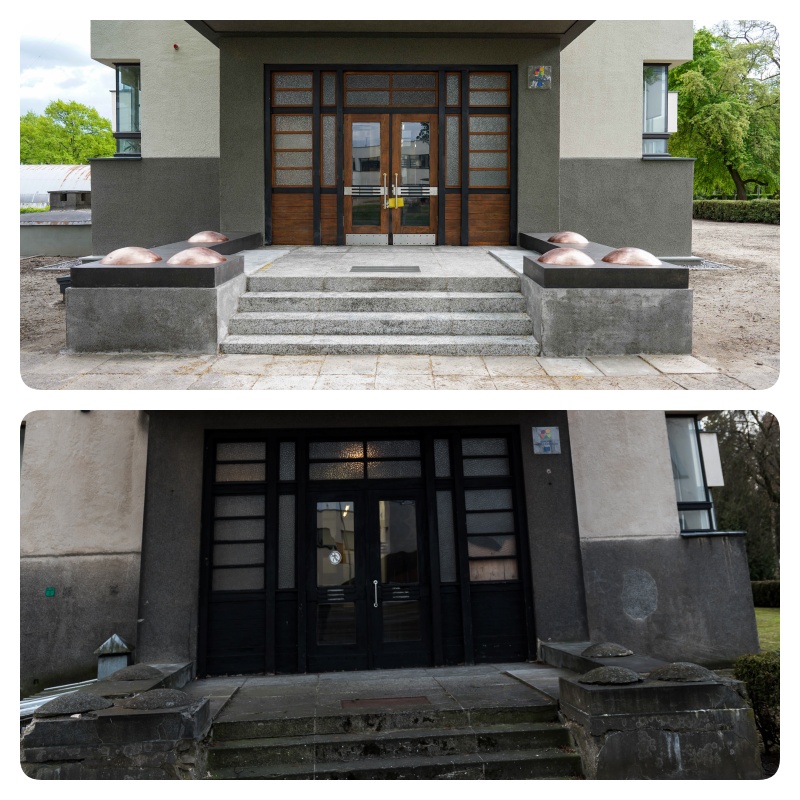
In 2018 renovated process has been started. In order to adapt the building for museum, cultural and educational activities, works of protection of cultural heritage and maintenance construction work have been carried out.
KTU realizes both the importance of protection of the cultural heritage and its mission to educate society that is why KTU seeks to uphold authenticity of the building and to acquaint the society and guests of the country with the history of the architectural monument besides its primary activity.
After the implementation of the Project the valuable features of the cultural heritage object have been revealed, the object has been adapted for the above mentioned activities and it is expected to attract visitors from various social groups.
It is a unique service related to modernist interwar architecture, it should be emphasized that this building is still used to carry out scientific research in the field of chemistry. Exhibition in the building includes unique antique equipment which was obtained abroad during the period of the laboratory development. By providing this service free of charge KTU aims to retain as much as possible of rich and various LT cultural heritage and to ensure its adaption to demand of modern society meanwhile promoting the better understanding and care of cultural heritage
Key objectives for sustainability
The building was built more than 80 years ago, thus the concept of sustainability was completely unknown and irrelevant during design and construction period. Therefore, the aim of the Project wasn’t standard and the main challenge which the developers of the Project faced with was how to maintain the building from sustainability point of view while preserving its qualities and authentic. The Project aimed for sustainable use through perceiving of the building and its installations as a single unit, advocating extended life span of historic elements and preventing loss due to misunderstanding of the value.
Whereas the sustainability aspect, the building’s layout is ideal from technical point of view and it perfectly suits for current demands, too. So it was aimed to reconstruct the building without loosing advantages of layout and maintaining conditions for scientific activity as well as creating possibilities for the visitors to see the interior and exterior of the building.
Besides the main objective to preserve cultural heritage and to adjust it to needs of the society, aims of the sustainability and green course were pursued implementing this Project. As a result of improved public cultural service and created modern and attractive exposition, the knowledge on architecture of the building, its main purpose and mission would be deepen.
Every country in the world seeks to find as many solutions as they can to control climate changes and ensure the growth of green industrial solutions. The Project aimed to increase energy efficiency, reduce thermal energy consumption. Renovation of the leaking windows and doors optimized the consumption of thermal energy and reduce the amount of greenhouse gases emitted into the atmosphere. After the implementation of the Project, it is planned to save about 27% of heat energy consumption and to contribute to the reduction of greenhouse gas emissions significantly.
Key objectives for aesthetics and quality
The building represents an outstanding example of the architecture of the modern movement embraced by architects in the LT between the wars. The building retains in high level of authenticity. Moreover, the building has never changed its primary function and has been serving as a chemical lab
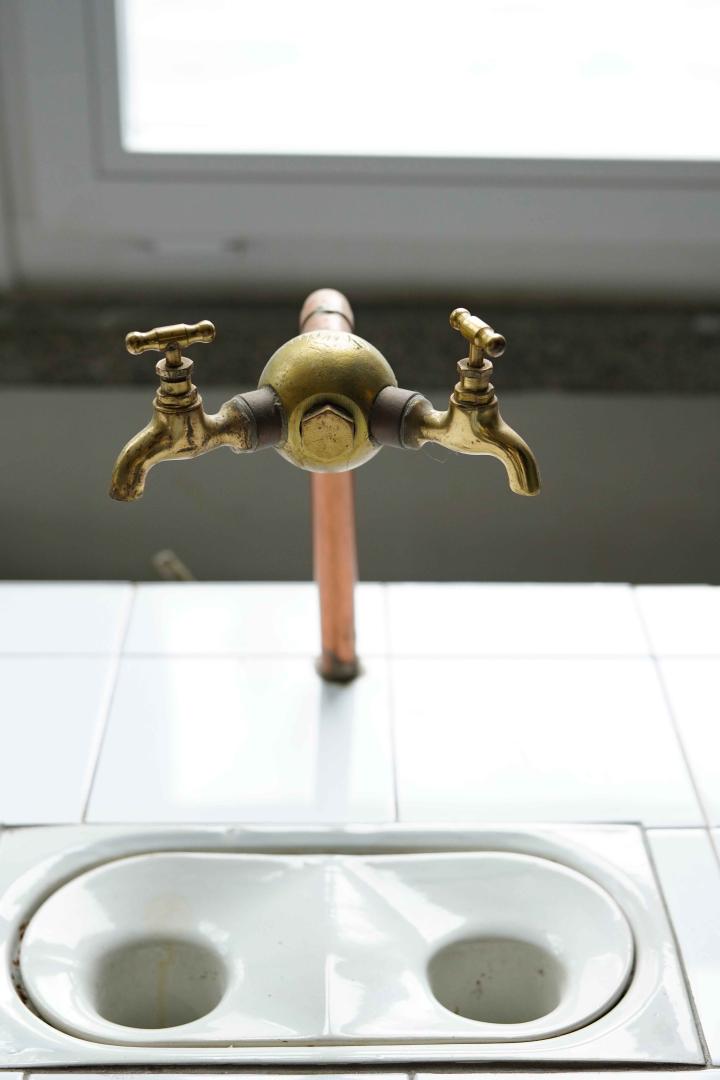
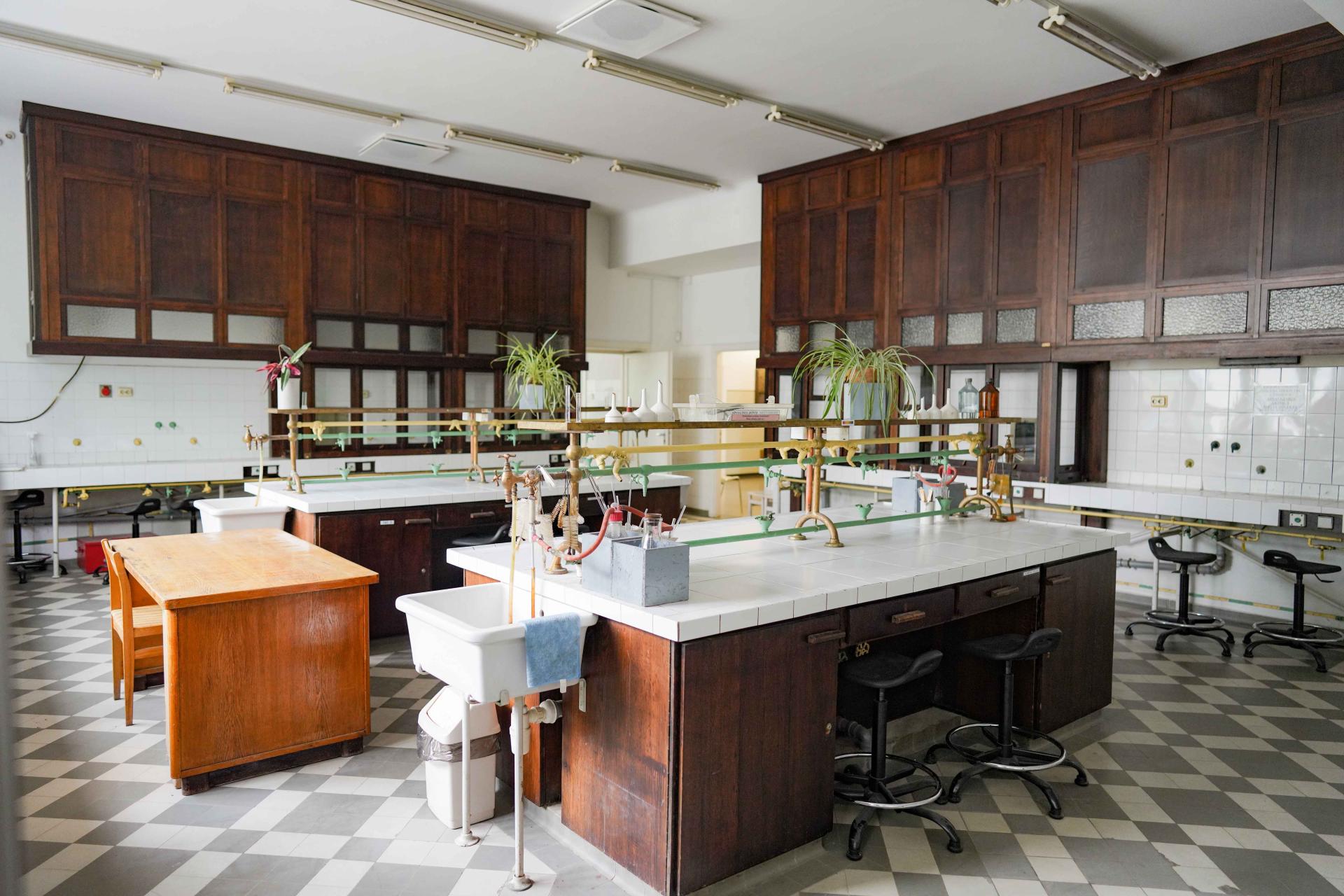
The Lab’s exterior and interior has an aesthetic significance, due to the retention of their original form. The original structure of the building is unchanged, and its integrity and authenticity have largely remained intact and many architectural details, fixtures, furniture and even lab equipment remain in use, making it truly exceptional not even in LT but in the international context
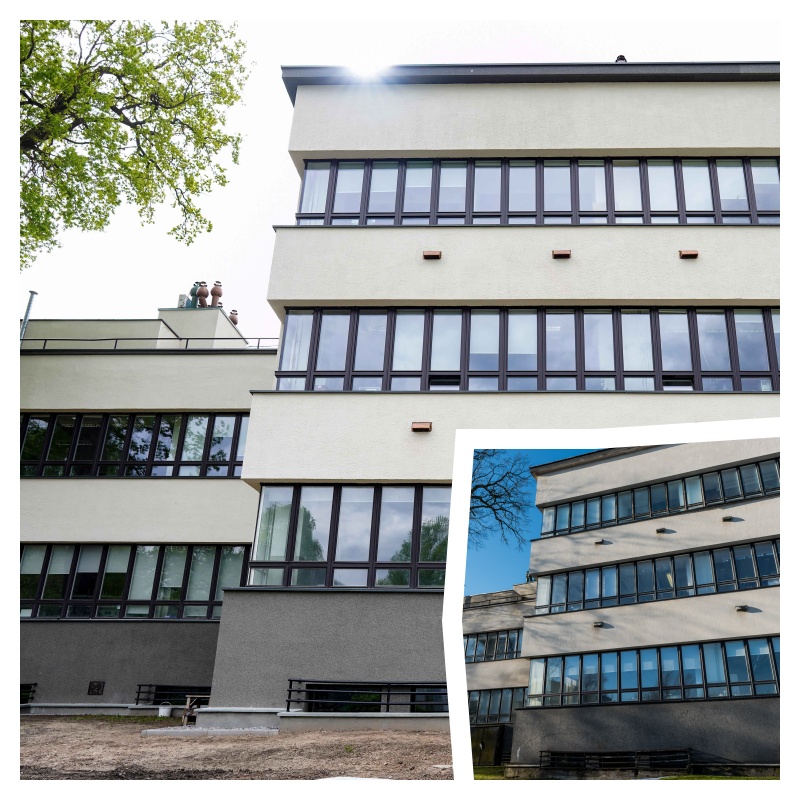
Integration of contemporary design features of the period give the unique face to the building. Windows had been chosen to withstand and mitigate the impact of possible explosions, so that the blast wave will only destroy the walls of the windows and not the building’s main skeleton. The lab tables and parts of the ventilation system had been incorporated into the main structural building frame in such a way as to remain fixed in place in the event of an explosion
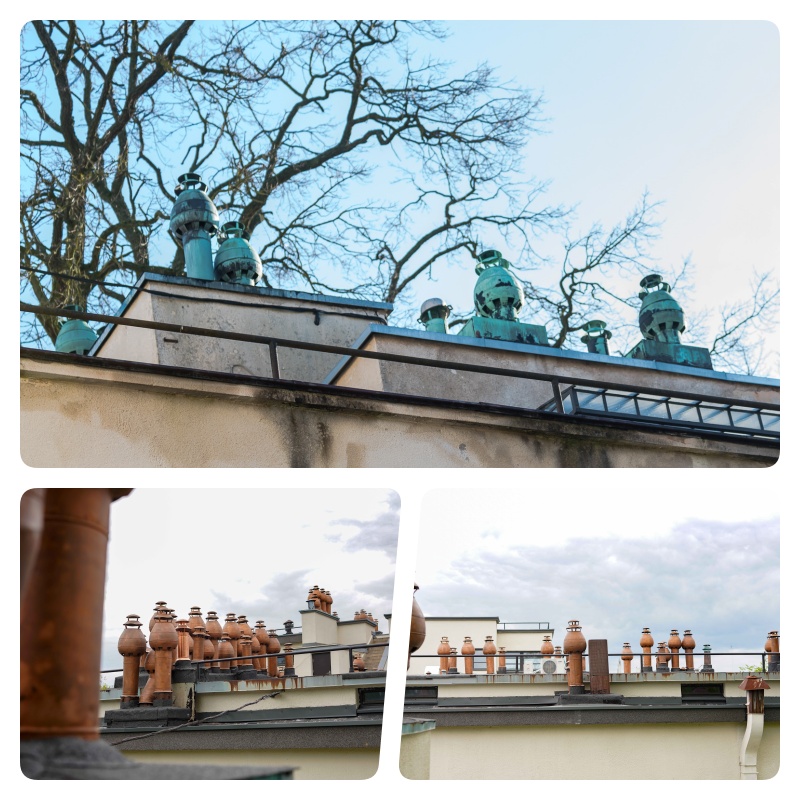
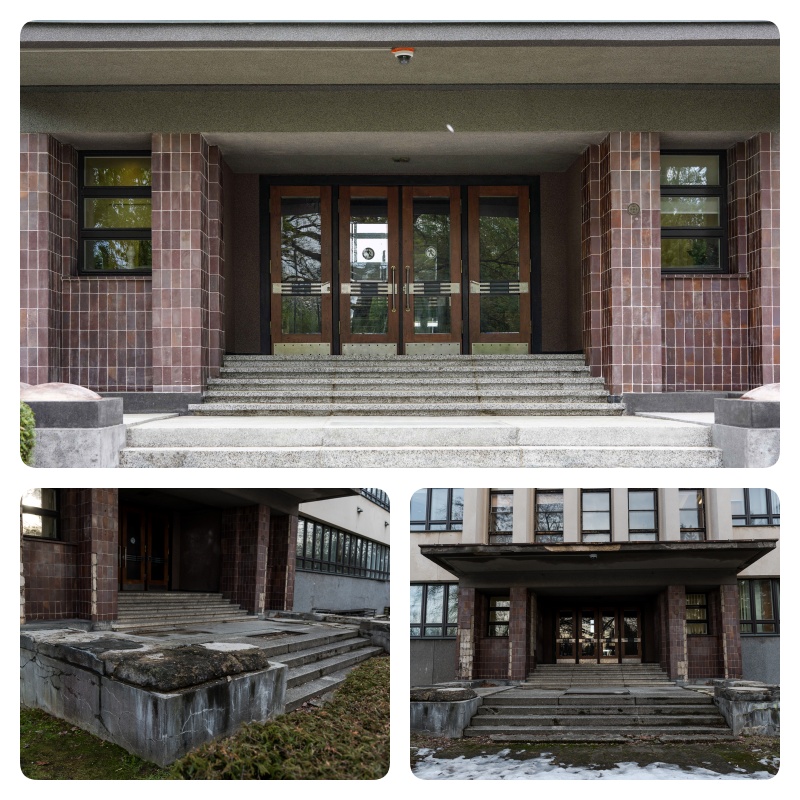
The consistency and coherence in the character, design, and materials of the interior components of the Lab, such as doors, furniture, flooring, demonstrates the quality and thoughtful design. Every architectural detail has a specificity to its place and function, thereby gaining significance and value that encourages maintenance and discourages obsolescence. Among the most characteristic aesthetic features of the Lab are the copper chimney stacks in the form of poppy seed heads on its flat roof
While adjusting the building for the society KTU aimed to adapt it for cultural and educational demands, to enable to watch the authenticity of the building. The building is freely accessible to visitors, they can look round the exterior and interior, to get acquainted with unique building and its valuable features
Key objectives for inclusion
The building was primarily designed for conducting of scientific research for the military and civilian purposes. Today study and scientific processes takes place there
Building knowledge about what is valuable, why it must be preserved but at the same time considering staff needs because the function that is maintained until today is one of the most valuable attributes of the building and it can’t be lost. Constant interest from schools, single visitors indicate the growing demand for such information
Currently, there are three main communities that have strong social and cultural associations with the building: chemists, academia, and architects/ cultural heritage groups
Close collaboration with staff and community involvement is the main and the most important condition for a successful contemporary use and retain of the authenticity of the building
Recently, the interest in the architecture of interwar modernism has grown and the building receives a lot of public attention. Thus after renovation the building become more open for the public: building is adapted for cultural and educational needs, expositions are equipped and informational excursions are organized
Society was include into this process. The renovation process was widely described in local press and mass media, everybody was able to acquaint with it and anyone having any significant information were welcome to share knowledge, experience and exhibits
An educational program and attractive concept of presenting the building to visitors were created, an exposition was equipped, posters and tables with descriptions were added allowing visitors to get acquainted with the history of the building and exposition independently. Informational monitor was equipped which demonstrates historical photos, films, interactive online quiz
Arrangement of the aesthetic view and modernization of the exposition and adjustment for the visitors increased availability for the society, made it more attractive for var
Results in relation to category
The building represents an interwar period architecture with a characteristic interior. The building fascinates its’ peculiar harmony of functions and aesthetics characteristic of interwar modernism which is noticeable both in the details and in architectural designs and solutions. Retained authentic furniture, laboratory equipment, interior details demonstrate this esthetic. Uninterrupted ribbon and corner windows, copper chimney stacks in the form of poppy seed give the facade uniqueness.
Implementing the project a lot of effort has been put into in order to meet strict requirements of preservation of cultural heritage. The main aim was to preserve the architectural authenticity of the building.
The works combined contemporary materials, modern technologies and authentic elements ir order to not to damage historical, cultural and architectural value of the building. Therefore the original structure of the building is unchanged, and its integrity and authenticity have largely remained intact and many architectural details, fixtures, furniture and even laboratory equipment remain in use, making it truly exceptional in the in Lithuania and an exemplar in the international context.
We have managed to sustain and highlight uniqueness, distinctive layout and architectural solutions of the building and to adapt them for current needs. The project implementers found the solutions to reconcile authenticity of the building with the needs of the research institution and sustainability aspects.
Equipment of the exposition inside and informational tablets outside opened the building to the public. While renovation of historical building capacitated to maintain authenticity also we have managed to reduced our heat consumption and to contribute green course which is extremely crucial for the whole planet nowadays.
How Citizens benefit
The renovated building has been granted the status of a monument of national significance because it is one of the most striking examples of interwar modernism, and due to this it is called the pearl of Kaunas modernist architecture.
The laboratory building was not freely accessible to the public due to its function and pour state.
After the Project was implemented, the Laboratory building became open for society. Visitors can deepen their knowledge in political, architectural, and scientific history and to promote chemistry for younger generations.
Now Kaunas University of Technology organizes thematic sightseeing tours for those who want to get acquainted with the building by prior arrangement. The demonstrations of educational chemical reactions are carried out in the Laboratory of Organic Chemistry. After renovation the building has been included into sightseeing tours of Kaunas city. Kaunas Tourism Information Centre informs interested local and foreign tourists about the opportunity to visit the unique building.
Innovative character
Implementation of the Project was extraordinary due to its specific status and importance.The main challenge of the project – to renovate historical valuable building and to keep the primary purpose of it. If taken simplified that might support an idea of keeping the building in its pure original state i.e. intentionally purifying appearance and purging from later alterations to align the interior with its original appearance. This would be over-simplified approach because of two reasons. First, the laboratory is a part of the functioning university and it should be allowed to operate in a way that enables the university to meet its essential goal – provide learning/research facilities for students and scientists.
The innovation aspect has been met in ability to combine requirement to maintain uniqueness, historical value and to adapt the building for current needs in terms of sustainability and green course that is crucial for the whole planet. Ability to reconstruct the building without loosing advantages of layout and maintaining conditions for scientific activity as well as creating possibilities for the visitors to review the building strengthened its social significance even more. We are proud of our ability during this Project to sustain and highlight uniqueness, distinctive layout and architectural solutions of the building and to adapt it for current needs.