Immersions in materials for packaging
Basic information
Project Title
Full project title
Category
Project Description
MATto, Politecnico di Torino’s material library, proposed within Terra Madre - Salone del Gusto 2020, a support to companies and designers interested in new material and technological challenges of food packaging: solutions, today, are linked to disciplines from chemistry to technological culture, from semiotics to perception, to design. MATto investigated these issues, with attention to sustainability, aesthetics, and inclusion, developing a new accessible learning model for extended audience.
Project Region
EU Programme or fund
Which funds
Other Funds
COSME, Enterprise Europe Network, 2021
Description of the project
Summary
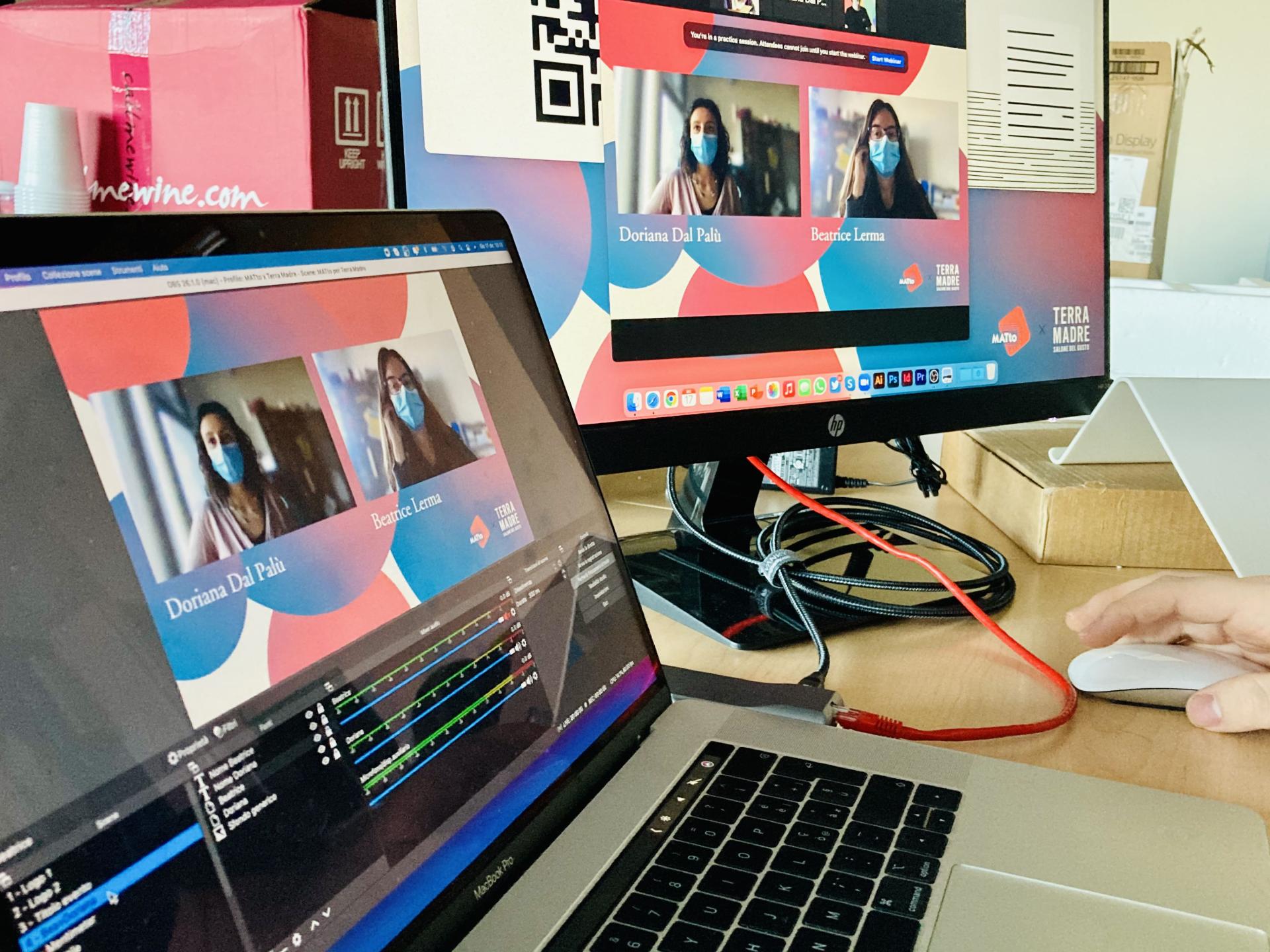
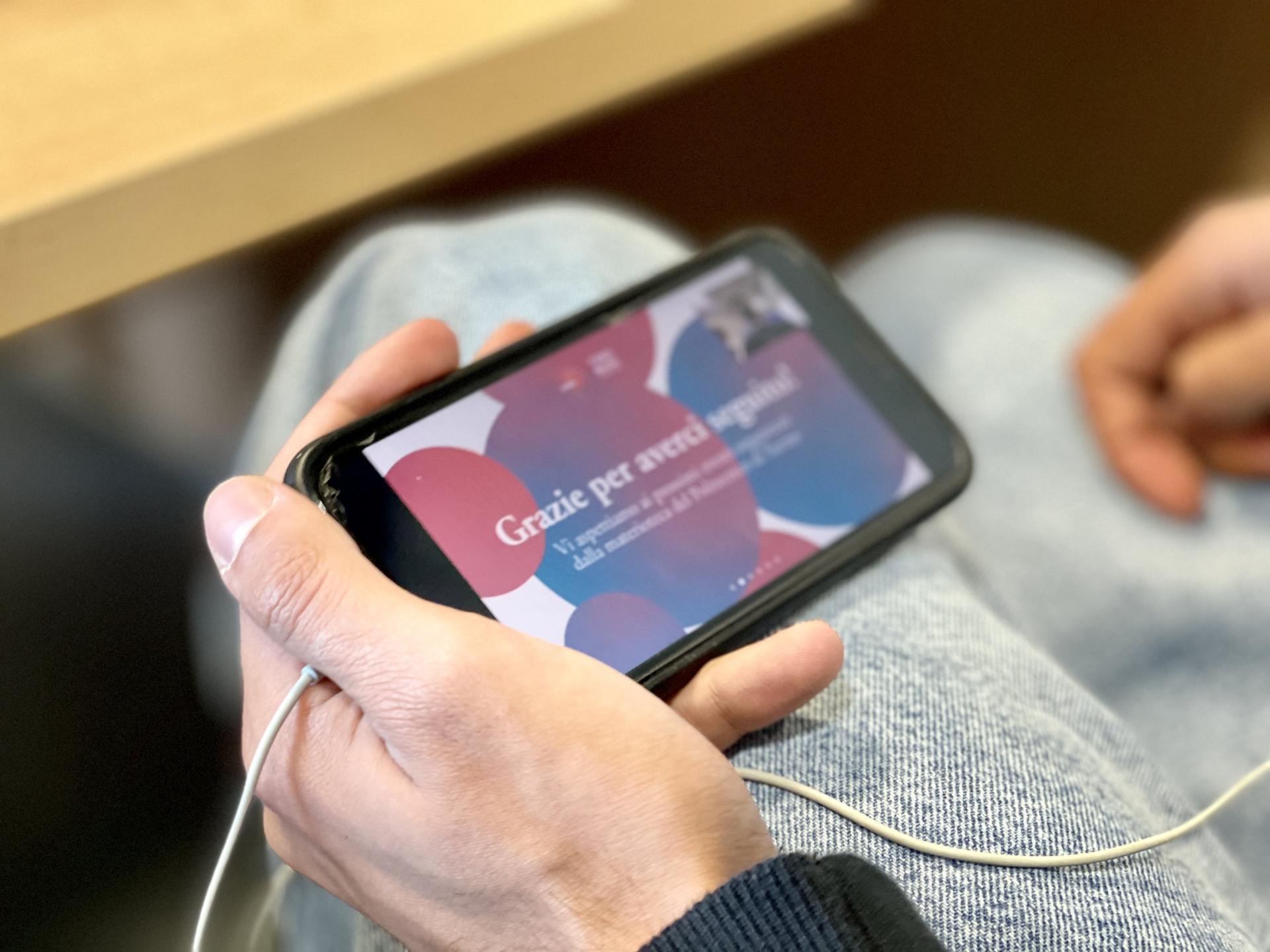
Five months of online events dedicated to food research: 6 online webinars open to all and 3 seminars for local companies from December 2020 to April 2021. A rich calendar of events for Terra Madre - Salone del Gusto 2020, resulting from the synergy between the Politecnico di Torino and the Torino Chamber of Commerce (and the Laboratorio Chimico of Camera di Commercio Torino). In the "MATto for Terra Madre" events, the theme of research around food and its protagonists inside and outside the boundaries of the Politecnico was addressed, creating a system of contributions from different disciplines around the design culture. The aim was to discover new forms of interaction and contamination between the world of research and the agro-food chain. A complex cycle of meetings developed as a tool to update companies, designers, and people in general, interested, for example, in issues such as food delivery, food inventories, food-territory-packaging relationships, e-commerce, and material innovations.
The introductory event has been dedicated to the polytechnic culture and to the role of research within the agri-food chain. The closing event was dedicated to the horizons of the packaging project of tomorrow, providing the public with a vision and perspectives for the packaging project. The 4 intermediate thematic events called _CULTURAL PILLS, saw the in-depth study of issues related to packaging, the link with the territory, technical aspects such as shelf-life, or the sustainability and perception of packaging through expert interventions. The materials library also offered companies and designers the participation in 3 events called _IMMERSIONS: these are online collective meetings, each of them open to 15 different companies, about inspirational themes defined by the MATto materials library and related to the latest innovative materials and technologies for food packaging.
Key objectives for sustainability
The aim was to disseminate the design culture to a broad public, prevent the onset of problems already in the design phase, and provide helpful information for correct design to designers but, above all, to companies and product manufacturers (contained food and packaging containers). Moreover, the festival has made it possible to disseminate information to the final consumer to prevent bad habits and false beliefs concerning environmental sustainability, recycling of materials, preservation of food quality, etc.
The repercussions, however, concern sustainability in a broad sense: by creating a direct interaction with civil society and the entrepreneurial system, it was possible to raise awareness among the general public about their role in sustainable development, capable of obtaining and therefore ensuring sustainability, availability, and quality of natural resources; social sustainability, to ensure the quality of life, safety and services for citizens; and economic sustainability for stable growth of economic indicators.
Acting on a broad spectrum of stakeholders has been possible, as there were different target projects: food producer, distributor, trader, consumer, freelancer, researcher. Furthermore, the involvement of a comprehensive public has allowed for dialogue with professionals and experts belonging to different product sectors and representatives of different roles: entrepreneur, CEO, quality manager, R&D, communication manager, all having a fundamental role in achieving and disseminating sustainability.
Moreover, the events online are very “light” from an environmental point of view (no paper, no travel, no flyers, no posters have been produced). All communication was done online through the social channels and the website of the MATto materials library; in addition, the guests and partners of the project constantly disseminated the activities through their communication and dissemination channels.
Key objectives for aesthetics and quality
The activities have been all managed from MATto headquarters: in fact, the knowledge of the materials is based on the physical experience (manipulation and observation) of the samples and the analysis (of their characteristics and properties - techniques but also expressive-sensory) and study about them.
Materials have recognized importance in the project. Moreover, they support its technical functionality and at the same time create its personality: the meta-project phase, which in this way is expanded and loaded with meaning, must already address the choice of materials suitable for the realization of a product. Therefore, the role of materials was the starting point for MATto, for the selection of the issues to be addressed in this festival at the project level, from packaging to food, thanks to the speeches of invited experts from different disciplinary sectors.
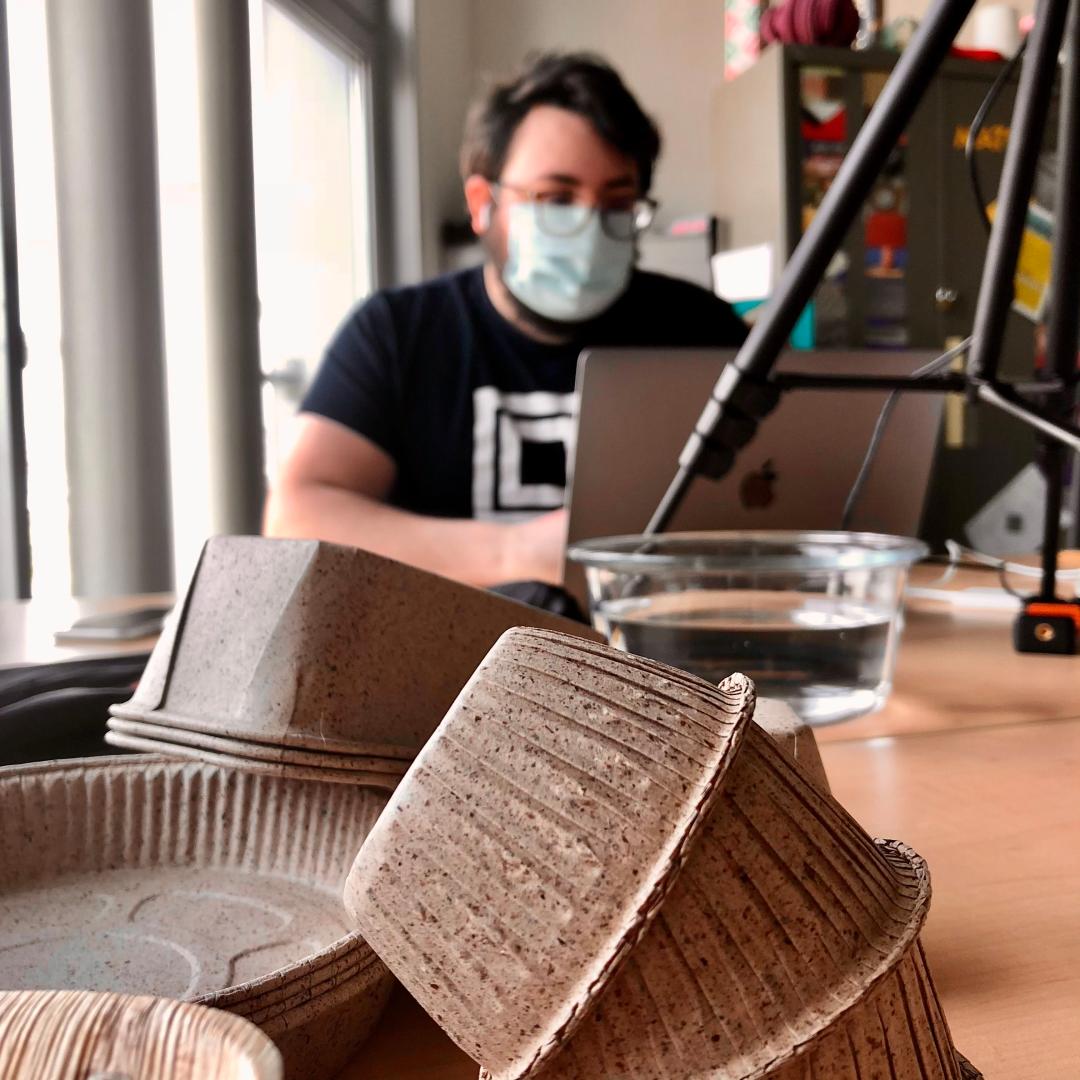
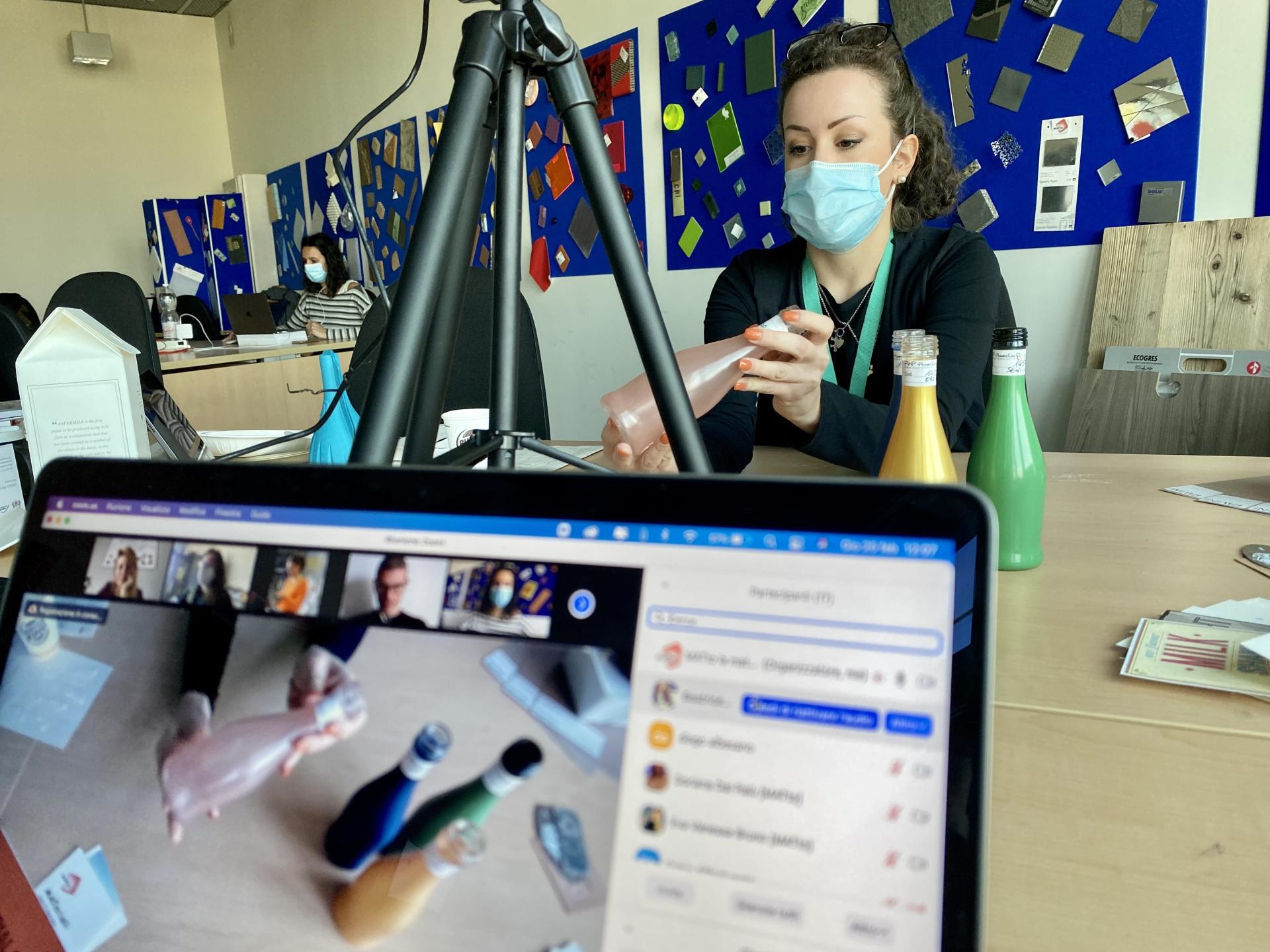
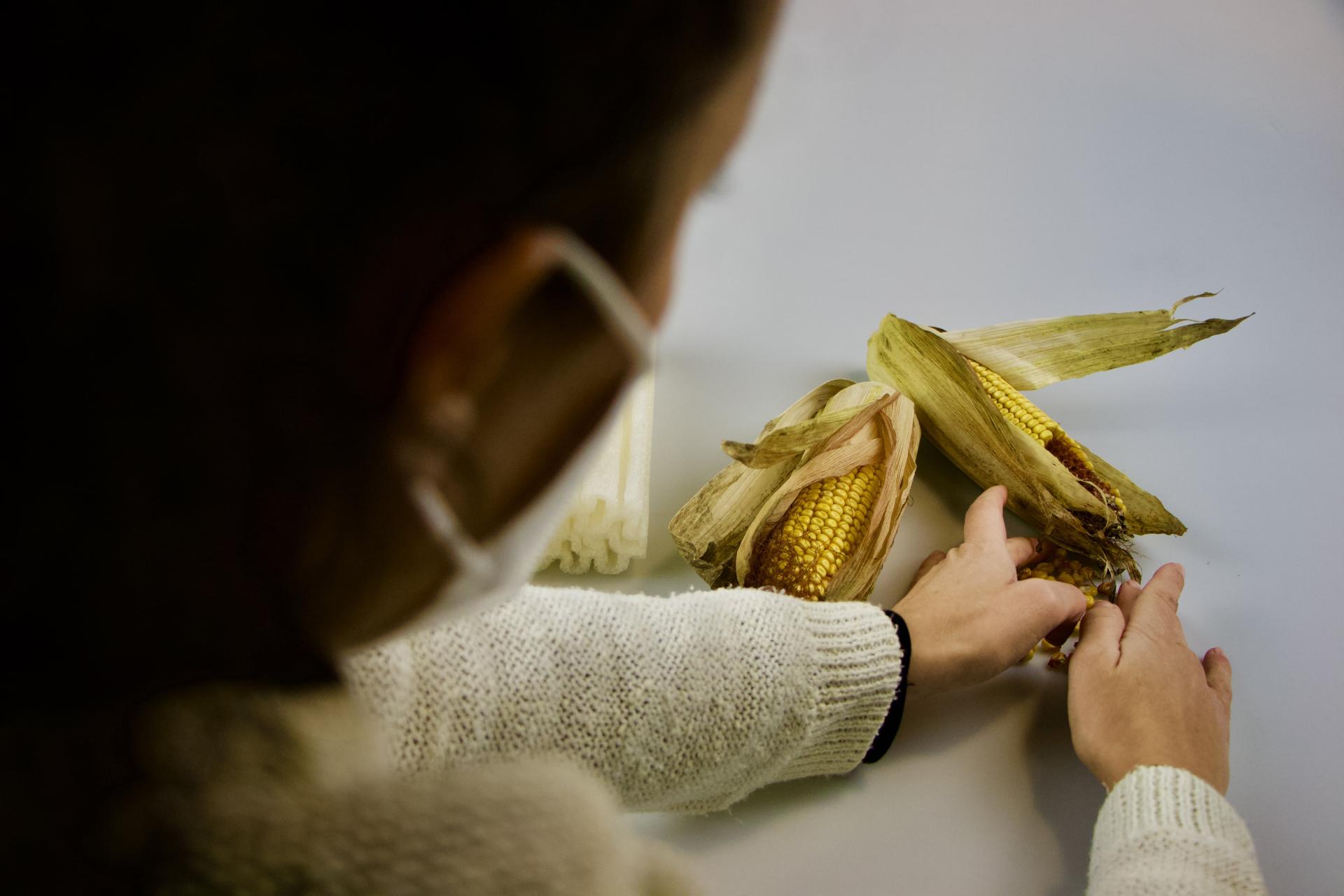
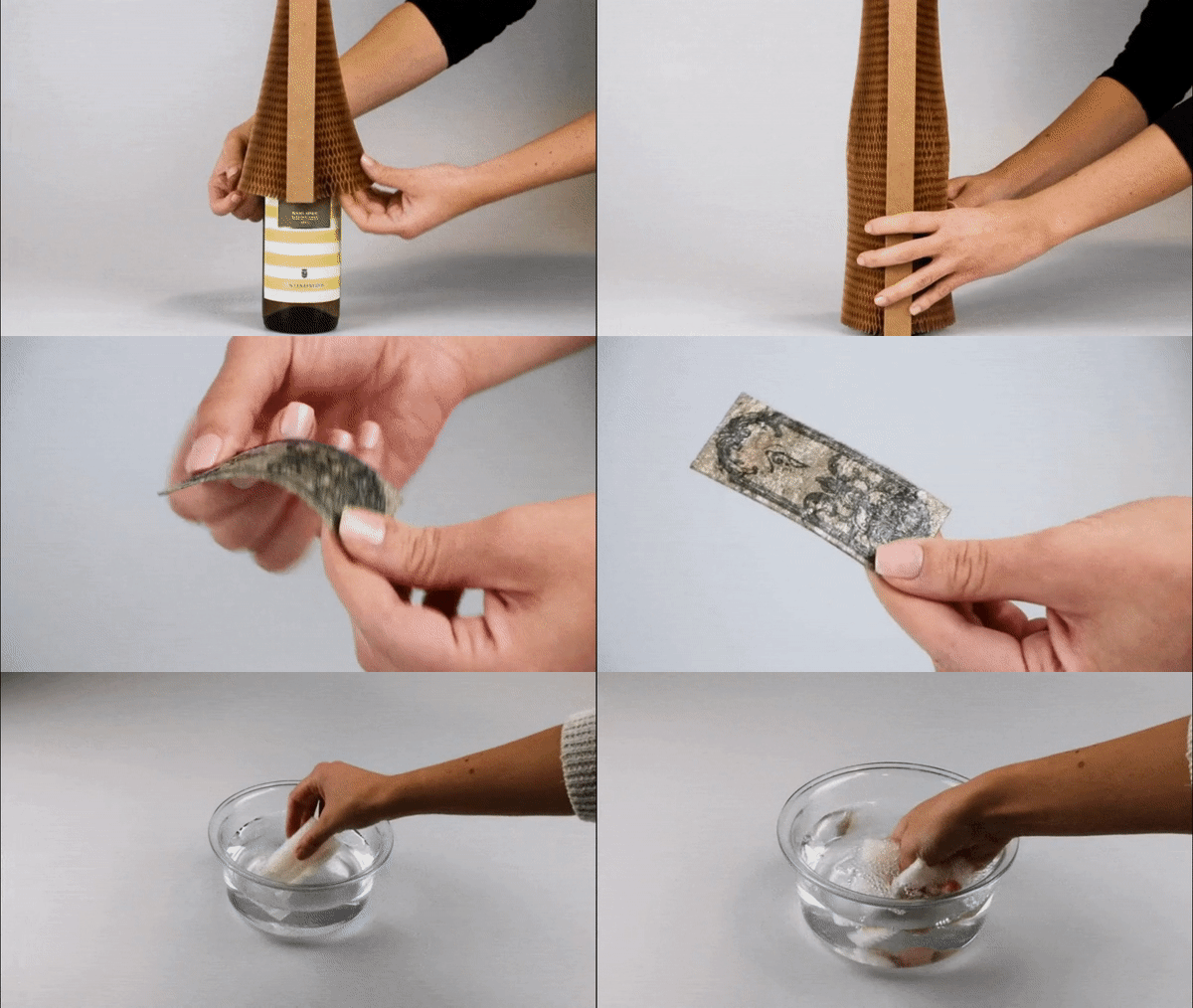
The material library replicated the real experience (tactile and auditory, as well as visual) of the careful manipulation and observation of materials through an immersion in the material world (and in its archive): by webcams focused on materials and on the products presented, live manipulation sessions and the narration of these experiences, it was possible to bring the material and product-experience into the homes and offices of the participants; through the definition of manipulation methods for the public at a distance, it was possible to understand and perceive the technical and expressive-sensorial properties of the materials selected, among the most recent and innovative, for the (food) packaging sector, by the researchers. Observing the behavior of the materials subjected to different stresses, or the sounds they produce, it was also possible to communicate at a distance the tactile quality of the materials (touch by proxy). Finally, the experience that has been transmitted through the events represents a "coordinated perception" through different senses.
Key objectives for inclusion
The festival of events, accessible 100% online, allowed the project to reach more people, call experts from every possible place, record the event in streaming, and make it usable and lasting over time. The guests-experts who animated the events were invited with attention to gender balance: moreover, not all of them belong to the world of design, but to many others, from the chemistry sector to sensory analysis, precisely to bring different visions and experiences and represent the interdisciplinary gaze that characterizes the research activity around food and its packaging, a cultural approach that embraces skills from multiple scientific sectors or multiple disciplines of study, integrating them to identify new solutions for complex problems.
In all the events (_CULTURAL PILLS) it was chosen to invite at least a representative of a University, a research and consultancy body, and a company: thanks to this balancing of voices it was possible to tell the numerous and complex facets of research activities around food and its packaging.
The ability to reach a broad audience also means considering the perspective of its users and the complexity that arises from having different and diversified needs. In fact, inclusion and accessibility are to be understood not only as of the possibility and ease of use of the events, but also as full participation in them, in terms of security, autonomous use, understanding, and management of contents. Since the events were recorded, all speakers were asked to consent to the recording of their images and voices, while the audience could interact, even if only via chat. In addition, throughout the festival of events, for online and offline communications, attention was paid to the use of gender language and inclusiveness.
Results in relation to category
This project was characterized by and was made possible thanks to a rethinking action of the real and direct experience of the samples of MATto. If usually the diffusion of knowledge on materials was (at least for us) linked to direct manipulation, the global pandemic has stimulated the acceleration of experimentation that has already been in our will for some time: the experimentation of training models that enhance materiality in the virtual, in line with the current digitization trend, has allowed in this case, and will allow in the future, to geographically extend our range of action, beyond the boundaries of our office, our city, our region.
The main result and impact of the "MATto for Terra Madre - Salone del Gusto 2020" festival is twofold: on the one hand, it lies in having generated the conditions for interdisciplinary integration and widespread culturalization (between science and project, science and humanities, etc.); on the other hand, it created the conditions for the birth of new synergies (between audience and speakers, between speakers and speakers, between audience and audience). This was possible mainly because the festival was conceived not as a "one-to-one" or "one-to-many" moment, rather as a "many-to-many" one. The continuous dialogue, interactivity, and exchange made it possible to better know each other, to break down the barrier of formality typical of extra-curricular training moments, and the distance inherent in the virtual world.
All this is a demonstration that a new way to carry out the University's Third Mission is extremely possible and necessary. A widespread training model, which crosses technology and knowledge transfer, but focused on an Open Science approach, so current and dear to the European Union, was proposed on this occasion and is starting to bear results and impacts. For this reason, we are confident that this operation can continue in the Materials for Packaging Week, in order to prolong its effect over time.
How Citizens benefit
The festival has reached a considerable number of people, here is some data. More than 100 materials have been analyzed according to their technical and expressive-sensorial properties. The festival involved more than 50 guests from the world of research and agro-food business. More than 450 participants and 45 firms followed the live events, connected from all over Italy. More than 850 people (and this number is growing day by day) followed the events remotely, through the videos on YouTube.
The festival has therefore activated a real community of people interested in the topic, people now more informed and made more aware of various aspects relating to materials and packaging design. The involvement of the community, a fundamental aspect to ensure that the event stimulates engagement, was strengthened by a constant search for interactivity between speakers and audience, using icebreaker activities with Mentimeter, polls, surveys, but also chat and Q&A, as well as repeated moments of verbal confrontation.
All this allowed to bring out the point of view of the public, as well as the initial level of awareness with respect to the issues and, more importantly, it stimulated spontaneous questions. Right the spontaneous questions allowed us to focus on (and overcome) false beliefs, clichés, and fake news on the subject of materials and packaging stimulating, on the contrary, a cultured and informed reflection. The dialogue with the experts and among the experts made it possible to increase awareness and the points of view under discussion.
Last but not least, the interviews with the researchers of the Politecnico di Torino that were proposed in the opening event allowed us to have a look and a first reading of what the academic world develops on these issues for the world of food and of the entire agri-food chain, always in relation to the SDGs, the Sustainable Development Goals, in line with the mission of our University.
Innovative character
The innovative character of the project lies in the "light" approach to the learning process, although the topic is absolutely serious, and needs to be studied in-depth with a rigorous scientific gaze.
To reach different target segments and give a more updated reading of the themes, two different types of events have been created: the _CULTURAL PILLS and the _IMMERSIONS. The first type of event was designed for a wider audience, and involved guests different from time to time, for multifaceted and multidimensional learning of the issues addressed. In each "cultural pill" the innovations (always available on the market) have been entrusted directly to the innovators/inventors, the best testimonials of the reality presented. The second type of events, on the other hand, represents a new format, specially dedicated to a corporate audience, and was designed precisely for immersion in our MATto material library. The 3 “immersions” made possible a detailed observation of real materials (the samples of materials stored in MATto) through digital means (webinars and webcams), so that the material library "entered" companies and offices of the audience.
The themes at the center of each of the 9 meetings were developed according to a concentric trend, from the center (the opening event entitled "The Politecnico di Torino tells itself", in which the university presented itself and basic and applied research which revolves around the theme of food) towards the outside, the future (concluding with the event “The horizons of the packaging project”). The closing event was the occasion to present some recent and little-known actions (the Ethical Packaging Charter, the Master in Eco Packaging Design of the Politecnico di Torino, and the Ask to Design platform), with the goal of providing the corporate public with tools for a conscious design of the packaging of tomorrow. In closing, the legacy of the festival was also launched.