Madaster
Basic information
Project Title
Full project title
Category
Project Description
Madaster developed digital tools that make the concept of the Green Deal and Renovation Wave happen. Madaster is the global online platform that enables the circular use of products and materials in the construction industry - in other words, a Circular Real Estate. Madaster offers property owners and other stakeholders the ability to store, manage, enrich, and share data about their properties and provides a trusted source of data for a new ecosystem.
Project Region
EU Programme or fund
Which funds
Other Funds
This project was funded by the European Union's Horizon 2020 research and innovation programme under grant agreement no. 779024. This grant was provided to the original implementation of Madaster in the Netherlands in 2017. For the New European Bauhaus Prize we apply via the Germany entity, which was founded in January 2021.
Description of the project
Summary
Madaster wants to empower humanity to stay within planetary boundaries so that everybody can live in an environment without waste. We want to adjust our economic system so that earth’s resources can restore, and resource scarcity be avoided. We believe in the power of data intelligence, the power of collaboration and openness to enable this transition to a more livable future.
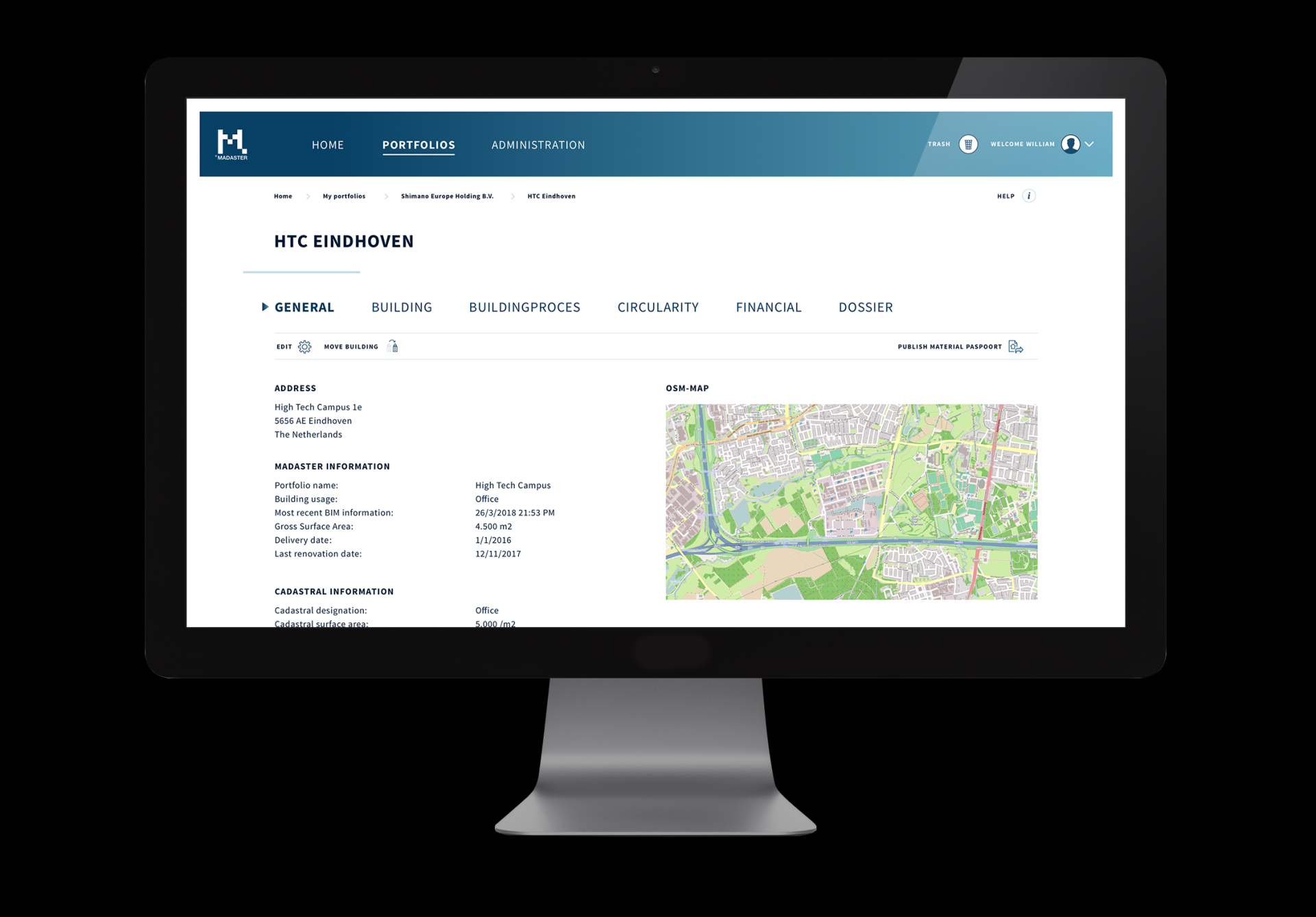
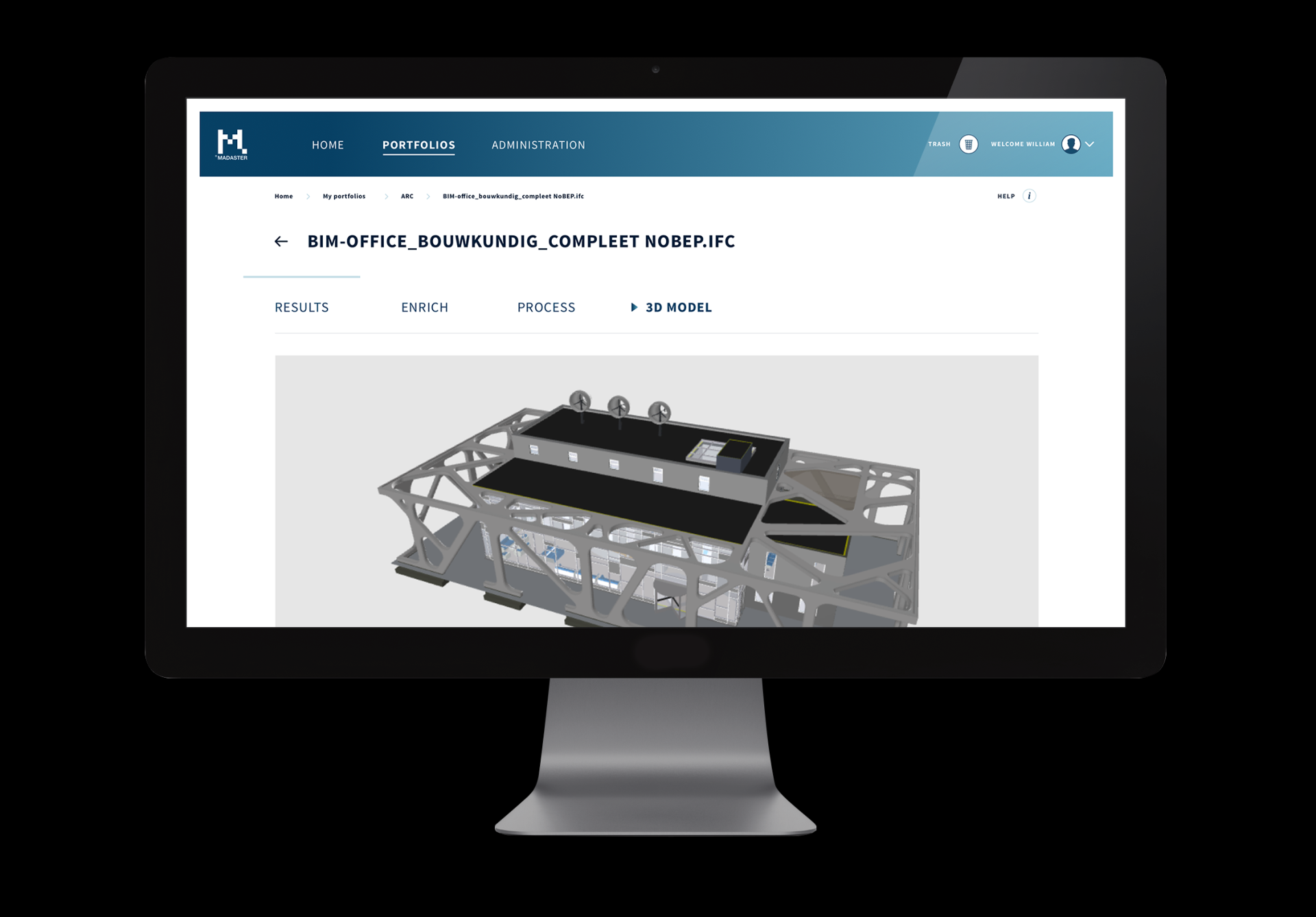
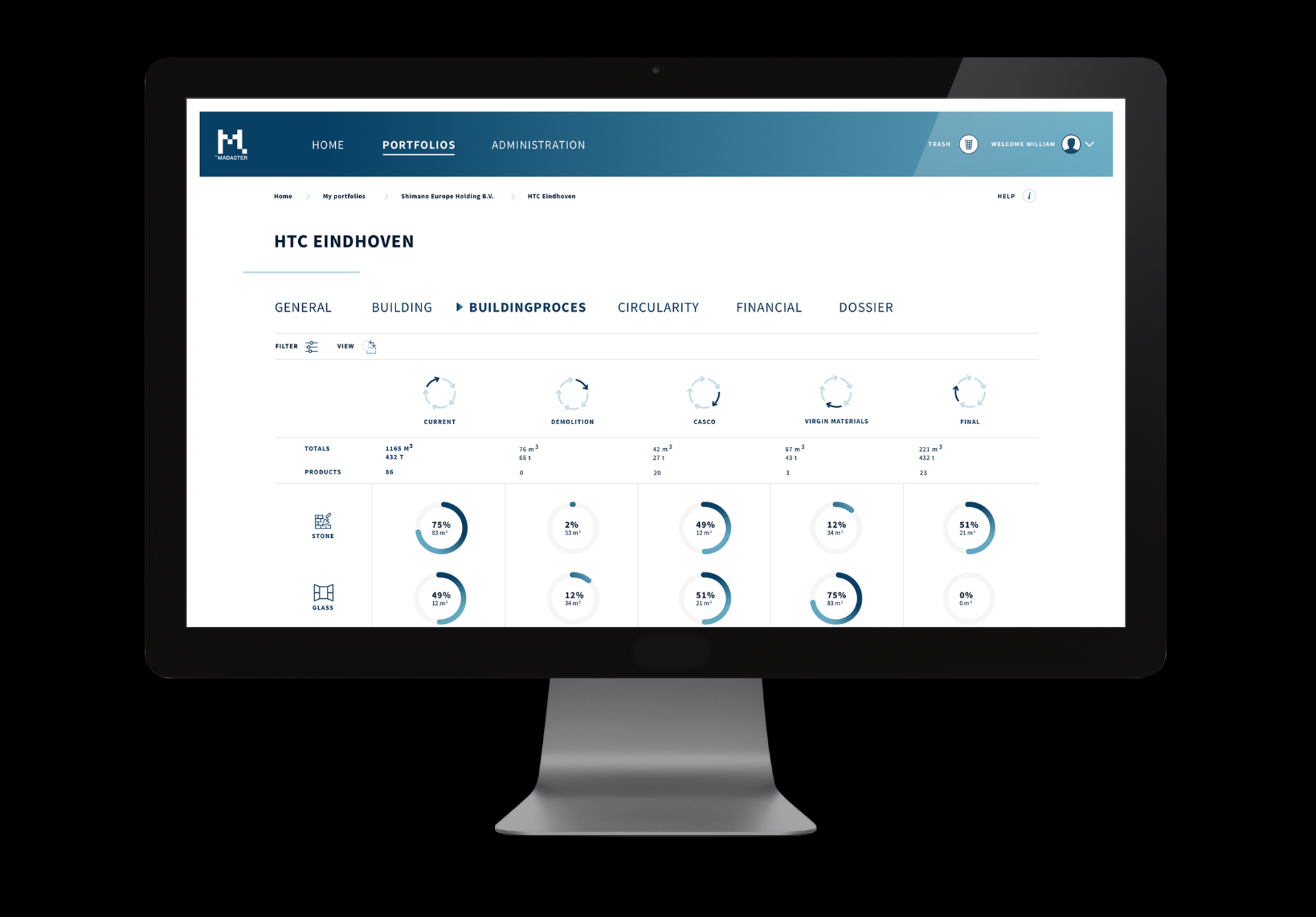
The Madaster platform is a unique, innovative, disruptive online cloud platform providing the user a ‘one stop access point’ to leverage their property data to meet and exceed their environmental, regulatory, health and financial driven ambitions across the full lifecycle of the object. Construction object information (digital twin) containing asset-, product- and material-data can be stored, enriched, shared and managed. Madaster automatically processes Industry Foundation Classes (IFC) files - Building Information Models (BIM) software - and enriches them with data from other public and non-public sources.
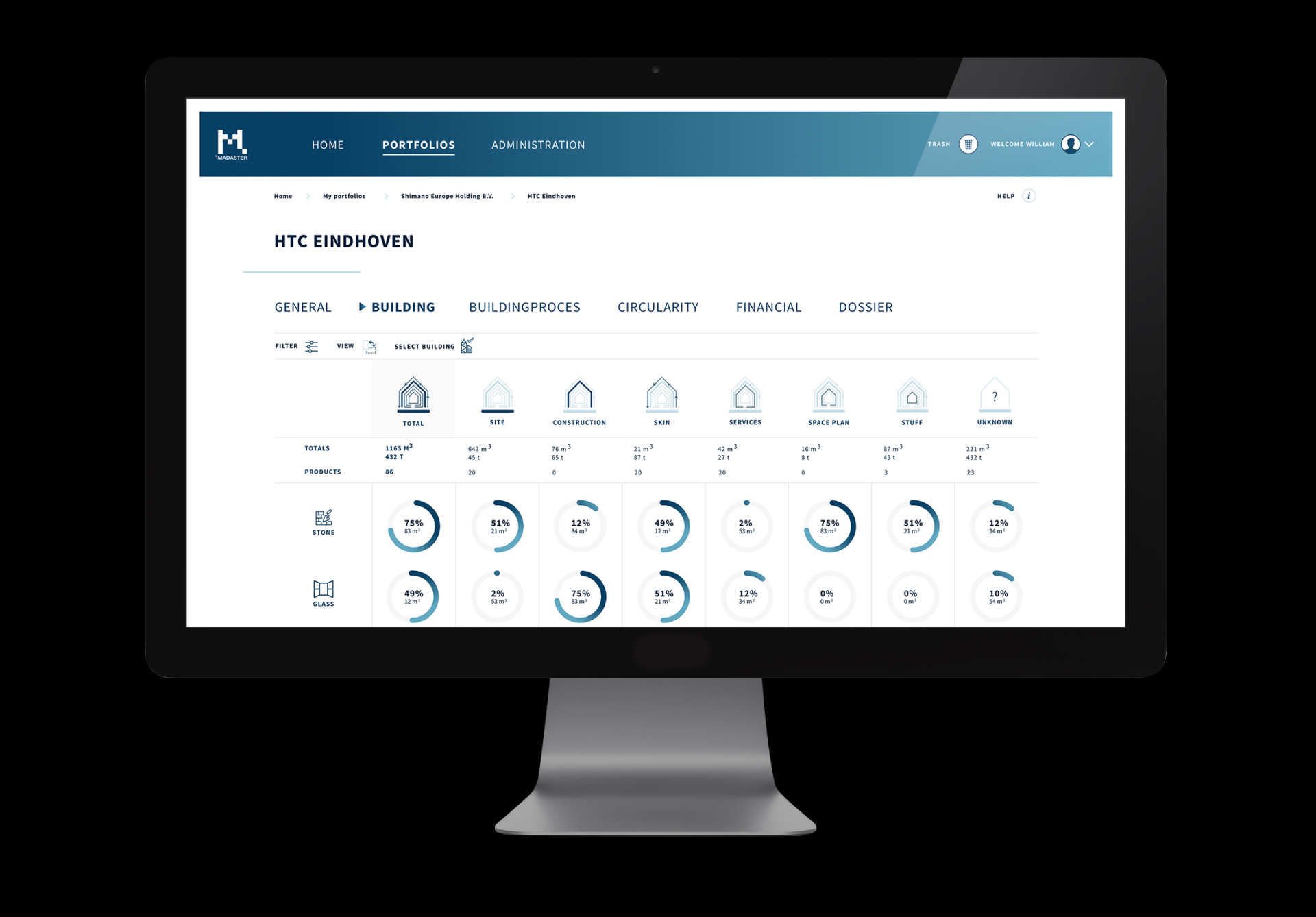
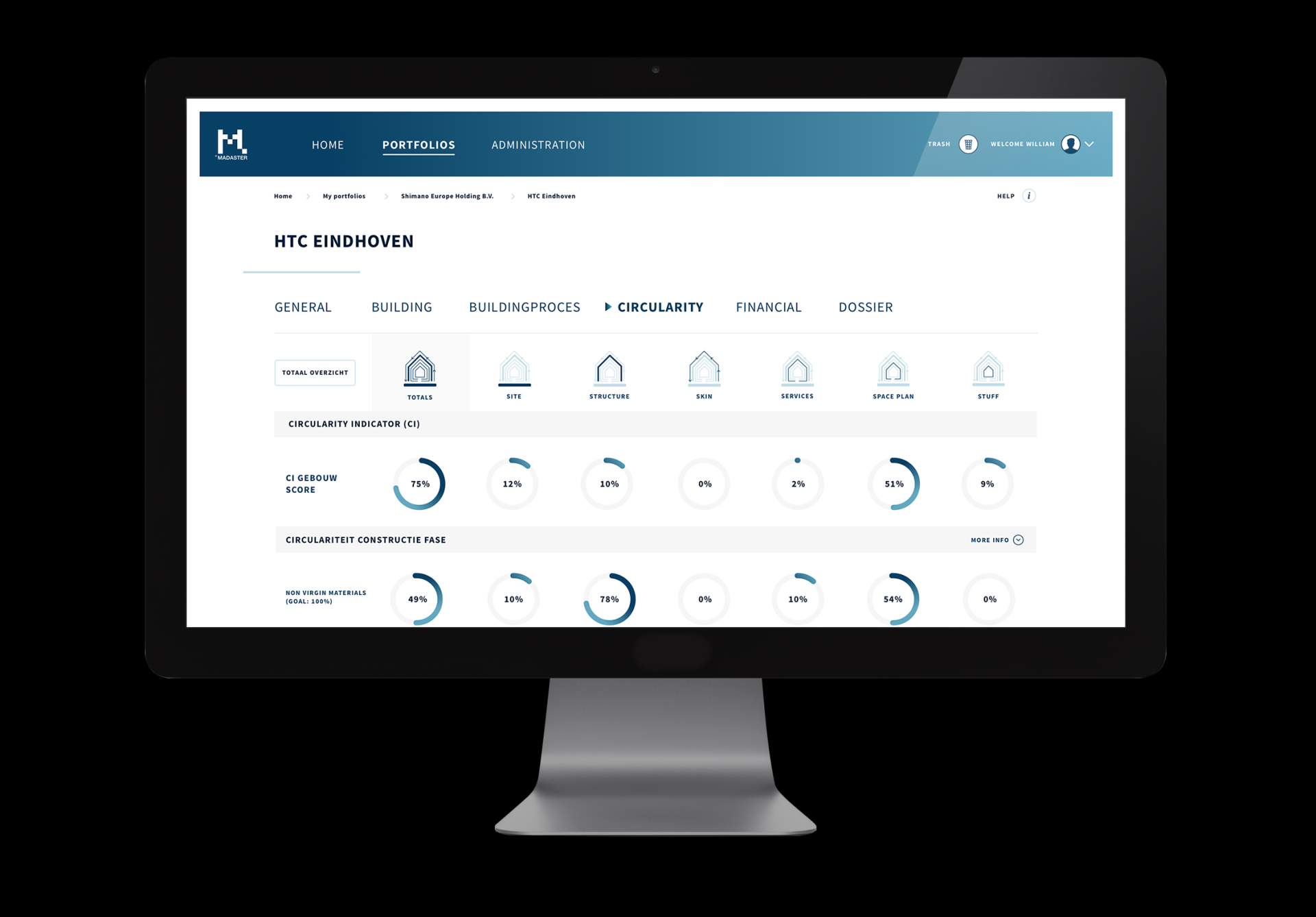
Madaster creates transparency about material assets by generating material passports of a physical object based on the registration of materials, components and products used. It generates insight in the financial valuation, embedded carbon, toxicity and reuse potential of the applied materials, components and products.
The platform provides a trusted source of data for an ecosystem that includes marketplaces (for reused products), designers, financers, valuators and regulators. These third-party applications and services are accessible through the platform on request of the platform users. In all situations, data is safely and securely stored and can be easily managed by the users. This is governed by an independent supervisory entity.
Key objectives for sustainability
We regard Earth as a closed system in which there must be no waste. Raw materials are limited editions and scarce. In order to keep materials available indefinitely, they need to be registered and documented. By giving them an identity on the Madaster platform, they form a source for reuse and each (construction) object can be designed and managed as a material bank.
The Madaster Material Passport documents the identity of a building or an object. Madaster supports the various initiatives to realize (inter)national guidelines and standards for materials, products and building passports or logbooks. We ensure that relevant data can be registered and documented, preferably automated from BIM and using smart connections with various data sources on products and materials (e.g. life cycle assessment or CO2 data), but also financial sources (what is the value of materials) and data sources on the health impact of materials.
Madaster makes a decisive contribution to achieving the EU and global climate targets in the individual countries and at European level. We are active in the Netherlands, Switzerland, Germany and Norway and soon in Belgium and Austria. Moreover, there are pilot projects in the UK, Taiwan, Canada and Australia. For example, in the Netherlands more than 2.000 buildings are registered on a detailed level with more than 8.5 million square meters. With Madaster, we can provide insights how many materials and products are in place in the built environment and when they will be available for new projects due to renovation or deconstruction.
Key objectives for aesthetics and quality
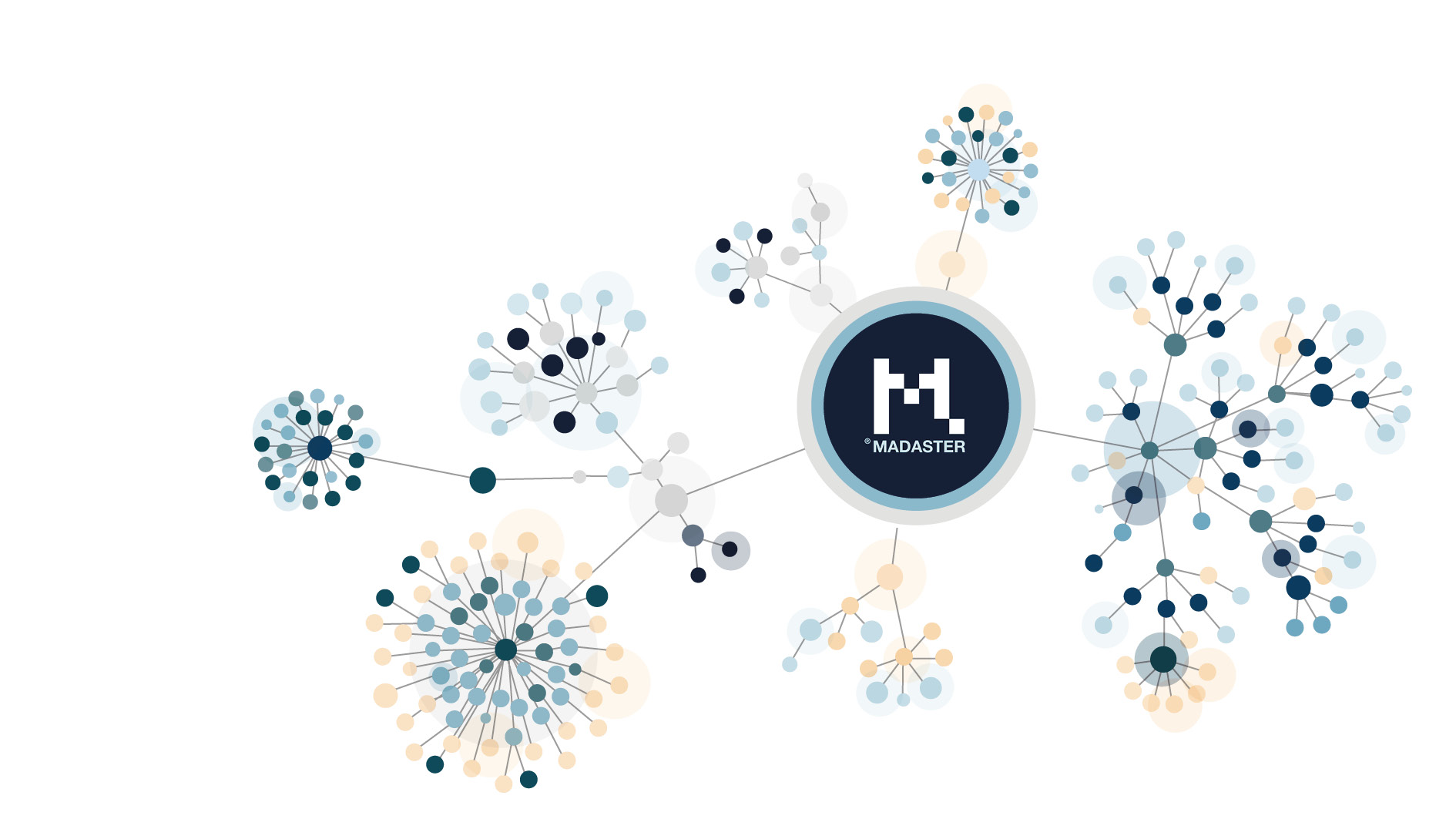
On the one hand, as a platform we focus on the connection of different systems and databases to connect people and projects and to make a circular economy in real estate possible.
As such, aesthetics plays a role in how data is stored, enriched, and exchanged. Maybe not that much from a building and design perspective but from a data perspective. It is not a coincidence, that administrators and IT developers are called ‘data architects’.
On the other hand, the Madaster platform creates transparency and insight into used materials and products. By that, architects and planners get an overview of the anthropogenic stock and thus totally new circumstances when planning and designing a building.
Key objectives for inclusion
Whilst our main focus is providing technical means to build and renovate in a sustainable, economically sound way, we believe that fighting climate change also is a key tool for inclusive societies.
Environmental risks are potentially higher for areas with low-income populations with higher cost pressure for buildings. Our platform provides tools to take stock, monitor and reuse materials in a sustainable way, which ultimately allows to increase the living standard of low-income areas, too. Climate change will specifically have a negative impact on poorer areas and its inhabitants and extreme cases destroy their living environment.
Madaster seeks to mitigate these effects to allow for truly inclusive societies. Making data available furthermore allows to include stakeholders and citizens via a simple and standardized exchange of information and data that can be used in a variety of ways (see further explanations below).
Results in relation to category
Construction and demolition waste (CDW) is the largest waste stream by volume in the EU – it represents about one third of all waste produced. Proper management of CDW and recycled materials can have major benefits in terms of sustainability and the quality of life and can also provide major benefits for the EU construction and recycling industry, as it boosts demand for recycled materials. Mitigating climate change and protecting our environment is not possible without considering materials and their impact. In particular, due to higher energy efficiency during use phase, more emphasis is put on the construction phase and the selection of materials. The successful implementation of the EU climate goals without a circular economy is a key but very challenging project. A material cadastre, that registers all materials and products in the built environment, is key to implement the principle of a circular economy.
This initiative started from the perspective that we should focus on a new economic model. A model in which responsibility is taken for raw materials and materials used in a building or product. So that they do not end up as waste. This can be prevented by registering, documenting and archiving materials, products and objects by and providing them with an identity. This is the first and only platform that makes it possible to register materials, give insight in their circular per and interlink databases with data of materials in the build environment.
How Citizens benefit
Madaster provides open interfaces to digitally share the stored information with commodity and product marketplaces, enabling a true circular economy. The added value for citizens, businesses, government organizations, research, and educational institutions, lies in the simple and standardized exchange of information and data that can be used in a variety of ways: From using material passports and supporting circular marketplaces to citizen participation and area studies, from enriching building assessments to assisting with permit applications. The Madaster platform simultaneously makes a positive contribution to society by providing information about the raw materials and materials used in our living environment. The register facilitates the circular economy by providing insight into the raw materials and materials used and by managing and distributing digital information. The platform supports analyses in different life cycles and is scalable from a local to a regional, national, and international platform.
Although the stored data is owned by the building owner to guarantee data security standards within Madaster, we will provide an overview (Area Register) of the anthropogenic storage of building materials and products to the public and official bodies. The Area Register includes a search functionality on object level (construction objects, products and materials), area level (where are what objects) and time level (when can material flows be expected). This enables society and politics to organize material streams and to adjust legislation in order to implement a circular economy. This overview of already built materials is missing so far and thus Madaster is the key element to enable society to use materials indefinitely.
Innovative character
The innovative character is that already existing information is further processed in the digital twin to store the materials used in buildings. A unique feature is that Madaster automatically processes the IFC files (BIM software) and enriches them with data from other public and non-public sources.
Through this approach, we minimize the additional effort and at the same time enable the stored data to be further used in other processes (see integration of external partners). The information stored on the Madaster platform is linked to other databases and automatically exported to a material passport. The material passport contains information about the quality of the materials, their locations, and their financial and circular value. At the same time, it provides insights into the deconstruction and reuse potential, whilst the data is secure and remains the property of the building owner.
This makes Madaster a key player in the new Circular Real Estate digital ecosystem. Many of the current providers of material passports base them on newly collected data, which is then stored in Excel data sheets or documents. In contrast, the material information on Madaster is stored dynamically and can be adapted to new findings and circumstances at any time.