VinziDorf Wien
Basic information
Project Title
Full project title
Category
Project Description
VinziDorf Wien offers low-threshold, alternative housing for long-term homeless people, who cannot accept existing institutions due to their personal constitution. In VinziDorf Wien, men suffering from alcohol abuse can find a home - indefinitely and unconditionally and inhabit it according to their possibilities.
Project Region
EU Programme or fund
Description of the project
Summary
A social project that aims to remedy a deficiency without reacting to it with a deficiency depends on donations. Right at the beginning of the project phase, comrades-in-arms were sought and found in the construction industry who could sponsor the high-quality building material. Such projects would not be possible without this commitment.
After living on the streets for many years, the goal was to meet the great need for retreat and privacy. To create a place of their own where they can safely leave their few and therefore valuable things behind. Your own door that you can lock. Only when the security of being able to stay has been regained and one feels accepted as a person is it possible to participate more in social life again.
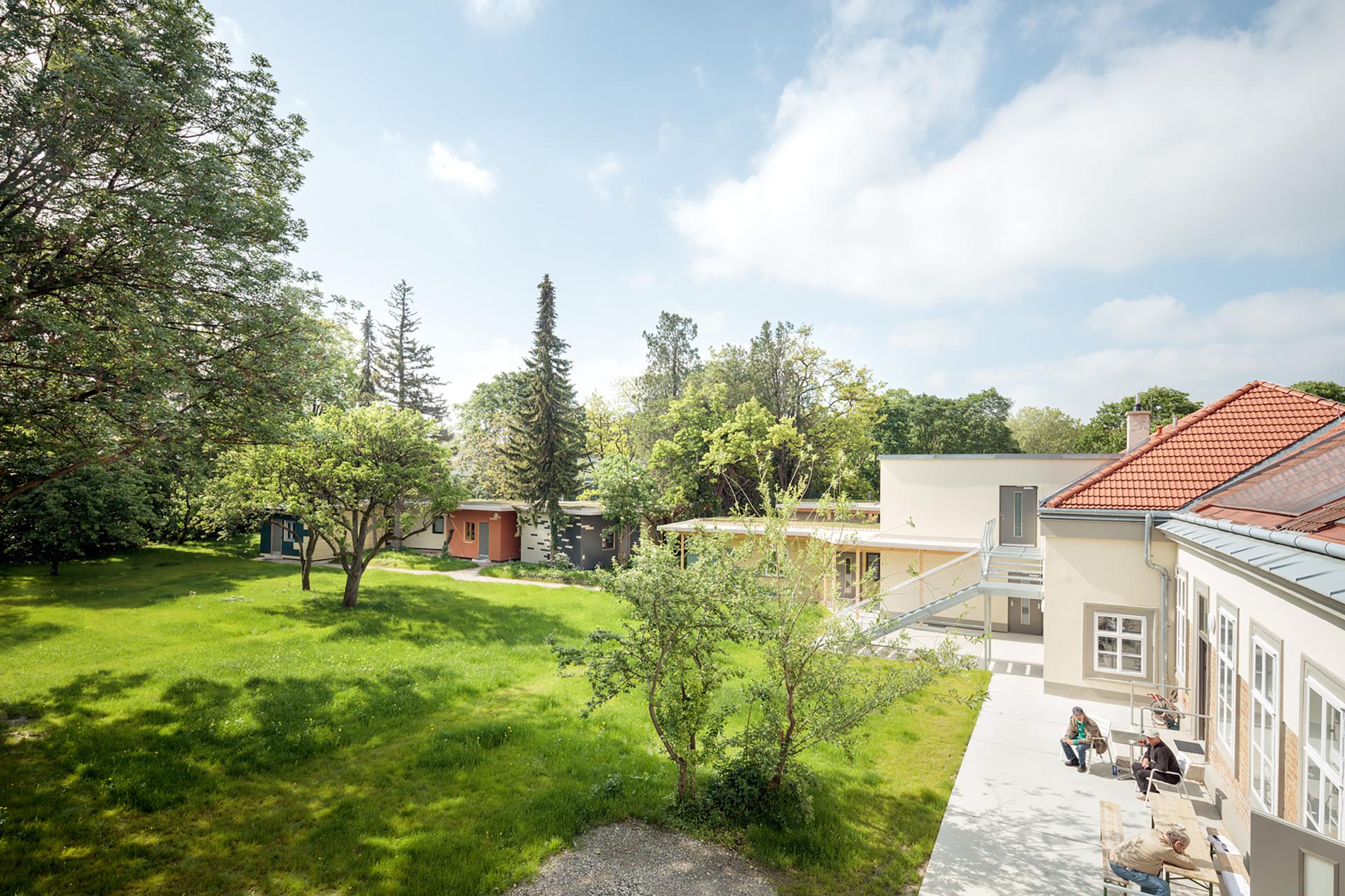
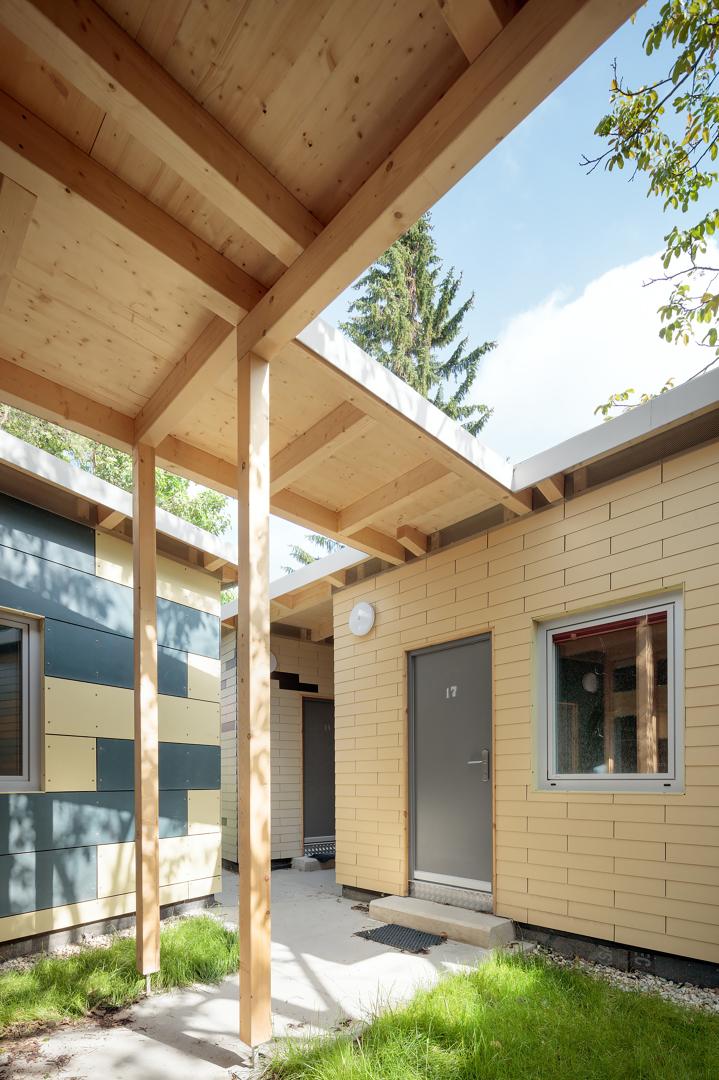
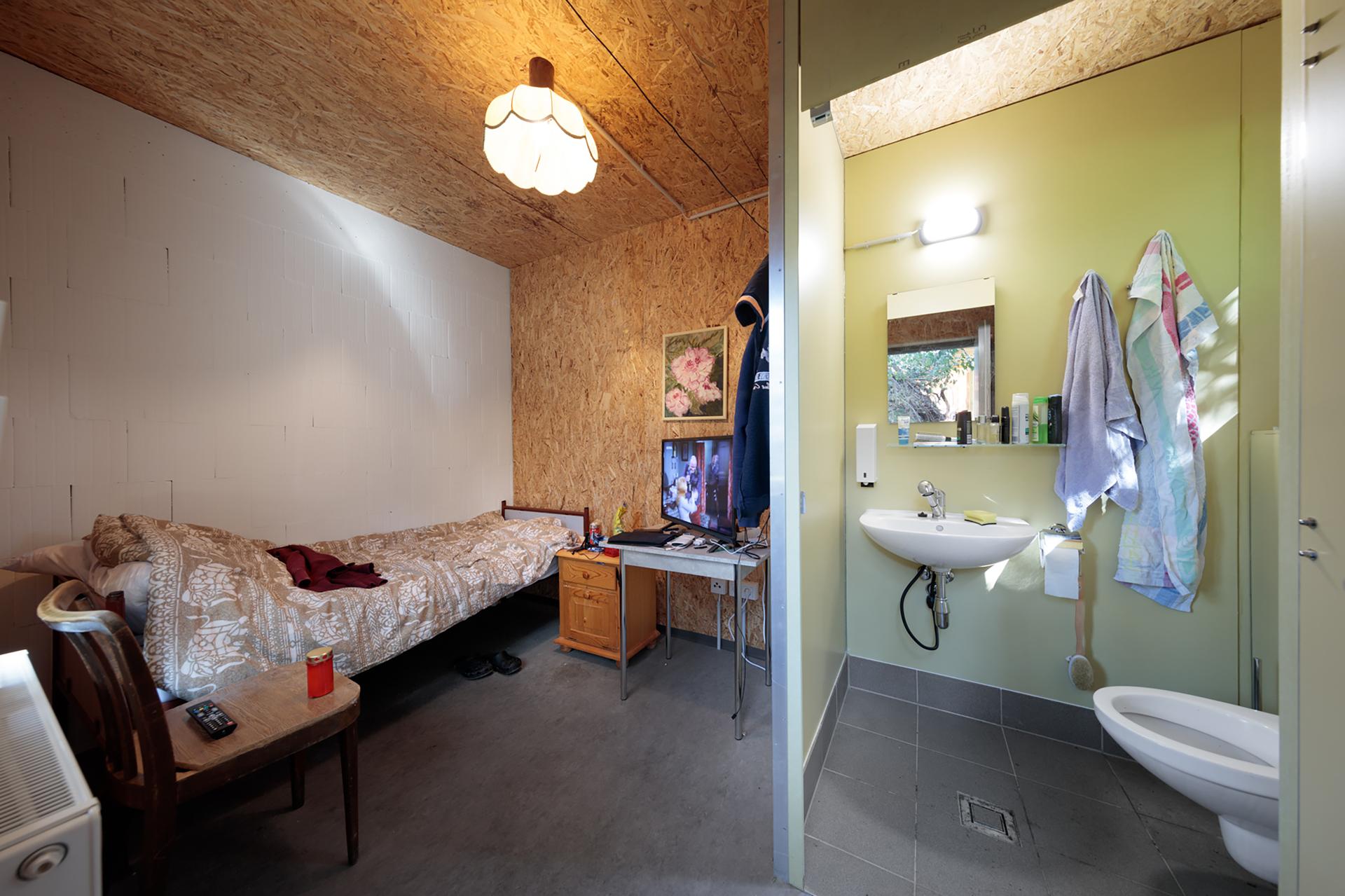
The chosen structural village structure optimally supports these needs. 16 residential modules were built together with students from HTL Mödling using a mixed construction method. The prefabricated wooden walls produced in the school workshops complement the brick walls made of donated brick-stones that have been whitewashed on the inside to reveal the structure of the bricks. The different wall materials each contribute in their own way to a pleasant living environment.
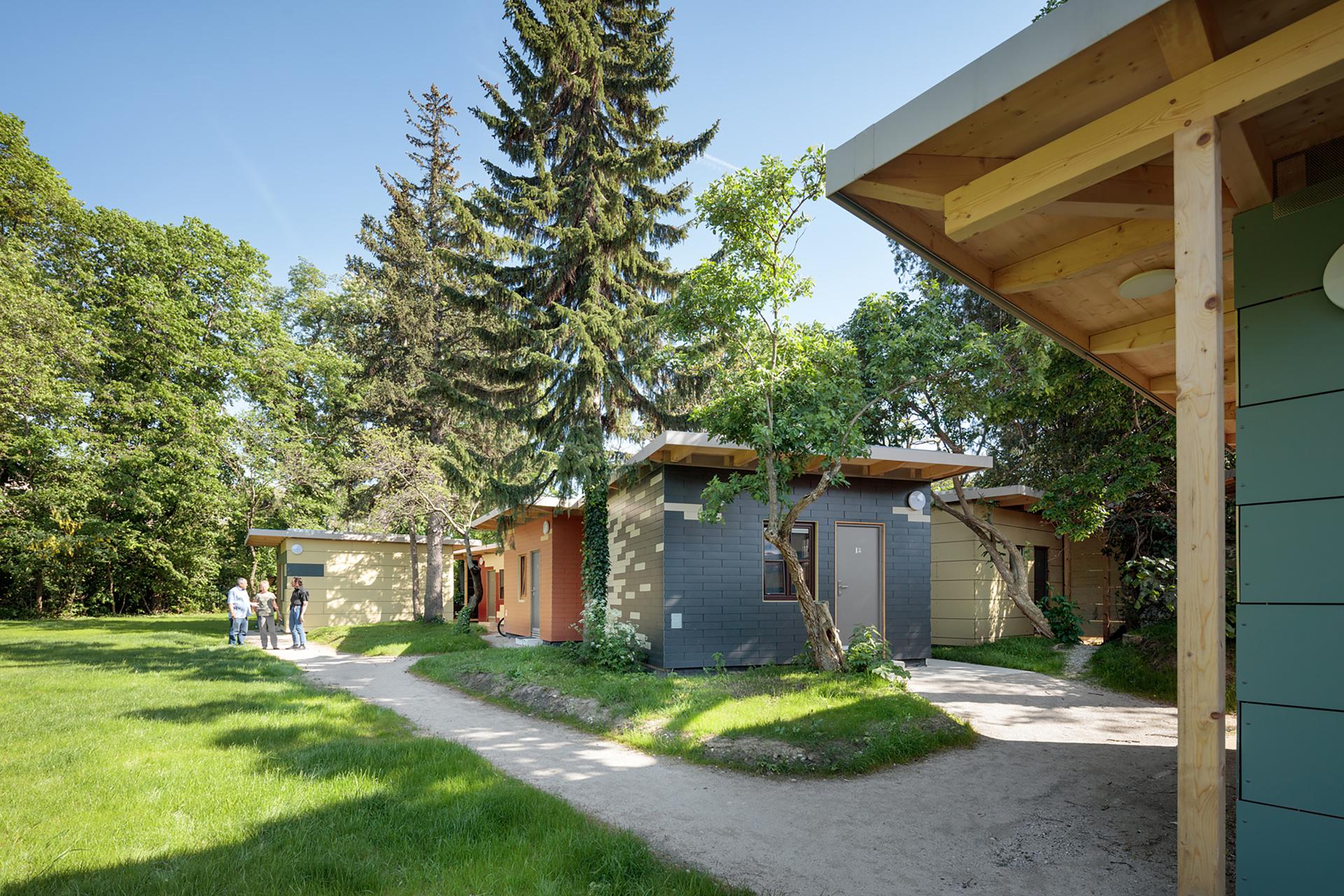
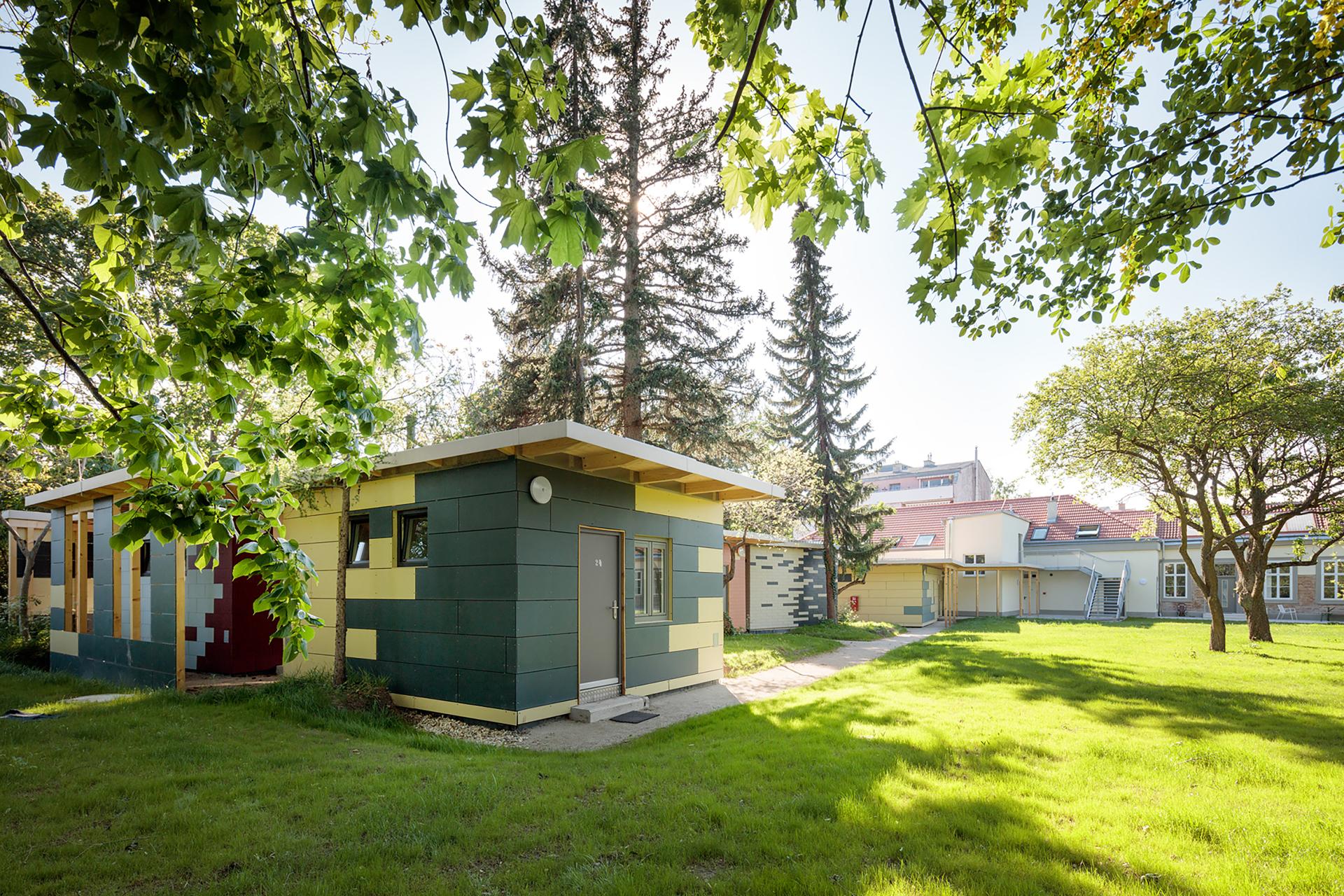
Other donations in kind such as windows, floor coverings and facade panels from leftover stocks give the houses their individual appearance.
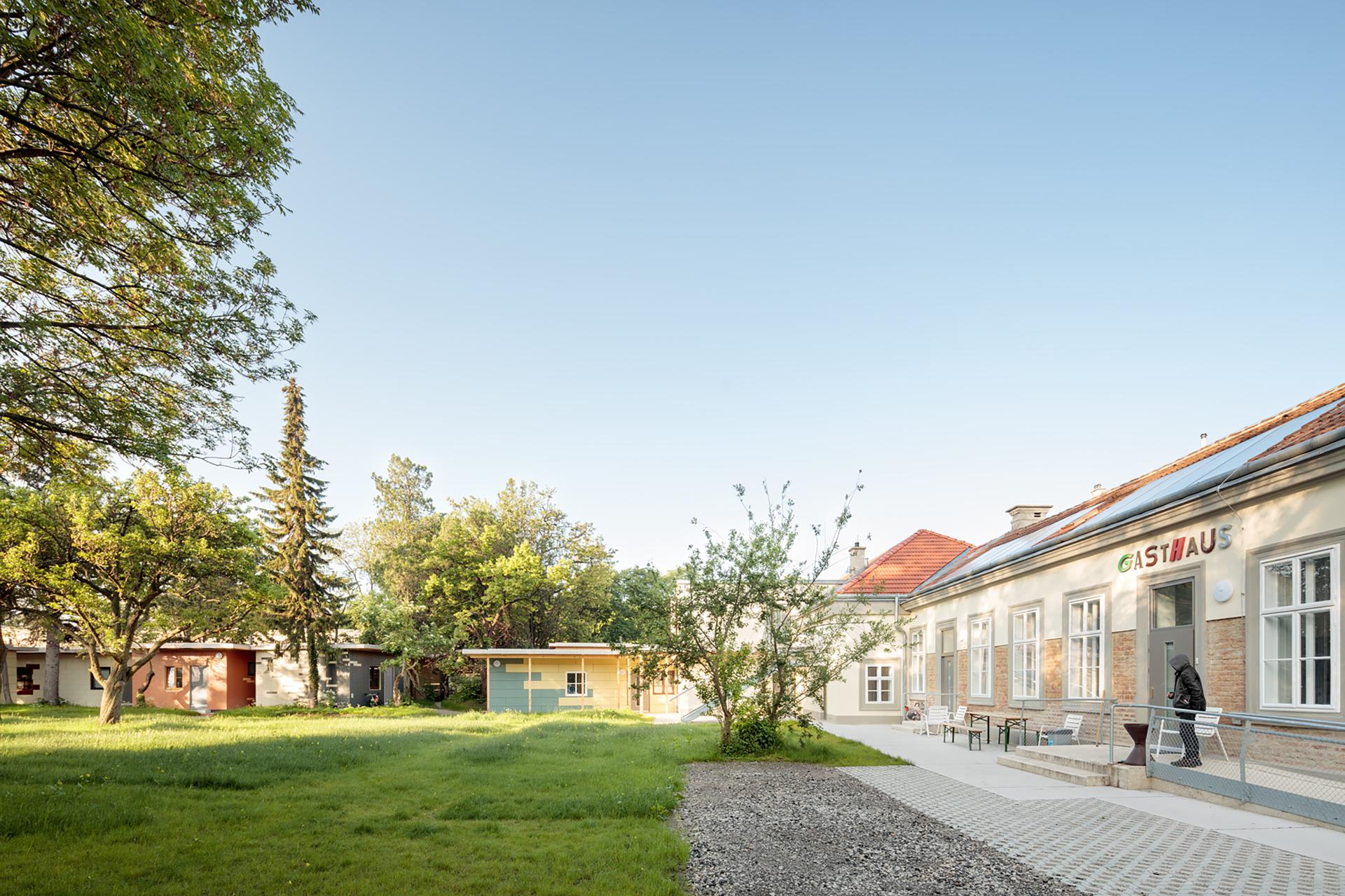
The existing old farm building, also a brick building, was not demolished, but gently renovated and contains rooms for communal living.
Voluntary helpers, material and work donations have made a significant contribution to reduce the project costs and thereby make the project possible.
As a result of this joint effort, 24 fewer people sleep on the street today.
Key objectives for sustainability
The site is judge and belongs to the Lazarists (a christen community). They still run a church and a retreat house on the other site of the property. The big klostergarden was divided into two and on our side an old farm building was left. We could reuse this building after an extensive renovation. It was not demolished, but gently renovated and equipped with modern building services. The building contains the necessary village infrastructure such as kitchen, office, staff rooms for the mainly volunteer staff, additional sanitary rooms, a common laundry room and in the attic another eight living spaces with their own bathroom. In the "guesthouse", anyone who wants to can find a connection to village life.
In addition we planned small wooden houses to create the village. Building regulations forced us to join the tiny huts with a large roof but we wanted to keep the old trees so we could make big openings into this roof.
In order not to have to react to the lack of money with lack again, we succeeded in winning committed companies that donate materials, large discounts, to make our project something special. Donations in kind such as windows, floor coverings and façade panels from leftover stock give the houses their individual appearance. On the garden 16 residential houses were loosely placed between the old trees. A small grotto with a statue of St. Maria was also found so we decided not to pull it down but to integrate it into the village. We got bricks for example - so we decided to make one wall of the timber houses out of it. The other walls and the roof were prefabricated at school and mounted at the building site. Like at VinziRastMittendrin we tried to involve pupils or students in the building process, which is a win-win-situation for both.
Key objectives for aesthetics and quality
Extremely small units - VinziDorf Wiens modular houses have around 9m² - need a lot of outer space around.
We were lucky with the big garden in front. And we created a village place together by planting a linden tree and making a fireplace. Berry bushes were what our residents wished for: so this year the first berries are sweetening the summer.
VinziDorf Wien is a quite unusually home in which you can feel accepted and live according to your possibilities.
Even with the use of donated and donated materials, a continuous design concept was adhered to: donated fibercement tiles for the facade. These tiles were left overs from old collections - colours which were not produced any longer. It was really a challange to find a concept for all these irregular tiles. Two units are situated back to back each got one colour code and the tales merge. Also the windows were donated - different types from a showroom - brand new but not saleable - lucky we - as every unit has exactly one window - and so we got a different look for every house - easy to recognize and easy for the residents to find home.
Key objectives for inclusion
For the poor in society often poor buildingsolutions are choosen. Cheap materials in uninspired ways. But this just turns every body down and a negativ spiral is set in motion. The residents are marked as loosers and this often leads to futher problems, aggressions and destruction.
To meet the retreat needs of the residents, who have often lived on the street for years, 16 wooden residential modules were placed loosely between the old trees on the edge of an orchard in a former retreat house in Hetzendorf. Each villager has their own lockable room with a sanitary facility. If you want more connection to life in village, you can visit the „inn“ in the completely renovated former farm building.
There are hot meals every day, fresh laundry and a friendly word. There is also the necessary infrastructure such as kitchen, shower rooms, laundry room, staff rooms, the office space of VinziWerke Vienna and 8 further living spaces with bathrooms in the attic storey. Volunteers and social workers take care of the needs of the 24 residents around the clock, who have found an unlimited, unconditional home since November 2018 that they can accept and live in according to their possibilities.
Much of the project funding was raised through donations in kind and work, work by volunteers and students from the Technical Highschool HTL-Mödling.
Results in relation to category
What do we really need? Our residents come from the street. Some of dem have been living their for many years and some of dem unlearnd to live inside a building. Asking them what was best in their new homes the answer was: A place you can close the door and lock it. A place you can store your own things and you are not troubled to loose them. Your own bed and the certainty to stay at the same place as long as you wish- nobody will drive you out.
Privacy is very important. So we have residents not leaving their houses for the first weeks - When they feel save and can be sure that nobody is throwing them out they finally open up and look for company.
Residents must be proud of their new home in order to accept it and subsequently want to help shape and maintain it. Only then can a negative spiral be counteracted, because ugliness attracts ugliness. In turn, the lack that is often felt in social projects is met here with special attention to detail and and aesthetic issues.
How Citizens benefit
Like always in these kind of projects their is a lack of money but an inspired bunch of volunteers who make the impossible possible.
During the preperation time for the construction work we tried to gain the trust of the neighbourhood again and to interest additional volunteers. A flea market was organised . This gives curios people a chance to get into contact with the people working for the project - and it gave us the possibility to explain and calm down their fears. Sometimes we managed to turn an opponante to a supporter.
Another type of support we got from a technical highschool, HTL Mödling, teaching timber construction.
In the beginning of the planning process we searched for firms which could support us with donations of construction materials or labour.
We got for example bricks - so we decided to make one wall of the timber houses made of brick. The other walls and the roof were prefabricated at school and mounted at the building site. Like at VinzirastMittendrin we try to involve pupils or students in the building process, which is a win-win-situation for both.
Innovative character
People who cannot withdraw, withdraw into themselves. Therefore, it is important to also give homeless people this minimal possibility to retreat in order to be able to participate in social life again as a result. Small retreat spaces require compensation through large common areas or outdoor spaces. Both are provided here in the form of a large community garden and a guesthouse. Only when the residents can be sure that they will not be evicted and have come to trust the volunteers they do participate in community life again.
In order to keep the project costs, which were financed exclusively by donations, low, sponsored materials from stock were used. Cooperation with students from the Mödling Technical College, who prefabricated wooden walls and ceilings in their school workshops and assembled them on site, helped to minimize costs and increase young people's understanding of homeless people.