KALDERIMI X2
Basic information
Project Title
Full project title
Category
Project Description
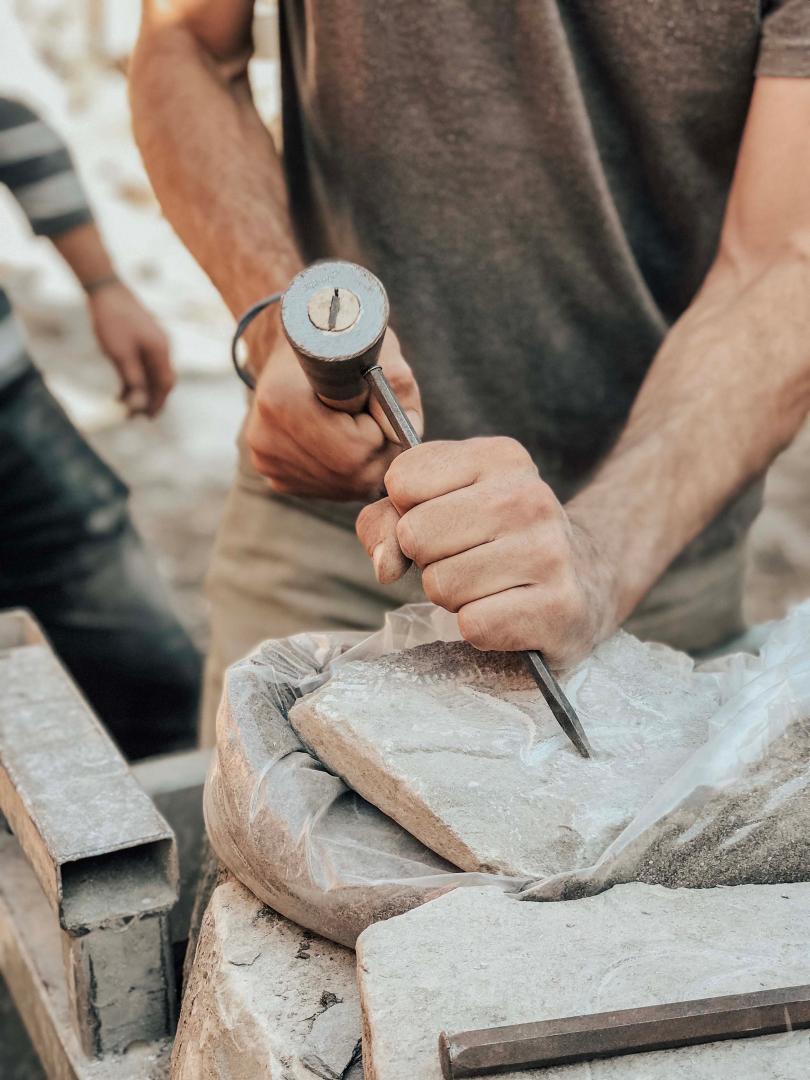
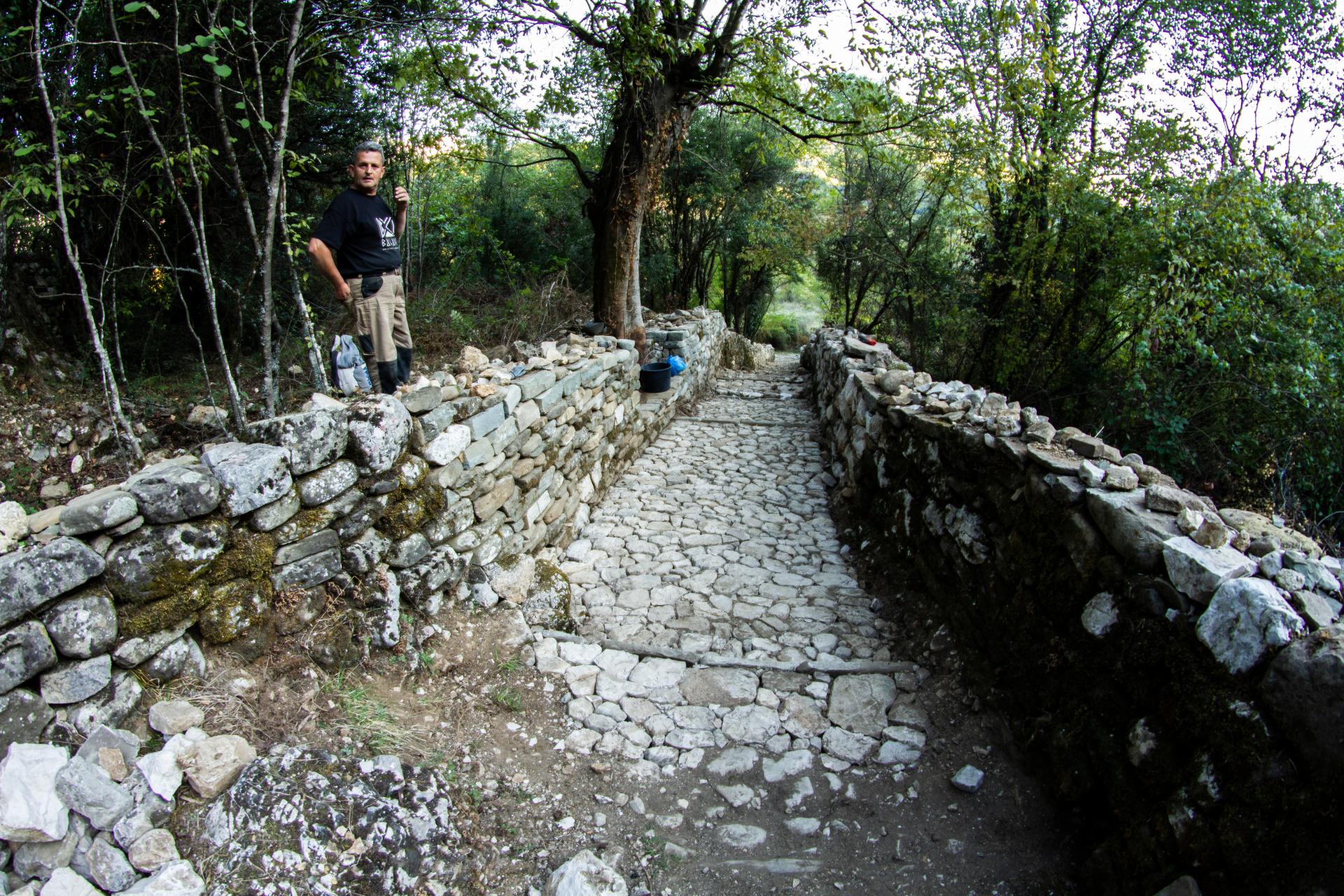
“Kalderimi X2” comprised a participatory building project and a hands-on educational program, aiming to restore a 400m long drystone cobbled pathway in the rural community of Plaka (Epirus, Greece) in 2019. It combined a two-month apprenticeship in traditional stonemasonry for nine young craftsmen from Greece and other Balkan countries, and a two-week workshop targeting a broader audience, thus consolidating an endangered material knowledge and exploring its potential in contemporary contexts.
Project Region
EU Programme or fund
Description of the project
Summary
“Kalderimi X2” is a participatory restoration project and a two-fold educational program consisting of a two-month apprenticeship in traditional stone masonry, aiming to foster a new generation of craftspeople from Greece and other Balkan countries and a twelve-day workshop targeting a broader audience such as architects and engineers, conservators, and artists.
One of the main goals of this program was to re-introduce the forgotten building technique of “kalderimi”, which is a particular type of cobbled pathway but also a water management system and address a gap in knowledge that has already adversely affected the character of traditional settlements in the mountainous Epirus region in Greece and the historic sites of the Balkans in general.
Boulouki had implemented its first educational intervention in the area (Plaka, North Tzoumerka) a year before “Kalderimi X2” took place, which established the dynamics among the Boulouki (i.e. “gaggle”, travelling group), the local community and the local authorities and prompted this second intervention.
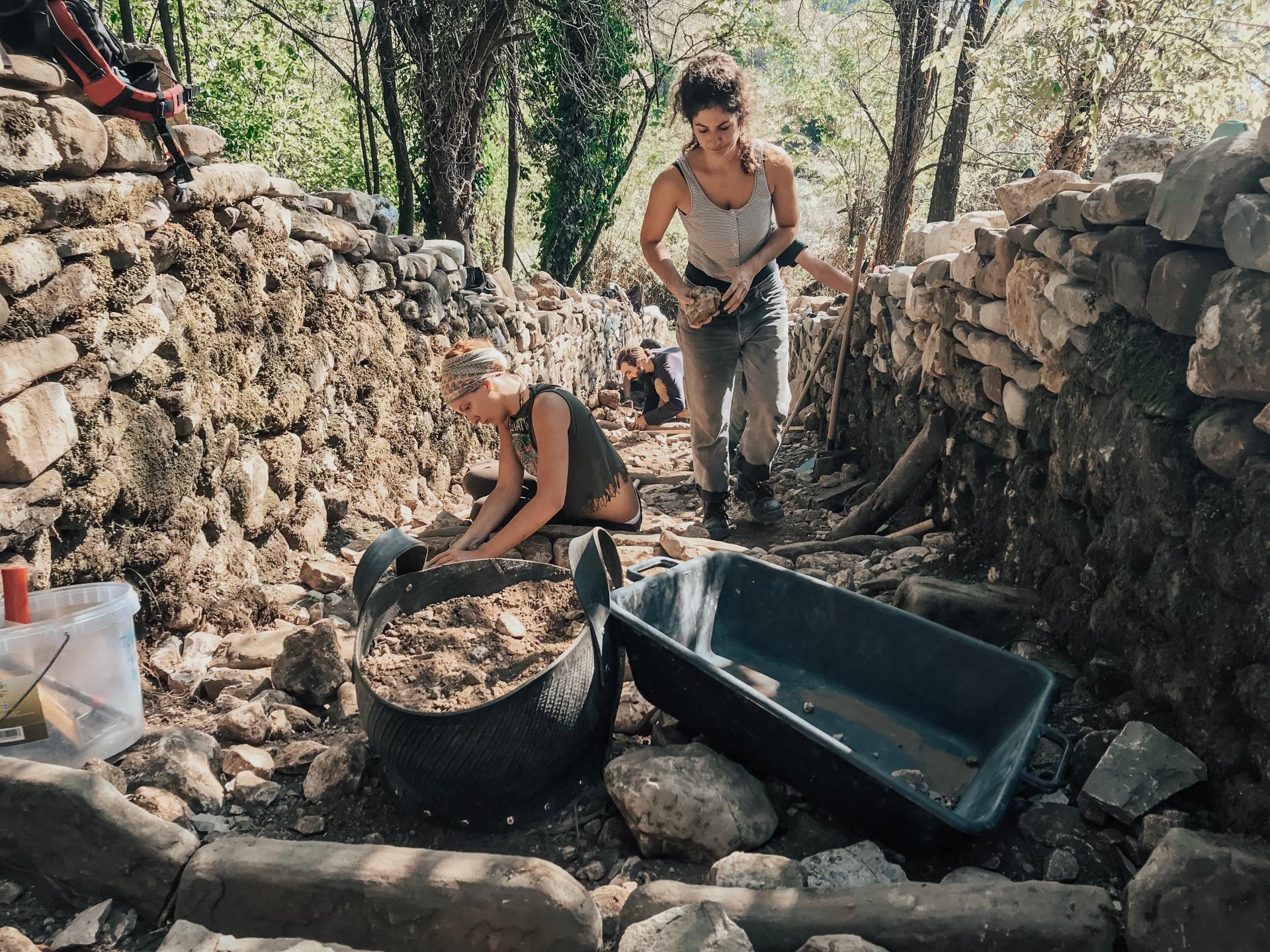
Nine apprentices from Greece, Serbia, Albania, and Bosnia worked for two months, under the guidance of three highly experienced stone masons-tutors, on the restoration of the 400m long cobblestone old pathway that leads to Plaka Bridge, a national monument and one of the largest single arched stone bridges in south-eastern Europe. Twenty-five workshop participants from the entire Balkan area joined forces with them during the twelve-day workshop.
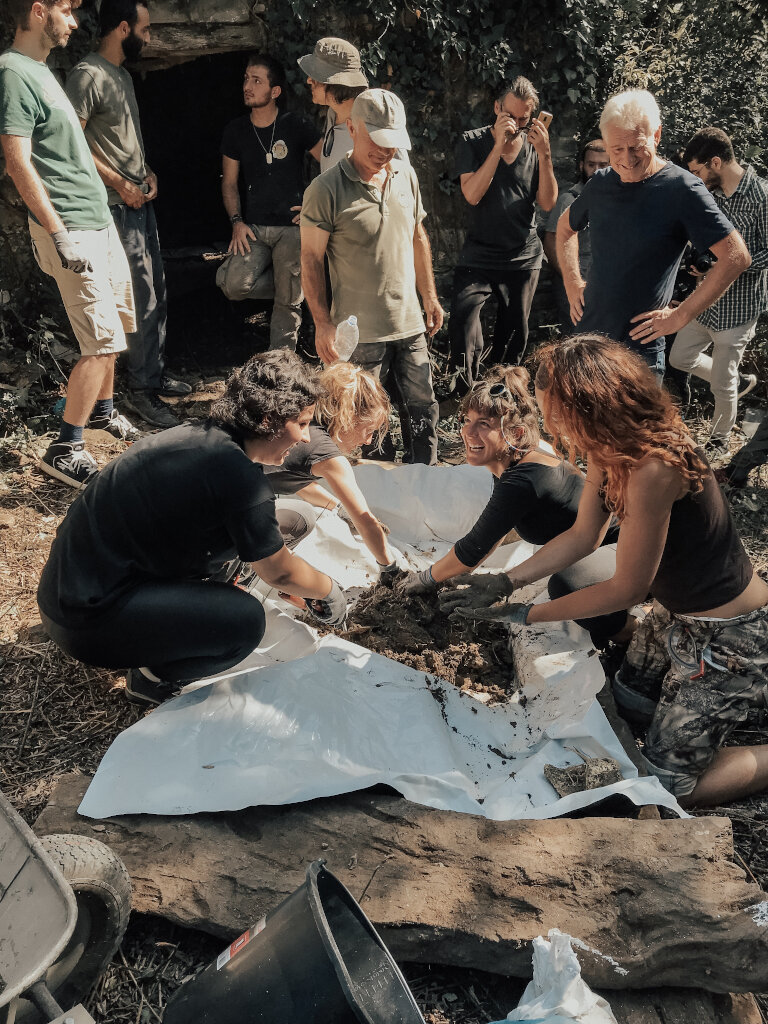
Moreover, this program included lectures given by renowned professors and professionals, as well as hands-on seminars and demonstrations, from extracting stone to preparing and applying lime and mud mortars.
Key objectives for sustainability
The building technique of drystone “kalderimi” used to be a common practice for local communities in rural areas. Thus, “Kalderimi X2” aspired to recover a traditional local knowledge on building techniques and materials, which -by definition- is adapted to the local cultural and environmental conditions.
Historically, such traditional knowledge has been central to the construction and maintainance of vast networks of trails and paths, the vernacular infrastructure that supported cultural landscapes all over the Balkans and the Mediterranean. Thus, the consolidation and dissemination of this knowledge, appears as key to the sustainable development of these territories, linking the question of economic and environmental equilibrium, to questions of identity and cultural values.
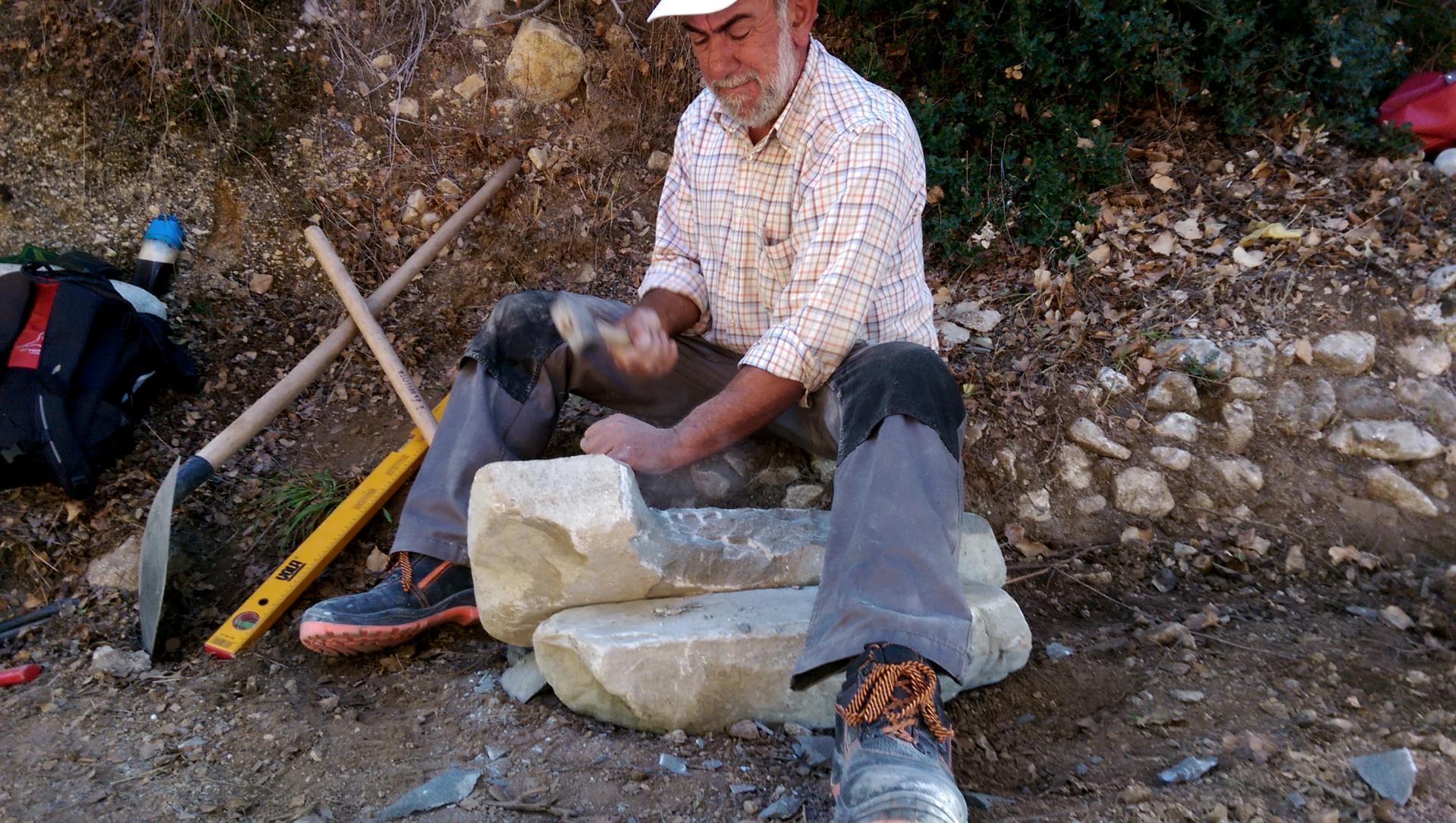
Traditional knowledge is of a practical nature. Hence, Boulouki selected three experienced masons, some of the very last that were able to demonstrate the building technique of drystone “kalderimi” and identified a paradigmatic case study of such craftsmanship; namely, the old pathway that leads to the bridge of Plaka. This pathway became the locus of a 'hands-on' learning experience with a strong focus on the question of sutainability from the perspective of traditional knowledge.
Thus the participants were introduced to the ecological features of dry stone building and traditional mortars, as well as their connection to the development of traditional systems of circularity and environmental management. Traditional tropes of sustainability were thus explored both in theory and practice, focusing on the links between traditional building and agricultural practices, the reuse of fallen fragments and the selection of appropriate additional natural materials, building-with-vegetation (rather than against it), low scale stone quarrying, and traditional water management.
Key objectives for aesthetics and quality
Being part of “Kalderimi X2” intended to offer a sense of belonging, connectedness, and the motivation to safeguard our collective knowledge.
The cobbled pathway reflects a certain residential organization and water management. It is also evidence of a traditional building technique that includes dry stone construction and the use of natural materials. Such a site - so called cultural landscape in UNESCO terms - captures the “long and intimate relationship between people and their natural environment”. There is a certain quality and pleasure in delving into and recovering the knowledge which has developed from experience over the centuries, is adapted to local cultural and environmental circumstances and is transmitted from generation to generation orally and by practice. More than that, the “gaggle” connected even more over the effort to come up with new structural solutions based on the acquired knowledge.
In addition, the “gaggle” of “Kalderimi X2” intended to highlight the intrinsic characteristics of an agro-pastoral cultural landscape, which derive from the qualities of the natural resources, the process, and the aesthetic result of manual work in the literal sense -the work done with hands- as well as the flora and fauna of the place.
Being in line with contemporary heritage conservation principles, Boulouki researched and understood the place, acknowledged the values –and among them, the aesthetic ones– of the agro-pastoral cultural landscape, identified the material elements which embody them and proceeded with careful and thoroughly planned interventions in a consistent manner.
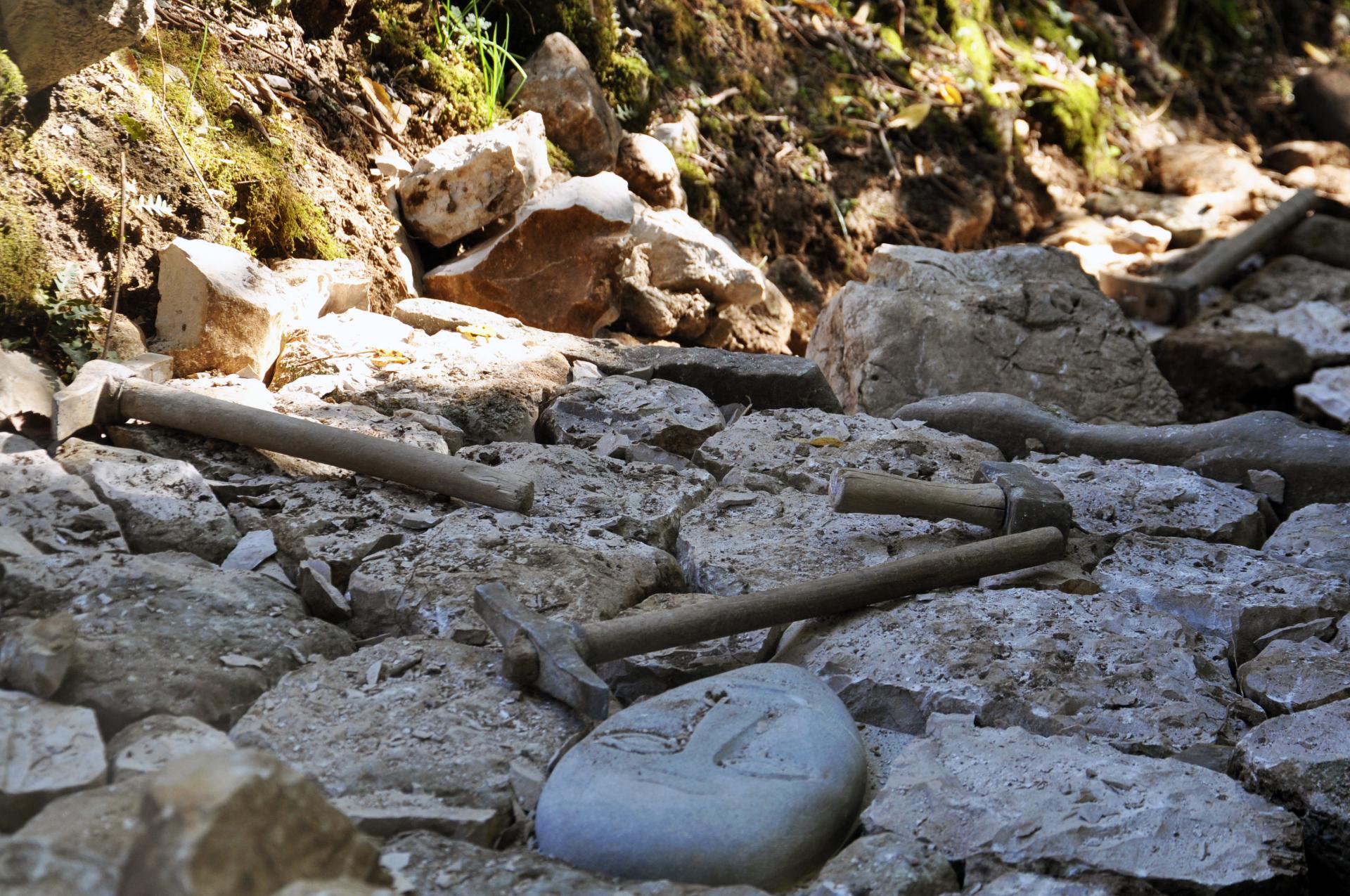
Worth mentioning is the collaboration with the sculptor Theodoros Papagiannis, professor emeritus at the Athens School of Fine Arts, with origins from the area of Tzoumerka. He carved local traditional symbols of prosperity and good fortune -a face, a snake, a bird and a cypress tree, a cross - on a few stones which were then embedded in the restored cobbled pathway.
Key objectives for inclusion
The experienced stone masons are at a late stage in their career, which makes the need to transfer their knowledge to the young ones even more urgent. At the same time, both older and younger masons are in a continuous search for the next construction project. Hence, one of the objectives was to motivate the masons to take part in this process of recovering knowledge in traditional building techniques and materials. To do so, Boulouki raised a fund to be able to make attractive job offers to the masons who would otherwise be employed in typical construction projects.
Another objective was to create an interdisciplinary learning experience for participants from the Balkan region. Nine construction professionals under the age of 45 were selected for the two-month apprenticeship: six with an active presence in the Epirus region and three from the wider Balkan region - namely from Serbia, Albania, and Bosnia. Twenty-five participants from Greece and abroad were selected for the intensive workshop, with nine positions reserved specifically for participants from other Balkan countries with whom Epirus shares the art of stone as a common heritage. The academic and professional background of the participants varied from the field of construction to conservation and the arts. Moreover, Boulouki raised another fund in order that Balkan participants could have free admission.
Finally, Boulouki sought to achieve the highest participation of local stakeholders with the focus on the ones who are usually excluded from such projects, namely the citizens, the ones who live, work, or have another interest in the area, children, men, women, and seniors.
Results in relation to category
“Kalderimi X2” was Boulouki’s first attempt to implement the concept of the two-fold educational scheme for professionals in the fields of construction, architecture, civil engineering, archaeology, environmental management, heritage protection and arts through an exemplary restoration project located in the Greek periphery. Essentially, it was a successful pilot project which has determined Boulouki’s project methodology to this day; conservation projects are seen as a learning opportunity for professionals in the relevant fields to work together and deepen their knowledge in traditional building techniques and materials, by bridging academic to traditional knowledge, engineers to craftspeople and global to local.
The project in numbers:
- a two-month professional apprenticeship combined with a twelve-day intensive workshop on dry stone masonry, and in particular the art of cobbled pathway,
- 400m. long restored cobbled pathway, 200m. of which were reconstructed,
- three experienced masons-trainers,
- nine construction professionals-apprentices under the age of 45; six with an active presence in Epirus region and three from Serbia, Albania, and Bosnia,
- twenty-five workshop participants from Greece and abroad; nine from other Balkan countries,
- 10 volunteers; among them seniors from the local community,
- 4 stones curved by a renowned sculptor; embedded in the pathway,
- 12 lectures given by renowned professors and professionals,
- 3 seminars and demonstrations in stone extraction as well as lime and mud mortars,
- 6 NGOs from Greece and abroad, who presented their work,
- a photographic exhibition from the archive of Spyros Mantas, a profound researcher of Balkan stone bridges,
- a photographic exhibition of the two-month apprenticeship spread in 6 different locations in the area,
- a film screening of “The Mountain Tears” (2018) followed by Q&A with its director, and
- a celebration dedicated to the elder stone masons of Tzoumerka and Epirus
How Citizens benefit
Starting from broader and continuing to more specific roles, children, women, men and seniors, informal groups and local associations, NGOs from Greece and abroad and young craftspeople/professionals in the construction industry who live and work in Epirus region were involved throughout the program, in a manner that was meaningful to them. They shared their memories and told stories, prepared, and offered local delicacies, co-organized events, and activities, built part of the pathway, presented their work and approach towards heritage protection and safeguarding, got trained and then trained others on preserving traditional constructions, techniques, and materials.
For starters, the memories and knowledge of the locals were a prerequisite to recover the technique of constructing “kalderimi”, hence, to safeguard it. The last carriers of this knowledge are in the final years of their professional lives, while in Greece and throughout the Balkan Region there is a lack of any formal education or training in vernacular architecture.
More than that, their active participation gave a louder message to the regional and national authorities that participatory culture-led interventions are a driver of positive change, sustainable development, and social cohesion. It also helped them expand networks and collaborations, which are valuable for the regeneration of this small place in the periphery of Greece. Thus, the positive response and contribution of citizens and civil society is what confirmed, to put it simply, that “something had to be done” and made Boulouki’s intervention relevant.
Innovative character
What makes this program innovative, is the combination of a restoration project with an educational program, which are implemented through a professional apprenticeship and an intensive workshop for architects and engineers, conservators, and artists. This dual format is mentioned in the program’s title “X2”.
As an educational program, “Kalderimi X2” incorporated all contemporary and most relevant didactic approaches; interdisciplinarity – including not only science but also arts – learning by doing, observation learning (social learning) and intergenerational learning.
What is worth mentioning about the relationship between the two educational schemes is that most participants were both trainers and trainees. Experienced masons trained the young masons, young masons trained the workshop participants and the opposite while everyone learnt from the lectures, seminars, demonstrations, and exhibitions.
As a restoration project, “Kalderimi X2” was steered by a team of professors, professionals, masons, and apprentices with an equal voice, it activated both academic and traditional knowledge and was addressed to both the authorities and the local community. It was designed and implemented collectively, bottom-up and top-down.