Hanzas Perons
Basic information
Project Title
Full project title
Category
Project Description
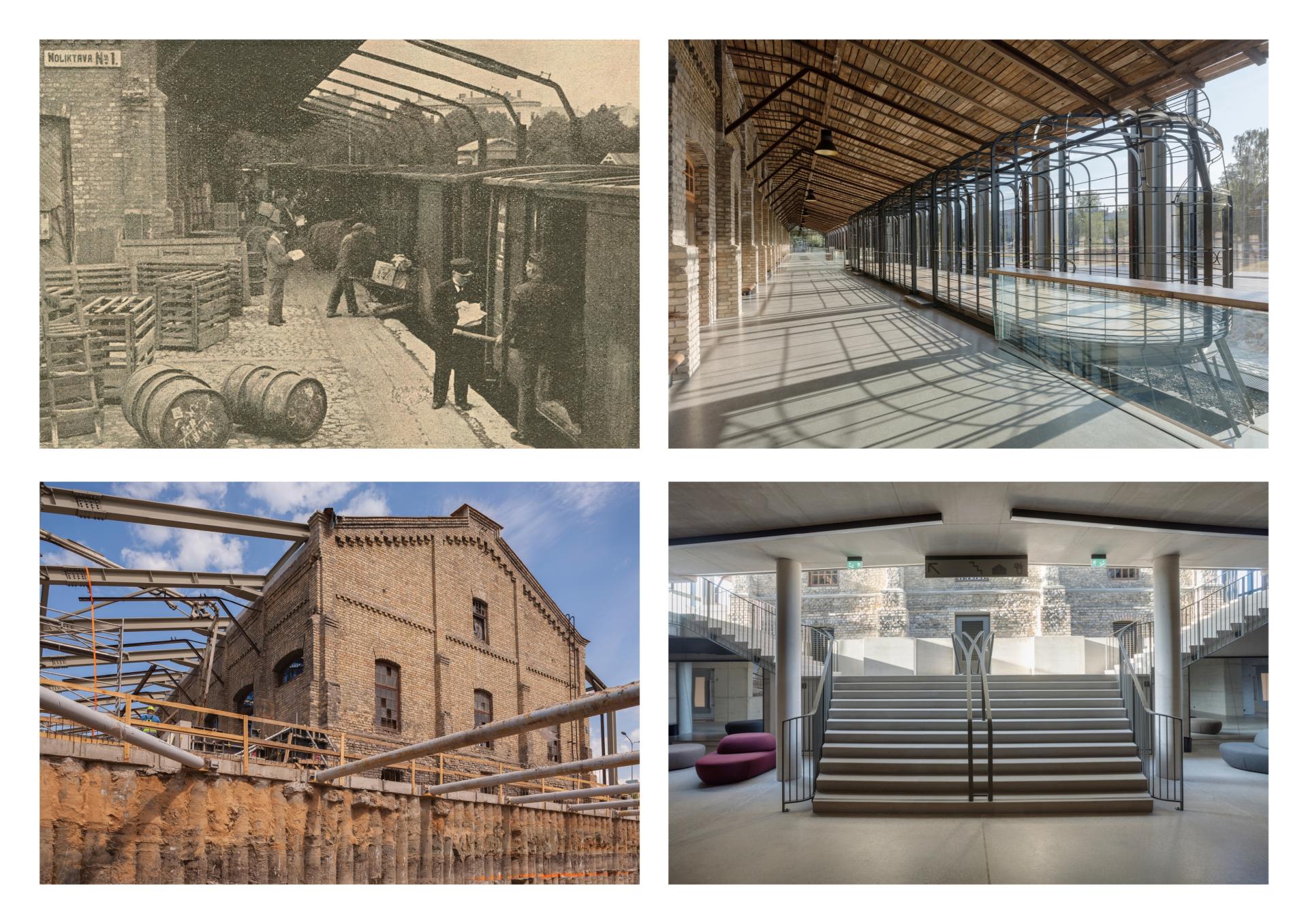
“Hanzas perons” is the former railway warehouse in Riga, repurposed as a multi-functional cultural event space. The existing structure is seemingly left untouched through the careful restoration of its historic patina and its envelopment in a glass structure, further complemented by contemporary details. It is a major development in Riga’s architectural and cultural cityscape and has already hosted numerous diverse happenings, starting the regeneration process of the whole “New Hanza” district.
Project Region
EU Programme or fund
Description of the project
Summary
The former warehouse building which dates back to the very beginning of 20th century is located in the area of former freight station on the edge of historic city center of Riga. Once it was an important logistics hub with six railway tracks and about 15 warehouse buildings but only this one has survived to the present day and – almost untouched, with beautiful brick walls, wooden beams, and many sliding doors and gates. With good intentions and efforts of owners, architects and builders the building is saved and upcycled to new event and culture venue, the largest private culture building in Latvia.
After the technical survey the conclusion was that the structure – both the roof and the brick walls doesn’t fit standards of building code. The concept was sophisticated and brave enough —to create a new bearing structure over and around the building.
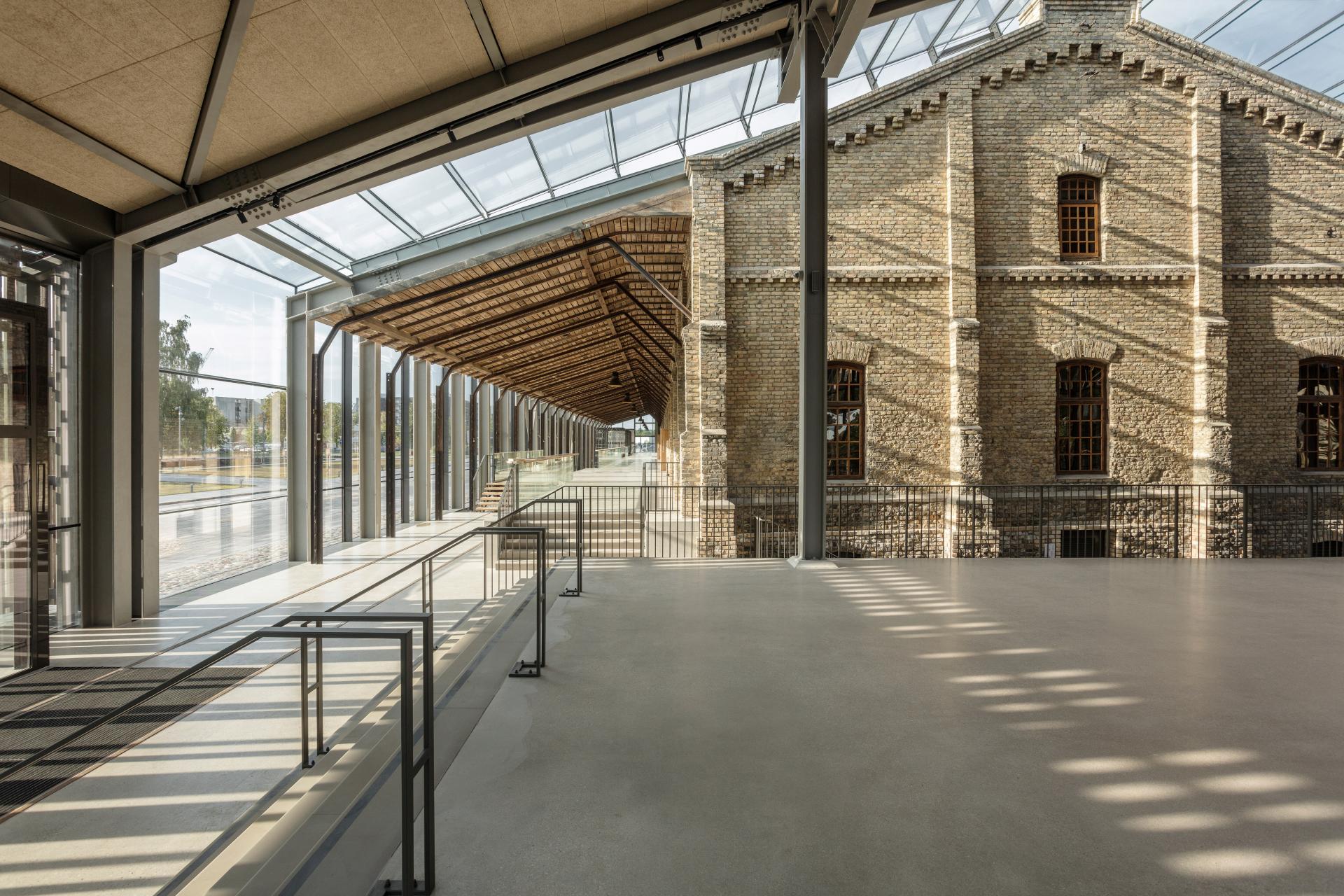
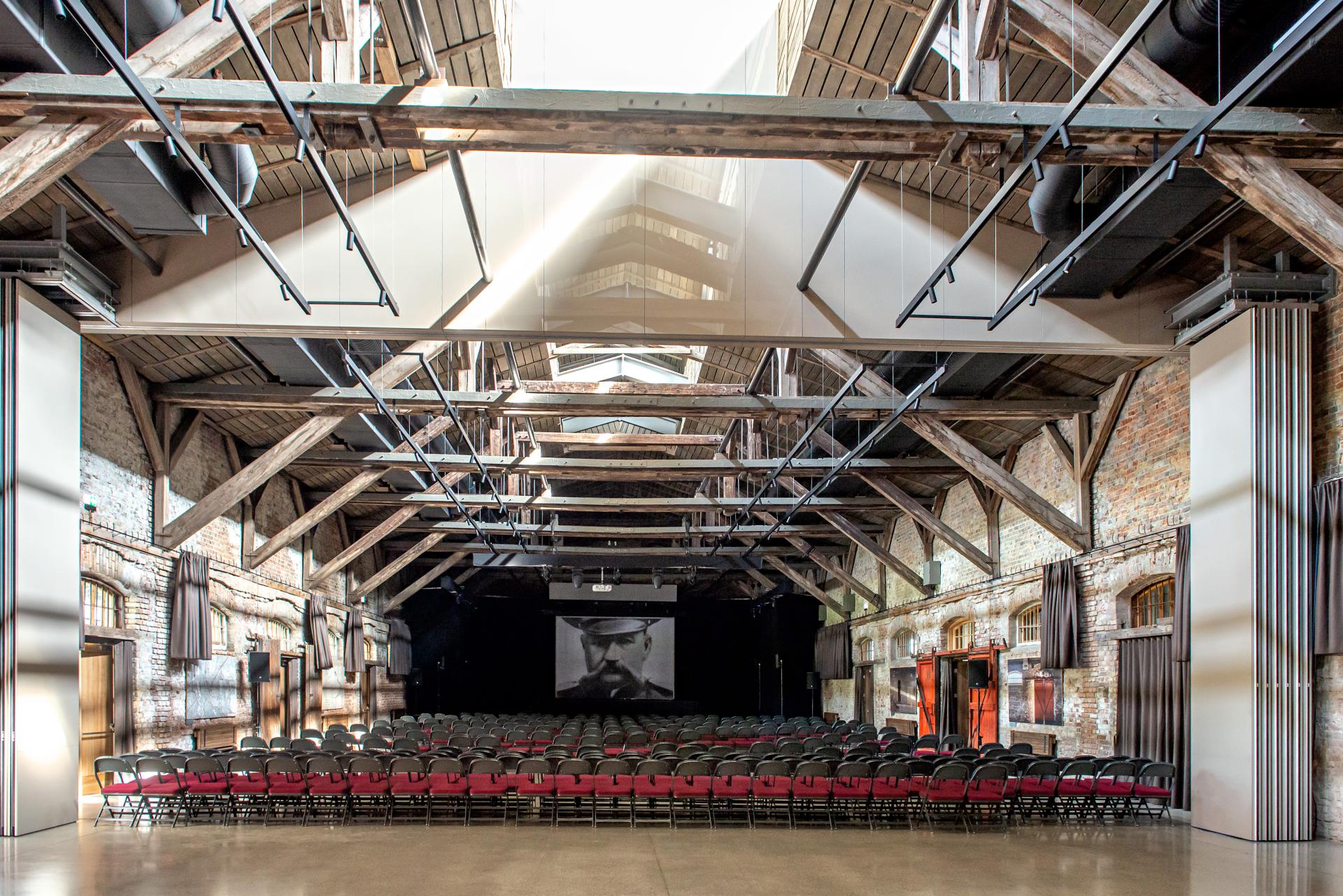
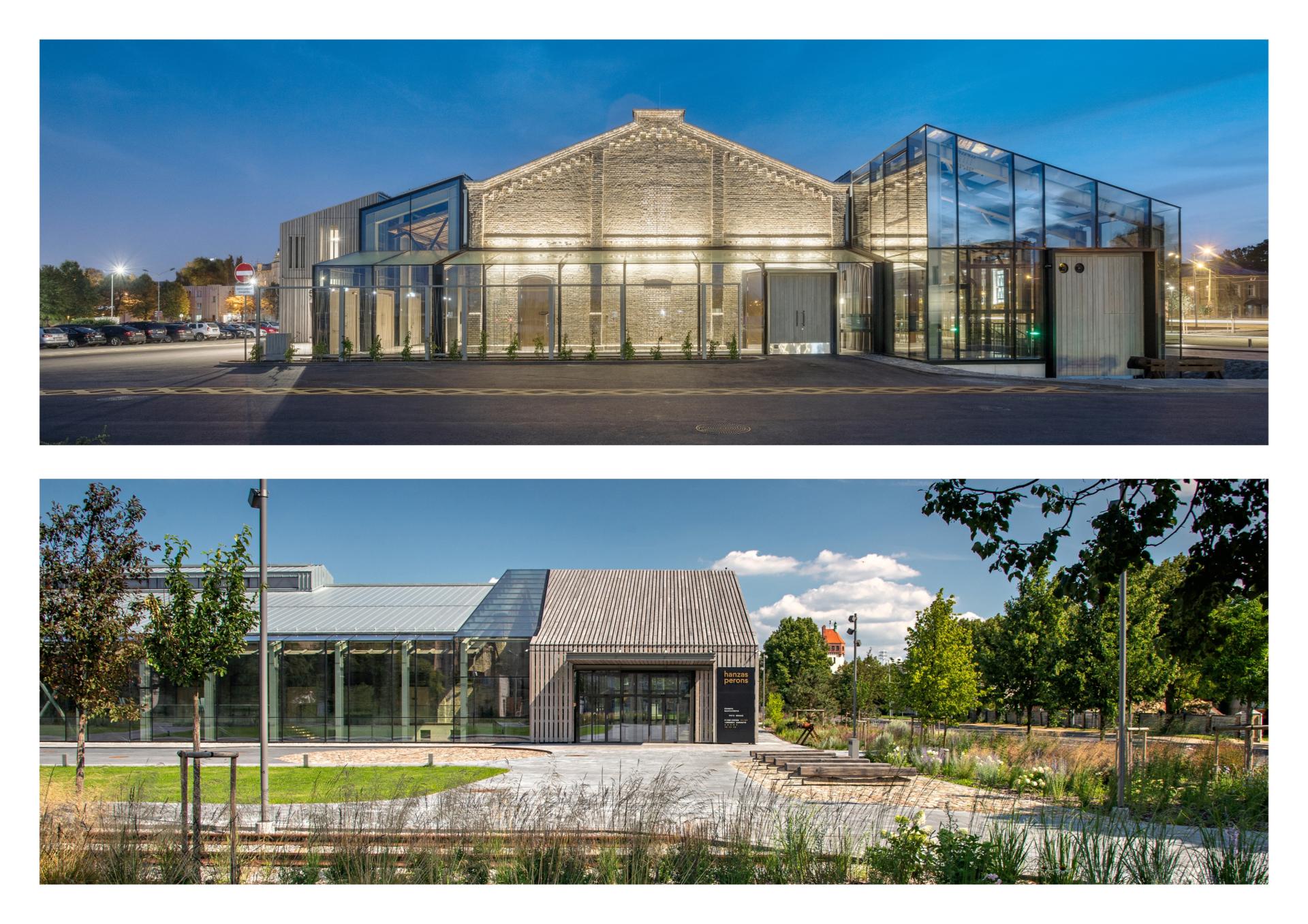
The result may seem controversial — the historic building covered and wrapped in the new coat made of steel and glass is hidden in fact. However, the biggest spatial value — 80 meters long and 15 meters wide column less hall is preserved in its whole, left almost seemingly untouched. Old jewel like structure made of brick and wood has become a part of interior.
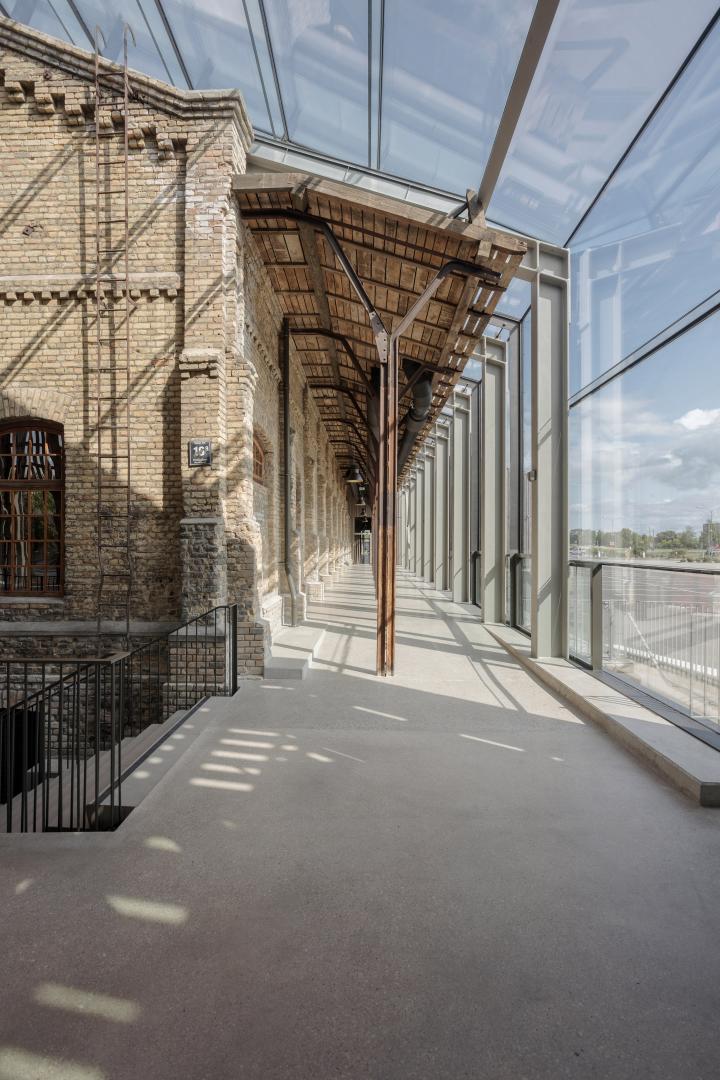
The concept of the coat helped to solve the additional spaces and service and technical premises in a very clear way. The roof of the warehouse formed a wide canopy on both sides covering the logistic platforms where the freight wagons approached on the one side and trucks on the other. Now both platforms under the canopies are turned to spacious lobbies.
Old warehouse upcycled to multipurpose venue — for concerts, exhibitions, banquets and other gatherings now stores and deals with the ‘goods’ of culture. Main hall of 1200 sqm could be divided in three separate spaces, allowing noteworthy flexibility.
Artis Zvirgzdiņš
European Union Prize for Contemporary Architecture — Mies van der Rohe Award, independent expert.
Key objectives for sustainability
One of the threats to the historical heritage of the site is the fact that the building stands empty without function and the energy for its maintenance is wasted. By allocating new public functions to the building, resources are used efficiently and the building becomes environmentally sustainable. We tried to create as multifunctional building as possible. A year has passed since the opening of Hanzas Perons and judging by the record of its scheduled activities (during the six months until the beginning of the Covid-19 pandemic), the building was visited by approximately 113,000 (one hundred and thirteen thousand) guests.
In order to meet the energy efficiency requirements (as in places the walls are only 38cm in thickness), the historical building was enveloped in a glass structure with a doubled plank facade for shading. A wooden openwork cladding facade was created to create shade in the south lobby.
The restored historic platform structure of the building allowed for a technical underground to be installed, which provides the building with the necessary utilities. The air inflow to the hall and the platforms comes from the technical underground via under the benches in the hall. A part of the outflow ventilation system is hidden under the hall’s wooden ceiling.
The hall (the original warehouse) does not contain heating elements, as it is not prone to heat loss. The hall is used periodically, hence it is heated or cooled before events, using the air circulation system. The overall idea of the ventilation system and the double-roofed construction of the building presented the opportunity to leave the ceiling of both platforms and the lobby clear of any ventilation pipes, consequently highlighting the historic details.
Key objectives for aesthetics and quality
The architecture of Hanzas perons seeks to balance authentic elements, innovation, and practicality, by compelling the ‘new’ elements to highlight or harmonize with the ‘old’ ones.
The old warehouse facades were created in the eclecticism brick-work style, following the architectural traditions of the warehouse’s era. The end facades are the most abundant stylistically, one of which is the main postmark of the new building as well as the architectural emphasis in the south lobby.
The renewed brick and other architectural elements of the original factory makes the interior of Hanzas perons a neutral background for widely varying event formats. The architectural idea was to maintain the truly broad and spacious feeling of the warehouse while exhibiting the brick walls and ceiling. Therefore a decision was made to use a uniform floor material in all publicly available spaces – a neutral grey Teraco concrete flooring, which creates a united gamut of feelings together with the steel architecture and the historic details. Furthermore, hydraulically unfolding benches are installed around the inner perimeter of the hall and on the west platform, to mimic historic wooden benches.
The original warehouse interior is left empty, thus creating a multifunctional event hall (1230 m2). The hall can be divided into three smaller rooms (460m²/310m²/460m²) with the help of acoustic walls. The hall is fitted for 1100 seats or a standing room for 2200 people. A new extension in south part of the building shows a lobby on the 1st floor, a visitor wardrobe and toilets on the basement floor. The east side of the building has a new two-story space with a basement fitted with tech. utility rooms. The new space is stylias an asceti shed with narrow windows and a vertical grey plank cladding.
Key objectives for inclusion
Hanzas Perons as a cultural building is not exclusive - the range of available events and the program is diverse in terms of interests, scale and prices. Hanzas Perons is truly open to everyone.
When planning the landscaping, the vision of the development of the quarter was taken into account and a concept was sought that would highlight the historical substance of the former goods station in the context of the urban environment. The green area created along Pulkveža Brieža and Hanzas streets separates the movement of pedestrians from the street, providing an opportunity to move freely near the building. The area between Pulkveža Brieža Street and the building serves as a place for organizing events and hosting markets during the summer season.
Integrated accessibility solutions have been developed for the building and its territory. Multiple ramps connect the outdoors and indoors, overcoming the difference in levels to enter the building.The lift provides easy access to the basement, with a toilet for people with special needs, as well as a wardrobe.
The building is the largest cultural venue space in Latvia that has been built after the Restoration of Independence at private expense.
Results in relation to category
The goods station warehouse in Skanste is a witness of the “golden age” before the First World War when industrial Riga was one of the largest and most developed port cities in Eastern Europe.
Just recently this building, one of the last witnesses to Skanste's industrial history, was to be demolished. The design vision for the reconstruction of Hanzas Perons was based on its preservation in its current stage of ageing while transforming its function to cultural venue space.
The century-old building, once destined for destruction, has now become the guiding principle for the development of the whole district. Its volume has been left empty and intact, allowing culture and public life to flow in, opening up the charm of this industrial area, once inaccessible to the townspeople.
At a time when the city of Riga has more than 1,000 slums and the preservation of architectural monuments is under threat, Hanzas Perons is a successful example of how an industrial architectural heritage site could find a new application. The old building has been given new life, with new, accessible functions, becoming available to the general public.
Adaptive reuse allows the preservation of local values and the creation of new ones. It preserves the cultural heritage, prolongs the life cycle of the building and ensures less resource consumption. The building can also be proud of the large number of materials produced in Latvia. During the reconstruction, brick walls, wooden roof construction and original 19th century curved rail canopies were restored using historical construction techniques.
How Citizens benefit
A year has passed since the opening of Hanzas Perons and judging by the record of its scheduled activities (during the six months until the beginning of the Covid-19 pandemic), the building was visited by approximately 113,000 (one hundred and thirteen thousand) guests. The venue is enjoyed by event organizers and artists and, most importantly, guests. The building itself can also be seen as a kind of performance that has become a source of knowledge for the public in the field of cultural heritage preservation.
As a cultural space, Hanzas Perons serves as an object that forms a sustainable community. A wide range of artistic, cultural and educational activities help to build social cohesion and develop a shared sense of belonging.
Innovative character
Hanzas Perons projects these characteristics:
1.Historical Riga Cargo station in it’s new appearance and function serves as pilot project for the new future multi functional development in this area – New Hanza.
2. The existing building is given new life with a completely new, accessible function, accessible to the widest reach of the public.
3. Preservation of the historic building, that is not a officially listed building, contributes to a broader understanding of the preservation of cultural and historical heritage.
4. The building can also be proud of the large number of materials produced in Latvia. During the reconstruction, brick walls, wooden roof construction and original 19th century curved rail canopies were restored using historical construction techniques.
At one time, freight trains stopped at this station, connecting various regions of Latvia through Riga or running to distant cities in the East and West. The "Ghost Train", located on the station platform, serves as a cafe during the events. The silhouette of the wagon is made of openwork metal constructions, which are joined on a metal platform frame, attached to the running gear of the original Riga Wagon factory (RVR) wagon.
5. The building is the largest cultural building in Latvia after the restoration of independence, built by private funding.