Magnolia Restaurant
Basic information
Project Title
Full project title
Category
Project Description
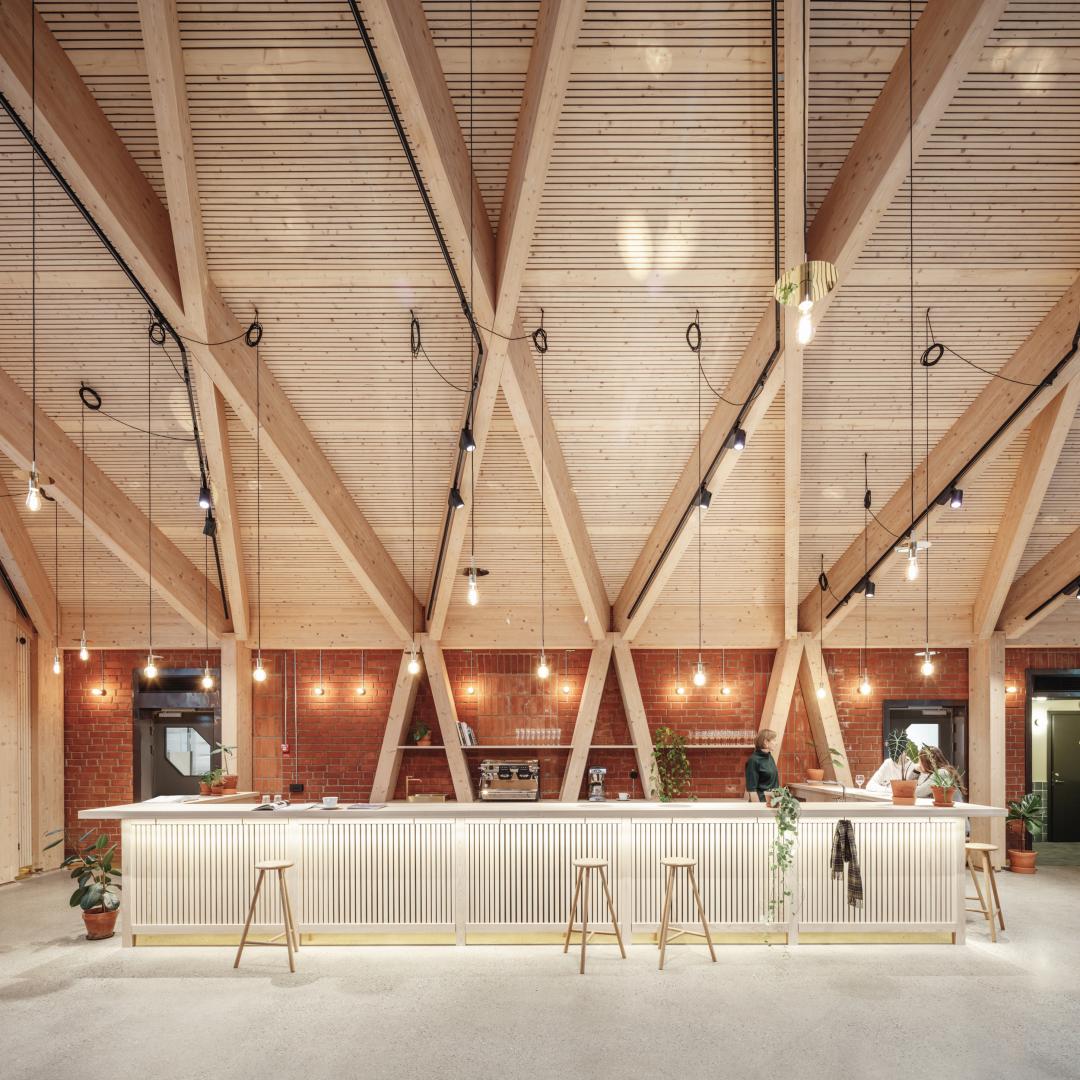
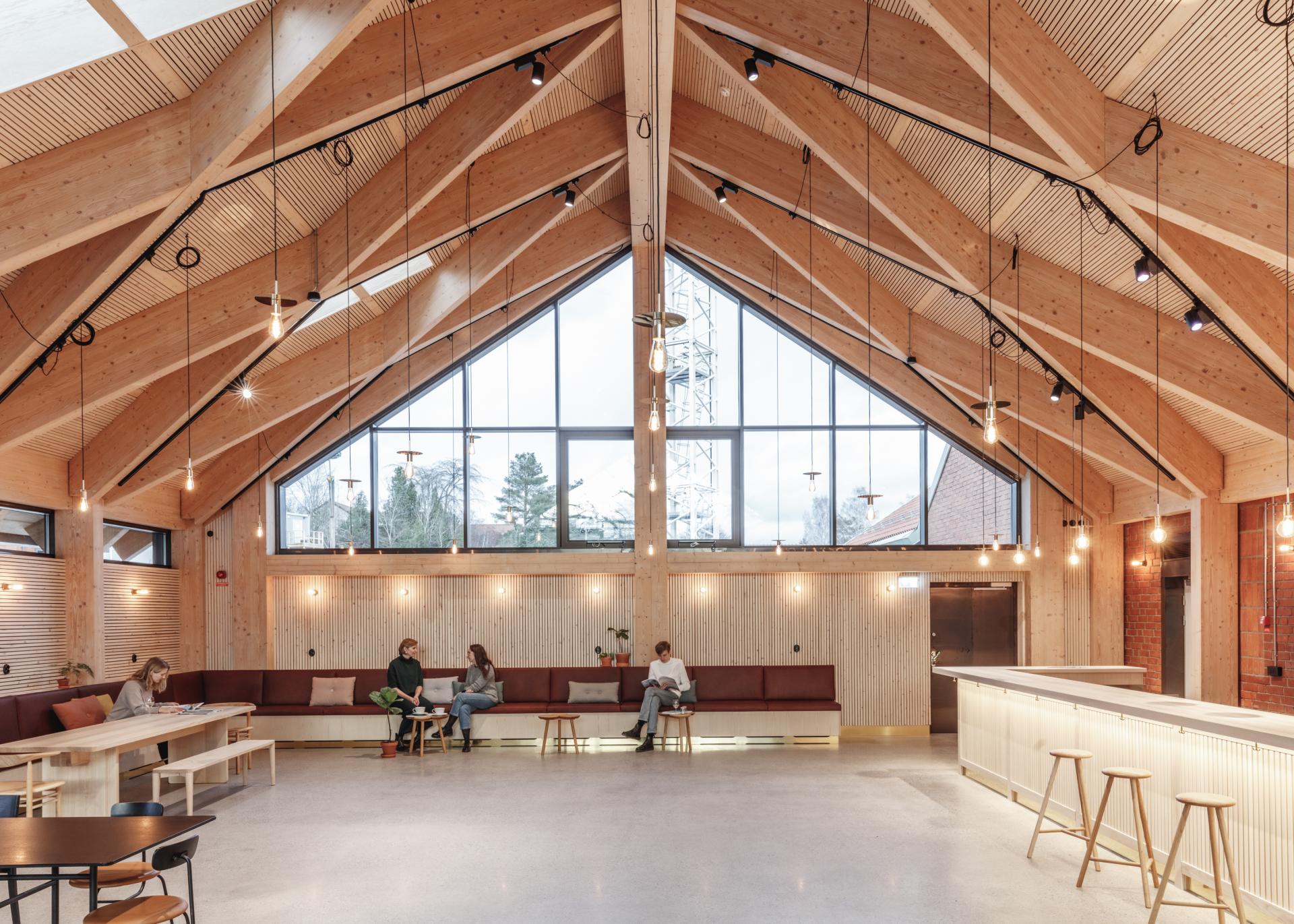
The extension of the Magnolia complex is designed as part of an ongoing urban development of Stora Sköndal in Stockholm. It will serve both as a restaurant and as a meeting place next to the new local square. Created by using wood as the main material it generates harmony. It ties the large open space together and contributes to a warm and welcoming atmosphere
Project Region
EU Programme or fund
Description of the project
Summary
The entire district of Stora Sköndal in southern Stockholm is currently undergoing an extensive transformation. During the first stage of the urban development, a new main street and a local square will be formed. Kjellander Sjöberg was commissioned to design a vibrant meeting place by the new square, a building with a flexible programme serving as a restaurant and a gathering point.
The project comprises a redesign of the existing brick building of the Magnolia complex and reorganizing the existing large-scale catering kitchen to serve two sides: a large canteen for an elderly care centre, for students and the public as well as a new à la carte restaurant. Core values from the design process that can be identified are: open, informal, sustainable, light and genuine.
Key objectives for sustainability
The material sustainability is a main strategy aiming to minimize use of resources and climate impact by making smart material choices. Besides the preservation of building elements, new construction is made of timber to minimize carbon dioxide emissions and the overall ecological footprint. The starting point of the design has been the fact that the long-term sustainability is ensured by providing opportunities for citizens to engage and interact with their local environment. The aim is also to inspire, engage and create incentives for leading a climate-smart lifestyle.
Key objectives for aesthetics and quality
The restaurant is acting as a vibrant and illuminated backdrop to the new square as well as create a main entrance to the Magnolia building with all its functions of a health care facility and a university college.
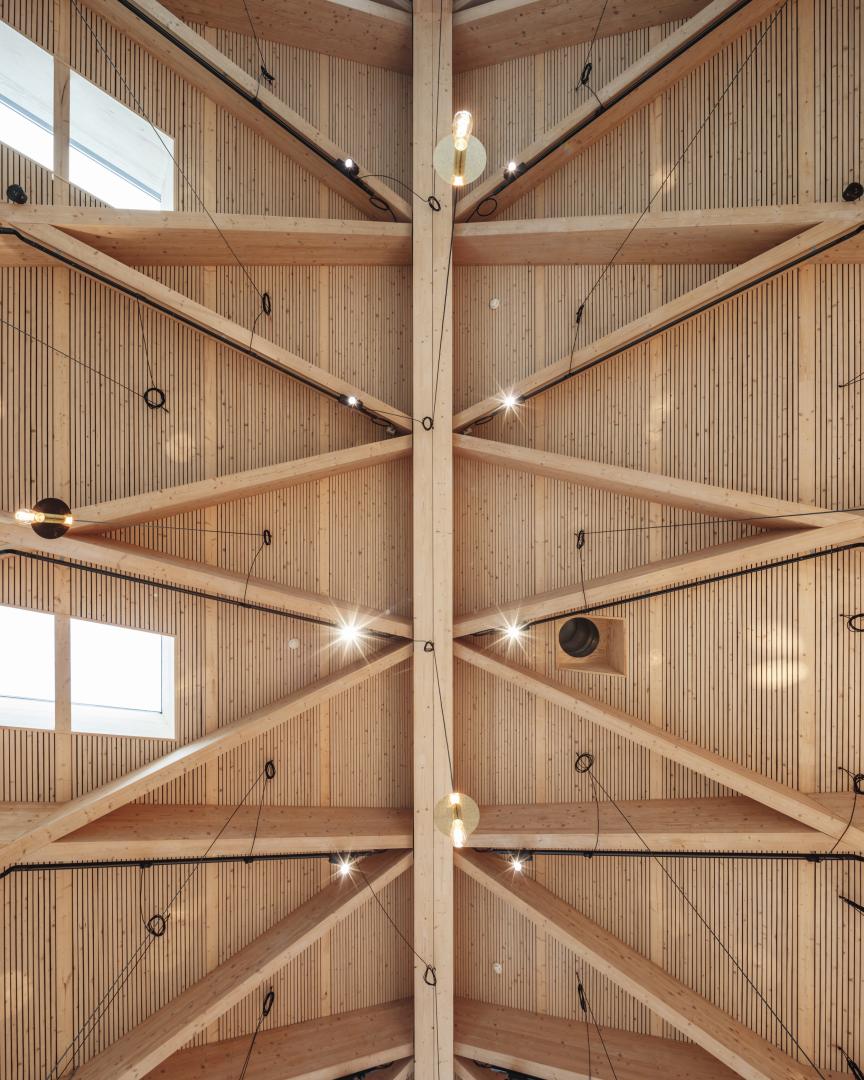
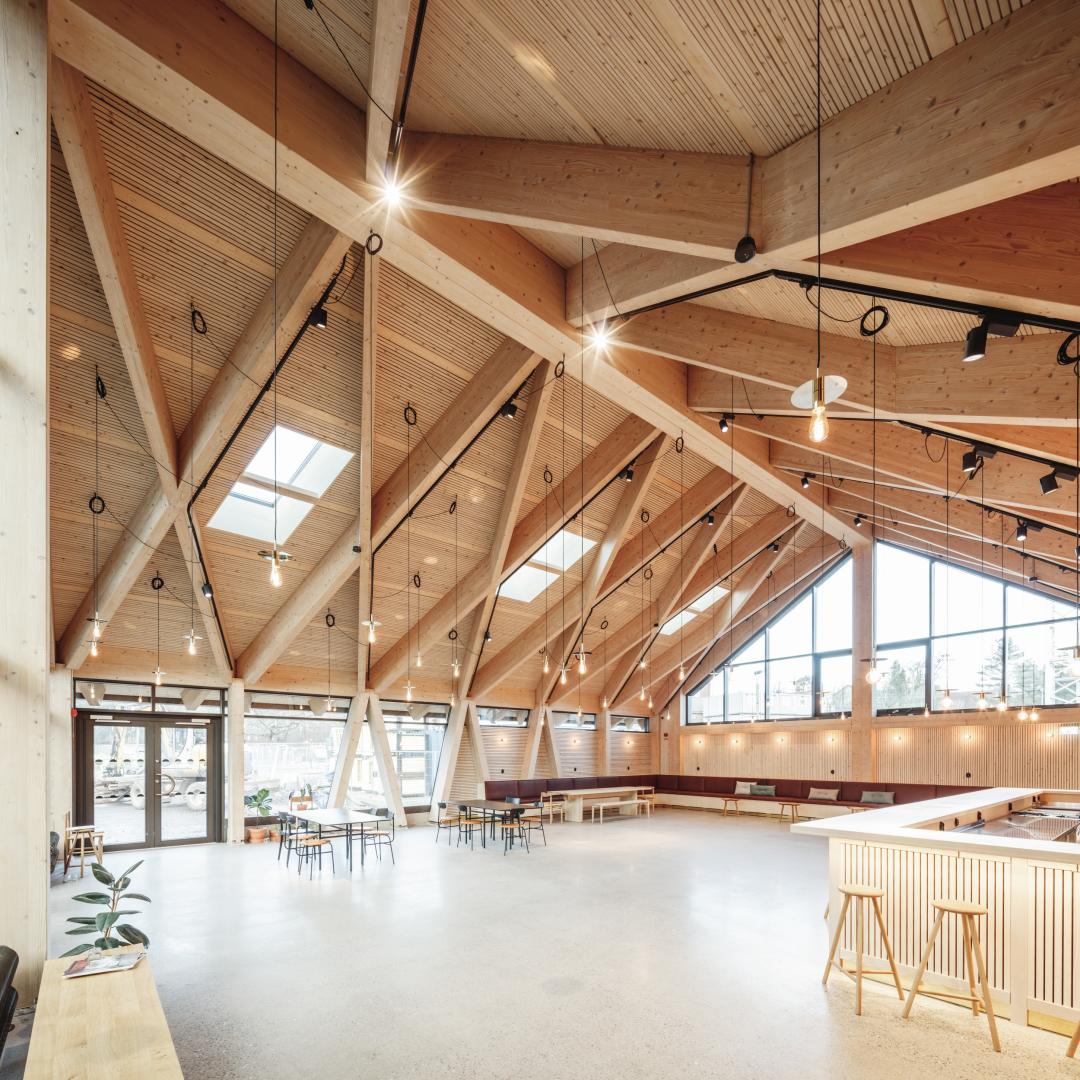
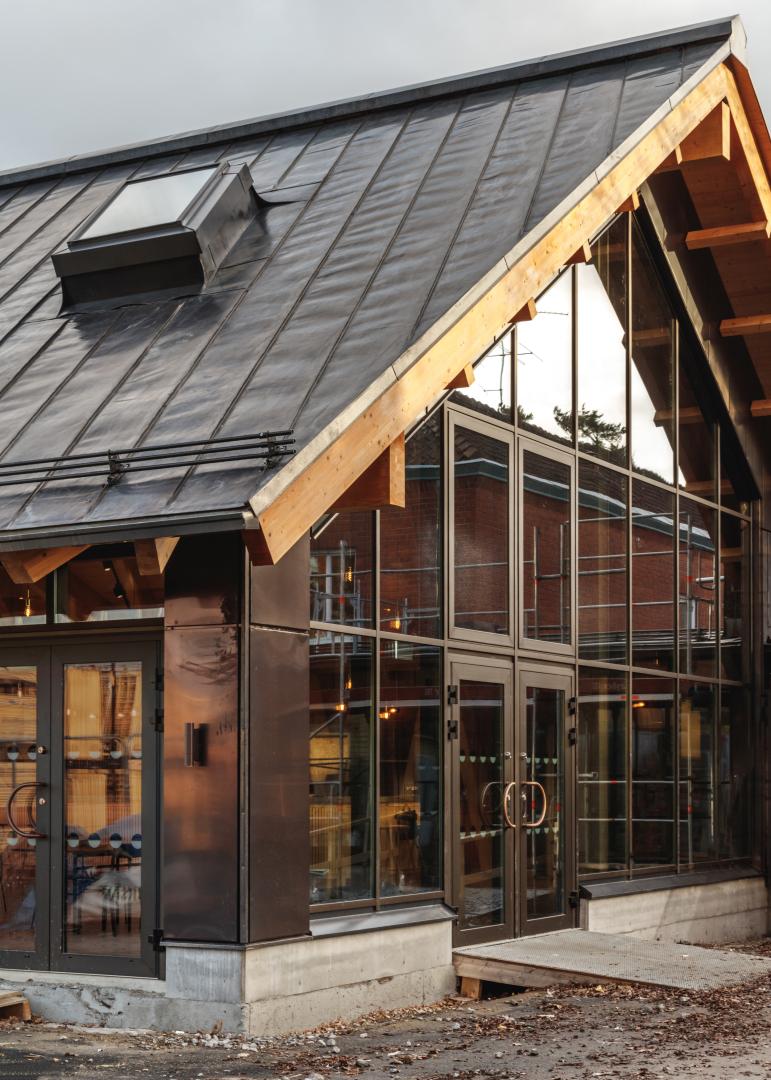
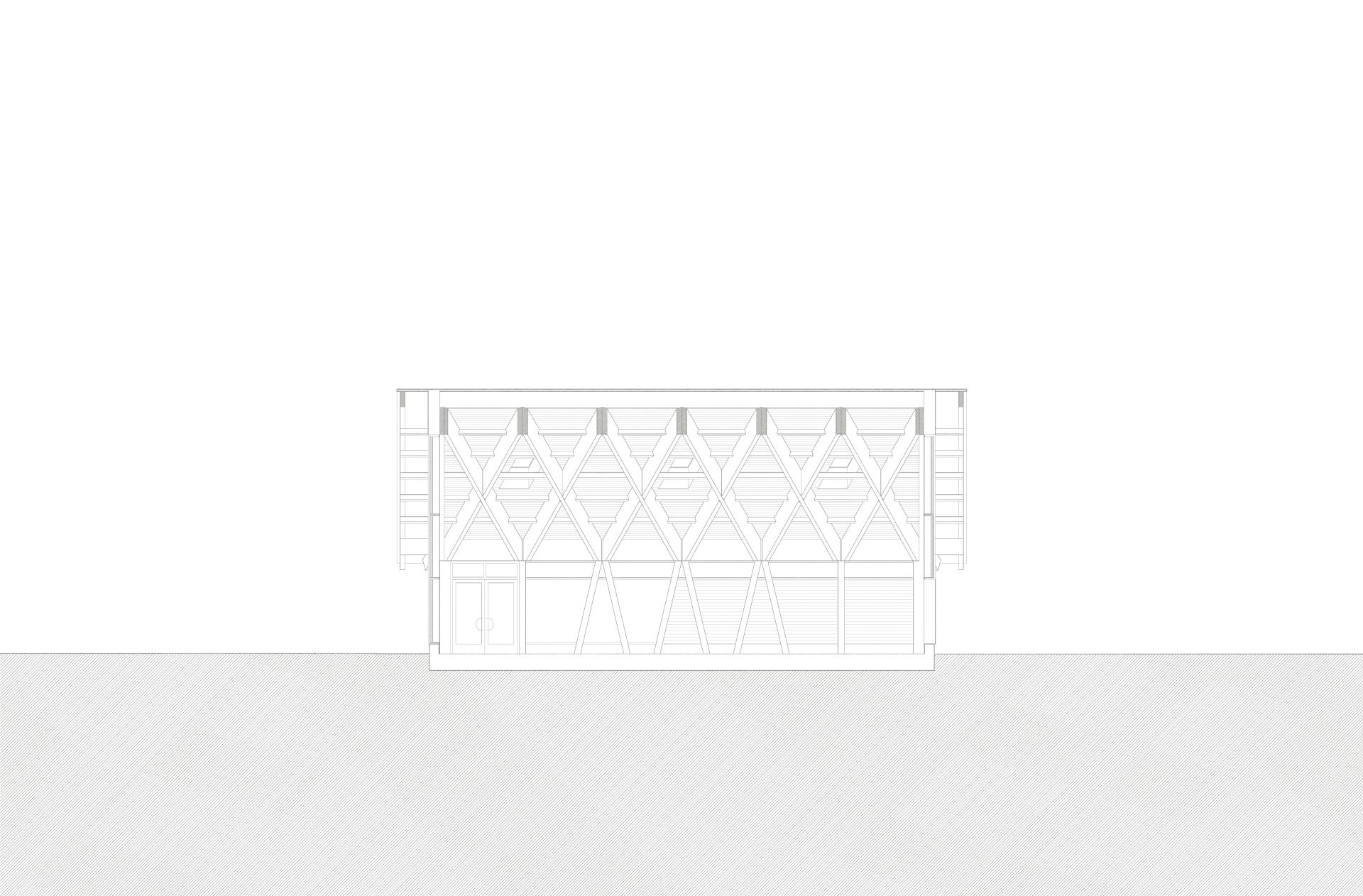
The form of the extension is simple; a generous roof with overhanging eaves echoing the serial roof structure of the existing Magnolia complex. The structural frame of the extension is made of prefabricated laminated timber elements, loadbearing columns and beams securing shear and lateral stability. The diagonal form of the carcass constitutes the unifying element providing the building with its distinct characteristics and detailing as well as creating a subdivision of the space. The floor is made of polished cast-in-situ concrete.
Key objectives for inclusion
The restaurant will be a new gathering place in Stora Sköndal accessible to everyone at a well-designed new square in a good sunny and wind-protected location. While the restaurant prepares and delivers meals to the Stora Sköndal foundation's elderly care centre and more, it is also the district's new oasis. Both a place for festive meetings and family dinners. This building extension is designed to activate all citizens.
The common vision for the entire district of Stora Sköndal is to develop a varied and active neighbourhood with strong natural values and biological diversity where old cultural buildings are preserved. The program seeks to generate a physically and socially inclusive urban environment with new connections enabling for both private and public meeting places to create vibrant and social urban spaces.
Results in relation to category
The Magnolia restaurant functions as a neighbourhood centre and as a bridge between the older surrounding architecture and the newly built residential blocks. People of all ages, from all backgrounds can hang out in this meeting place. The restaurant extension is laid out to work as a communal space with a canteen and a bar, and an adjacent smaller volume forming a new entrance to both the restaurant as well as the whole Magnolia complex. The individual spaces can be kept open or closed separately, enabling different kinds of use during the day. To maximize the flexible usage, the movable glass partitions can be opened towards the square. The exterior spaces blend with the interior of the Magnolia restaurant. The project is designed to house different kinds of events with various seating arrangements, allowing the functionality to be altered and developed over time.
How Citizens benefit
By taking a wide view on urban planning, involving different parties and through the collective work process, the development program for the entire Stora Sköndal addresses various aspects within a joint vision. The Magnolia Restaurant is one piece of a larger urban fabric. The operations in the area were established in the 1890’s and are run by the land owner Stora Sköndal, a non-profit foundation working with social support, healthcare, education and research. To enable future development of their services, Stora Sköndal has initiated re-programming of the area together with the City of Stockholm. The new program implies a holistic approach and investigates the possibilities of building 4000-6000 new homes and adding 1000-2000 new work places, public areas such as parks and squares, spaces for health care, education, culture and commerce. An early stage dialogue was held with representatives of affected interest groups. The program for Stora Sköndal was on display for a public hearing during 2017.
Innovative character
The project as a character of innovation in terms of re-usage and upcycling of previous building volumes. The result is a public building extension in prefabricates and laminated timbre structure. A construction in line with the innovations of the wood industry. The existing building from the 1960s with an add-on made of timbre, glass and copper creates a contemporary and welcoming unity where generations can meet.
In addition, allowing a newly built structure to evolve over time with the engagement of the citizens is a strategy that will allow for a rich socioeconomic variation, creating an urban neighbourhood which is open and attractive for all.