Civitas Sacra Sibenik
Basic information
Project Title
Full project title
Category
Project Description
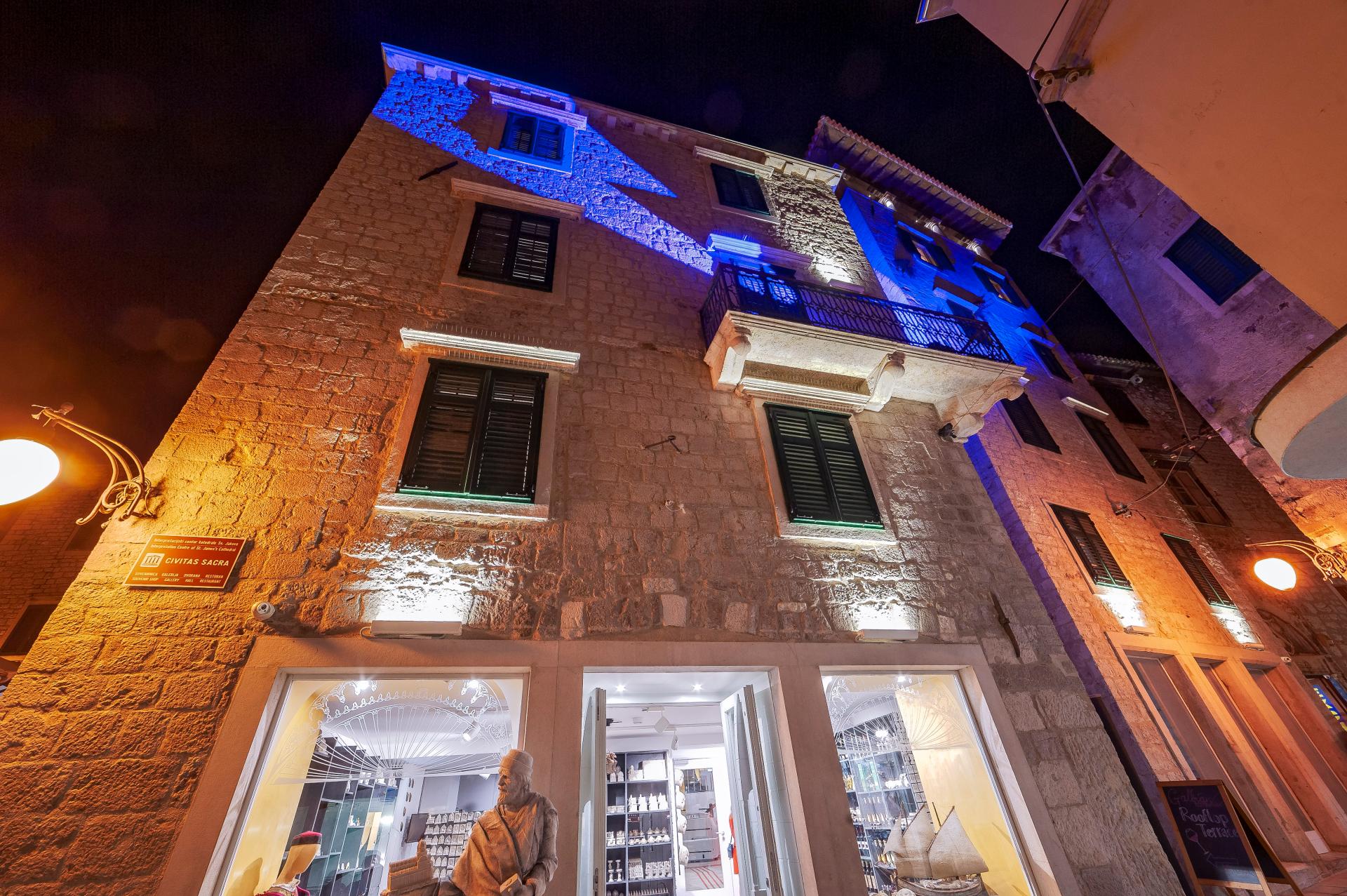
The multifunctional Interpretation center "Civitas Sacra", opened in May 2019, is based on the transformation of the Cathedral of St. Jakov from a partially accessible UNESCO World Heritage site to a highly attractive cultural and tourist attraction available to the general public and local community - all in the service of improving the economic (tourist) development of the city of Sibenik, implementing the principles of sustainability, inclusion and high aesthetics.
Project Region
EU Programme or fund
Which funds
Other Funds
European Regional Development Fund
Name of the Call for Proposals: Priprema i provedba integriranih razvojnih programa temeljenih na obnovi kulturne baštine (Preparation and implementation of integrated development programs based on the restoration of cultural heritage)
Year: 2015
Name of the project proposal: Integrirani program "Civitas Sacra" - Unaprjeđenje turističke ponude Šibenika temeljene na valorizaciji kulturne baštine katedrale sv. Jakova i palače Galbiani (Integrated program "Civitas Sacra" - Improving the tourist offer of Šibenik based on the valorization of the cultural heritage of the Cathedral of St. Jacob and the Galbiani Palace)
Project implementation: 15/09/2016 - 1/05/2019
Description of the project
Summary
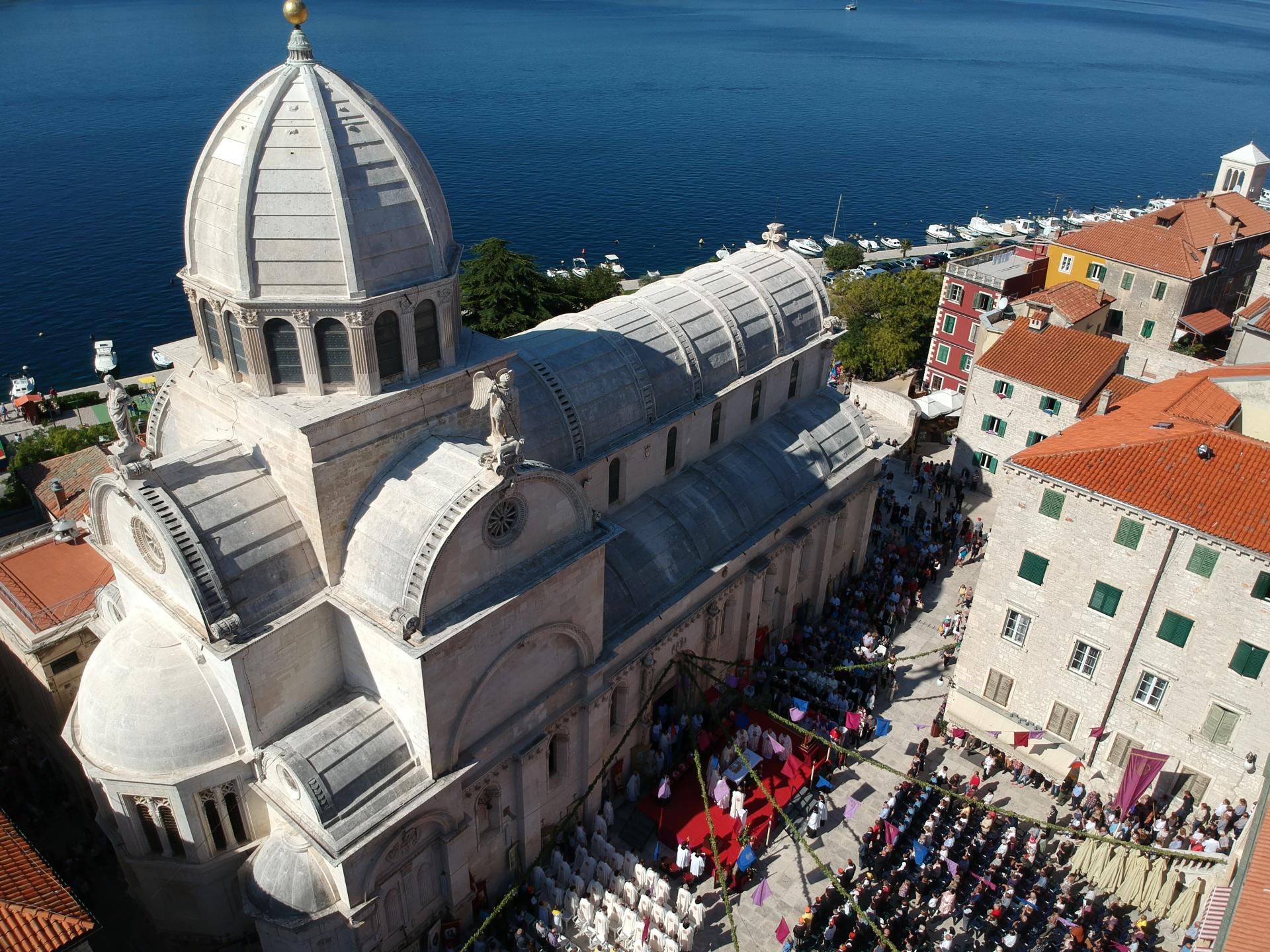
Civitas Sacra is based on the cultural heritage of UNESCO World Heritage site the Cathedral of St. Jakov and Galbiani Palace and the old town of Sibenik (both protected as national significant cultural assets) with the general goal of transforming cultural heritage into a sustainable economic resource of Sibenik. The Cathedral of St.Jakov is a generator of a large number of (tourist and pilgrimage) arrivals in Sibenik, due to its extraordinary values. However, thanks to the high attendance, there is a danger of its degradation and negative impact on the stone structures. The possibility of introducing new interpretation elements within the cathedral is not allowed due to strict protection conditions. In order to adequately educate the public about the Cathedral and preserve its universal values for future generations, it was decided to reconstruct the existing dilapidated building of the Galbiani Palace in the interpretation center in accordance with the needs of the local community/general public and modern trends in aesthetics, sustainability and inclusiveness; to restore, digitize and exhibit sacral cathedral exhibits that had not been publicly available and to tell the story of the cathedral with modern museological and multimedia aids. Special attention was paid to the interpretation center becoming a development point of the Old city of Sibenik by: a) providing the opportunity to keep visitors in the Old town and to offer them the opportunity to enjoy authentic cultural heritage and local offer; b) giving the possibility of buying indigenous products (gastronomic-oenological offer, an authentic souvenir); c) providing the possibility of holding professional gatherings in the multimedia hall and the possibility of holding workshops and exhibitions for citizens in the gallery space. The space was designed by local designers who, as citizens and users of the Old town, had the best insight into the needs of the local community (Structor Ltd and Kocka Ltd)
Key objectives for sustainability
Interpretation center "Civitas Sacra" (further: ICCS) is situated in previously neglected and dilapidated Galbiani Palace in the center of the Old town of Sibenik. Reconstruction of the existing facility, instead of building a new one, significantly reduced the carbon footprint. Also, by founding ICCS, visitors are now systematically redirected to the contents in the interpretation center. By retaining the large influx of visitors in Cathedral, the risk of degradation and negative impact is significantly reduced, is thus preserving the Cathedral for future generations. A heat pump, high-energy efficient equipment and LED ambient and general lighting of low consumption have been implemented in Galbiani Palace, as well as natural materials - stone and wood - used for interior decoration. Instead of concrete, mezzanine structures are also made of wood. Multimedia solutions have built-in motion sensors, which means that they are switched on exclusively by touch, and otherwise they are in stand by mode and thus rationalize energy consumption. The reconstruction of the Palace has achieved a high degree of thermal insulation by installing quality exterior carpentry with extensive insulation of the exterior walls and roofs. Instead of making replicas and consuming resources, wooden and textile exhibits were restored and exhibited in controlled conditions. The ICCS has a restaurant facility with domestic offer of wine and food, which has created a distribution channel for local farms and small producers. According to the applicable laws and regulations, the competent authorities of the Republic of Croatia have issued opinions on the basis of project-technical documentation, stating that the reconstruction of Galbiani Palace is environmentally friendly and the project can exclude the possibility of significant negative impacts, also stating that Galbiani Palace is reconstructed in accordance with measures to mitigate and adapt to climate change.
Key objectives for aesthetics and quality
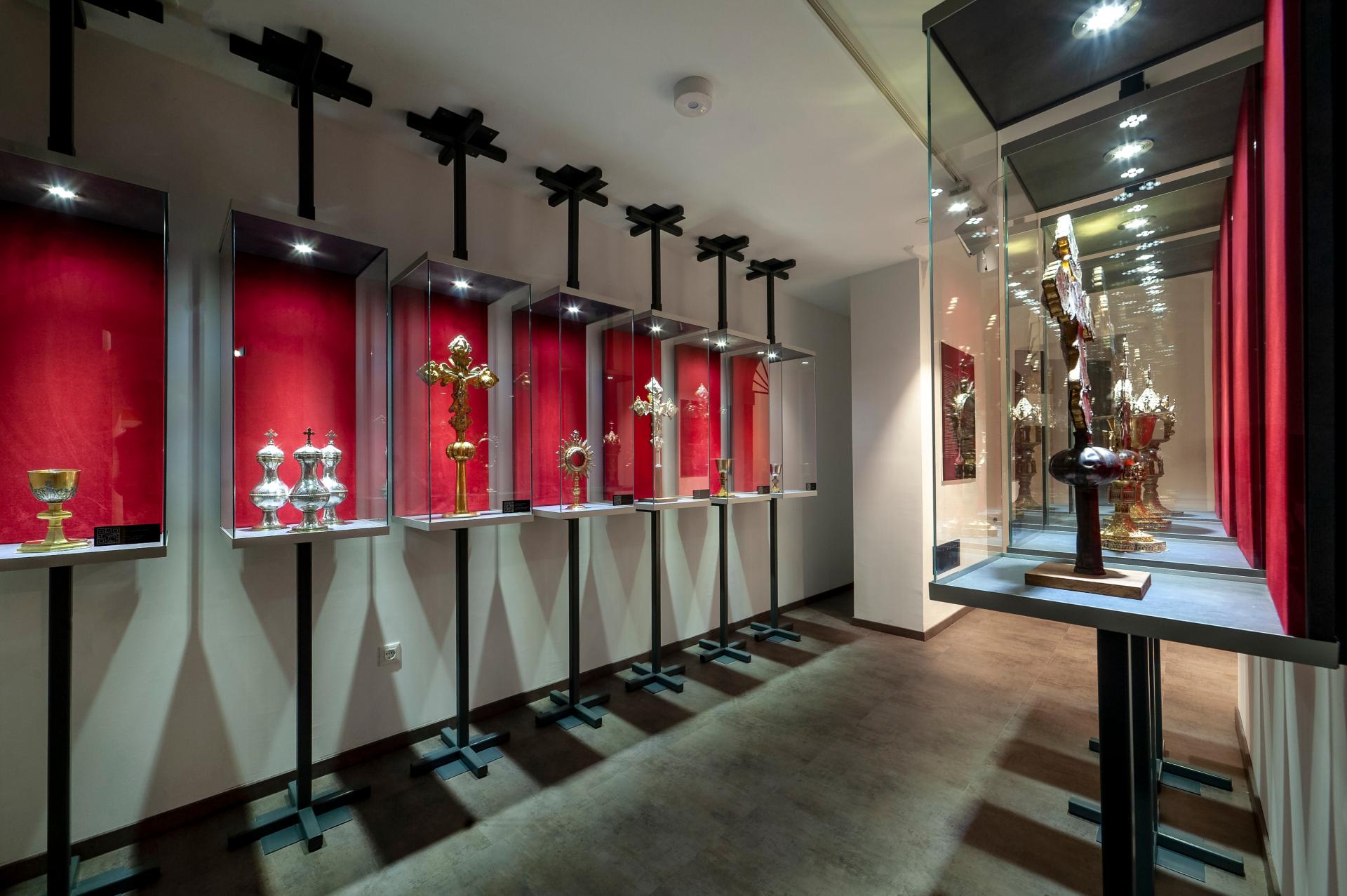
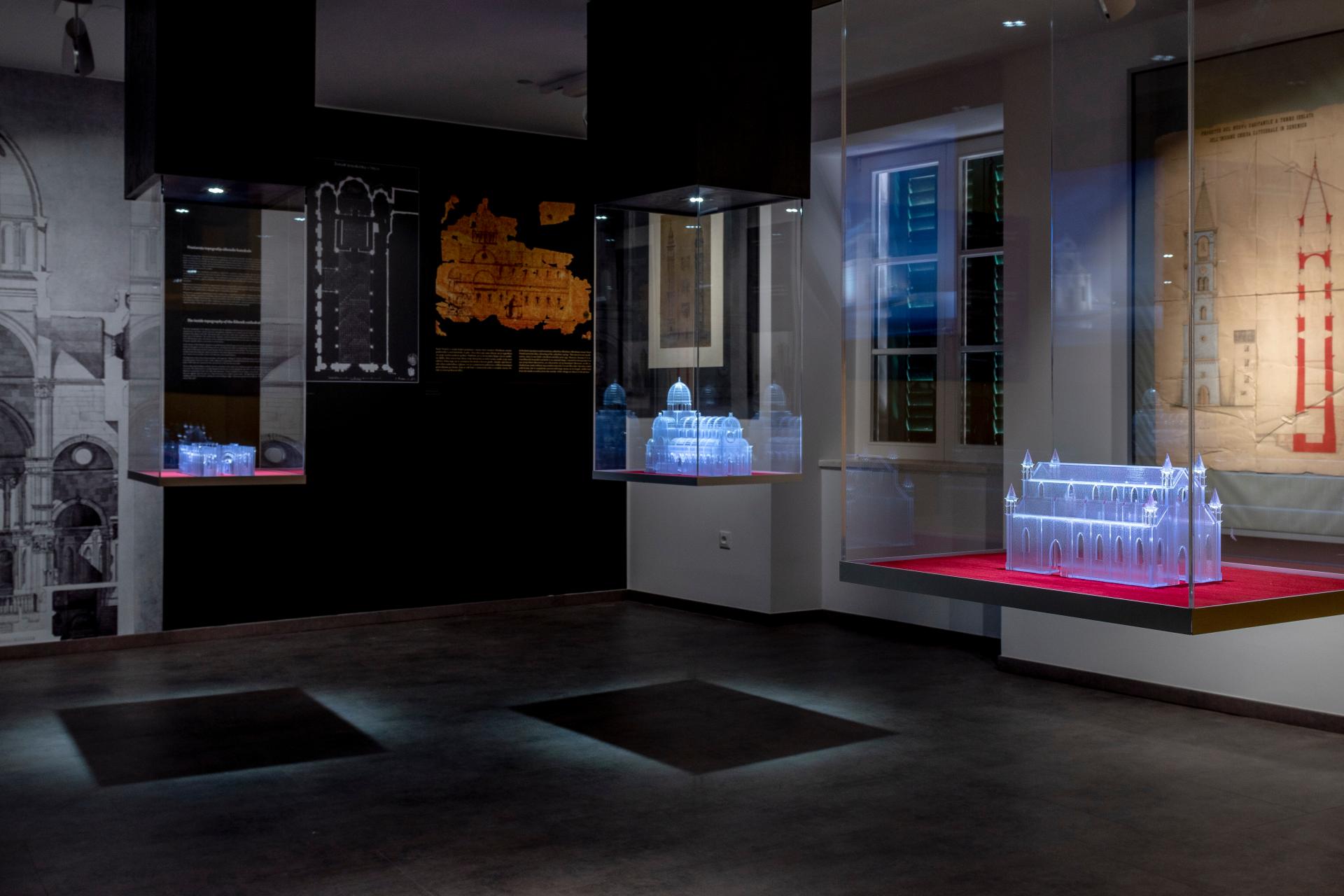
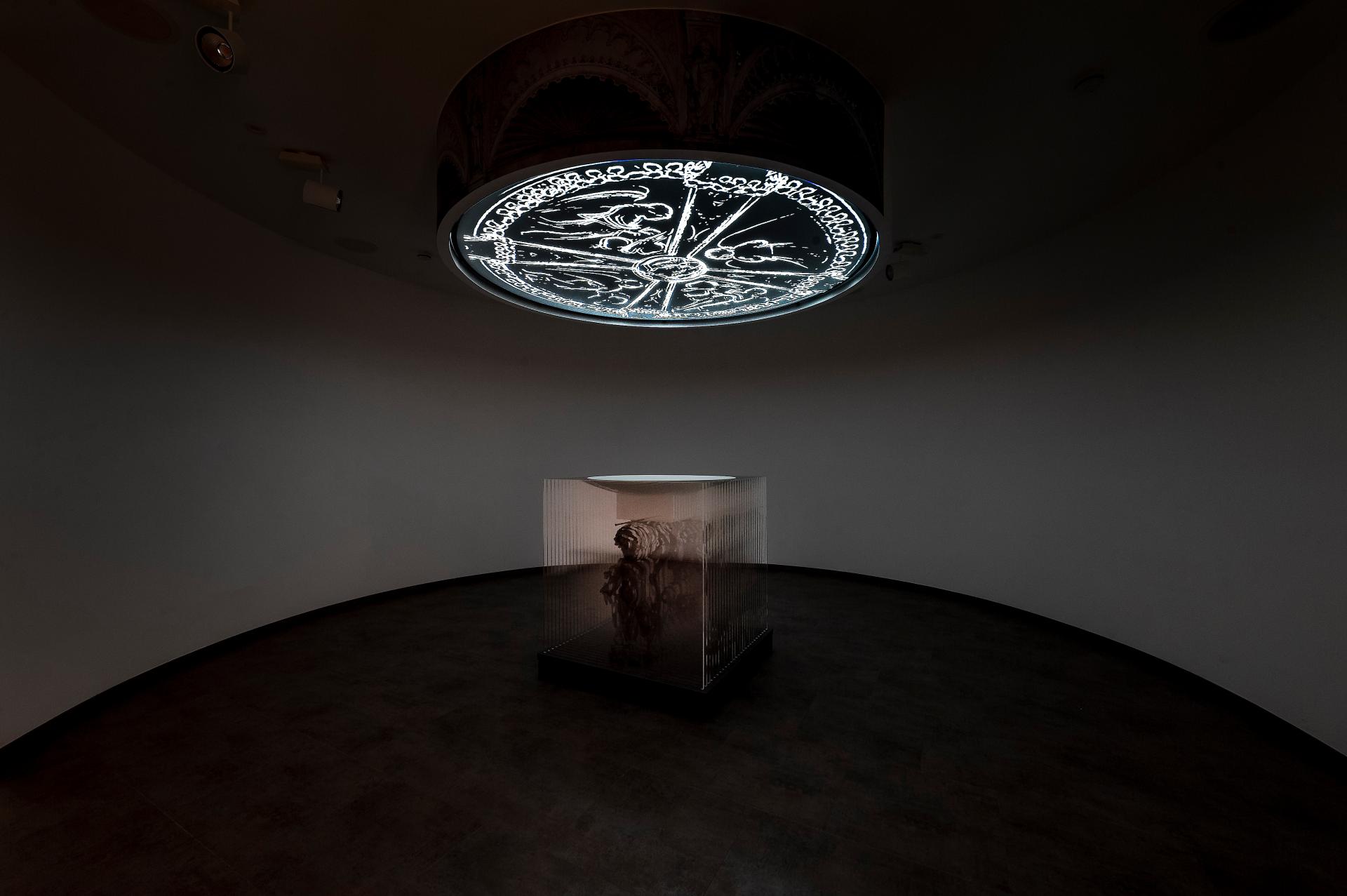
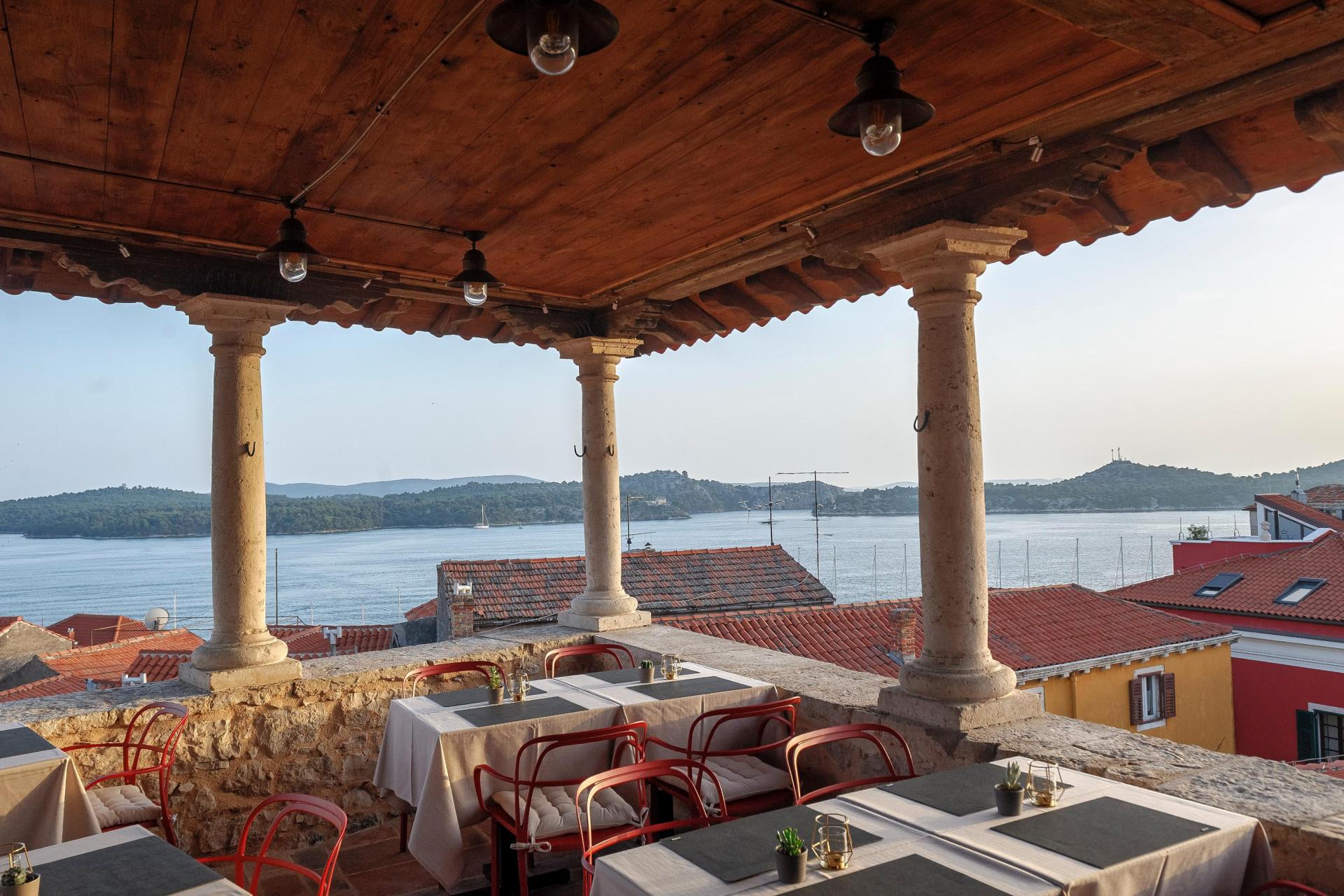
The Civitas Sacra Interpretation Center is extremely attractive due to its attractive location in the heart of the historic center, the potential of which is maximized by locating a restaurant at the very top of the Galbiani Palace with an (very rare) open view of the Old town of Sibenik and the sea channel of St. Anthony. A high degree of aesthetics was achieved during the development of interpretive content with an emphasis on interactivity and innovation and reliance on modern technologies - 9 software was developed that interprets the Cathedral of St. Jacob; 6 animations were made that bring details otherwise inaccessible to visitors (eg about the cathedral dome, ceiling elements, the roof of the cathedral); a virtual game was created for children and younger visitors; 3D and mapping projections; a virtual walk along the roof of the cathedral. In addition, the once inaccessible cathedral inventory (statues of saints, altarpieces, Mass vestments, Mass vessels) that had decayed in inadequate depots has been restored, digitized and exhibited to visitors. It is a rich inventory which is also protected as a material movable cultural asset and which has a total of 98 exhibits. The entire art exhibition is incorporated into the existing ambience in which stone and wood predominate, according to the strict protection measures provided by the conservators. During the works, the project needed to be modified due to the fact that painted ceilings, floors and walls and a private wall chapel were later discovered. These antique elements were then incorporated into the art exhibition and are now an integral part of the interpretation of the presented cultural heritage, which especially raises the attractiveness of the palace because it authentically combines the spirit of the past and present.
Key objectives for inclusion
A special emphasis of the Civtas Sacra project is on the inclusiveness and accessibility of content. Thus, audio guides for the blind that contain keys in Braille were introduced in the Cathedral of St. Jacob. Within the interpretation center, a Braille board is placed below each thematic unit, and tactile exhibits are set up for people with visual impairments, while audio guides are also available. Tactile track for the blind persons have been placed on all floors, including the souvenir shop. Olfactory sensory stimulus exhibits are also available. The interpretation center is spread over four floors and all are accessible by elevator to people with reduced mobility. For people with hearing impairments, inductive loops have been set up that allow people with hearing aids to adjust the appropriate frequency. In addition to physical availability, the established pricing policy is appropriate to the environment in which the center is set up. Ticket prices were formed lower than the average ticket prices for other heritage cultural facilities in Sibenik. Prices range from 1.5 EUR for pupils, 2.5 EUR for students and 4.5 EUR for adults, while admission is free for children up to 7 years, children and people with disabilities and tourist guides. Within the allocation of European funds for the Civitas Sacra project, a children's playground for children with special needs was arranged, not far from the Cathedral of St. Jacob in order to develop additional content for children with disabilities when touring cultural heritage. The mentioned playground has an integrated solar tree where visitors can charge their mobile phones and other devices, for free.
Results in relation to category
Nearly 12,100 people visited the ICCS in first business year and were educated about the cultural heritage of the Cathedral of St. Jakov. In 2019, the ICCS received the "Golden Bowl" award of the Sibenik-Knin County Tourist Board for "Innovation of the Year" and was presented at the "World Tourism Event for UNESCO Sites" in Rome in order to promote more aware and responsible cultural tourism. The same year, the Diocese of Sibenik, received the award of the City of Sibenik for the realization of the Civitas Sacra project and the valorization of the cultural heritage of the Cathedral of St. Jacob and the Galbiani Palace. Cooperation was established with the Typhological Museum in Zagreb (one of the few museums in Europe that deals with the needs of the blind in culture and museum activities) and the Association of the blind of Sibenik-knin County within the EU funded project "UNESCO4ALL TOUR" aimed at adapting cultural content to the visually impaired. Through the project, blind and partially sighted people could experience replicas of selected parts of the cathedral (eg stone heads) made specially for them. Civitas Sacra is recognized in the community as an ideal place for smaller gatherings and so far it has hosted the Inter-County Professional Meeting for Teachers of Fine Arts in the context of theme "Cultural Heritage and its application in design and art". The gallery space of the center has so far hosted exhibitions of children's works as part of the 25th Educational-Museum Action and students of the Elementary School of the Catholic School in Sibenik. Additional workshops and lectures were planned, but had to be postponed due to the coronavirus pandemic. The employees participated in a workshop within the project of cross-border cooperation with Italy "Tourism4all" on inclusive and accessible tourism with the aim of developing a cross-border network of accessible tourist destinations and designing new tourism products focused on people with special needs.
How Citizens benefit
During the realization, a series of 4 workshops was organized for citizens on the Civitas Sacra project about:
- what it implies and the changes it brings in terms of developing new cultural and tourist content;
-the possibilities available in the form of potential cooperation through the procurement of food and souvenirs.
- the cultural heritage and significance of the Cathedral of St. Jacob
- capacities for holding smaller events in the multimedia hall and gallery.
Citizens were involved in the development of content for the permanent exhibition: photo-shoots of citizens were organized and mass and pilgrimage celebrations in which citizens participated were recorded and also used for the permanent exhibition. The animation of the citizens resulted in the successful oral dissemination on Civitas Sacra which resulted in the visit of the interpretation center and the use of catering services. Also, citizens were given the opportunity to design an original souvenir that would be tied exclusively to ICCS. In addition to the cash prize, they could propose and make authentic souvenirs that met the categories of originality, quality, recognizability, originality and traditional heritage and environmental acceptability. Citizens are provided with free entrance in days of celebrations (eg. The Day of the City of Sibenik). Also, from 2019, free digital photography workshops were held for citizens. In May 2021, ICCS started the cooperation with the local Art Organization Histeria Nova and the Aurora Association in order to prepare the first inclusive vertical dance workshop for people with disabilities and children suffering from cerebral palsy. Dance workshop is planned for implementation during 2023. The gallery space was given for free use for exhibitions of children's works in cooperation with the Catholic School and the kindergarten of Blažen Hosan, both local organizations.
Innovative character
The innovativeness of the project stems from the combination of a classic museum display and a modern, interactive interpretation. The central role of the ICCS is internationally recognized Cathedral of St. Jacob which was the foundation for the revitalization of the Galbiani Palace, located in the Old town. Its recognizability was used to develop and encourage the well-being of the local community, while the local community itself was involved from the beginning in the development of the content of the interpretation center. In this way ICCS had a developed audience even before it was opened. Also, the interpretation center is adapted to people with disabilities and invests in further development of inclusive capacity, educating employees and implementing modern technologies (tooteko ring, tactile exhibits, mobile application) that make static cultural heritage accessible to people with disabilities. The innovativeness of the project is reflected in the spatial thinking of Galbiani Palace, where each room is designed to meet the needs of the local community: an inclusive art exhibition implements modern technology, interactive interpretation and classical museum exhibits in order to preserve the UNESCO World Heritge site the Cathedral of St. Jacob; the multimedia hall is designed for professional events due to the lack of such facilities in the Old Town of Sibenik, the gallery space is available for free use by the school and kindergarten and as a space for holding free workshops for citizens; the souvenir shop offers original, custom-made souvenirs, while the catering facilities offer an autochthonous gastronomic and oenological offer, as well as a channel for the placement of local products.
These are all pieces that make up a unique puzzle in which cultural heritage takes on several new dimensions thanks to innovative technology and rethinking the space in a way that is integrated into the community and is sustainable.