BEAR ARTS
Basic information
Project Title
Full project title
Category
Project Description
Initiated from LIFEARCPROM (a EU program under the coordination of Callisto, an environmental NGO) BEAR ARTS created an educational art-platform; 4 National Parks in Greece and Italy, 2 NGOs and 2 Universities have cooperated to solve a crucial problem: rescue bear from extinction. BEAR ARTS created visual works that have been realized from fart students and faculty of the School of Fine Art, Florina. Experiential activities, various art-forms became the tools to support human/bear co-existence
Project Region
EU Programme or fund
Which funds
Other Funds
LIFE ARCPROM (LIFE18 NAT / GR / 000768)
Description of the project
Summary
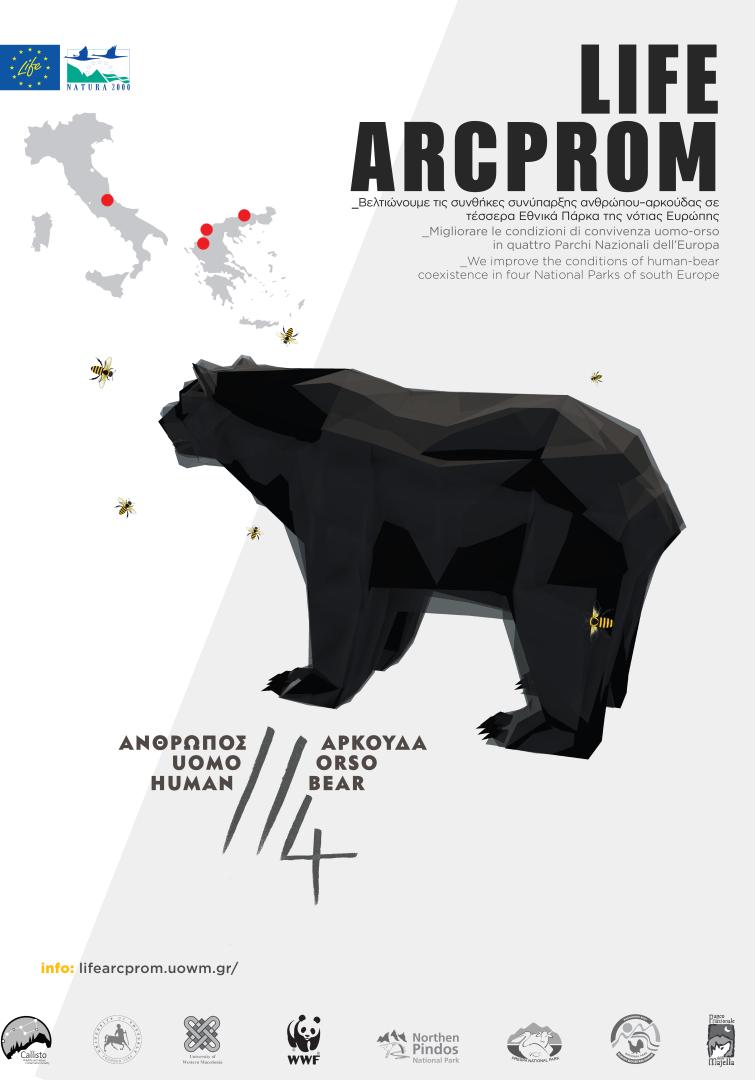
The BEAR ARTS project is an interdisciplinary educational method accomplished by the 1st Painting Workshop of the Department of Fine and Applied Arts, University of Western Macedonia (EETF). The 1st Painting Workshop (EETF) has undertaken the educational and artistic implementation of the LIFE ARCPROM program. It aims at improving human-bear coexistence in three National Parks of Greece and one in Italy. The contribution of the 1st Painting Workshop (EETF) in LIFE ARCPOM was the educational process BEAR ARTS.
The main working group of BEAR ARTS was faculty and students of the 1st Painting Workshop of EETF (Associate Professor Yannis Ziogas and Specialized Teaching Staff Cynthia Gerothanasiou). Eventually, the procedure became inter-departmental, and it involved the Printing Workshop (Assistant Professor Sofy Papadopoulou) and the Adjunct Professor Annita Koutsonanou (Design Courses). Environmentalists, biologists, veterinarians became part of the educational team creating an interdisciplinary approach.
The students worked in an experiential way collecting visual data in the field and transforming them into artworks. The official site of LIFE ARCPROM achieved a role beyond its communication role: it became an educational tool of public awareness concerning bear-related issues. The artistic process was addressed to the students of EETF, local communities, visitors of the National Parks, and the website https://lifearcprom.uowm.gr/.
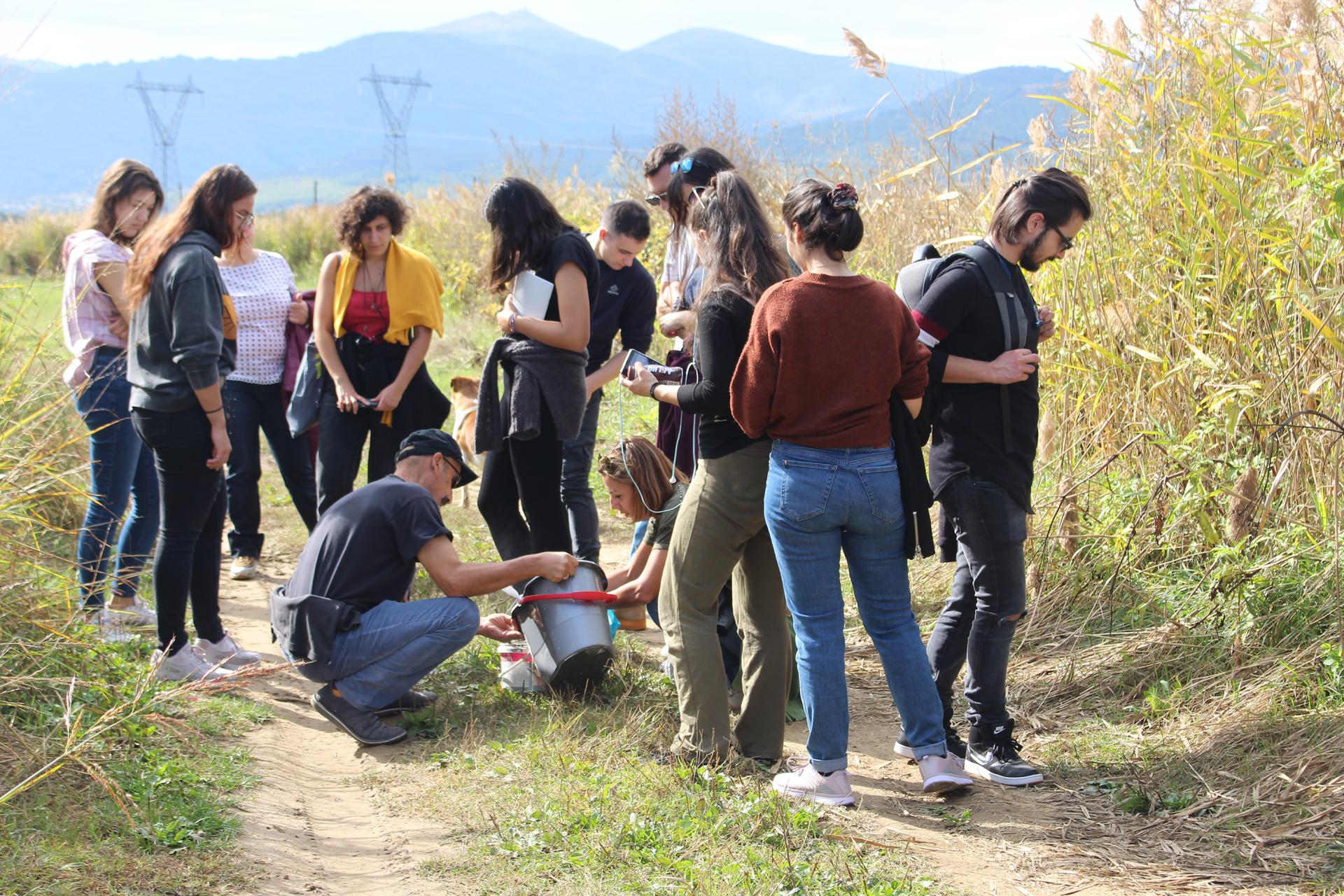
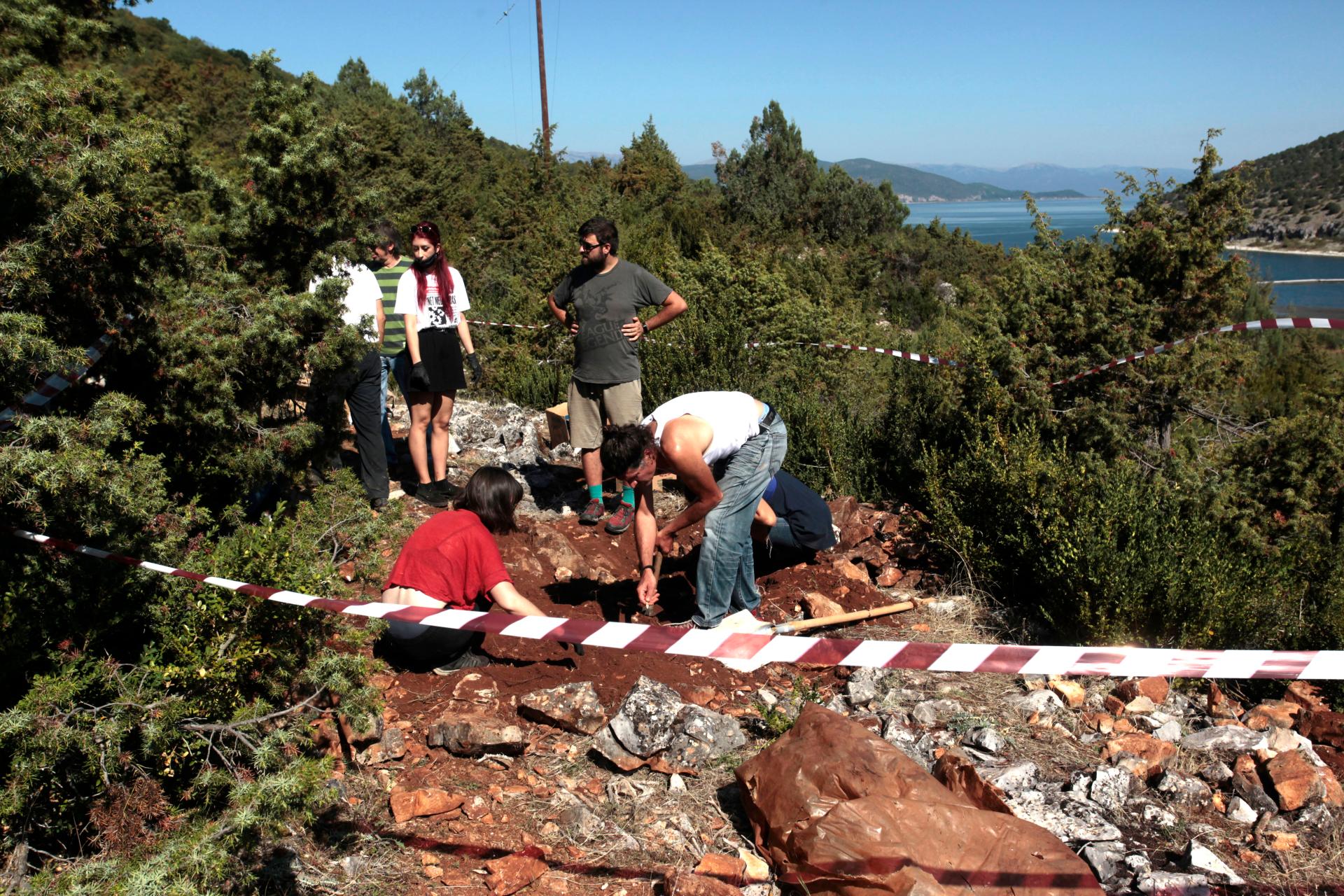
In the context of BEAR ARTS there were numerous activities in the field. Walking art became the main artistic tool for that. The main activities were:
- Creation of the visual identity of LIFE ARCPROM.
- Creation of lifearcprom.uowm.gr/.
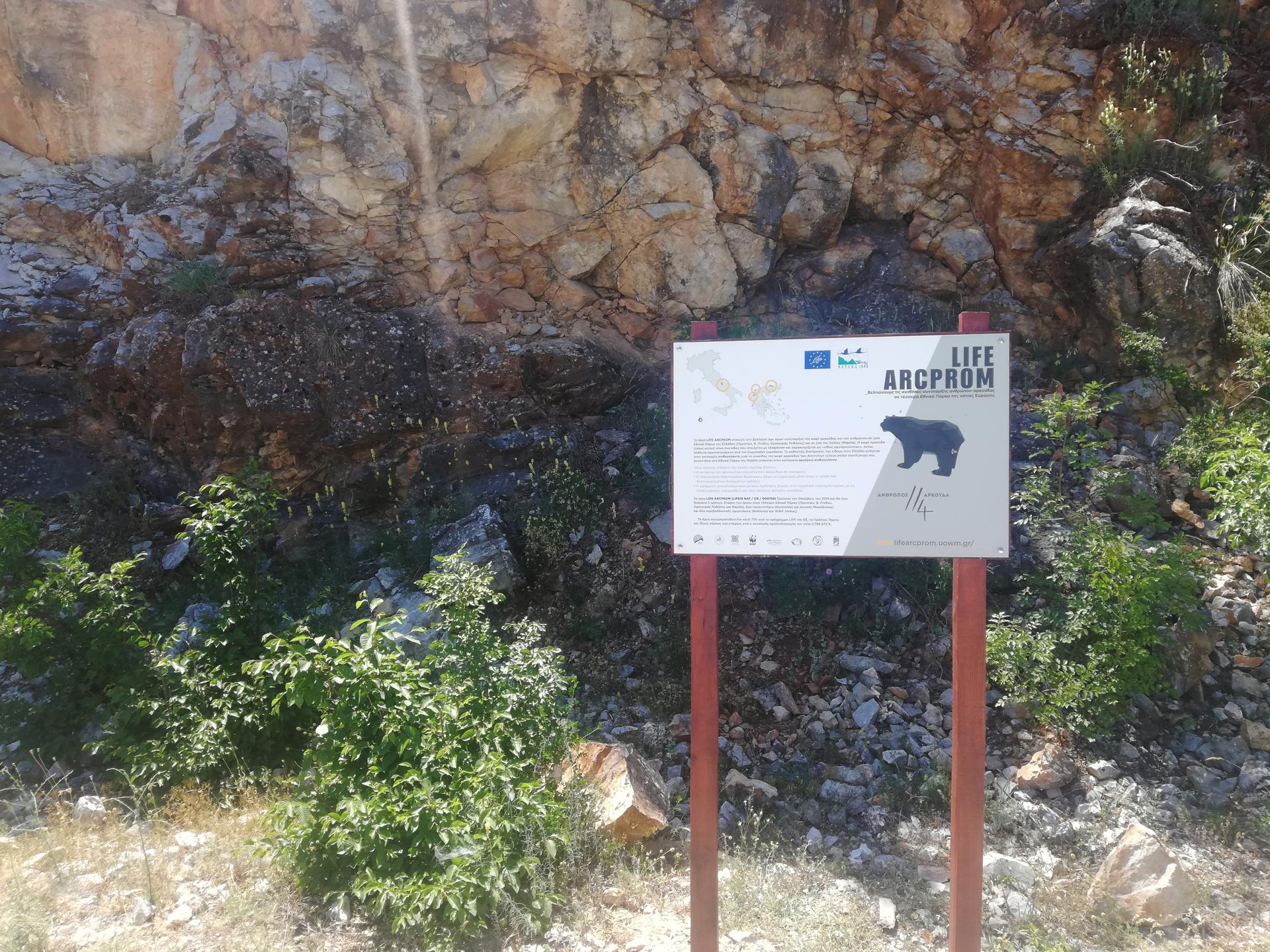
- Realization of the printed awareness material of the project (leaflets, poster, roll-up, booklet)
- Tracing of the local bear’s footsteps in the area of Mesonisi / Florina
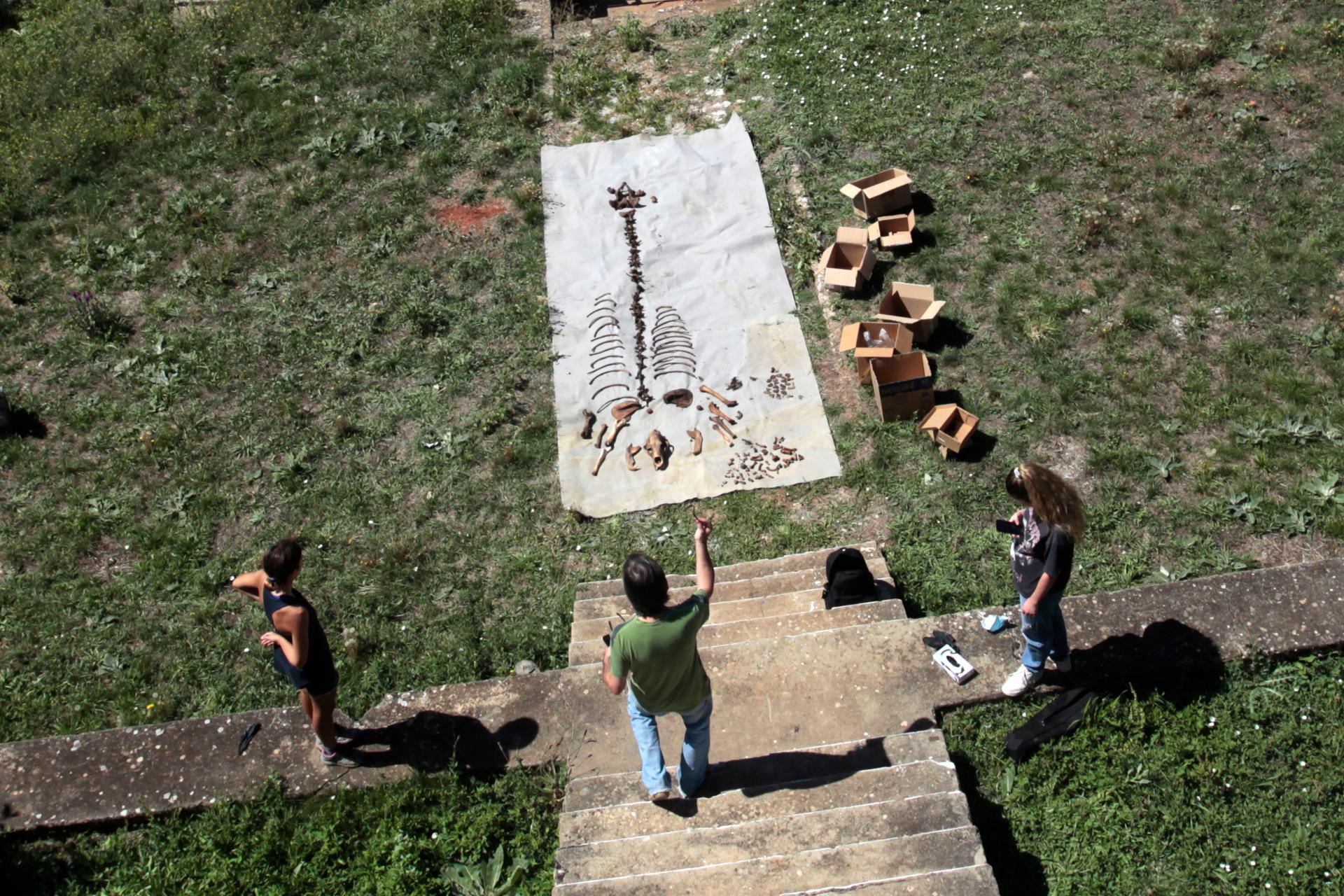
- Excavating a skeleton of a poisoned bear and reconstituting it.
- An oral history documentation of stories about the bear
Key objectives for sustainability
Preserving species is one of the most important aspects of sustainability. Bear is considered one of the most endangered species globally and its extinction will result in serious damage to the effort of sustainability. It is the first time in a European LIFE program that the visual communication and identity are undertaken by a university and more specifically by a School of Fine Arts, whilst the usual practice is the direct assignment to an external designer.
The 1st Painting Workshop (EETF) initiated its participation in order to implement an educational model that will move beyond the traditional role of an Art School and incorporate sustainability and community-based methods. Following the tradition of Bauhaus in a contemporary context, it proposed a method where a cause, saving of species, became the main educational tool.
The transnational LIFE ARCPROM project aims to improve the coexistence between brown bears and man, promoting the conservation of this key species of European fauna.
The key objectives of the BEAR ARTS project, as part of LIFE ARCPROM, included:
- Introducing an innovative interdisciplinary educational method.
- Creating a visual method to interpret and heal the preservation of bear.
- Creating a visual communication approach that deals with human-bear co-existence in residential areas.
Contemporary methods of walking practices allow the experiential understanding of the field. This led to the activation of a creative team that initiated a method for ecological awareness for the students of the institution. As the subject of environmental vigilance has a universal impact, the involvement of the 1st Painting Workshop (EETF) has been crucial in raising awareness of the broader society.
The BEAR ARTS project of the 1st Painting Workshop (EETF) introduces methods that teach how the effort of saving and preserving the bear can become additive factors to sustainability of of the wolrld we live.
Key objectives for aesthetics and quality
The main artistic values of the creative team of BEAR ARTS were Relational Aesthetics and Community based practices. LIFE ARCPROM is dealing with a crucial issue related to co-existence. The 1st Painting Workshop’s (EETF) objective was to establish an aesthetic model that was relied on experiential knowledge and interaction with community. The 1st Painting Workshop has established since 2007 Visual March to Prespa, an ongoing innovative model of artistic practices that rely on exploring the landscape as topos and field.
BEAR ARTS was part of the educational approach initiated from Visual March to Prespa and aimed in creating an aesthetic experience that relies in understanding the aesthetic and social complexities of landscape.
Aesthetics are the tool to implement this process and reshape the way participants are perceiving their body and its significance.
The educational model is developed in the following axes:
- Experiential knowledge of an ecological issue by working in the field (National Forests)
- Artistic interpretation of experiences and data collected in the field via various visual media (both traditional and also multimedia/digital approaches).
- Implementation of artistic interpretation in the field of applied arts with the realization of the communication process (design of the website and printed material, actualization of additional gadgets).
- Using both 2 and 3: There was an introduction of innovative educational models of ecological education in the National Forests.
- Working with relational and community-based artistic and communicative methods to improve public awareness on that critical issue.
There were lectures and open calls for production of works. The students were informed about the objectives and the course of the program, gave feedback with works of art based on their experience in the field. All the above finally formed a new field on the website, a digital gallery entitled bear-arts where these educationa
Key objectives for inclusion
BEAR ARTS project is a process developed in rural areas of Greece and Italy that are underpopulated. The ones in Greece are next to the national borders and all of them are facing the consequences of urbanization. Prespa is considered one of the poorest areas of EU. BEAR ARTS project aims in the preservation of species and is also adding to inclusion as it creates a sustainable environment and raises opportunities for people to work and build their lives within the areas of implementation.
Inclusion became in that way a key objective of BEAR ARTS project and the goal has been met in many ways such as:
- The work with the local community in recording the oral history added to the cultural identity of local populations.
- The solution in an ecological problem contributed to the creation of an environment where people can live and support decent living conditions.
- In an Anthropocene approach the inclusion of endangered species, e.g. the bear, is also an important effort. This aim was realized significantly in the period of implementation.
The way image, visual communication, and symbols were developed taking into account approaches to confronting the factor of visual illiteracy, a significant component of a contemporary citizen. Visually illiterate citizens have to be educated and included in contemporary societies. BEAR ARTS project took the above into account and developed its strategies accordingly.
Results in relation to category
The results of the nterdisciplinary education models that were initiated from the BEAR ARTS project were the following:
a. There was participation, interaction, training of students in the artistic and environmental fields. The processes that were implemented, the material that was created allowed them to create a community spirit, learn new techniques, interact and support each other.
b. There were established connections with the communities involved, there were initiated inquiries and reflections on specific environmental and social issues and there was the development of horizontal student skills, https://lifearcprom.uowm.gr/inspired-by-2/.
c. There was awareness development and engagement through art with the production of works of art as well as relational and community-based practices. The created artworks were used for the website. Stories were recorded and illustrated, https://lifearcprom.uowm.gr/bear-stories/.
d. Art and Ecology osmosis was performed as a vehicle of approach and creation of a more advanced consciousness of the modern person.
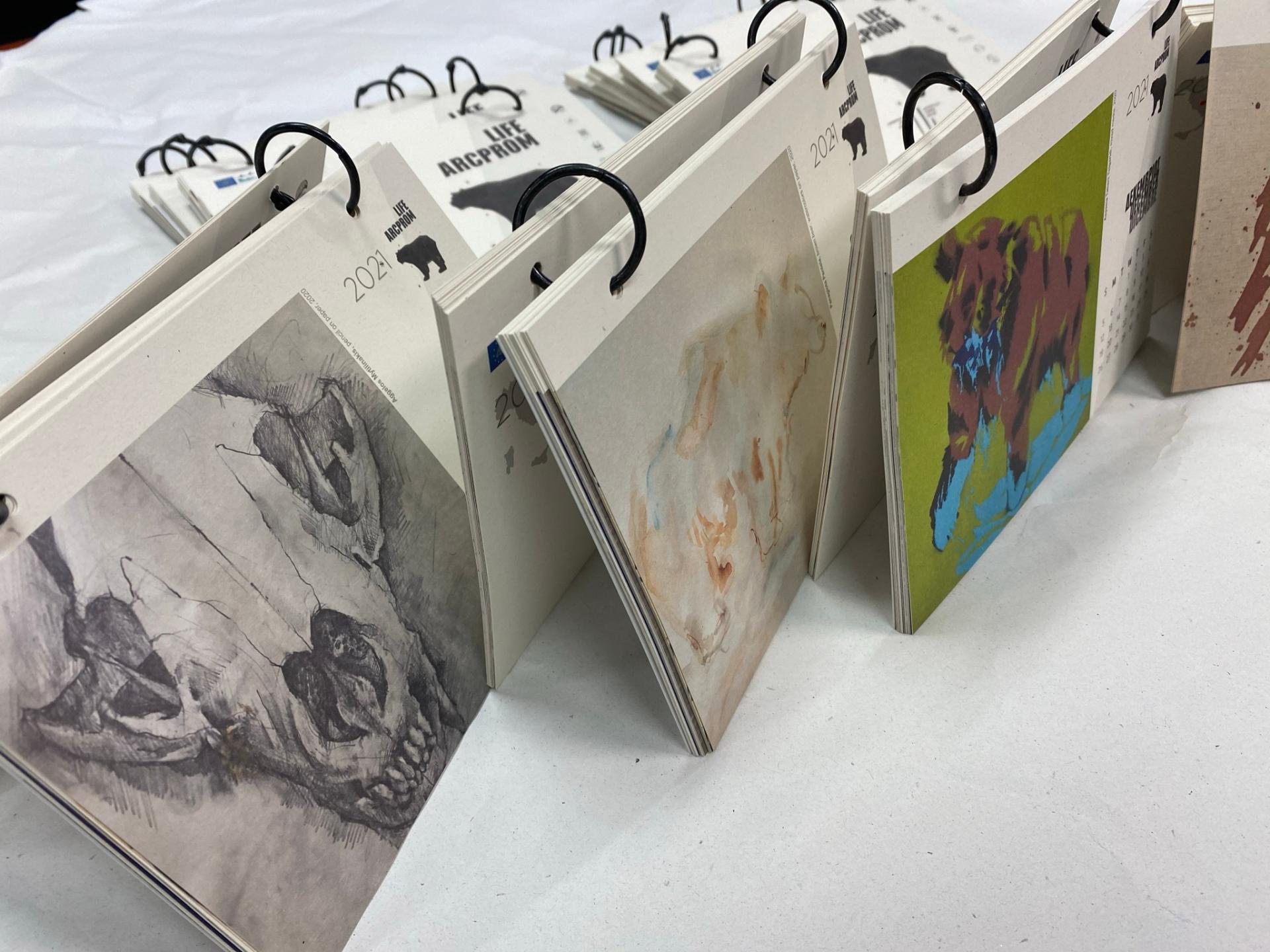
e. A diverse communication material was created: website, shared map display, bookmarks and signs, information material, calendars, https://lifearcprom.uowm.gr/
A contemporary educational method in tertiary art education should include community participation, contemporary technical skills, creative use of the new media, intervention in critical social and political issues, and professional development. The "classroom" or "studio" should be extended beyond the walls of the building of an art school; It should function as an institution without walls.
With BEAR ARTS the vast environment of the 4 National Parks became the "studio" where art was taught. Nature and communities that are living in it were the agents of art activity and education. The diverse participants, and especially Callisto, with its long history in environmental issues, became a diverse "teaching team" that articulted an experimental curriulum.
How Citizens benefit
During the implementation of BEAR ARTS project, the four national parks emerged and activated the local communities following the programs’ objectives. At the same time, there was another engagement formed, that one between the university students and the local communities.
The entrenchment of academic entities with environmental NGOs for the processing and the communication of programs’ objectives unexpectedly raised awareness and sensitivity and was transmuted into creativity with a new approach by all the partners of the program. All the partners were affected after some point by the 1st Painting Workshop’s action, and all this emerged an education of partners -apart from students, in various art fields. All partners gradually became more and more interested in aesthetic analysis and visual communication pursuit.
At the same time, the communicational material was simplified and easily organized to be appealing and simple for anyone in local communities. In the greater scale of communities, the artistic approach of environmental issues as well as the field-based students raised awareness on the human-bear coexistence and local groups start seeking for LIFE ARCPROM’s actions from the first months of the program’s activation.
Innovative character
The BEAR ARTS' project educational method has as trainees the following:
- The art students of a University Art School
- Local Communities
- Students in Primary and Secondary Education
- Visitors in the National Parks
- Visitors to the website
The main innovative character of the BEAR ARTS project is justified from the following:
- BEAR ARTS project transformed the ecological issue of saving the bear into a method of empowerment with knowledge, community consciousness, and ecological awareness in all five groups of trainees.
- It did not separate each particular group of trainees but dealt with each group as a part of a larger entity related to issues of ecology, sustainability, and inclusion.
- BEAR ARTS project initiated an educational artistic method that combines the development of technical skills in both traditional and new media, it incorporated concepts and activities deriving from relational aesthetics and community-based art practices.
- The educational method created a public awareness for a crucial ecological issue.
- BEAR ARTS project created innovative and socially engaged visual material.
It is the first time in a LIFE program that visual communication is undertaken by a University and specifically by a School of Fine Arts, whilst the usual practice is the direct assignment to an external designer. This path led to the activation of a creative initiative which at the same time trained the students of the institution and the communities involved. As the subject of environmental vigilance has a universal impact the involvement of the 1st Painting Workshop (EETF) has been crucial in raising awareness of the broader society.
To sum up, the BEAR ARTS project updated in a contemporary context the Bauhaus tradition by creating a total artwork, a Gesamtkunstwerk where the students function as artists and serve as agents for social change and empowerment.