Making Futures Bauhaus Plus
Basic information
Project Title
Full project title
Category
Project Description
Making Futures Bauhaus+ is an action research project that addresses questions of architecture as a collective form and architecture as a resource. Departing from these two perspectives, it operates as an experimental research unit that advances future paths for architectural practice and education. It was initiated in 2018 as a cooperation between raumlabor and the Berlin University of the Arts on the occasion of the Bauhaus’ centenary.
Project Region
EU Programme or fund
Description of the project
Summary
Making Futures Bauhaus+ is an action research project that sought out new perspectives on the Bauhaus school. Its aim was not so much to examine the Bauhaus retrospectively or in a historicising way, but to derive issues and questions from the school’s historical context that pertain to current socio-political conditions. Initiated in 2018 as a co-operation between the University of the Arts Berlin and raumlabor on the occasion of the Bauhaus’ centenary, this research project dealt with questions of architecture as both a collective form and a resource. According to these two perspectives, Making Futures Bauhaus+ functioned as an experimental research unit that sought future paths for architectural practice and education.
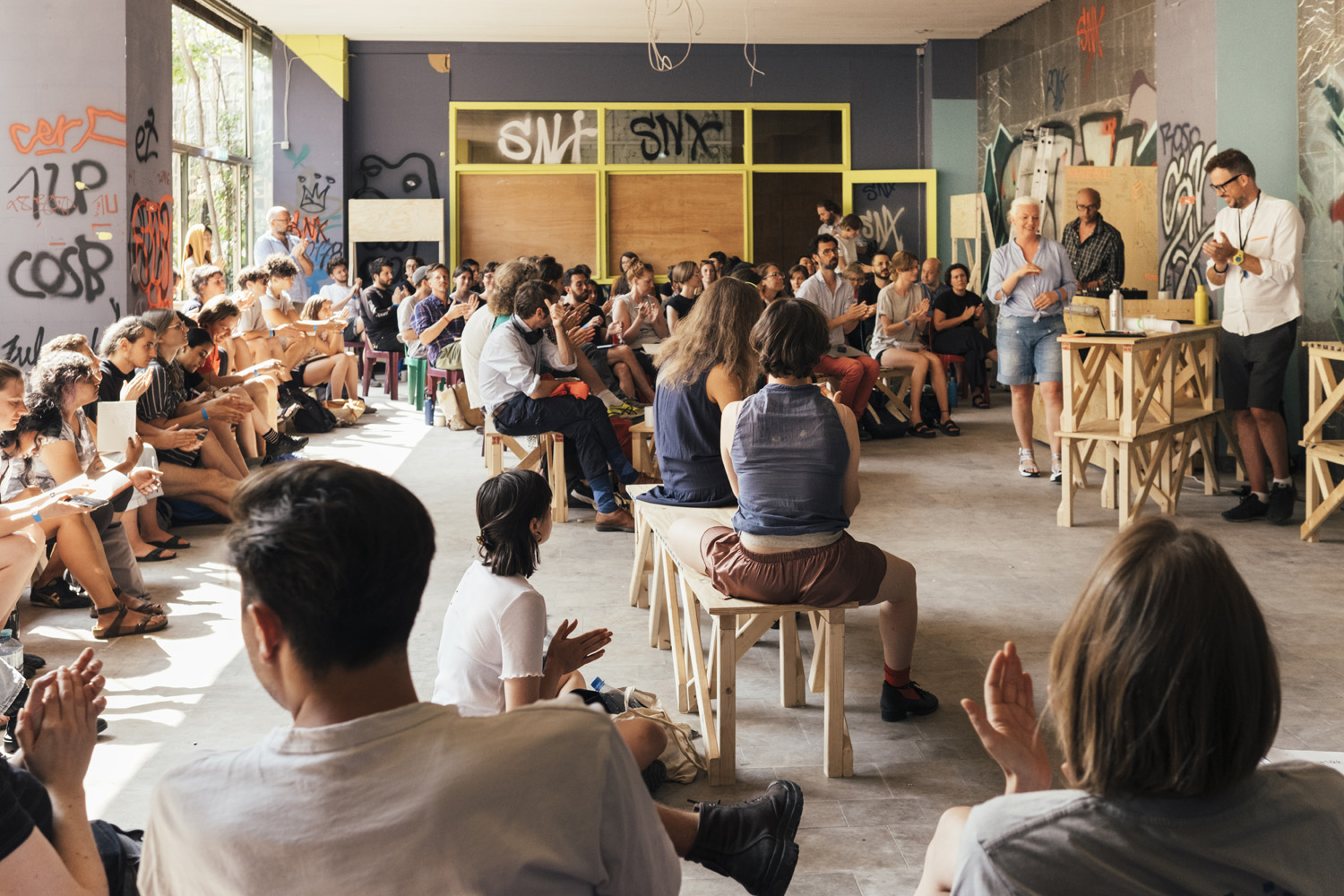
Making Futures School was situated in Haus der Statistik, Berlin to explore further forms of productive cooperation, exchange, solidarity and living. Making Futures School’s activities entailed a mix of process-driven as well as applied research strategies, including – but not limited to – research-based interventions throughout the building; working with the local community to propose pioneer uses; and rethinking education in spatial practices.
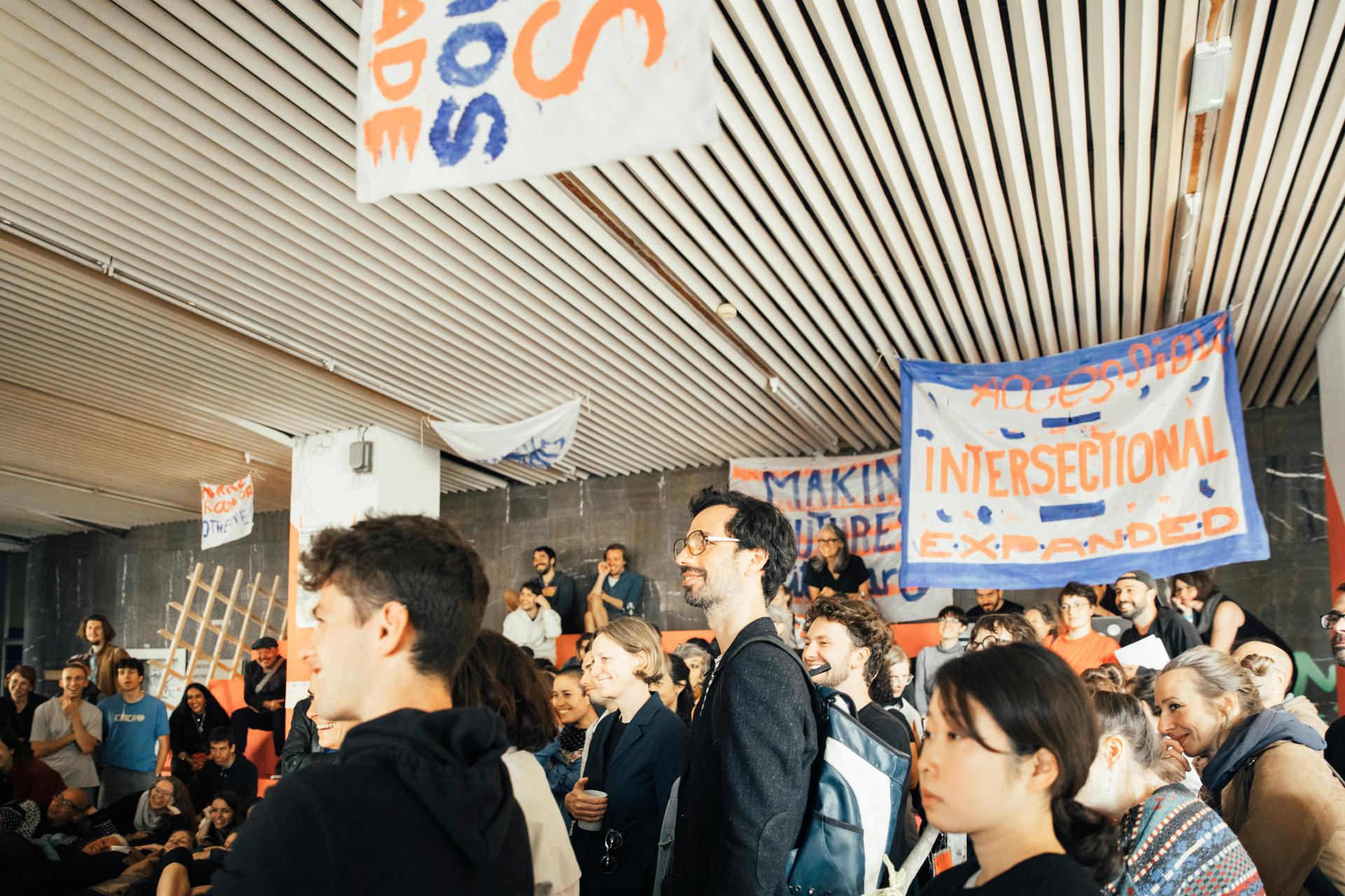
Over the course of two weeks, over 80 participants took part in a diverse curriculum convened by practitioners in the field of spatial practices. Acting as a post-disciplinary learning environment, the School proposes, designs, builds, negotiates, maintains, performs and celebrates an educational and convivial space in and around Haus der Statistik. At the same time, it becomes a dynamic actor within a process of urban transformation, serving as a common sphere of action between participants, neighbours and civic society.
Key objectives for sustainability
As a collective form, architecture brings together social, cultural, political and economic spheres. It crosses different entities and scales: objects, bodies, buildings, cities, the human and the planetary. It invites us to reflect on our built environment beyond obsolete dichotomies such as public and private, living and working, city and countryside. Architecture as a resource is concerned with longer-term dynamics, such as regeneration and conservation in the production and reproduction of space. By way of example, the construction industry is a key producer of waste, primarily driven by the need for rapid growth and innovation resulting in an imbalance between the energy it consumes and its ability to reuse it.
The Making Futures School was situated in an ex-office building which was listed for demolition until very recently. Reusing, reinvigorating and reimagining the space through our use is a resource-sparse action. One that shows potential for other derelict buildings in cities. Reimagining existing structures instead of tearing down and rebuilding with excessive energy consumption.
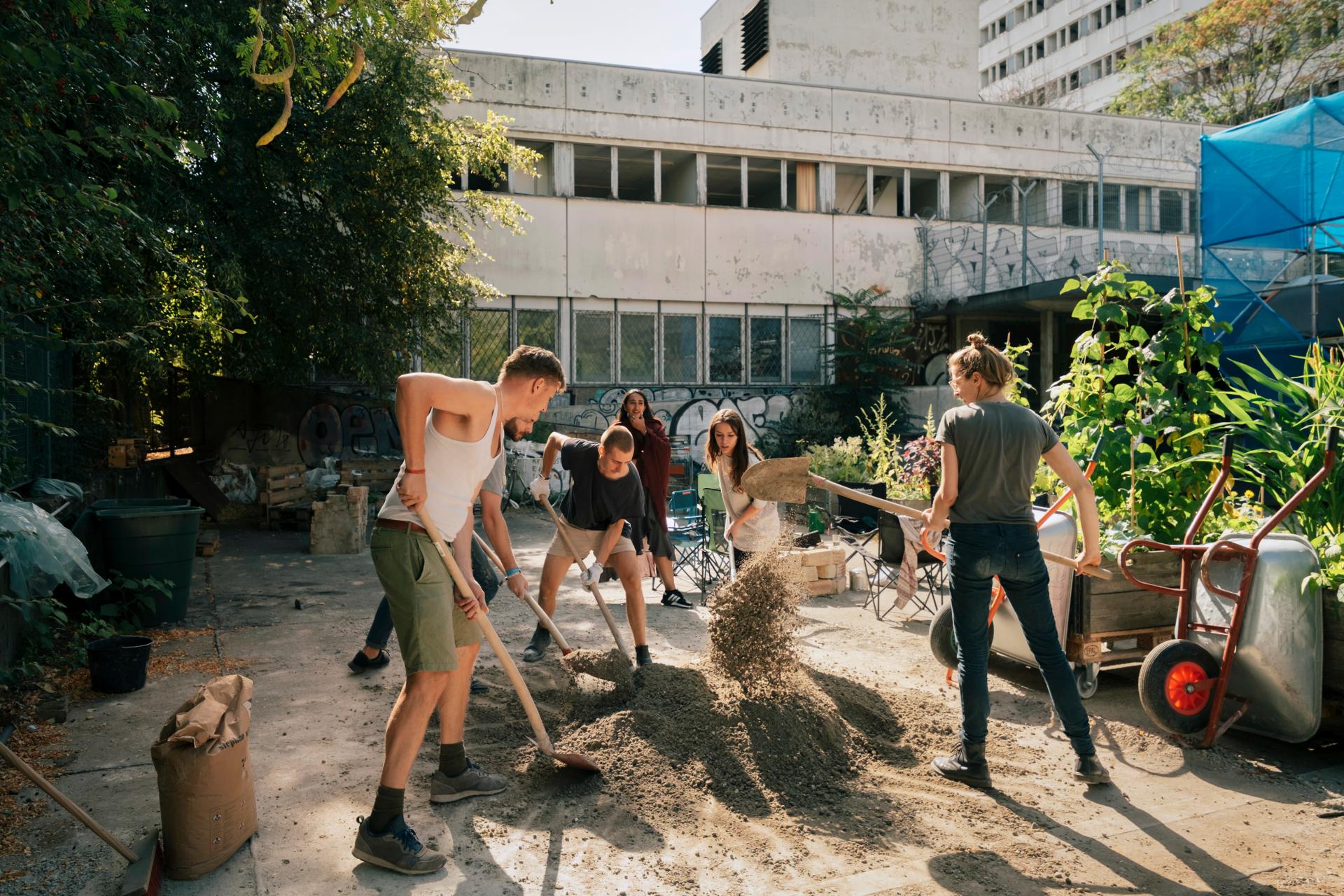
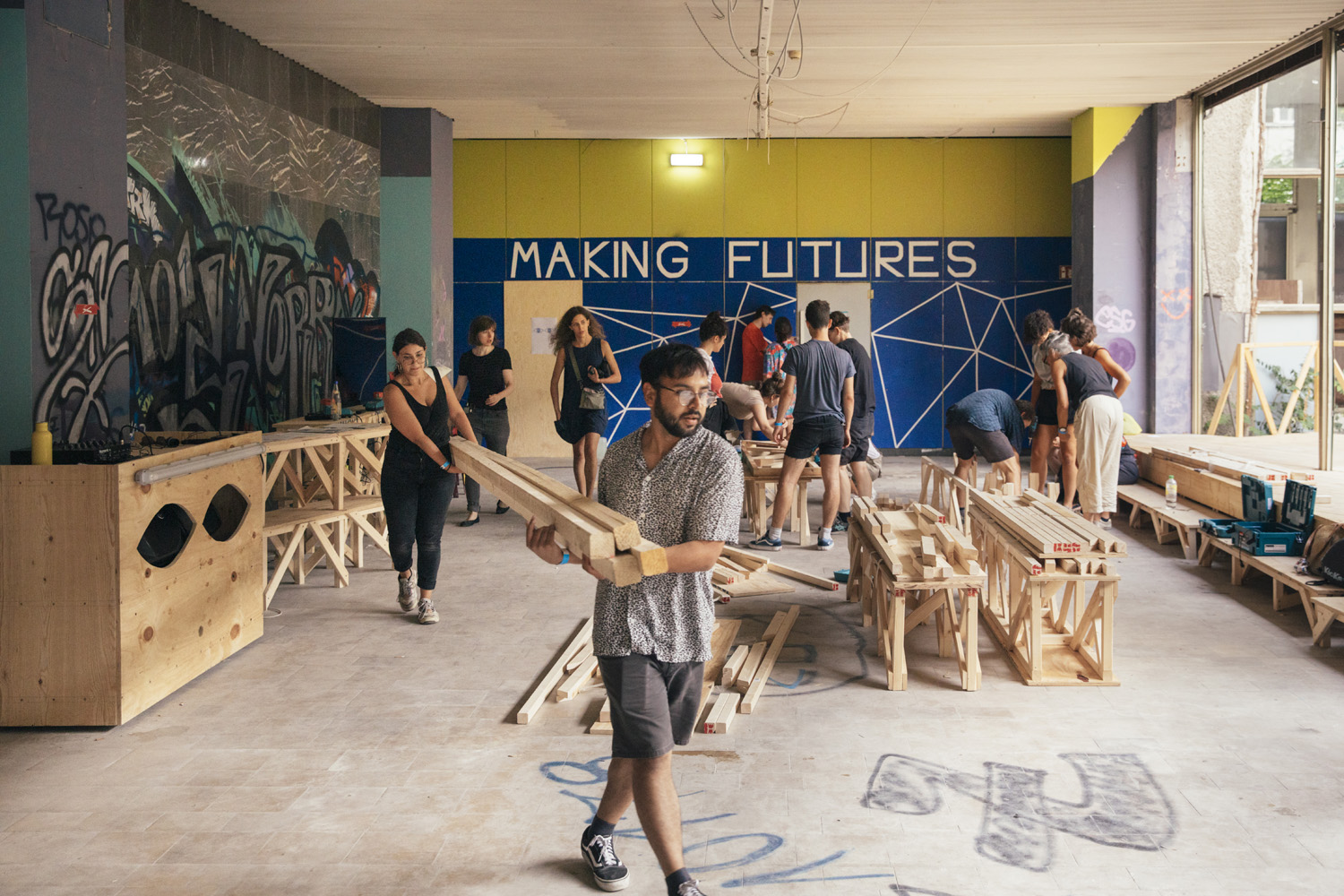
The infrastructure we built for the school was made from wood and scaffolding. The sleeping area for the participants was a multi-story scaffolding structure with tents. The scaffolding went back to its main use after the school and the wood structures continued their use either in the Haus der Statistik by later projects or in other projects and locations around Berlin. The kitchen was vegan, reducing the footprint of an event that fed over 80 people multiple times a day, with scarps being recycled or composted. The Making Futures School was built with a focus on planetary care with an awareness of depleting resources and a belief in limiting the schools environmental footprint.
Key objectives for aesthetics and quality
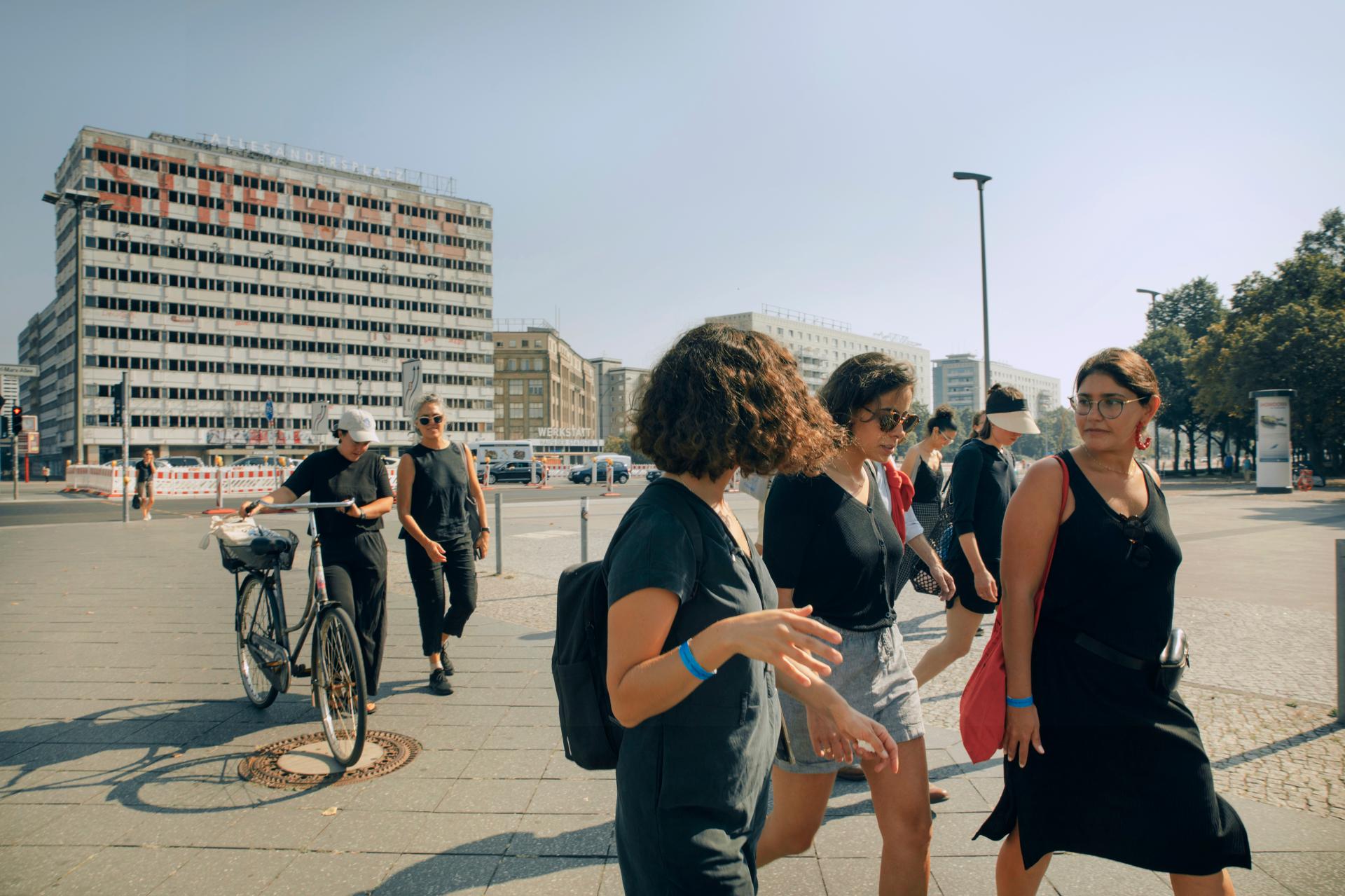
Making Futures situated its School in Haus der Statistik, located near one of Berlin’s busiest public squares, Alexanderplatz. Built between 1968-1970 as the headquarters of the State Central Administration for Statistics of the GDR, post-reunification the building housed an archive where those targeted by the Stasi could check the files held on them. Empty since 2008 and now derelict, today Haus der Statistik finds itself sandwiched in between shopping locations, hotels, quiet residential areas and surrounded by the city’s biggest traffic interchange. But the building is also the subject of a unique process of transformation, in which civic and state actors are collaborating at eye-level to collectively invent its future.
A contemporary example of cooperative urban development and city making. This context-based approach offered not only a spatial framework for negotiating the topics set by the school, but also a platform for diverse perspectives. Making Futures Bauhaus+ invited exploration of forms of productive cooperation, exchange, solidarity and living. Acting as a post-disciplinary learning environment, the school proposed, designed, built, negotiated, maintained, performed and celebrated an educational and sociable space in and around Haus der Statistik. By inhabiting a live construction site, Making Futures Bauhaus+ imbued itself with the transformation of a building, which in turn provides impetus for transformations of the personal self and the collective.
How then to maintain a small-scale intimacy while letting many people get involved? As a prelude to the pioneering phase in the former Haus der Statistik, ground floor spaces were made accessible, and participants set up a camp and kitchen to create an atmosphere of appropriation, attentiveness and responsibility.
Key objectives for inclusion
Making Futures Bauhaus+ functioned as an experimental research unit that sought future paths for architectural practice and education. Paths based in care and stewardship. Making Futures Bauhaus + sees architecture as a social, political, collaborative practice. Understanding it as a form of agency -in its transformative sense and in its capacity of acting otherwise- we propose to shift away from the solely production of shapes and objects, the architect-hero, the solution-oriented. Through practice we are interested in the how: a post-disciplinary and transversal approach for enacting spatial transformation.
The School is constituted by more than just a predetermined curriculum; Indeed the curriculum was developed with the participants as part of the school, allowing everyone to shape the 15 days. When designing it we thought about the different elements, qualities and attributes that it should be composed of. This has meant developing its style and intensity; rethinking its mission and agency; considering the nature of its own ecology and the resources of its context; and reflecting upon its manifestation to its representation. When a school is conceived in this way, delivering a lecture, preparing a meal or building a bench all become acts of equal importance. The participants cooked together, ate together, cleaned up together, celebrated together, discussed together, built together and even lived together on the site at Haus der Statistik. Eliminating the hierarchies of knowledge and establishing care as guiding principle. All of these acts were considered of equal importance, all were deliberate and part of the learning environment.
The intention is to create a support structure – with ‘others’: wishing that this open form allows the unthinkable and the unprovable to emerge while at the same time provides a welcoming, nurturing and nourishing environment. The aim was then to maintain small-scale intimacy while also being open for many to get involved.
Results in relation to category
If the Bauhaus school were able to develop a striking thesis on the position of architecture and the architect in early 20th century society, Making Futures Bauhaus+ was bound to ask: ‘How may architecture and the architect act in an accountable way in the society of the early 21st century?’ The project set up an open learning program that continuously explored future forms of urban practice. Mobile workshops in Istanbul, Palermo and Thuringia, conducted over more than a year and a half, steered the project in terms of an open, reflective and practice-oriented format that condensed itself into the Making Futures School. Everywhere it went and everyone that interacted with Making Futures Bauhaus+ was carried on through the different iterations adding to the collective knowledge and experience.
The Making Futures School provided 15 days of intense, critical, caring and resourceful collaboration within and across the different tracks and disciplines. Collective knowledge was created and exchanged, both within the school and with the public through open houses. Making Futures Bauhaus+ explored forms of productive cooperation, exchange, solidarity and living.
Collective experiences were shared, the school cooked, ate, talked, celebrated, cleaned and thought together. This collective experience is currently being collected into a book, in order to share the knowledge and experiental space creation further.
Making Futures worked towards building up alliances and making transversal connections with people across, disciplines, institutions and territories that transcend the boundaries of the academic world and go beyond the borders of Europe. This is underpinned by the belief that social change cannot be limited to a dispersed few but must instead manifest as part of a wider, synergized system. Making Futures is definitely a pluralistic endeavour, there is not one future, but many.
How Citizens benefit
Complementing its day-sessions, a wide-ranging public evening programme or Night School accompanied the Making Futures School. It comprised reading groups, screenings, lectures and performances – sometimes hosted by the School working groups and sometimes by external invitees –an open invitation for the local Berlin public to encourage further exchange.
Baking Futures addressed the value of communal, practical “doing” within both professional practice and private everyday life. It combined the collective construction of a clay fire baking oven with the experience of preparing a simple meal from scratch, centred around some “real” sourdough. The clay construction and food preparation were conducted (simultaneously) in a slow, conscious and performative way alongside conversations around everyday rituals and practices. A reading group engaged with different discourses, including “critical care”, written in response to the capital-centric, speculation-driven, and investment-dominated architecture and urbanism of today. Rooted in a radical care perspective that always starts from the given, in the midst of things, it offers an alternative vision in architecture and urbanism that focuses on caring for a broken planet. A conversation with construction workers from Haus der Statistik, helped in show buildings as relationships and collectivity as being the taking of responsibility for the entire process of the building.
Nocturnal city walks and multiple open houses and open slots invited the public to participate, observe and explore. Opening the school’s discourses to a wider public enabled interesting and important conversations, which then fed back into the development of further discourses within the school’s groups. It also ensured that the schools conversation reached a larger group, germinating the discourses and possible futures in the building and its surrounding area.
Innovative character
André Gorz once suggested that unlike conditioning, indoctrination and training, education aims essentially at bringing out in individuals the capacity to take charge of themselves. He argues that this cannot be taught, but has to be stimulated. Relating this to education in architecture, spatial practices and urbanism open various questions: How might we learn about the contemporary urban condition and the relation of the subject within it? What educational formats are needed to stimulate future imaginaries of what it might mean to become an urban practitioner?
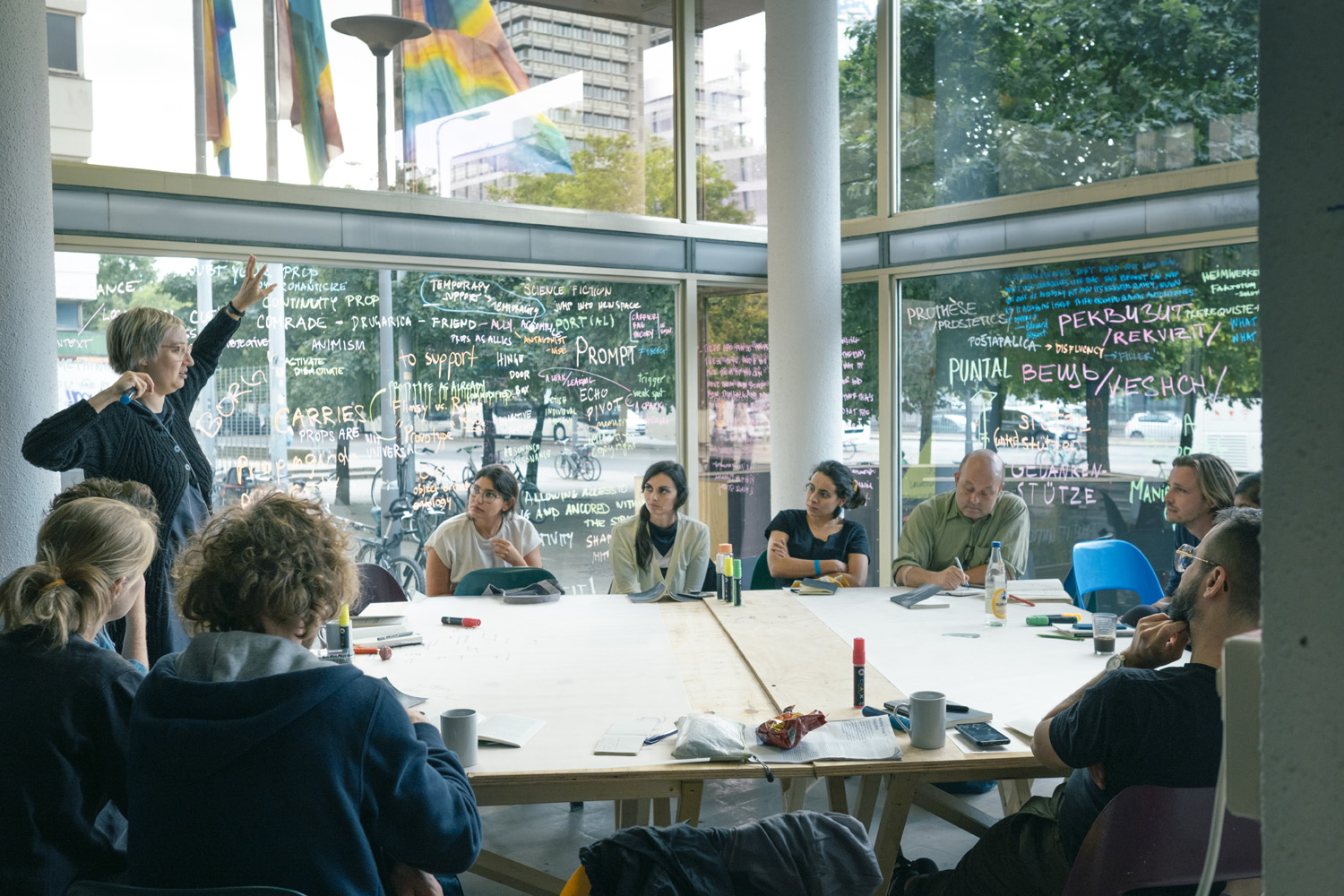
Making Futures Bauhaus+ never had a ‘fixed programme’ but a place for ‘inventing together what it will be”. Rather than dividing by themes, its participants suggested meeting around pressing issues, collectively promoting through various agents of spatial practice, a process structured in progressive phases: Encounter – entailing two days of coming together, getting to know the city and ourselves. Emergence – participants begin to constitute the School via a series of moderated assemblages before organising into the different working groups led by invited facilitators. Production – each group goes on developing mutual research and learning processes. Exchange – the juncture where outcomes are shared within the groups and also with the wider public.
Going beyond a curriculum; the schools designers pondered the diverse elements and qualities it should be composed of. This meant developing its style and intensity, rethinking its mission and agency, contemplating the nature of its ecology and the resources of its context, and reflecting on the relationship between its manifestations and its representations. Conceived thus, the acts of delivering a lecture, preparing a meal or building a bench are of equal importance. The intention was to create a mutual support structure, hoping that this open form allowed for the unthinkable and unprovable to emerge while providing a welcoming and nurturing environment.