Etopia Kids
Basic information
Project Title
Full project title
Category
Project Description
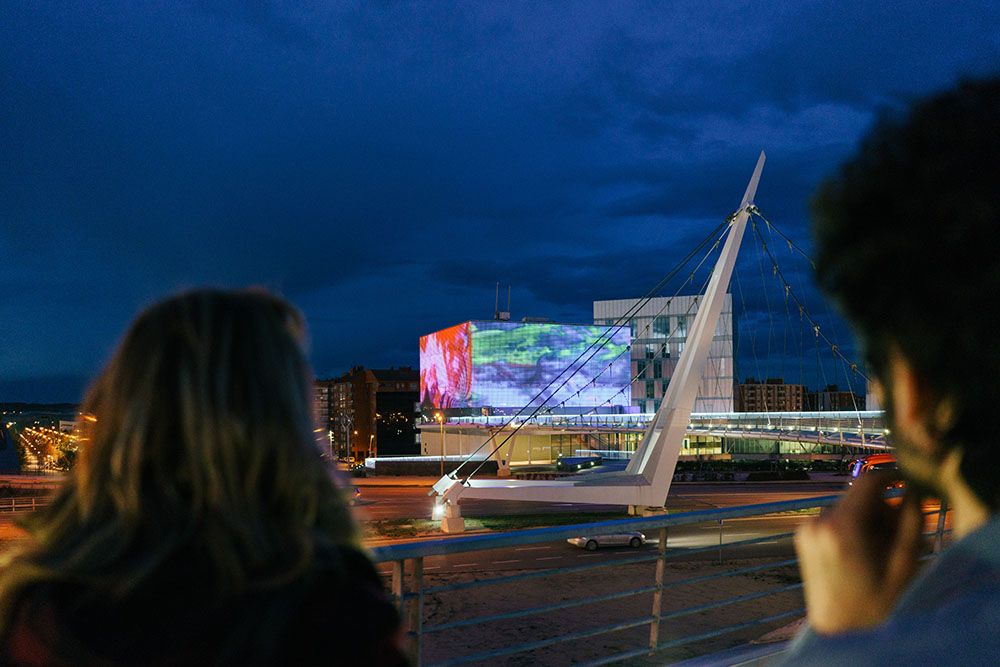
Cities are our most precious innovation platforms and our most powerful invention to transform the future. Can you imagine something more transformative than some children connecting with, learning through, hacking and re-designing the city? What about those children being +10.000 children for a city of 660.000? What about the ideologist of this program being David Cuartielles, co-inventor of Arduino, and that one of the "hacked" infrastructures was Carlo Ratti's Digital Water Pavillion?
Project Region
EU Programme or fund
Which funds
Other Funds
Programme: Creative Europe
Project: "European Artificicial Intelligent Lab", coordinated by Ars Electronica (Linz, Austria)
Year of funding: 2019, 2020 and 2021
Description of the project
Summary
Etopia Kids is a project of the Zaragoza City of Knowledge Foundation (ZCC Foundation) and Ibercaja Foundation, in collaboration with the Zaragoza City Council and the University of Zaragoza. The ZCC Foundation is a public-private entity working to promote technology-based projects, education in creative technologies; dissemination of culture, science and technology; and promotion of creativity in at the crossroads of art, science and technology.
Etopia Kids is a learning and experimentation program using open source & creative technologies for ages between 6 and 18. It started in 2013 with the Urban Summer Camp, since then Etopia Kids hasn’t stopped growing and now the Etopia Kids program proposes activities and workshops all year round:
- FAMILY: year-round educational workshops for the youngest ones and their parents
- DIWOK (Do It With Other Kids): one trimester, collaborative workspaces for participants aged 14-18 in which teenagers work on the projects of their choice.
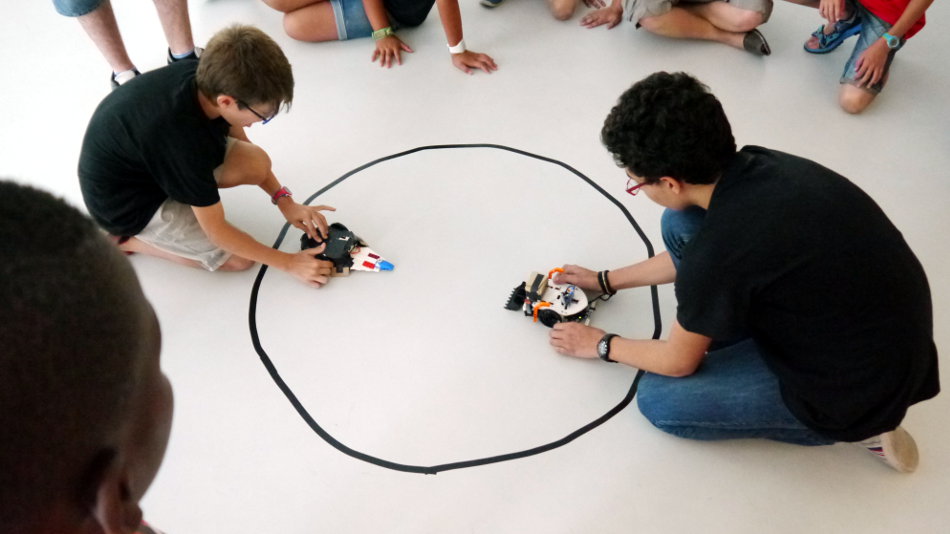
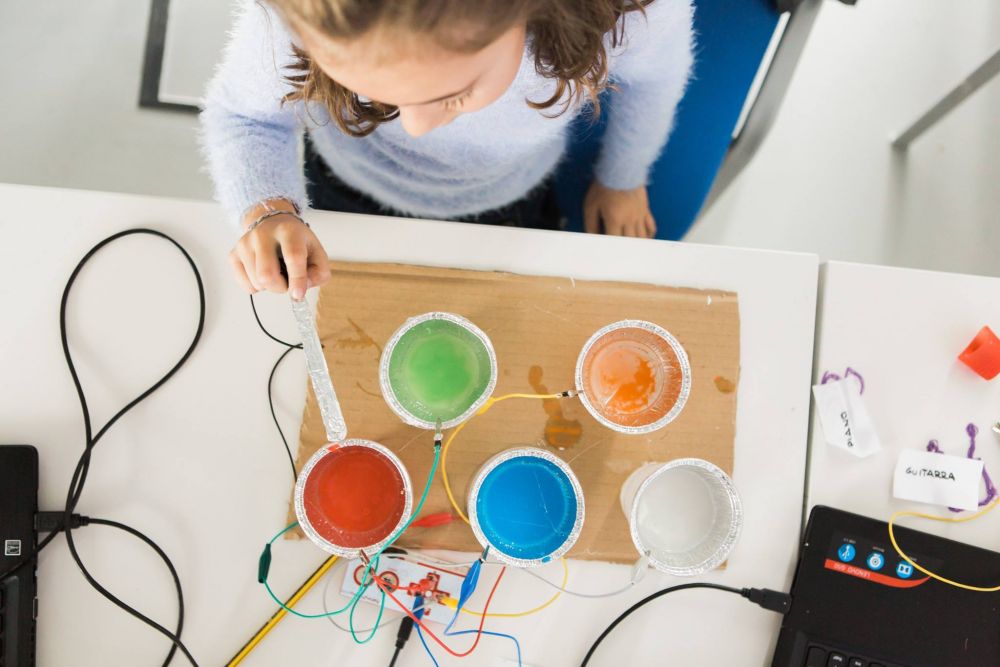
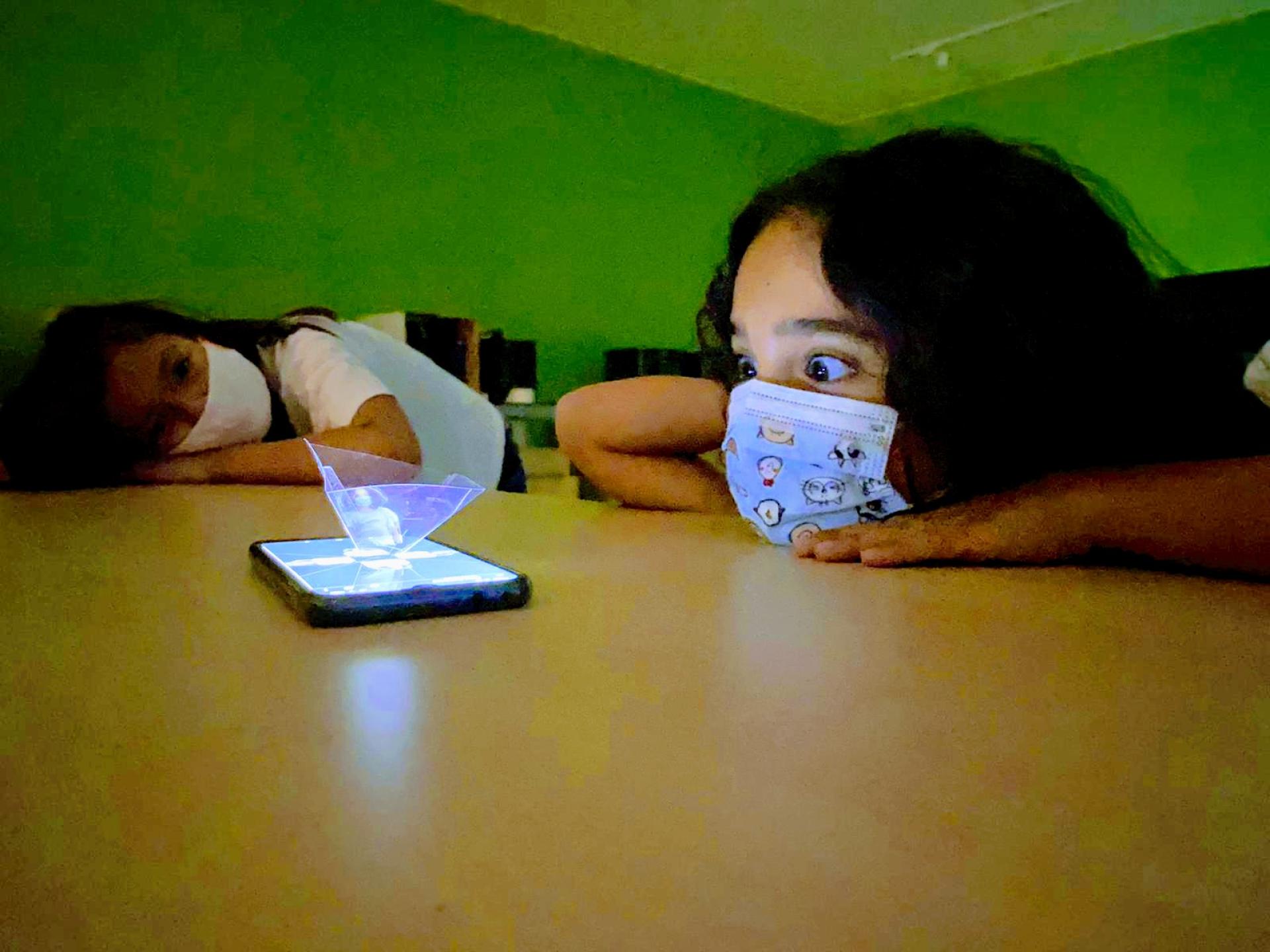
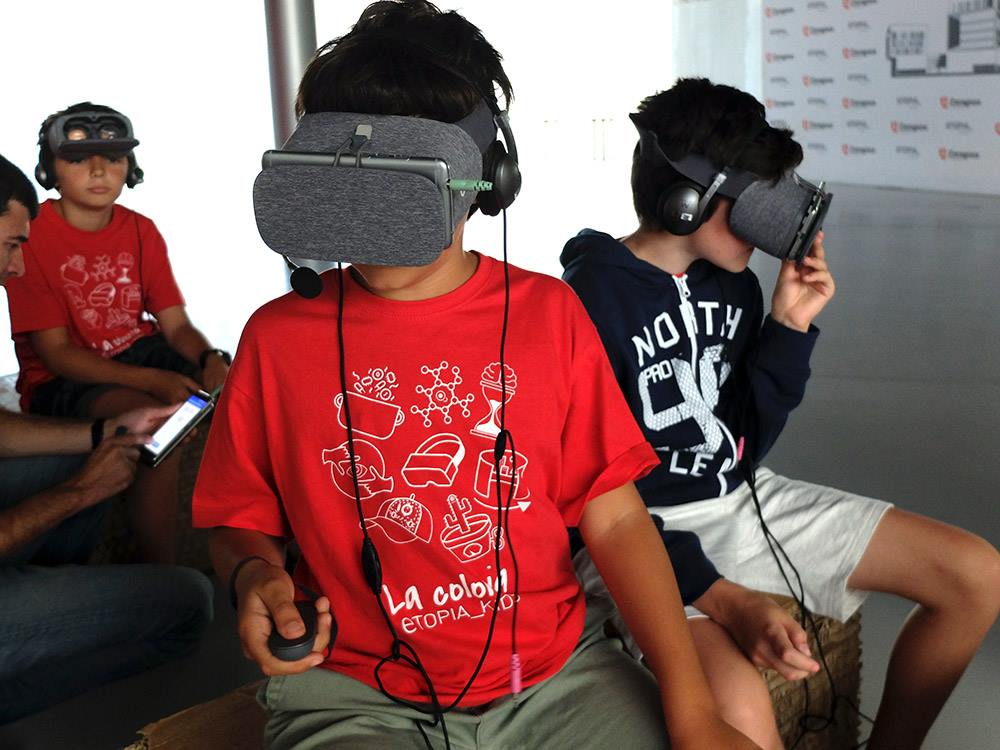
The main objective of Etopia Kids is to allow techno-scientific learning through play and experimentation with creative technologies (robotics, programming, basic electronics with Arduino ...) and image and communication technologies, to discover new capabilities and feed the creativity of participants.
Etopia Kids offers:
• Artificial Intelligence
• videogame design
• animation
• audiovisual, cinema, photography, and new media
• robotics
• electronics
• science, microbiology, biomaterials, astronomy
• 3D modeling
All workshops are based on the "do it yourself" philosophy and imparrted by researchers and professionals of creative technologies.
Key objectives for sustainability
Etopia Kids aims at fostering a culture of sustainability and awareness on climate change. This general goal unfolds into several specific objectives:
- Reflect on the importance of environmental care
- Develop projects arount the 3xRs - Recycle, Reduce and Re-use
- Experiment with nature-related processes
- Raise awareness about the importance of recycling
- Understand how living beings function
- Learn basic concepts around electricity and energy
- Raise awareness around environmental protection
To meet the former goals we have designed several activities and itineraries; such as:
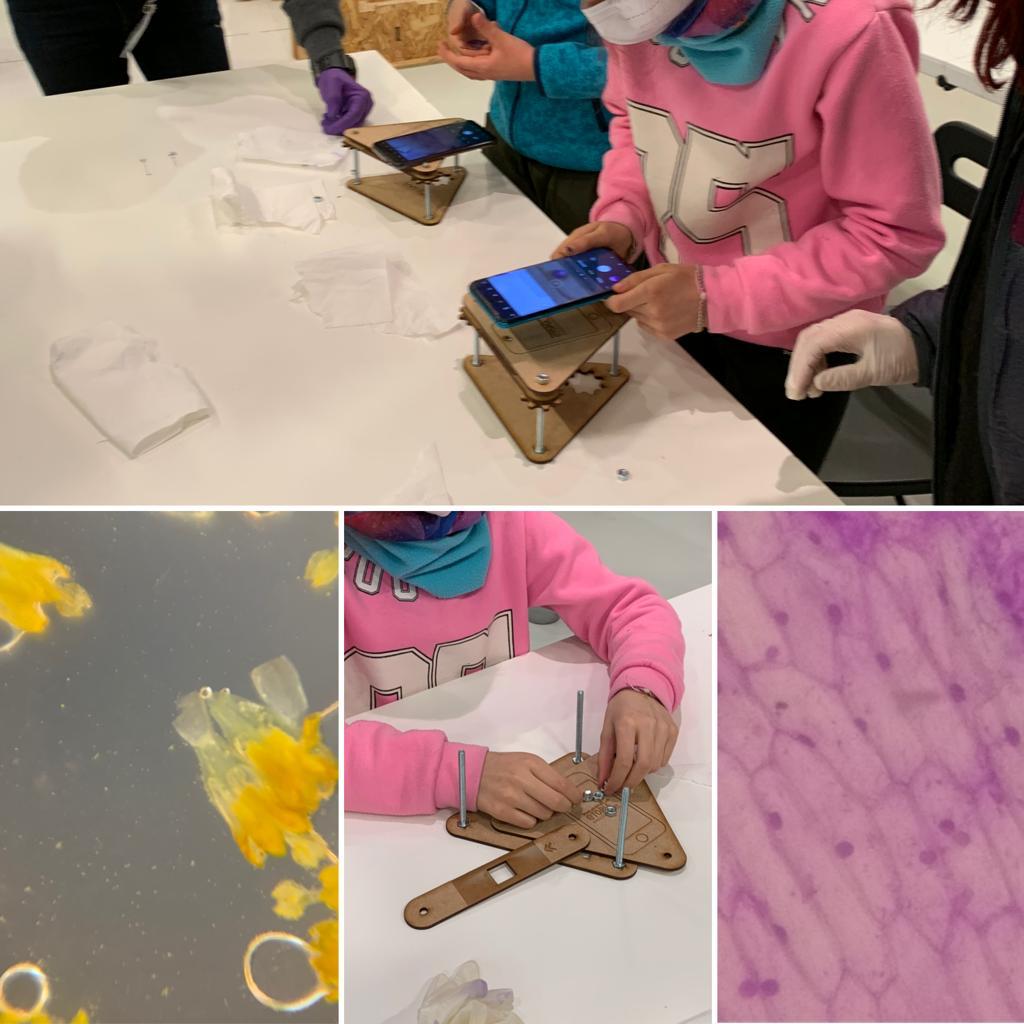
- Reduce, reutiliza y reciencia! (9-12 years) We experiment with micro-organisms (bacteria, funghi, etc.), to obtain bio-materials. To achieve that we combine simple techniques, easily replicable at home, with more complex techniques used in scientific labs, such as crystalization, growing bacteria or cellular dying.
- EcoRobots (9-12 years). In this itinerary, a recycling machine is created. The robot classifies objects in their correspondent container. Using AI, the computer learns the difference between plastic, paper and organic waste.
- Terrabióticos (12-14 years). We will discover suprising phenomena, invisible at first sight, so that kids will learn how ecosystems and organisms work. They will learn protocols and techniques used in micro-biology and bio-materials.
- Jardín robótico (8-12 years). We study the basic needs of plants and the create a garden with artificial plants. Our robot-plants move towards light and are watered automatically. We will learn proamming fundamentals, snap4arduino and IoT technology.
- ElectroReciclaje (8-11 years). The workshop is transformed into a homemade recycling factory. We will give a new life to obsolete domestic objects, turning them into new toys or useful gadgets.
These programs pivot around our WetLab, a specific lab led by a researcher from the Institute of Biophysics and Complex Systems (BiFi)
Key objectives for aesthetics and quality
One of the main objectives of Etopia Kids is to enhance and foster design skills through the use of creative technologies, as well as autonomy and teamwork. All this according to the project's commitment to open knowledge and collaboration.
Design is present in all of our activities, including Etopia Kids programs of techno-scientific and artistic nature that range from 3D design, robotics, programming, electronics, sound, or photography.
Children participating in our programs approach disciplines such as biology, learn concepts and techniques for the production of biomaterials. They also learn how to use fab lab tools such as 3D printing, laser cutting, or milling. With the ultimate goal of carrying out a project in which participants develop products based on these biomaterials.
There are two specific infrastructures that play a key role in the development of aesthetics and design skills: our Fab-Lab and our 600 sqm Digital Media LED façace.
Children put themselves in professional artists' shoes, entering the world of Digital Art and creating their artworks for the led facade of Etopia. The double Digital Media Etopia Façade is a unique device because its structure is custom-built to cover two of the fronts of one of the buildings that make up the Etopia Center. This medium, issued in a non-standardized resolution, is both a technical and creative challenge in which to put into practice different artistic languages and different communication proposals to investigate the real possibilities of these new, currently expanding media.
Kids can interact with the façade and experiment with new media artworks.
Key objectives for inclusion
Etopia Kids works, as a primary objective, for the inclusion and eradication of the digital divide in our city, reserving a percentage of the places of its activities for minors at risk of social exclusion, thanks to the collaboration with the teams of educators and social workers of public and private entities of the city whose activity is framed in the care of minors and / or family intervention.
This general objective includes a target goal of 10% of the places reserved for children at risk of exclusion.
In the same way, the project focuses its efforts on a second key objective: the elimination of gender barriers in the scientific-technological field, favoring the participation of girls in the different workshops.
To meet these goals, we have put in place several measures:
- Firstly, the Etopia Kids scholarship system is proposed as a tool to encourage the participation of people in vulnerable situations in the center's activities. For the allocation of these scholarship places we have the collaboration of the teams of educators and social workers who work with their families from the Municipal Centers of Social Services of Zaragoza, La Casa de la Mujer or the Alba Center, as well as with that of local entities that focus their activity on working with minors such as the Foundation for Comprehensive Care for Minors, El Trébol Free Time Association, La Caridad Foundation, Gusantina Socio-educational Association or YMCA.
- Secondly, through the cultural mediation plan, we actively work with the civic tissue to soften the socio-economic bias of attendees. Specifically, we work to develop a closer collaboration with civic agents to expand this possibility of access to all Etopia KIds activities for minors and adults, not only eliminating the economic barrier, but also favoring active participation in other types of activities.
- Finally, in 2021 we have allocated 50% more funding to extend our scholarship program to reach 15% of the children attending.
Results in relation to category
Etopia Kids has directly impacted +10.000 children and +9.000 families in Zaragoza and its area of influence. Over a population of 68.000 people between 6 and 14 (out an overall population of 660.000), this implies a significant share of the youngsters in the city.
Besides the quantitative impact, Etopia Kids has obtained important qualitative results:
- Firstly, it has accelerated the spread of the maker / DYI culture around the city. Professionals imparting workshops at Etopia Kids have created their own maker spaces and sustainable businesses related to DYI-education.
- Secondly, Etopia Kids has inspired other schools launch similar activities. Not only the talent developed in Etopia Kids, but also the contents, howtos, all copyleft, have been used by other agents in the city to launch their programs and activities around DYI technologies, creating a community of design and technology-based educational projects at the service of child-youth training.
- Finally, Etopia Kids has been a source for new audiences at "Etopia Center for Arts and Technology". The popularity of Etopia Kids has brought new public to the center. A public that is consequently engaged in other activities around art, design, city making, etc. +3.500 people follow our activities through our blogs, social networks and newsletters.
How Citizens benefit
Etopia has established itself as a different and unique space in the city of Zaragoza. From the beginning, the center has worked with different groups, associations, and educational centers so that they find their spaces and places in Etopia. This is achieved both through our activities of mediation, an important activity of the center, and through our network of alliances.
The Zaragoza City of Knowledge Foundation, responsible for Etopia Kids, is a key actor in achieving this. Its board is composed by the two local universities, the region's main bank, the City Hall itself, the two tecnology clusters of the area and a series of individual trustees that ensure the traction with the academic and civic tissue. The Foundation has worked both in accompanying projects of professional artists who want to produce on Etopia, and in the design of dynamics that allow the participation of citizens in artistic, scientific, and technological processes. One of the main objectives is to evaluate the impact of its activities, retain and attract new audiences, and generate active participatory communities.
It also seeks to promote, through artistic practice, the relationship between art, education, and citizenship, promoting new forms of participation through the artist's direct relationship with difrerent groups in the city.
The foundation works and collaborates with different agents of the city such as different departments at Zaragoza City Council, Municipal Social Services Centers, youth houses, civic centers and NGOs. They also collaborate with educational institutions such as the University of Zaragoza, San Jorge University, schools and institutes in the city.
As a result of this cross-sectorial engagement, Etopia Kids program:
- includes children from every neighborhood and socio-economic millieu
- offers multi-disciplinary and cross-cutting contents around science, design, technology and arts
- grows every year in audience, variety of contents and skills
Innovative character
Etopia Kids leans on free and open source culture, thus creating a powerful vehicle to transmit knowledge.
It is designed under the asumption, as David Cuartielles himself puts it, that "technology should be a part of Education". But not in the sense of learning at school how to use a computer, in the same way that childrem do not learn at school how to ride their bikes. Etopia Kids seamlessly integrates the computer, or an electronics board such as Arduino, across different scientific, artistic or leisure domains.
In any case, at Etopia Kids children and teenagers learn how to make computers, robots, films, complex science experiments, aerostatic baloons, new tissues with bio-materials, small satellites, videogames, IoT devices, drones, etc. We have planned to do so in the belief that, if we do that out of school, then once in school in physics class kids will be able to place computers in footballs and measure its acceleration, using sensors, when they drop it from the second floor, or assemble a drone that flies over castles taking pictures for the history class, or measure the environmental conditions and freely share their data.
Etopia Kids has long pursued a deep change in mindset. A change that is driven from above - through education practices and programmes -, but also from below, creating a bottom-up movement where we learn to use technology in our benefit. In this sense, Etopia Kids works with citizen science to make
Etopia Kids strives for a twist on our understanding the value of technology in our lives. This changes implies not assesing just the function of things, but working on their design too, even with small kids.
We believe that education is the basis of the formation of the self, and therefore we pursue the liberation of our most innovative selves. By doing Etopia Kids will provoke a sustainable and durable societal transformation of our city.