Reinventing schools as communites
Basic information
Project Title
Full project title
Category
Project Description
Can a new school bench help learn beauty and practice inclusion? Or a school courtyard be rethought as a green agorà to practice participation? Schools are at city’s heart, where social life begins and educational community can meet. City of Milan has contributed to innovate perspectives in education as urban policy and in use of public spaces, financing innovative learning environments co-designed in 14 schools of the city, especially in suburban areas, to transform schools in community spaces.
Project Region
EU Programme or fund
Description of the project
Summary
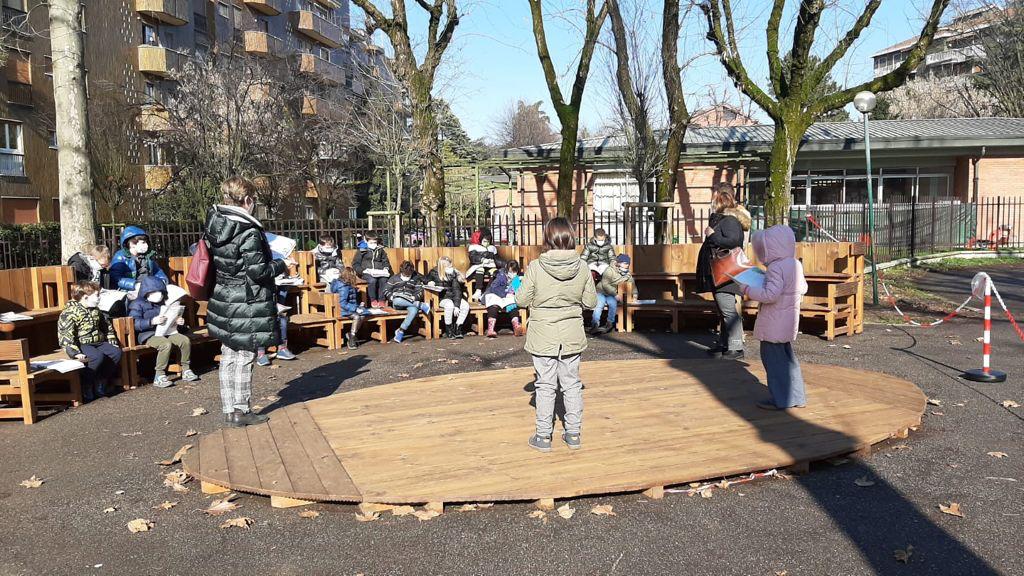
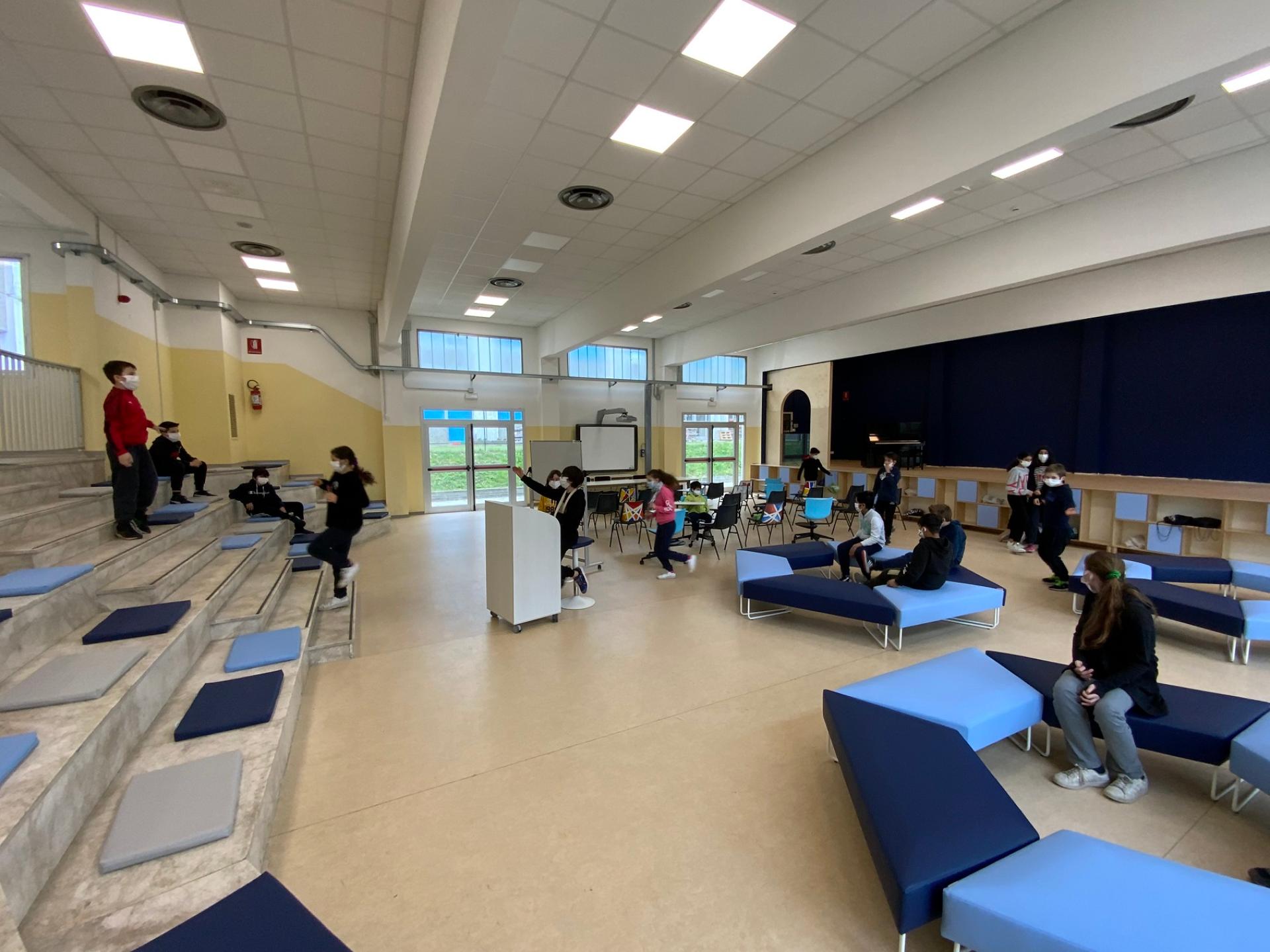
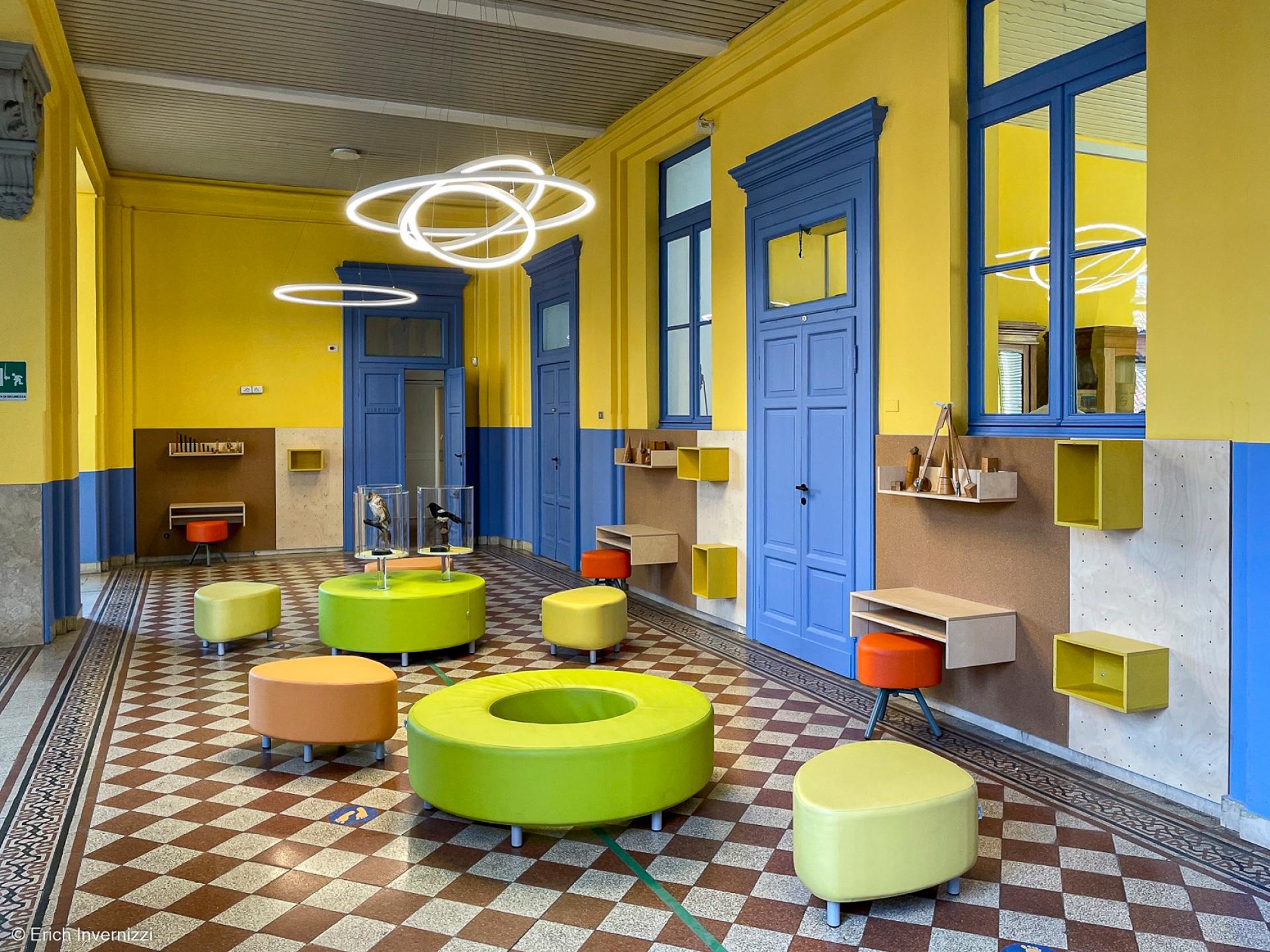
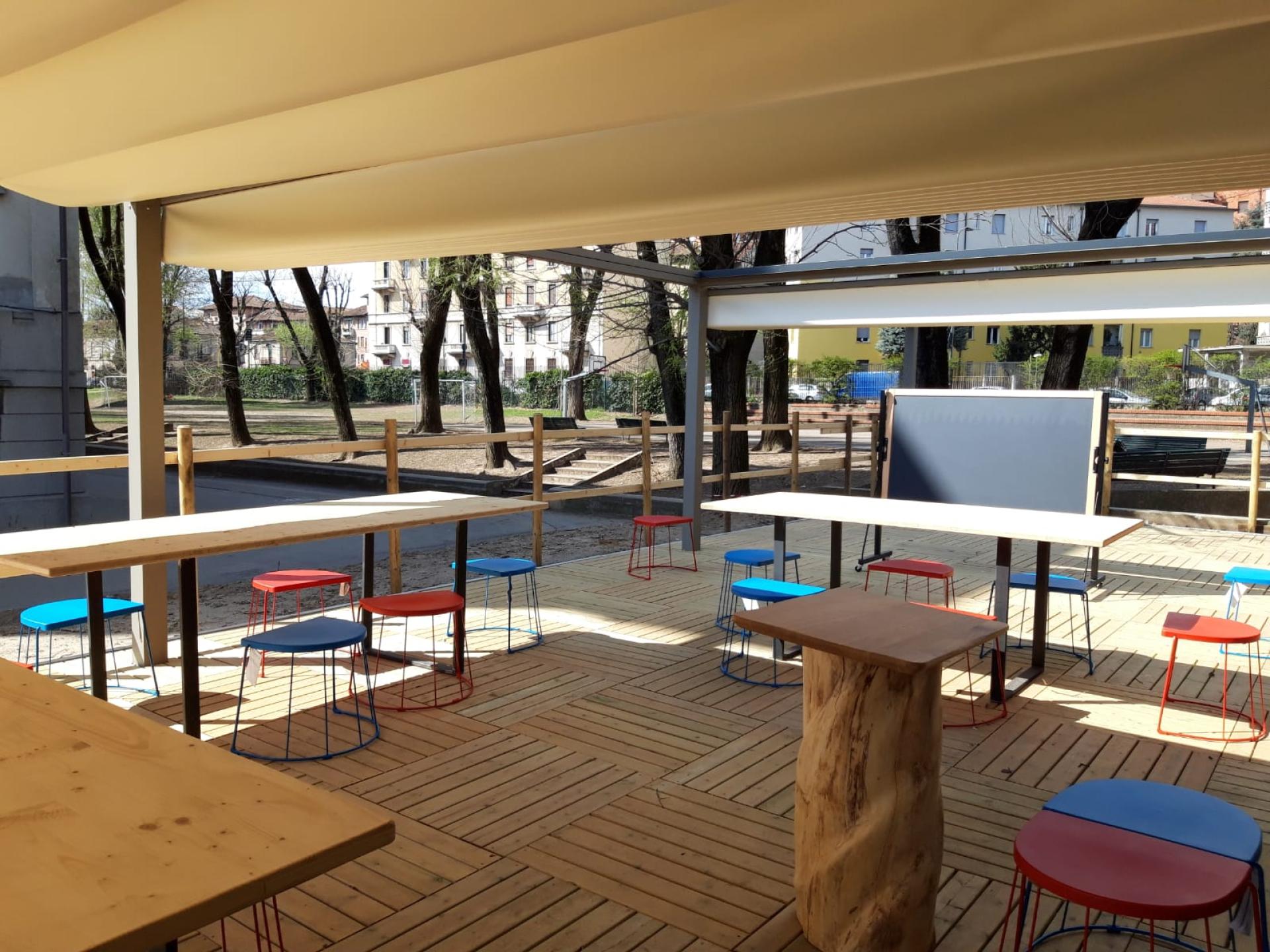
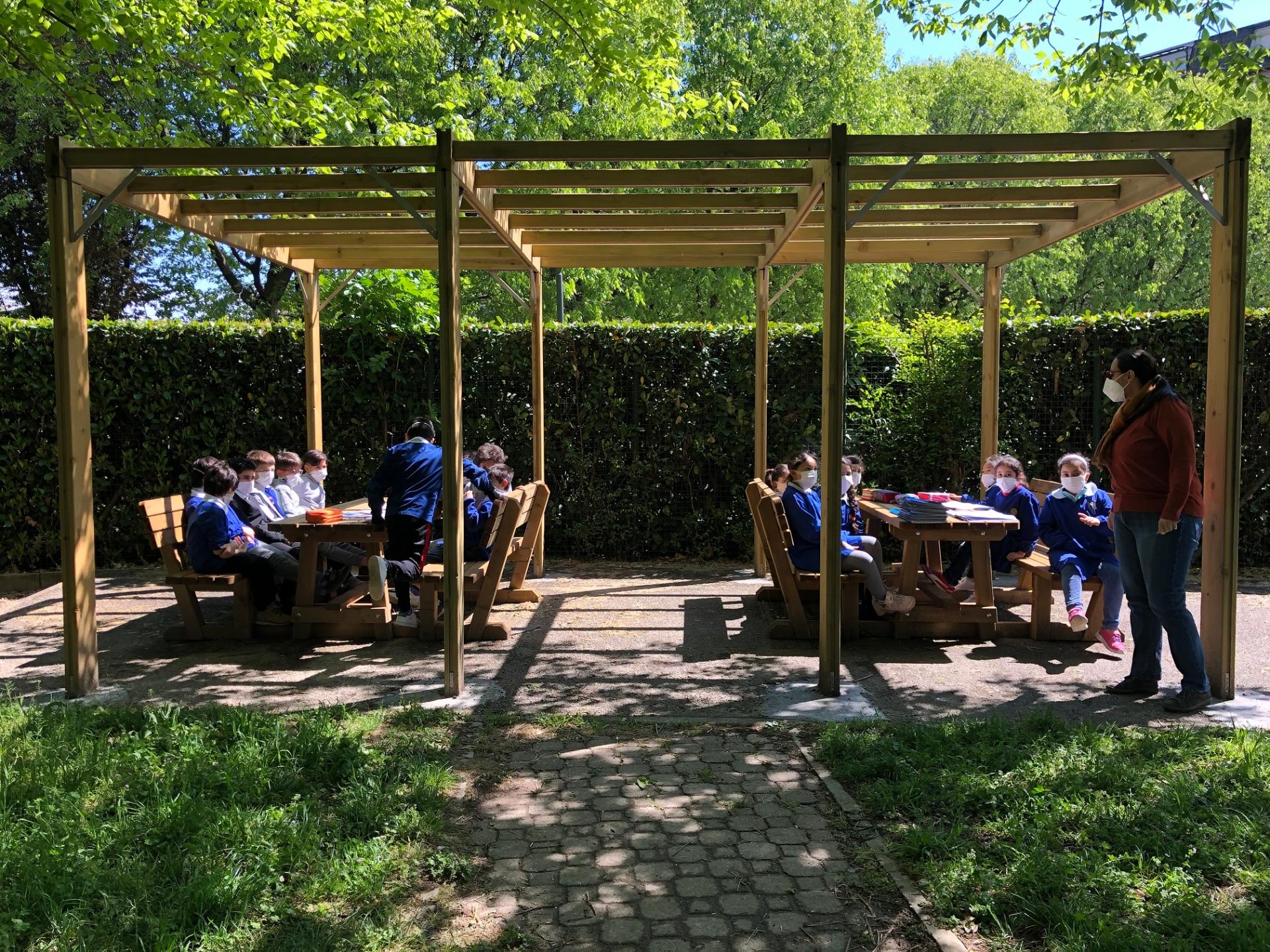
Recent research shows there is strong correlation between effectiveness of learning process and design and setting of where this process takes place. Local government is committed, through its policies and services, in promotion of successful education and in strengthening of urban school network, since investing in schools means investing in the future of the city, promoting its cultural, social and economic growth. Milan Municipality according to its duties has to provide to school furniture and usually do it through the same procurement for all schools of the city. Considering the premises and the peculiarities of each school which should need tailored solutions, it has decided to innovate the approach towards an interdisciplinary one. With the current project the administration has dedicated 500.000€ additional budget from own funds for innovation to let schools test a flexible organization of learning environments promoting the overcoming of the so-called “traditional” classroom paradigm and transforming schools in community spaces open also to neighborhoods, according to “Open Schools” approach. Municipality published a call dedicated to public schools (primary and early secondary) to submit projects requiring an architectural and design project integrated with the description and function of furniture; a relevant educational project for the use of renovated spaces; a dedicated training plan for school community; a 3-yrs monitoring plan to guarantee and verify project results. Schools warmly welcomed this initiative; 38 proposals arrived and 14 were selected (14 schools, impacting on + 5.000 students); all schools have co-design interventions (e.g. outdoor wooden classrooms; maker spaces for manual activities; hallway arranged as "Clarification Corner"; libraries with sound-absorbing panels and comfortable workstations; tables arranged in islands for work groups).
Key objectives for sustainability
The project aims at being financially and socially sustainable. The public investment of this project gives schools the opportunity to start thinking “out of the box” and developing a method, combining architecture, space design and pedagogy, that schools will carry on by themselves in the next future, also through other dedicated funding calls. This method could include stronger civil society engagement in concept design, private sponsor contribution and CSR actions to concrete realization. Thanks to this project schools have become breeding ground for other sustainable projects or initiatives such as green building solutions that Municipality is about to launch in a sort of positive “domino effect”.
The project aims also at being environmentally sustainable, reinventing and using empty spaces and especially for outdoor intervention, enriching school courtyards with vegetable gardens, outdoor classrooms, teaching students to take care of their common spaces.
Furthermore, the project contributes to local economy: having integrated the usual procurement scheme of one big furniture supplier, different schools have chosen to rely on different and multiple suppliers, especially local ones such as woodworkers selecting more customized and “km 0” solutions.
Finally, the project is institutionally sustainable thanks to a specific agreement called “Manifesto Milano” signed among Milan Municipality, Local and Regional School Offices, the National Institute of Education Innovation and Research and the Italian Association for school furniture producers and suppliers. The signature of this important agreement means having on board together main institutional stakeholders in the school field aligned on the same objectives.
Key objectives for aesthetics and quality
The project aims at overcoming the traditional use of school spaces and furniture, by combing aesthetic and quality characteristics with functionality, or rather, this combination is the heart of the project; in fact the intervention on physical spaces and the choice of furniture design is thought together with method adopted as an essential condition for the effectiveness of the learning approach.
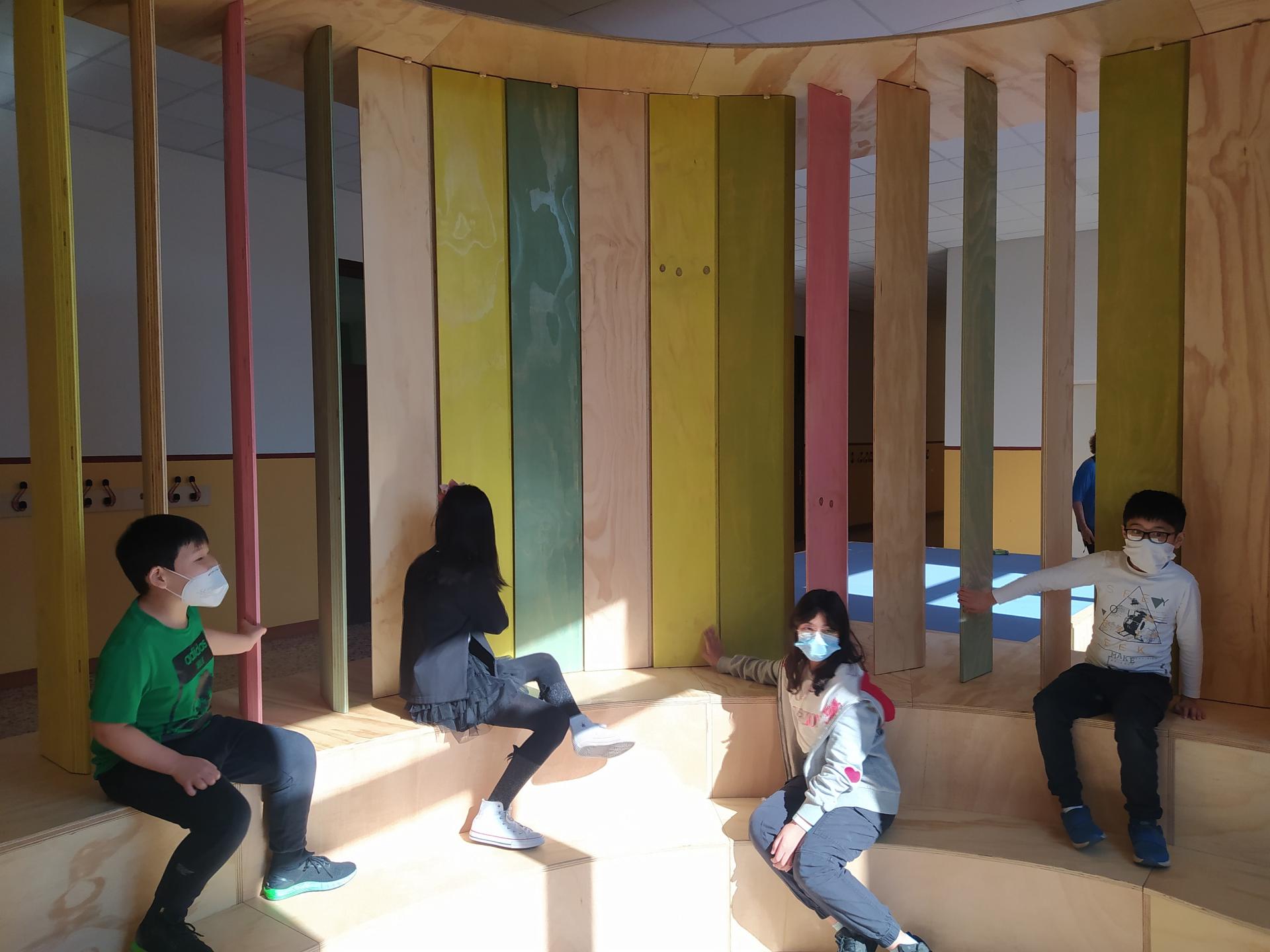
The project, led by this assumption, has realized, for instance, a “reading room” with big colored cushions; classrooms arranged in islands and trapezoidal desks that encourage group work to facilitate peer education activities; an open space artistic “atelier” prepared for different kind of arts (e.g. paint, ceramic,…) in a school with high percentage of students with disabilities; a “green classroom” in school courtyard prepared as “agora space” to practice debate, with very light and coloured benches, easy to be moved by children and so on.
To overcome the idea that functional means ordinary, boring and repetitive according to a top-down perspective, the project wants to let students know that is possible to live in a space crafted on their learning needs.
The aesthetics and quality characteristics of furniture and classrooms setting invite students to develop creative thinking and problem-solving approach, explore their cognitive, social and emotional skills, promote cooperative learning and relations.
Usually, we can see this kind of innovation in private and/or upper class schools, but the project aims to fill with beauty and innovation public school environments, especially in that located in suburban areas, in more complex situations, to let all students to be educated at beauty and to take care of objects, spaces and relations.
Key objectives for inclusion
Talking about inclusion needs a foreword on Milan urban context and public school system. In the last years the city has been affected by a population increase and also an important students' increase (primary and early secondary). Most of them have not italian origin and that fact has started to determine a change in school choice by italian middle-high class families and to create the so-called White Flight phenomenon. That produces the effect to have some schools quite completely populated by students with non Italian origin. Furthermore, it’s to consider the increasing tendency to early drop-out of students, especially during early secondary schools and due to different and complex reasons that show a certain distance between educational system and students' needs. This generates frustration in teachers, students and families and can lead to a vicious circle. Often we find that students affected by high drop-out risk are students with non Italian origin, living in suburban areas. Milan Municipality, with this project aims to reach the double objective:
- to fight the White Flight phenomenon, reattracting Italian students to peripheral schools thanks to the attractive proposal of renovated spaces and initiatives
- to fight the early drop-out with innovative teaching and learning methods
The new organization of classroom setting and the new vision of study environments realized by the project are a powerful tool to promote and practice a real inclusion, first of all inside the school buildings, in behavior among pairs and in the relation between teachers and students, but also outside schools in a renovated way to engage families and to connect and include local stakeholders.
Results in relation to category
The project is based on an interdisciplinary approach. The concept is that the whole school building with its structures and spaces contributes to students' learning process and to local communities' learning process inviting students, teachers, families and other actors to jointly participate.
14 schools have been renovated with an impact on around 5.000 students and their teachers thanks to a total amount of 500.000€ expenditure in the procurement of innovative furniture and in spaces planning.
Solutions adopted by the project are the result of research and collaboration among different disciplines, such as: pedagogy, architecture, design and participatory training methods.
In this framework some schools, starting for instance from the innovative pedagogic method adopted (e.g. Pizzigoni, Montessori, constructivism, movement like “Schools without backpack”) has rethought spaces and furniture for responding properly to the learning approach.
Some other schools starting from their available environment and/or unused spaces have codesign them to tailor them on students learning needs and to promote an open use of school also by local community.
The power of concrete experience is part of the result: for instance, a student seated in a bench, beautiful to see, comfortable for the body position, appropriate for working in group and for socialization, this process and its results are an interdisciplinary learning itself.
During project realization, all the actors involved (e.g.institutions, teachers, educators, students, local community, furniture’s suppliers, experts…) have participated to a collective learning process led by collaboration and contamination among different competences and know how.
How Citizens benefit
The main groups of citizens affected by the project are school communities. The power of Innovative Learning Environments (ILE) has strong impact on students and teachers joint learning experience. It not only increases student engagement and well-being, it can also improve academic outcomes and provides new teaching tools and settings.
School communities have been engaged to co-design spaces. In preparation of the proposal, each school has involved their students and teachers, in some case supported by experts, to define the project. Some of these spaces are available not just for school communities, but also for families, local associations, citizens of neighborhood to strengthen school-city connection in a real “Open Schools” approach. A dedicated training on how to use ILE linked to pedagogic methods is foreseen and developed by school and experts.
Early results of project implementation tell us the new learning environments have had a positive impact on school community well-being according to the objectives of the project.
Innovative character
The main innovative aspect of the project lies in its process, the collaboration among different scientific fields: architecture, design, pedagogy working together and taking in consideration the design of educational methods and activities and the space where they take place as a whole. Interaction between students' learning experience and space use experience has a key role in the project. Recent scientific research demonstrates how cognitive and emotional aspects are connected and the best learning setting is a setting that enables emotion expression. After years focussing just on cognitive element of education, the social and emotional education seems to be the “missing piece”. Starting from this point, the project gives an innovative perspective. In a learning environment where students can interact, work together with peers and teachers, express themselves, understand other behaviours, move their bodies and their thoughts, the learning experience becomes enormously enriched. The project includes experimental programs, aimed at implementing cutting-edge teaching methods. Other 2 innovative characters are: the school communities engagement in co-design spaces and teachers and educators training for using them in the best way. Infact to design a new environment is not enough without a proper involvement and training of its users, because it could be just a modified space where teachers and students continue to put in place the same old learning and teaching schemes. The flexible organization of learning environments promotes the overcoming of the so-called “traditional” classroom paradigm. Finally, the project represents an innovative tool also from a policy-making perspective: the procurement of school furnishing elements is part of local authority duties. With this project Milan municipality has chosen not to provide it as a mere execution of a legal obligation, but as an advanced educational pact between the Local Authority and schools.