Summer Universities GBS and AEMS
Basic information
Project Title
Full project title
Category
Project Description
Based on the challenges of climate change, the two interdisciplinary summer programs "Alternative Economic and Monetary Systems (AEMS)" and “Green.Building.Solutions. (GBS)” deal with the increasing necessity of a socio-ecological transformation: Following a holistic approach, AEMS highlights alternatives for the economic status quo. GBS focuses on ecological architecture and sustainable urban planning. Both have an emphasis on a mixed international audience and transdisciplinary cooperation.
Project Region
EU Programme or fund
Description of the project
Summary
The annual summer universities “Green.Building.Solutions. (GBS)” and “AIternative Economic and Monetary Systems (AEMS)” are unique in their holistic approach to the topic of sustainability in light of the increasing problems caused by climate change – ecologically, as well as socially:
GBS specializes on first-hand ecological knowledge and engineering expertise. The program deals with the ecological, economic, technical and social aspects of green building and construction. Participants deepen their knowledge in passive house planning, sustainable urban development, new energy technologies, innovative architecture and ecological design together with Austrian and international experts. A group design project aims to incorporate the gained knowledge.
AEMS is open to motivated applicants from all fields of study and focuses on alternatives to the economic status quo. International participants deal with limits of growth, as well as the instabilities of our financial system and learn why a drastic system change is necessary to stabilize the world climate at 1.5°C. There will also be an additional focus on possible solutions to the financial crisis triggered by Covid-19.
Both are designed as modular university courses lasting three weeks and include a program of lectures, excursions, workshops, discussions, and thematically relevant film screenings. In total, the GBS corresponds to a student workload of 7 ECTS (175 real hours), the AEMS 5 ECTS (90 real hours).
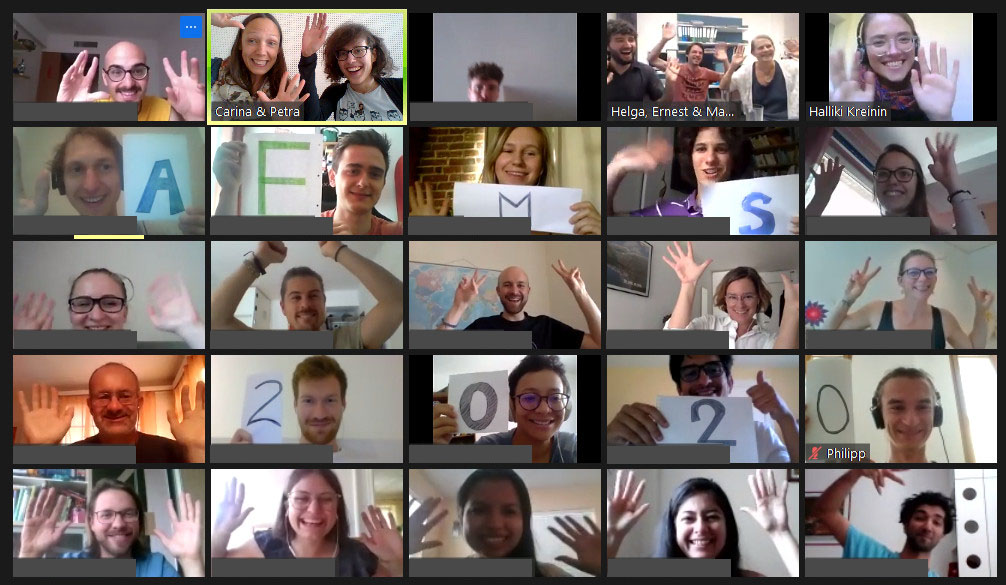
The summer universities take place annually and are held in a digital format already for the second time in 2021, enabling international changemakers to participate without the additional costs and environmental impact of travelling to Vienna. They are not only trained to be responsible actors who implement what they have learned in their home countries: The interactivity of the program promotes exchange and networking, which are essential for achieving sustainable development.
Key objectives for sustainability
Many problems we are facing today, such as extreme weather conditions or the urban heat island-effect, will increase with the ongoing climate change and environmental degradation. These complex challenges require solutions on the global scale. In order to stabilize global warming at 1.5°C by the end of the 21st century, fundamental behavioural changes are needed – and it all starts with awareness, on both the local and global level. Education plays a crucial role in fostering an interdisciplinary problem understanding. Conventional university programs usually focus on single issues rather than the big picture, however, and too often leave students with detail-oriented knowledge without being able to connect the different fields.
Complex developments, such as climate change with its impacts on ecosystems and social coexistence, require a comprehensive understanding of the problem as a basis for long-term behavioural change. This is where the annual rewarded academic programs AEMS and GBS come in: The overall goal is to convey interdisciplinary expert knowledge in order to not only shed light on the current problems, but primarily focus on alternatives at hand as well as best-practice examples.
On their mission of raising awareness for sustainability, the non-profit summer universities aim to reach as many students and professionals as possible and therefore offer an extensive scholarship-program: In cooperation with the many partners, supporters and public funders, students are enabled to participate on the basis of a reduced participation fee or – in the case of the Empowerment Scholarships targeted at an audience from low-income economies specifically – with their full fees covered.
Key objectives for aesthetics and quality
The academic summer programs GBS and AEMS aim at raising awareness for sustainability via an interdisciplinary and holistic approach. The 3-week long courses therefore enclose a modular curriculum offering different types of activities such as lectures, excursions, workshops, energy simulations and a final group project work. Both programs have been adapted to a digital interactive format for 2020 and 2021.
In order to guarantee a high educational quality as well as unique experience to make, the programs are organized as cooperation projects by OeAD student housing: The non-profit organization offers accommodation for 12.000 students and guest researchers in Austria’s university towns per year. About 3.000 live in guesthouses built according to the passive house-standard (PH) and beyond. The mission “passive houses for active students” has already started in 2005, with the first PH student dormitory worldwide and now includes two EnergyPLUS guesthouses as well as the first flexible dormitory built in modular wooden construction.
OeAD student housing organizes AEMS and GBS in cooperation with more than 60 international academic partners, who also contribute to the contents.
After successful completion of the program, students of “Green.Building.Solutions.” receive a certificate on 7 ECTS, alumni of “Alternative Economic and Monetary Systems” are awarded with a certificate upon 5 ECTS – each issues by the University of Natural Resources and Life Sciences, Vienna for the students to accredit at their respective home university.
The main advantage for participants is not only the knowledge gain but also the opportunity to build a network of like-minded people and experts. They learn from the best and about Austrian best-practice examples, which brings them a beneficial add-on to their career. Some have already continued to do a master’s study, an internship or a research project together with Austrian / international partners after taking part in AEMS and/or GBS.
Key objectives for inclusion
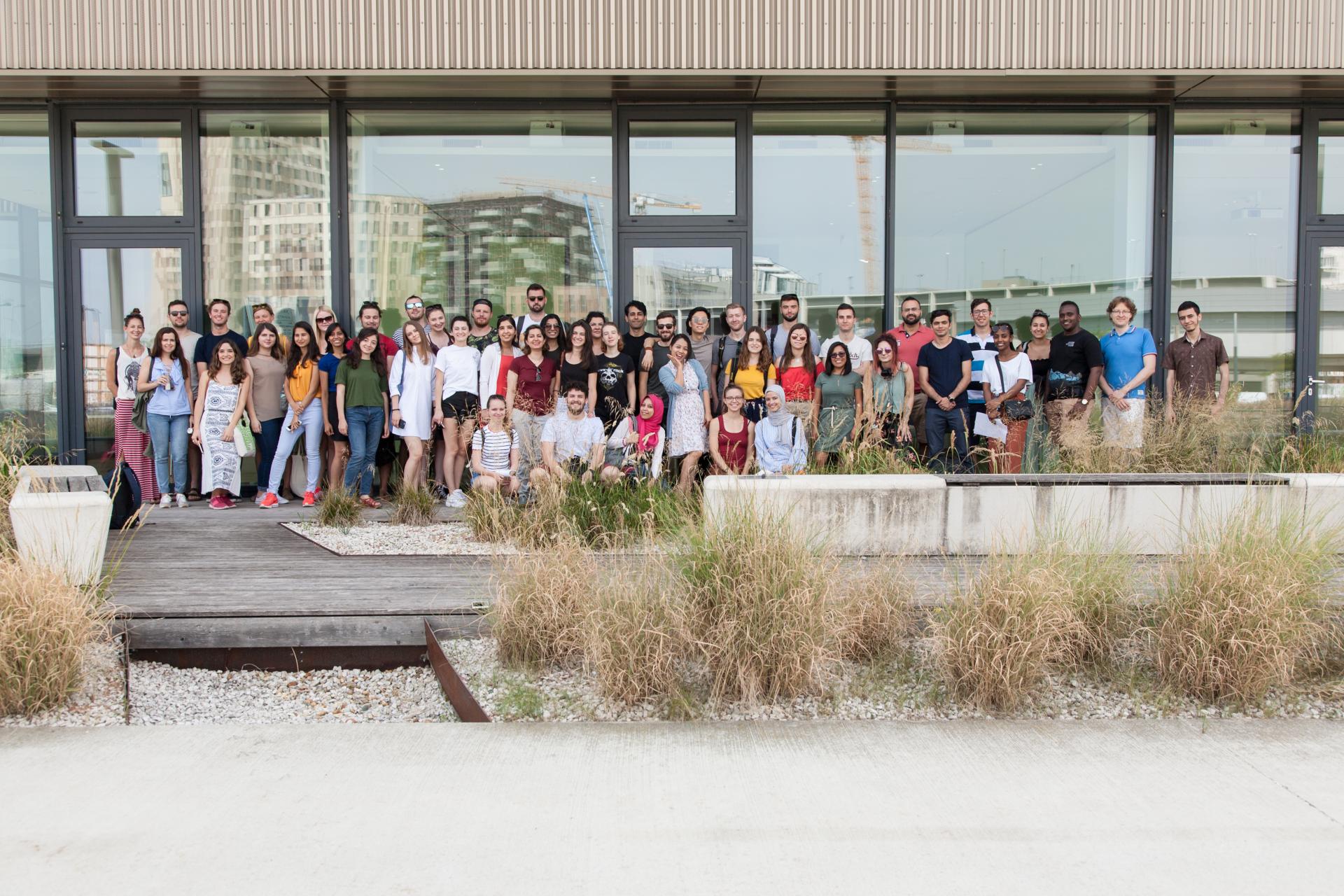
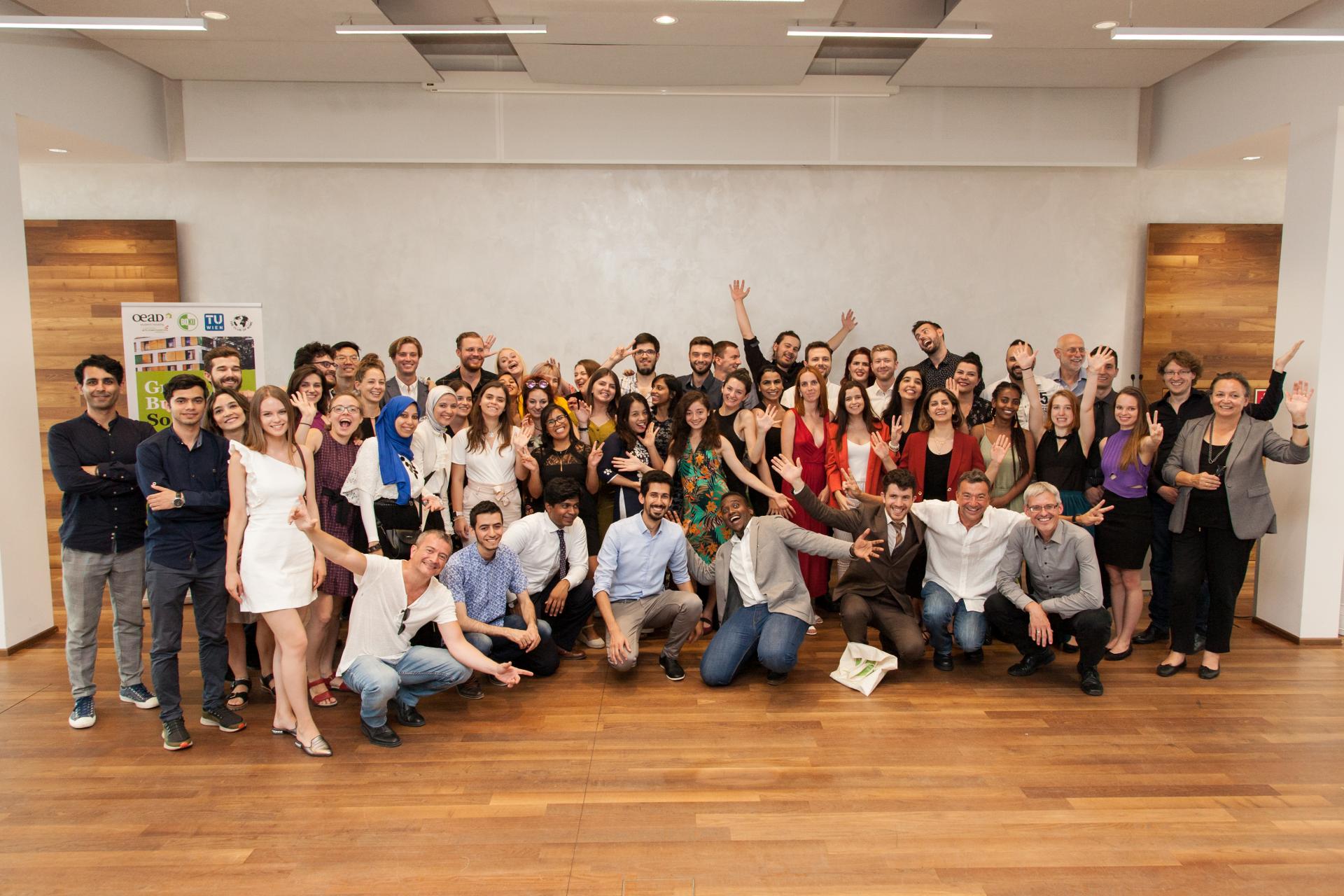
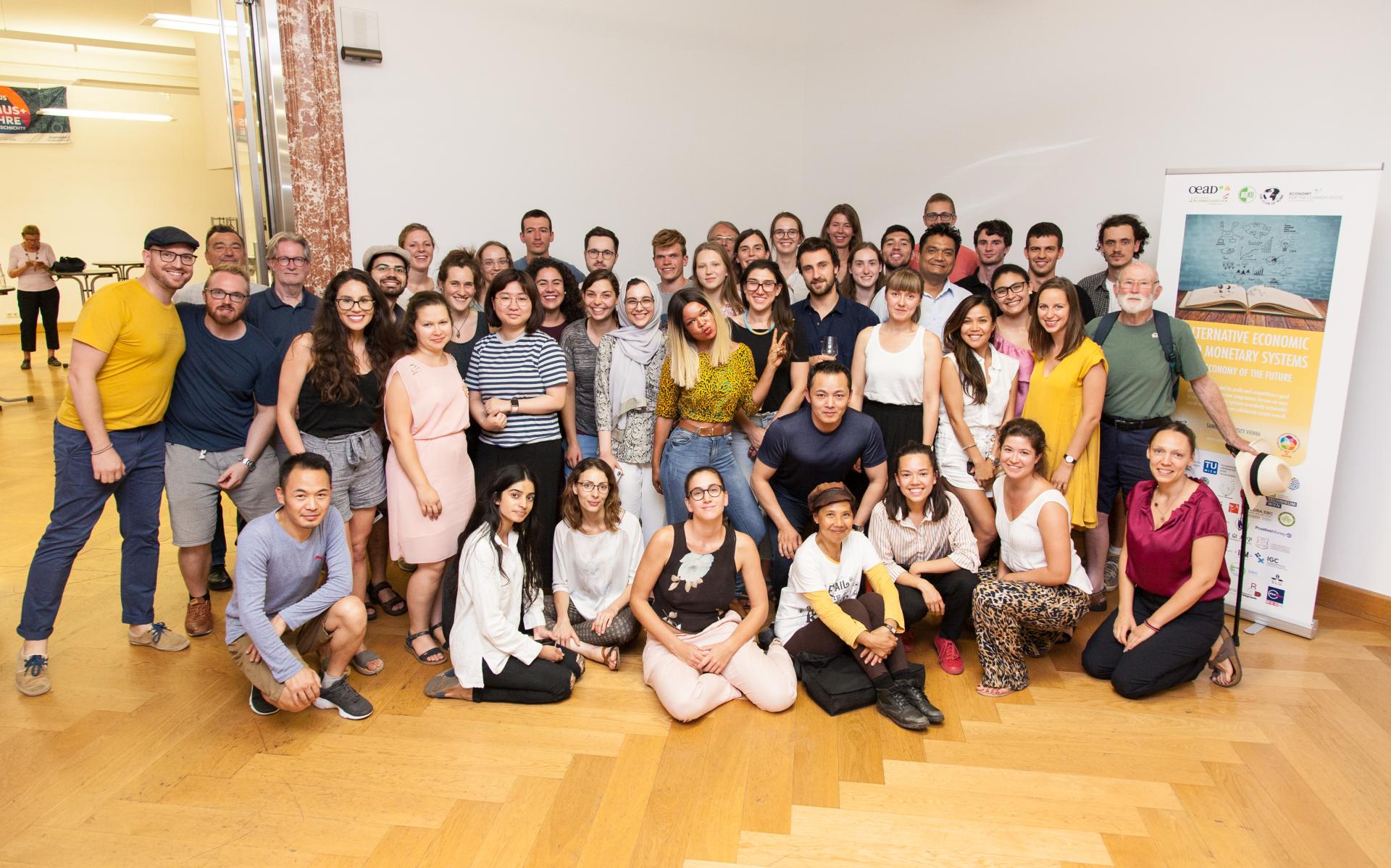
Both GBS and AEMS aim at inter- and transdisciplinary, but also intercultural exchange in light of the diverse backgrounds of participants and lecturers. Therefore, students and professionals from all over the world are invited and encouraged to participate. A special focus is put on a high diversity of participants during the enrolment process in terms of age, gender and nationality. GBS has 348 alumni from 77 countries, while AEMS counts 318 alumni from 70 countries of all ages and diverse professional backgrounds. So far, the summer programs count more than 650 alumni of 94 nations with the youngest participant at the age of 18 and the oldest at the age of 83.
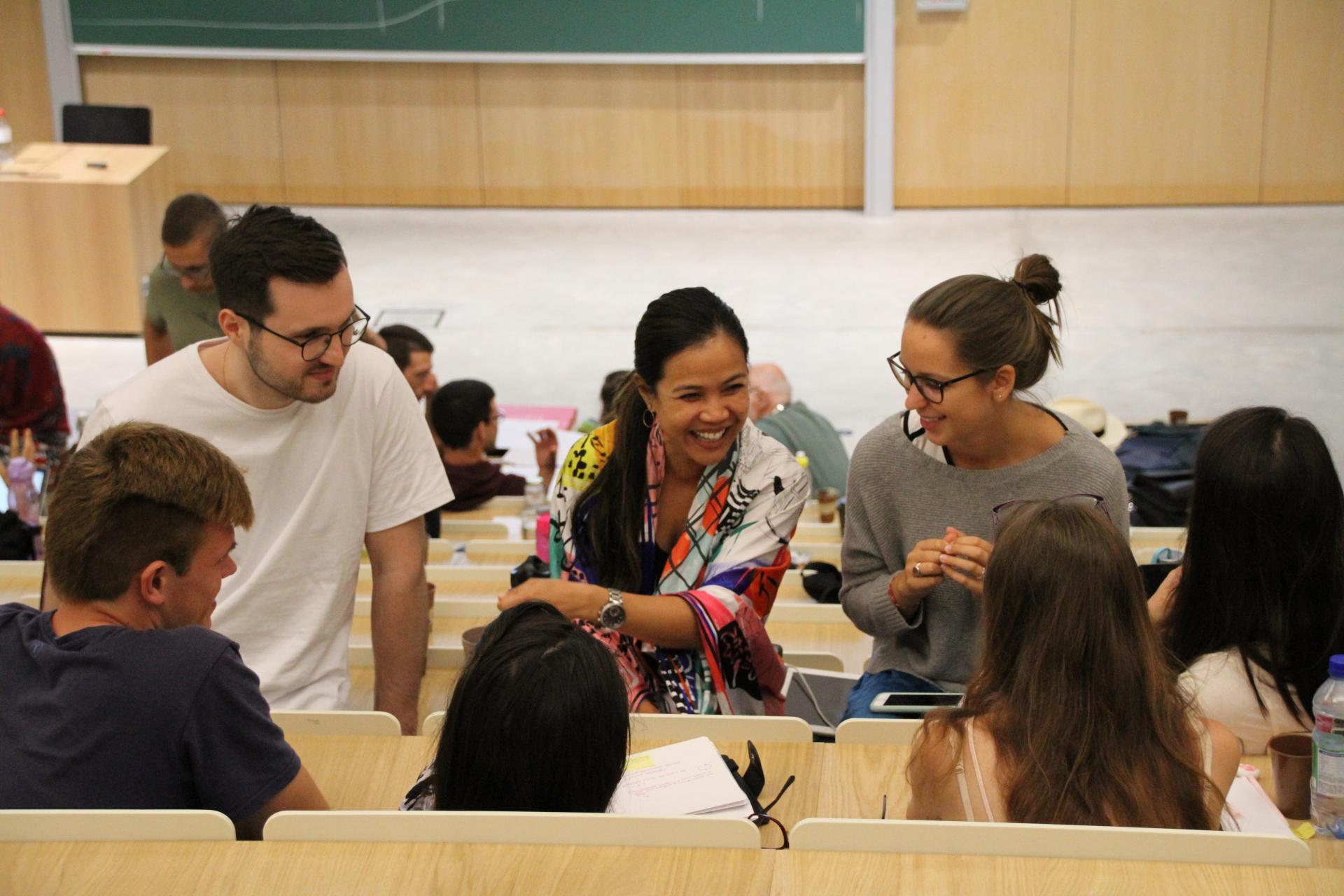
During extracurricular activities, such as sports events, movie night, or excursions, as well the group work assignments both programs entail, participants get to learn from each other and broaden their horizons in terms of gaining new perspectives. Consequently, they gain a deeper understanding for the far-reaching topics and problems addressed during the courses.
For both summer universities, alumni often stay in touch even long after the course and/or continue to work or get involved with projects in their professional careers: Some GBS-alumni have continued to write a master’s thesis on topics discussed during the summer program or gone ahead to find the first passive house organization in their home countries. Similarly, AEMS-alumni often continue to get involved with environmental organizations or pursue their own projects to implement.
After 2020, both summer programs will again take place in an interactive digital format in 2021 to enable changemakers from all over the world to gain in-depth knowledge for a more sustainable future. As already mentioned, empowerment scholarships enable participation without any costs for applicants from low-income countries. This supports equity, inclusion, fairness and justice.
Results in relation to category
The Summer University “Green.Building.Solutions.” addresses students and professionals from architecture, energy technology, civil engineering and similar fields by providing expert knowledge on ecological building and sustainable urban planning. The Summer School “Alternative Economic and Monetary Systems” offers an overview of alternative approaches and reform proposals to the existing economic/financial system and is open to all interested students and professionals.
With increasing application numbers, the summer universities indicate a growing awareness and show their success on three levels:
1) Individual: Graduates are motivated to contribute to climate protection in their respective positions and in everyday life - which is evident from the feedback collected.
2) Collective: Graduates are aware of their social responsibility, encourage an active debate in their environment and initiate projects independently; the OeAD student housing supports their visibility.
3) Institutional: The programs offer a platform for global exchange and networking of interdisciplinary actors from business, politics and science.
We also offer the concepts of both successful programs to our international partners, who could replicate the summer program at their university/in their country. The curriculum as well as know-how already gained are offered free of charge in support of our vision of open source-sharing of knowledge and experience in favor of sustainable building and alternative economics.
How Citizens benefit
The summer universities are led by cross-institutional steering committees consisting of: OeAD student housing, University of Natural Resources and Life Sciences Vienna, Economy for the Common Good, Academy for the Common Good, Vienna University of Technology, Austrian Institute of Technology, Danube University Krems, FH Campus Wien, FH Technikum Wien, Passivhaus Austria, Reinberg Architekten ZT, City of Vienna, University of Vienna.
Together with the many partners involved, a scholarship system has been implemented in order to allow for the largest number of interested and highly qualified students to participate and gain expert knowledge to benefit not only themselves in their further careers, but also the society at large.
Cooperation partners are (inter)national universities, universities of applied sciences, research institutions, companies from the private sector and public institutions. Austrians renowned climate researcher Helga Kromp-Kolb (AEMS), as well as Karin Stieldorf together with Doris Österreicher (GBS) are the respective academic directors.
During the two programs, public events are offered free of charge for attendees, such as the public opening event of both AEMS and GBS which encloses a panel discussion with experts such as Austrian Federal Minister for Climate Action Leonore Gewessler in 2020.
Other publicly accessible events include movie nights with thematically fitting documentaries or the Expert Talk Series started in 2021: During these free online events, experts open up the topics of ecological construction and sustainable urban planning, as well as alternatives to the current economic and financial systems to the general public. These events are free of charge and offer the possibility for questions, as well as discussions and networking not only with the speakers, but also other members of the audience.
Innovative character
Both programs are characterized by their holistic approach to the problems of climate change and environmental degradation, which are examined from an interdisciplinary perspective:
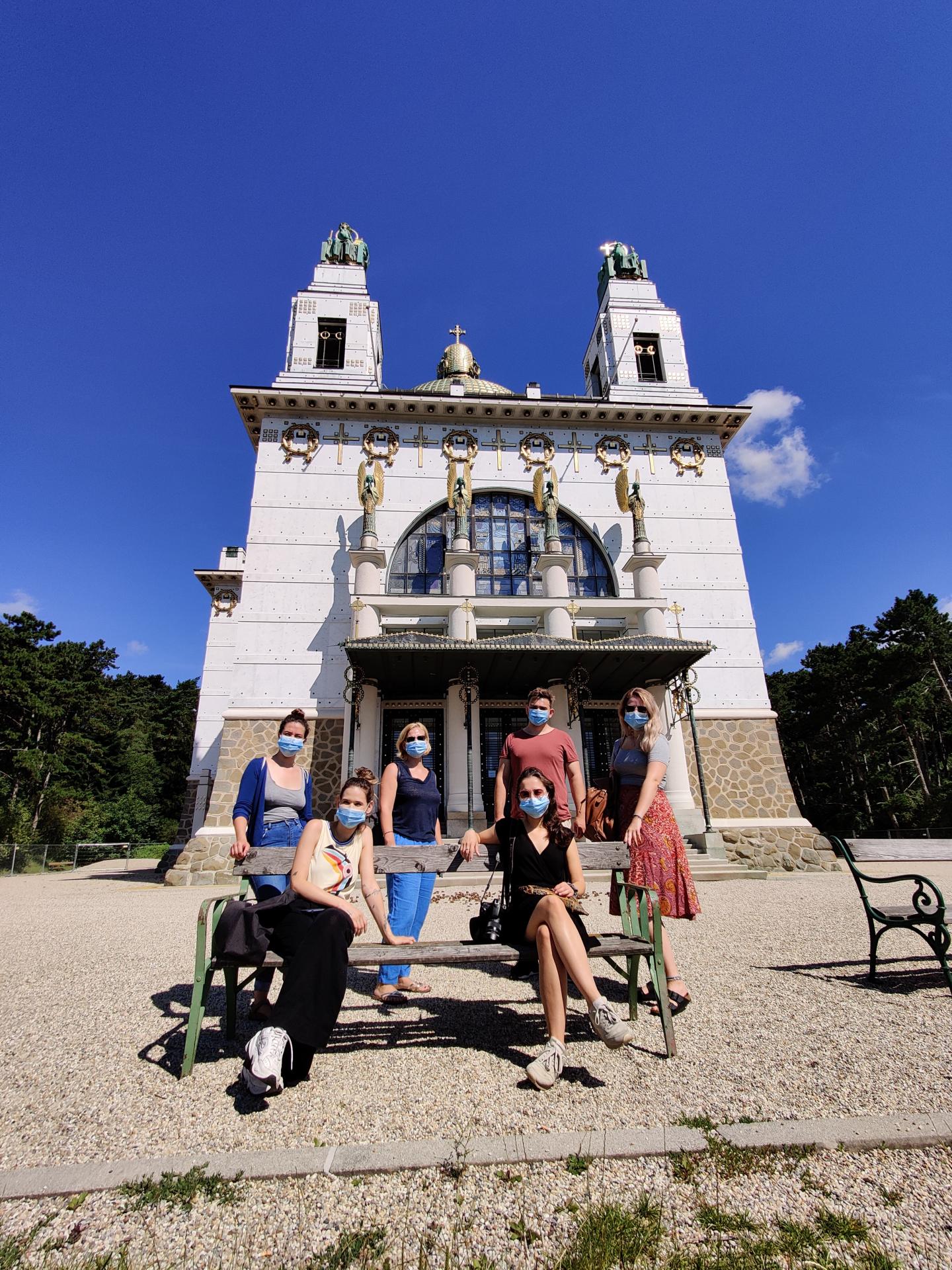
GBS presents new innovative construction technologies and sustainable building materials. It includes not only excursions to pioneering best-practice examples, but its students also profit from the accommodation offered during the program: they get to first-hand experience ecological living in a PH student dormitory by OeAD student housing in Vienna for the duration of the entire program. The course further also enables a practical examination of the topics discussed by means of a final project work: In 2020 student were to work on the real-life project of creating an EnergyPLUS-university campus on the historical Otto Wagner Area in Vienna also taking heritage protection into account.
AEMS offers a deep understanding of why a drastic system change is necessary in order to stabilize the world climate at 1.5°C, but doesn’t stop there: The summer program sheds light on alternative approaches for our economic and monetary systems. International participants not only deal with limits of growth, as well as the instabilities of our financial system. They learn about innovative alternatives for a socio-ecological transformation and get to put their knowledge gained into practice during an interdisciplinary group project work.
In addition, different approaches for the building sector as well as for the economy are discussed during public expert talks hosted throughout 2021.
There are no similar programs including different approaches, perspectives and stakeholders from the respective fields and encouraging change in direction of climate change adaption / mitigation and sustainability. AEMS and GBS are unique international cooperation projects of interdisciplinary education, aimed to reach out to a global audience with our pioneering knowledge – a fundamental prerequisite for change.