KORZO ZÁLESIE
Basic information
Project Title
Full project title
Category
Project Description
The story of the rediscovery of the Little Danube River in Zálesie. A multi-year project to transform a neglected river embankment into a lively village promenade. Space for walks in nature, discovering fauna and flora, relaxation of paddlers, tourists, cyclists and locals. The former junkyard on the banks of the river and the meeting place of active drug addicts has turned into an attractive part of the region. The aesthetics of the intervention will merge with the surrounding nature over time.
Project Region
EU Programme or fund
Which funds
Other Funds
INTERREG V SK-HU - Project DANUBE BIKE& BOAT (SKHU/1601/1.1/014)
Description of the project
Summary
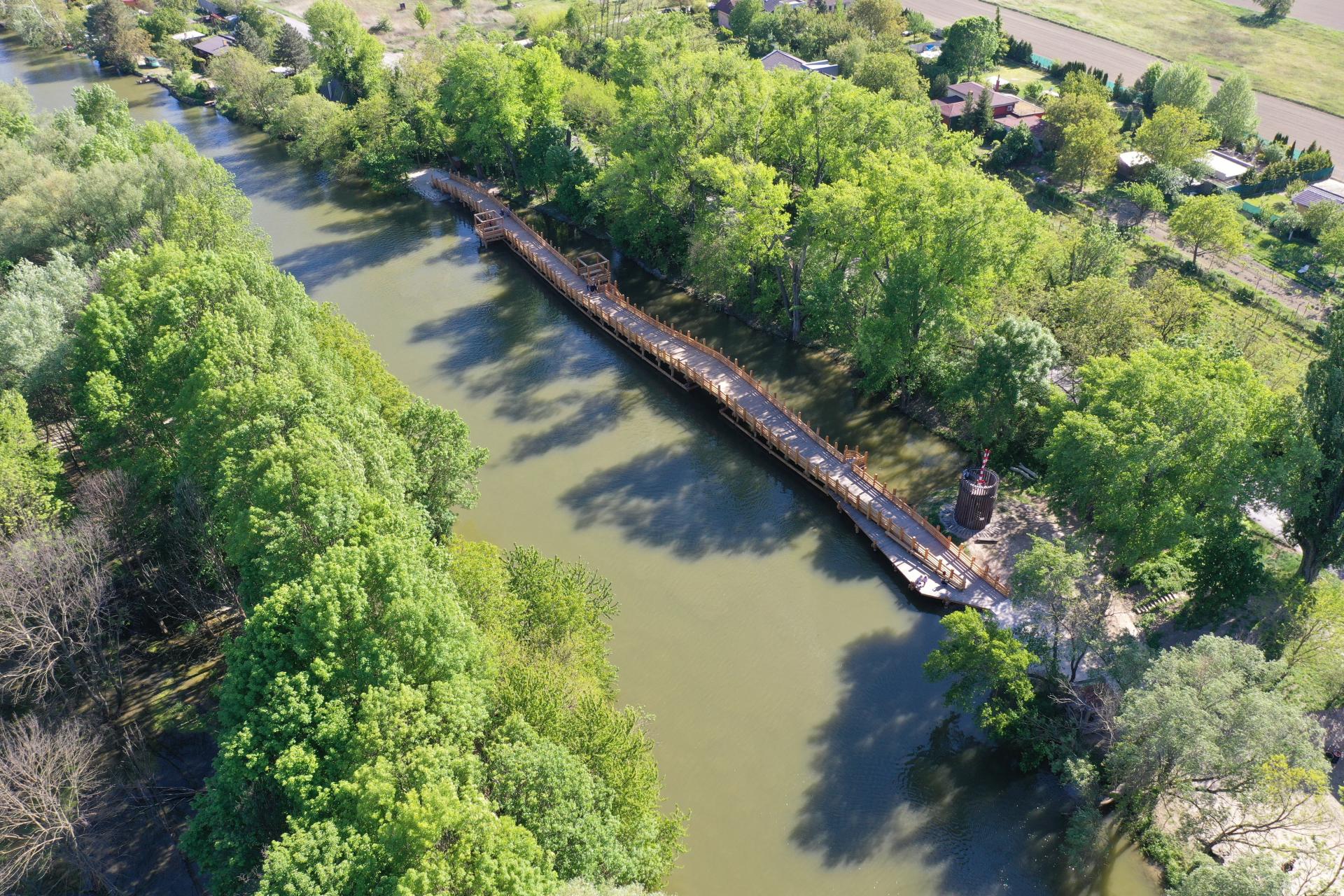
The space in the eastern part of the village Zálesie, where the promenade is located, is an exceptional and unmissable place, where the Little Danube River in a right-handed meander approaches the built-up area and in a short section of open space allows you to experience the beauty of untouched nature directly from the public road. However, the potential of this place has long been hidden under 300 tons of waste.
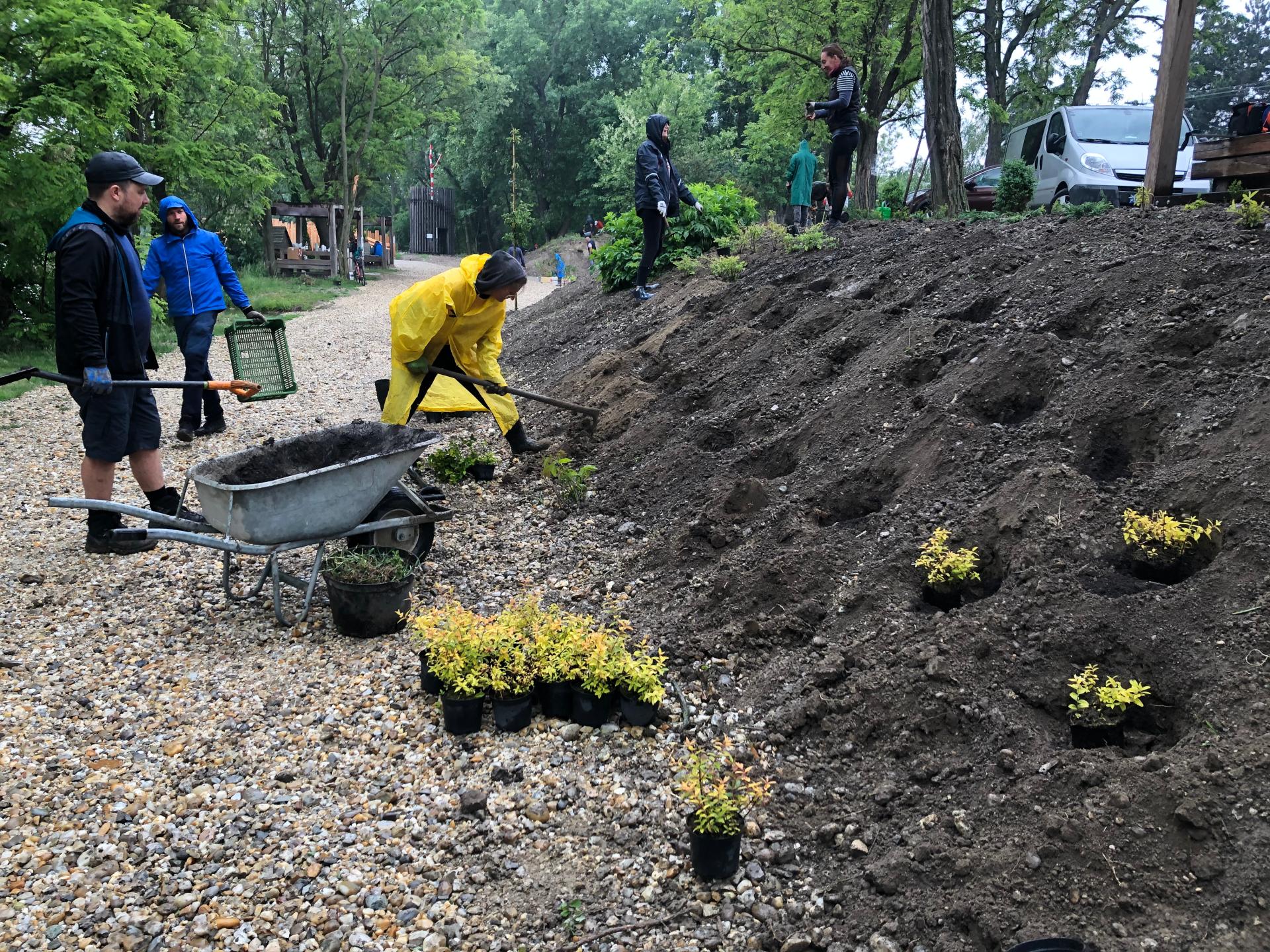
The initiation for the Korzo Zálesie project was the construction of the Zálesie Lighthouse with a view of the Little Danube, which was implemented by an active community of enthusiasts from the village in 2013. Subsequently, architects from the AŽ PROJEKT studio designed the whole concept of transforming the bank of the Little Danube into a place for relaxation, rest after work and a place to meet neighbors. The Korzo Zálesie project was implemented in the years 2018-2020. The space where the inhabitants were afraid to enter, an overgrown landfill by the river, became a place to discover the beauties of the nature.
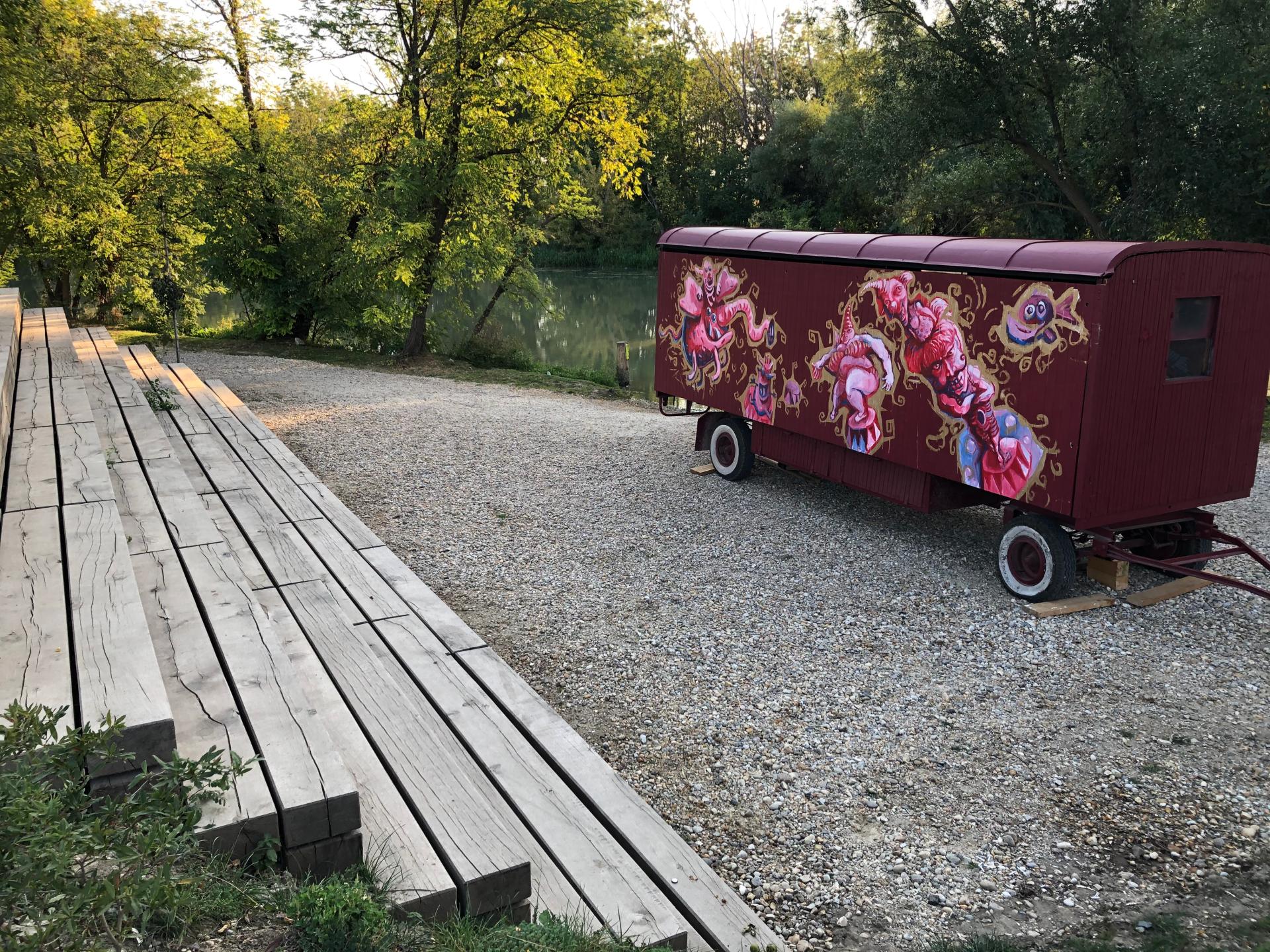
The project transforms the bank of the Little Danube into a place for relaxation, rest after work, a place to meet neighbors, sitting with a coffee or roasted fish, a weekend break with music or a performance in the amphitheater. It allows paddlers to embark or disembark during a voyage on the Little Danube, including mooring in the port. The promenade is also intended for cyclists, safe sidewalk of Korzo connects the residents from a remote part of the village, which was previously inaccessible on foot. The promenade is an exceptional example of people returning their attention to the river and a key contribution to the Little Danube River phenomenon.
The project continues in the future with the construction of an entrance visitor center to the NATURA 2000 area, the Cultural and Ecological Center, so that visitors, in addition to an amazing experience of natural nature, also take away knowledge about nature and the germ of love for it.
Key objectives for sustainability
From the beginning of the project planning, the main goal was to create the potential of a long-term and sustainable harmonious relationship between the village and nature, man and fauna and flora of the NATURA 2000 area and its recovery after years of devastation and ignorance.
In the past, the Little Danube included a complex system of branches, later in connection with the use of the area for agricultural purposes and the construction of settlements, the river flow was regulated and the construction of protective dams began. As the river lost economic significance, so did its value to man. The waterfront, as a natural intersection of the urban environment with the river, disappeared along the entire course. Instead of social life, landfills and areas of production and agricultural plants were created by the river.
The decline of the locality was also “helped” by a massive ecological petrochemical catastrophe in the 1980s, which for many years sealed the view of the river and the relationship of the inhabitants to it. Paradoxically, the lack of interest in the river can be thanked today for the fact that nature has been able to recover over the years and create incredibly beautiful nooks with diverse fauna and flora. Today, the flow of the river is part of the NATURA 2000 protected area, and at the same time a popular place for water tourism, cycling, nature walks.
The tool for achieving a sustainable goal was a stable community, which through the implementation of the project strengthened and gained confidence and courage in other projects and various activities in accordance with the main goal. Cultural events – exhibitions, symposia, theater, chamber concerts, but also environmental education, outdoor schools and sustainable tourism – rafting on the Little Danube, gastronomic festivals of local specialties, bicycle rental. These goals become their main importance after the completion of the project.
Key objectives for aesthetics and quality
The key initiation goal of the project was the revitalization and activation of the Little Danube embankment. The revitalization of the river embankment brought new meaning to the place, increased its aesthetics and quality. The creation of the promenade created a new ecological public space of the village, which is today a destination for residents and visitors by water or land.
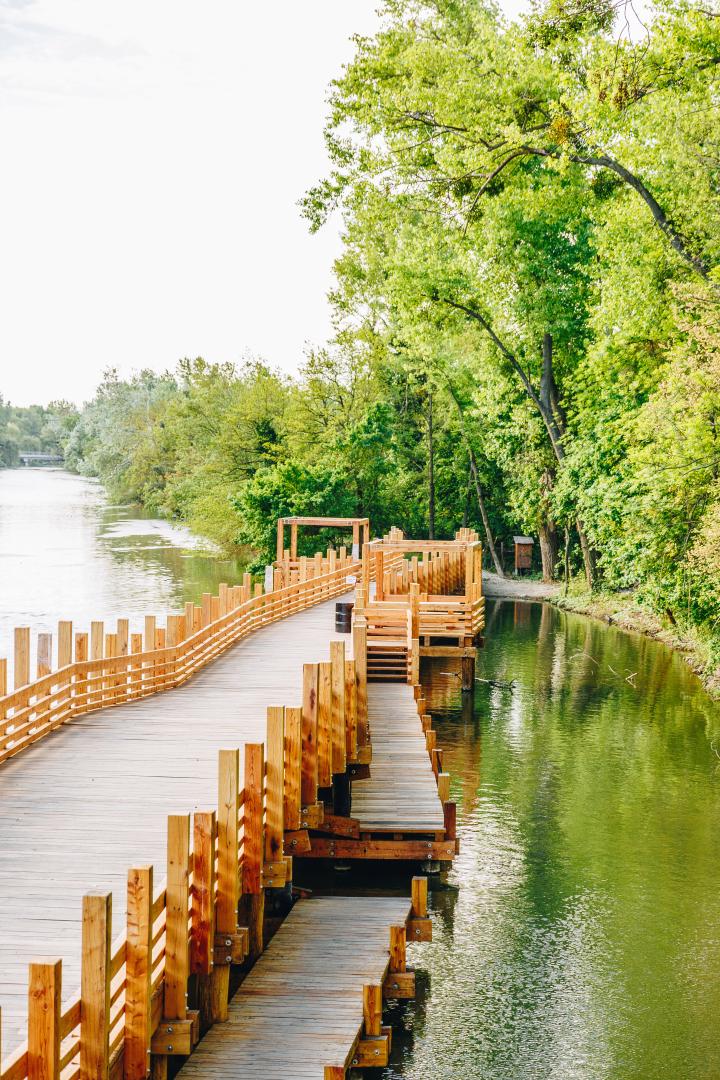
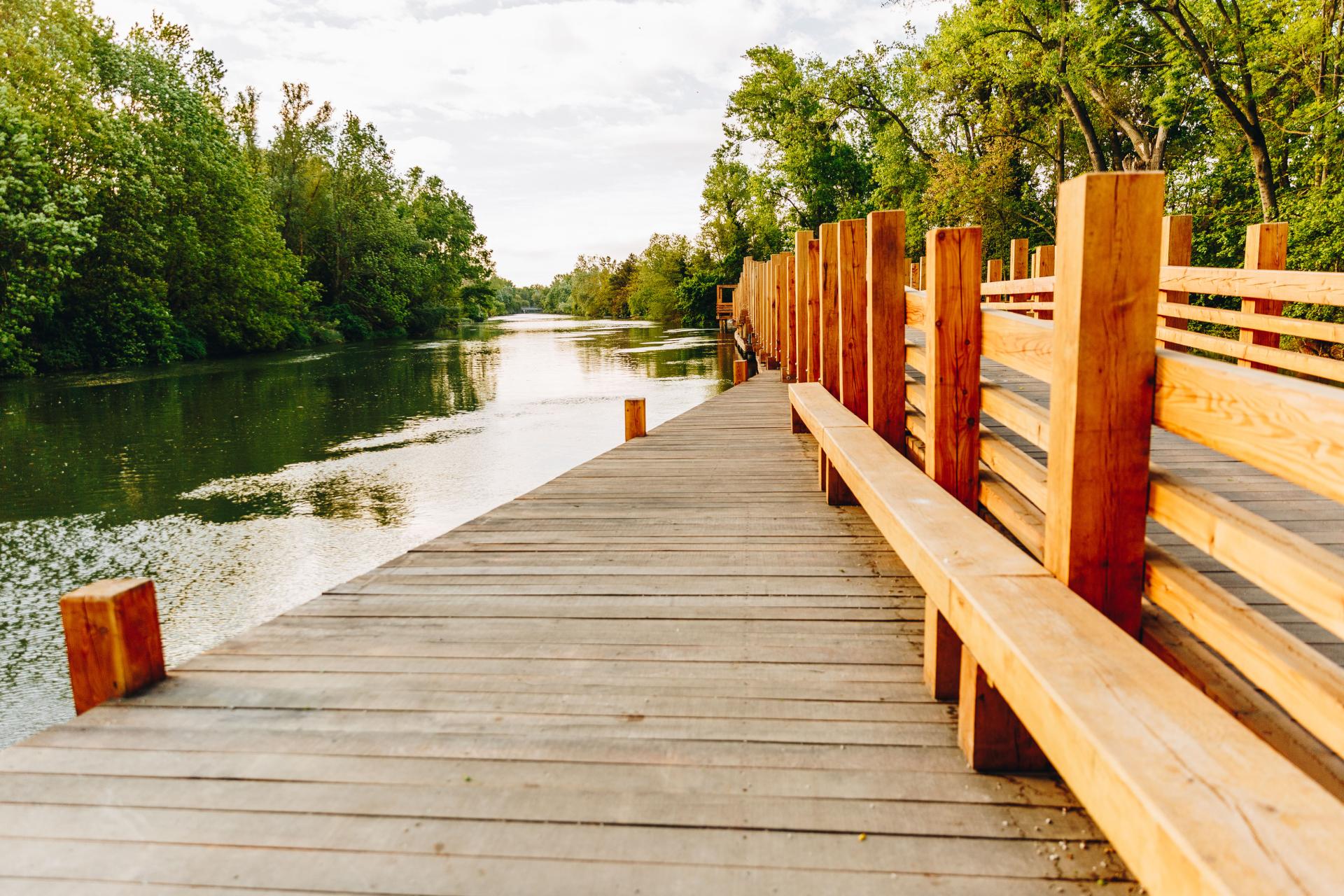
The key goal of the project was that the revitalization of the river embankment would allow residents and visitors to touch the river phenomenon, its fauna and flora. The Korzo Zálesie is therefore made up of various elements of interest that interact with each other: a harbor for boats, a promenade over the water for cyclists and pedestrians, a lookout, an amphitheater for cultural activities. They create an attractive complex for sports, recreation, education, cultural and social activities.
An important goal of the project was to make the promenade visually and aesthetically in tune with the natural character of the river. The whole process of project creation and implementation was adapted to this goal. From the urban point of view, the project fully respects the dominance of the river, composes the elements of the promenade so that they do not interfere and only complete the space. From an architectural point of view, the individual elements of the promenade are designed with the aim of visual appeal, encouraging the discovery of the coves of the river. The building material of the elements of the promenade is wood in its raw form, which over time acquires a patina and merges with the natural environment.
The combination of various architectural elements creates a synergistic effect – the promenade has become a magnet that constantly attracts new visitors.
Key objectives for inclusion
The Korzo Zálesie project connects the natural space of the river and the organized rural environment of the village. It incorporates previously neglected periphery now as a functional element into the village structure. Originally a forgotten place, it is now an active space, an integral part of the village.
The aim of the project was to create a living community, various groups and communities such as boaters, cyclists, enthusiasts and nature observers, visitors to cultural events. The project managed to transform from the abandoned waterfront, to a place where you can meet the neighbors, sit with a coffee or roast fish, dance over the weekend, or listen to music in the amphitheater. The promenade is a place for barrier-free meetings of all generations, children, parents and grandparents, getting to know the living phenomenon of the river together.
Boaters navigating the Little Danube have a space where they can embark or disembark, recharge their energy and supplies, rent a boat. The inhabitants of Zálesie have a port here, where they can anchor their boat for the whole year. Cyclists have a new destination for their journeys, a place to service or recharge an electric bicycle. The promenade connects a remote part of the village with safe sidewalks instead of a dangerous busy road, which residents had to use before.
Results in relation to category
The project that transforms a landfill into a public space was devised, in cooperation with experts and representatives of state professional organizations designed and in cooperation with village representatives, the self-governing region and in international cooperation they received funding for implementation. From various schemes of the state, foundations, donors but also from European finances – the INTERREG program gradually, the local activists in their free time, implement and fulfill the goals they set at the beginning – to create a space for other projects in the field of culture, nature protection, sustainable travel and the development of civil society. A stable community of active people of all ages has been created around the project, with various knowledge, experiences and skills. This situation allows for the implementation of various projects.
How Citizens benefit
The Korzo Zálesie project was created as an activity of the inhabitants of the village of Zálesie. In the past, the village has been experiencing enormous development since the 1990s, the population has tripled. Immigrants from all over Slovakia exceeded the number of the original population. The forgotten village at the end of the world became a satellite of the capital with all the positives and negatives. With the new young settlers came other customs, differently used free time, new energy and a different opinion of what the village wants to look and function. Over the course of 10 years, several citizens’ initiatives have emerged that have changed the community through their activities. One of the most significant activities to this day is the protection of the nature of the Little Danube River. And one of the most significant activities in the village and region is the Korzo Zálesie project.
The project that transforms a landfill into a public space was devised, in cooperation with experts and representatives of state professional organizations designed and in cooperation with village representatives, the self-governing region and in international cooperation they received funding for implementation. From various schemes of the state, foundations, donors but also from European finances – the INTERREG program gradually, the local activists in their free time, implement and fulfill the goals they set at the beginning – to create a space for other projects in the field of culture, nature protection, sustainable travel and the development of civil society. A stable community of active people of all ages has been created around the project, with various knowledge, experiences and skills. This situation allows for the implementation of various projects.
Innovative character
The project innovates the way of thinking about the relationship between man and nature, the village and the protected area. It draws the community's attention to responsibility for the state of the environment and creates a positive and easily following example of land regeneration, which combines the aesthetics of natural nature and human work, the sustainability of joint activities and the inclusion of man and nature.
It innovatively combines community, culture, nature protection, education and tourism into one harmonious whole. It creates a non-invasive window into the protected area NATURA 2000. From the most neglected space in the village creates a value for exhibition and a brand.
It brings an innovative guide on how to keep the community active and gives space for culture and relaxation even in uncertain pandemic times.