AMBASADA | building.a.community
Basic information
Project Title
Full project title
Category
Project Description
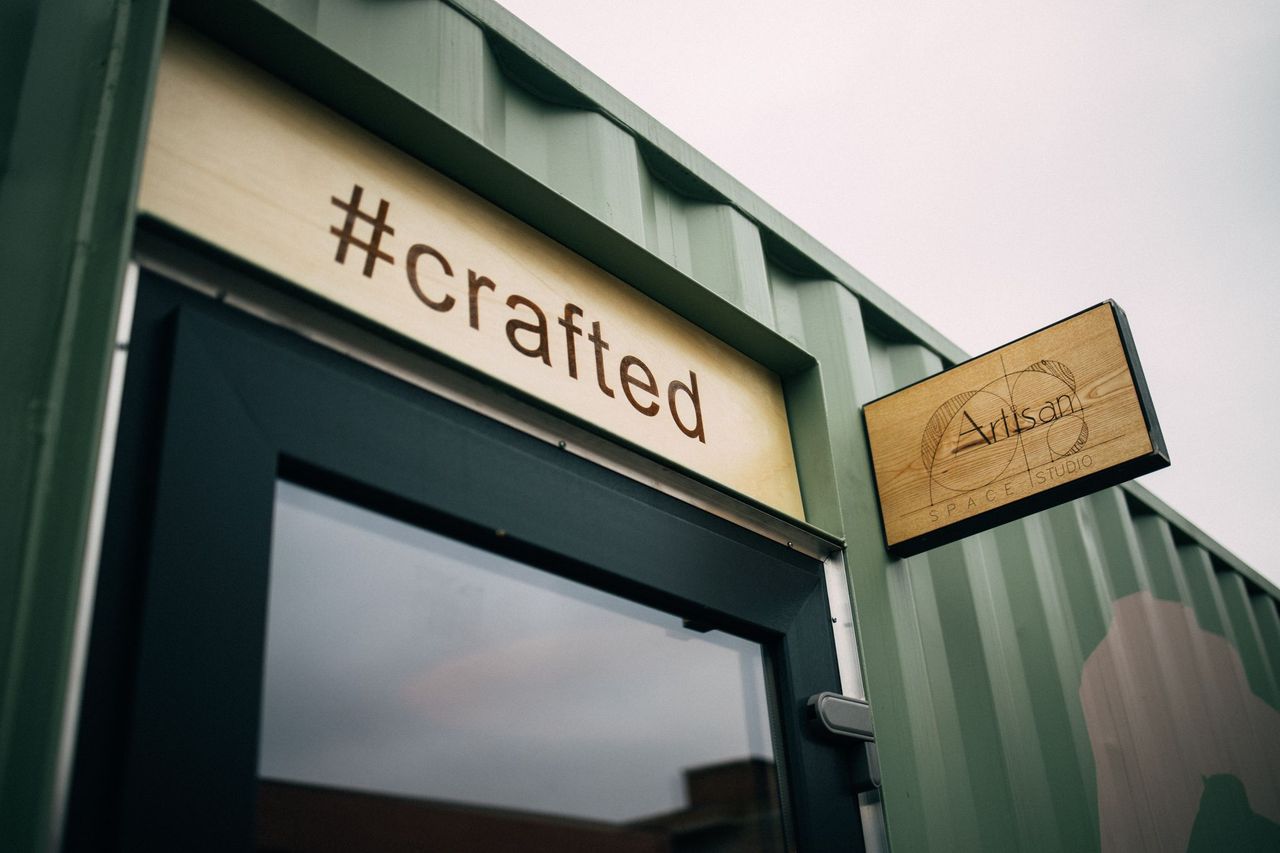
Building.a.community is an inspirational space that generates a bridge between different entrepreneurs, different communities, and different interests. A space designed and created to promote collaboration between different actors who interact within the shared framework of this living lab. In our growing community you’ll find artisans, NGOs, shop owners, a recording studio, a contemporary art gallery, breast cancer and social therapy studios and an oil recycling business to name a few.
Project Region
EU Programme or fund
Description of the project
Summary
If the pandemic situation made us all live apart and go into secluded spaces, building.a.community is a symbol of local resilience. The pandemic period made us feel the need for meeting spaces, individual workspaces and different operating models while being aware of our impact in both environment and communities. Same as with AMBASADA, we dreamed and worked on a model of sustainability through which a cultural NGO, a social enterprise, to be an equal partner in the local economy and to generate an example of what’s possible by hosting creatives and social innovators. building.a.community is a living lab, a hybrid case study, which develops by listening to the needs of atypical entrepreneurs, who are the creative breath of a functional community.
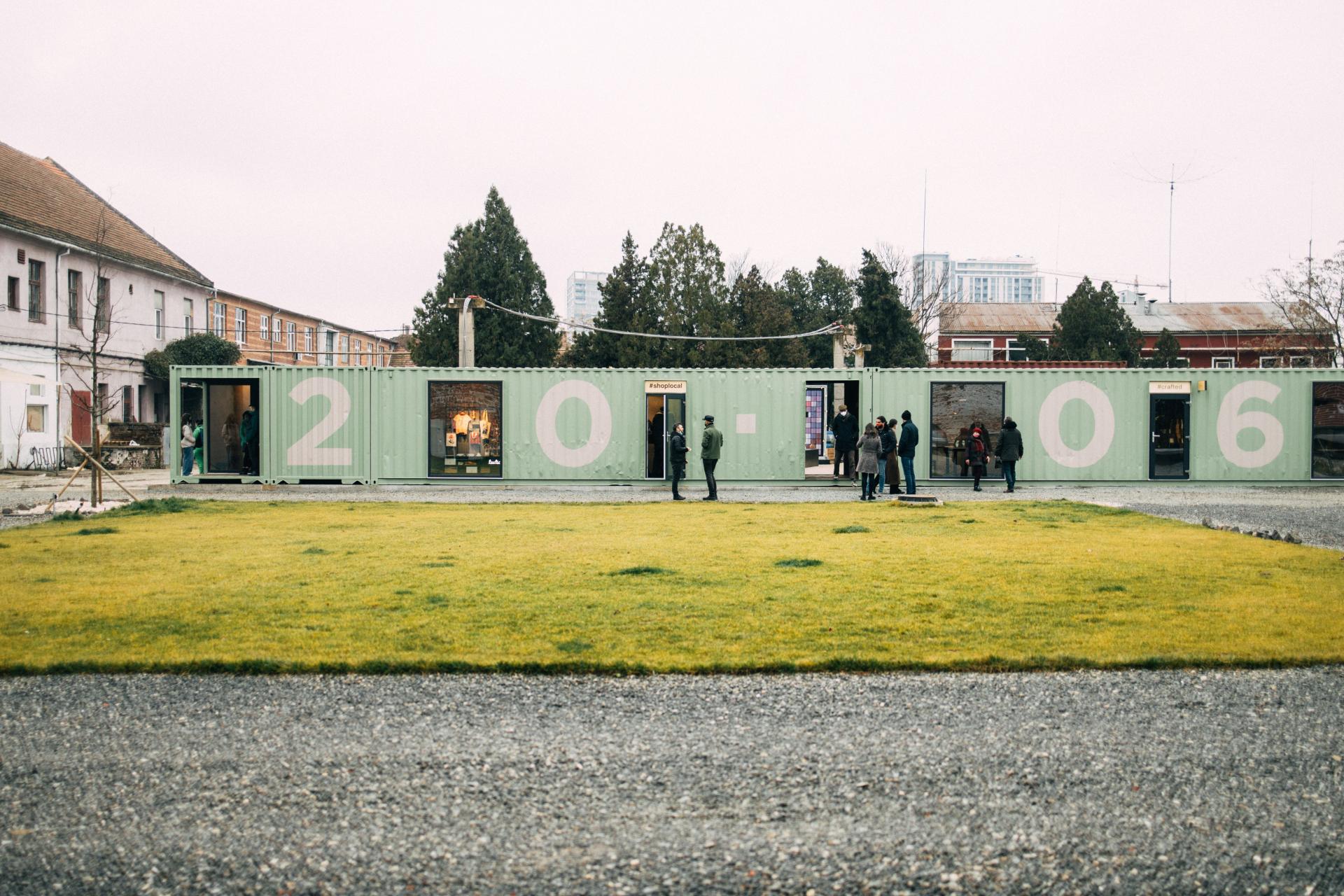
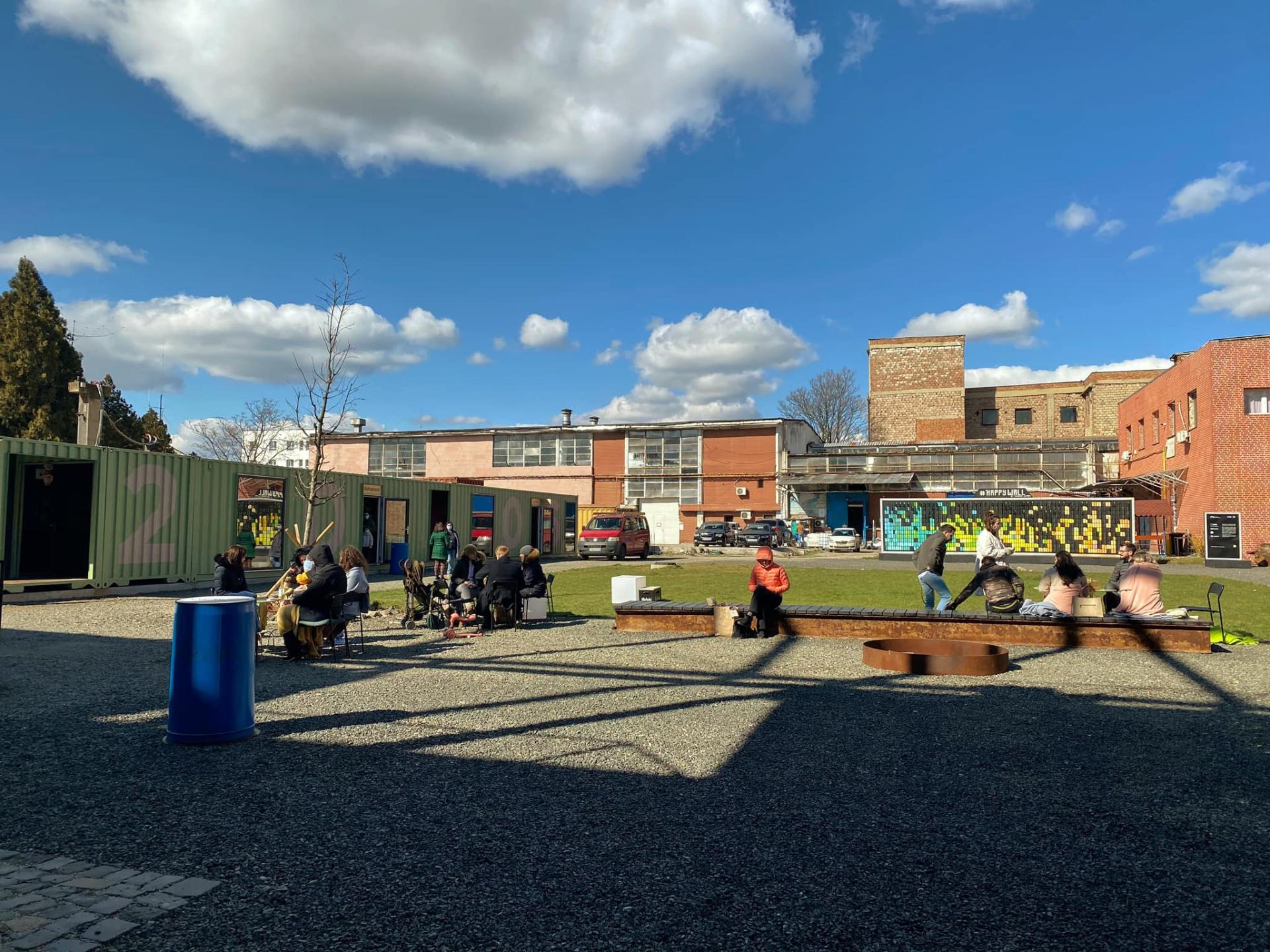
Most of our residents needed a place to make and showcase their creation in a place that connects them as a community and a place that can attract audiences for cross pollination with an affordable and sustainable rent. We started with 4 used shipping containers and a community garden. We're up to 14 and adding a food trucks' court, creating a community area in between private entities, with both privacy and togetherness.
We chose shipping containers as a baseline structure for the project due to affordable and circularity reasons (low maintenance cost) but couldn’t resist the obvious aesthetic and functional reasons as well. Each resident would personalize the interior of their container based on their needs and activities while the exterior is unchanged, a strong visual clue that evokes a community spirit.
Building.a.community is an inspirational space that generates a bridge between different entrepreneurs and their interests. A space designed and created to promote collaboration between different actors who interact within the shared framework of this living lab. In our growing community you’ll find artisans, NGOs, shop owners, a recording studio and even a contemporary art gallery to name a few.
Key objectives for sustainability
From the very beginning it was clear to us that we wanted to build a space that was made out of sustainable materials and that would serve a community of residents which in turn operated based on sustainable work models and guided by ethical principles.
The materials used for the project involved out of function shipping containers, wood & raw plywood panels and rockwool for insulation and all utilities run on electricity with an average monthly cost of 30 EUR/container.
Sustainability is the foundation for all the projects and concepts developed by us at Centrul Cultural PLAI. It was only natural for us to gather like-minded residents preoccupied by the environment, the economical and / or social well being of the community at large. To name a few of our 14 (and growing community of) residents: ONE is making blouses out of reused fabrics by employing residents of the city with physical disabilities; OilRight collects used oils and turns them into candles with the help of people with disabilities coming from state institutions;
Because we are highly interested in developing a favorable environment that would enable our residents to grow their businesses sustainably, we make sure that the rentable space has a moderate price. Currently we are having an open call to offer a fully paid residency in our community. The new resident will benefit from the space free of change, mentorship for managing their business and financial help to start digitizing their marketing, financial of communication processes.
We have created a space where art and social, linked by the drive of sustainable models, share both the space and the effort to grow their communities of impact. This already has generated collaborations, created new products and services and encouraged the entrepreneurs to dream and do more and better. The sustainability is not only of the project, but it is a gain for the enlarged community.
Key objectives for aesthetics and quality
This project was created during the pandemic, inspired by hardship, aiming to challenge the status quo to develop a space to meet and share. Aesthetics and space usage played an essential role into the development of the project. In order to foster co-creation this space had to be welcoming and enriching. Green lawn can be found nearby which can be used to encourage an informal approach to work.
Being located in a formal industrial site, the usage of shipping containers was the right choice as it preserves the spirit of the site.The shipping containers are positioned in a way that leaves space for a community garden, accessible to every resident to meet and share and host their own events.
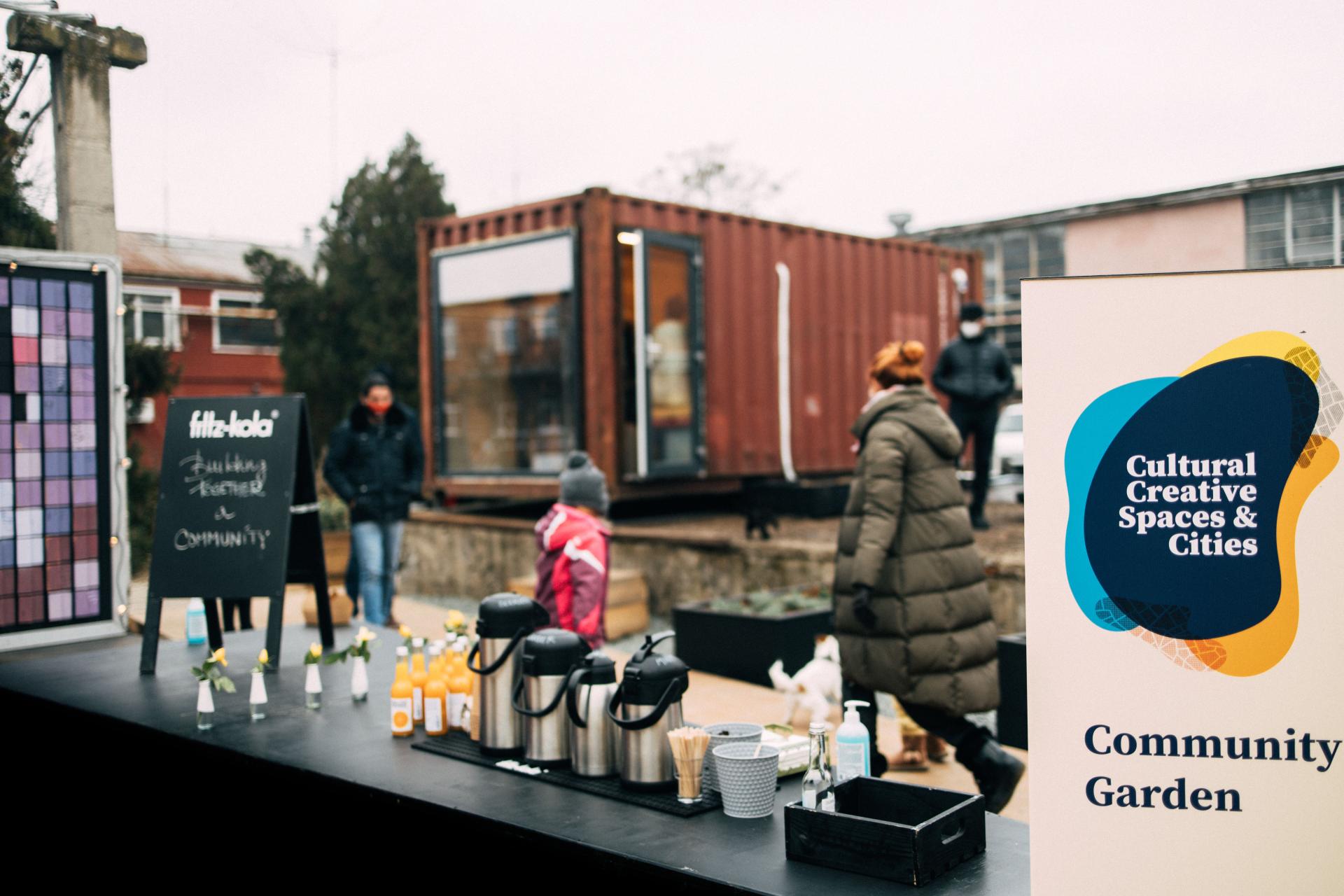
The community garden and it’s residents will benefit from an artwork by SpiderTag, an interactive led installation whose lights can be altered by the individuals in a co-creative process through a mobile app. The community garden is already hosting the artwork of Tomas Dumbo, Happy Wall,, a project already developed by Centrul Cultural PLAI under the Timisoara 2023 European Capital of Culture back in 2019.
Although we painted the exterior of the containers, we kept all the dents and used an industrial green color to highlight their past.
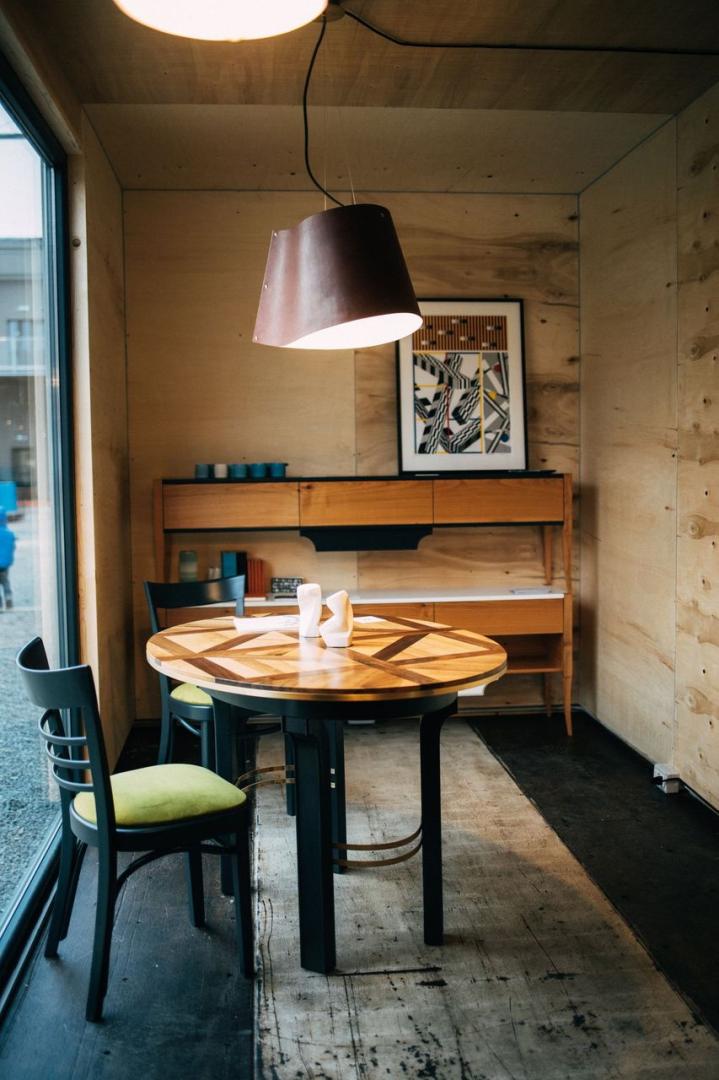
As for interior we opted for wood cladding made with raw poplar panels and eco friendly rockwool insulation. To enhance the “it is what you see it is” idea, all the electrical works are visibly mounted. This also eases repairs and changes if the residents feel like it. All illumination is made with LED lights while windows and doors use a 7-chamber system with argon gas to enhance comfort.
The interiors started with a standardized theme of warm but clean panels that invited residents to experiment and personalize their space. The floors were kept as a proof to the heavy weights and variety of stories stored within the containers.
Key objectives for inclusion
It is good people that make good places. Our desire was to make sure that every individual space corresponds to the unique needs of each resident. That being said you won’t find two identical shipping containers. Each business is different, yet part of the same community and space. Next, our objective was to enable collaboration and inclusion between residents.
Since most of them or if not all of them are preoccupied with developing a sustainable society, soon started collaboration in their own projects promoting positive change. Building.a.community is the binding factor between a musical producer, a jewelry designer and a furniture artisan,but, at the same time, models of social economy that offer not only employment to the vulnerable, but real inclusive communities for people at risk of being forgotten. The pandemic, unfortunately, has isolated and neglected even more the ones not fitting the norm, making social innovation through social economy structures even more valuable. In Romania their entities are recognized but not subsidized, making it even harder for the social entrepreneurs to thrive.
building.a.community is bringing together two kind of entrepreneurs that have a hard time of competing with the regular kind of economy and giving them some much needed support, promoting them among the local and national communities as examples of the new economy we all aim for in the spirit of the Green Deal and the New European Bauhaus, where tomorrow and how we build and leave that legacy becomes more important than what we win today, where collective wellbeing is more important than personal comfort and where people of all realities can feel appreciated and can contribute.
Results in relation to category
Building.a.community managed to bring together 14 residents (and counting) all with strong social and creative purposes in a yard in the middle of a former industrial site. From 4 shipping containers to now 14, in a matter of less than 6 months this community managed to start thriving in a pandemic context.
Many of our resident’s businesses were planned to start right before the pandemic and without the support of building.a.community their projects would have been cancelled. Also, in our community there are artisans that teamed up to rent a container and open a physical shop of their own, an attempt otherwise impossible. .
The residents are more integrated and better known in the local community due to their presence in building.a.community while the community at large has a new hotspot for leisure and local creative shops & workshops.
The collaboration between and NGO and a private real estate owner is also, in itself, a win in terms of best case practices. Renting out the middle, no-ones’ place of an industrial platform that hosted waste and throwaways in that in between territory and transforming it into a community space is not only sending an inviting message to collaborate to the renters of the industrial platform to come meet the creatives and the social impact driven businesses, but also to the larger community regarding the importance of appreciating space, even if private, as a common good we should all feel responsible to build on.
How Citizens benefit
Building.a.community is an idea of active citizens which was implemented by them. This project is the perfect example of co-creation in the public space. Without the civil society this project wouldn’t exist or it would have had a different scope. The fact that citizens and volunteers came up with the idea, is the reason why the community is the very center of building.a.community.
The project started as part of PLAI Festival when the volunteers involved needed space for the event, cleaned a dump area in a former industrial site for their workshop, near AMBASADA (cultural hub / social enterprise). The idea of a community garden grew further. Part of CCSC (Creative Cultural Spaces and Cities) an EU project AMBASADA was involved in, they transformed the newly cleaned area into a place where people are invited to grow together. Organizations have started to verbalize a need for resilient spaces so the low-rent, sustainable mix of private and community working spaces was co-created. A carpentry business which wanted a space here as well got involved in the prototyping of the works needed to repurposing shipping containers and in 4 months 5 businesses opened shop.
The benefits of having such a space is the key to the community feel in itself. The ‘shop local’ movement has also made local creatives realize the importance of creating a local support community to complement the national and international collaborations they had pre-pandemic times.
It is never only about the space. It is never only about the individuals. It is always about how the space influences relations and connections between people that choose to create something together for many others, with a deep understanding of the common responsibility for tomorrow.
The success and community feeling are emphasized on the constant request for new spaces. Timisoara will be the European Capital of Culture in 2023 which will make building.a.community as the main tourism creative hotspot.
Innovative character
The innovative approach lies in the physical manifestation of community and drive to come together in a time when the pandemic, legislation and social customs were advised against. There are still ways to come together by taking all this into consideration, without moving everything digital and missing this much needed interaction between professionals, communities and individuals.
We feel strongly that, by the way the space, the interaction with individuals, the relationships between people and the social needs we are looking for solutions were at the core of the concept, the model is about getting back to simple, common sense, empathic ways more than new ways. The innovation comes from simplicity, fast response, social impact and the sustainable thread that keeps them together. The concept in itself fosters and invites for social innovation, resilient behaviours and sustainable impact. Having this come to life in a neglected space sends an important example for other communities to take action and start generating change for the better. The power of replication and its contagious (in the good sense) element is innovative when globally we are fighting extreme behaviours, fake news and losing sight of the European values.