Protecting schools' environment
Basic information
Project Title
Full project title
Category
Project Description
Barcelona is working hard to protect kids’ quality of life through 2 different programmes. "Adapting schools to climate change through green, blue and grey", has converted 11 schools vulnerable to heat in climate shelters open to all citizens, by implementing solutions in buildings and transforming courtyards. “Let’s Protect Schools” program is implementing traffic calming measures around 200 schools, to guarantee children are safe and healthy.
Project Region
EU Programme or fund
Which funds
Other Funds
Barcelona City Council has received funding from the Urban Innovation Action (UIA), a program of the European Commission, for the project "Adapting schools to climate change through green, blue and grey", which proposes interventions in eleven schools with a group of measures that involve nature, water and architecture.
Description of the project
Summary
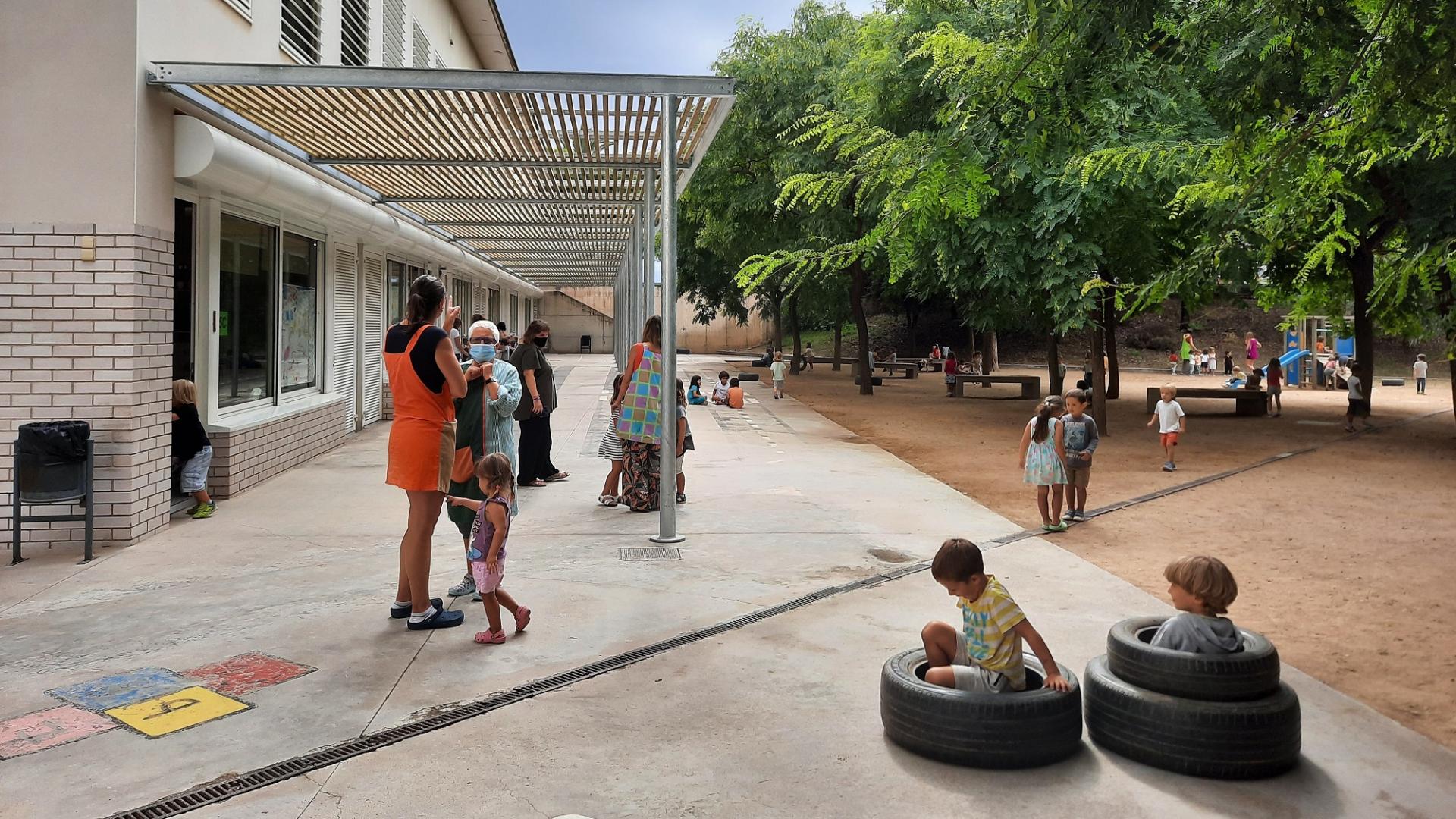
Barcelona City Council is "Adapting schools to climate change through green, blue and grey" in eleven schools with a group of measures that involve nature, water and architecture. These improvements can be enjoyed by the students of the schools and the citizens, since the patios remain open during the summer and in times of emergency due to high temperatures they function as climate shelters. The project also has a pedagogical aspect, since the children have participated in the design of climate solutions and in the evaluation of actions. At the same time, several research centres are scientifically evaluating the results of the interventions in terms of health and climate comfort. Barcelona City Council participates in this project, through the Urban Ecology Area, the Barcelona Education Consortium, Barcelona Water Cycle, the Barcelona Public Health Agency, the Barcelona Global Health Institute of the UB, the UAB Institute of Environmental Science and Technology and 11 schools in Barcelona.
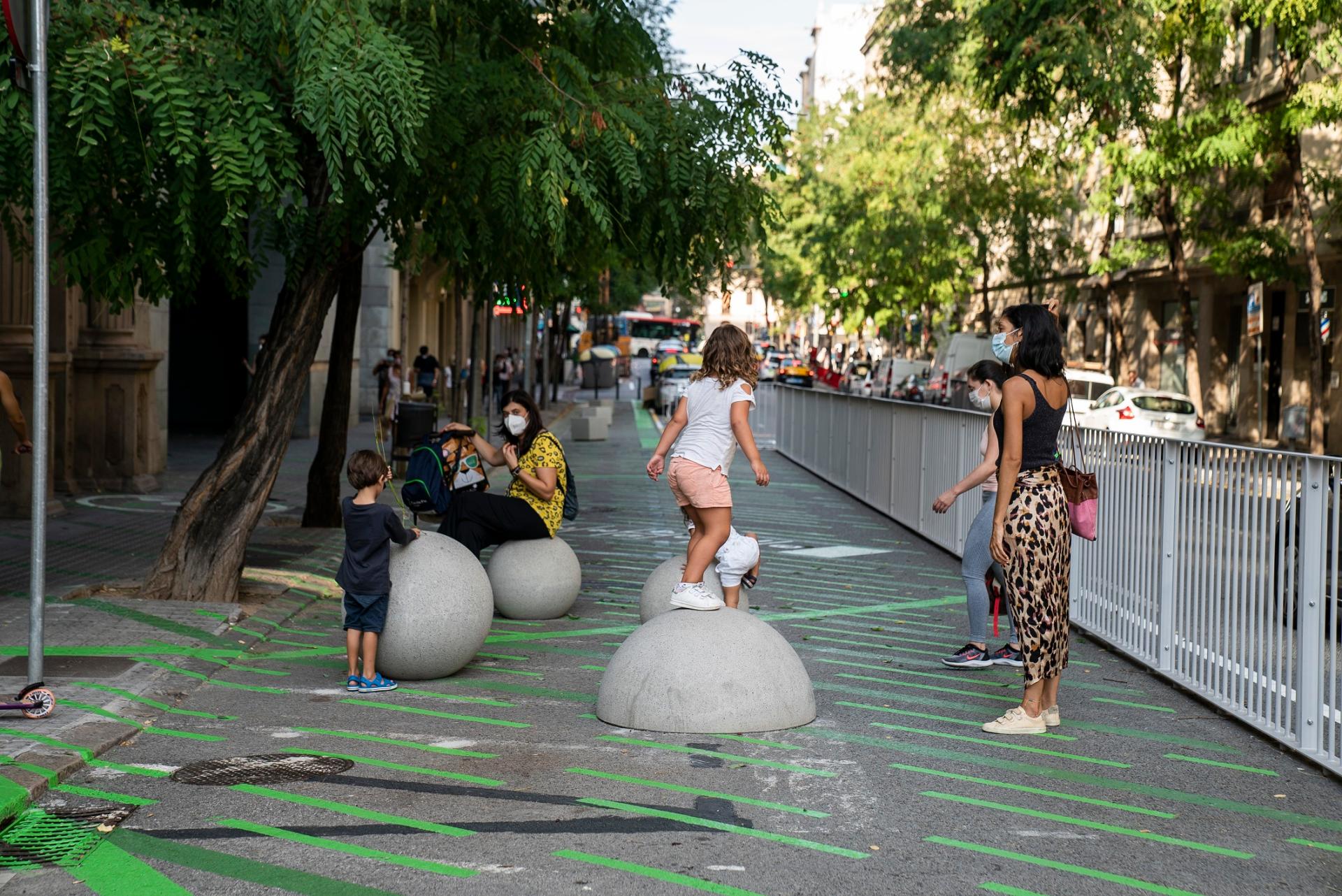
At the same time: protect all the boys and girls in the city is the objective of the program Let’s protect schools that the municipal government developed to improve the environments of educational facilities and guarantee that they are safe and healthy. It is about advancing towards the pacification of the urban space of a total of 200 schools and nurseries with actions that reduce accidents, create friendlier and greener meeting spaces and improve the environmental quality of school surroundings. In short, we aim to make schools and their surroundings a safe and lively place. The objective is to reach the goal that 1 of every 3 schools in the city already have a traffic-calmed, safe and lively environment by 2023, and 100% by 2030.
So, with both programmes, Barcelona is fighting to reach a better quality of life for kids in short and long terms.
Key objectives for sustainability
Barcelona approved on 2018 a Climate Plan, which is a cross-sectional plan that includes 242 actions until 2030. It is a strategic plan with proposals to mitigate the effects of climate change, adaptation projects, climate justice and the promotion of citizen participation. Within these actions, it is noted that the following must be done in terms of School Shelters:
- Identify existing and potential climate refuge spaces that can provide conditions of thermal comfort in extreme heat episodes as well as to provide services that these spaces need.
- Create water spaces with children's games that combine permanent performances with ephemeral or seasonal ones.
- Improve the thermal comfort of climate shelter facilities, intervening as a priority on those that provide services to the most vulnerable population (kindergartens, schools, residences, etc.).
- Create new climate refuge spaces (green spaces or facilities) to guarantee territorial coverage.
To fight against the climate emergency that requires reducing the car use, to improve air quality and noise impact around schools and to advance in urban planning with a gender perspective that places the needs of daily life in the centre, a strategic city program was launched in 2020 with the intensive pacification of the schools surroundings as places for meeting and spontaneous play within Let’s protect schools program. In 2020, action was taken at 26 schools in the city. This program is being gradually extended to all schools in Barcelona. The selection and prioritization of schools is done in coordination with all the municipal areas involved and the following criteria are taken into account: Prioritization of children from 0 to 12 years; Schools in complicated points of road safety; Schools with high environmental pollution, both air and noise; Centres with the greatest need for improvement of the school environment.
Key objectives for aesthetics and quality
To adapt the objectives to the School Shelter projects, a catalogue was prepared with 14 elements and 6 mixed solutions, which include examples for the drafting of projects in the 3 planned fields of intervention: green (nature), blue (water) and grey (architecture). It specifies the type of measures in a pilot and replicable way with a series of shared strategies on schools in order to turn them into climate shelters.
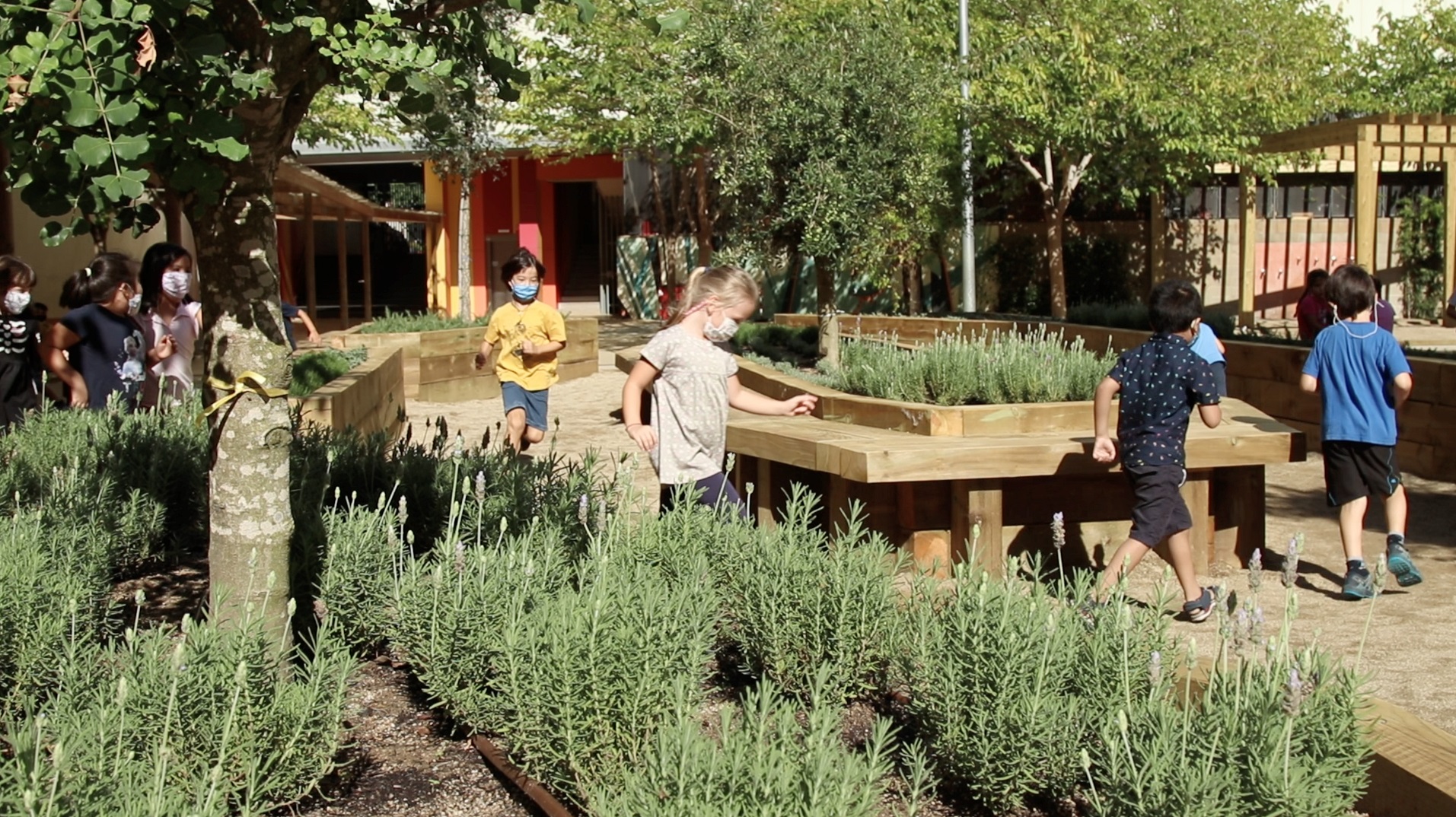
As for the green, the places for new plantations are defined: patios, gardens, roofs, facades and dividing walls. The type of vegetation is indicated.
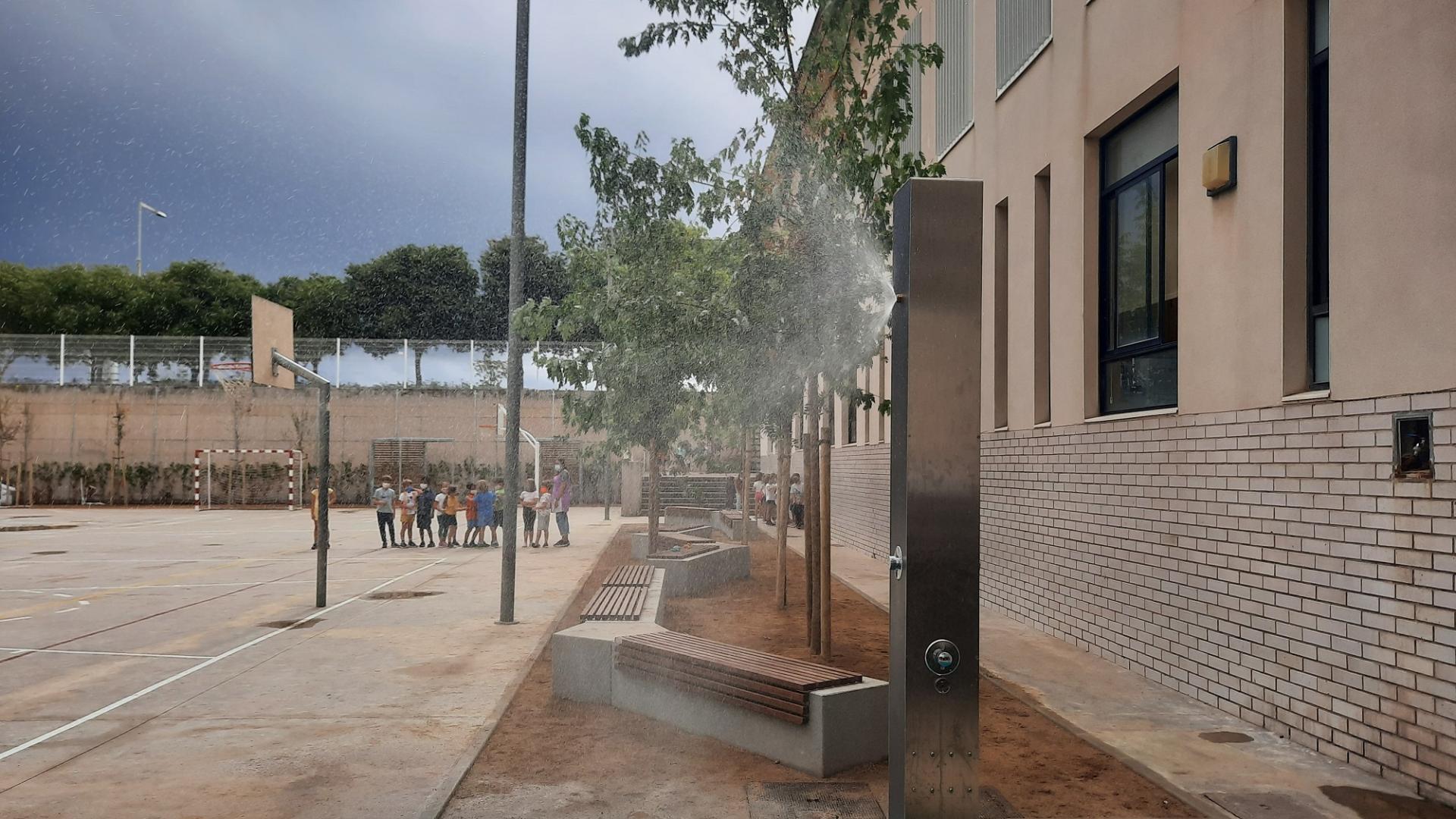
Regarding blue, the catalogue proposes water intake points, drinking fountains, leisure elements such as springs and sprinklers, game elements, naturalized rafts and rainwater collection tanks.
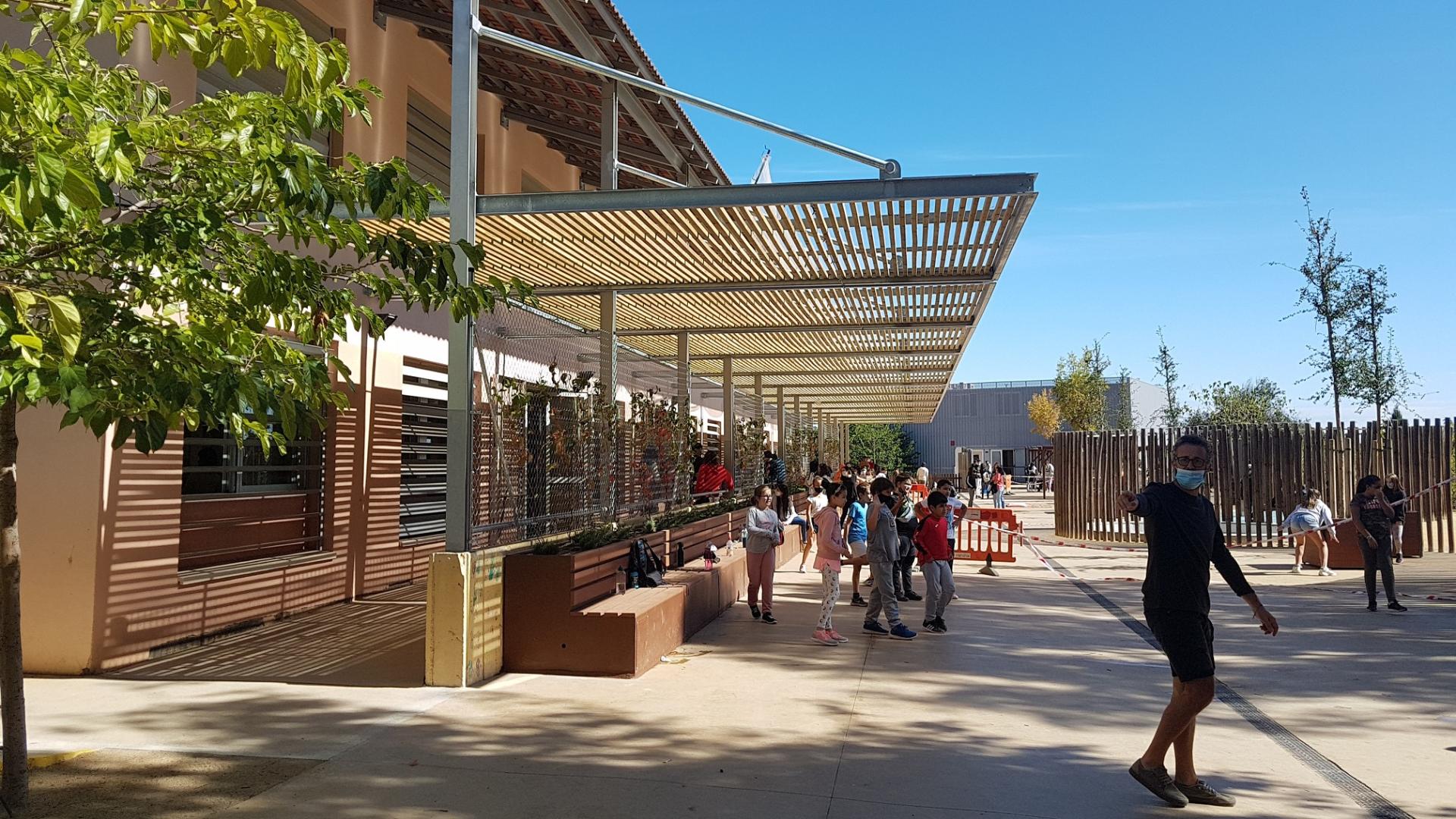
Finally, the grey, the types of actions are: power generation with photovoltaic panels, thermal solar panels and low-power wind energy, isolation on roofs and facades, isolation and thermal bridges, curtains, blinds, porches and pergolas, cool covers…
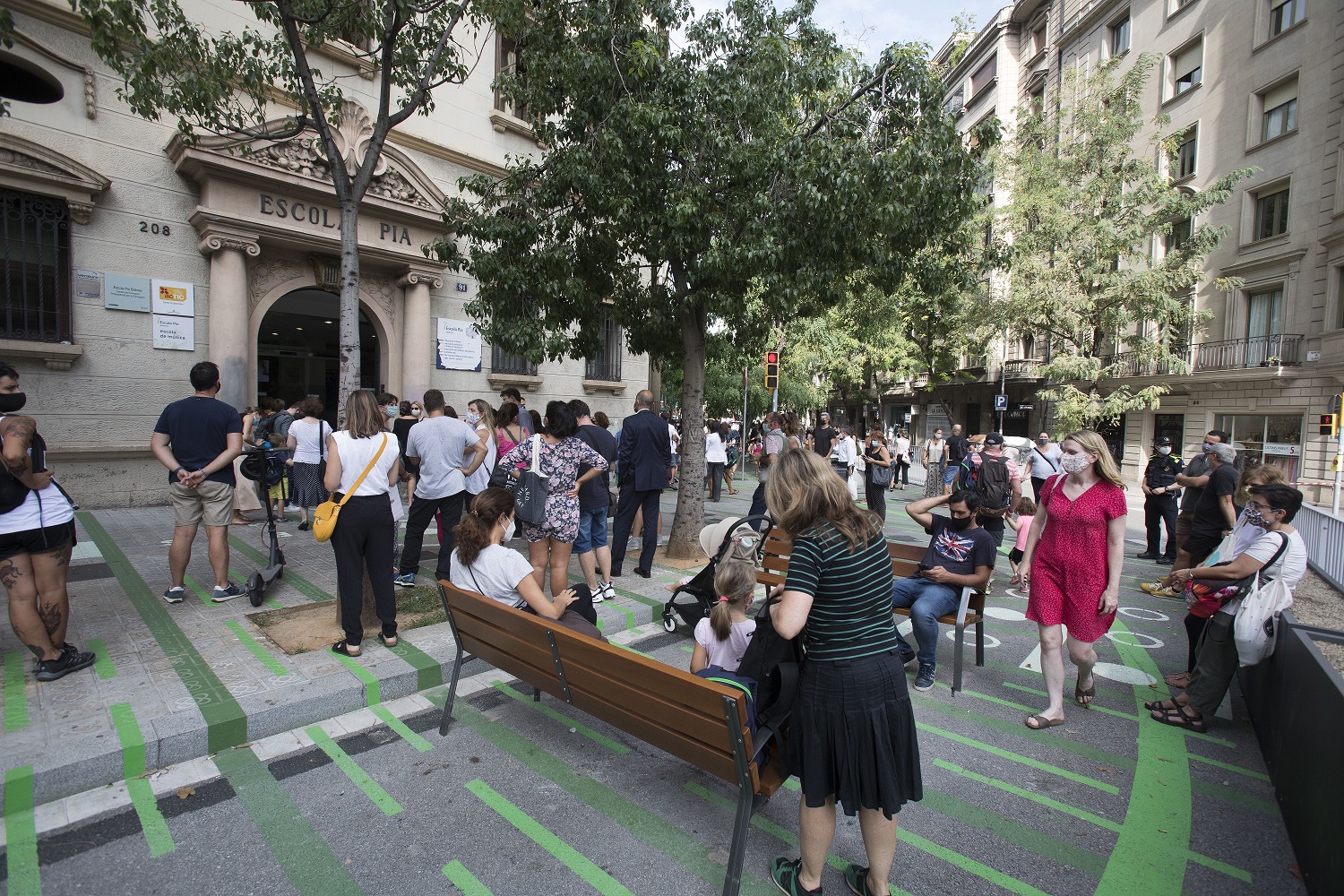
Regarding the improvement of schools surrounding within Let’s protect schools, solutions are designed and adapted to the needs of each centre, always offering comfortable living areas with more vegetation and shade. The actions are based on two types of measures, achieved through both structural and tactical interventions combined:
Traffic calming: the space for vehicles is reduced by eliminating traffic lanes and parking spaces, maximum speed is reduced to 20 km/h, lighting is improved and safety elements are installed. The entrance to the pacified space is marked with orange paint and a horizontal logo. Volunteer traffic control program is implemented at the time of entry and exit of class.
Improvement of habitability: at the access and exit points of the centres, square spaces are created with a surface area minimum 10 meters in diameter, where flexible and beautiful street furniture is placed to invite people to walk quietly and carry out activities.
Key objectives for inclusion
The main objective of the project School Shelters is to convert eleven schools into places for people vulnerable to heat by proposing climate shelters open to all citizens, implementing traditional solutions against high temperatures in buildings and transforming courtyards by introducing vegetation, shaded spaces and points of water. Schools play a key role in urban life, and are not only places of education and socialization for children, but also act as centers of proximity. Cities are increasingly facing the impacts of climate change and urban heat islands are becoming more intense. Therefore, cities around the world initiate "school cooling" projects to adapt and protect children from extreme heat.
Reasons to start a school project as a climate refuge in Barcelona are many: Children are especially vulnerable to extreme heat, any action designed for them benefits the vulnerable population as a whole; Also, improving the conditions of educational spaces in buildings and courtyards with passive architecture, shade and natural ventilation increases thermal comfort and creates a better learning environment; The creation of shady and watery schoolyards and areas for children encourages playing outside and increases the physical activity of boys and girls, and, therefore, their health; The use of schools as community hubs provides climate and social awareness of the community, etc.
The projects of Let’s protect schools initiative are worked exhaustively with a participatory process with all the schools, carrying out participatory sessions. Co-creation processes with children and families are also proposed to involve the educational community. Also in order to make the speed reduction effective, the situation in the environment of each school has been specifically analysed in order to determine the most appropriate measures for each situation.
Results in relation to category
The project School Shelters is led by 5th grade students. Through training seminars for teachers, educational resources are offered to address the issue of adaptation to climate change with students, as well as concrete experiences to monitor scientific measures together with technical teams. Communication strategies are also deepened to make the use of equipment as a climate refuge reach the neighbourhood near the facility, and activities are proposed to take advantage of the implemented measures pedagogically. Once the three-year period is over, the centre maintains the theme of climate change as the backbone of its educational project with the support that the Sustainable Schools program usually offers. During 2020 the results have been: new 1,000 m2 natural soils, new 2.200 m2 shadows with trees and others, 80 new trees, 30 new water fountains and water games. The installed sensors will be kept so the students can continue monitoring the indicators.
Let’s protect schools project is transforming the schools environment, putting the safety and well-being of children at the center through various actions: Traffic calming in the school environment, Improving access to schools, Expansion of living and green areas, incorporating new street furniture: benches, planters. To reduce traffic, the space for vehicles is reduced by eliminating traffic lanes and parking spaces. The maximum permitted speed is also reduced preferably to 20km/h; vertical and horizontal signage and information radars will be placed, traffic lights are adapted, lighting improved and security elements such as railings and pylons installed. During 2020 a total of 9.500 students from 26 schools have benefit from the program, gaining 4.500 m2 for leisure and relax around the schools, removing 5 driving lanes, creating 6 new streets for pedestrians, and putting 317 new green plants and trees, 66 benches and 38 new playing areas.
How Citizens benefit
Regarding School Shelters, a participatory process is held with the educational community - students, educational team, AFA (families), non-teaching staff and all the agents involved in the life of the centre. The objective of this process is to define measures to be applied in each of the schools by detecting the needs and evaluating the impact of these measures by the users of the facility. This line of work is developed through the participatory sessions that are held in each of the centres, stimulated through the More Sustainable Schools program (E+S). The proposal is based on four sessions with the educational community: the first, to validate the climate adaptation challenges that each centre has, and prioritize the measures to be deployed (according to the catalogue of available solutions). The second, to help the technical team assigned to each school to specify the chosen measures and to draft the executive project of works. The third, to make a first evaluation of the measures deployed, and the fourth, planned during the heat season, to evaluate whether the solutions implemented improve the thermal comfort of the school.
Children spend a lot of time in schools, which is why they become the most sensitive spaces in the city. Environmental pollution, both air and noise; the poor conditions of public spaces and road insecurity can pose more serious risks in these spaces. Therefore, streets in their surrounding must be protected as a priority and placed at the centre of all urban policies. Barcelona, with Let’s protect schools and other strategies is moving towards a new urban model in which schools must be central elements and of special attention in public space. Schools as the priority axis of all actions to transform public space to pacify the city, improve air quality, reduce environmental noise, reduce accidents and generate more meeting spaces, and the benefits of these actions are wide and for all the citizens.
Innovative character
The innovation in both projects is assured. Regarding School Shelters project, as it was designed the new concept of climate spaces that didn’t exist until now in Barcelona and that adapts perfectly to the city Climate Emergency Declaration. We have received many requests from other cities, such as Paris or Milan, for information on projects and the possibility of replicating them. We have also been asked for information from the C40 network of cities and are considering it as a highlighted good practice. The use of passive elements to achieve the goals, the drafting of the catalogue and the involvement of the educational community in decision-making has been a success. All the proposals use nature - green, as an essential part in order to achieve a broader biodiversity in the schoolyards, while obtaining new spaces of freshness and shade. The number of new trees planted is considerable and, as a consequence, we are reducing the paved ground to obtain more natural and breathable soil. Regarding blue, the projects incorporate solutions that bring us closer to the initial objectives of the project and at the same time adapt to the wishes of the schools; in addition, they meet the technical and health requirements. The third element of the project - grey, has also been positively implemented and, in this case, the use of passive architecture has been a key.
An innovative element is monitoring plan that has been designed for the different actions in the city's school environments within the "Let's protect schools" project, which consist of taking environmental data before and after the interventions to evaluate the impact on air quality and noise. A mixed approach of collecting environmental data and evaluating social aspects is also proposed to measure the impact on health and well-being.