Titus Macer Domus
Basic information
Project Title
Full project title
Category
Project Description
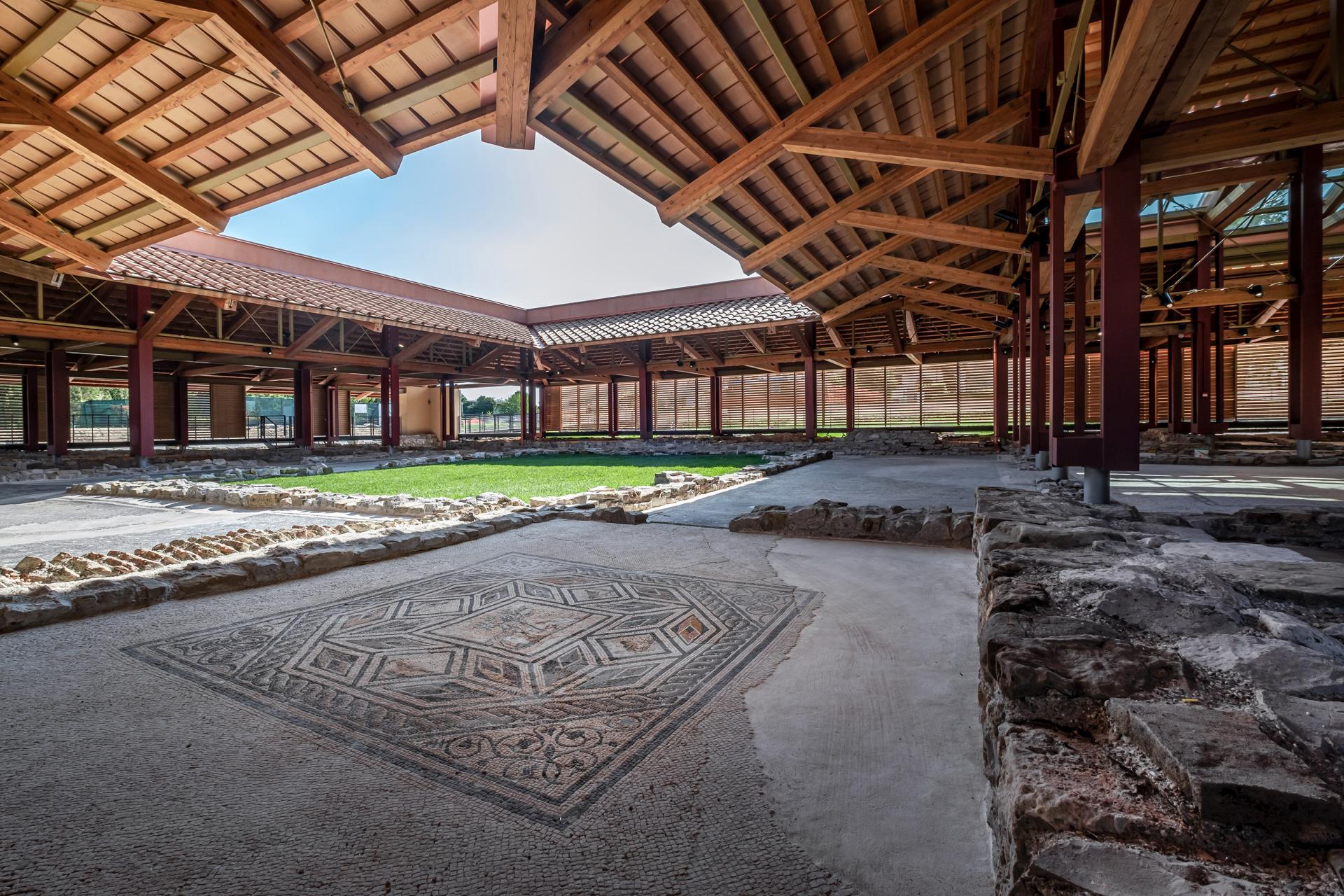
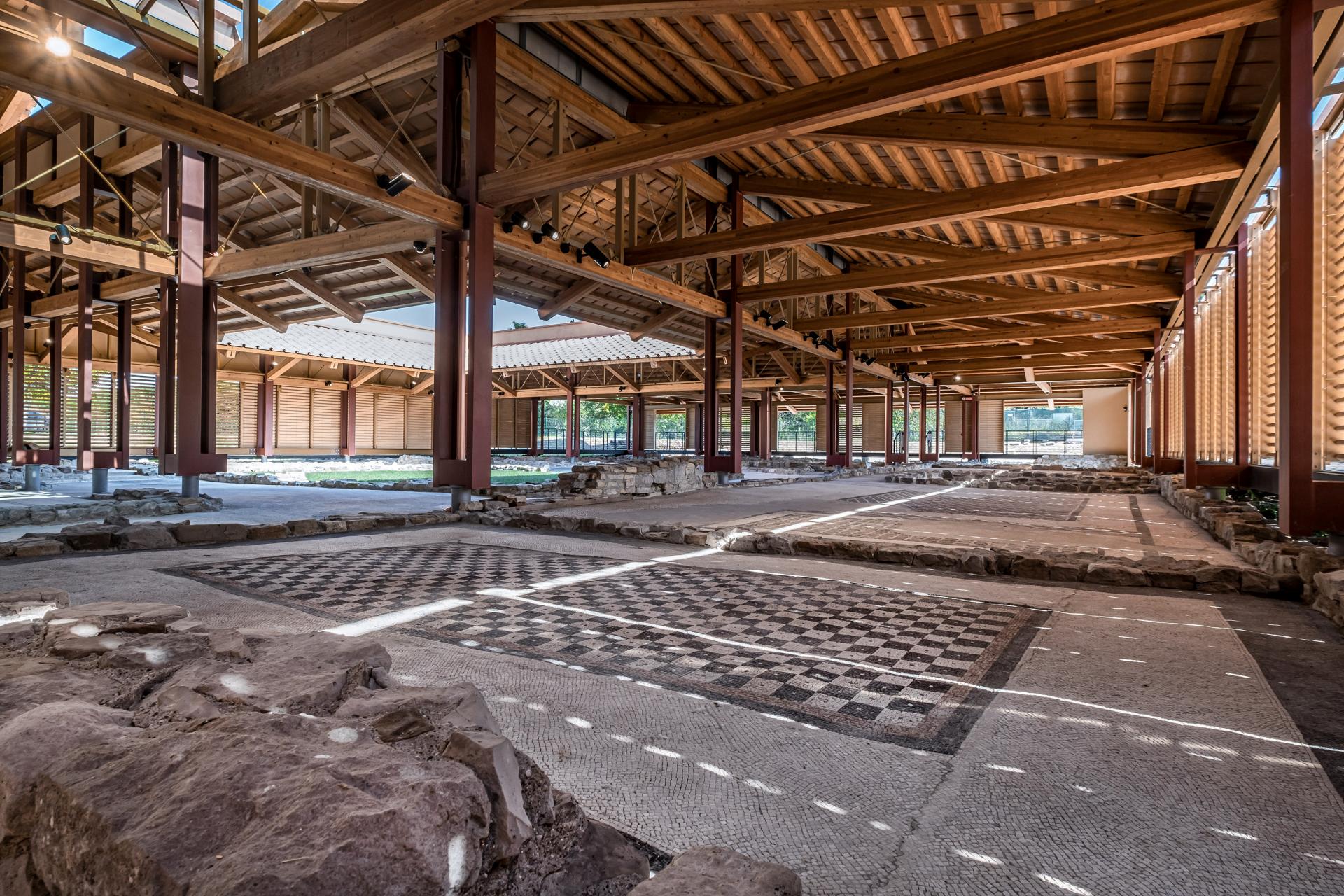
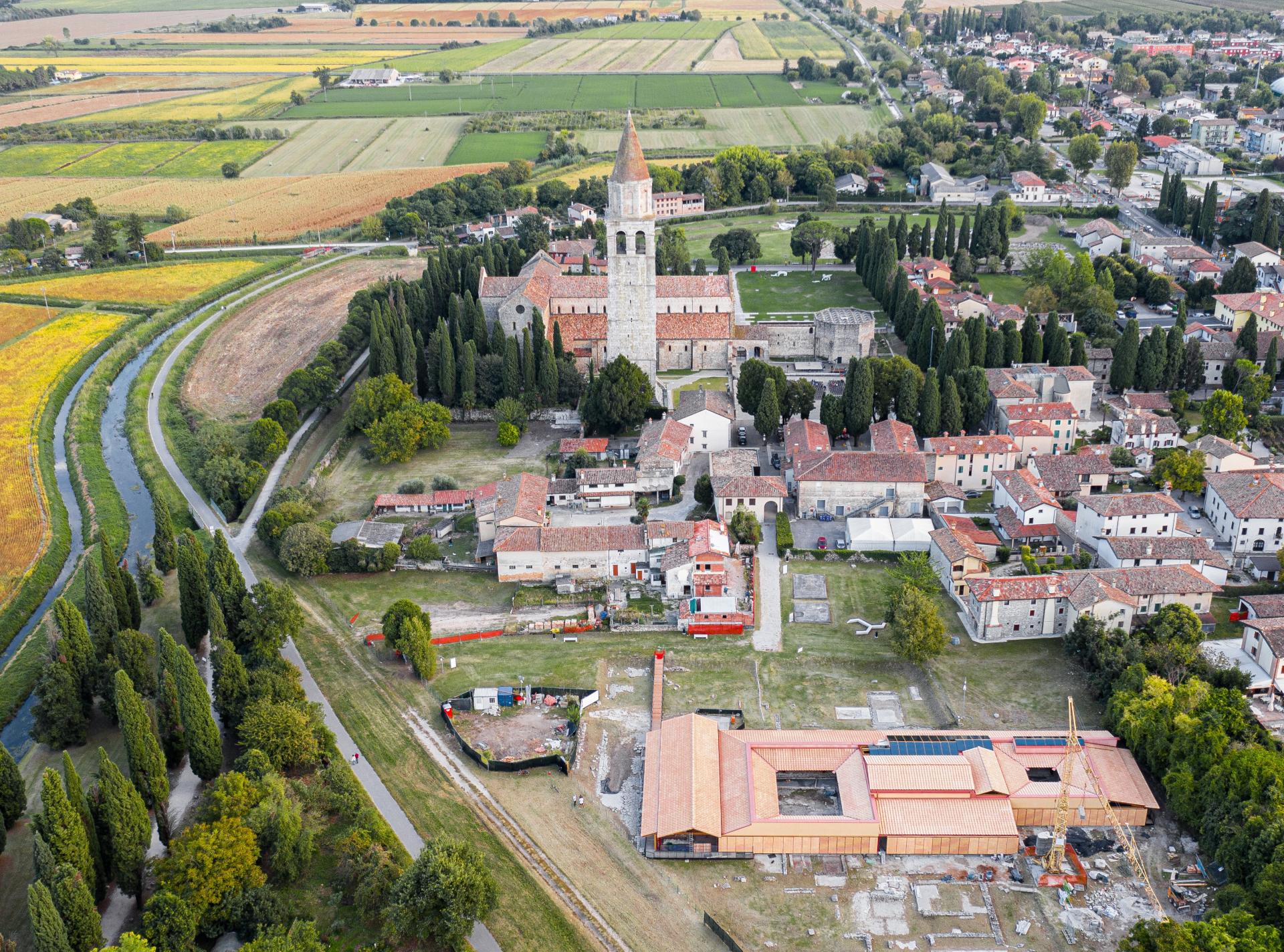
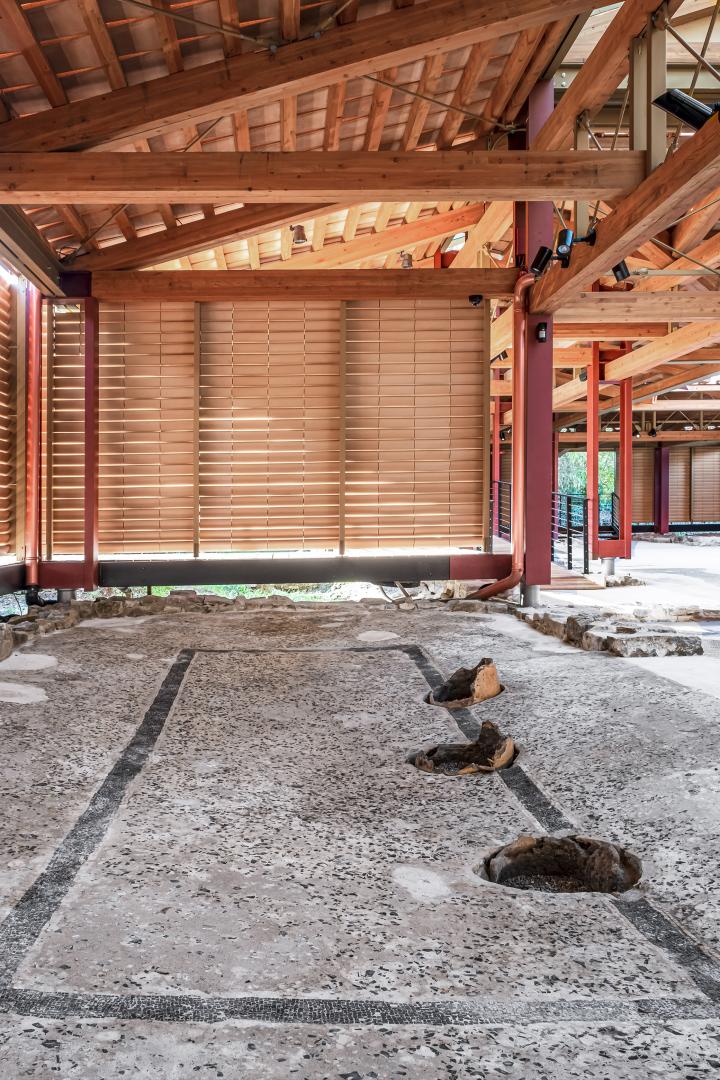
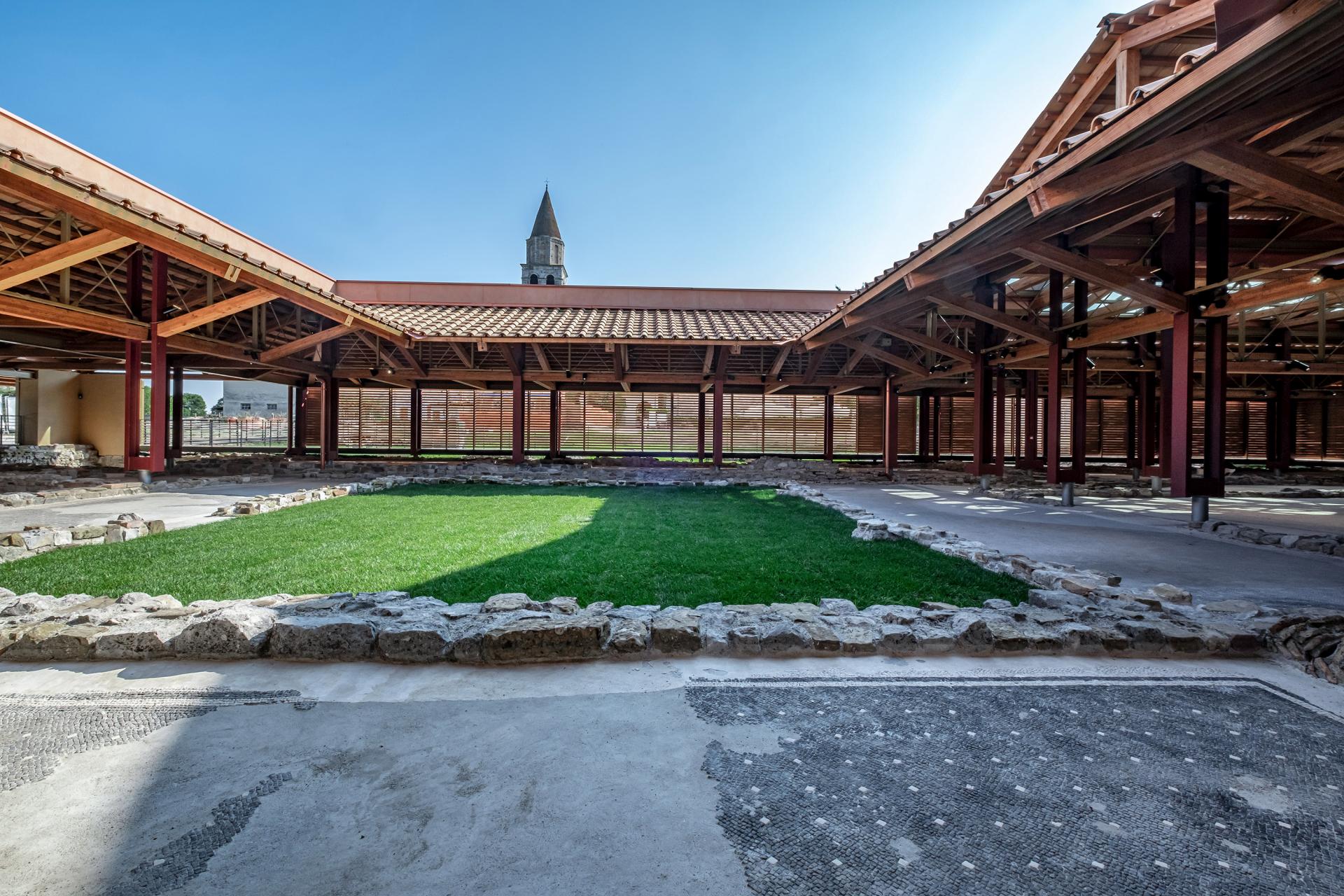
It was the residence of a wealthy citizen of ancient Aquileia and it was extended for about 1700 square meters between two of the paved streets of the city, near the patriarchal basilica. The domus of Titus Macer can now be visited thanks to a brand new roof structure in steel, wood and brick, which, in addition to protecting the precious mosaics, alludes to the volumetric articulation of the ancient residence, creating an atmosphere of rare suggestion.
Project Region
EU Programme or fund
Description of the project
Summary
It was the residence of a wealthy citizen of ancient Aquileia and it was extended for about 1700 square meters between two of the paved streets of the city, near the patriarchal basilica.
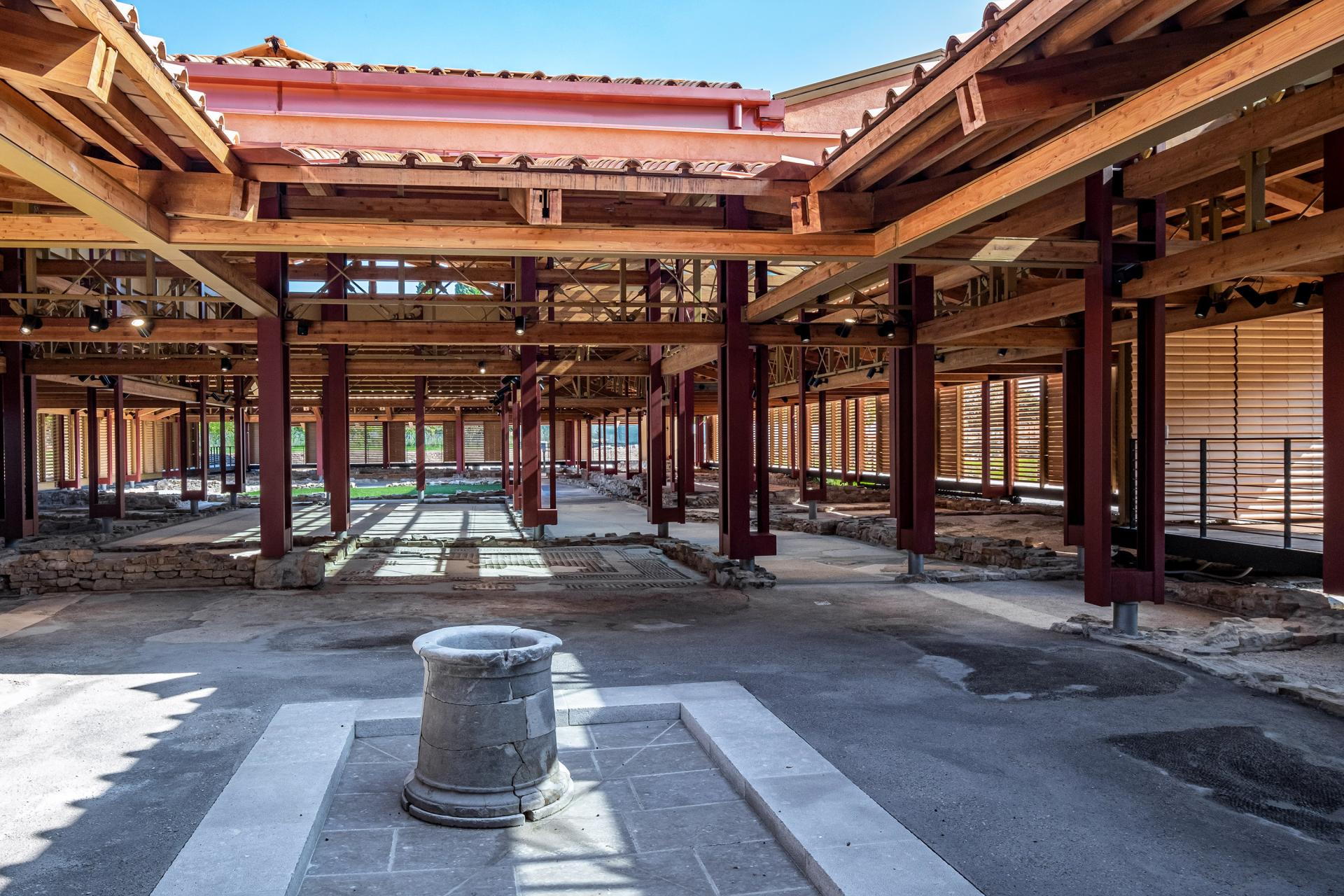
The domus of Titus Macer can now be visited thanks to a brand new roof structure in steel, wood and brick, which, in addition to protecting the precious mosaics, alludes to the volumetric articulation of the ancient residence, creating an atmosphere of rare suggestion.
The enhancement of the domus, born on the initiative of the Aquileia Foundation with the collaboration of the Superintendence for Archaeological Heritage of Friuli Venezia Giulia, the Department of Cultural Heritage of the University of Padua and the generous financial support of Arcus spa (now Ales spa), followed a competition of ideas, which rewarded the proposal of the design group led by the architect Eugenio Vassallo and coordinated by the architect Pierluigi Grandinetti.
The development of the design works took place in step with the archaeological research, under the direction of prof. Jacopo Bonetto and his collaborators of the University of Padua. It was necessary to preliminarily reconsider the situation of the remains already unearthed in the area since the twenties and fifties of the last century, when the area was acquired to the public domain and the site was open to visitors.
The museum complex of the domus of Tito Macer constitutes another step towards the creation of that "living archaeological park”, integrated into the social and urban fabric of Aquileia" which is the main statutory purpose of the Aquileia Foundation. But it is also a space that awaits to accommodate some important archaeological materials and which, due to its characteristics, can be filled with further contents, including multimedia, able to further strengthen its value in relation not only to the history of the domus and the archaeological area in which it is located, but more generally to the great history of Aquileia.
Key objectives for sustainability
The enhancement project for Tito Macer's Domus is fully part of the sustainable development scenario by pursuing objectives 4, 8, 11 of the 2030 Agenda. It plays a fundamental role in transmitting the memory of the past and could become a fundamental stage in the visit of Aquileia, in particular for school groups; it was an opportunity to experiment with technologically innovative solutions in its construction; It was also an important opportunity for confrontation with the creative cultural enterprises of the area for the development of virtual reconstructions and audio-video-stories. In the future it could be the ideal scenario for new forms of multimedia and immersive staging for the storytelling of the great history of Aquileia. The primary purpose of the project was the protection and safeguarding of the cultural heritage, while at the same time guaranteeing its use, accessibility and inclusiveness thanks to the brand new roof structure in steel, wood and brick, which, in addition to protecting the precious mosaics, alludes to the volumetric articulation of the ancient dwelling which can be visited entirely and accessible to all.
Key objectives for aesthetics and quality
The enhancement of the domus of Titus Macer's domus was a great challenge that, together with the didactic value, required a serious reflection on the living and vital role of archaeological sites, in and for contemporary life. In this perspective, the central theme was to study and interpret the signs that emerged from the excavations and on that basis propose the design for the roof to be built. The shape and size of the roof therefore strictly depend on the study and interpretation that we have been able to make thanks to the archaeologists who have brought to light those ruins and then returned the measurements in a relief.
Key objectives for inclusion
Great attention was given to the issue of physical and cultural accessibility: there is an entrance dedicated to phisically disabled people and the tour path is accessible to everyone. Information are available in Italian and English through the website and the online digital guide. 3D reconstructions have been developed and allow the visitors to virtually immerse themselves in the environments of the ancient dwelling and are navigable via the APP. Also suitable on-line some audio and video storytelling for an audience of users with special needs. For an even more rewarding visit experience, people can join a guided tour accompanied by archaeologists. Next step is the design of a multimedia exhibition that allows people to understand even better the history of the house and of Aquileia.
Results in relation to category
The Titus Macer's Domus is the only Roman house entirely excavated in Aquileia. Thanks to the investigations conducted, we are finally able to know the physiognomy and structure of a domus in Aquileia, an "atrium" house, the first to be found in Aquileia. The research plan was aimed at re-reading the historical-urbanistic and historical-architectural articulation of an area already investigated by various archaeologists (G. Brusin; L. Bertacchi), who nevertheless had never presented the results in an organic and convincing form. of the excavations made. The excavation carried out between the two road axes made it possible to investigate a domus (possibly belonging to the merchant Titus Macer) among the many already partially unearthed in the past in the past in this area. The strategy of excavation in extension and depth allowed to reconstruct the history of the house since its construction in the Republican age (100-90 BC), when it assumes an atrium articulation of evident Central-Italic derivation. Its transformations were then followed in the first century. A.D., implemented with the construction of a large closed peristyle, and its late imperial evolutions (4th century A.D.). Based on the results of scientific research, a Roman house was then returned to the public in its entirety and space, creating a roof that would make the articulation of the spaces clear to the general public and offer a different sensory experience. The project focused on the reconstruction of the volumes and the maintenance in situ of the mosaics, favoring a coherent chronological phase. Furthermore, cleaning, consolidation, repair of gaps and final protection were carried out on an area of 320 square meters of floors decorated with mosaics - the visible phase of which can be dated between the end of the 1st century BC and the mid-1st century AD.
How Citizens benefit
Citizens and civil society were involved in public meetings where experts debate about archaeological coverings with comparative analysis of case studies. The presentations of the various stages of the work have always been open to the public and Aquileia Foundation organized open visits to citizens and the general public. The visits were led by the director of the Aquileia Foundation, the archaeologist Cristiano Tiussi and by the archaeologists who conducted the researches. Open days are always an opportunity to make everyone aware of the project, of the architectural choices and of a piece of Aquileia's history. Extraordinary openings are also planned in the evening and visits to the domus combined with a visit to the National Archaeological Museum of Aquileia where some artifacts found during excavations and many valuable mosaics that belonged to the area of the Cossar funds on which the domus stands are preserved. In these first months, despite the lockdown, the interest aroused in the entrepreneurial and associative world has been remarkable: numerous associations and private entrepreneurs have in fact grasped the potential of this new point of interest and are proposing other experiences of discovery of the territory combined with the visit to the domus (wine tasting in the cellars, chocolate tastings, cycling routes).
Innovative character
The challenge of the project was to re-propose a Roman house in its entirety and space, creating a roof that would make the articulation of the spaces clear to the general public and at the same time be the result of an in-depth study. The innovative element is given by the vertical steel structures that are inserted with vertical poles into the ground, up to a depth of 15 meters, coming out slender and defined, ready to accommodate the steel and wood roofing superstructures and the roof tiles and glass. The perimeter walls are made with "brise soleil" in terracotta and steel, partly adjustable in such a way as to close the imaginary reconstructive volume of the ancient Roman domus. To position the foundation piles as accurately as possible and not interfere with the archaeological evidence, 3D relief was used, even with the aid of a drone, then refining the accuracy of these operations for subsequent production in the workshop. The work is completed by an electrical and special plant and rainwater disposal systems which represent perhaps the greatest criticality of the construction, given the fact that in certain situations the floor of the domus mosaics is located below the groundwater level.