Stuttgart City Museum
Basic information
Project Title
Full project title
Category
Project Description
With the conversion of the Wilhelmspalais into a city museum, a new place of encounter and exchange was created, which is entirely dedicated to urban culture. Above all, future questions, architecture and sustainability play a major role. The refurbished building itself serves as the best example for this. Without giving in to the desire for a simple reconstruction, the original conceptual thought was returned to the building and reestablishes the historical urbanistic idea.
Project Region
EU Programme or fund
Description of the project
Summary
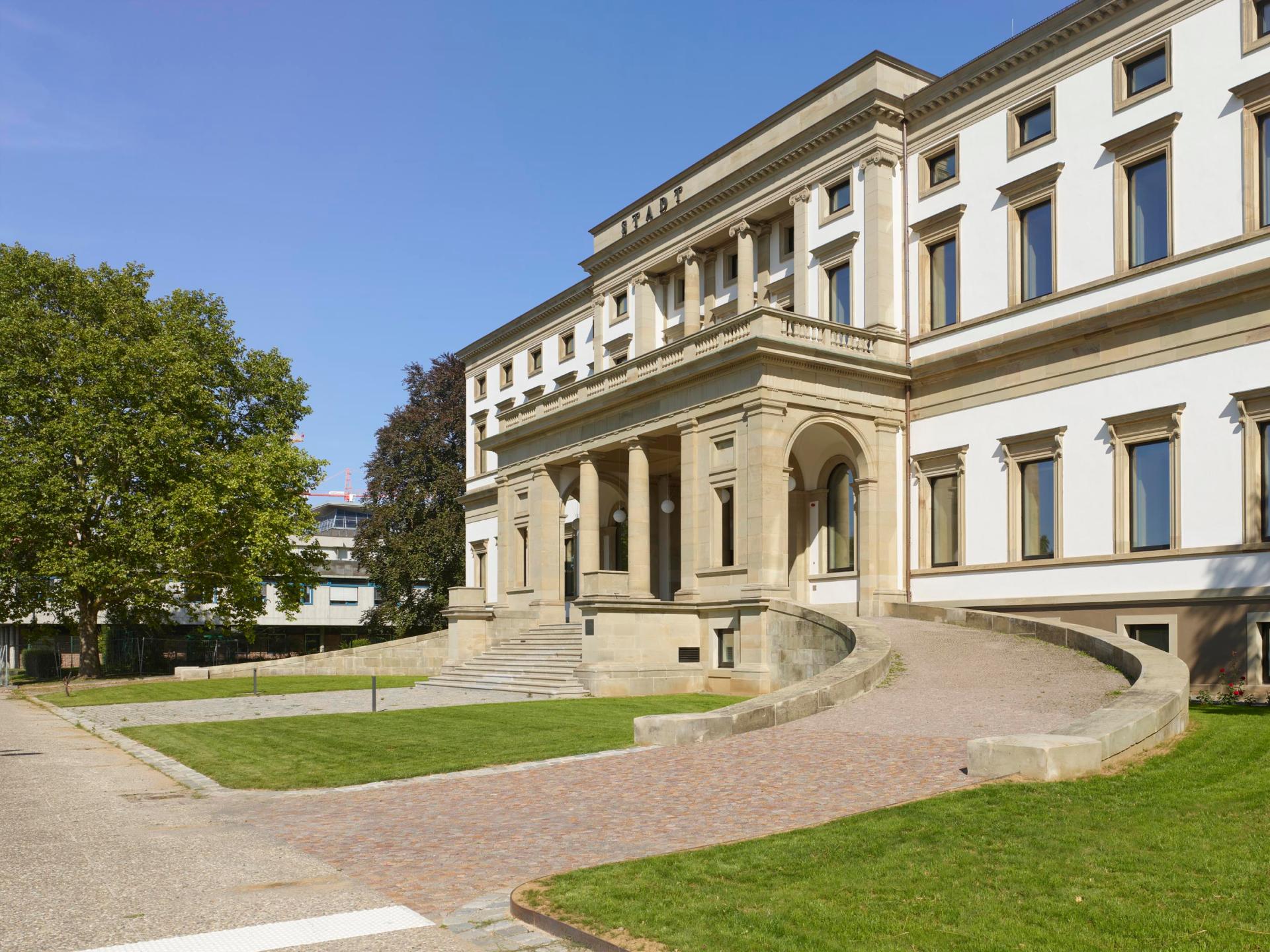
The Wilhelmspalais (King Wilhelm’s Palace) in Stuttgart was designed by the Italian architect Giovanni Salucci 1834–1840. King Wilhelm I had it erected as an abode for his two daughters. After enduring changing uses and partial destruction during the Second World War, in the early 1960s, Wilhelm Tiedje retained the old facades and integrated a new building for the municipal library inside the existing building. He modified the floor plan layout in response to the transport junction at Charlottenplatz by placing the main entrance at the back and inserting a central staircase behind the former entrance.
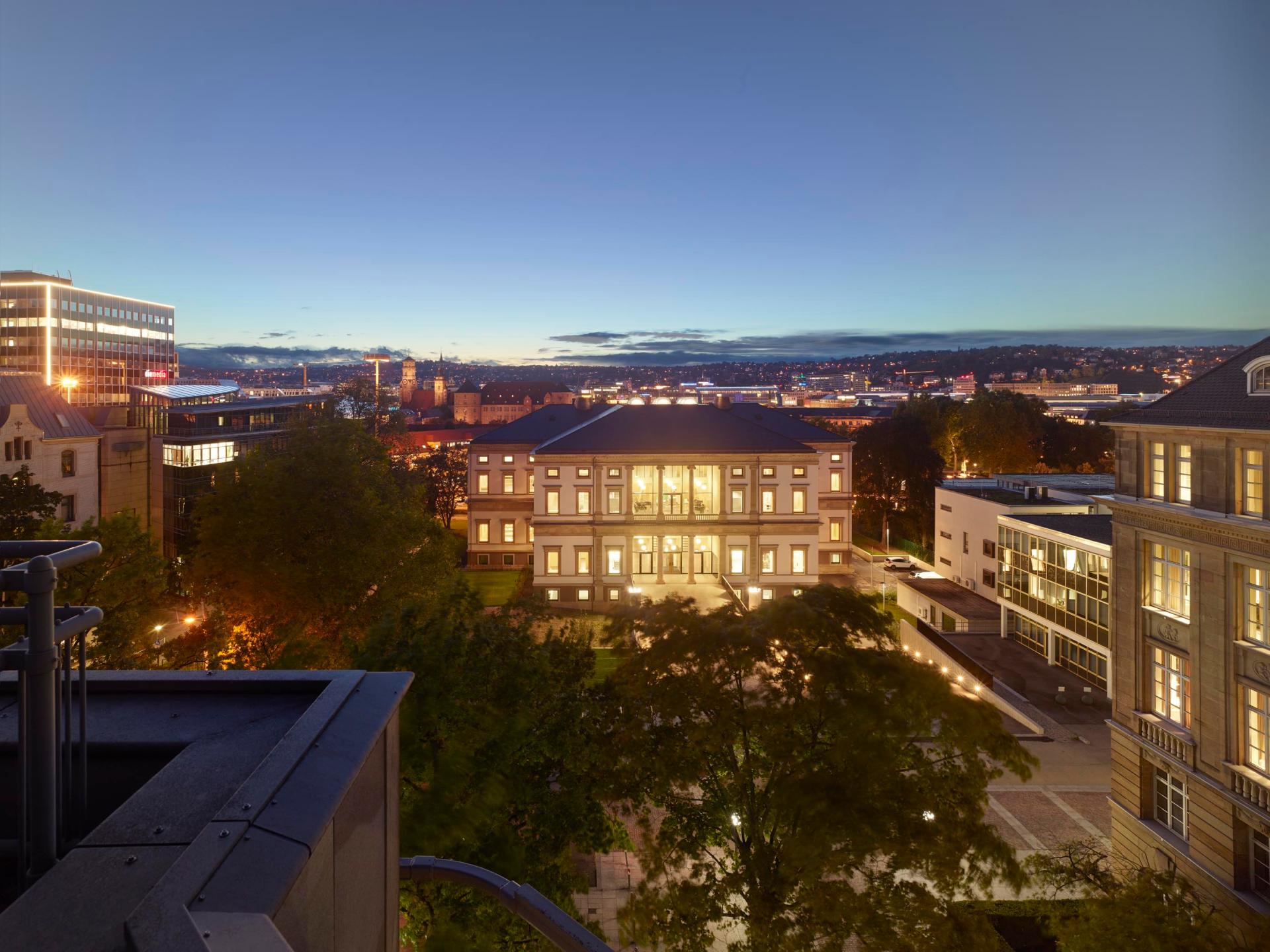
The new spatial programme for the city museum entailed internal restructuring of the building – while Salucci’s facades were to be preserved. But we were principally interested in the importance of the palace on an urban level. The building marks the intersection of two important axes: Planie and Konrad-Adenauer-Strasse. Together with the former Kronprinzenpalais (Palace of the Crown Prince) on the site of today’s art museum and the two palaces flanking the Planie, it formed a spatial sequence that was extraordinarily beautiful before its ‘destruction’ through reconstruction. This urbanistic quality was reflected in the former floor plan: interior and exterior spaces coalesced in an ideal way.
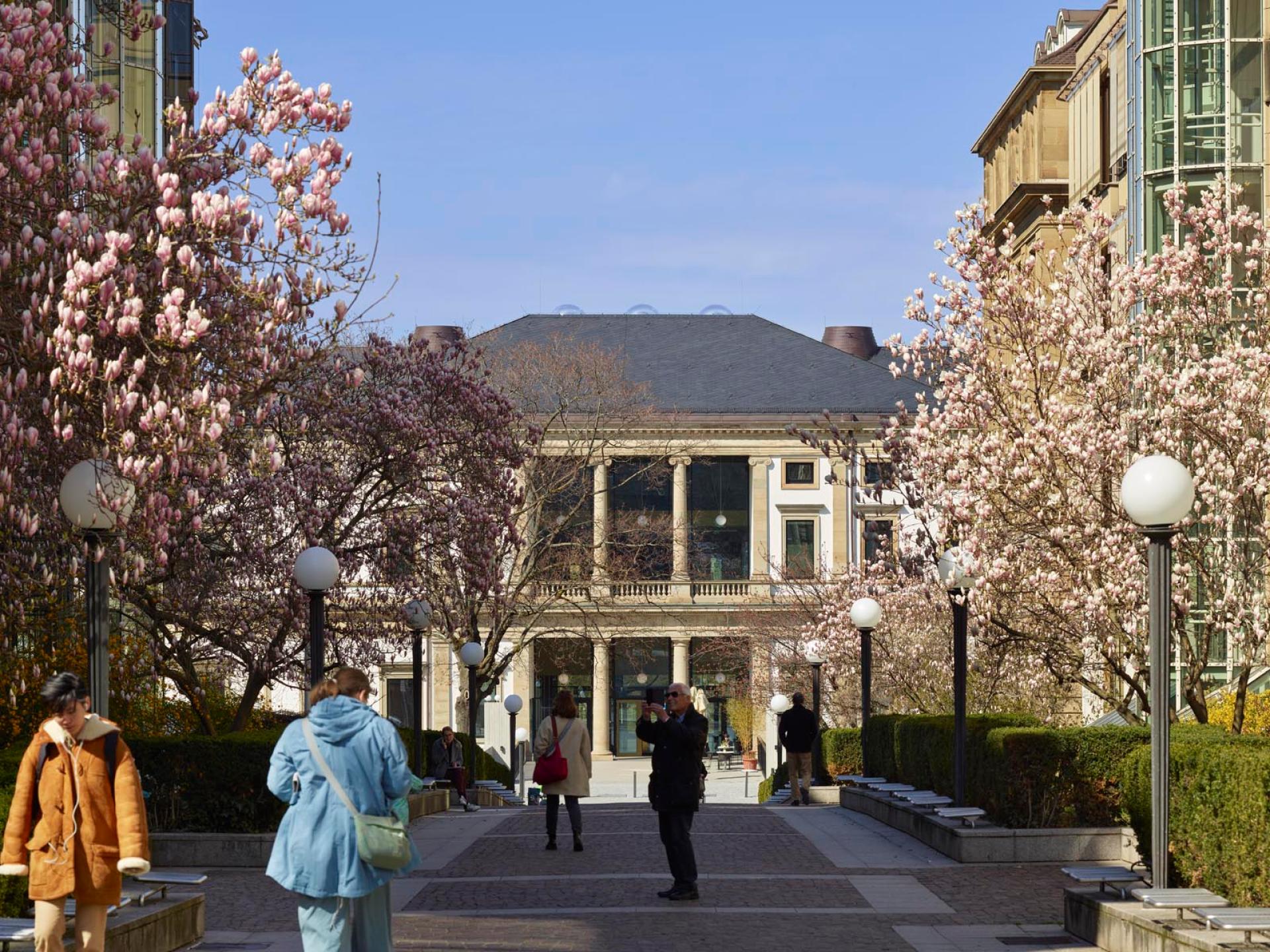
For this reason, the future main entrance was to be reorientated to once again face the city, while the walls and hedges of the grounds were to be removed and replaced by an exterior stair extending across the full width of the building. This would restore the visual axis at eye level between the art museum and the palace, and it would reintegrate the building into the urban space.
Key objectives for sustainability
The Stuttgart City Museum attaches great importance to projects that are dedicated to the topic of sustainability. On a regular basis events take place that deal, for example, with the consequences of climate change for Stuttgart. As a visible example of sustainability, the materials from the various events are reused whenever possible. In 2019 a mobile surfing station that was part of the “Stuttgart am Meer” summer-campaign was turned into a toboggan run in winter.
Sustainability also played an important role in terms of the architecture of the house. During the renovation, an attempt was made to deal with the existing structure and its history as carefully and responsibly as possible. The repair of the listed building was an important sign against demolition or the development of new areas. Aspects of sustainability are also the basis for the possible conversion and reutilization of the building. In addition, the use of natural, durable and high-quality materials also contributes to sustainability. Furthermore, the renovation makes an important contribution to sustainable urban development and also includes social dimensions.
Key objectives for aesthetics and quality
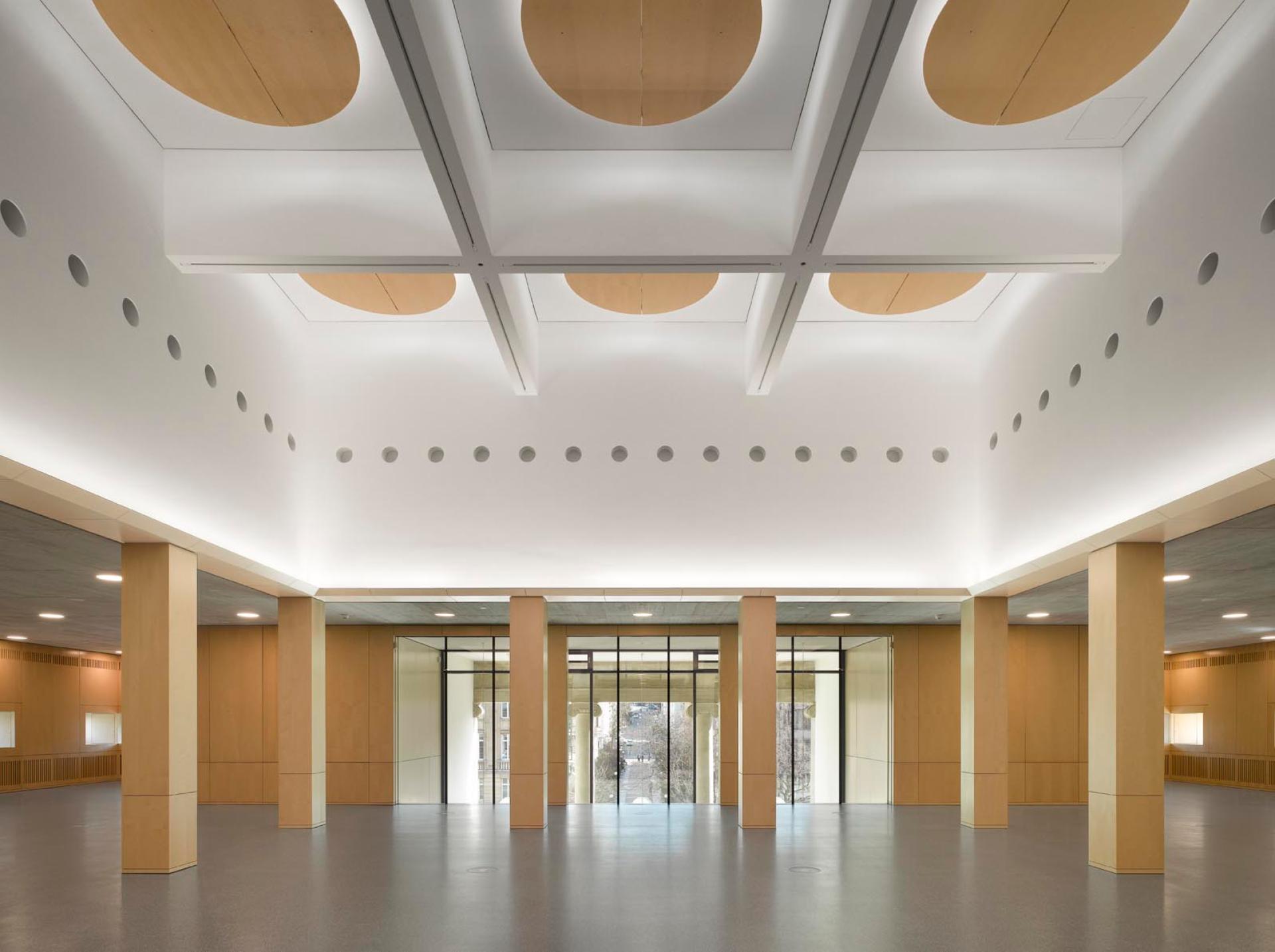
The internal spatial configuration is based on Salucci’s plan. The building’s central axis has been restored, and from the entrance hall, it is again possible to enjoy the view that Salucci had devised in his day as an important perspective for the design. The two staircases to the left and right of the central hall were also re-introduced, while the load-bearing structure, with its column placement, elucidates the old compositional idea. The initial idea of carrying the central hall right up to the skylights in the roof was rejected by the user and client for the sake of gaining more space; the hall is now two storeys high. In addition, the café planned for the first floor – which would have offered access to the balcony facing the Planie, from where there is a magnificent view over the city centre – was not realised. In order to maximise the room heights, all the wiring and piping for the building services and the necessary equipment for ventilation and the like are accommodated in the space between the old walls and the new interior cladding. The building is like a treasure chest whose inside is clad in birch. Hence the window openings are set within deep reveals and seem like display cases, which – in contrast to the exhibited objects devoted to the city’s history – offer a view of and comparison with the situation as it is today.
Key objectives for inclusion
The StadtPalais is an open house for everyone. In order to address a wide variety of visitors, the program is deliberately diverse. The museum is aware of its pluralistic audience in the choice of its topics and presentations, because as a municipal institution it wants to address the broadest public possible. Children and young people with different social and cultural backgrounds are a particularly important target group of the museum. Participation, integration and inclusion are basic principles of the Stuttgart City Museum with regard to its content orientation and its operation.
As an open place of education in the middle of the city, the topic of inclusion is of particular importance. Designed to be as barrier-free as possible, the museum makes offers for people with special needs and develops them together with representatives of the associations concerned.
Above all, the museum tries to reach those who are on the margins of society because of their origin or their social situation and makes this exclusion the subject of its work. Migration, social exclusion and the social task of integration are the main focuses of the museum's work.
Results in relation to category
The Stuttgart City Museum is a house for all Stuttgart residents, in which they can grapple with the history of their hometown, take a stand on current issues and think and discuss the future of the city. As a modernly designed house with attractive offers, it is aimed at different target groups and makes the diversity of the city tangible. The museum sees itself as an open and inviting forum for discourse on the history, present and future of Stuttgart. The involvement of visitors and users in the activities of the house and active mediation work are integral parts of the concept.
The city museum wants to be attractive to the broadest audience possible – including the residents of the city who moved and immigrated and in particular for children and teenagers. The interdisciplinary offers of the city museum are all seen as an approach to the phenomenon “Stuttgart” in the past, present and future. The Stuttgart City Museum sees itself as a social laboratory for the city of Stuttgart in all of its temporal dimensions. In this laboratory for the urban society and culture of the past, the present and the future in Stuttgart, the city museum discusses with the citizens what the respective city was, is and will be. The museum puts people - as visitors as well as actors in the past, present and future - at the center of its work. The people of Stuttgart will find the city museum to be the place where they themselves become a social actor. The critical examination of one's own urban identity is just as much a goal of the museum as strengthening identification with the city.
How Citizens benefit
The history of the StadtPalais goes back to civic engagement. And the fact that this facility was opened in 2018 has clear advantages: We not only have a conventional city museum, but also an open house of urban culture that deals with the past, present and future in different formats on all media channels. It has established itself as a kind of “living room” for urban society.
The Stuttgart City Museum develops its diverse offers in cooperation with partners from urban society. The museum sees itself as a stage for urban society on which the latter is allowed to develop, take a position, find its audience and a stage on which the citizens themselves become actors.
The museum is a forum in which all pressing questions of the present and the future are discussed. The people of Stuttgart discuss what they are, were and want to be - where they come from, where they stand and where they go. The Stuttgart City Museum is a place where citizens participate in the development of their own city and help shape it.
Innovative character
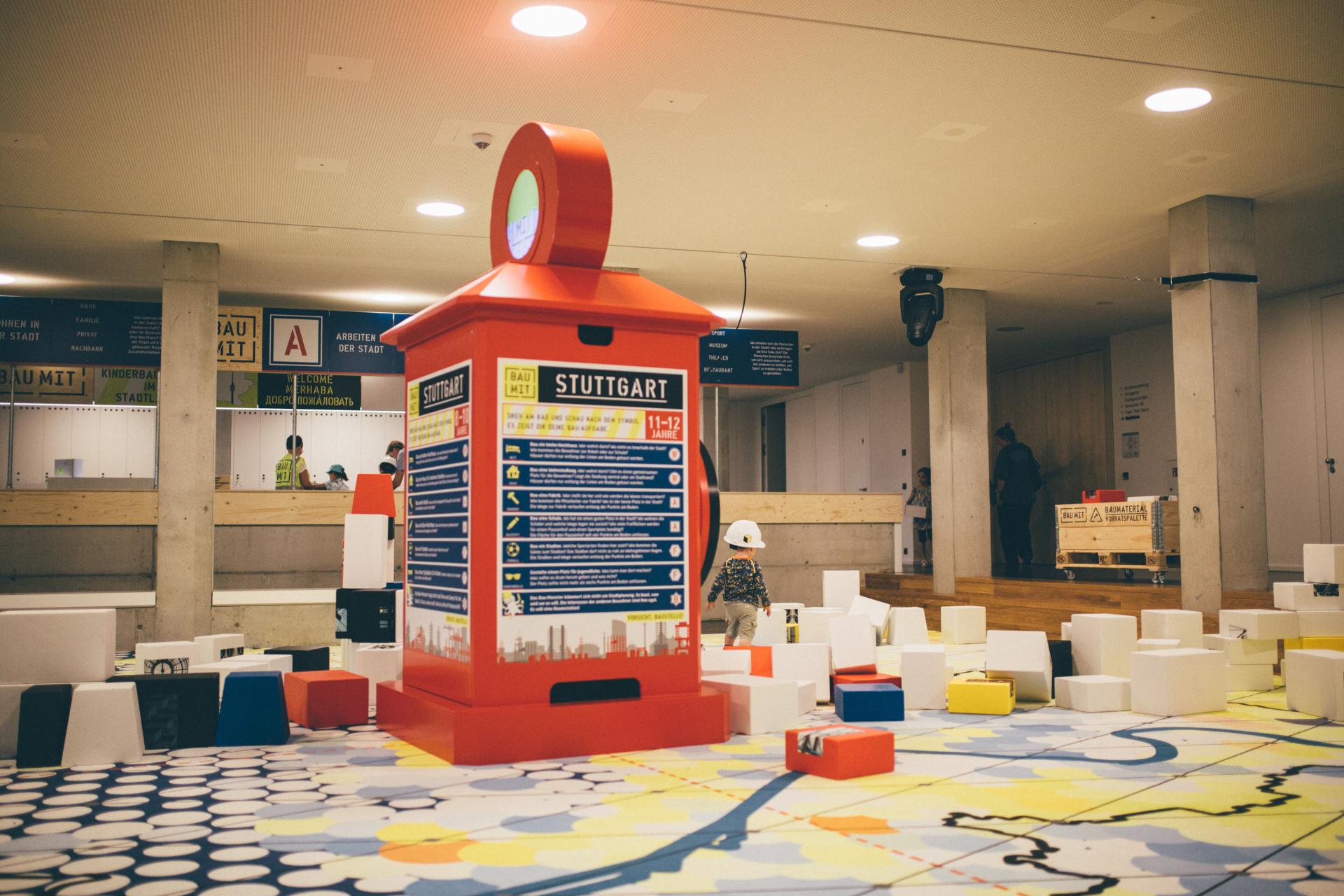
The StadtPalais is a lot more than a museum. It is a science center of urban culture, a place where people can meet and exchange ideas. The building’s design takes into account that in the long term, the rooms can also be used for other purposes. The museum concept now being implemented is not limited to the familiar areas for permanent and special exhibitions. The basement level, for instance, is being fit out to house an urban laboratory (“Stadtlabor”) in which visitors, especially children, can become acquainted in a playful way with the expansive areas that make up the city. The entrance level is dedicated to encounters with and exploration of the themes of the city. It became a kind of “living room” for the city. Most importantly, the palace is intended to encourage people to use it not just as a museum that only helps us to remember the past, but also as a vibrant place within the city dedicated to Stuttgart’s past, present, and a possible future.
Construction of the entire self-supporting reinforced concrete structure necessitated securing the old façades, which was by no means easy. It was impressive to see this engineering feat during the time when the outer walls, like an empty box, were waiting to be filled again with rooms. Because an additional storey was being inserted, all the building services – the wiring, piping and equipment – had to be routed within the space between the Salucci façade and the enclosing walls of the rooms. Therefore we chose a lightweight enclosure of wood construction, which, like a birchwood treasure chest, envelops the interior spaces. This material establishes the chromatic impression of the building. The windows reveal a view of the city past their deep soffits. They are set into the wooden surfaces like display cases.