An Old Port Harboring Shared Knowledge
Basic information
Project Title
Full project title
Category
Project Description
The new Immaginario Scientifico Science Centre inhabits the "Porto Vecchio", an area heavily built in the late '800 and abandoned in the middle '900. The science museum has inserted lively and light elements into the central section of Warehouse 26, balancing and enriching the solidity of the old building. The new museum aims at involving the general public in the life of the international community that has made Trieste "the city of science".
Project Region
EU Programme or fund
Description of the project
Summary
In October 2020, the Immaginario Scientifico Science Centre finally moved to its new premises, the central section of Warehouse 26, located within the "Porto Vecchio".
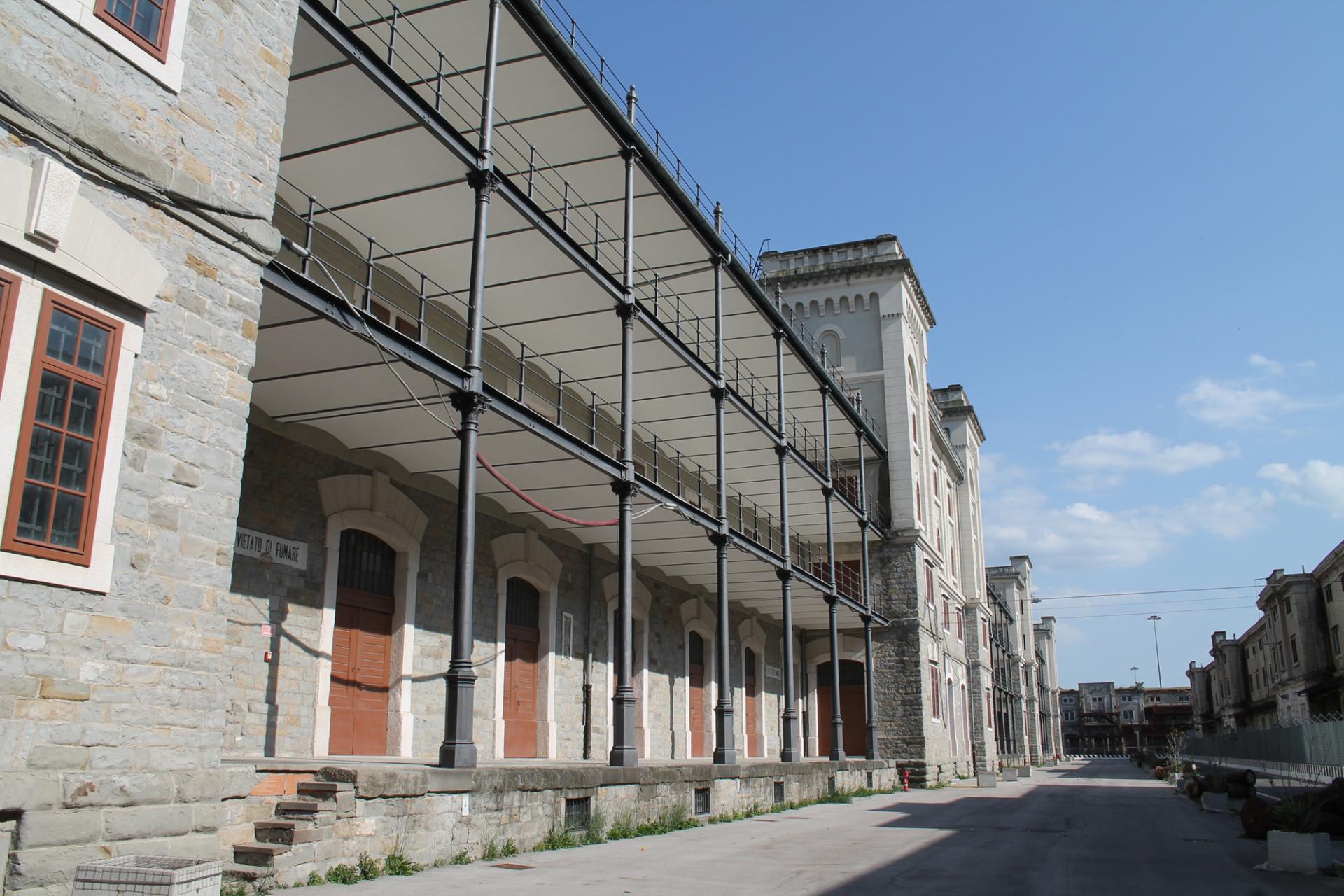
"Porto Vecchio" is the old port of Habsburg Trieste, of the times when the city was the most important maritime emporium of the Empire. It covers about 66 hectares on the seafront of the town (following the railways towards Venice) and develops in a succession of large buildings, originally used as warehouses for material goods.
After its refurbishment and reconversion, Warehouse 26 is becoming a mix of industrial archaeology and modern design that will evolve into a significant cross-border cultural attraction.
Within this context, the architectural project of the new science centre has aimed at creating a coherent and consistent space balancing the heaviness of the structures with the colorful lightness of the new insertions.
As for the inclusion of the general public into science,
the science museum, being the first cultural permanent element of the renewed "Porto Vecchio", fully embodies the move that characterizes Trieste's call to be a "city of science": from the trade of material goods to the sharing of the immaterial goods of science's universal truths and methods.
In fact, the Immaginario Scientifico mission is to make sure science is for everyone and at everyone’s reach, no one is excluded. The vision, shared by all its partners, is a society in which all the citizens can consciously participate.
Key objectives for sustainability
It is a recognized truth that the reduction of consumption is to be considered among the main energy resources. From this point of view, having reused a building avoiding new construction is per se a sustainable action that fits in very well with the 17 goals of agenda 2030. Furthermore, in the design of the technical systems, special attention was paid to the issue of sustainability, within the limits of compliance with the rules dictated by the fact that the building is subject to the Italian laws protecting the cultural heritage.
The private companies that have been our partners in the initiatives are companies committed to sustainability, and they all make products that meet the goals of the 2030 Agenda.
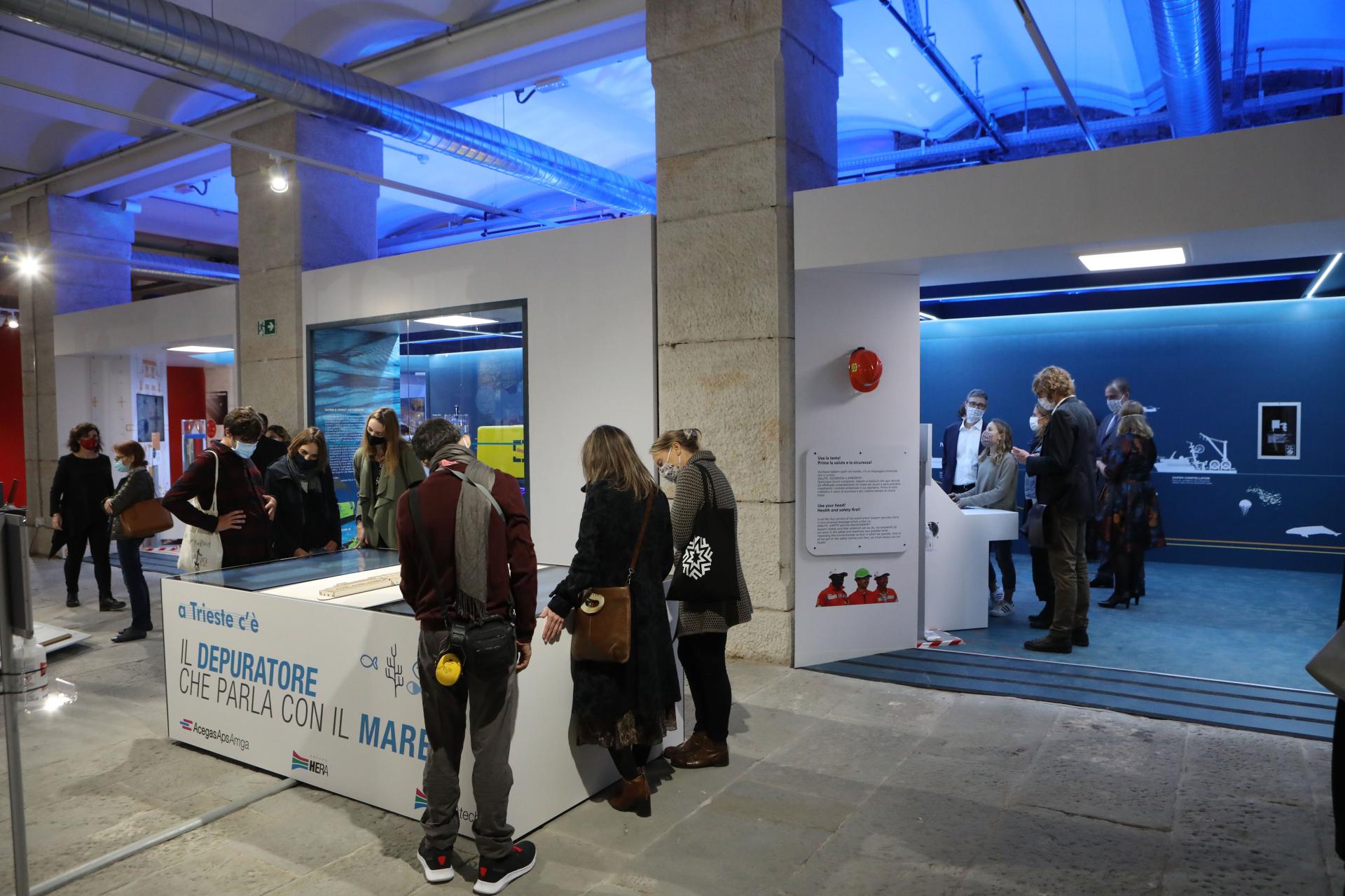
Moreover, from the point of view of the sensibilization of the general public, the Immaginario has always been engaged in the field of education to environmental awareness. Many workshops and specific activities aimed at school groups and families have been organized within this scope; renewable energy, wastewater disposal, water purification are themes widely illustrated in several museum's exhibits.
Key objectives for aesthetics and quality
Built around 1880, Warehouse 26 covers 9000 square meters, with a basement used as a cellar, a ground floor, and three upper floors, plus an attic. The first design of Warehouse 26 recalled the neo-Gothic and neo-Romanesque stylistic features of the warehouses of the Speichestadt in Bremen. The building as a whole appears rigorous, austere, and solemn, with essential façades, whose decorative aspect is entrusted to a few elements, and above all to the construction materials such as brick, stone, wood, iron, and cast iron.
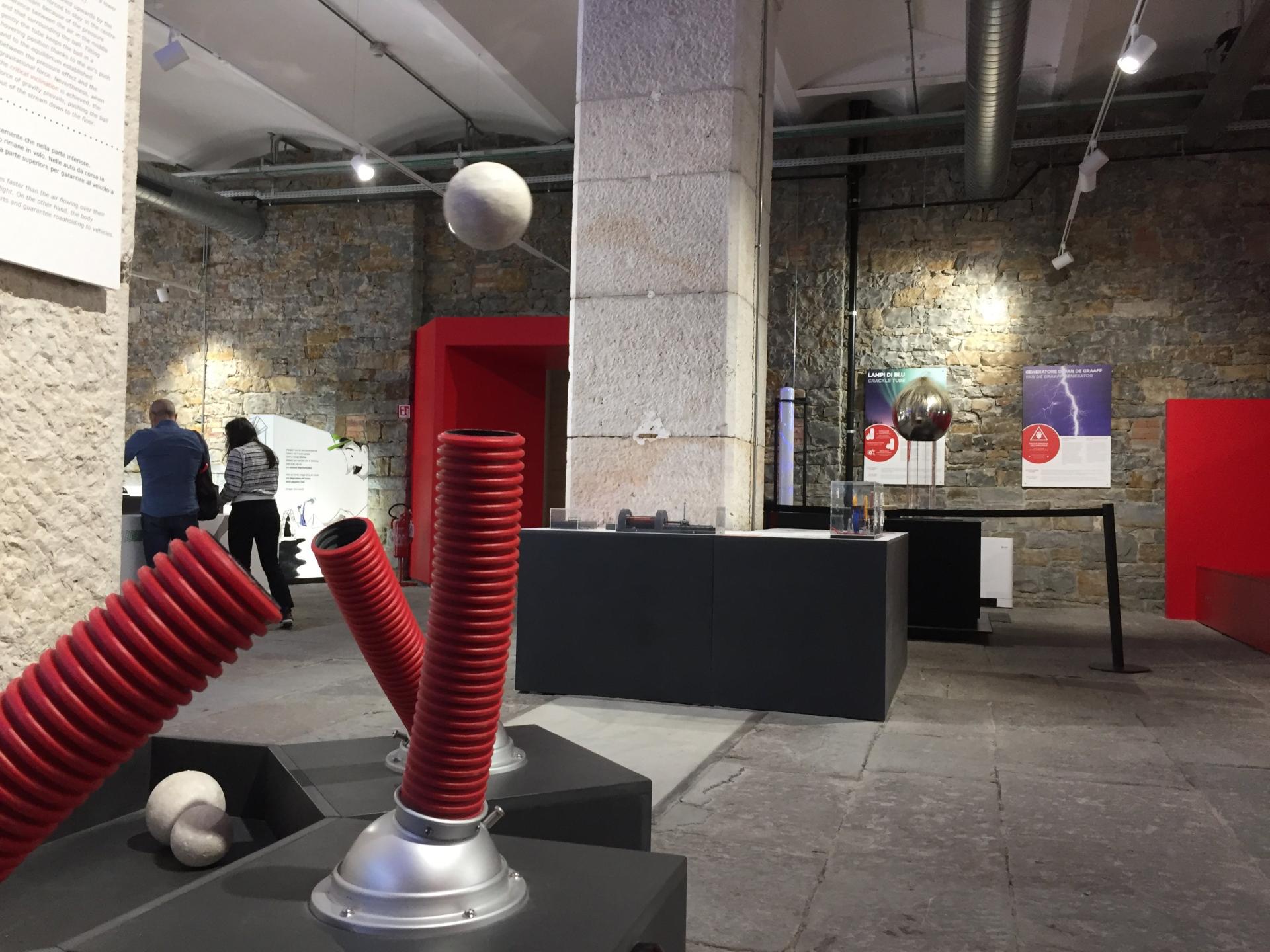
The renewal of the building, in sight of the new intended use as a science museum, has followed a line of intervention as much as possible aware both of the aesthetic qualities of the old building and of its identity, with the double objective of conservation and renovation. The insertion of new light elements, respectfully opposed to the solidity and strength that identifies the building, has therefore always been carefully negotiated. As for the exhibits, the furniture and the museum didactic apparatus, they too have been designed, in terms of size and colors, not to cover but to dialogue with the preexisting structures.
Key objectives for inclusion
The Immaginario Scientifico's inspirational model was San Francisco Exploratorium, the first interactive science centre in the world, founded by Frank Oppenheimer. The original Exploratorium's title was "a community museum dedicated to awareness".
In fact, its goal has been not only to help people understand nature but also to understand how they understand nature and encourage everybody in his own cognitive endeavor.
Consistently with this museological philosophy, the vision for the new Immaginario Scientifico is to create a communication space, safe from the point of view of reliability and comprehension of the scientific contents, communicating extroversion and empathy.
The ultimate purpose of the museum is to offer everyone, regardless of age or the level of scientific education, the opportunity to make an independent path of discovery, led by wonder and curiosity, aimed at acquiring awareness and scientific citizenship.
To ensure these results, the Immaginario Scientifico relies on its own decades of experience in informal education and on the contribution of the University and the international research institutes present in the city.
Results in relation to category
All the "Porto Vecchio" area has remained for decades inaccessible to the general public, in a condition of total abandonment. Only recently, the municipality of Trieste has activated a recovery operation of the area.
The Masterplan that has been approved by the Municipality concerning the "Porto Vecchio" area identifies five systems, among which the one for scientific/cultural/museum is the very first.
The Trieste Municipality MP has defined public spaces, green areas, gives design guidelines, enhances and redevelops existing infrastructure and buildings with interventions for the protection, enhancement, and networking of building heritage, monumental, historical, artistic and cultural, material and immaterial, through the creation of sustainable territorial systems, with the strategic goal of returning to the city a disused port area and its connection to the surrounding urban fabric. The interventions take into account the environmental, landscape, and typological context and foresee the transformation of the spaces through progressive urban development.
The Immaginario Scientifico insertion in the area has been supported by the Trieste Municipality and, in fact, is one of the feathers at his hat.
Since the opening of the museum last October, in spite of the challenges due to the COVID-19 pandemic, the presence of the thousands of visitors that the science museum has attracted so far are significatively contributing to the repopulation process of the whole area.
How Citizens benefit
The design of the Immaginario Scientifico, the first museum to move into Warehouse 26, results from the cooperation with various public and private scientific national and international institutions. Beside the scientific organisations and companies that have made Trieste a city of science renown at the international level (Trieste was celebrated as European city of science at ESOF 2020), the museums has also many proactive partnerships with prestigious companies that stand out for research and innovation: Acegas Aps Amga – Hera Group, Illycaffè, SIAD, Saipem, Esteco and Sissa Medialab. All of them have worked side by side with Immaginario Scientifico to design, develop and accomplish the museum’s contents.
In terms of financial contribution, the museum has been developed also thanks to the funding of Fondazione Casali, Fondazione CRTrieste, and Fondazione Pietro Pittini.
As governamental base, the Immaginario Scientifico is supported by Friuli Venezia Giulia Regione, Trieste Municipality and the Italian Ministry of University and Research has been fundamental.
All of these organizations actively participated in the design of the museum and also in its realization, some even producing entire sections.
They have been committed to producing and updating content and tools because for them the museum is an important form of communication with the city. This task of helping scientific organizations and industry involved in research to dialogue with the public has been one of the main reasons for the existence of Immaginario Scientifico since its inception.
Innovative character
The Immaginario Scientifico has a long history of innovation in exhibition and museum techniques, which started with its first edition (Paris, May 1986), when hypertexts allowing interactive exploration of the contents were added to the traditional printed captions.
Since 1988 Immaginario Scientifico has created and shared an archive of experiments, demonstrations, and activities for informal didactics (the "Sperimentoteca").
In 1999 a permanent site was open to the public, adding a multimedia section to the "hands-on" exhibits area.
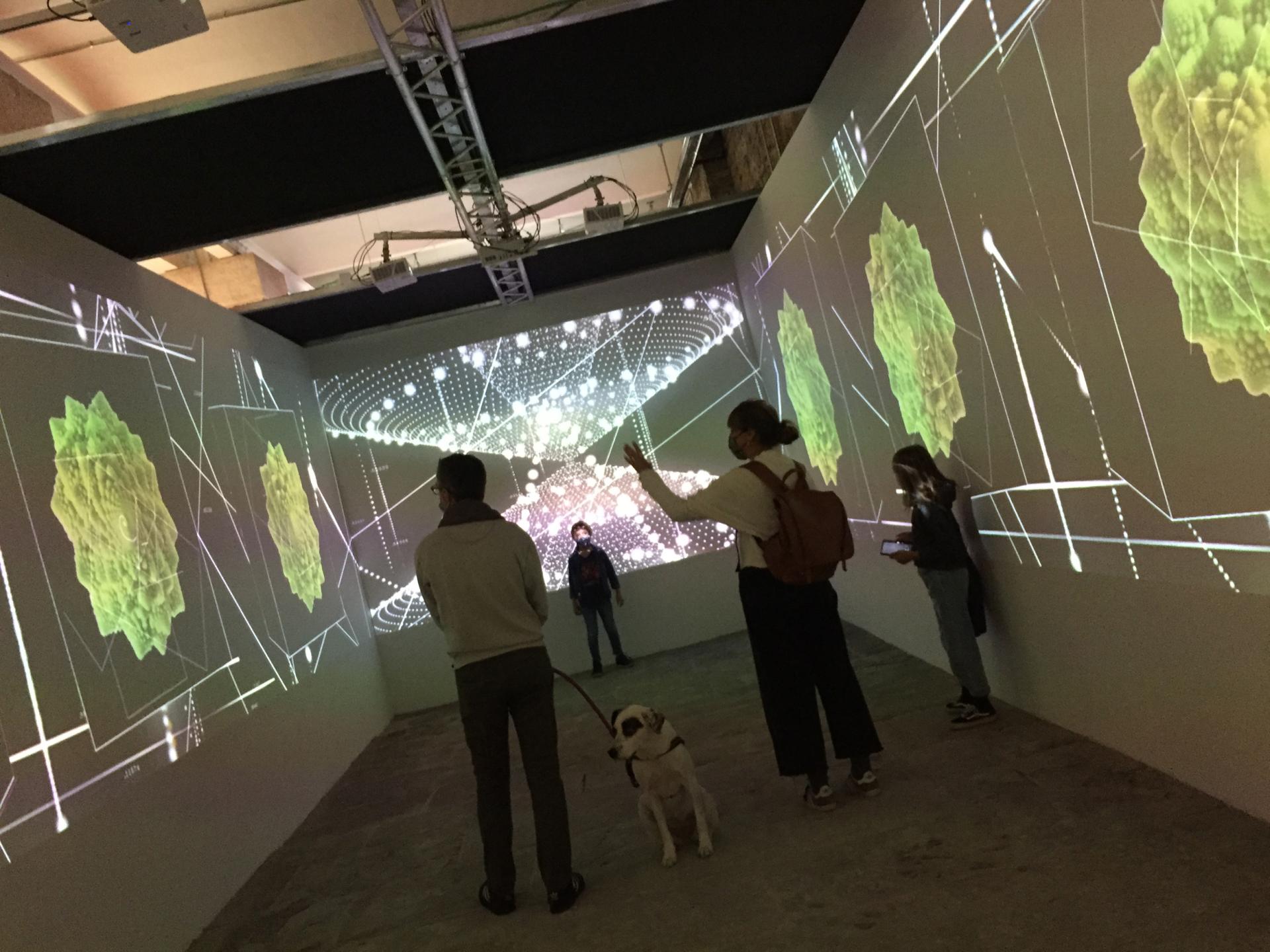
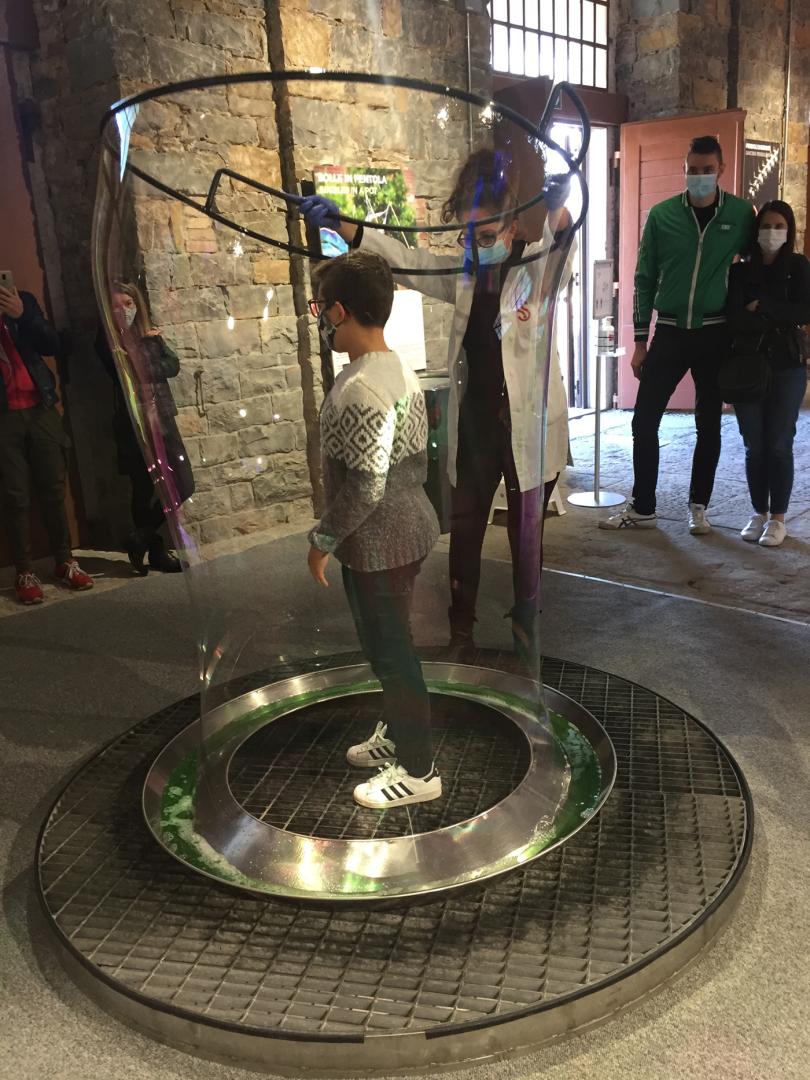
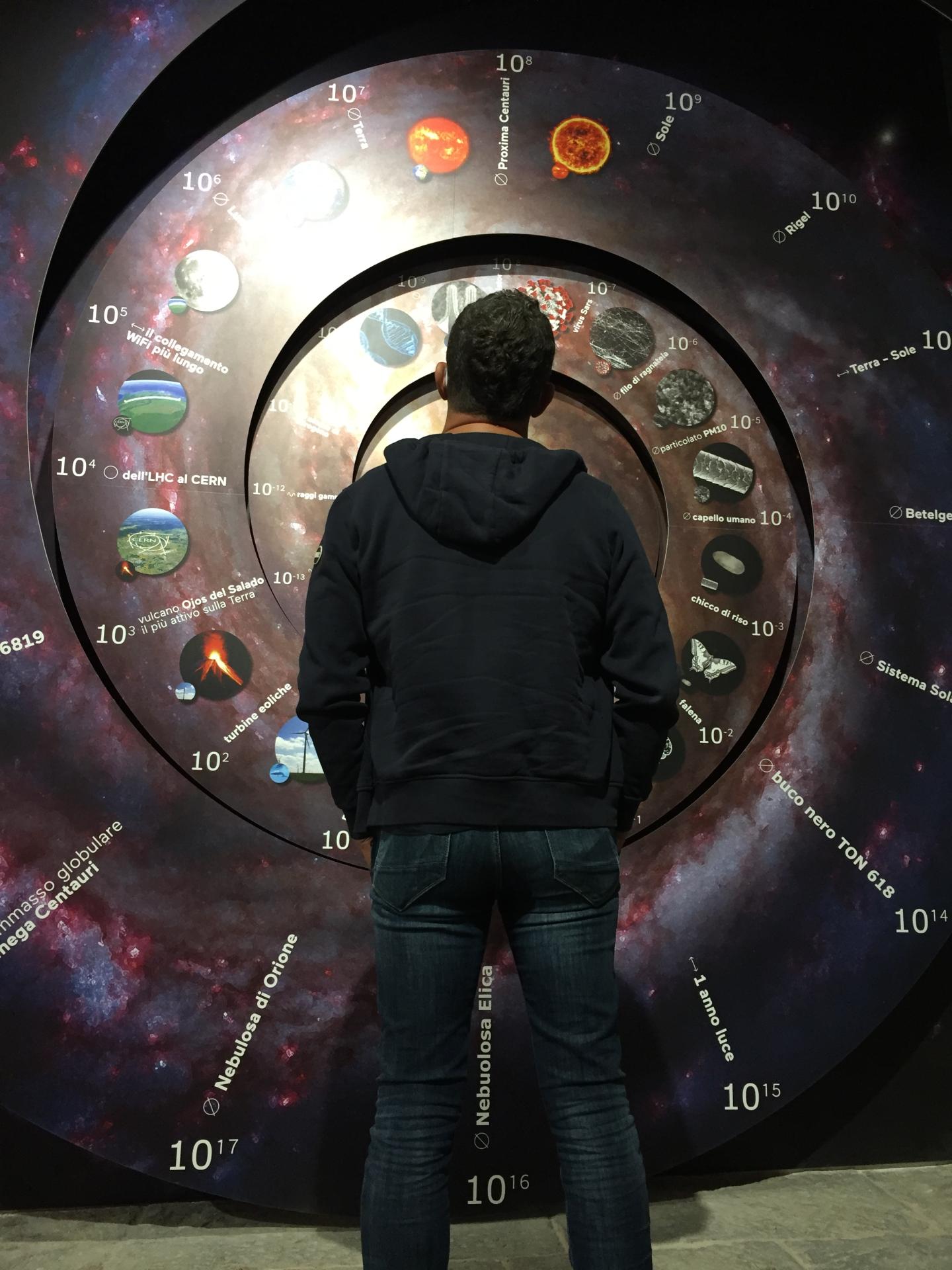
The new museum opened in 2020 at Warehouse 26 is based on the constructivist museum philosophy and features expository areas that are interactive, engaging, and captivating.
The exhibits allow to directly experiment with natural phenomena and with the more innovational applications also developed in collaboration with the main Trieste’s scientific institutions.