Medina Guapa
Basic information
Project Title
Full project title
Category
Project Description
Through the attractive initiatiatives for the Medina de las Torres’ people and the adjacent villages, it is being carried out a transformation of the image and urbanistic aspect of the town, using waste & recicled materials from hospitals. This activities pretend to gather and involve all of the community, disregarding the age and genre.
Project Region
EU Programme or fund
Description of the project
Summary
“Medina Guapa” is a proyect that intends to involve all of the community of Medina de las Torres (Badajoz, Spain) in the transformation & beautify of the surroundings. This change is being carried out through many initiatives that use recycled materials & waste.
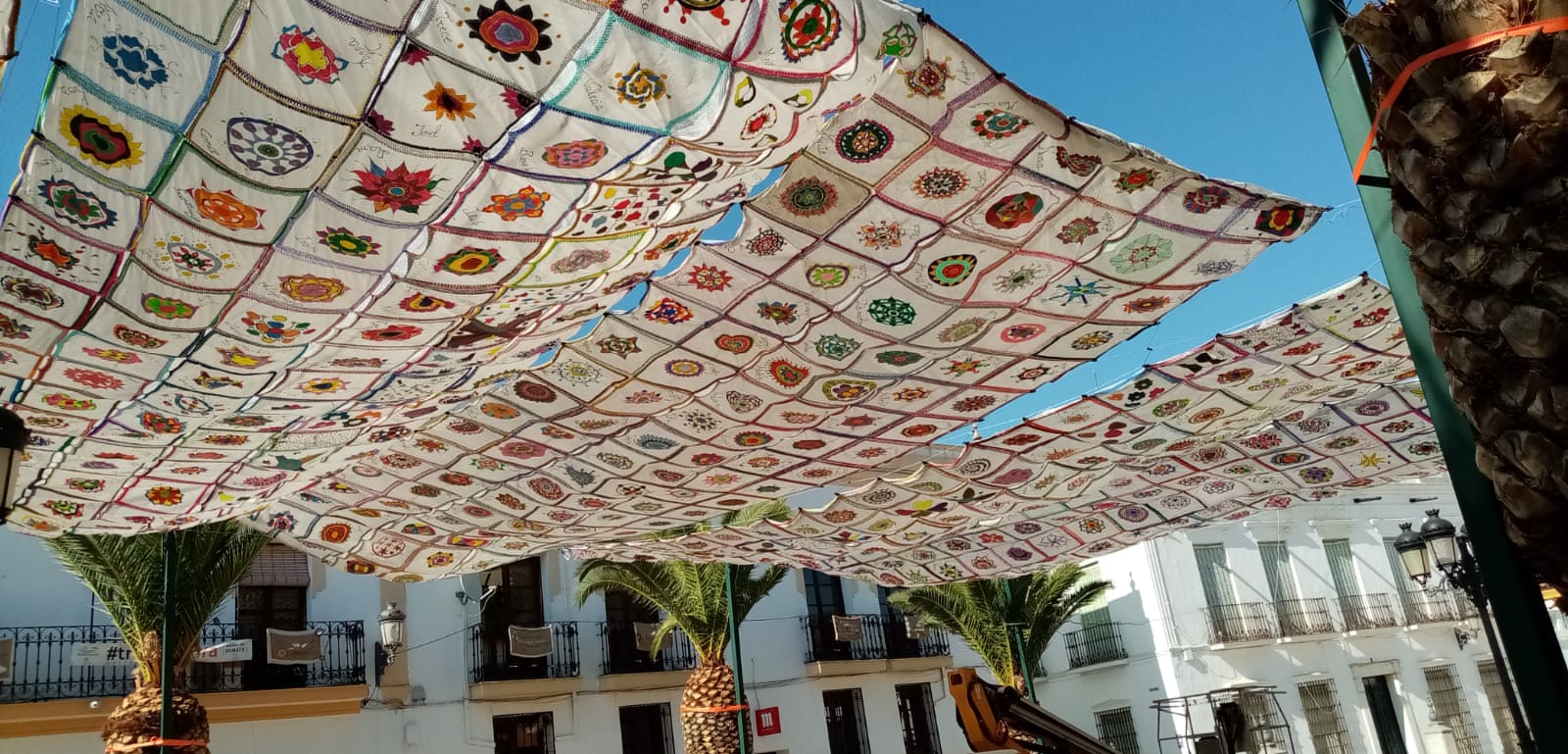
The first of these initiatives consisted in the production of an awning for the main square through this materials, gathered from the surrounding towns. These interlining are joined together with crocheted yarns & decorated with hand-made mandalas. The awning is still growing and other proyects are taking shape for the surrounding streets and the elderly residence.
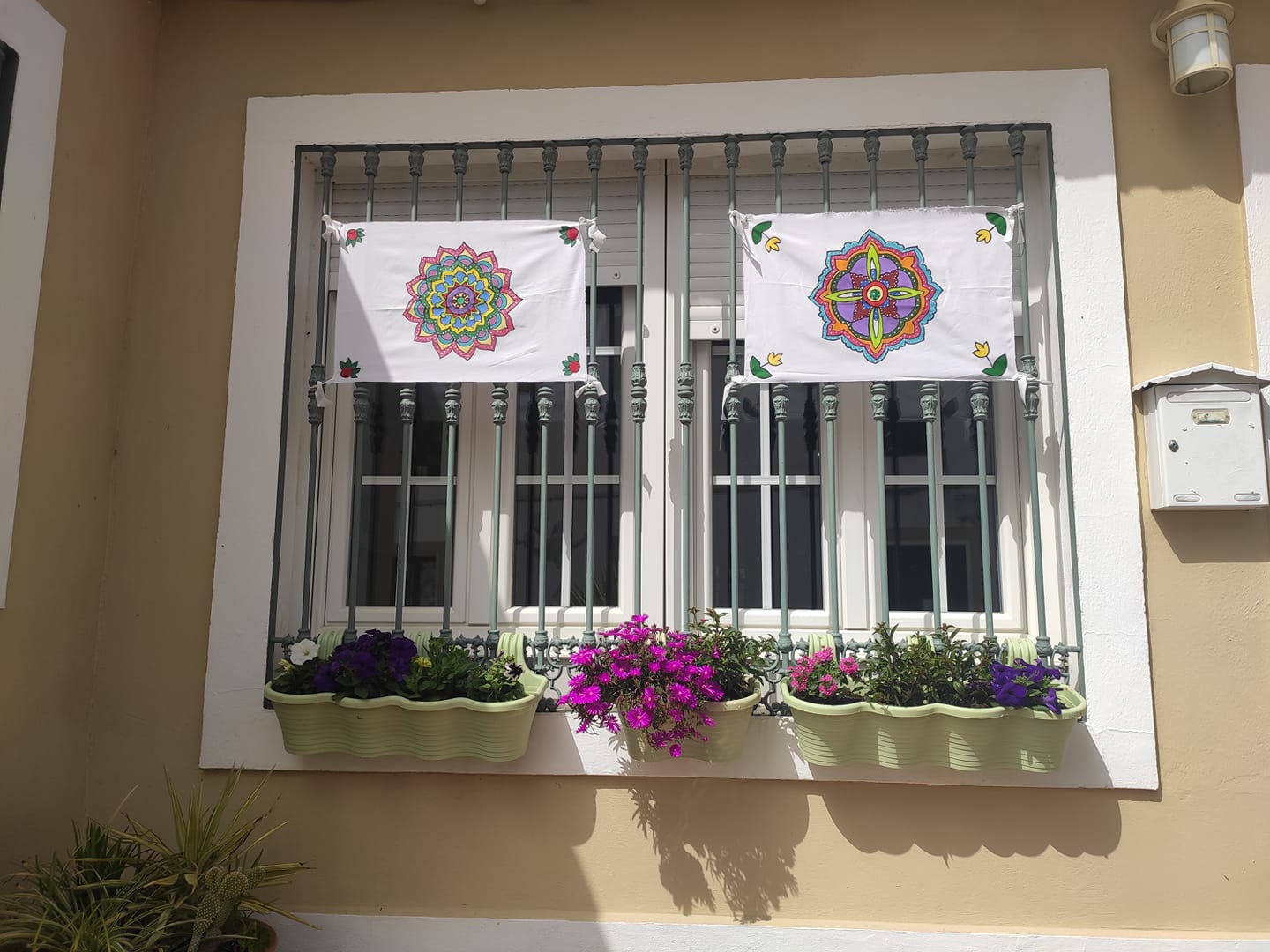
As a follow up for the awning idea, the possibility of beautifying the facades of the village came up and, reusing the fabrics donated by the neighbours to paint the mandalas on them, decorating the windows and balconies where plants had previously been placed.
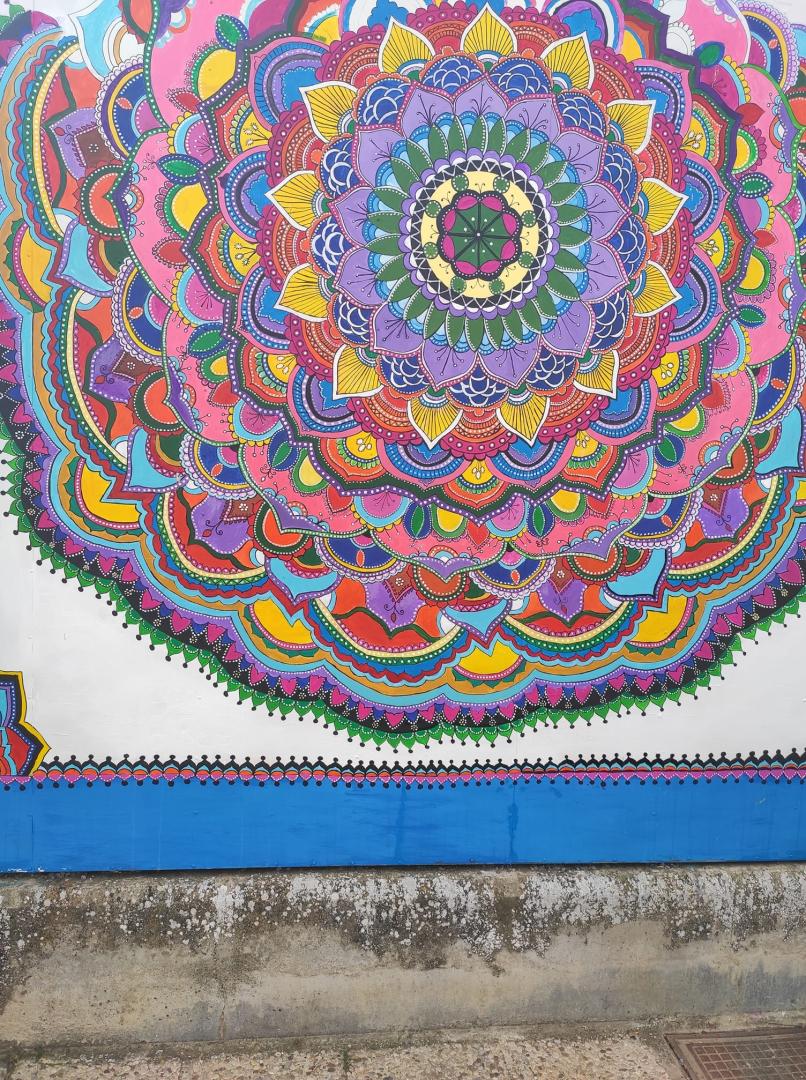
Other initiative, related with the previous two, is the one in charge of decorating and old metal plate from Plan E with the painting and design of a big mandala near by the elderly residence. The idea is to reuse every single metal plate we found, preventing them from going to the junkyard.
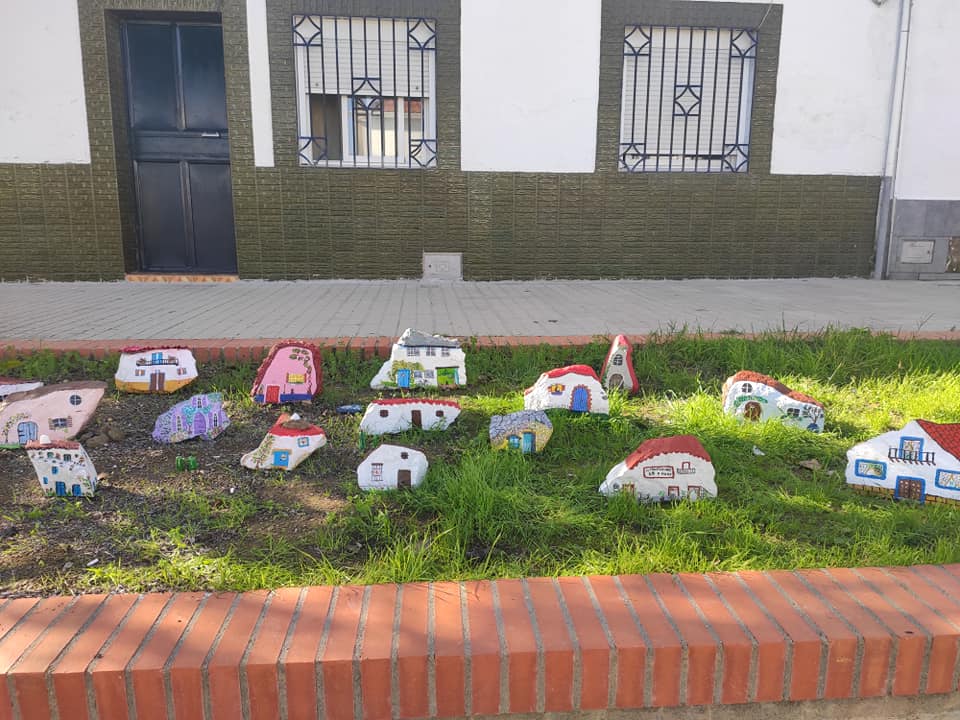
The next activity consists in the creation of a miniature village with recycled materials in a garden from a usually traveled road. The neighbours themselves are creating the houses and placing them. An average of 80 people are involved in this proyect, from Medina and the surroundings and have created 115 houses, most of them mimic the real houses of the town and represent known places from the locality. “El Pueblino” is still growing each day, and more of the folks involved are the ones taking care of its maintenance.
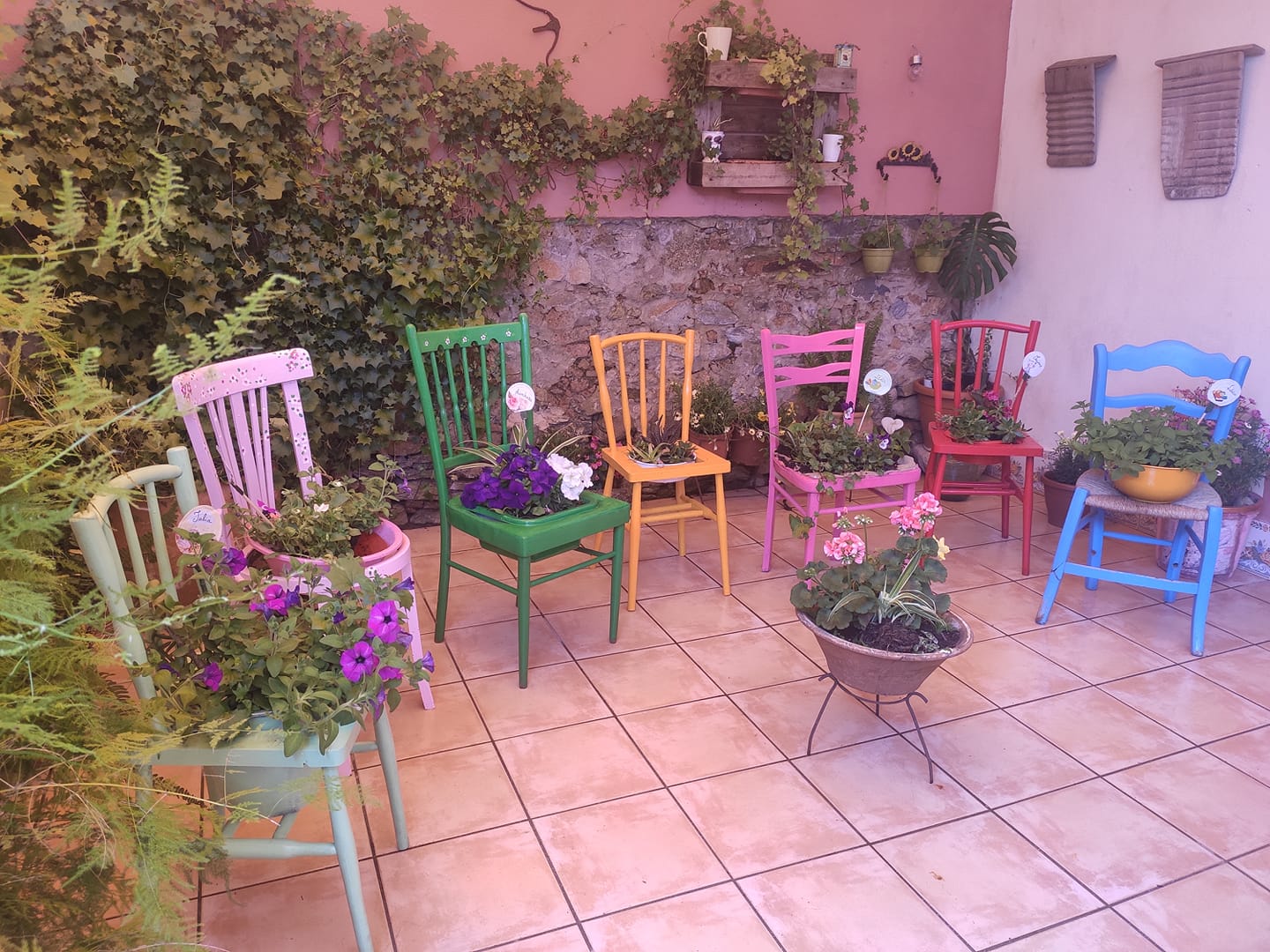
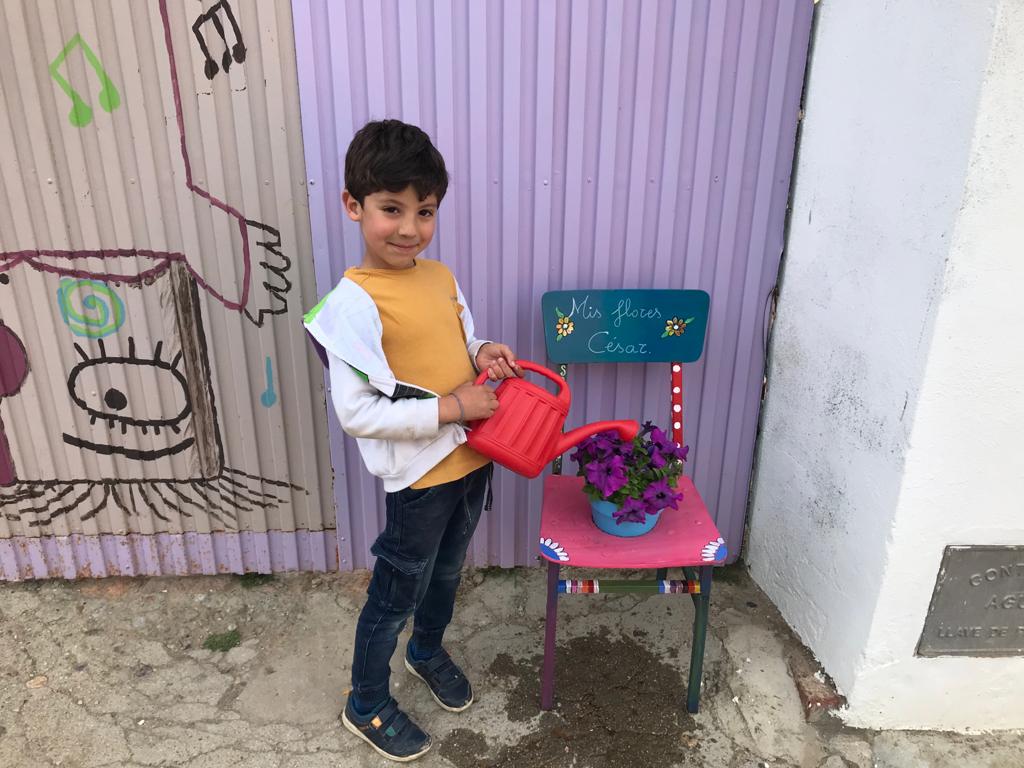
The last one consists in the reuse of old chairs to plant flowers and create little gardens that the kids from the village will take care of. Planted and painted chairs are placed on the street, near the children homes.
Key objectives for sustainability
Every initiative that is part of the proyect is thought to be susteinable, for the materials as well as the resources used. The making of the awning and every other activity is carried out by volunteers, individuals aswell as workshops.
When talking about the awning, it is elavorated with surgical waste materials (interlinings used for wrapping surgical gowns) from the Llerena, Zafra and Mérida’s hospitals (Badajoz, Spain). Donated wool, provided by the neighbours, is being used aswell to join interlining and crocheted yarns. The markers used to paint and the wool or fabrics, run out from time to time, but it is bought when needed with the money gathered from the donations that people give when they want to see their name on the awning.
The mandalas decorating the windows are made of old blankets that the neighbours donate independently they are involved on the project or not.
As for the mandala made near the elderly residence, it’s painted over a metal of “Plan E” plate that would have ended up on the junkyard.
The houses of the miniature village “El Pueblino” are elavorated with stones, bricks and rubble found on the streets. The paintings are the ones given by the neighbours & the association buys acrilics for the details, buying these by selling second hand objets given by the volunteers.
Finally, the chairs are gathered and picked up in the junkyard and clean point, donated by families of the children who will be in charge of their care. The paint is provided by the families or the association. Plants are donated by neighbours, others are from individuals in the assotiation and a few are bought to the local florist.
Key objectives for aesthetics and quality
The awning was born as a solution to the heat in the central square on the summer, but as time went by, people wanted it more for the esthetic than for the utillity. This instalation is becoming a turistic attractive, as well as the mandalas in the windows and balconies, chairs and “El Pueblino”. Because the Project is becoming popular in social media, neighbours from the region are coming to visit to see the awning, when its out, and every other instalation placed permanently.
The awning is made though the year. Because of the first state of alarm, the surgical material stopped arriving. Resulting in the neighbours deciding to reuse the fabrics of their own houses to continue making mandalas, making them feel more productive in those hard times. To give the village a more cheerful image and overcome with joy the situation, the neighbours started to hang the mandalas on every window and balcony. This way, the second initiative started. Although it is already possible to go outside, people have continued making mandalas because they considered it a gratifying activity, entertaining and now are demanding for more activities.
Medina is becoming an outdoor museum and the population is now daring to go out, enjoy and discover this new creations. A domino effect is taking place, making the people worry about the esthetics of their facade, even the ones that don’t want to place mandalas, are now putting flowers.
Key objectives for inclusion
Every single activity of the proyect is open for anyone from the locality or outside. First the mandalas were made from women of the local “Association of Women”. When seing the results, and the mandalas from outside each house and balcony during confinement, the number of volunteers grew and so did the range of age and genre. The activity is provoking that an activity as crocheting is being now popular, making it interesting for new generations.
In the same way, “El Pueblino” has recieved a great response between people of any age, but above all, Elder man. This activity is very flexible and allows anyone to make a version of a home. Kids are excited to discover new houses on this Little village and are encouraged to do one themselves, asking parents or familiars for collaboration. Grown ups feel challenged to do creative houses, polished and more atractive than the ones already done.
Finally, the Project of the chairs need more implication of the family. Adults, in many cases the grandparents, are in charge of gathering and decorating the charis, and children take responsibility for the care of the plants.
Results in relation to category
Work groups have been created with people who did not know each other before, and they work with the same purpose. Now, there are about 30 women crocheting who, facing the impossibility of reunion caused by the pandemic, are relating through a Whatsapp group to meet and to exchange material. We’ve got collaboratos from other locations too.
At the same time, other 20 people are painting the mandalas, which are for the awning and for the windows. 35 chairs have been placed in the streets, which have been made and they’re taken care of by some families; added to the people who gave us the soil, the plants and the chairs to develop the activity. Ultimately, 80 people have colaborated painting the 115 houses which shape “El Pueblino”, the most inclusive activity of the whole project.
It has been created an eviroment of hope due to improve the village’s appearance and more and more neighbours ask for materials to participate in any activity.
Thanks to the social media in which the project’s process is being published, this is being known out of the village and the participants see their work recognized. The Extremadura TV as well as the radio and the press are interested on the project and are publishing it.
People who doesn’t live in the village and want to participate on the activity are feeling adhesion.
This adhesion feeling is being created by people who does not live in the village and who want to participate on the activity too. So, last year we received requests to write down their names and their relatives borned in Medina de las Torres from different Spanish geographical points and even from New York.
This is the first time that initiatives like this are made in the village and we feared that some people destroyed said creations. We think that it has borned a respectful enviroment from the neighbours implication that protects all the work.
Little by little the project is turning into in a hallmark of Medina de las Torres and a reason for pride.
How Citizens benefit
The project has added more activities and more participants. It started being an awning and has ended up being an urban action which now is working on four initiatives at the same time.
The fact that the activities are so different between them allows to give participation to people with different tastes and hobbies. The implication is growing because a wellness feeling is expanding and the desire of continue improving the enviroment. The population is becoming aware that the power to change their village is in their hands.
The project is 100% voluntary and it could not have been carried out without the participation of the citizens. The project is growing so fast that it requires more people to being carried out and to being kept. It is a “snowball effect”: the appeal of the creations causes that people want to participate and when they see that the village improves, they want to be included on the project.
To respond this demand, the Association is planning new activities within the project, like group murals, painting traditional games on the floor, points to encourage reading taking advantage of unused locations, etc.
Innovative character
All the initiatives have got an innovative part. First, there is no known awning made of surgical interlining. There is no known concentration of mandalas so big than we’ve got in Medina de las Torres neither. The mandala’s design is completly original, each person makes their own drawing. It is curious how we can recognize the different styles and the different authors.
As for the chairs, the original idea was found on social media but we contribute the use of recycled materials and the children implication on the care of the plants. It is an innovate approach of the Association.
There is no information about the existence of an initiative similar to “El Pueblino” and with such a large participation.
We’re asking the neighbours about putting their own seedlings and to share their plants for the windows decorated or not with mandalas and for the chairs. The goal is that all the plants dressing the village will be exchanged between the volunteers.
Also, all the initiatives are carried out by the volunteer in their own houses, without the need of trainers or a common space. This allows the Project to continue growing despite of the sanitary restrictions due to the Covid-19. The number of participants and the open nature to include every age, sex or origin is innovative too. The sustainability of the initiatives is peculiar, because the participants are the ones taking care of gathering materials and the finances needed.