EXPO 2015 Save the Children Pavilion
Basic information
Project Title
Full project title
Category
Project Description
Save the Children Pavilion for EXPO 2015 was conceived to be fully adaptable to further uses after the international exhibition. Starting from its layout, organized in a flexible constellation of small pavilions, the building is devised to be dismountable and rebuildable, reusing up to 90% of the components, including the structure, the roof, the panels and windows, and all the screws. After EXPO 2015, the pavilion has been readapted as a school in the Al-Marj Syrian refugee camp in Lebanon.
Project Region
EU Programme or fund
Description of the project
Summary
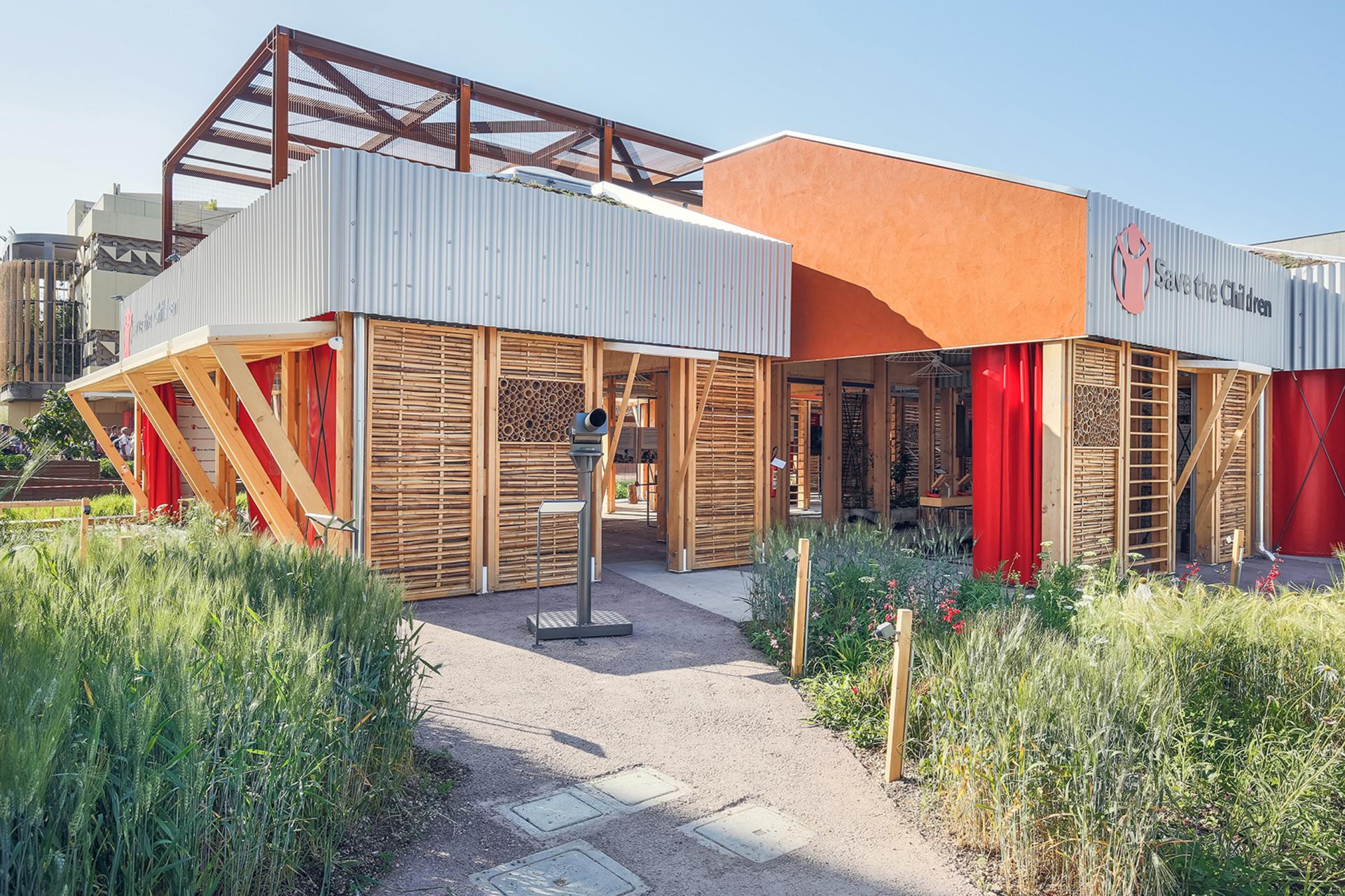
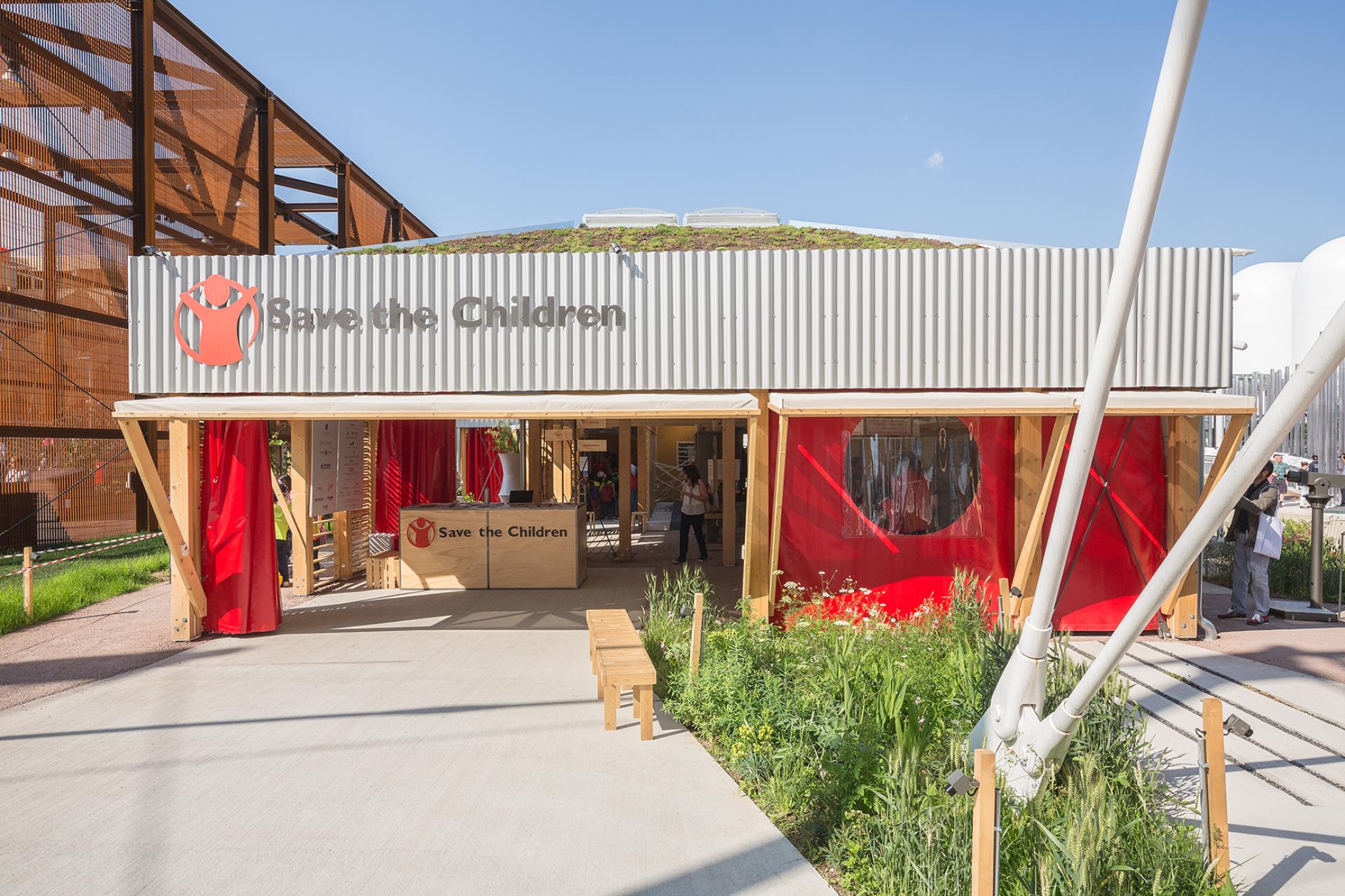
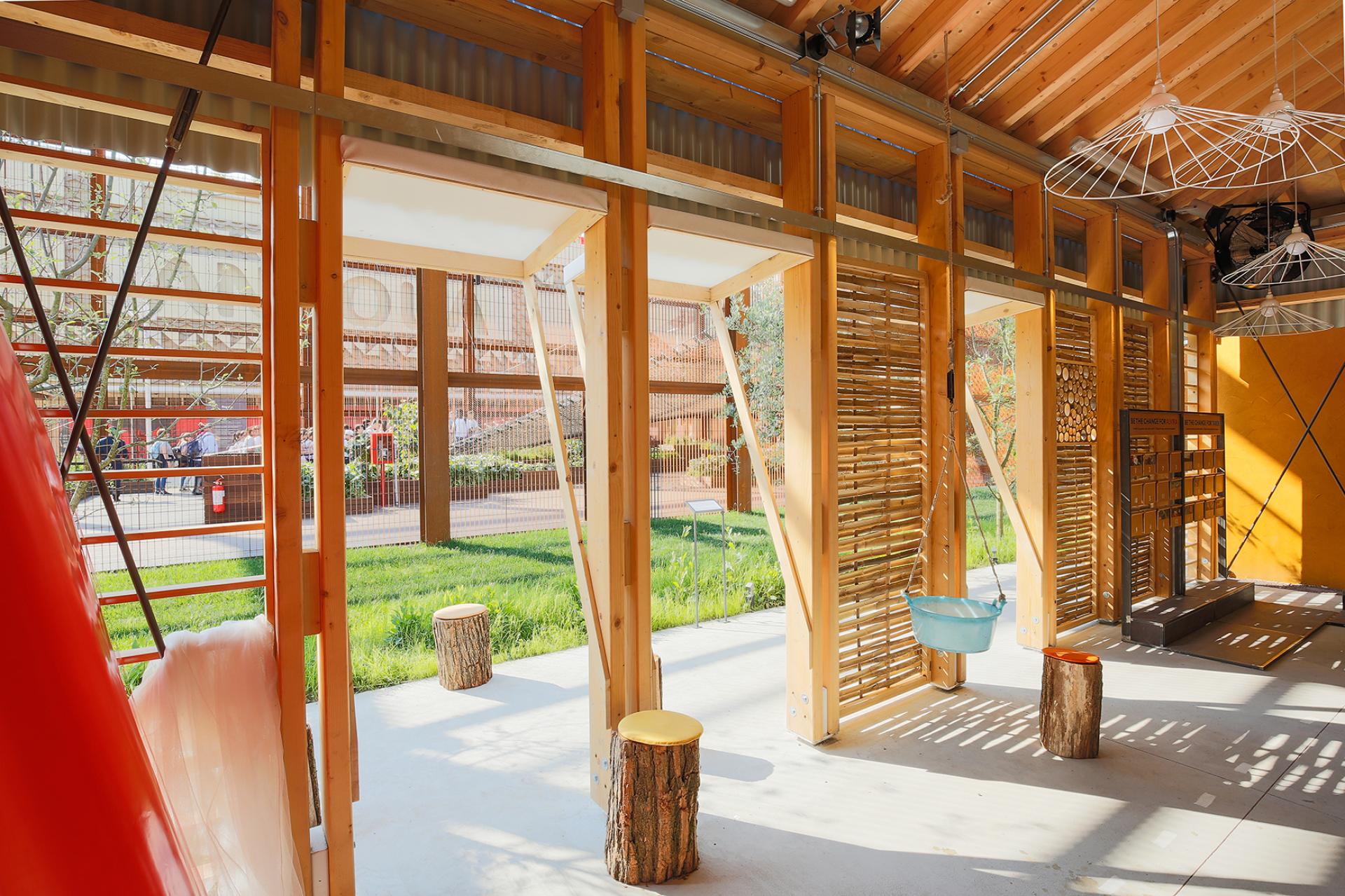
On the occasion of EXPO 2015, AOUMM designed a temporary pavilion for Save the Children Ngo, embedding the possibility to rebuild it elsewhere at the end of the international exhibition. The project interpreted the concepts of sustainability not only choosing materials and construction methodologies aware of bioclimatic aspects but paying attention to the whole process, from design to construction, to dismantling and reconstruction, reusing 90% of the original materials, including the structure, the roof, the panels, and windows, as well as all the screws used during construction, in a fully circular system. The pavilion mimics an archetypal village, evoking the urban landscapes of the countries where the Ngo operates: the body is composed of seven small volumes, with pitched roofs equipped with skylights, to allow natural ventilation. Distinct volumes, formally similar but different in size, are placed according to an open scheme, creating continuity with the external space. The project of the outdoor landscape has been created to welcome, entertain and educate the public: vegetal experiences that bring stories with them, cereals of ancient origins, trees, and a small vegetable garden, to recall the community allotments that are crucial in Save the Children programs. The creation of a constellation of small pavilions comes from a predetermined strategy, where the pavilion had to adapt to changing needs and other places. This open layout and the design of the structure allowed to reuse it as a school in the Al-Marj Syrian refugee camp in Lebanon after EXPO 2015. The pavilions were redistributed in a new configuration, adapting itself to the limited context of the field; each volume offers a different size, allowing the organization of various age groups. The construction system will still allow the school to be rebuilt elsewhere at the end of the war, keeping on to provide access to education and better quality of life to children in different parts of the world.
Key objectives for sustainability
The idea behind the project is that innovation and sustainability not always lie in a patent or technology, but in the approach and the process. The objective was to design a pavilion with a low environmental impact and energy requirement in each realization phase, embedding the possibility to rebuild it elsewhere at the end of the event, prolonging structure's lifecycle. Therefore, the project interpreted the concepts of sustainability not only choosing materials and construction methodologies aware of bioclimatic aspects but paying attention to the whole process. The wooden structure is designed to be reused with an undetermined function: the pavilion is articulated as a village, populated by seven small volumes that can be easily reorganized for further uses. The dry construction works on modules and is conceived to be dismantled, easily transported, and rebuilt, reusing 90% of the components, including the structure, the roof, the panels, and windows, as well as all the screws, in a fully circular system. The company in charge of the structure system (Legnolandia Srl) has been awarded the Green Flag by Legambiente: it uses only PEFC certified wood from Friuli Venezia Giulia forests and only renewable energy sources (hydroelectric, photovoltaic, biomass) in its transformation plants. For this project, they used Silver Fir, a local species recognised as the most ecological tree in Europe since it contributes to the formation of healthy, biodiverse, and variated forests. A set of measures were implemented in the pavilion to guarantee a low energy consumption in its post-occupancy phase: skylights allowing natural ventilation and avoiding expensive HVAC systems; a photovoltaic system producing about 1kWp and supplying the perimeter lights; led lamps; presence sensors and timed lighting; water-saving taps; green roof; a tank for rainwater harvesting and an irrigation system that measured soil humidity and regulates its use based on actual needs.
Key objectives for aesthetics and quality
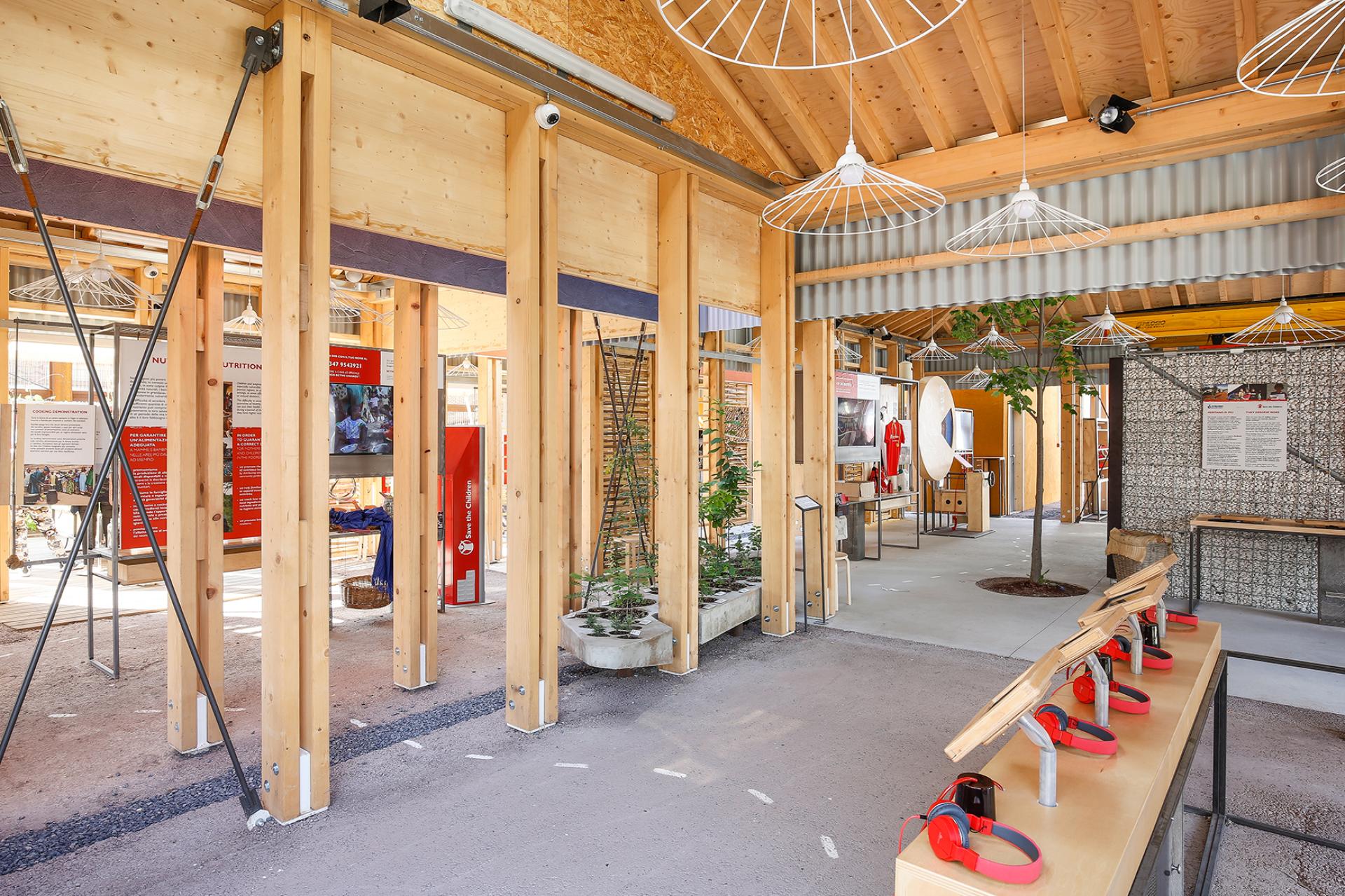
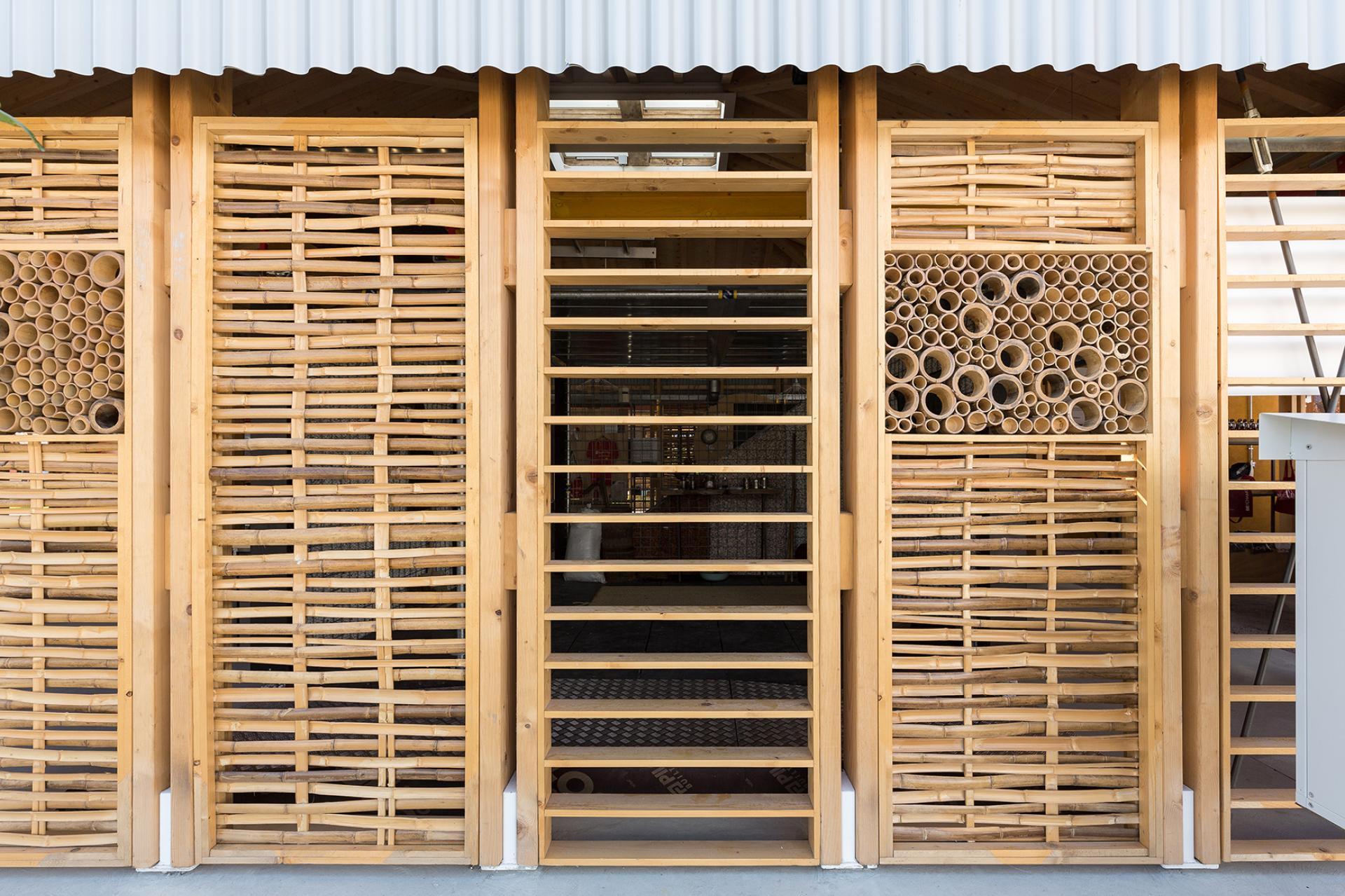
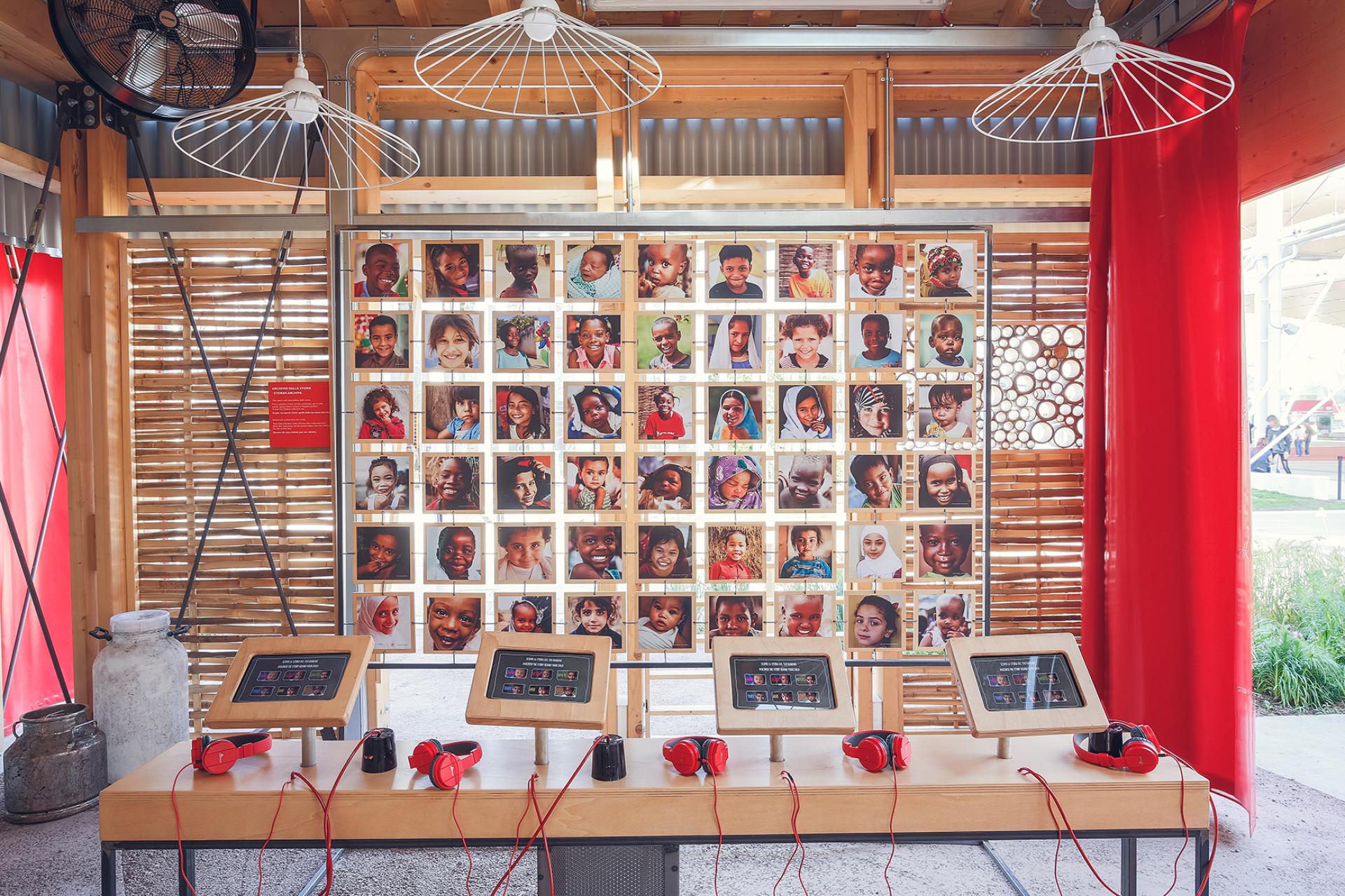
The project had the aim to communicate through the design of the pavilion the identity of Save the Children Ngo, its activities, and its mission and provide a spatial experience able to recreate the values according to which the organization works: openness, community, transparency. The pavilion could be defined as a proper “village”, a domestic and welcoming environment where a sequence of rooms without walls and barriers put the place in conversation with the surroundings and the other pavilions. The space is permeable and open, and the external landscape is an integral part of the internal world, such as the territory is a strong part of the life of families and communities in the countries where the Ngo works. The use of red refers to the Save the Children logo while simple materials as wood and metal sheets, together with a floor made of concrete and soil aim to remind the warmth and colors of faraway lands. The 240x91 cm perimetral panels made of fir wood and bamboos have been made through a workshop with immigrant kids part of “Civico Zero”, the local program by Save The Children in Milan: each one is different from the others and they visually bring in the pavilion the topic of the self-production, creativity, manual skills and individual efforts with group participation. The project of the outdoor landscape has been created to welcome, guide, entertain and educate the public: vegetal experiences that bring stories with them, cereals of ancient origins, trees and a small vegetable garden, to recall the community allotments that are crucial in Save the Children programs. Adults and kids discover the village through interactive installations which are funny and educational at the same time. Objects that the community workers use every day can be observed and touched, and the visitors can get immersed in images and sounds.
Key objectives for inclusion
The idea to design a structure that could be reused, besides the sustainability aim, had the inner purpose to be useful to different communities and respond to different needs, bringing a positive impact to different users through several functions and environments along its lifecycle. Designers’ aim was also to embed in the architecture and the construction process inclusion values, relying on a spatial organization favouring diversity and community-making and involving different actors in the realization phases. The layout mimics an archetypal village, where different volumes and the courtyards among them allow different people to build a community. This design provided flexibility to the structure, allowing to reuse it as a school in the Al-Marj Syrian refugee camp in Lebanon after EXPO 2015. The pavilions were redistributed in a new configuration, adapting itself to the limited context of the field; each volume offers a different size, allowing the organization of various age groups. The bigger pavilion has an area of 81 square meters and hosts today classrooms for 300 pupils. The construction system will still allow the school to be rebuilt elsewhere at the end of the war, keeping on to provide access to education and better quality of life to children in different parts of the world. During the construction process of the pavilion, AOUMM opted to realize the bamboo panels of the façade through self-construction, with a group of unaccompanied immigrant children welcomed in Milan by Save The Children. The participated workshop became an intense opportunity to research alternative construction techniques and to provide new knowledge to a group of young people: carpentry and craft skills, useful to develop expertise for a future professional path. The pavilion is fully accessible: the barrier-free design allows all users to access the space and the exhibition, which project is studied to be engaging to all ages.
Results in relation to category
The idea to design and build a pavilion that could be repurposed is a viable way to exploit the value retained in materials and components after the first designated function and make more efficient use of tangible and intangible resources. This concept allows saving energy in the production of materials and manufacturing of components, making functional and beautiful architecture accessible and affordable to different users. Save the Children pavilion was designed to be part of a circular system. To do so, specific materials and techniques were implemented. Sustainably sourced Silver Fir wood was used, recognised as the most ecological tree in Europe since it contributes to the formation of healthy, biodiverse, and variated forests. The design phase was crucial to guarantee the functional and technical reuse of the structure. Designing the pavilion with circularity in mind allowed the realization of a structure that makes reuse easy, safe, and convenient, avoiding incidentals practices not meeting the requirements of new users and environments. Several strategies allowed to pursue circularity by design. Dry construction permitted to simply disassemble and remount the structure, without damaging building components and maintaining their physical and aesthetic performances for further uses. A flexible, adaptable layout favours further reorganisations of the structure without imposing it but making it dialogue with new environments. Modular, interchangeable elements make the reassembling quicker, easier and cheaper. Properly sizing components and elements to be transported make the reuse of the structure viable: Save the Children pavilion was dismounted and shipped to Lebanon by sea in a single container, reducing the environmental footprint of its transfer to the minimum.
How Citizens benefit
The reusable structure aims to serve different communities and respond to different needs, bringing a positive impact to different users through several functions and environments. As Save the Children Pavilion at EXPO 2015 in Milan, the building allows adults and kids to discover the Ngo’s activities and mission, focusing on the themes of nutrition, malnutrition and emergency, starting from the EXPO main topic: feeding the planet. Therefore, in Milan the pavilion plays an educational role, informing visitors about global, urgent issues. Rebuilt as a school in Al-Marj Syrian refugee camp in Lebanon, the structure is keeping on with its educational role, providing access to education to children in a different part of the world, positively impacting their present and future quality of life. The decision to involve unaccompanied immigrant children in the realization phase of the façade panels is also an example of how to turn the construction itself into an impactful experience: the involved young people developed carpentry and craft skills, useful expertise to spend in a future professional path. The pavilion has played and plays another educational role, tacit but powerful: through its simple, immediately understandable reuse concept and the materials employed in the construction it embeds crucial messages about the importance of care for people and assets, the responsible use of energy and resources, the positive impact architecture can have.
Innovative character
The innovative character of the project lies in the possibility to easily reuse the structure and the component elsewhere at the end of the international exhibition, prolonging the lifecycle of the pavilion. Furthermore, the pavilion demonstrates that innovation and sustainability do not always lie in a patent or technology, but in the approach and the process: the structure embodies a simple, accessible, and affordable idea of sustainability, in the framework of an international exhibition where cutting edge and high-tech solutions are usually adopted to stand out. The innovative character of the project lies also in the subverting of the building paradigm of such wasteful, temporary events: international exhibitions are historically occasions to showcase technical and creative innovations in iconic and epochal buildings, with little attention to the environmental impact of the structures and the huge amount of waste produced. Save the Children pavilion used the opportunity of EXPO 2015 to demonstrate how these temporary, international events can be carried out without necessarily producing thousands of tons of construction and demolition waste but, instead, showcasing beautiful pavilions which lifecycle can be prolonged, permanently spreading EXPO positive impact around the world after the end of the temporary exhibition.