La Murgia abbraccia Matera
Basic information
Project Title
Full project title
Category
Project Description
Aware of the value of the rural heritage and its development potential, the project has identified development as a strategic factor for "re-knowing" and re-functionalizing it in a sustainable way. The agricultural archaeology, the landscapes, the ancient paths and the Appian Way become the guidelines of the new economies of the territory, guaranteeing inclusiveness, community participation and innovation of processes and products for an experiential and cultural tourism.
Project Region
EU Programme or fund
Description of the project
Summary
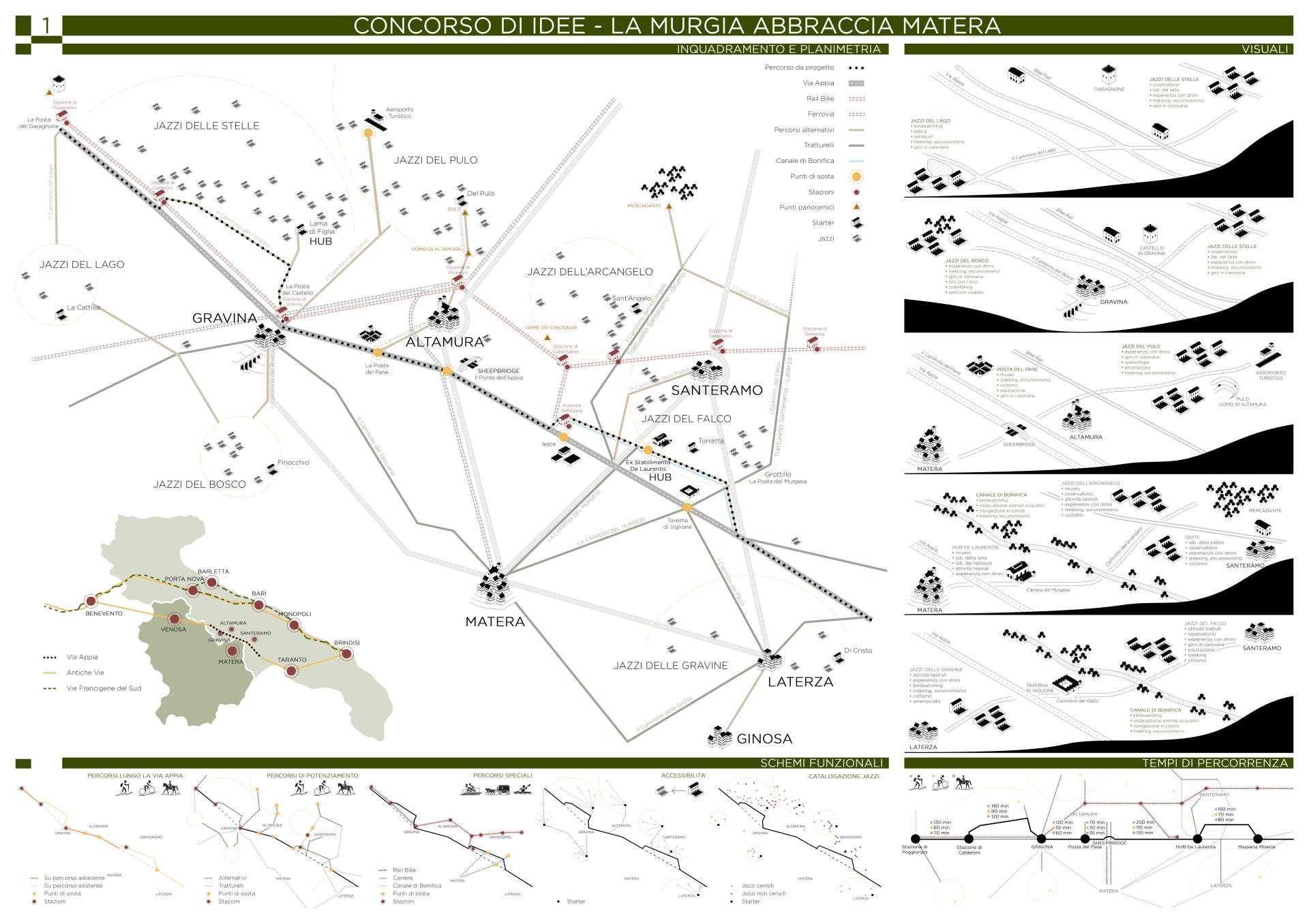
The Puglia Region has launched a project strategy aimed at a reference territorial scenario represented by ancient routes: The Ancient Appian Way – Royal Track Melfi - Castellaneta, which cut through the land at the border of Puglia with the Matera area corresponding to the ones of Gravina in Puglia, Altamura, Santeramo in Colle, Laterza and Ginosa. This area, strongly characterised from a morphological point of view as a karst plateau - 'La Murgia' - which separates the Adriatic coast from the Bradanica trench and slopes down towards the Ionian coast, contains environmental resources and historical evidence of an economic system of considerable size based on sheep farming. The tangible signs of this economic system that has structured the territory over the centuries are represented by the network of sheep tracks (called “Tratturi”), for the passage of flocks during transhumance and by the rural buildings called 'Jazzi' used to carry out the activities linked to the sheep farming chain. The project was structured with actions and interventions in five thematic areas that contributed, in an integrated way, to define a complete development strategy, represented by a main objective (the social, cultural and architectural recovery of minor rural assets) carried out directly by the Region, and a participatory objective (the Ideas Competition for designers and the one for local authorities and associations in the area, which ended with one macro-project and 13 winning micro-projects).Here we intend to enhance the mother-project of the Puglia Region, ‘Murgia Stupor Mundi’ with the five thematic areas in which the actions have been articulated:
- creation of tools to support the restoration and development of minor architecture
- recovery and reconversion of rural areas with interventions of landscape rehabilitation
- creation of itineraries and thematic routes
- communication and cultural promotion
- creation of territorial networks.
Key objectives for sustainability
Consistently with the "Strategy for Cultural Heritage in Europe in the 21st century". Recommendations adopted on 22nd of February 2017 by the Committee of Ministers of the Council of Europe; the project has assigned cultural heritage, which includes an intangible dimension of knowledge and comparisons, a value inextricably linked to its context and its natural and cultural environment. This idea of cultural heritage implies that its recognition is the result of a shared responsibility: heritage is no longer limited to those elements officially recognised as such by national authorities - the protected heritage - but includes those elements considered as heritage by the local population and local authorities. In the framework of the Recommendations of the Council of Europe, particular importance is given to sustainable tourism development policies (Recommendation D7): in the case of the Murgia territory, the project involved:
- the appulo-lucana route of the Appian Way, which is currently the subject of important development initiatives
- the dense network of sheep tracks (tratturi) along which the transhumance paths developed, as far as the hilly and mountainous areas of the Apennines. Among the many, it should be noted that the Melfi - Castellaneta sheep track (tratturo) runs along the Appian Way, contributing to the configuration of this route as the central axis of Murgia territory
The project aimed at removing: the inadequate levels of integration between the heritage of minor cultural assets and the other identity resources of the area; the difficulty of coordination between the different institutional levels; the weakness of the governance systems. The idea of using the road axis that runs along the Ancient Appian Way -Track Melfi - Castellaneta as a primary platform to connect Matera, the Murgia and the minor rural heritage of the Project territory.
Key objectives for aesthetics and quality
The project created an integrated territorial system of interventions aimed at a biophilic approach and experiential tourism through the promotion of the rural archaeological heritage and landscape, directed at:
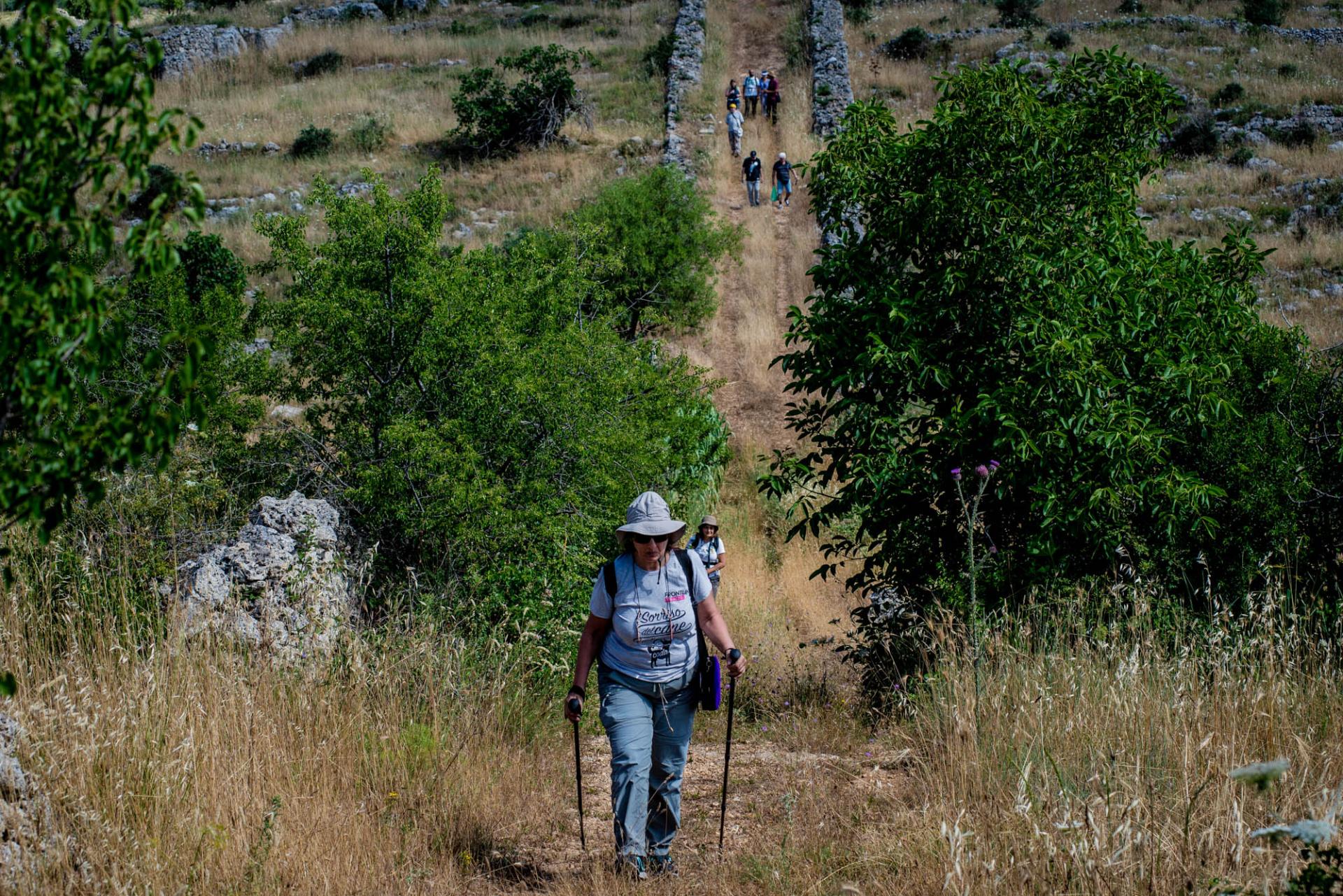
- the creation of paths along the Ancient Appian Way - Tratturo Regio route for pedestrians, cyclists, and horse riders
- the upgrading of the network of small sheep tracks (tratturelli) and branches that branch off the main itinerary
- the recovery of the Poggiorsini - Gioia del Colle railway line, disused by the State Railways, and its recognition as a tourist itinerary to be travelled by rail bike
- the positioning of specific signs, characterised in terms of technology, graphics, and sustainability, indicating the services and sites, the routes of the soft mobility network with the access and exit points
The project also included:
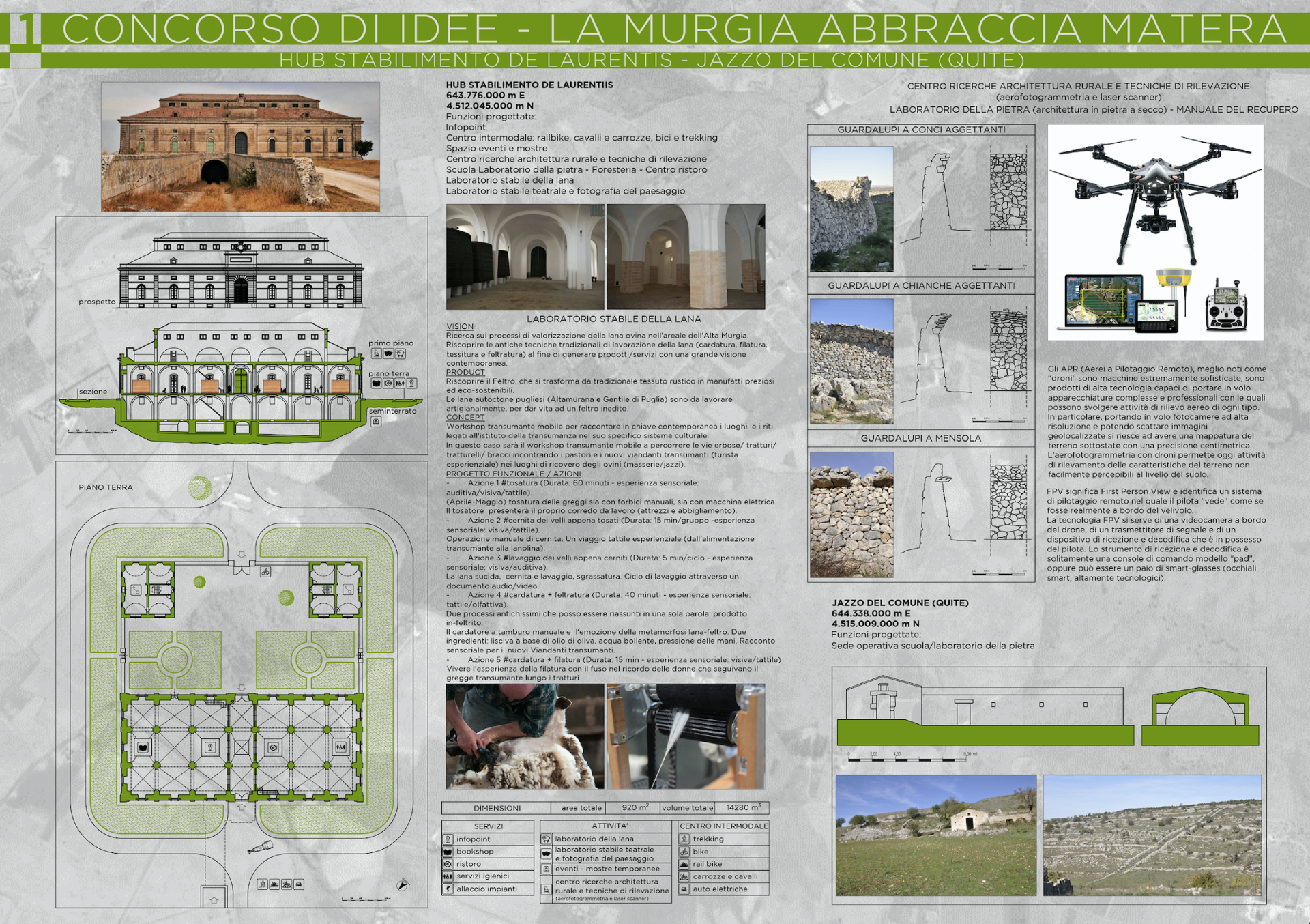
- The recovery of the former De Laurentis factory as a central access node to the tourist offer system with reception services, Documentation Centre, University Research Centre, Tasting and sale of traditional Murgia products.
- The recovery of rural structures for the construction of post stations at the service of "soft mobility". The interventions concerned the Jazzo "Cialledd'" (the Bread Post) and the Jazzo "Grottillo" and saw the realisation of intermodal centres, shelters for horses and carriage logistics, spaces for the maintenance of bicycles and provision of trekking equipment, guest houses.
The agro-pastoral system is, however, still evidence of rural archaeology that is one of the most important in Italy. Moreover, its location in the "empty spaces" of the Murgia territory contributes to identifying the "Murgia area" as one of the landscapes with an attractive potential at a national level and as a "reserve" of resources available to widen the development margins of the inland area. It is destined to become strategic if agricultural and cultural production processes are integrated.
Key objectives for inclusion
The project focused on enhancing the relationship between public and private operators and resident citizens, so that, as mentioned above, a second phase involved local associations in the area that interpreted "parts" of the strategy.
The sections of the population that are usually passive "spectators" of tourist-promotional events participated in:
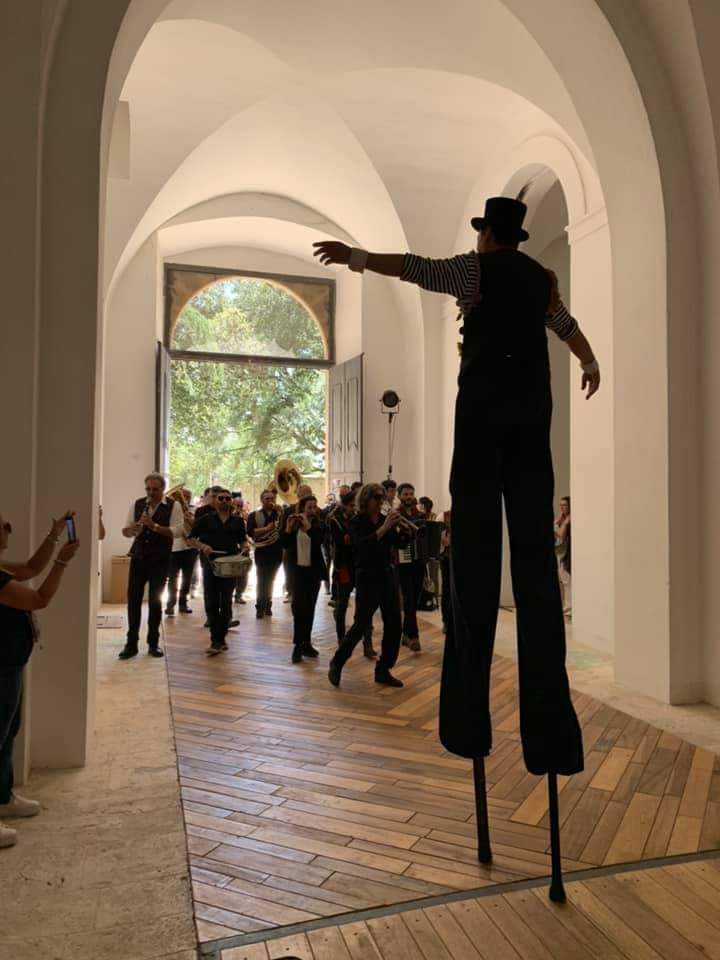
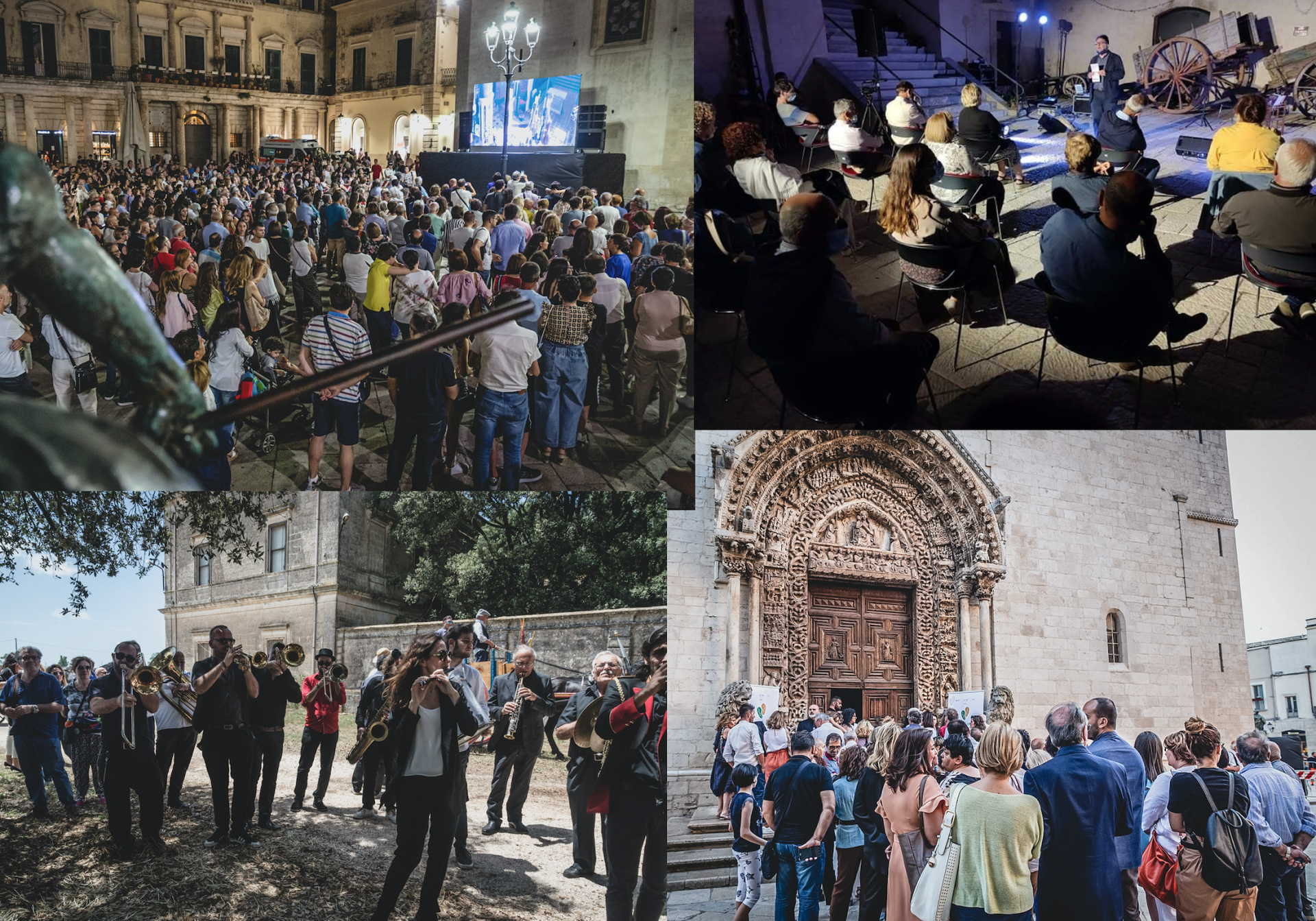
- the realisation of a launch event "Transhumance: Murgia land of shepherds", which revived the atmospheres of the rural world linked to sheep farming through theatrical/experimental performances
- the creation of a travelling 'Viandantifestival': "La carovana degli artisti: il teatro del paesaggio" (The artists' caravan: landscape theatre), intended to reconstruct the rituals and the world of transhumance in the landscape setting where they have always taken place
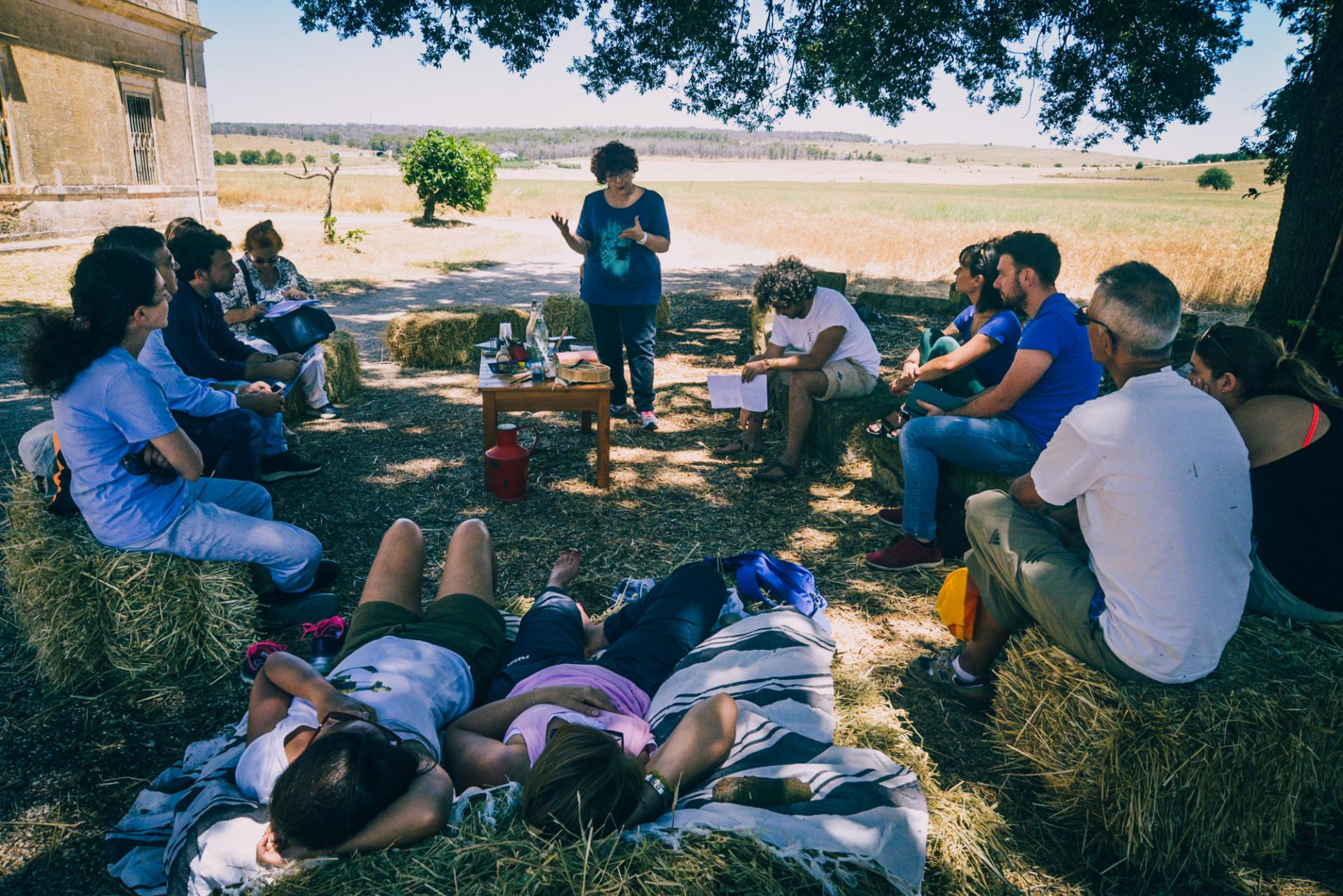
- the organisation of events linked to seasonal agricultural and sheep-breeding cycles aimed at highlighting specific aspects such as:
- Observation of the sky
- Sheep shearing
- Observation of fauna
- The discovery and appreciation of grasses
- Signs of religious devotion and fairy tales
- the creation of laboratories to develop activities for the recovery and revival, with the aim of enhancing the identity of the Murgia territory, also from a tourist point of view, such as the Stone Laboratory ("Quite" of Santeramo in Colle, Jazzo Comune), the Laboratory of the sheep wool production chain (Ex Stabilimento De Laurentis), the Laboratory of the sheep milk production chain (Jazzo "Lama di figlia").
- particular attention has been paid to the processes of re-functionalization of the disused railway line that crosses the whole of the High Murgia and that is oriented towards becoming a zero-impact tourist line of great international value.
- cataloguing, mapping, geolocating and securing a heritage of 147 Jazzi and 59 wells/fountains with drinking troughs.
Results in relation to category
The main goal of the project was mainly to enhance the historical system of transhumance, a heritage that had been forgotten for centuries and of which the local community was unaware. It is an authentic material and immaterial inheritance, a silent presence that represents an identity foundation of the whole Murgia territory and an extraordinary development opportunity with a view to sustainability, aesthetics, and inclusiveness. The municipalities and their community of the High Murgia National Park, involve more than 170,000 residents who have reappropriated their territory, rediscovering its potential for a new regenerative development oriented towards the economy of the beauty and culture of places. The recovery and re-functionalization of the Jazzi (Masserie delle Pecore), of the dense network of sheep tracks and small sheep tracks has taken place through an intense series of actions of knowledge and involvement of the community. A cultural and tourist offer has been organised through the creation of the 'Viandantifestival' as well as the structuring of cultural and excursion itineraries such as the 'Cammino Materano', 'Il viaggio del pastore', a contrada experience along the roads of transhumance, 'Le strade della Fiaba',etc. The project has launched important systematisation and valorisation activities on the great route 'Via Appia' Regina Viarum, the great open-air archaeological site identified as a great national attraction and connection system to the European network of slow ways, an ideal link to rediscover with a biophilic approach an extraordinary landscape. It is also remarkable the development of the Stabilimento De Laurentis as a strategic hub for the project and the venue for the Viandanti festival. It is the only example in Italy of a French-style wine factory, around which there is a new ferment of initiatives, art exhibitions, film sets, visits and events. Registered flows 2019/5000 units, economic impact on the territory estimated at 4mln€.
How Citizens benefit
The instrument that, due to the nature of the project proposal, was most suitable for an effective and original participation of the subjects active in the Murgia territory was the Protocol of Agreement between the Region and the municipal administrations and the public and private subjects operating in the area. The goal was to empower networks of the rural heritage that involved the realities connected with the artisan sector and cultural associations. The background that has legitimised this never seen joint effort of tourist positioning of the Murgia area has been represented by:
- The inclusion of the Paths of Transhumance in the Atlas of the Paths of Italy established by MiBACT with the Directive 16/12/21015 n 567
- The acquisition of the recognition, by the Council of Europe, of the Transhumance Routes as “European Cultural Itinerary "
- The definition of an integrated territorial project for the development and promotion of the entire Murgian territory
These preconditions and the implementation phases of the current project are being developed in detailed and articulated communication actions, which are summarised below:
- A WEB site not only offering information on the facilities, sites, routes and initiatives that make up the tourist offer of the district, but also with a communication strategy that has involved, structuring them into a reasoned map, the information and services available on the WEB through thematic links and logical content maps
- A festival with the evocative name of 'Viandantifestival', which aims to enhance the symbolic dimension of wayfaring
- The study of applications that can be used on smartphones, tablets and PCs to access geo-referenced information content for the customization of visit experiences by users.
- The creation of editorial and video products prioritising the new digital technologies of virtual and augmented reality
Innovative character
The UNESCO Culture 2030 Indicators propose a reading of the "transformative role" of Culture, understood in a material and immaterial sense. From the UNESCO document we assimilate four dimensions of culture-oriented research that are relevant to this project: the role of Culture for sustainable development (Environment & Resilience); the contribution to the inclusion of goods and services, to the world of work and to participation (Prosperity & Livelihhod); the importance of soft and hard skills to trigger empowerment processes (Knowledge & Skills); the participation of people in cultural life (Inclusion & Participation). The innovative nature of the project is confirmed by reference to the nine TAGS included in the Urban Regeneration Charter published by AUDIS (Association of Disused Urban Areas), which are reproduced here:
- Urban Quality: Balance - Reconstruction of disused or degraded areas in a balanced way, fully integrated with the territory.
- Architectural Quality: Attractiveness - Producing attractiveness for users - residents, city users - and investors.
- Quality of Public Space: Community - Promoting civil coexistence, social aggregation, security, and participation.
- Social quality: Liveability - Enhancing the quality of life by promoting social cohesion and articulation and offering adequate personal services.
- Economic Quality: Development - Developing economic benefits for investors and citizens.
- Environmental Quality: Sustainability- Aiming for the best balance between the given environmental conditions and the intended functions.
- Energy Quality: Well-being - Transforming the territory from an energy-consuming organism to an energy-producing organism, applying innovative technologies
- Cultural Quality: Identity - Developing a sense of belonging and identity while facing the challenges of urban development.
- Landscape Quality: Perception - Enhancing the identifying signs accumulated over time by the urban landscape.