Concular - Circular Construction
Basic information
Project Title
Full project title
Category
Project Description
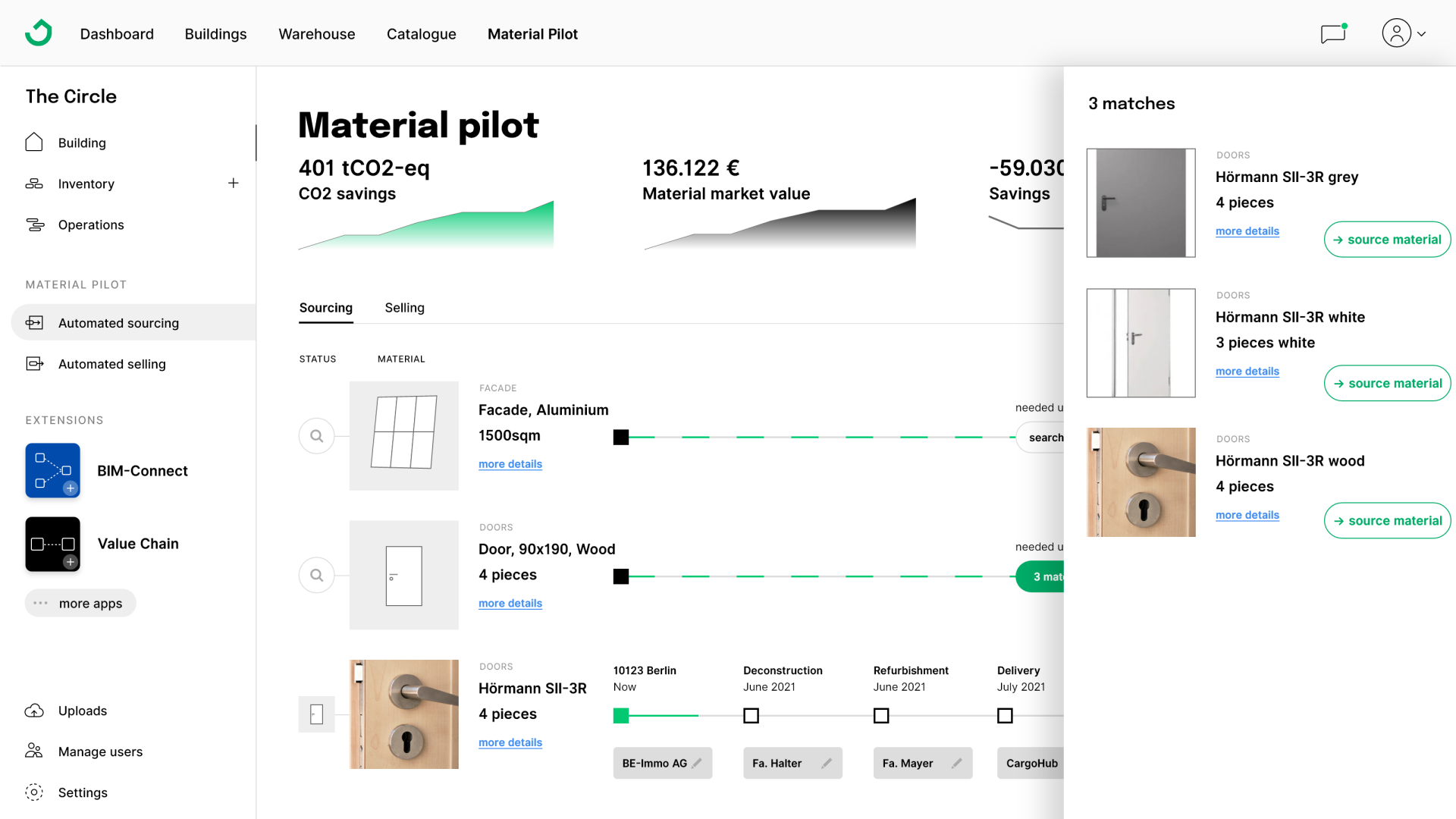
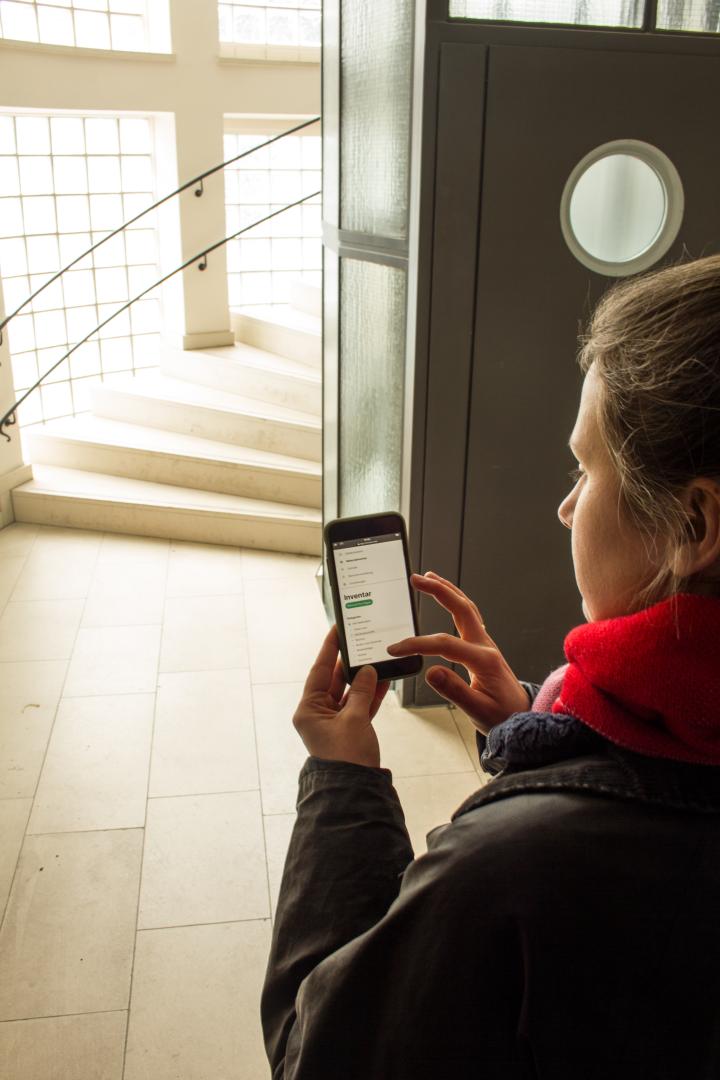
Concular is the digital platform for resource-efficient construction enabling the reuse of construction materials. Therefore build-in material is digitized using specific material passports and then redistributed to construction sites by a matching algorithm. That way, the passports can meet the material demand of upcoming construction projects before any demolition happens. We certificate, move and examine materials. The impact is measured by calculating the CO2 and waste saved in the process.
Project Region
EU Programme or fund
Description of the project
Summary
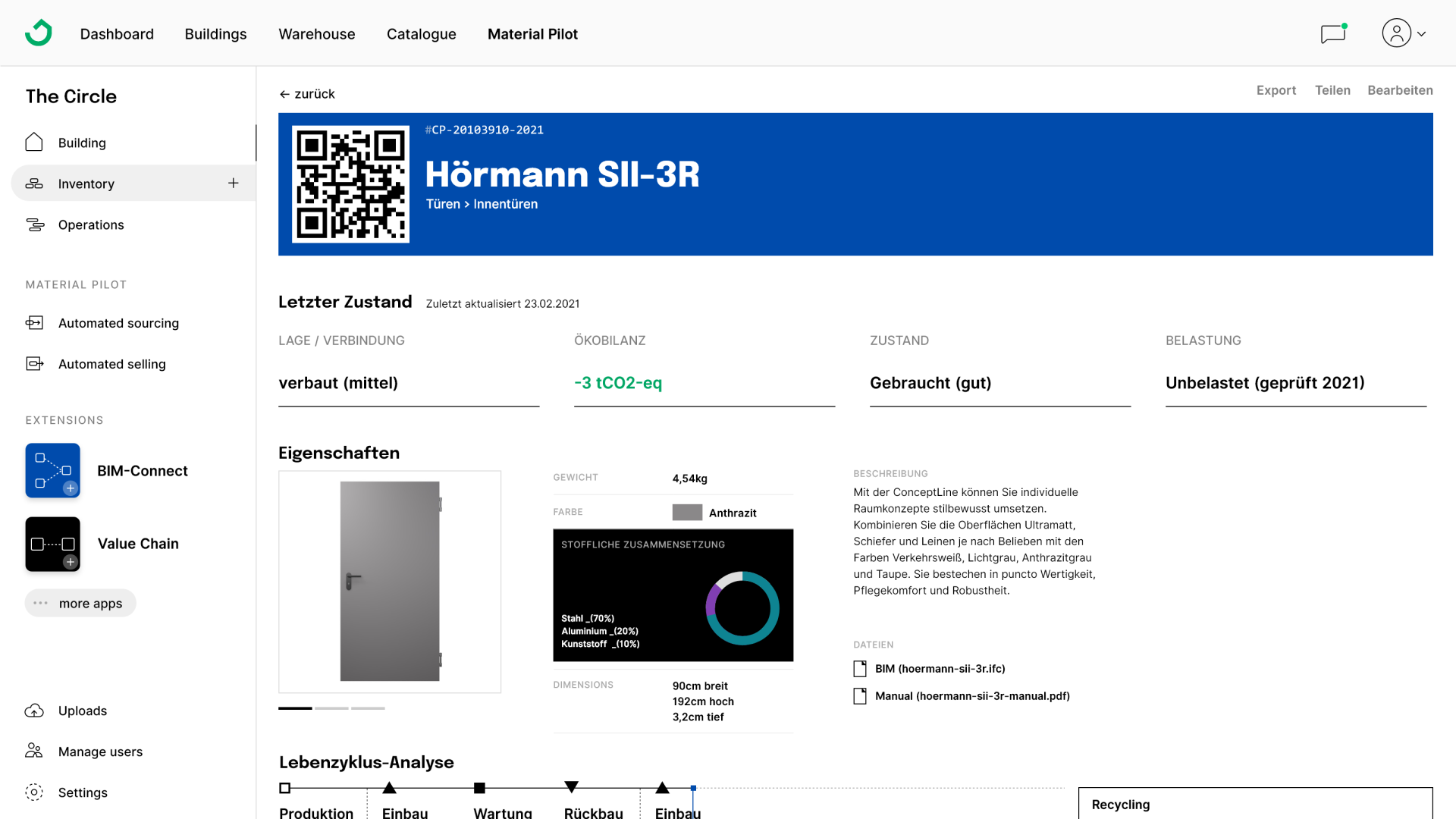
Concular represents the intersection between theory and practice, business and politics, and the digital and analog world. Up to the present time, the reuse of building materials was almost non-existent because its processes were not holistically managed and only isolated solutions existed. Concular digitizes materials in an inventory as digital material and product passports based on blockchain technology. Furthermore, it makes reuse easy and feasible by an automated matching of supply and demand of these materials and organizing local supply chains to reuse. This is digitally coordinated by an AI-based algorithm. In addition, the impact is measured by CO2, waste and costs saved.
Concular is based on the data and experiences of eight years building restado.de - Europe's largest marketplace for reclaimed building materials. The founders conducted more than 100 interviews of all stakeholders in the construction industry to identify barriers to reuse and work on solutions. The team is supported by Prof. Dr. Linda Hildebrand, a renowned researcher at the RWTH Aachen for circular construction.
By now, Concular has managed to establish an efficient end-to-end solution that closes material loops in the building sector in a project-accompanying, digital and collaborative way.
Several thousand materials were already digitized and found a second home with Concular. They are now parts of new buildings instead of ending at the landfill. This is recognized by more than 30 successfully executed projects and several currently ongoing.
Our long-term vision is to enable the construction sector to be a resource- and CO2-neutral. We want to reach that by offering a sustainable procurement of construction materials. We begin with reclaimed materials but also aim to integrate sustainable considered materials such as wood or clay products.
Key objectives for sustainability
The construction sector is the world's biggest polluter. 40% of all CO2 emissions and 60% of waste are linked to the sector. Addressing this issue in recent decades was mostly done by improving energy efficiency during the operating phase. However, more than half of the CO2 emissions are generated during the construction of a building. The biggest proportion accounts for the production of materials, which is highly resource and energy-intensive. These materials are being assembled and then disposed of at the end of the building's service life. While many of them could be reused this currently happens in less than 1% of cases.
Concular provides a large-scale and scalable way to reuse materials to save CO2, waste and resources. The immense reduction in resource consumption has the potential to save up to 20% of global CO2 and 30% of resource consumption. In addition, up to half a million jobs are expected to emerge as workforce is needed to process and re-certify the materials. That way the business model has a direct impact on the SDGs 11, 12, 13 and 15.
The realized savings (e.g. CO2 and waste) are calculated and presented automatically using a specially developed life cycle assessment method. That way target groups receive a tool to report their sustainable performance.
Concular is the engine that can lead the economy into a sustainable future. Through the networking of many actors, unparalleled innovation is being created.
Key objectives for aesthetics and quality
The platform we developed is easy to access, intuitive to use, and adds more than just economic value. The simple digital system not only enables customers to act in a truly sustainable manner but also implements an understanding of material cycles. Through a new way of valuing material, we aim to create a form of emotionality.
In our belief, materials also tell stories. The buildings we live in are deeply anchored in our emotional world. As Concular, we try to use this through branding and storytelling to create a new value for used materials. The meaning concepts of “used”, “old” and “second hand” are to be transformed in the minds of customers through their own aesthetics of storytelling.
Sustainability is a particularly difficult topic in the construction industry.
Until now, buildings and the materials embodied have not been digitized. For almost no building it is known, which materials were used - regardless of whether they are new or 70 years old. Digitization with material passports, therefore, creates an identity for these materials for the first time. With material inventories based on material passports and the right marketing, nothing stands in the way of the sustainable revolution.
We have noticed the success in increasing cooperation requests, sales and feedback. This has already been used to implement more than 20 projects across Germany and save thousands of tons of CO2.
Key objectives for inclusion
With our concept, we create circular supply chains, local cycles and increase social know-how.
A construction process is composed of many stakeholders that are interconnected on different systemic levels. Each stakeholder and each level contains a great level of knowledge. Today, the individual stakeholders are trapped in a linear process and do not manage to use their knowledge and ability efficiently. A circular process, on the other hand, would lead to higher interconnectedness, process integration and material usage. For this reason, we set ourselves the goal of creating circular supply chains. In addition, we also see an aspect in the locality. Local economic models and local cycles have the characteristic to promote local integration.
Local integration, in turn, strengthens knowledge creation and expertise doesn’t get lost. This is also reflected in a higher social impact. In addition, up to 500,000 new jobs could be created.
We were able to experience this in a project in Aachen. Integration has many positive effects on individual processes such as testing, deconstruction, reprocessing, upcycling, and even certification. Together with a local university and companies, we were able to experience the added value in practice.
The construction sector is the climate lever and a melting pot of many challenges and chances. In order to make a change, all societal systemic layers (supranational, national and regional) have to work hand-in-hand. Especially in lighthouse projects, municipalities and cities there is further potential. They offer the opportunity to create small self-contained subsystems with a high degree of networking and interaction. More sustainable innovation can be created through knowledge sharing among cities, municipalities, businesses, research institutes, and organizations.
For all this, Concular supports and enables the urgently needed transformation to a sustainable, resource-conserving and fair construction industry.
Results in relation to category
With our start-up Restado.de, which we founded 8 years ago, we have already been able to save around 1 million tons of CO2. This amount represents a hundred thousand building materials that have been saved.
Another more practical sense of achievement is represented by a story of an aluminum facade. The reuse of a 450sqm salvaged aluminum facade saved 25 tons of C02 equivalent, which is a C02 footprint of three German adults per year.
The construction industry is at the beginning of probably the biggest change of its time. The climate crisis is creating major challenges and the construction industry is the sector with the greatest potential for CO2 reduction. However, the construction industry is known for its inertia. Therefore, processes now need to be rethought and circularized. It is not enough to build new and better, we need to work with the existing, including what has not been built well in recent years.
The first step towards a sustainable construction industry is the increasing digitization of the sector. The data generated in the process will help to make the right decisions and lead to new business models. Technologies such as BIM and material passports give buildings and materials an identity. This makes them measurable and usable. For instance, we now know what materials are in buildings months before they are demolished. This also makes it possible to communicate much more efficiently.
Concular believes in effecting a change on multiple system layers. Benefiting the environment, existing structures and enhancing innovation in this particular sector.
How Citizens benefit
The implementation of circular construction has many benefits for the state, society and companies. Civil society, in particular, can benefit through local cycles.
Waste storage and waste disposal take up a lot of space and affect land use. With less landfill space, there is more room for biodiversity. Not only the waste issue but also the material procurement is space-consuming. Resource-efficient management already reduces certain environmental problems. In addition, local climate protection is addressed. In this way, cities can independently establish sustainable subsystems and reduce C02 emissions.
Through local material extraction and reuse, global supply chains can be eliminated.Through our project, many of the 17 goals of the United Nations can be successfully implemented.
Socially, a great added value arises from the fact that, on the one hand, a significant contribution is made to slow down climate change. On the other hand, the establishment of a material cycle also requires new forms of occupation. It is estimated that up to 500,000 new jobs will be created to establish a circular economy in the construction industry.
Furthermore, our whole world is made of material. Material that we get from nature with a lot of energy. Material is a home for us, a workplace, places of life, invention and sensation. Nevertheless, buildings are contemporary witnesses that preserve our history. They embody an unique historical and cultural value. Also, humans tend to spend most of the time indoors. The basic human need for housing and having a shelter doesn’t have substitutes. Therefore contaminant loads in construction material, rising housing and construction prices and increasing regulations represent demographic, economic and systemic challenges for society.
With Concular, circular construction becomes possible. Appreciative, we capture material digitally, refer it to new construction projects, and accompany the material into the new building.
Innovative character
Innovation is created through cooperation and collaboration. Concular is implementing this ideology in many ways. On a macro level, we aim to bring all stakeholders from the construction sector together to enable a change on a big scale. Due to a high interdependence of stakeholders, we believe in immense climatic effect. Not only in terms of macro players, but we are also believing in micro-level cooperation. That, we are implementing in our firm internal structures. By low hierarchies and many experts from different disciplines, we aim for a team-based innovation. Furthermore, we are always looking for external collaborations or events to share and generate knowledge. Innovation requires stable systems, system players or stakeholders, knowledge and clear legislative boundaries. We thrive to create this environment to let innovation flourish.
Concular has the potential to increase the reuse rate of construction materials to 50% until 2030. This potential translates to around 14bn€ and the saving of up to 10% of global GHG emissions and 30% of waste. In addition, there is a strong link to SDG 9, 12 and 16 as the extraction of raw materials is reduced, leading to fewer conflicts and harm.
How do we measure the impact of our services? The impact is measured by GHG emissions and waste saved. For that, we developed in cooperation with the RWTH Aachen a life-cycle-assessment methodology using the ÖKOBAUDAT to calculate the savings by reusing materials instead of new ones.
Concular is the only solution on the market enabling the reuse of construction materials by coordinating all actors of the circular value chain. The platform created a unique process to identify materials to be sold and measure the economic and ecological impact. This measurement is possible due to market data from restado.de, the largest platform for reclaimed materials in Europe.