DE_FORMA
Basic information
Project Title
Full project title
Category
Project Description
DE_FORMA is a project born in Politecnico di Milano as a collaboration between a group of design researchers and PhD students.
The project aims to explore the boundaries between Bio-fabrication and Digital Fabrication of organic, bio-based, and sustainable growing materials.
DE_FORMA is a project funded by the Department of Design with basic research grants for young researchers.
Project Region
EU Programme or fund
Description of the project
Summary
DE_FORMA is an experimental research project that aims to develop multidisciplinary knowledge on the themes of growing materials and digital fabrication, identifying and verifying potential applications in sectors such as consumer electronics, lighting, healthcare, and fashion-tech.
Thanks to the use of digital fabrication as an enabler for the construction of ecosystems to cultivate growing materials, the project DE_FORMA wants to explore the possibility of building an experimental and flexible production system, which allows integrating formal choices, surface treatments, aesthetic and additional integration a priori, with a zero-waste logic toward environmental sustainability.
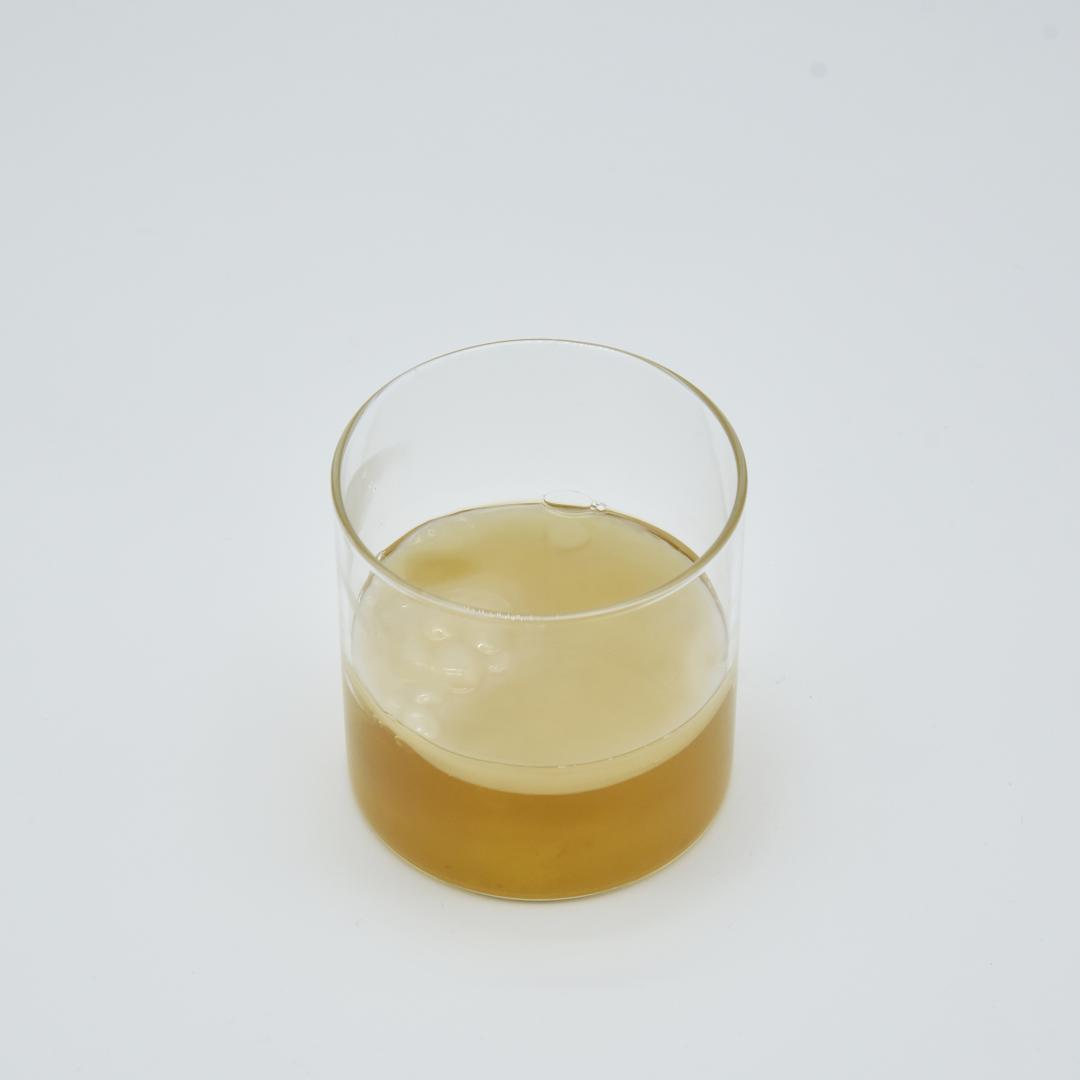
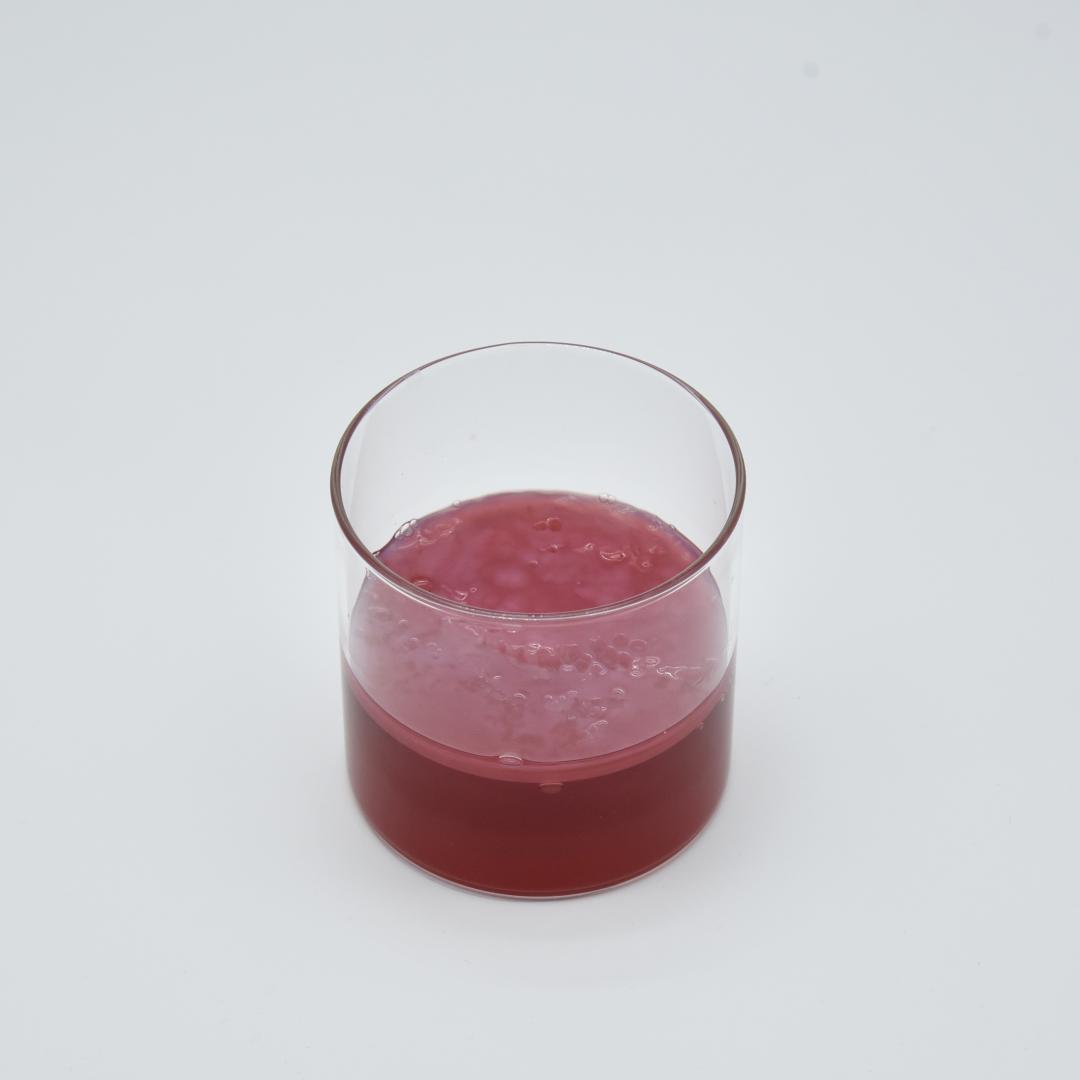
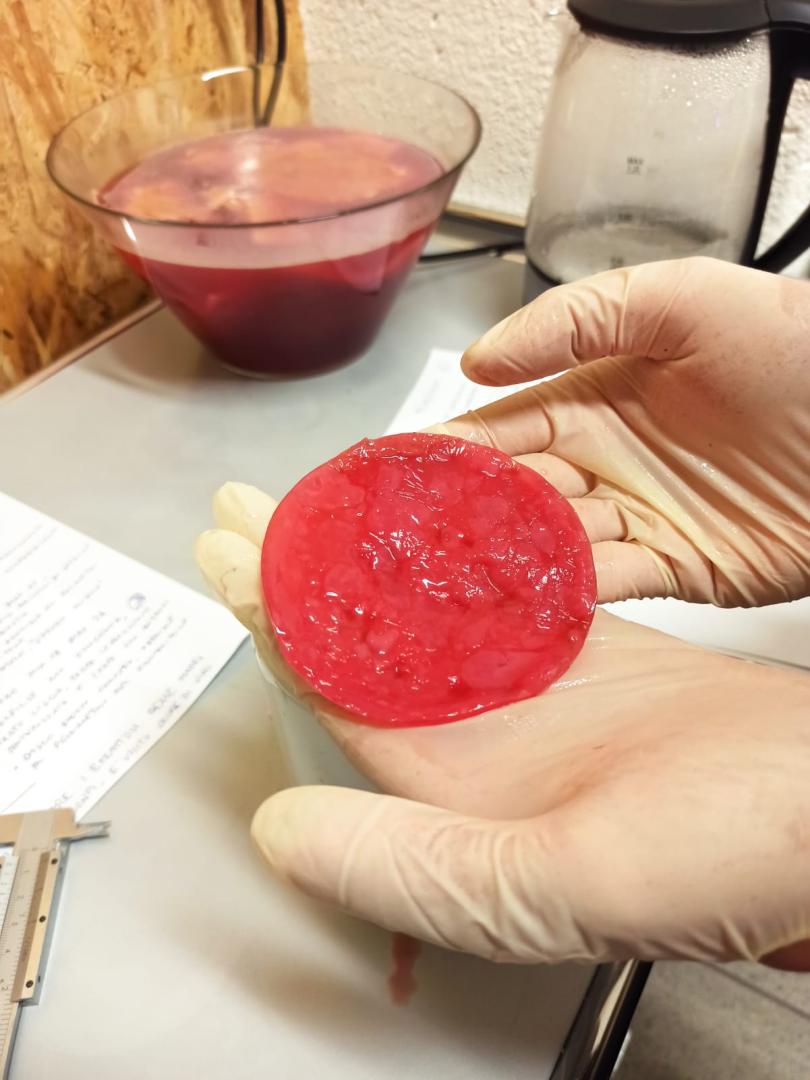
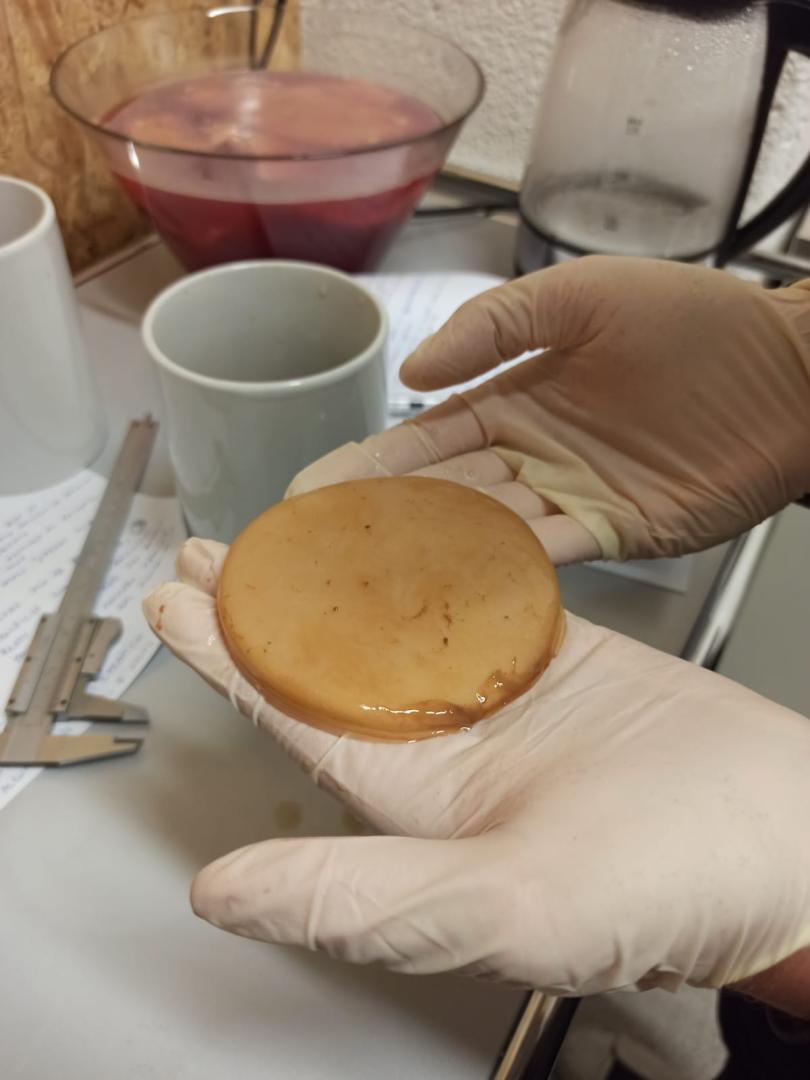
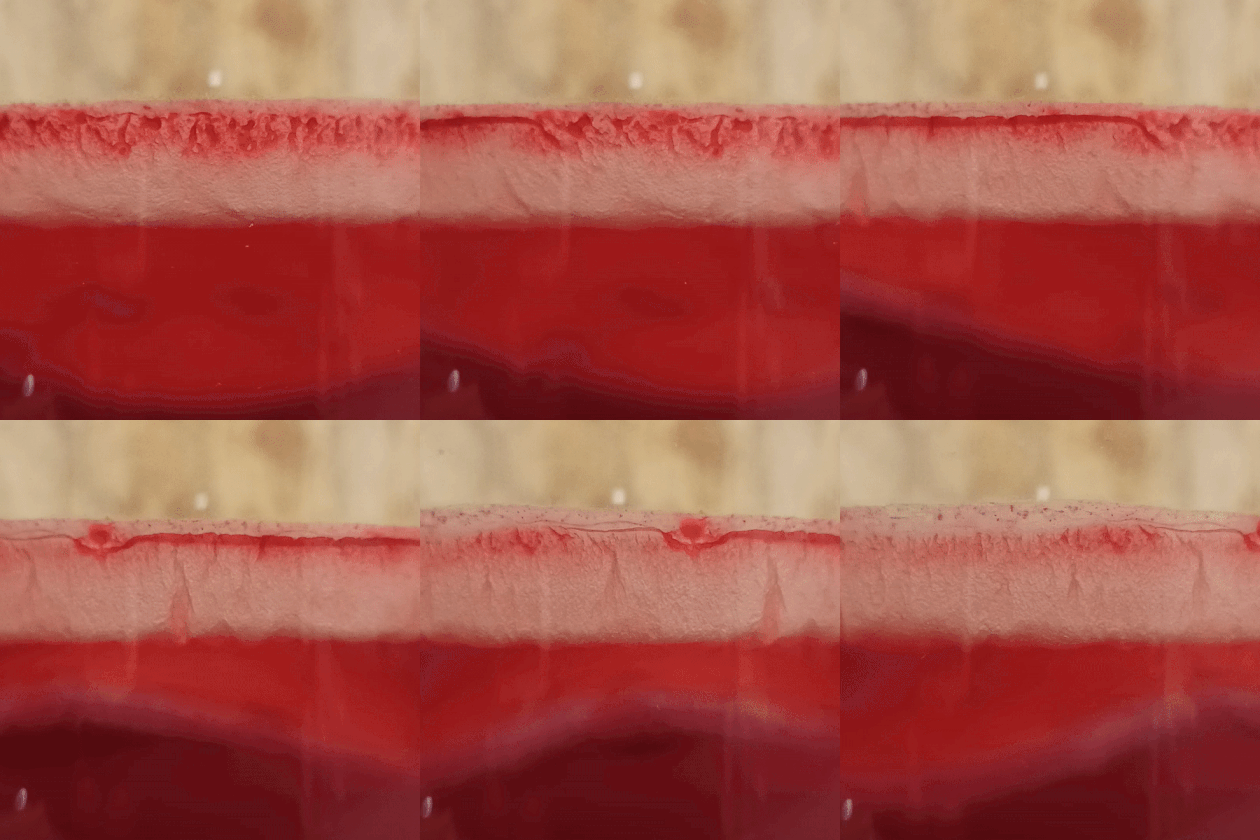
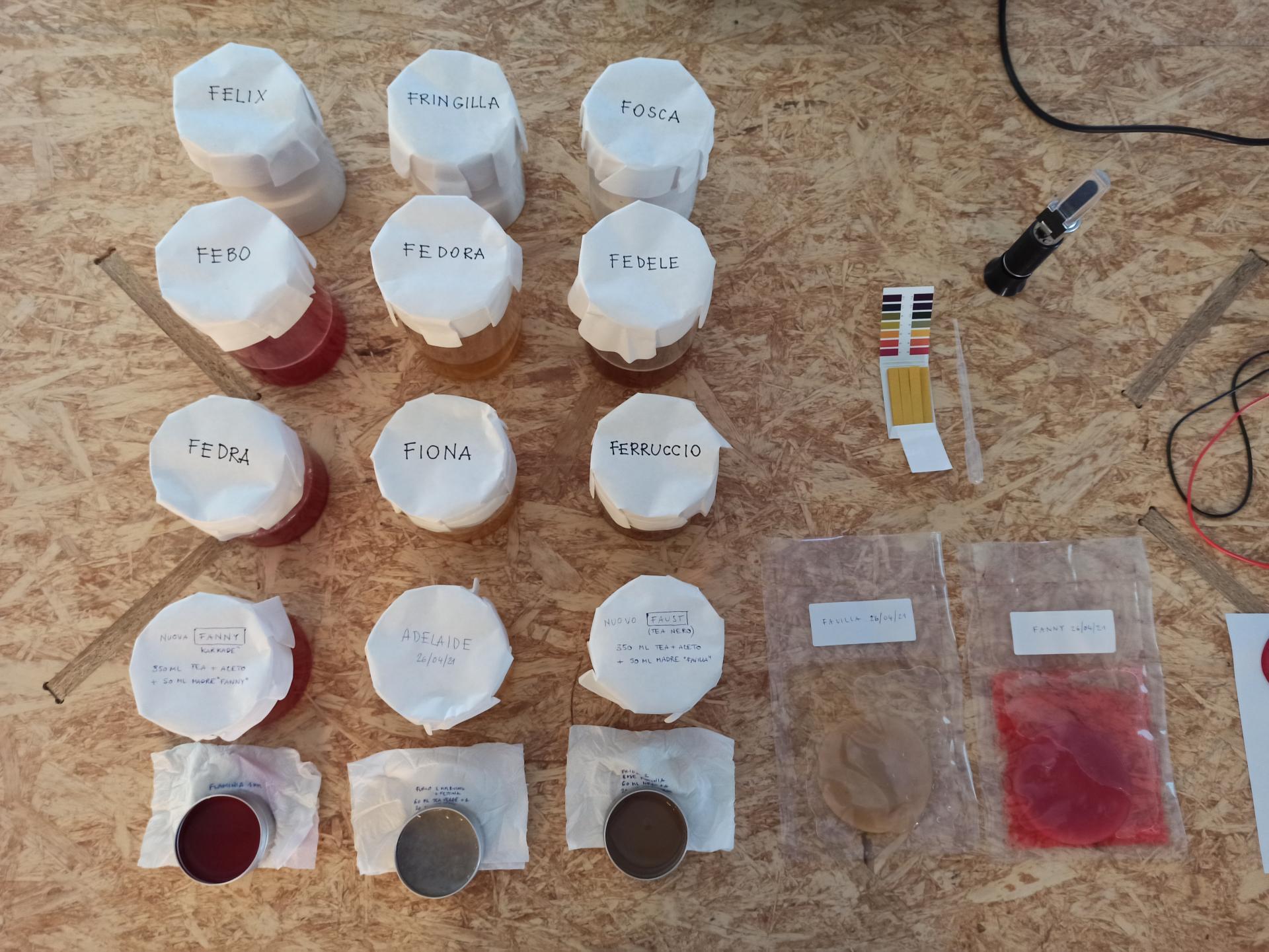
The main object of observation and study is a particular type of bacterial cellulose, a biological product derived from Kombucha fermented tea and commonly known as SCOBY (Symbiotic Culture of Bacteria and Yeast). The innovative element of the project lies in the idea of being able to conceive, produce and develop new growth chambers for the Scoby. This change of approach has the advantage of realizing a bacterial skin - that in some application fields can be substituted to animal skin or to silicone mixtures - with the preset shape, color, and thickness of the final semi-finished product, avoiding post-production processes. The first of the expected results is the construction of new scientific knowledge, based on practical and replicable evidence. The empirical results could be scaled to improve the lifestyle of users, with particular attention to the construction of a sustainable supply chain, using design as a holistic discipline.
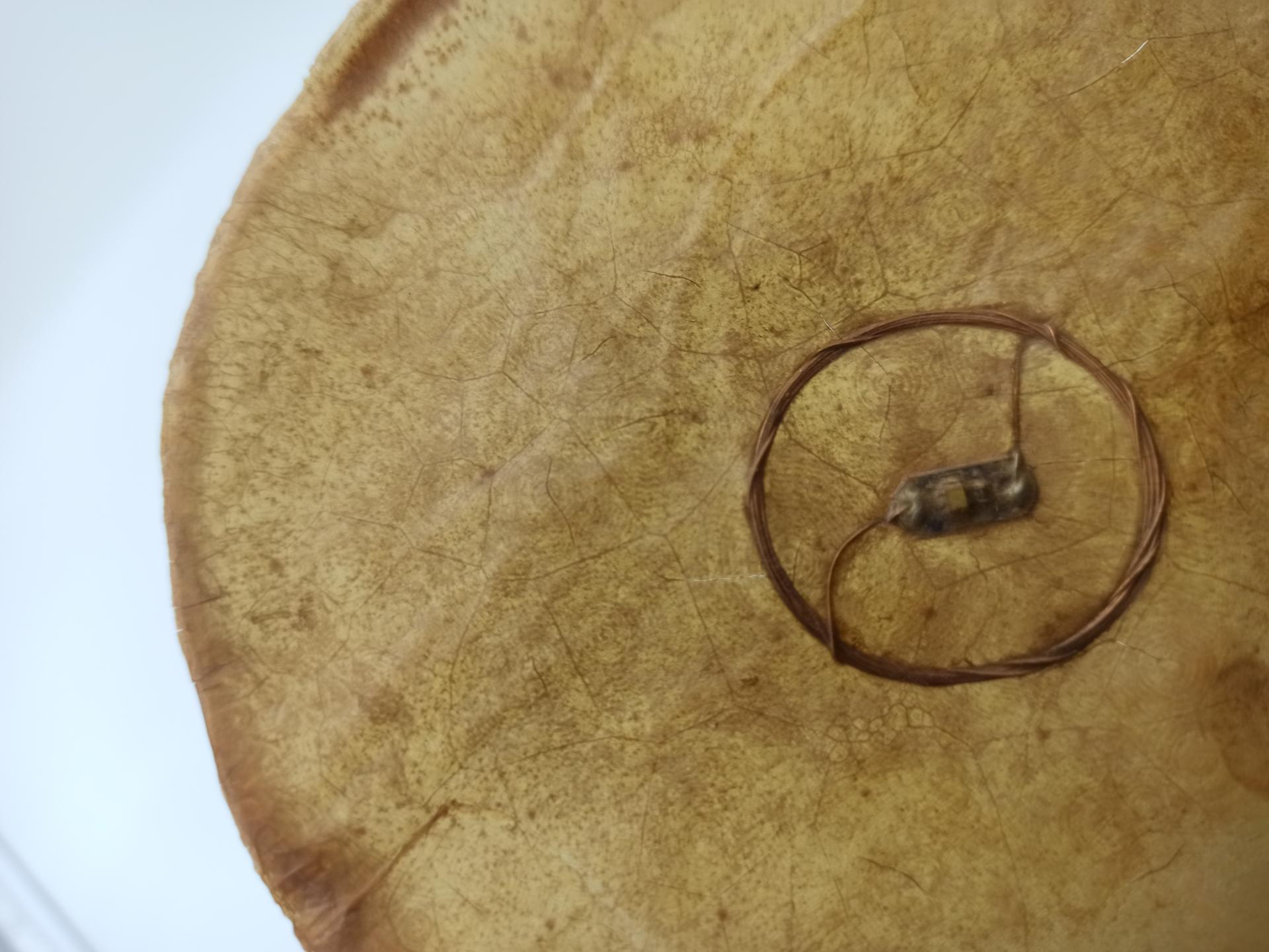
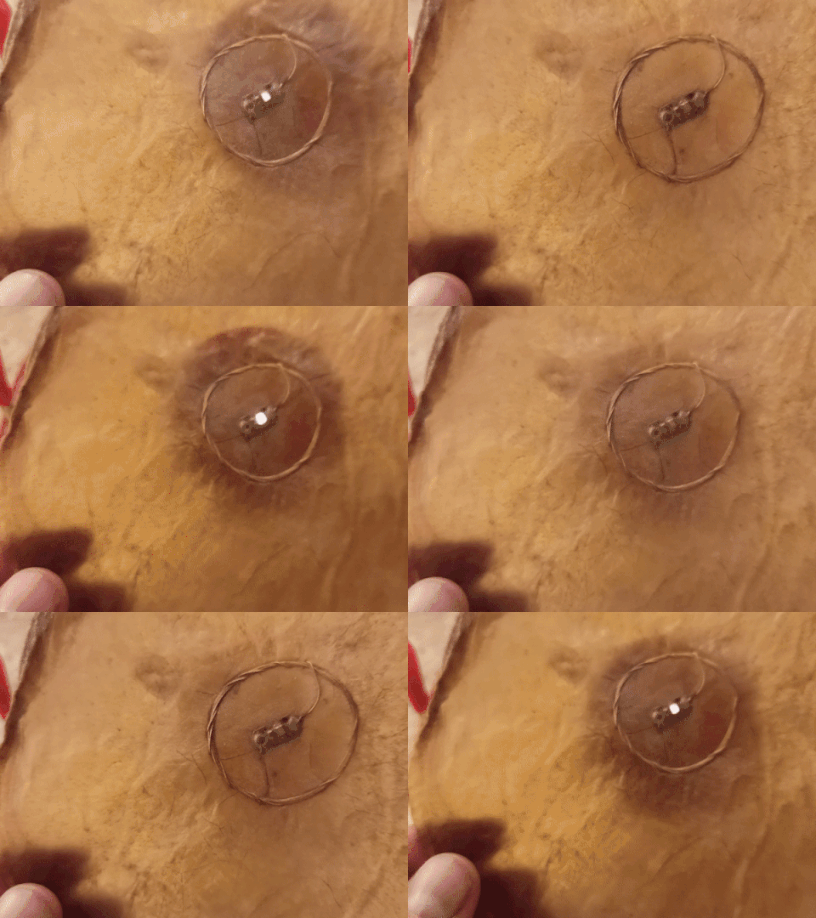
To date, the project has achieved the ideal growth parameters of the Scoby. The programming of the cultivation of growing materials into specific shapes and with textures aiming at the aesthetic characterization and the integration of sensors and actuators on its surface is in progress, thanks to the use of the specially designed growth chambers.
Key objectives for sustainability
In recent years there has been a growing interest by designers and the academic community towards bio-manufacturing, understood as a process of production of materials - e.g. growing materials and of complex objects through the growth of living organisms - through the dialogic exchange between the world of design and that of applied sciences. While designers have always been involved in the material selection process, today, the focus is on creating experimental materials through innovative production processes. Although GMs are inherently sustainable as they are renewable and biodegradable, current experiments do not consider the production system in terms of circularity, integration, and optimization with potential applications. We frequently witness a design exercise, which does not consider the applicative and functional evidence of the material's technical, sensory, and intangible characteristics.
DE_FORMA wants to be the missing link between this experimental trend and the concrete possibility of transforming bacterial cellulose into a material that can be integrated into sustainable production chains and re-produced according to stable effective systems.
In this sense we can recognize a level of attention to environmental sustainability:
- of the material, which is bio-based and pre-designed to avoid the generation of subsequent waste;
- of the production process, which adopts Digital Fabrication as an enabler, thus using organic polymers;
- of the impact on the application fields, for example, counteracting the impact that is being recorded in the textile sector (due to fast-fashion), or in the lighting and consumer electronics sector (with regard to the disassembly and recycling of components).
Transforming the traditional manufacturing processes through design thinking and digital fabrication has implications in terms of cultural sustainability in the definition of new knowledge useful to be encoded in new open-ended knowledge systems.
Key objectives for aesthetics and quality
DE_FORMA project focuses on the programmability and assessment of the aesthetic features of the bio-manufactured living materials, functionalized to the application in the initial design stages. The aesthetics dimension is closely dependent both on functional aspects and sensory perception.
Working on the intrinsic characterization of a "living" and "growing" material is a significant and attractive challenge for designers, who can operate on colonies of bacteria/yeasts to encode the aesthetic aspects of the final bio-fabricated material. The aesthetic aspects on which it is intended to intervene, because relevantly perceived by users in contact with the finished product, are:
- surface qualities, e.g. consistency, flexibility, texture;
- optical qualities, e.g. transparency, colors, photoluminescence;
- volumetric qualities, e.g. thickness and weight.
When sensors and actuators are integrated into the material, it will be able to transform itself according to predefined inputs or to variation of parameters subject to direct monitoring, creating in fact a "smart" material, whose aesthetic features are dynamic and programmable. The characteristics of the Scoby to be water resistant but not waterproof once dried, ensures easy disassembly of electronic components from the smart material, promoting its environmental sustainability at the end of its life cycle.
The whole growing process will offer practitioners a direct feedback on materials properties, showing the direct correlation and interdependence between conceptual ideas and real-life ones. In this way, the aesthetic of a single material will become an expression of the process itself and of the cooperation between designers and other beings, increasing awareness of prime matter use and design.
Aesthetics evaluation will be performed taking into account users’ tactile, visual, olfactory experiences along with assessing their emotional and intangible impact.
Key objectives for inclusion
The dimension of inclusion in the DE_FORMA project may relate to the type of consumers to whom products incorporating these newly developed materials may be targeted: as it is a non-animal origin leather, it may meet with the favour of vegan communities and animalistic associations. Being a biodegradable material, it will be used in diverse sectors to limitate waste after use.
Furthermore, potential future actions include studies with users to identify patterns of appreciation and preference relating to the material and possible applications, helping to shorten the related acceptance and appropriation times.
Framing a pilot that is based on the use of digital fabrication to build a new production chain, also offers an extra element that can be associated with inclusion: once the production system is stabilized, its replicability can be feasible even for SMEs that can nimbly integrate the new materials into their internal production system.
Innovative character
The innovative character of the project DE_FORMA lies in the shift of attention from the simple growth of the crop to its programming and design, depending on possible applications. By building material from scratch, it will be possible to modify the traditional production chain, anticipating needs and constraints that are currently delegated to post-production. This could enable new productive and entrepreneurial paradigms.
The participants in the project, although they all have a background that can be associated with the discipline of Design, come from very divergent fields of research and practice, giving a strong added value of multidisciplinarity. The transversal know-how of the participants offers a synergistic intersection able to enhance, integrate and develop knowledge, converging on methods, tools, and models.
In summary, the innovative character of DE_FORMA is to have addressed a topic related to the growth of microorganisms with a design approach. The ultimate aim of the project is to expand the material production potential in view of design and circular economy, embracing a sustainable development perspective and following the material biological cycle.