Bračak Energy Center
Basic information
Project Title
Full project title
Category
Project Description
The story and life of the Bračak Energy Center forms a project
wholly central to the New European Bauhaus.
A manor that had different uses during its lifetime but with an inherent
cultural heritage that only ten years ago was left to decay. It has been
revitalized through implementing the latest construction techniques to
attain the standard of low-energy buildings, becoming a social stronghold of
the region and a national and European lighthouse of sustainability and
energy transition.
Project Region
EU Programme or fund
Which funds
Other Funds
Yes – for the preparation of the reconstruction (project documentation,
feasibility study).
The contract was signed on 7th May, 2013 - Contract on co-financing the
preparation of project documentation in accordance with the Program of
preparation and implementation of development projects eligible for funding
from European Union funds in 2012, Subprogram - Preparation of regional
development projects- Program 2901-Stimulating regional infrastructure and
economy - activity K758019- Preparation and implementation of EU projects.
Description of the project
Summary
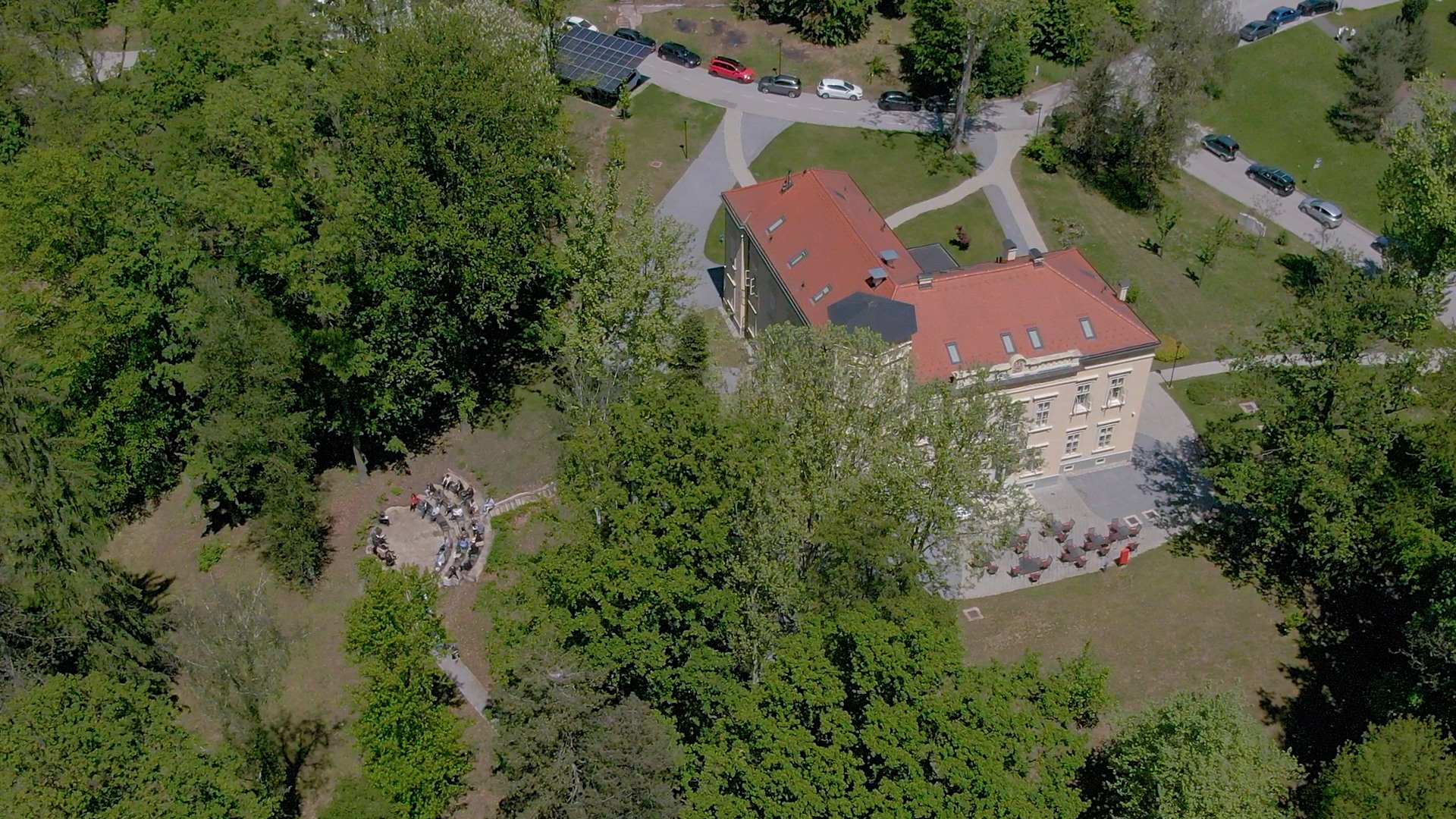
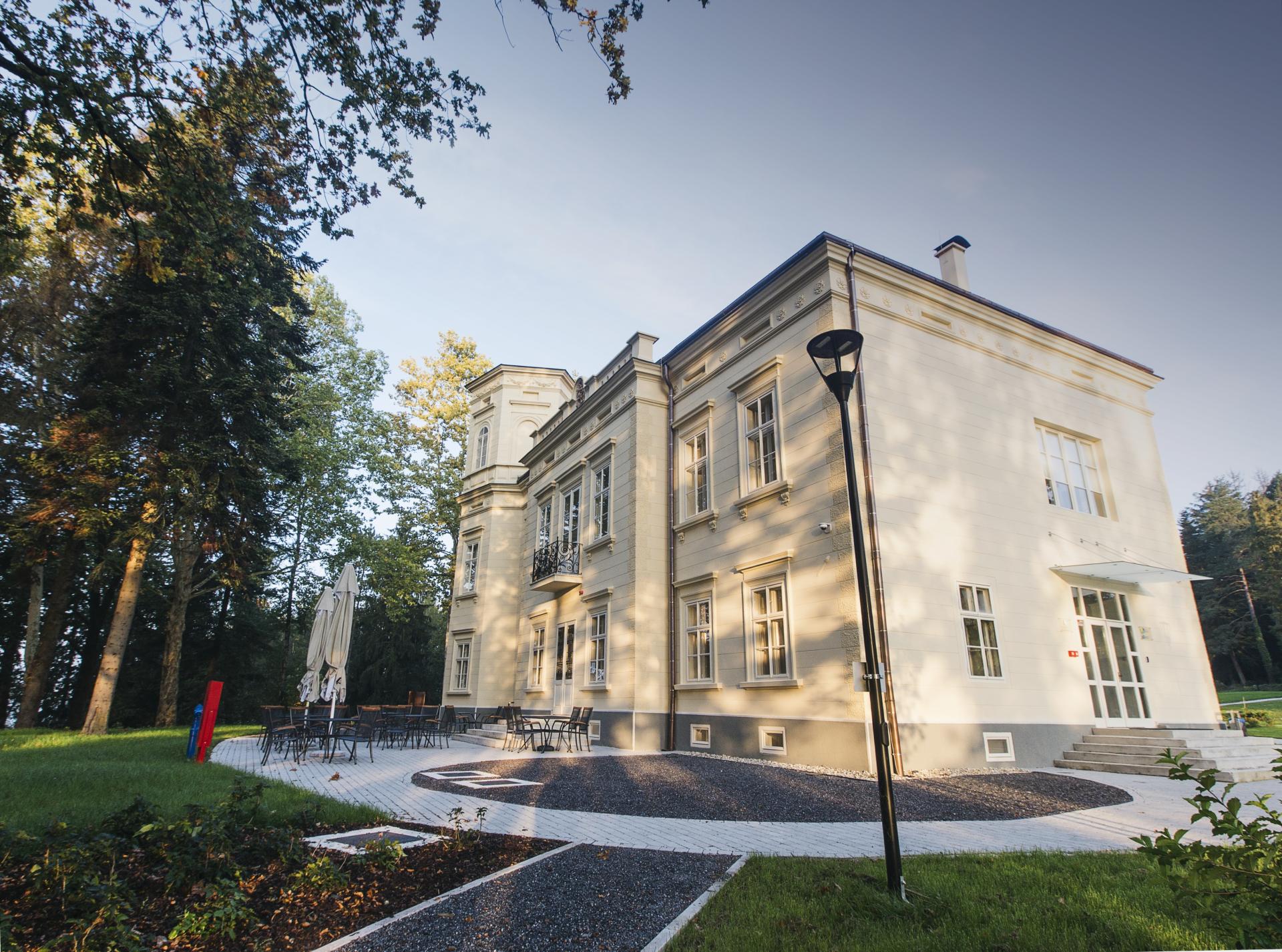
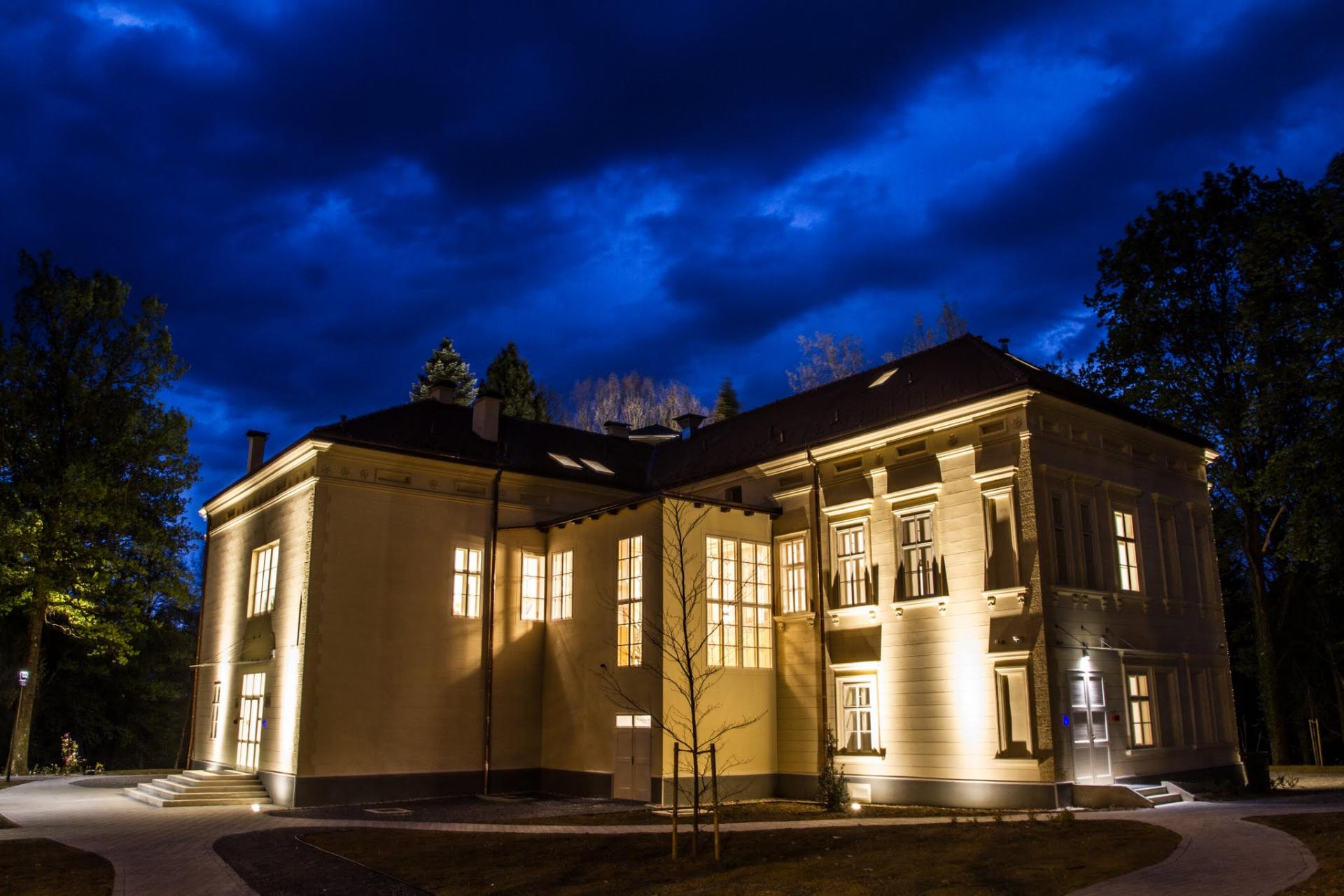
The Bračak manor, with its reconstruction according to low-energy
building standards, is a unique example of good practice in the field
of energy-efficient reconstruction of buildings with the status of
cultural heritage. Built by the Kulmer family in 1889, the manor sits on the
plateau of a hill that rises on the north side of the Krapina River and the
newly built Zagreb-Budapest railway. In the same year the park that
surrounds the manor was formed. After the end of the Second World War,
the manor became the Children's Hospital for Lung Diseases. When the new
hospital on the neighboring hill was completed in 2007, the Bračak manor
lost its hospital function, was abandoned and left to decay even though it
was protected as a cultural heritage. REGEA developed an innovative
vision of the future energy centre in 2011, prepared reconstruction
project documentation, and in 2015 began work on the
comprehensive renovation and revitalization of the Bračak manor
and its transformation into the Bračak Energy Center. Its new
purpose is proof of how the manor can be given new life using
modern 21st century technology.
As an example of best practice, the Bračak Energy Center opens the door to
the development of business infrastructure and strengthening the capacity
of Croatian stakeholders for the development of energy efficiency,
renewable energy sources projects and projects for adaptation to climate
change at the local and regional level in Croatia and Europe. A special place
in the use of the building has been allocated to an entrepreneurial incubator
for new companies related to such projects. Energy Center Bračak is a
place of work, a place for creation and realization of good ideas, a
place for meeting, dialogue, a place that is important in the lives of
all communities from local to European. A dialogue of Croatian
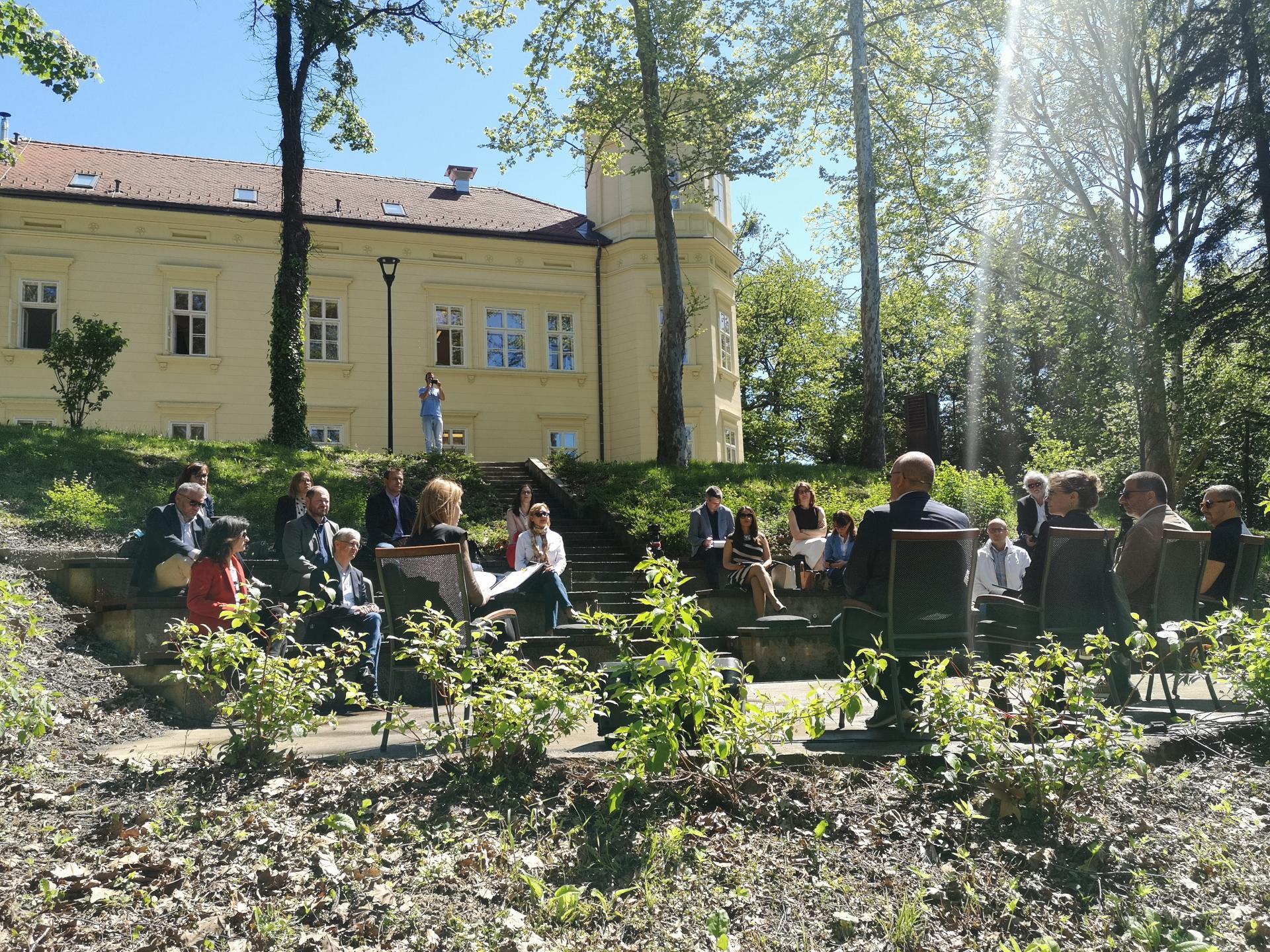
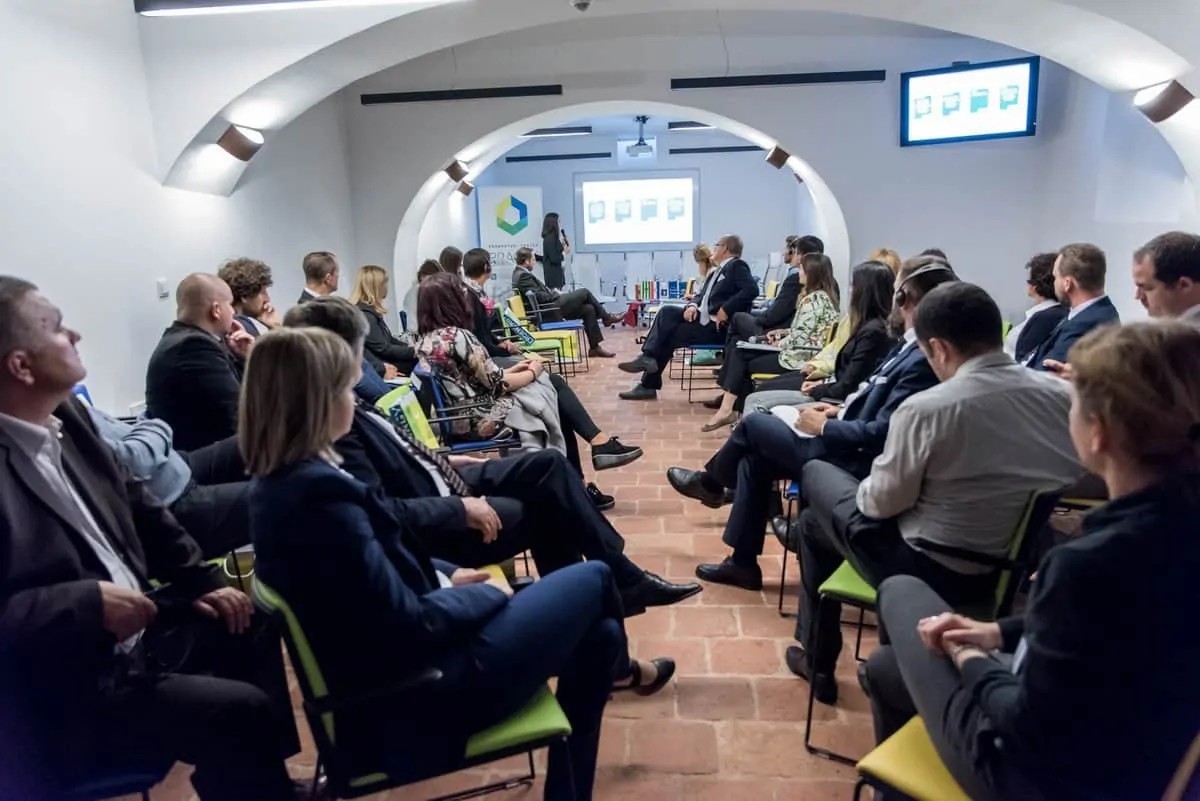
stakeholders on the New European Bauhaus was held in the
amphitheatre of the Bračak Energy Center, thus making it also a
part of the New European Bauhaus.
Key objectives for sustainability
A key objective of the project in terms of sustainability was to
perform the comprehensive renewal of the manor, bearing in mind
its cultural heritage, in order to transform it into low-energy
building that uses renewable energy sources and is respectful of
nature.
Within the scope of energy renovation, changes to the skeleton of the
building were carried out including strengthening and reconstruction before
adding thermal insulation on the complete envelope of the heated
space. Insulation was placed on the inside of the walls with a built-in active
steam barrier that allows the walls to dry inwards, all in order to preserve
the original appearance of the building. Energy-efficient exterior windows
and doors were installed matching the design of the original ones.
Technical systems installed included a wood pellet boiler for heating,
microcogeneration for hot water and power production during summer, an
air-water heat pump system for cooling and heating in transitional periods,
an efficient lighting system, HVAC system, an advanced central building
management system for monitoring of heating, cooling and energy
consumption, rainwater harvesting for irrigation of green areas and
wastewater treatment as well as an electric vehicle charging station.
88% of energy used in the Bračak Energy Center comes from
renewables and this share is going to be even higher in 2021 because a
canopy for cars with photovoltaic panels and an energy storage system has
subsequently been built. Energy savings on an annual basis amount to 70%
of the required energy for heating compared to the original state before
renovation.
Furthermore, in everyday working of the Bračak Energy Center, the
principles of a circular economy are applied, usage of plastic is
minimised and usage of resources and energy is closely monitored.
Only natural juices are served for visitors as well as food and wine
from local suppliers and inside the park there are hives in which
“local” honey is produced.
Key objectives for aesthetics and quality
In terms of achieving the goals of aesthetics and quality of
experience, it was imperative to carry out a comprehensive
renovation of the Bračak manor in a way that remained sympathetic
to the original design and aesthetics, in order to protect and
conserve the inherent cultural heritage of the building.
Nevertheless, the ultimate result of the renewal had to be a rational, usable
and sustainable building that would provide healthy indoor climate
conditions and overall comfort for all the people that would be using it. As a
consequence, the renovation also had to include a complete reconstruction
of the facade, reconstruction of paintings and architectural plastic and
interior paintings in the stairwell space as well as implementation of other
measures that affect all important requirements for the building to make it
fully functional and comfortable to use, while always respecting
conservation guidelines.
For the design of the interior of the building, natural recyclable
materials were used such as wood products for floors and furniture,
bricks (visible or hidden) for walls as well as for some floors.
Prefabricated elements were also used, as well as a prefabricated structural
elements, for example for an internal security staircase, which had to be
added in order for the building to meet all requirements regarding fire
protection in accordance with the applicable regulations.
In a modern style, also as a prefabricated construction, canopy for cars with
photovoltaic panels was added in 2021, creating a contrast and starting
dialogue of different artistic styles with the manor as originally designed in
1889. All technical systems inside the manor are unobtrusively installed,
taking care not to disturb its original design.
In parallel with the renovation, the restoration of the park started
which further emphasized the importance of green infrastructure
and the synergistic connection between the building and its
environment.
Key objectives for inclusion
The story and life of the Bračak manor is an example of a
continuous inclusion.
At first, the manor was home to the Kulmer family, but after the Second
World War its social function began. It was a hospital for children with lung
diseases, important institution for maintaining the health of the region.
Afterwards, the manor was transformed through substantial renovation, into
the Bračak Energy Center, raising inclusion to an even higher level in the
function of energy transition.
Bračak is a workplace, a place of meeting and dialogue, a place to
realize good ideas contributing to the green transition and
attaining a climate neutral Europe thus resulting in the widest
possible inclusion. An inclusion that extends from connecting the local
village of Bračak and town of Zabok, through Krapina-Zagorje County and
Croatia to all cities and regions of Europe. Consequently, our dear partners
and fellow citizens from all over Europe come to the Bračak Energy Center
to work together on projects that are important for Europe. The Bračak
Energy Center hosted numerous EU project meetings, energy conferences,
workshops, trainings and other events (over 150 events per year in pre-
COVID era) and will continue to do so.
The renovation of the Bračak Energy Center was designed with
inclusion in mind. Within the centre there are office spaces, several
multifunctional halls of different sizes intended for conferences, meetings
and events and a restaurant with an outdoor terrace. All spaces that invite
interaction and joint working. The open-air amphitheatre in the park offers a
new dimension to organizing meetings, events, workshops and gatherings.
The fact that before the COVID pandemic, the Bračak Energy Center
was visited by more than 4.000 people each year tells a lot about
its inclusiveness. Special attention is given to youth as well as
marginalized and vulnerable groups with numerous activities and
programs regarding education, employment and raising social
standard.
Results in relation to category
The Bračak Energy Center is example of cultural heritage that was
revitalized through comprehensive renewal in the spirit of
sustainability, aesthetics and inclusiveness – thus in the true spirit
of the New European Bauhaus!
Comprehensive renewal is integral in this approach. This type of renewal
consists of energy renovation, strengthening and reconstruction of elements
of constructive systems, improving indoor climate conditions, fire protection
and all other aspects of functionality regarding fulfilling basic requirements
for a building. This type of integral revitalization of cultural heritage building
resulted in saving it from decay, turning it into a low-energy building with
88% share of renewable energy sources in energy usage and enabling it to
become a social, educational and economic stronghold of its local
and regional communities (and wider).
The Bračak Energy Center is true New European Bauhaus example because
it proves that it is possible to restore decayed cultural heritage with the
latest construction techniques and technical systems without losing its
original charm, beauty and value.
But also, that it is possible to breathe new life into cultural heritage, much
needed, as proof that cultural heritage buildings are able to host
programs and activities needed in 21st century, activities that will
lead us to a climate neutral Europe. And in the context of “places that
we live in“, the Bračak Energy Center and it's park and surroundings
demonstrates that our houses need to have a proper relationship with
nature and outdoor spaces.
All members of the team that created the Energy Centre Bračak are very
proud of their achievements, because the contribution of each one of them
helped to continue the inclusiveness, restore the beauty, and bring
forward sustainability.
How Citizens benefit
In order to realize this project, it was necessary to connect all the
important stakeholders needed for its implementation in an
interdisciplinary way of working and cooperation.
The idea came from the then prefect of Krapina-Zagorje County, who asked
the director of REGEA: "Are you ready for a difficult task?”. REGEA led the
project, but all the necessary stakeholders were involved in the whole
process: designers, conservators, stakeholders from public authorities drawn
from the local through to county and even from the national level, experts of
various professions, contractors and all other stakeholders who each in their
own way helped to bring about the success of the project. Local citizens
have not only been formally involved in the project – after seeing
for themselves the building renovation, they even donated original
19th century furniture and cutlery from the Bračak manor which
they kept in their homes to prevent from ruin!
It is here that the importance of civil society is immediately seen,
proof that if we are united to achieve a set goal that is the same for
everyone, if we all push in the same direction, we will certainly
achieve that goal. And don't think for a moment that the comprehensive
renovation of the Bračak manor was an easy task in any sense.
The value for the citizens and society is reflected in the everyday
life of the Bračak Energy Center and the activities that take place
within it. Due to the diverse content of activities, the Center is open to all
age groups through various events, education, workshops, business
meetings or simply events that are important for the local community or
Krapina-Zagorje County. Energy Center Bračak is also home to REGEA,
which is daily committed to achieving the goals of the European Green Deal,
green transition and adaptation to climate changes and which works
networked on more than 50 projects together with over 100 partners across
the European Union - for citizens from small Bračak to large Europe.
Innovative character
The innovative character of the project is reflected in the integral
approach to comprehensive renovation that results in the
revitalization of the building and its contents in which it regains its
socially important purpose.
This concept fully honors the importance of cultural heritage while setting a
clear vision and program for the use of the building in the longer period. An
energy center of the region, a place of work, meetings, exchanges and
implementation of projects related to green transition and adaptation to
climate change – it contributes to the justification of such investment
because in the next 30 years it is expected that there will be a lot of work on
the above topics that will need to be done in the Energy Center and it will
certainly be well used. In that sense, the Bračak Energy Center has proven
to be a successful investment because it justified the investment of a
comprehensive renewal. The same lesson should be applicable to other
cultural heritage buildings renovation, where it is always important to have
a quality of vision and building management program for the longer period,
so that a building when revitalized, can be properly used and thus justify
investments. Also in case of this project fully integral and interdisciplinary
approach was established resulting in synergy and collaboration between all
stakeholders involved in a project.
In technical terms, the innovative character is reflected in the use
of the most advanced technological systems and construction
techniques that are used in a way that respects cultural heritage
and are not invasive. In this sense, it can be said that the measures and
techniques implemented are in line with the design and heritage values of
the manor. The fact that has been confirmed through this project is that
every project related to the revitalization of cultural heritage should be
innovative in its own way in order to give a suitable solutions tailored to the
uniqueness of the building in question.