Design for Climate TU Dublin
Basic information
Project Title
Full project title
Category
Project Description
Design Curricula for a Resilient 21st Century is a co-creation project in higher education that calls upon students, lecturers, and the profession in Architectural Design to develop understanding, create trust, change culture, and embed sustainability into the curriculum to engender sense of purpose and responsibility for future practice.
Project Region
EU Programme or fund
Description of the project
Summary
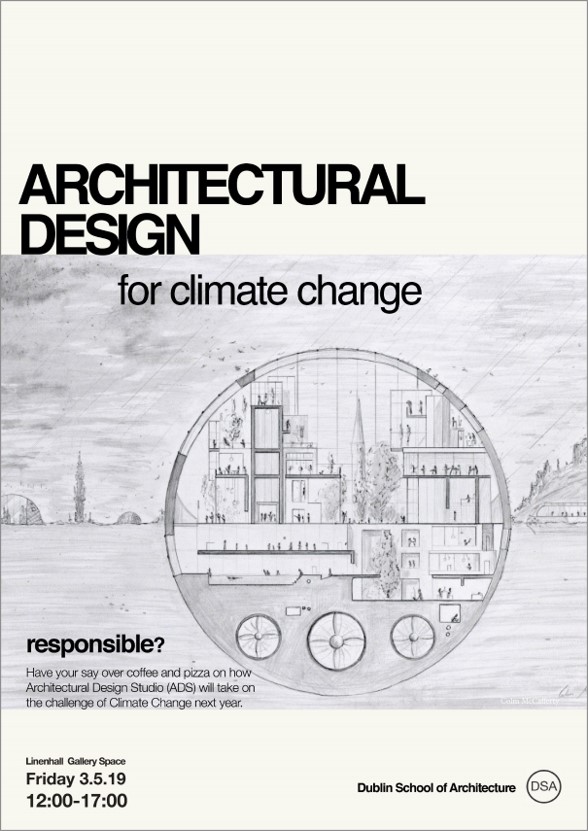
Design Curricula for a Resilient 21st Century began with the Architectural Design for Climate Change pilot project in May 2019. The pilot project aimed to embed sustainability at the centre of architectural education. The pilot design engaged student citizens, lecturer practitioners, academic management, industry, and the professional body (RIAI) to embed the UN’s SDGs for 2030 within the Architectural Design Studio. The project’s co-creation process elevated the student voice to partner with academics, who along with academic managers, members of the profession, and its accreditation body developed a human-centred design process for rapid and radical change. The project included for all perspectives on what ‘good architecture’ is in the context of Sustainability for Climate Change. The community invited to engage with the project included 300 undergraduate architecture students (from years 1-5), academic Lecturers from the Architecture and Architectural Technology disciplines, Industry Practitioners, the Education Director from Royal Institute of Architects of Ireland (RIAI), the Sustainable Energy Authority Ireland, the Irish Green Buildings Council, and members of the RIAI Sustainability Taskforce. Building on the Dublin School of Architecture’s mission to deliver Sustainable Buildings – buildings that are economic, efficient, ethical and beautiful – the project invited multiple viewpoints and encouraged open exchange to empower participant’s views on where Architectural Design has the power to solve global climate challenges. By using the Architectural Design Studio, the primary and heavily weighted project-based learning module within architectural education, as a host/location where architectural solutions could address Climate and Sustainability challenges, students and lecturers identified potential project types and building typologies for the curriculum.
Key objectives for sustainability
The project piloted an alternative way of sponsoring curriculum revision to achieve strategic sustainability objectives and bring sustainability into the core of the School’s culture (via curricular and extracurricular activities)By taking the core academic module, the Architectural Design Studio, it asked students and lecturers to reimagine the types of design studio projects that could be posed throughout the five-year curriculum in order for architecture to create solutions to the challenges of Climate Change. In the primary workshop, students and lecturers agreed the critical thematic priorities (building material sourcing, inclusive housing, adaptive re-use, etc.) for each year of the programme. Year groups were asked to agree assessment methods that align priorities of Climate into the Studio modules, prompting a necessary discussion between students and lecturers on how successful projects would be measured. Following workshops, peer reviews of the module revisions were circulated and commented on by students and lecturers in advance of the coming academic year. To guide and articulate the new module objectives, specific UN SDG targets and indicators were incorporated into the module descriptions, project briefs, and assessment criteria. Following the process of revising the curriculum, came the need to continue to support the community on their journey of implementing these changes and make the new changes sustainable in the academic learning environment. Students and Lecturers identified key resources and actions to support them in delivering on these changes. Items identified included more group workshops across the five years through vertical projects, a shared reading list of core climate and sustainability texts for the programme (students and lecturers) to use as a touchstone, key software and external expertise in areas of life cycle assessment and embodied carbon, and recognition and celebration of projects that achieve the goals agreed by the team.
Key objectives for aesthetics and quality
1. To create engagement and accountability for making significant curriculum change; using design thinking methods and transparent brainstorming processes to create, host, and deliver an open inclusive discussion about change, students and lecturers created (together) a memorable and meaningful experience of their academic community and shared purpose that enabled them to align architectural education to global goals. This approach gave voice and weight to students as the future stakeholders of the architectural profession, who generationally are aware of their responsibility to society thanks to Gretta Thunberg’s international youth activism, as well as local initiatives in primary and secondary education in Ireland. The experience of the participants transcended the traditional functional role of the programme development processes of previous academic decades. 2.To redefine beauty through the lens of sustainability: Traditionally noteworthy architects have prioritised aesthetic design above other criteria to measure whether buildings have been successful in their realisation. Criteria such as cost, durability, material sourcing, and efficiency have been relegated to other professional disciplines for their championing, often competing with the architect’s project objectives. This tendency, supported by media, industry narrative, and architect’s own proclaimed philosophies, has persisted while a wave of industry change to move towards environmental building design and energy efficiency was increasingly supported by larger global imperatives. The last two decades has seen a growing schism between ‘good (looking)’ architecture and ‘green (environmental)’ architecture has been created. To bridge this gulf, and diffuse the polarity, the importance and relevance of sustainability in architecture needed debate, discussion, and commitment by those that hold on to the importance and value of beauty.
Key objectives for inclusion
To create a safe-space that empowered each of the participants and encouraged meaningful engagement during the session, roles for the pilot project were defined and allocated to participants in advance. Each participant was given preparation work in advance of the session (affording each person time to consider their role and responses, offering suggestions before the workshop).
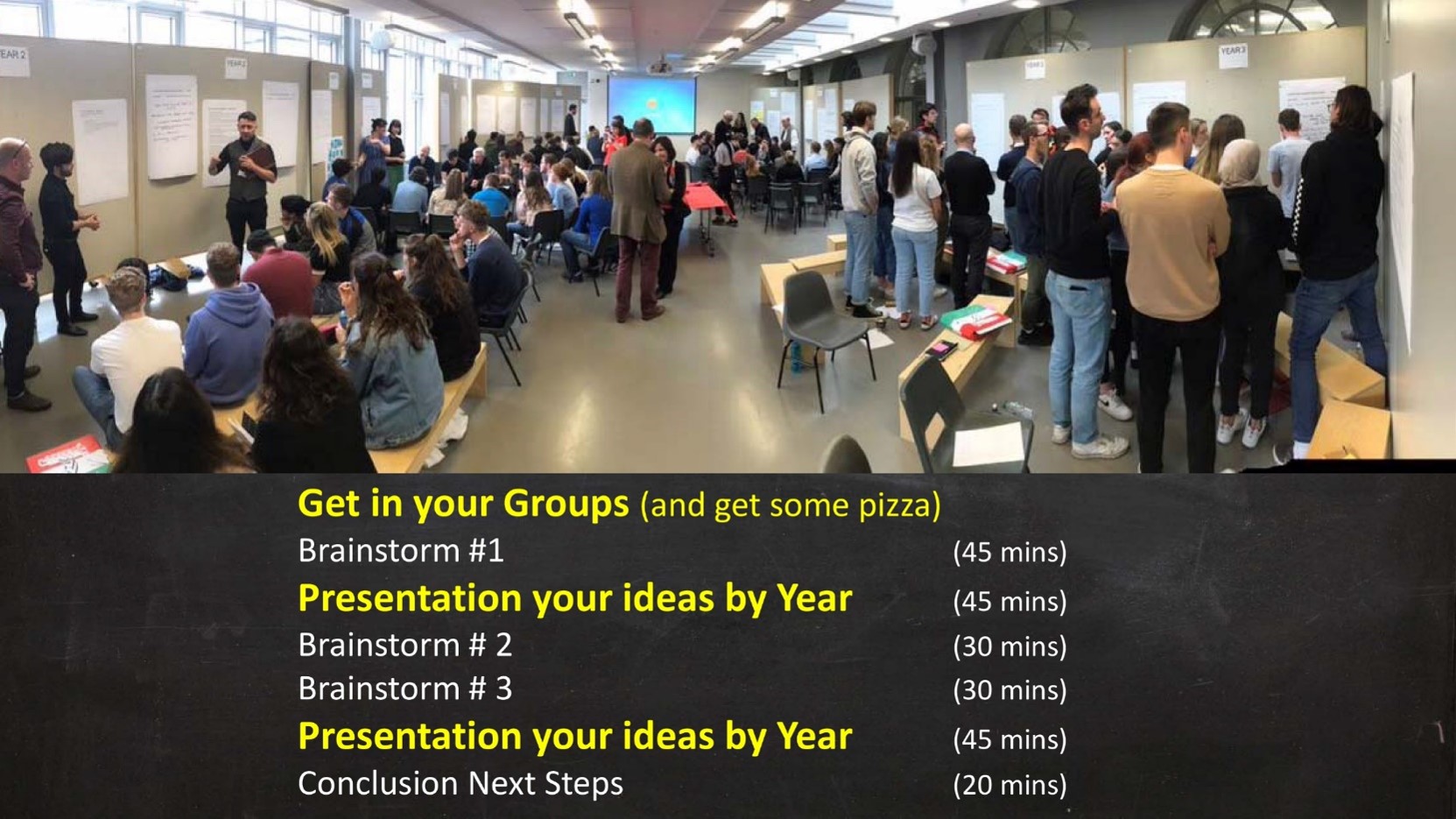
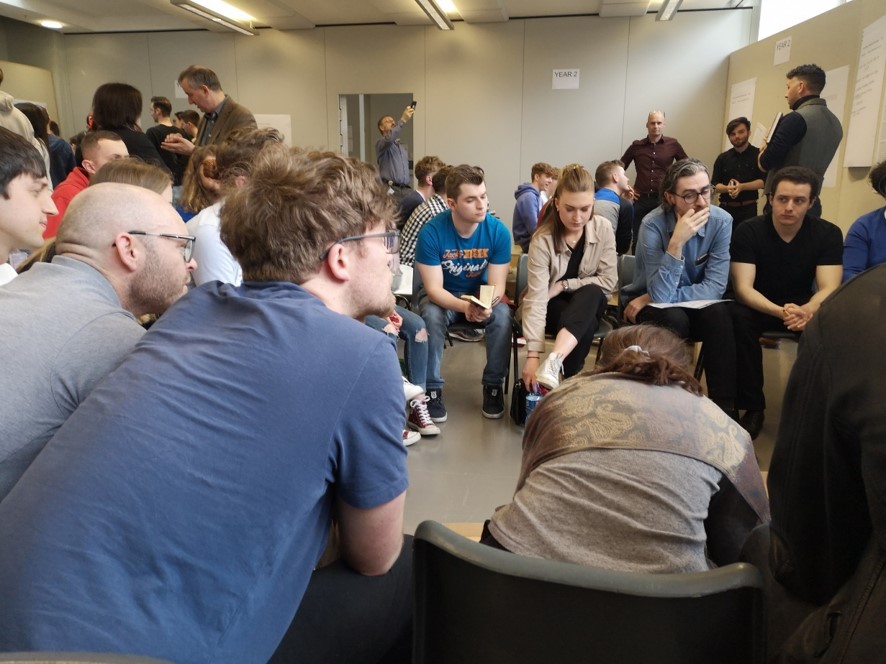
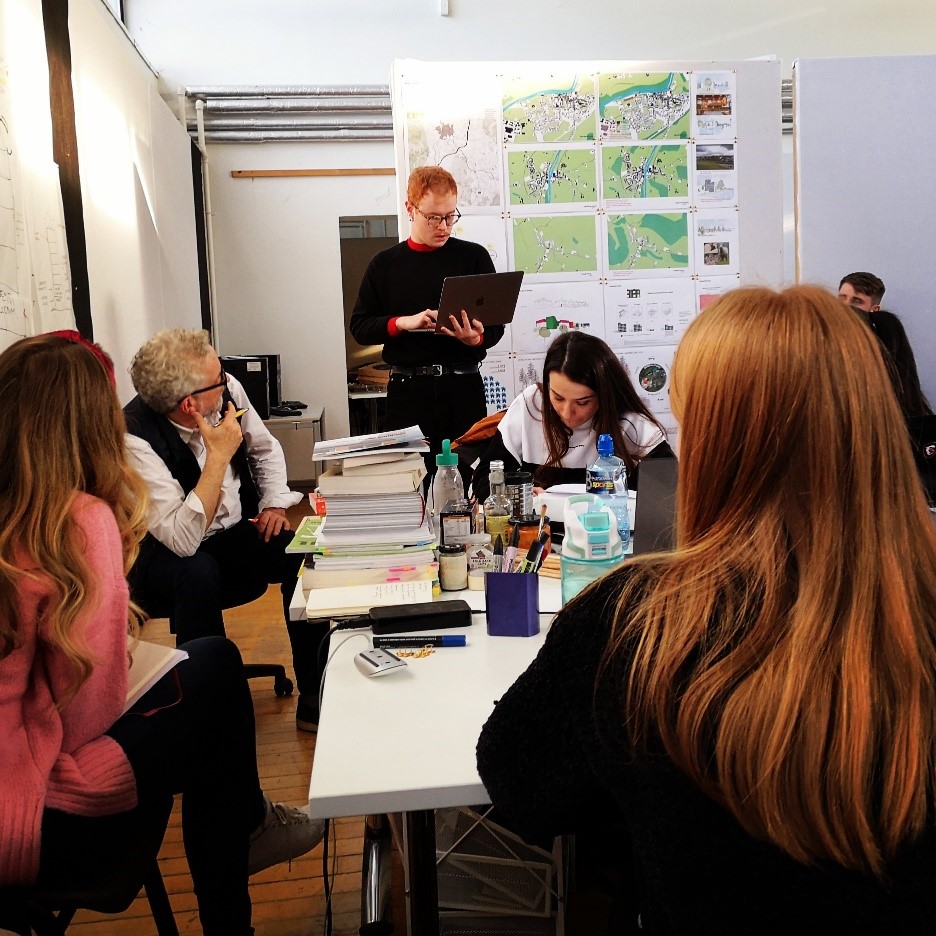
The aim of the workshop was to review and revise the Architectural Design Studio modules across the five years of the Bachelor of Architecture programme and elevate and empower student voice in the process. Of the five groups designated by years 1-5, each was composed of two student cohort subsets – approx. 25-30 students currently attending that year and 25-30 students in the subsequent year of the programme. Each group also contained the lecturers from the Architectural Design Studio in that year. The groups were each facilitated by different external participants, each with expertise in an area of sustainability. The role of external participants was to capture the group’s ideas, ensure equity of voice from all group members, and oversee the idea-funnelling process.
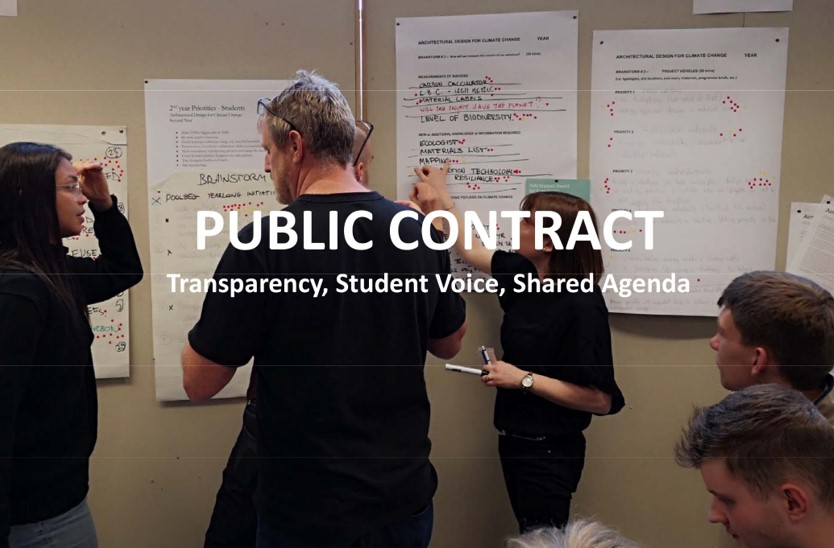
The event was structured around transparent and inclusive ideation. Each group was asked to conduct brainstorms in three areas from the Architectural Design Studio module to address the challenges of Climate Change and Sustainability. These three areas were 1)prioritising thematic areas, 2)proposing project typologies, 3)defining how best to measure a successful project outcomes. The ideation process used worked through the steps of idea generation (brainstorming), idea evaluation (discussion), and idea selection (silent voting with stickers) and was undertaken by groups over timed intervals with selected rapporteurs communicating conclusions to the wider group.
Results in relation to category
Culture Change was triggered through increased awareness and consciousness across the community of students and academic staff within the School of Architecture and across the TU Dublin academic community. Increased openness to programme change with involvement across built environment and engineering disciplines. This was demonstrated by the increase in the extracurricular activities undertaken by students in the Architectural Student Association (ASA) centred around sustainability and the increased membership and activities of the cross-discipline Green Campus Committee to undertake responsible citizenship (employ sustainable materials, reduce waste, recycle, and reuse where possible) for the buildings we inhabit on campus. The process has been recognised by the TU Dublin President, the Earth Institute at Columbia University, and the Royal Institute of Architects of Ireland as exemplary.
Increased School and programme sponsorship from industry has enabled subsequent momentum events to be delivered to include student prizes, industry expertise workshops, and event recording for dissemination purposes. An increased number of new partnerships from within and outside of the profession have exposed students and lecturers to emerging techniques, specialist knowledge, and best practices examples through their participation in student workshops, studio module delivery, and guest lectures.
How Citizens benefit
The project created an open dialogue through the creation of a shared safe space. It employed design-thinking principles and ideation to generate engagement.
From this engagement by the School community over the duration of the pilot project, an increased awareness of our School activities and priorities for Beautiful Sustainable Building Design has resulted in the student work being recognised and selected for national awards in Sustainability by the professional body (RIAI Annual Student Awards), an increase in the number of public sector and NGO organisations interested in partnering on projects with our students, an increase in the number of applications to lecture in the School, and invitations from industry, education, and professional discipline groups to speak at national and international conferences to share and inspire others that positive change is possible. Through it’s large scale inclusive and transparent approach, the project has created a culture change engendering responsible citizenship in our community. It has inspired individuals to take ownership and responsibility in the ethical professional practice of architecture. the world’s future.
In support of this change agenda, the School has received increased levels of partner commitment, increased sponsorship of sustainability related education activities, and has been invited to key professional policy revision groups.
Innovative character
The pilot project developed and delivered a process that enabled deep change at scale and pace in a discipline area where the relevance of the profession has been in question for some time. Through the pilot, which married global objectives, personal values, and professional purpose, a groundswell of enthusiasm and engagement was sponsored triggering a number of key positive knock-on effects to engender responsible cultural change within a community of 350+ people ages 17-65. The School mission is now understood at an individual level where a wholistic understanding of Sustainability is prioritised at the Dublin School of Architecture in the education of architects.
The project piloted a new form of large scale co-created curriculum design through a series of open and inclusive workshops, in contrast to traditional team meeting practices. It created a ‘safe space’ in which the wider community of students, lecturers, and external stakeholders could take time out of normal duties, by the lead academic manager cancelling classes and extending invitations, to engage in a forward-looking creative design process .
It is an example that effective leadership can be delivered from the middle of an organisation. Where leadership has as a curatorial role in bring people together to create shared purpose through open innovation and academic exploration.