Restart 2018. Innesti Urbani
Basic information
Project Title
Full project title
Category
Project Description
The participatory design event faced the regeneration of the historic centre of Oliena, in inner Sardinia, with the aim of promoting local culture and production. The potentials of the place to undergo (as rootstocks) a possible modernisation (grafting), based on contemporary living patterns, were put at stake through co-design artistic installations engaging the inhabitants, able to trigger new models of space re-appropriation, aimed a
Project Region
EU Programme or fund
Description of the project
Summary
Held in a small village in the western mountains of inland Sardinia, affected by population shrinking, abandonment and decay of the historic centre, Restart 2018 consisted in a system of events aimed at involving the community in a process of awareness raising. The goal was on one hand to highlight the importance of the built heritage as a legacy of an ancient rural culture still present in the intangible traditions, and as a resource to be rethought and reinterpreted for contemporary demands, on the other hand to show and demonstrate the feasibility of the concept. The temporary exhibitions realized in two buildings of the historic centre, were conceived and built through a range of diverse activities involving the participation of the local community, a multidisciplinary team of researchers and young architects and designers from Politecnico di Milano and guests from other European countries and China. The final outcome could be visited during a widely known yearly festival celebrating local crafts, food and culture, to take place in the village, visited by thousands of inhabitants from all other the island as well as by tourists on a national and international scale. The Restart 2018 was the most complex and thorough of a series of previous participated events, organized and conceived as an ongoing participated process focusing on the centre regeneration, a case study for the development of bottom-up approaches and methodologies to forestall the inland and rural shrinkage phenomenon.
Key objectives for sustainability
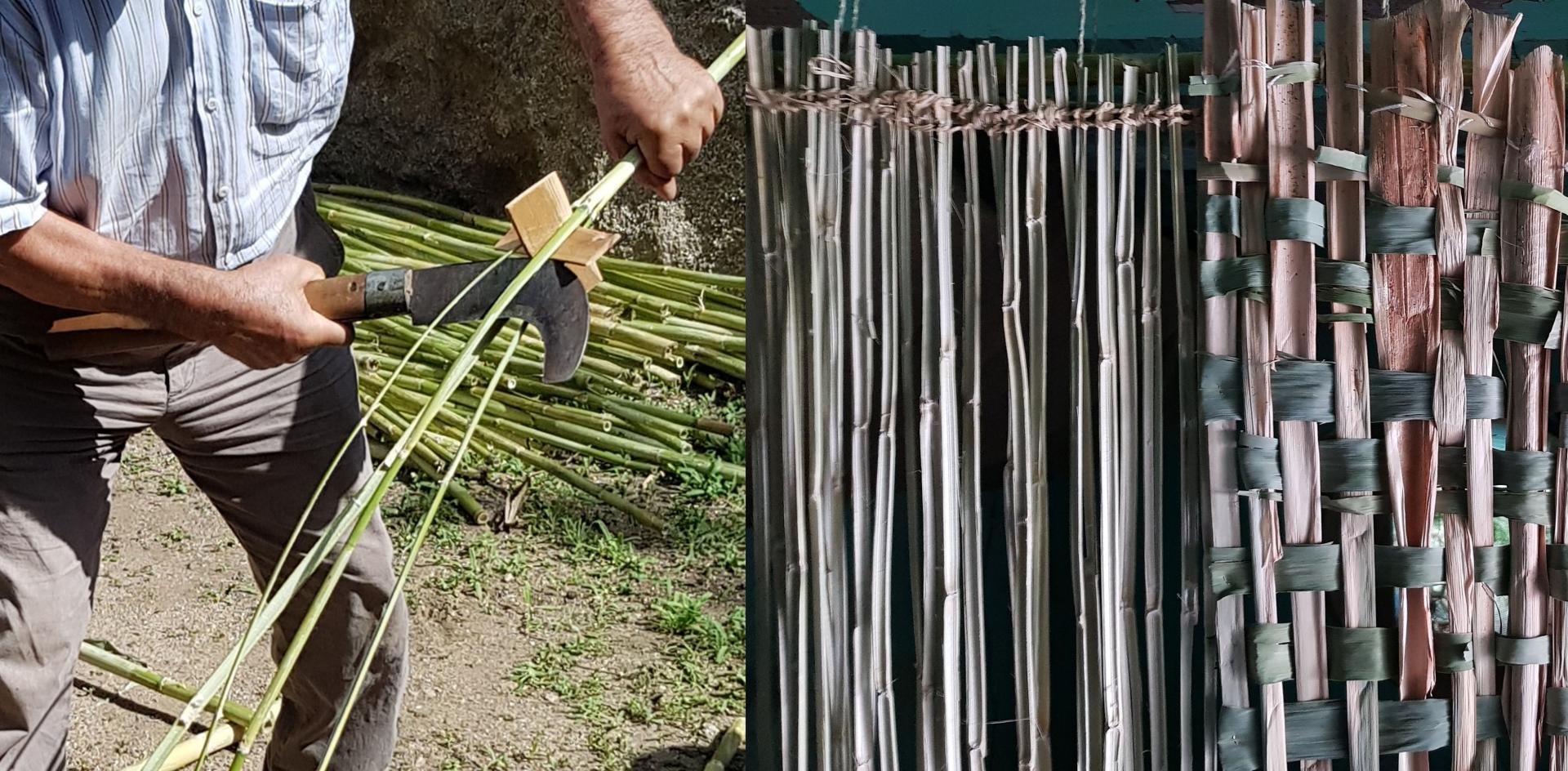
Contrasting rural abandonment is about not only preserving the biodiversity and the existing green infrastructures but also addressing the cultural landscape as the result of the human and nature intertwined history. The value of the ancient centre is related to the morphological typological and technological characteristics of the historic fabric which is structured in closed courtyards where all the main social and productive activities occurred, surrounded by the family houses. The ‘cortes’ represent the legacy of a rural society based on family clans, currently disappeared, intrinsically tied to the belonging territory, but now inadequate to the contemporary living demands. Therefore, the development of regeneration strategies for this large heritage, which extends for more than 27 hectares, responds to environmental, social, economic as well as cultural sustainability goals. In fact the project is about the conservation and reuse of the existing resources, the vernacular architecture, also forestalling soil consumption, and the reinterpretation of the heritage embedded in its landscape and scenic beauties enhancing local sustainable economies, and hosting new activities such as tourism, thus preventing the emigration of the young and allowing for the preservation of both the tangible and the intangible rural cultural heritage made of traditions, myths, stories, skills and crafts. The successful application of local cultural and natural resources in contemporary technologies, the strong relation with the surrounding landscape as well as towards the rich and specific biodiversity present in the territory were also highlighted using for the set-ups a repertoire of traditional materials species and crafts. Hence, the exhibitions employed natural organic materials to be easily recycled, as well as systems and objects mechanically jointed which could therefore be easily dismantled and reused
Key objectives for aesthetics and quality
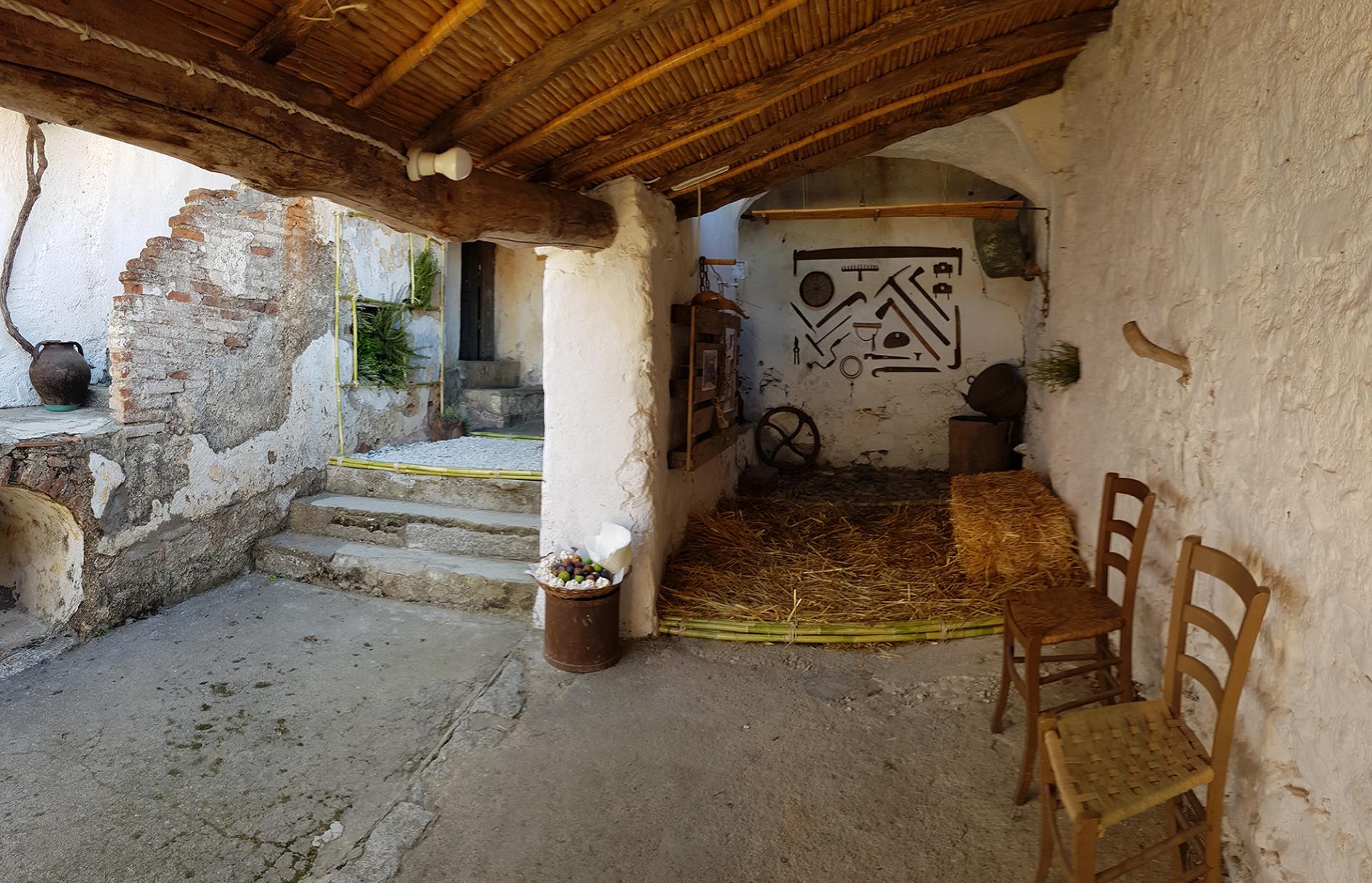
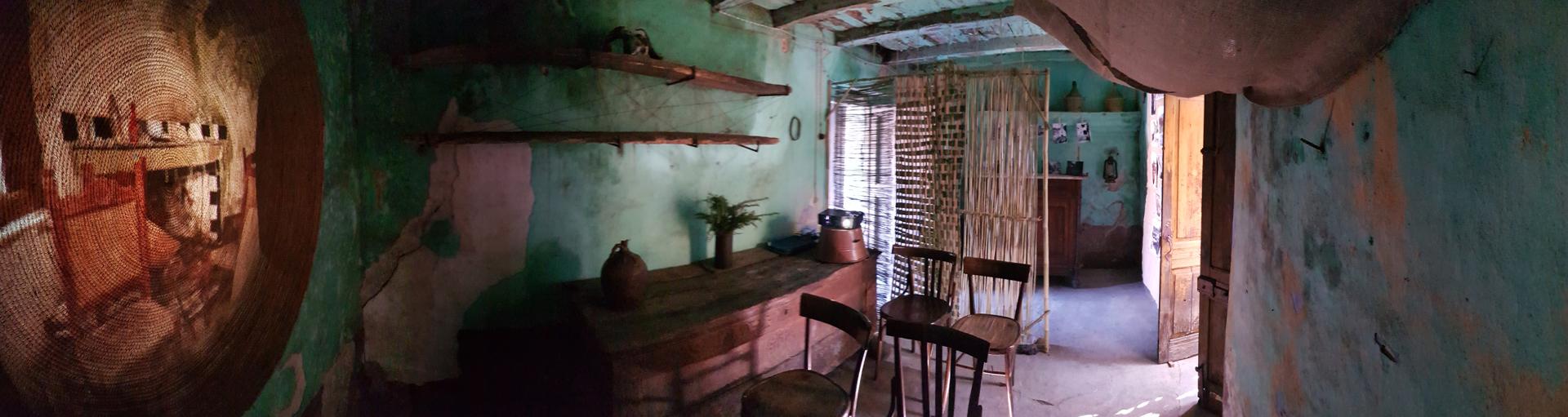
The Restart 2018 activities aimed to enhance the value of the ancient centre of Oliena and, more in general, the cultural and natural heritage of the local territory, developed through participated creative activities. Among these, the design of some art installations and settings was developed, to be constructed within a court named Mula, which represents a morpho-typological sample of the village's historic fabric. The inclusion of Mula Court in the itinerary of the festival Cortes Apertas, an event held in the village every year in the fall, assured the visibility and the artistic impact of the activity.
One of the main aims of the project was to generate an experience, immersive and relevant from an aesthetical point of view, which would allow local inhabitants to recognize the value of their tangible and intangible cultural heritage, going beyond its traditional significance of use.
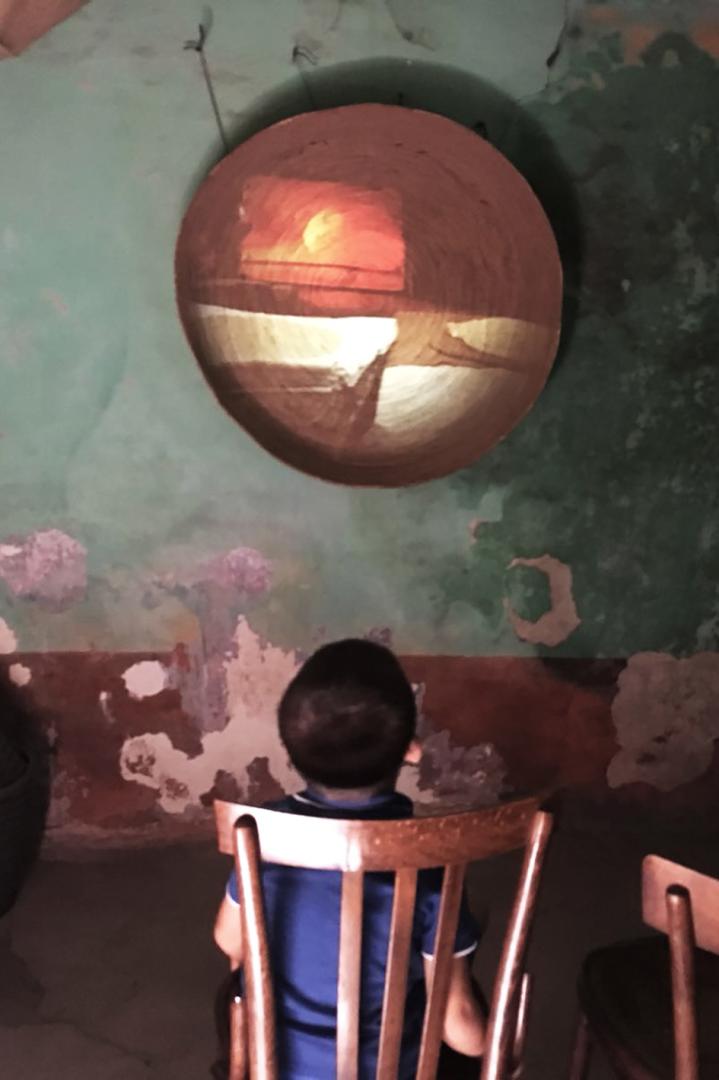
The contents of the installation, in fact, was inspired by guided visits to the surrounding cultural landscape and through a mutual exchange of suggestions and knowledge with the local inhabitants. This exchange led to the reinterpretation of the interior spaces of the Mula court with new meanings or uses lost in the memory to foster an immersive and engaging experience of visitors.
Another objective was to build a bridge between past and future of the local heritage, helping inhabitants and stakeholders imagining innovative meaningful scenarios in the contemporary and future culture and uses. The interdisciplinary and international character of the workshop, helped to foster this shift of perspective.
The third objective, connected to the previous ones, and of same relevance, was to encourage the formation of a sense of belonging to the community highlighting the aesthetic value of heritage and stimulating the need to take care of it and communicate it.
Key objectives for inclusion
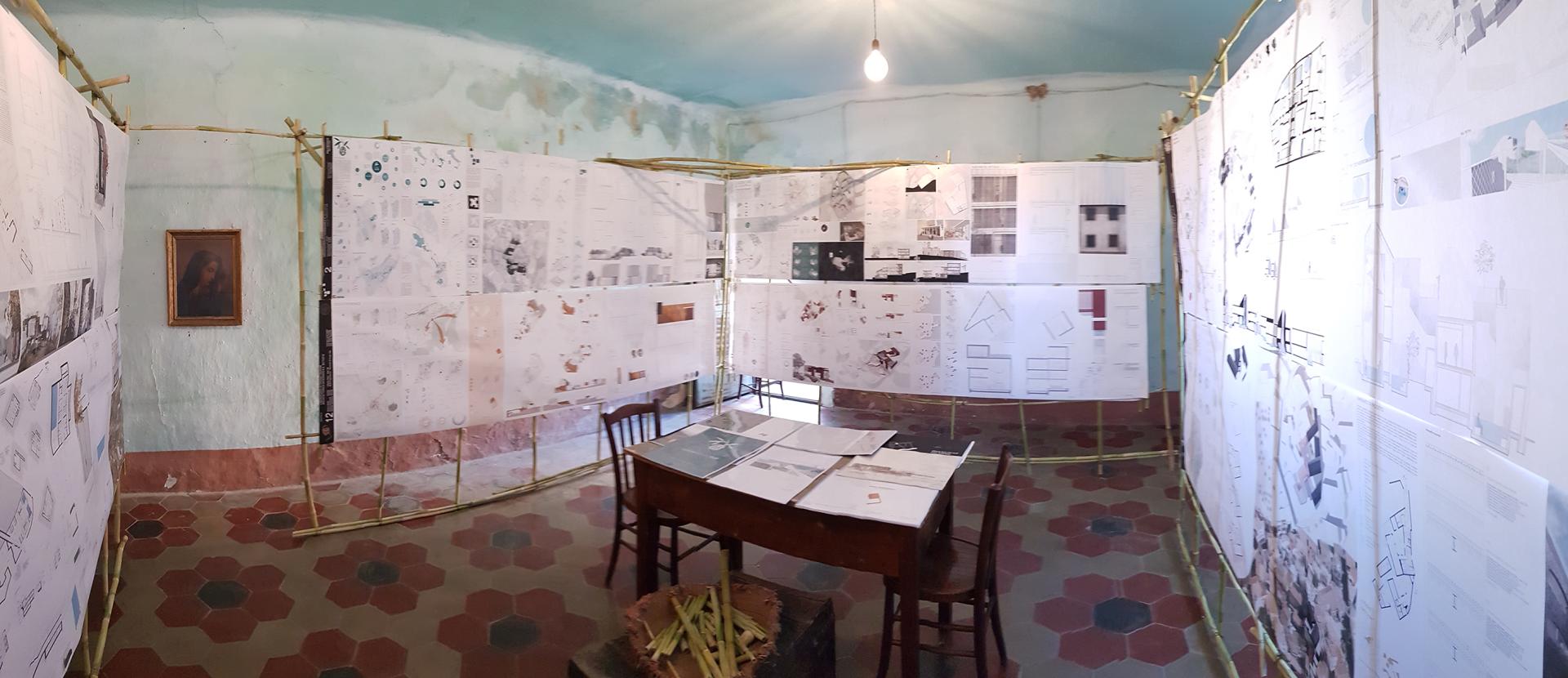
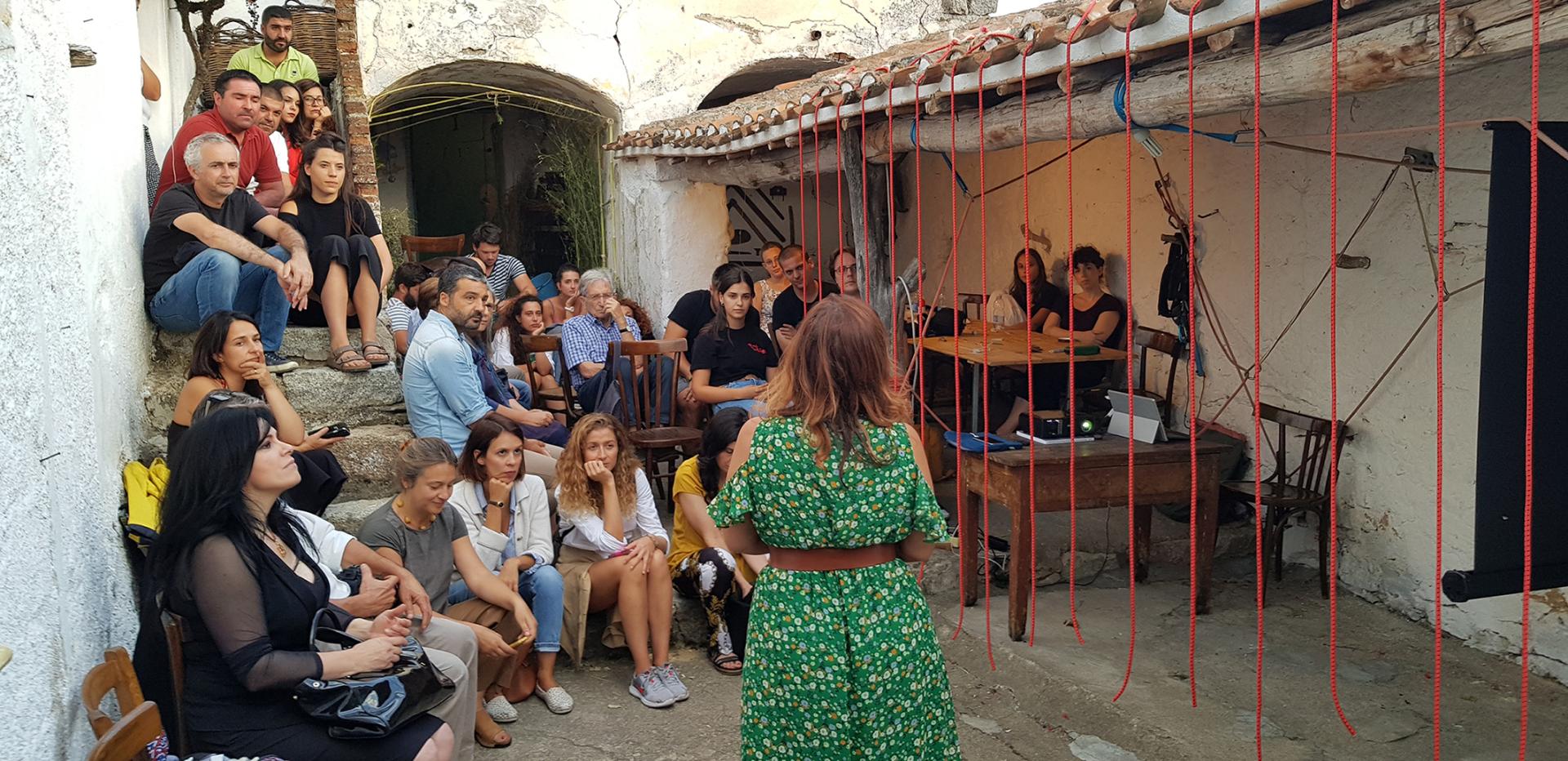
The event was conceived through the participation and the continuous exchanges with the local community addressed as the main instrument for the transformation: first, the goal of building, together with the inhabitants, a specific framework of demands and its system of communication. A first immersive learning phase was organized dedicated to the landscape and the local culture aimed, on the one hand, at tracing the uses and behaviours rooted in the history of the population, and, on the other, at identifying current trends and orientations in the use of the territory. This phase entailed the involvement of the Municipality, enterprises and local associations. Secondly, a week-long series of evening seminars was scheduled, open and much attended by the inhabitants of all ages to meet a multidisciplinary pool of scholars and artists dealing with case studies, experiences and intangible heritage values declined through models of actualization of the tradition on an international scale. Finally, the two temporary exhibitions: one, a collection of drawings and 3D models showing regeneration strategies (project + process design) developed over the years by Politecnico students illustrating the concrete feasibility of the results of the possible transformation. The second portraying themes and points of view to re-inhabit and envisage the cultural heritage and its enhancement through an artistic installation in an existing courtyard developed through the participated brief construction. Its building involved the community: they taught their traditional crafts and techniques employed in the set-up, and directly helped in the supply of natural materials and labour to physically build up the exhibition. The visiting experience by the citizens and the tourists during the weekend festival turned out to be an involvement experience as well, to identify values, share a sense of belonging to the place and understand the potentials of seeing things through different eyes.
Results in relation to category
Restart 2018 brought to the fore, through multiple modalities, the narration of a selection of elements of the cultural and natural heritage, of which local inhabitants are often not fully aware because it is acquired in their empirical knowledge and in the history still present in their everyday life. The presentation of this heritage, through the creative contribution of other disciplines and cultural approaches, presented in ways that diverge from the traditional sales activity that characterizes events and festivals in small towns, allows to recognize the value and uniqueness of this heritage and its dignity. Besides that, in addition to the activities planned within the project and the results in terms of artistic installations built in the Corte Mula, Restart 2018 provided for the creation of an exhibition of projects by students of architecture that confirm the feasibility of some local asset enhancement scenarios.
The experimentation of empathic narrative methods that brings detailed and personal perspectives constitutes one of the important factors of the activity carried out through Restart 2018. On the one hand, it allowed the mobilization of culture outside the local circuits and on the other hand it allowed the population to recognize oneself by building a shared awareness in the value of this heritage, a sense of belonging together with a sense of ownership.
By discovering and rediscovering the value of the existing cultural and natural heritage, the community was re-built through a logic of sustainability in which the human development approach proceeds exploiting finite resources efficiently, protecting and enhancing the environment and the quality of life.
How Citizens benefit
The organization and management of the Restart 2018 activities were carried out in collaboration with the inhabitants, thanks to the 'Oliena centro' association, formed as an innovative result of the previous Restart editions, aimed at instructing the construction of the awareness of the local heritage among the inhabitants. This collaboration favoured the involvement of the population in the construction phase of the activities, such as in the analysis and understanding of the complexity of the place. The project in fact included a cycle of seminars in which local excellences in artistic production and artisanship were invited, testimonies of local production characterized by high sustainability and attention to the territory, representatives of local institutions, the LAG Barbagia, the Municipality, etc. On the other hand, seminars also hosted academics who shared similar research experiences set in other geographical contexts.
As part of this knowledge transfer activity, an important role was played by inhabitants who accompanied the team on visits to the landscape, transmitting various contents, from the knowledge of local vegetation to the presentation of sports related to the local natural heritage such as climbing, hiking, downhill and mountain biking. The latter immediately generated in the minds of the guests a shift from the local scenario to an international dimension, restoring the complexity of the territory.
This relationship of mutual exchange of knowledge fostered some connections of meaning between distant places, similar in some aspects of a local nature that produced results in term of cultural heritage comparable to each other. This projection beyond the coasts of the island has enhanced the the opportunities for cultural and commercial networks, finally activating a process of self-awareness regarding the specificities and identity of the place.
Innovative character
The innovations experimented dealt with two aspects. The project was conceived and planned as a complex system of diverse activities, each involving the participation of the community, aimed at changing a long-lasting mindset: the lack of vision and trust towards the possible reuse and actualization of their heritage, and at strengthening the perception of the relationship between the tangible and intangible heritage. Two previous events had preceded the Restart 2018 project: a first activity (Sep. 2016) of awareness building: an informal round table set up outdoors in one of the urban courtyards, involving scholars and university academic staff, and addressing citizenship with the aim of discussing the theme of urban regeneration of the historic centre, its possible models and above all the related opportunities. A second event (Sep. 2017) followed, foreshadowing the potentials and possible physical transformation of the village, which was aimed at testing possible strategies for the reuse and revitalization of some sample blocks of the historic centre. Hence a methodological process was developed, employing a diverse set of different activities and design approaches based on the cultural exchange between locals and foreigners (researchers, young designers and architects), broadening the visions of both sides and thus developing an augmented, educated awareness of the partners’ cultural backgrounds. The creative shared exhibition set-up activity bears witness to this enriched experience demonstrating the grafted combination and synthesis of different cultures between tradition and future perspectives. The relationship between the temporary installation and the hosting architectural shell, attempted a balance between the communicative estrangement effect of the unusual objects exhibited, albeit made with traditional local materials and the recognisability of the architectural type through a sort of contamination of the courtyard.