Shifting Perceptions
Basic information
Project Title
Full project title
Category
Project Description
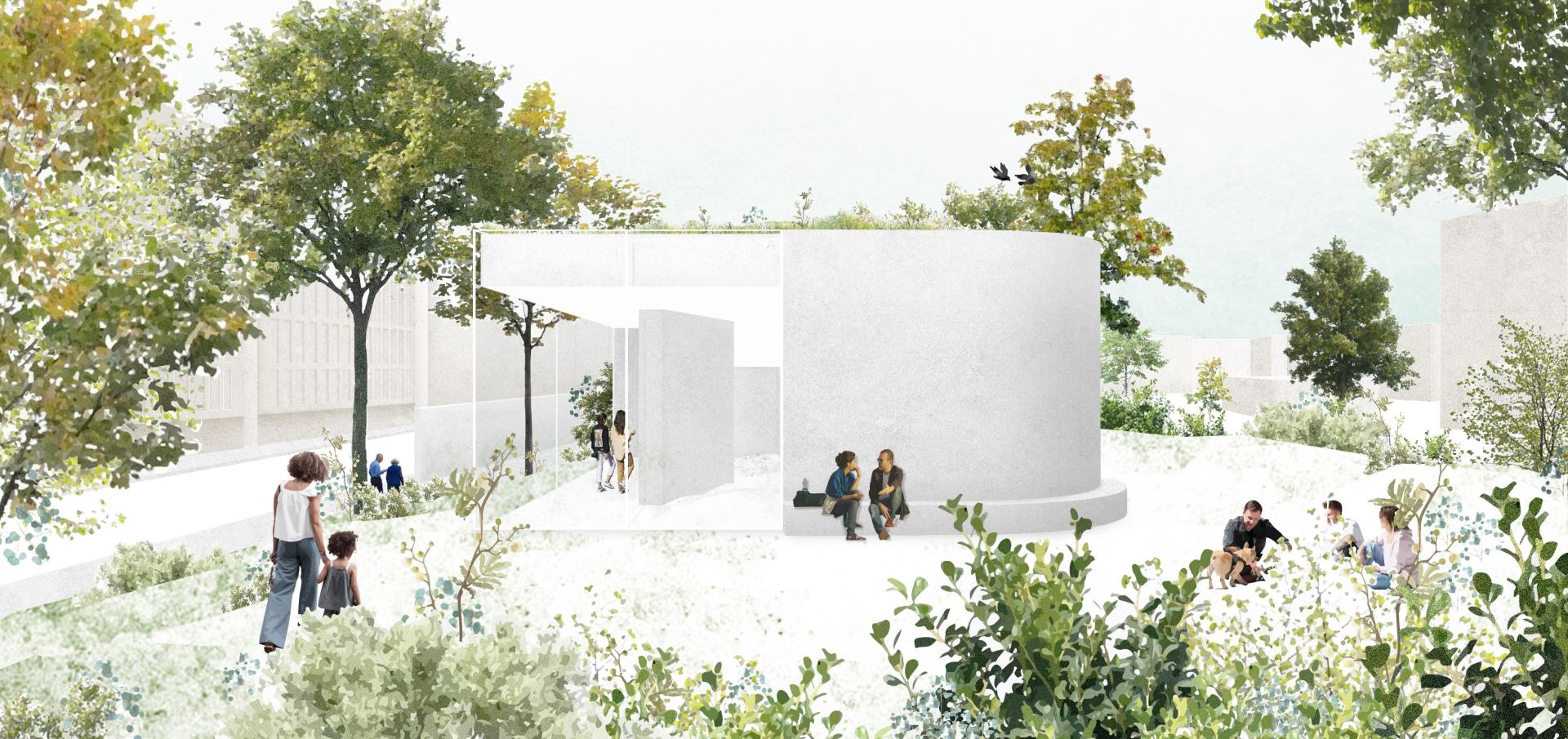
An educational refuge in central Vienna, has a potential of connecting the neighborhood and nature. The concept rethinks flexibility and its need of externally driven systems. Distancing itself from conventional planning, the building is conceptualized with no main organization. Achieving a unique interior by continuing the landscape within the building, the built and natural environments are seen as a harmonious whole, in which human movement and experience play a central role.
Project Region
EU Programme or fund
Description of the project
Summary
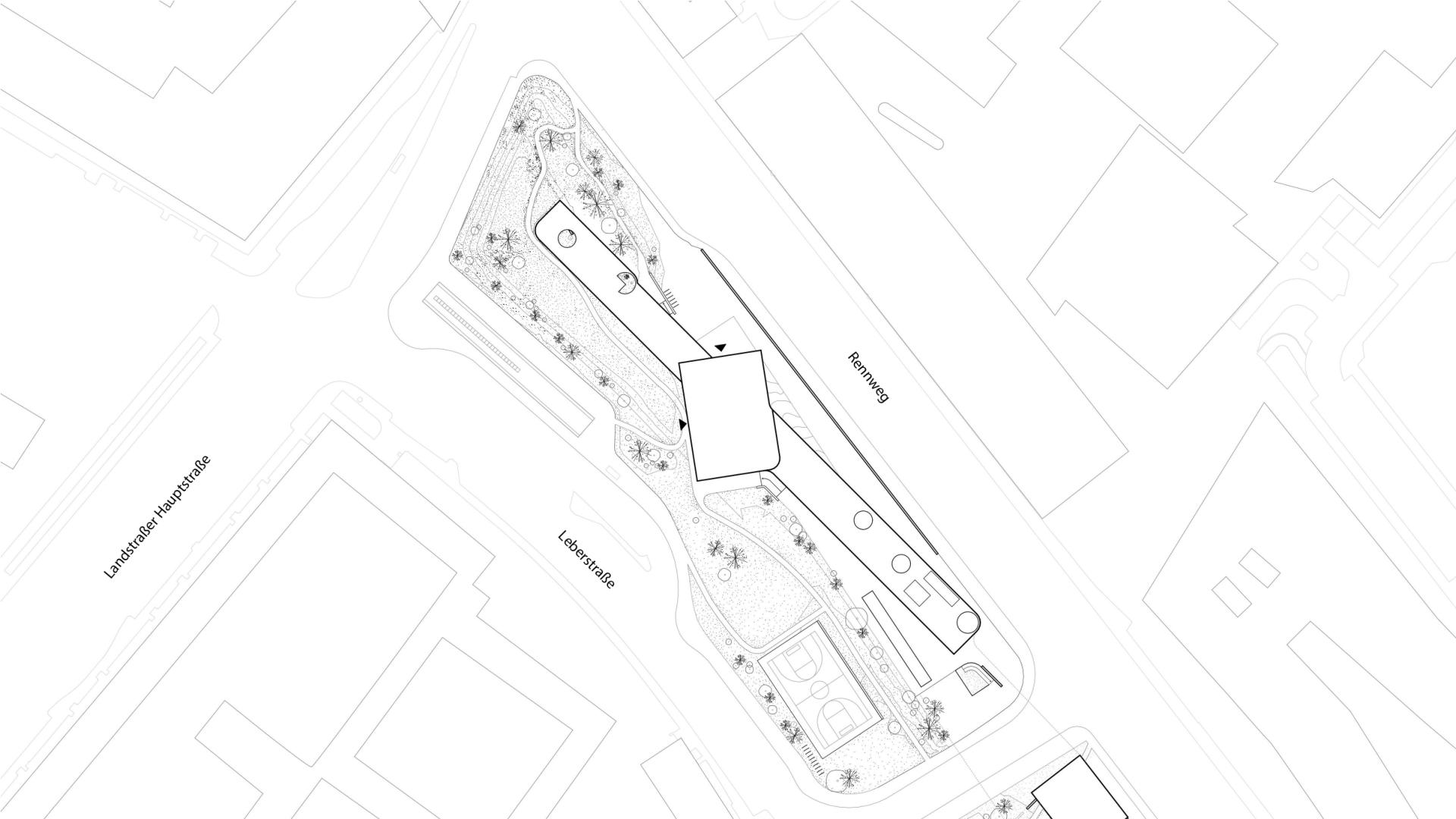
A seemingly forgotten island of wild greenery in a central area of the multicultural city of Vienna has a potential of establishing new links and connections between the neighborhood and the surrounding developments by implementing an educational refuge.
Most educational spaces are given a function and they only serve that sole purpose. The possibility of change and flexibility is very little to none. Even multifunctional spaces and flexible systems predetermine usage in their own flexibility and leave little room for free development by the users themselves.
A new typology which not only shifts the perception of existing spatial concepts for buildings of higher education, but also allows new educational concepts to develop to their full potentials and gain flexibility through the informality of spaces. Education must be based on the fact that the individual experiences of students cannot be replaced. Every student can choose how and where he wants to work, meet, connect and live. The project strives to merge sciences, arts and craftsmanship in one space.
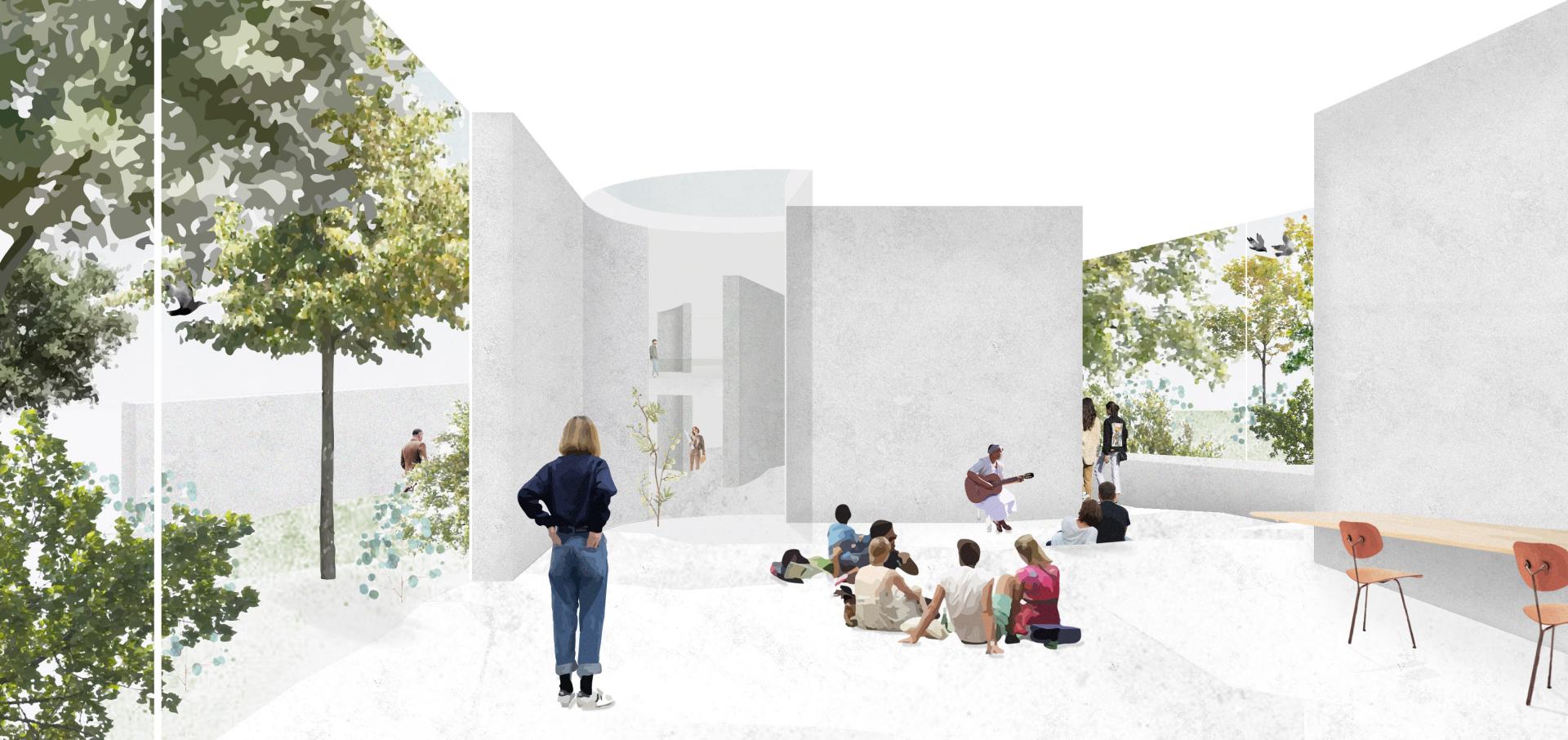
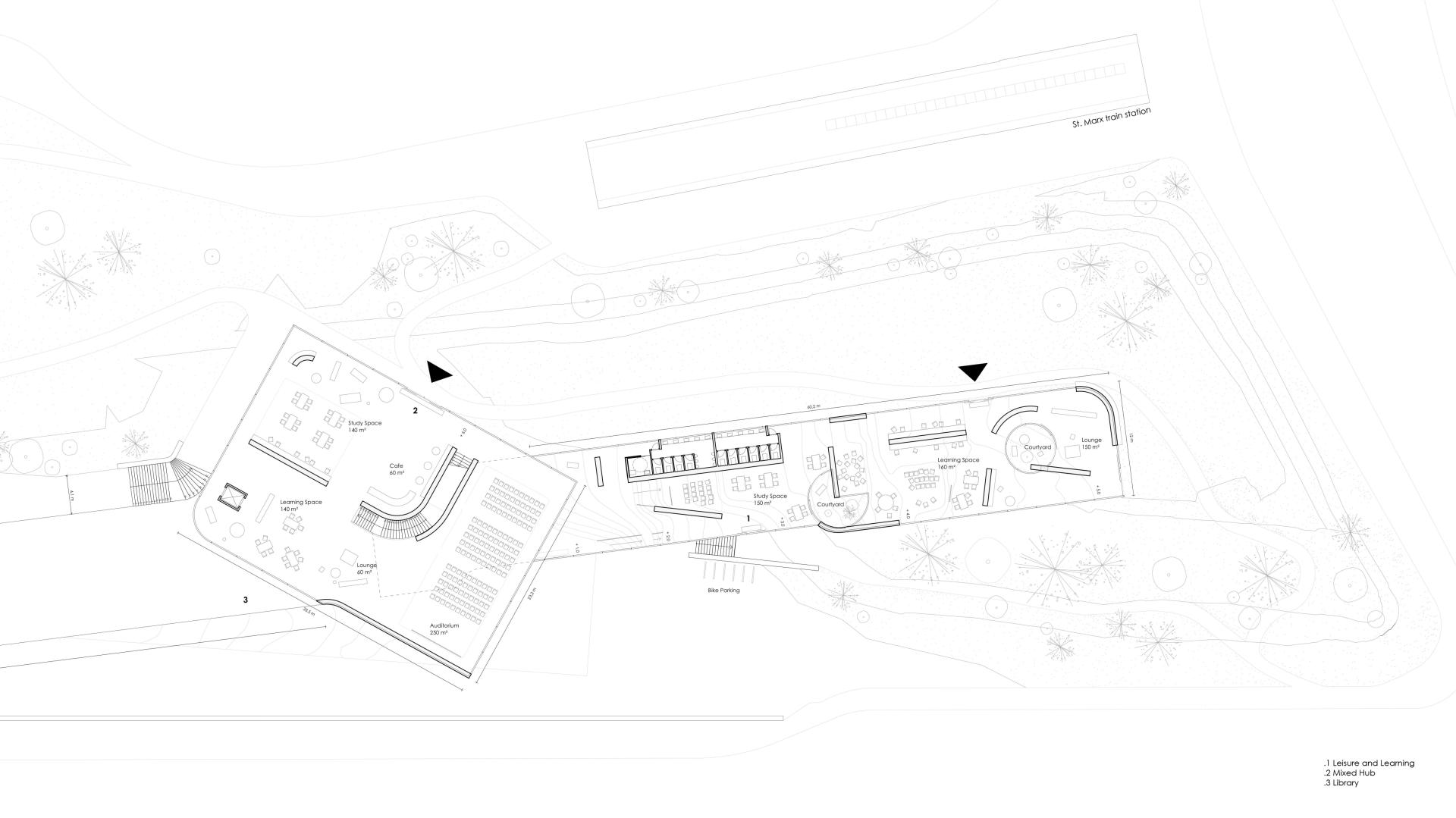
The goal is to create a continuous, non-restrictive space, that hints different functional areas without determining them. Built environment through open and informal planning, allows users to choose the function and the meaning of a space without additional organization. Spaces of different qualities on a built landscape dissolve boundaries between inside and outside and create a freely accessible floor plan between levels for all.
Key objectives for sustainability
In a cautious approach layers are added to the existing narrative of the place instead of creating a new one, after determining the potentials of the surrounding, such as drastic changes of scale and the distinctive topography on site. Furthermore, the natural environment is an enclave, secluded between the vast concrete surface and the built environment.
Meticulously positioning the new building into the existing built space creates a link between the greenery and the urban context, making the wild, unused nature become more accessible and expand with and within the newly built. The concrete area, which was dedicated to car dealerships and the car industry, is repurposed and scaled down as a solution for the dense concrete surrounding in need of additional vegetation.
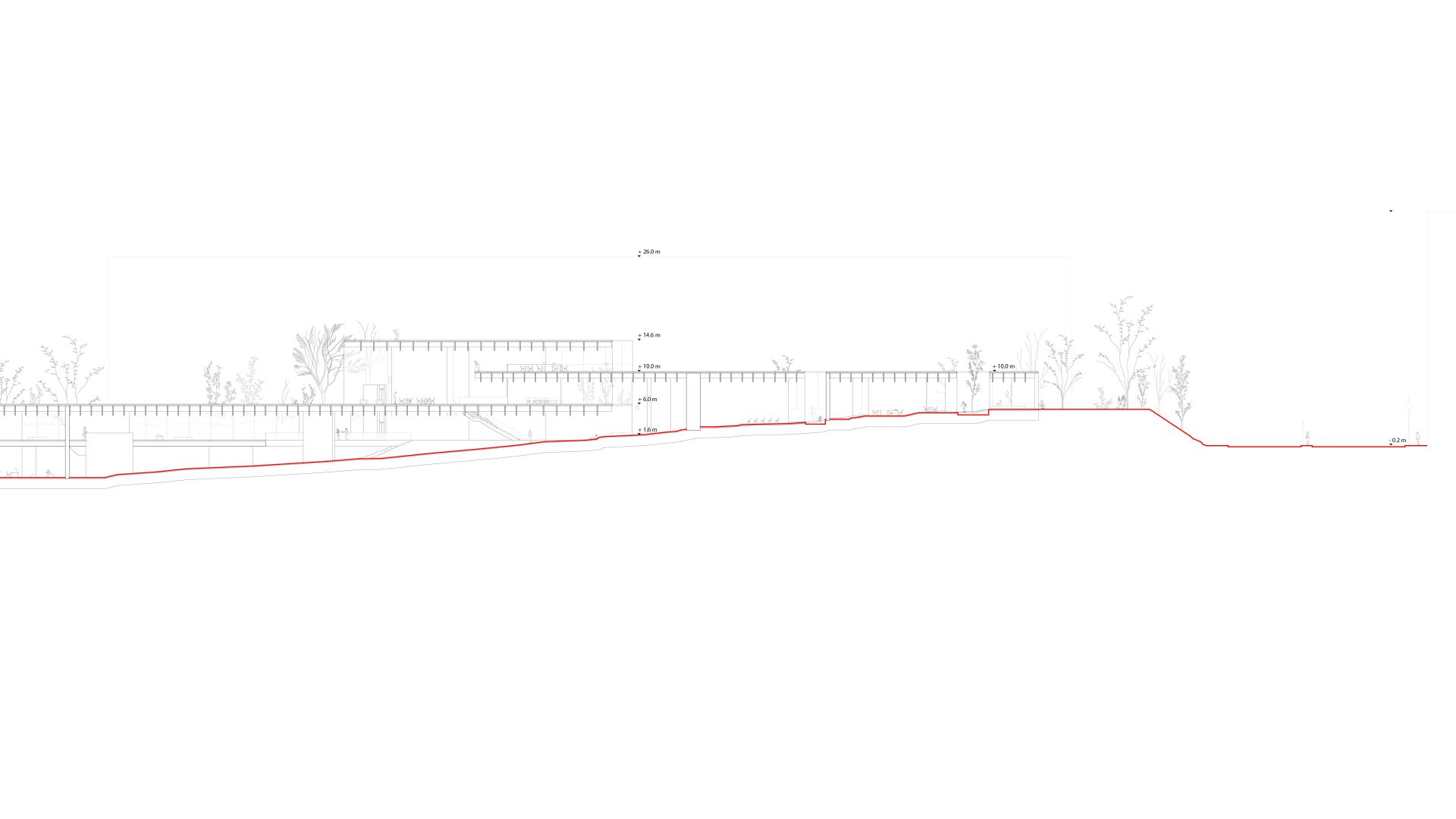
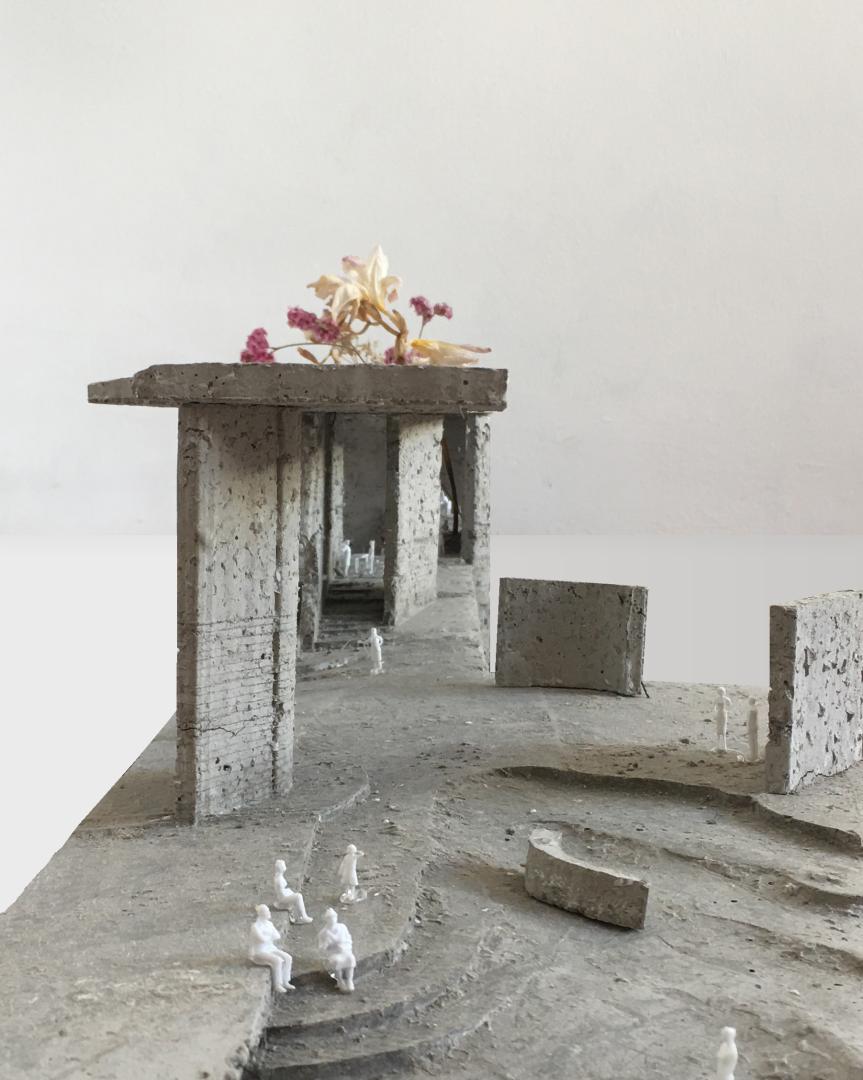
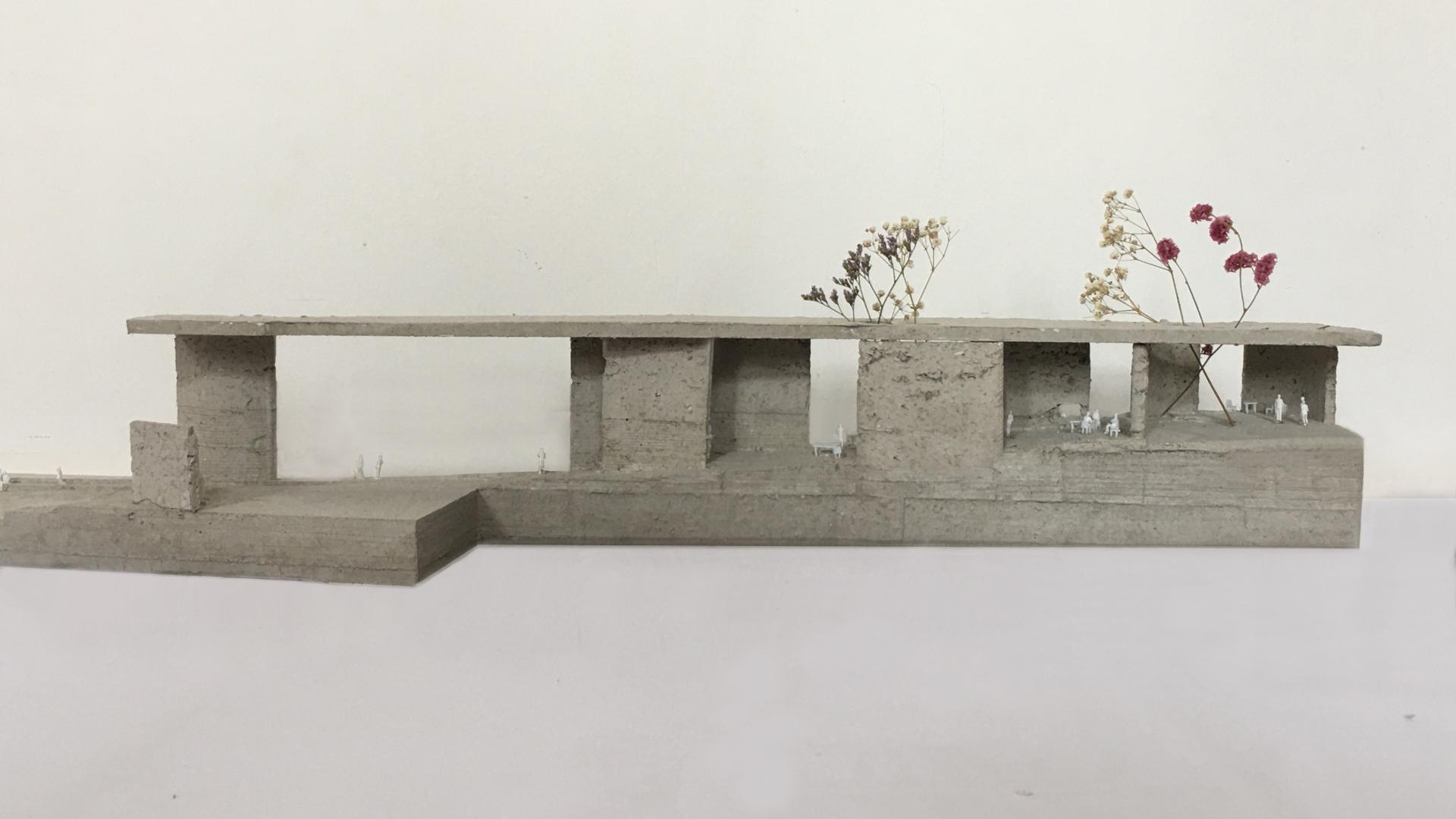
Aiming to merge the natural and built environment, the topography on site is continued in the building, mitigating the existing level differences. The new space is conceptualized as a continuous layer added to the existing, that should expand and accentuate the unusual biodiversity within the city by leaving the greenery as untouched as possible. Additionally, green courtyards of varying sizes and greenery on the roof create a pleasant microclimate, providing a refuge for the users, by-passers and the entire neighborhood.
Key objectives for aesthetics and quality
The space is seen as whole. Freely accessible spaces which dissolve the boundaries between inside and outside with different qualities such as varying sizes, acoustics, illuminations, forms, transparencies and visual connections, that are free from any predetermination of usage, allow a variety of functions.
The building fit into the topography consists of two levels and an underground. The continuous built landscape through the whole building, merges all levels with the natural topography. Without conventional connections, spaces interlink with each other and create areas that can be used differently. By encouraging human movement, the user is invited to discover and explore the space. Flexibility is achieved by giving the community a sense of ownership of space, allowing its members to freely determine how to use it.
The underground spaces consist of larger and more defined spaces. The direct connection to the outdoor is generated through courtyards which also serve as bigger outdoor-gathering and leisure areas within the building. Both direct and indirect light comes from these openings, allowing the building to breathe.
Key objectives for inclusion
Due to its proximity to public transportation such as the rapid transit train to the airport and the city center as well as other bus and tram lines, the refuge invites a variety of users from different sectors of life.
People from all backgrounds, ages, educational and social classes are invited to explore the space and landscape in contrast to the rigid spatial construct of existing universities which restricts each individual to its spaces of action and sometimes even how to access them. The building serves as a mediator not only in the urban scale but also between different classes and businesses, by giving a chance of visibility and a voice to everyone.
Through the achieved spatial flexibility the need for space, therefore the building costs are reduced.
Results in relation to category
The concept rethinks the idea of flexibility and its need of other-directed systems, allowing the user to gain a central role. Distancing itself from conventional planning of higher education, the building is conceptualized with no main organization. Achieving a unique interior by continuing the landscape within the building, built and natural environments constitute a harmonious whole where human movement and experience plays a central role.
How Citizens benefit
Phase 0
- Promotion of the idea in social media platforms
- Gaining public recognition by presenting the concept to various communities
Phase 1
- Presenting the idea of a new alternative educational space in the city to universities and other educational organizations
- Informing the locals and the neighborhood
- Further research and development of the idea with the public
Phase 2 (after May 2022)
- Forging partnership with eligible architects and collectives
- Seeking funding and support by the municipality and the businesses in St Marx for establishing a prototype of the idea
- Creating a platform of exchange for the involved parties
Phase 3 (future)
- Potential construction of 2000 m², consisting of a library, learning and communal spaces.
Innovative character
The concept rethinks the idea of flexibility and its need of other-directed systems, allowing the user to gain a central role. Distancing itself from conventional planning of higher education, the building is conceptualized with no main organization. Achieving a unique interior by continuing the landscape within the building, built and natural environments constitute a harmonious whole where human movement and experience plays a central role.