MI.MOMO.FARO
Basic information
Project Title
Full project title
Category
Project Description
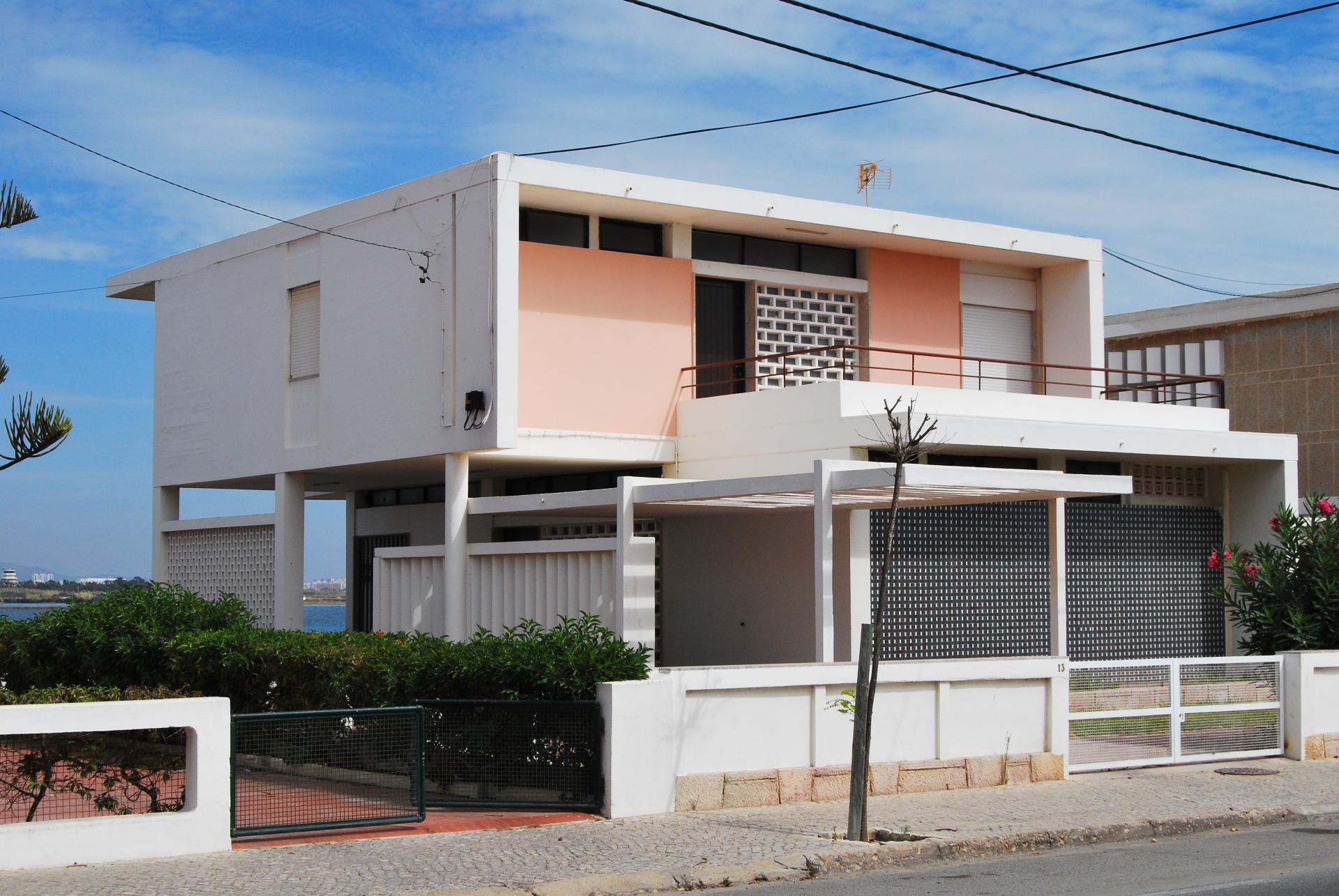
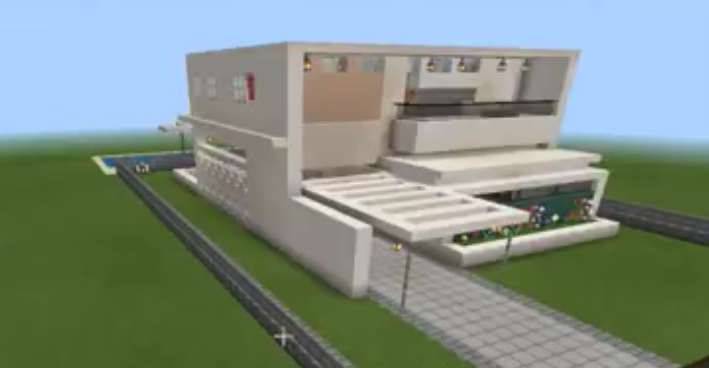
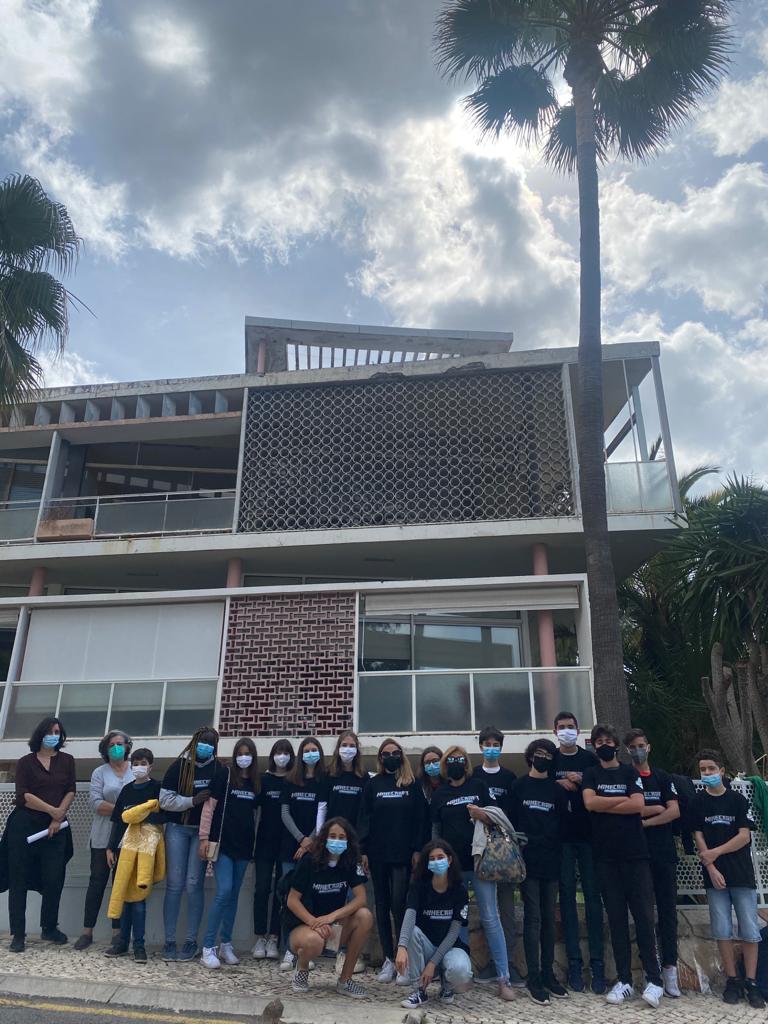
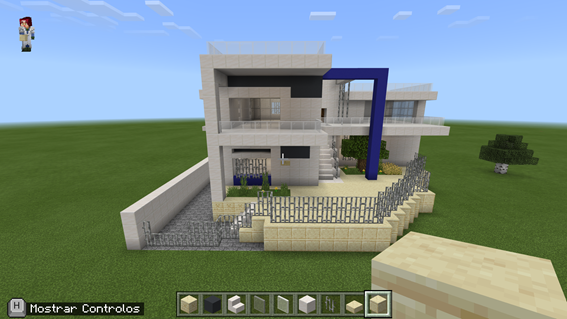
MI.MOMO.FARO is an educational project which aims to meet the spirit of the Faro Convention and the local cultural strategy. It fits into the theme of cultural heritage, with a strong educational component, in which students are challenged to explore various buildings of the Modern Movement of Faro through Minecraft: Education Edition, based on an interdisciplinary vision articulated to school curricula, using new digital technologies and the game based learning method.
Project Region
EU Programme or fund
Description of the project
Summary
Developed by Faro 2027 and the Municipality of Faro, MI.MOMO.FARO is an heritage education project that explores 21st century skills through Project Based Learning and Game Based Learning approaches, in order to bring Heritage into the school curriculum, promote involvement in this process, enhance heritage education through digital skills and promote the understanding of this 20th century architecture as cultural heritage. It aims to meet the spirit of the Faro Convention and the local cultural strategy, fitting the theme of cultural heritage, with a strong educational component, in which students are challenged to explore various buildings of the Modern Movement of the city through Minecraft: EE, based on an interdisciplinary vision articulated to school curricula, using new technologies.
The main objectives are:
- To contribute to the enhancement of Faro cultural heritage;
- Enhance heritage education through the use of digital skills;
- Promote the understanding of Modernist Architecture as cultural heritage;
- Empower students, teachers and schools through contact with new learning dynamics (game based learning);
- Foster collaborative work between teachers and students; To provide teachers with integration and participation in communities of educational practices at European level;
- Raising awareness of the importance of skills in terms of communication, creativity, curiosity, and solving complex problems through the project based learning pedagogical approach;
- Awaken a new look at their own city and thus increase the "sense of belonging".
It is mainly addressed to the school community (12-16 years old) of the 6 basic schools of the municipality, having an interdisciplinary basis, with teachers from different areas, promoting an articulation with the school curricula. So, the teachers give the expected subjects, through the game and the exploration of this theme, making cultural heritage and education more democratic and participatory.
Key objectives for sustainability
With regard to the issue of sustainability, our goals with MI.MOMO.FARO was:
- to raise awareness of the importance of the architecture of this recent past, which strongly characterizes the urban landscape of the city. With this call for attention, we were able to notice a greater valorization on the part of young people, who, when they understood the value that this architecture assumes, expressed an increasingly attentive look and concern, which will certainly contribute to its preservation in the future;
- share knowledge regarding the characteristics of the architecture of the Modern Movement of the city, with the functional character that characterizes it and markedly adapted to the climate of the region, by using different solutions, valuing climate issues and the environment, and promoting a greater and better utilization of spaces. This was also a decisive factor in making young people understand the importance of sustainability in architecture and and how it can take advantage of the environment itself;
- on the other hand, promote new pedagogical approaches using digital technologies, with a view to contributing to the Digital Transition. This was also one of our concerns in terms of sustainability, opening schools to new resources and methods.
Key objectives for aesthetics and quality
With regard to the aesthetics and quality of experience beyond functionality, which in this case so characterizes the Architecture of the Modern Movement, MI.MOMO.FARO aimed to:
- promote the understanding of this Architecture as a source of artistic and creative inspiration, by the architectural languages used and the introduction of new features at the time: articulation of different volumes and materials, on a strongly humanized scale that made young people understand that it was Man himself and his needs that were the true sources of inspiration for this way of making architecture;
- contribute to the appropriation of the aesthetics inherent to the architecture of the modern movement, often seen as strange at first sight, especially by the youngest. Initially, they did not appreciate or identified with it and throughout the process, several expressed their desire to buy and live in a modernist house one day;
- draw attention to the various possibilities in terms of the use of different materials, especially in the case of Faro, in which local materials, mostly seen as «traditional», are widely used, highlighting the use of modern tiles, which play an extremely important role in the architecture from the 50/60s of the 20th century in Portugal. The students understood how the materials themselves, combined with the design of the spaces, contribute aesthetically and functionally to the poetics and architectural harmony, and how a simple geometric tile can change the experience and living of a space.
Key objectives for inclusion
Regarding the inclusion and the way that MI.MOMO.FARO promoted it, our goals were:
- enhance the democratization of culture and cultural heritage, alongside education, meeting the Faro Convention and taking these issues into the public schools of the municipality. In many of the young people, at an early stage, there was a lack of knowledge and distance from subjects of this nature;
- consequently, promoting access to and participation in these issues, regardless of their cultural and educational background, through a playful pedagogy using the game Minecraft: Education Edition, which has greatly contributed to removing these barriers in an unconscious way;
- contribute equally to the access of all to new technologies in the context of teaching and learning, giving everyone the opportunity to use them, regardless of having them in the family context;
- foster a more playful education, eliminating some learning barriers, as students learned "without realizing it" while playing the game, which allowed many to not feel that they were learning and, consequently, to leave aside some difficulties and prejudices that they would have at the outset.
It was our intention to promote education through the arts and heritage that is more inclusive and participatory, using new technologies.
Results in relation to category
MI.MOMO.FARO had excellent results as an interdisciplinary education model, showing a fantastic articulation with the school curriculum that led to greater enthusiasm and satisfaction on the part of students and teachers, the latter receiving specific training on the use of Minecraft: EE applied to cultural heritage. Especially the students mentioned that it was a great motivation to learn about the disciplines and about this heritage, simultaneously, highlighting the ease with which they learned in a more "relaxed" way, through Minecraft.
The fact that it is an interdisciplinary project, which encompassed the most varied disciplines (ICT, Mathematics, Chemistry, Physics, Sciences, Visual Arts, and Languages such as French and Portuguese) allowed us to understand that cultural heritage can and must be part of a transversal education and school curricula.
In addition, through this project and the project and game based learning approaches, we are able to enhance the development of the 21st century competencies/skills (creativity, problem solving, curiosity, critical thinking, collaboration, communication, etc.) and promote community spirit between teachers from different schools, strengthen relationships between students and teachers, as well as between the municipality and the different schools.
Both teachers and students were more open to future projects of this nature, having aroused a great interest in teachers and students who did not participate in this first edition. Thus, through partners such as Microsoft, Europeana, Kaunas 2022, National Plan for the Arts and the Regional Directorate for Culture of the Algarve, a 2nd edition is already planned for the academic year 2021/2022, with the expansion of the project to other schools in the Algarve, to more students and teachers, and an internationalization phase, with a group from Mozambique and Kaunas (Lithuania).
How Citizens benefit
Citizens and civil society were involved in MI.MOMO.FARO through the online parallel programming that took place online, with panel discussions about Faro as a modernist city in southern Europe, which featured architects specialized in this modernism so characteristic of the Algarve, and the living in these modernist houses, with the participation of several owners who shared their experiences of feeling and living this architecture. The fact that they took place online aroused the interest of the civil community on the topic, having actively participated in the various streamings, asking questions or leaving suggestions for future initiatives.
This awakening to the Architecture of the Modern Movement of the city led to the emergence of several initiatives, not directly related to MI.MOMO.FARO, on various aspects of this architectural movement in the city, thus being able to affirm that we managed to contribute to a "non-formal education" of society in general, which was impacted and influenced by the educational project.
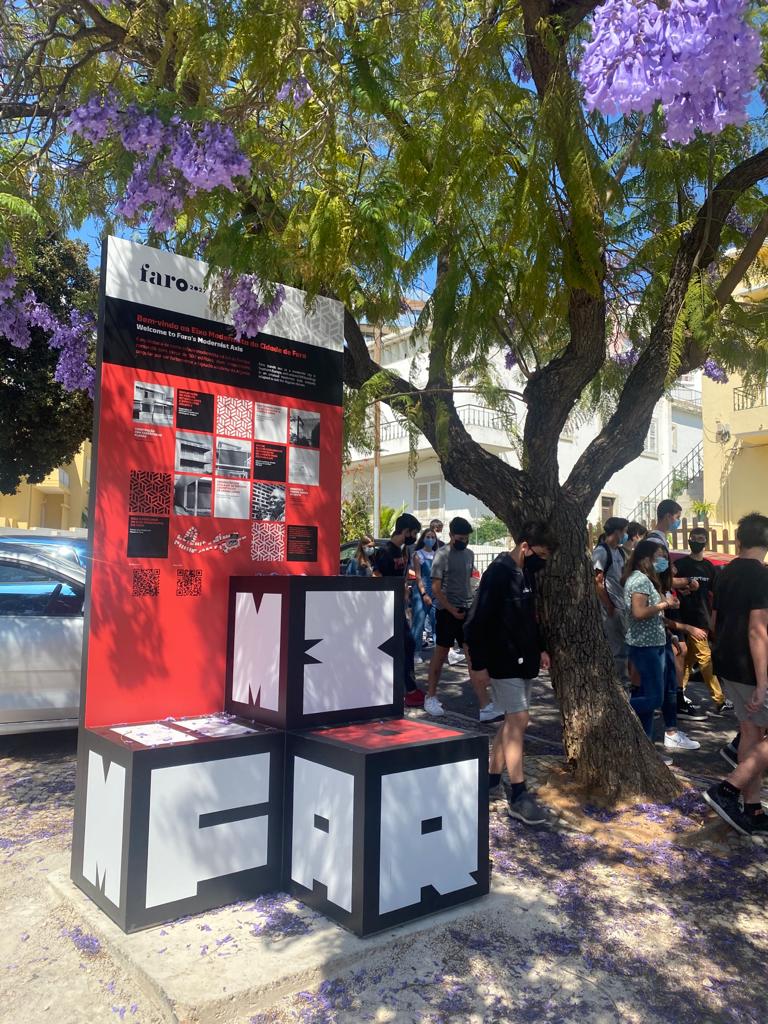
The owners of the buildings explored by the students were contacted about the existence of the project and several showed their satisfaction, due to the growing appreciation of their houses. There were also guided and technical visits to the city that led students to get closer to the city and, consequently, to the community itself. To complement the project and connect it to the city itself, a totem depicting MI.MOMO.FARO was placed next to the axis classified as of municipal interest, due to its architecture, where those who pass through there can find more information about the project and the architecture of this period.
This is how it approaches the community of Faro. In general, we can affirm that with this project we have been able to get a new look at the city itself, by a large part of the school and civil community, as well as to develop a greater sense of belonging, valuing the work that had already been done by the axis classification
Innovative character
The innovative character of this project is mainly related to:
- the use of a game like Minecraft: Education Edition in the context of teaching-learning, using the game based learning approach, which allows for a more playful and equally consistent learning;
- the promotion of the theme of cultural heritage as possible to be part of a transversal education, capable of being worked on by any of the disciplines in conjunction with the subjects provided for in the school curriculum;
- the implementation of an interdisciplinary model through digital technologies, which connects the most different areas/disciplines, strengthening relationships between teachers and between students and contributing to the Digital Transition in schools;
- the prospect of continuing the project for at least 3/5 years and the possibility of extending it to other topics, since normally this type of projects are only punctual and do not tend to extend over time.