Estonian Centre for Architecture
Basic information
Project Title
Full project title
Category
Project Description
Estonian Centre for Architecture (ECA) is a cultural platform for everyone who wants to experience and understand how architecture and design contribute to our lives. ECA takes action for sustainable, attractive and diverse living environment through exhibitions, tours, events, learning and networking activities, by creating space for inspiration, enjoyment and immersion. Promoter of critical (non-/peri-)urban discourse, ECA dares to surprise and provoke, while connected globally and locally.
Project Region
EU Programme or fund
Which funds
Other Funds
ECA has over the years since its founding in 2008 received altogether approximately 2MEUR support from the ERDF through Enterprise Estonia measures to support creative industries.
Description of the project
Summary
Estonian Centre for Architecture (ECA) was established in 2008 by the Estonian Academy of Arts and the Estonian Association of Architects. ECA’s mission is to raise awareness about how quality architecture and urban space contributes to the well-being of everyone. ECA’s goal is to integrate the knowledge and competence of architecture sector with other fields in our society, thus enhancing the development of both the field of architecture as well as the society at large. They cross borders and take down barriers to reach new audiences. They engage organisations as well as individuals and work simultaneously on local, national, regional and global level. The key partners in Estonia include the city governments and local municipalities across the country, several ministeries, companies and entrepreneurs, to generate synergy for creation of a better living envrionment.
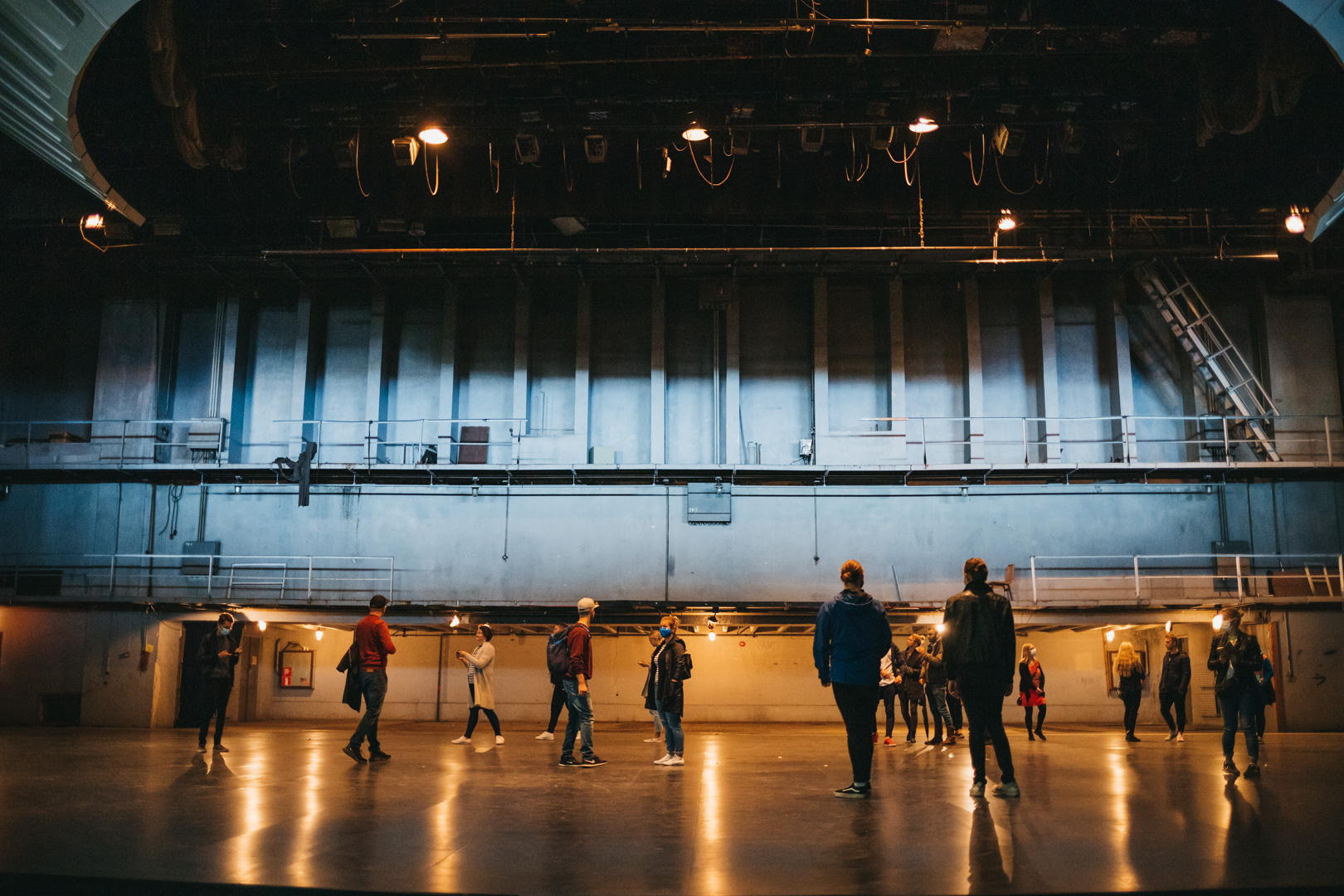
While working side by side with Estonian architects and developers, as well as promoting internationalization of Estonian architecture, ECA bridges diverse sectors and acts as an independent broker between all parties responsible for the development of the living environment. The main activities include organising the international festival Tallinn Architecture Biennale, the City Fora (Linnafoorumid), Open House Tallinn, various tours, exhibitions, so-called „lighning“ lecture series („Välkloeng“), training courses for both the public and private sector, screenings, seminars and workshops, advancing export opportunities of Estonian architecture studios, as well as coordinating and producing the biannual Estonian exposition at the international Venice Architecture Biennale. The activities include educational and other events that promote social cohesion, addressing both the Estonian and Russian communities as well as the minorities in the country. ECA also operates an inspiring event space in creative hub Kultuurikatel in a former power plant on Tallinn waterfront (https://kultuurikatel.ee).
Key objectives for sustainability
ECA acts as a platform to discuss sustainability from multiple angles, encouraging through its programming the consideration for the use of natural resources, biodiversity and emissions in the field of planning and building activities, including the handling of the limited resources of land and materials. Additionally, mobility is addressed by many of the events, as it has a strong influence on the environment and needs to be reconceptualised in regard to its sustainability. ECA’s main events target the integration of buildings and infrastructures into the landscape as well as the preservation of protected areas and objects, where place quality includes the landscape scale with its significance for people’s identification and place attachment. ECA often provokes and intrigues the public at large to think of alternative ways to sustain the equilibrium of our ecosystem.
For example, Tallinn Architecture Biennale 2017 edition „bioTallinn“ (https://2017.tab.ee/biotallinn), curated by Claudia Pasquero et al, challenged typical assumptions of what constitutes the boundary between natural and artificial realms. Rather than considering nature as a balanced system, that is perturbed and derailed by human action, bioTallinn assumed that there is no nature. It declares that ecosystems themselves are the product of an accumulation of catastrophic events, that give origin to new dynamic equilibria. bioTallinn presents a radical revision of the contemporary Urbansphere by suggesting novel terms for its coevolution with the Biosphere. TAB 2017 explored the city as a territory of self-organization and co-evolution of multiple dynamical systems, including ecological systems, infrastructures and technological systems, social groups and political systems. The convergence of biotechnology and information technology applied to landscape and urban design is considered by many pioneers as one of the most promising future developments for our society. TAB 2017 provided a showcase for it.
Key objectives for aesthetics and quality
Profound consideration of the aesthetic and experiential aspects of the perceived living environment is inherently built into ECA’s programming.
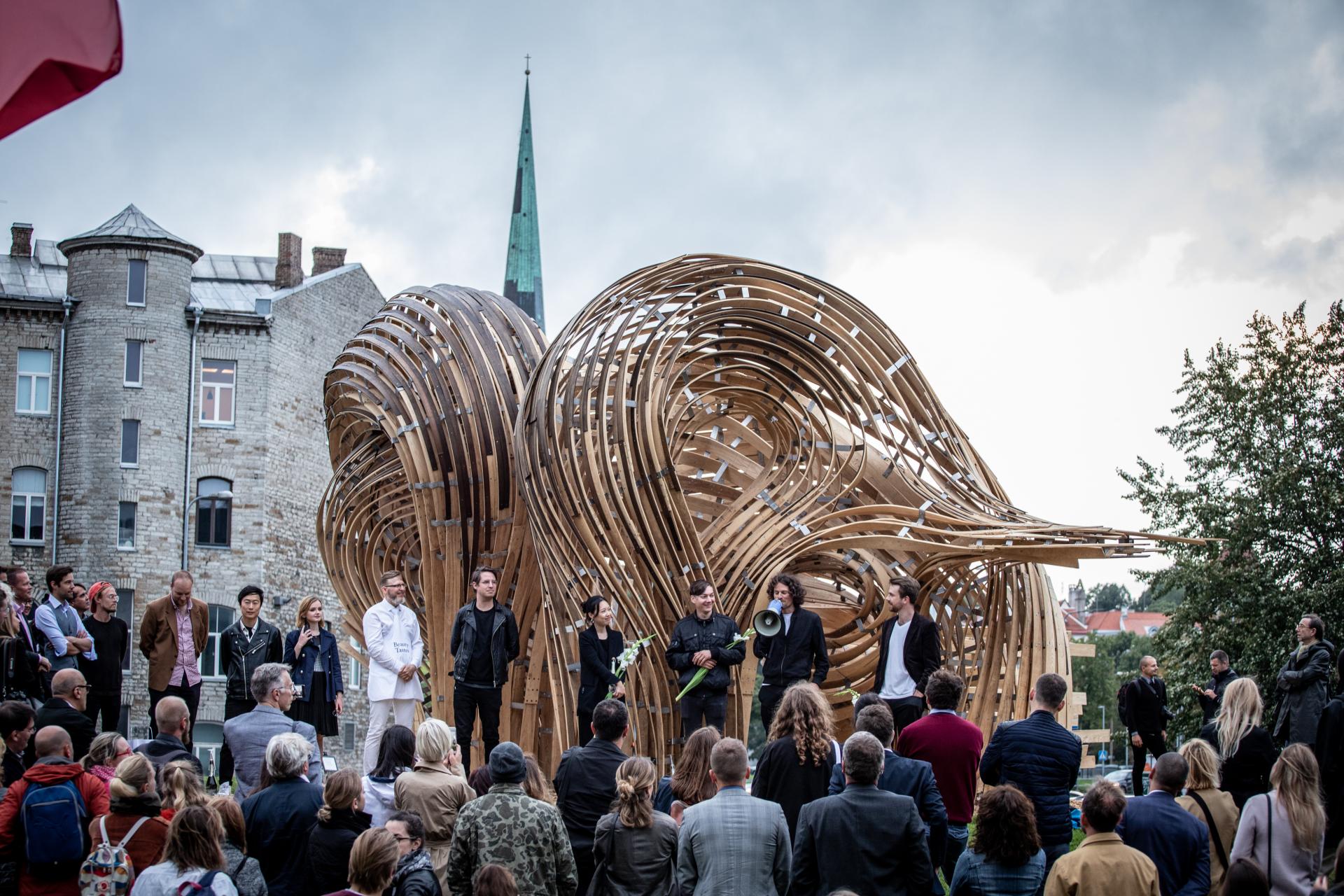
The best example would be the edition of Tallinn Architecture Biennale TAB 2019, titled “Beauty Matters: The Resurgence of Beauty”, curated by Dr Yael Reisner. TAB 2019 explored Reisner’s research interest of the last decade—the troubled relationship between architecture and beauty. TAB core programme consists of five main events: Curatorial Exhibition, Symposium and Vision Competition (all curated by TAB head curator), an International Architecture Schools’ Exhibition and Installation Programme. The key message of TAB 2019 edition is that after 80 years of aggressive suppression of engagement with aesthetics, the temporarily dormant preoccupation with beauty is back. This is evidenced by a current cultural shift from the supposedly objective to an emerging trust in the subjective—a renewed fascination for aesthetics supported by new knowledge emanating simultaneously from disparate disciplines. Digital design continues to influence architectural discourse, not only due to changes in manufacturing but also through establishing meaning. The very term 'post-digital' was introduced by computational designers and artists, who accept that digital gains in architectural design are augmented by human judgement and cognitive intuition. Under the guidance of Reisner’s curatorial team, the TAB 2019 edition took an interdisciplinary approach to this re-emerging interest in beauty across neuroscience, neuroaesthetics, mathematics, philosophy and architecture, while discussing the work of the international architects, in both practice and academe, who are generating new aesthetics.
In ECA's view, professionals and experts must engage in an ongoing, broad debate on what is or can be perceived and judged as “beautiful”. Altogether, ECA fosters lively discussion and debate on aesthetics at different levels.
Key objectives for inclusion
ECA's central position in curating the discussion in the society on the matters of the living environment means that all acitivities must be inclusive of multiple governance levels, variety of stakeholders and all users of the built solutions, i.e. everyone. Such role can be best described through by City Fora (Linnafoorumid) organised and initiated by ECA between 2010-2018 in various cities and towns across Estonia, among them Tallinn, Tartu, Narva, Rakvere, Pärnu, Viimsi and Haabneeme. City Fora are two day workshops with locals, architects and other professionals from various related fields, interest groups and stakeholders focus on specific issues concerning the local urban space. The format is open to everyone and the results have been publicly presented. Since the results of the discussions are well documented, the fora comprehensively capture the development and history of urban planning in Estonia. Urban planning in itself is thoroughly regulated by law, both as a process and a phenomenon. In addition to formal urban planning, urban changes are influenced by informal discussions, activities and communication with the public. It has been crucial to approach the formal planning system with an alternative view by engaging key target groups in public discussion and to inspire the participants to think outside the box, with the help of expert knowledge on (r)urban matters. Altogether, City Fora engage architects, urbanists, municipality representatives, researchers and experts, business companies and cultural organisations, neighbourhood organisations in a curated discussion about our living environment. Above all, the fora are open to all interested individual citizens. Bringing people together by a carefully curated conversation paves the way for intertwined synthesis of different arguments and thus arrive at a quality solution for as many users as possible.
Results in relation to category
´ECA’s activities have been recognised at the national level in multiple occasions. For instance, the Estonian Cultural Endowment awarded ECA’s City Fora the Annual Prize for Architectural Activity in 2010. The award went to ECA for conducting city forums, i.e. for initiating a series of multiple stakeholder workshops on (r)urban planning, focused on site-specific issues and seeking a dialogue between all interest groups and stakeholders. By addressing a specific spatial development challenge in the city or town, the aim of creating discussions is to generate ideas for raising the quality of the living environment.
In the light of the small size of Estonia, ECA's activities have has a signifiant impact on the society, engaging a broad range of both the specialist and the general public, not to mention the citizens in local communities. One of the most influential event series organised by ECA is certainly TAB (Tallinn Architecture Biennale)—the biggest and most important architectural festival in the Baltics addressing relevant issues in architecture and delving into the present and the future of the field. The next edition of TAB 2022 will take place in September-October 2022. TAB 2022 is titled “Edible. The Architecture of Metabolism” and is curated by Lydia Kallipoliti, Areti Markopoulou in collaboration with Co-Curator Ivan Sergejev.
ECA has demonstrated that the field of architecture has a role to play in facing many of the challenges of the future. These challenges are best solved in interaction with different professional perspectives. ECA works as an open platform between citizens and professionals, culture and business, Estonia and the world. An open platform for co-creation, open innovation and democratic engagement that contributes to creating economic, social, and environmentally sustainable development—both in Estonia and internationally.
Most importantly, ECA has made a vast contribution to raising spatial awareness across the society.
How Citizens benefit
ECA’s programming addresses the citizens in multiple ways and makes specific effort to bring the users—individual citizens’—perspective into play when targetting spatial matters.
For instance, one of the things that concerns us all at the very basic level is food, as well as food production, consumption and decomposition. The next TAB theme, selected through a curatorial competition—“Edible”—transfers the metabolism and experiential aptitudes of the natural world to the domain of cities and buildings. The main objective of the proposed curatorial exhibition is to revise and reimagine the logic of circular economy and the ways in which it migrates to the fields of design, architecture and the production of urban environments. The curators aim to empower architects, planners and environmental practitioners to develop a proactive stance on architecture’s expressive capacity to perform circular operations, to produce resources—generate food and energy, as well as to decompose itself. “Edible” works around the notion of ”food” that will be approached both literally and metaphorically; on the one hand exploring architectural strategies of local food production and self-sufficiency and on the other hand, integrating operations that use by-products of urban life into the built environment, replacing traditional linear systems of “make, use and dispose” with circular models that limit material and resource loss.
In brief, ECA's program aims to teach 21st century skills for spatial development and activation of public space by bringing exhibitions, installations and events into city space. The goal is to reach people who do not visit museums or galleries, involving people in community events so that they could learn more about architecture and the environment around us. With each event in the participants acquire new skills and tools that they could use in their daily life.
ECA activities engage also a large number of volunteers.
Innovative character
The operational model of ECA in itself is as if a generator of innovation. The goal of activities is to find better, alternative solutions to the development of the living environment as we currently have.
Innovation is deeply rooted in ECA’s existence: the most recent example would be the launch of www.biennalepavilions.com, a brand-new collective digital platform for the Venice Biennale Architettura 2021. Initiated and produced by ECA, born of a collective sense of community, collaboration and exchange of ideas, the project enables visitors to enjoy the contents of some of the National Pavilions of Venice Architecture Biennale 2021 online, ensuring the participation of a higher number of visitors in times of travel and public gathering restrictions. The action was launched by six National Pavilions: Estonia, Switzerland (Swiss Arts Council Pro Helvetia), Lithuania (Rupert), Great Britain (British Council), Finland (Archinfo), and Grand Duchy of Luxembourg (Luxembourg Center for Architecture) together with the Biennale's Commissioner Group who felt the urge to address the limitations imposed by COVID-19. To date, the initiative involves altogether 19 countries, in addition to the above also Austria, Canada, Dominican Republic, France, Grenada, Kuwait, Latvia, Nordic Pavilion, Poland, Singapore, USA, The Netherlands, and Turkey. The platform will grow in the coming months, covering the entire duration of the event. This year, more than ever, La Biennale di Venezia has become a hybrid event due to the global pandemic—a new reality that has accelerated the use of digital tools and empowered the participating National Pavilions to create new ways of engaging with their audiences. The Biennalepavilions.com hopes to bring together all their events in one online hub, not substituting the main physical event, but enhancing their potential and adding value to the exhibits—as a digital door to the frontline of architecture.