Hedonist minimalism
Basic information
Project Title
Full project title
Category
Project Description
At the end of their lifecycles, most small kitchen appliances increase the volume of electronic waste, the fastest growing waste stream. My goal is to create a modular system that supports a healthy, sustainable way of food-preparation, consumption and living. With a critical approach and an open-source design this serves as an alternative for reducing the amount of the overspecialized appliances. My project is a vision an alternative consumer behavior, that creates and uses objects sustainably.
Project Region
EU Programme or fund
Description of the project
Summary
At the end of their lifecycles, most small kitchen appliances increase the volume of electronic waste, the fastest growing waste stream. My goal is to create a multifunctional, modular system that supports a healthy, sustainable way of food-preparation, consumption and living. With a critical approach and an open-source design this serves as an alternative for reducing the amount of these appliances and therefore the waste-volume of the overspecialized small kitchen appliances that are abundant on the market.
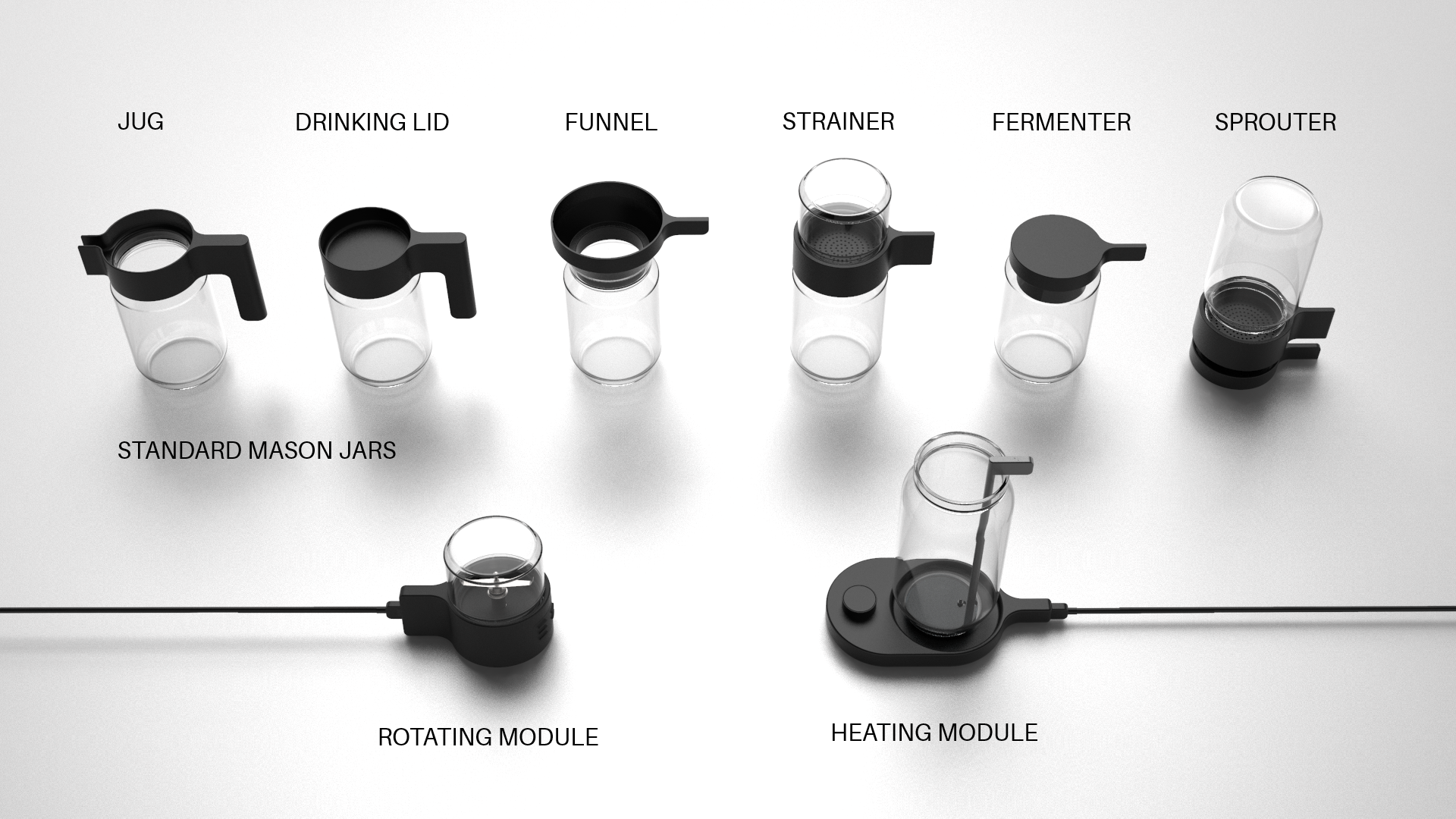
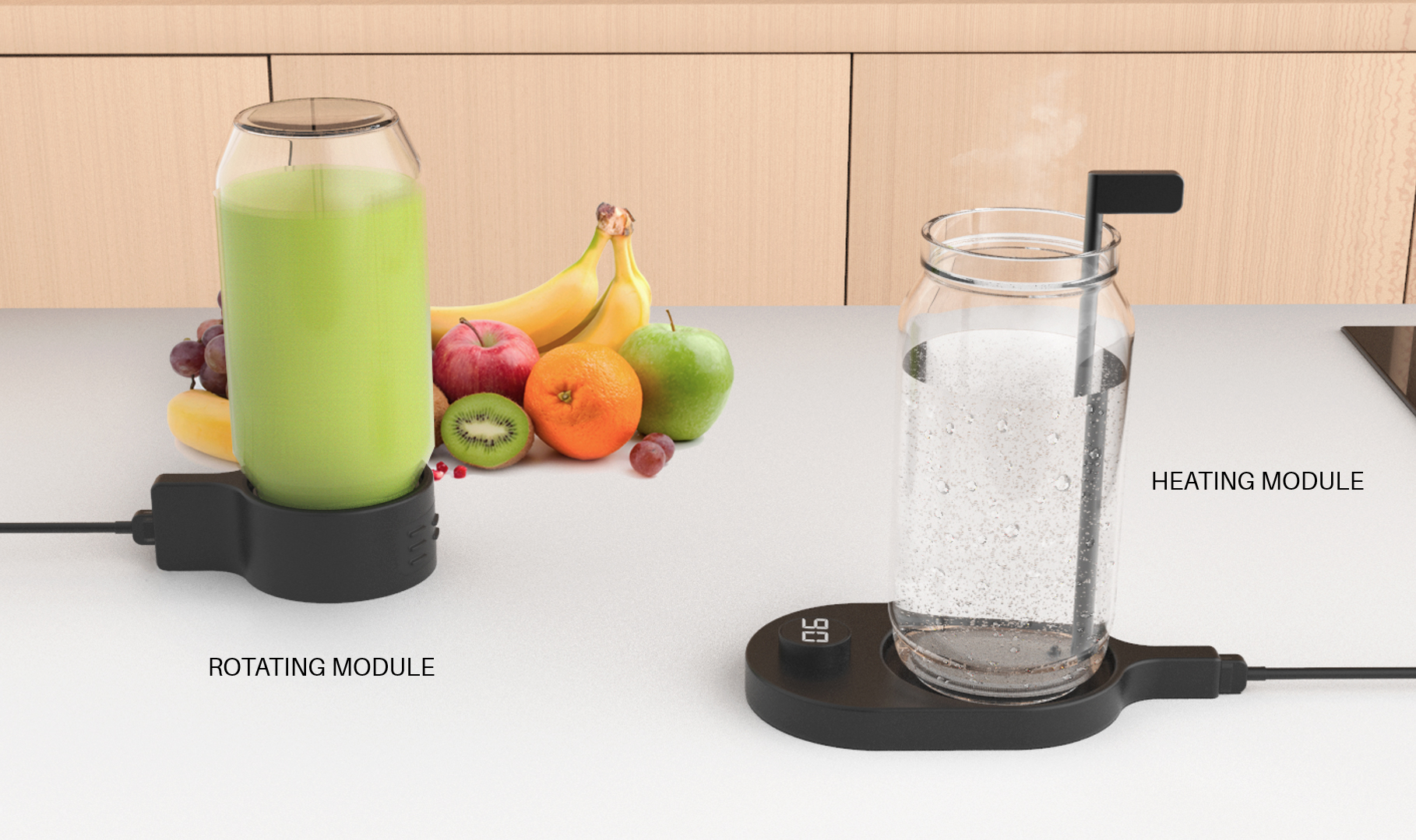
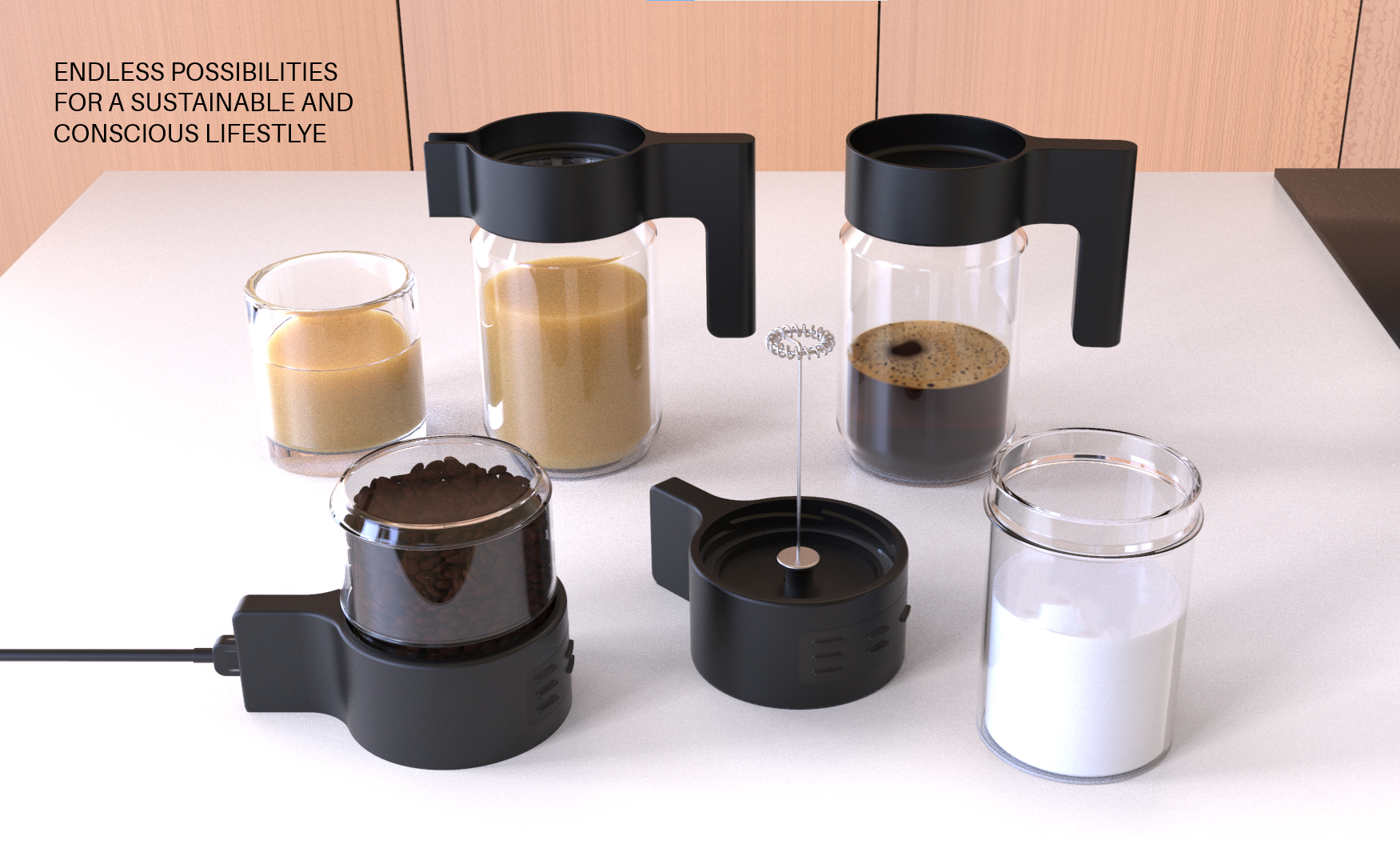
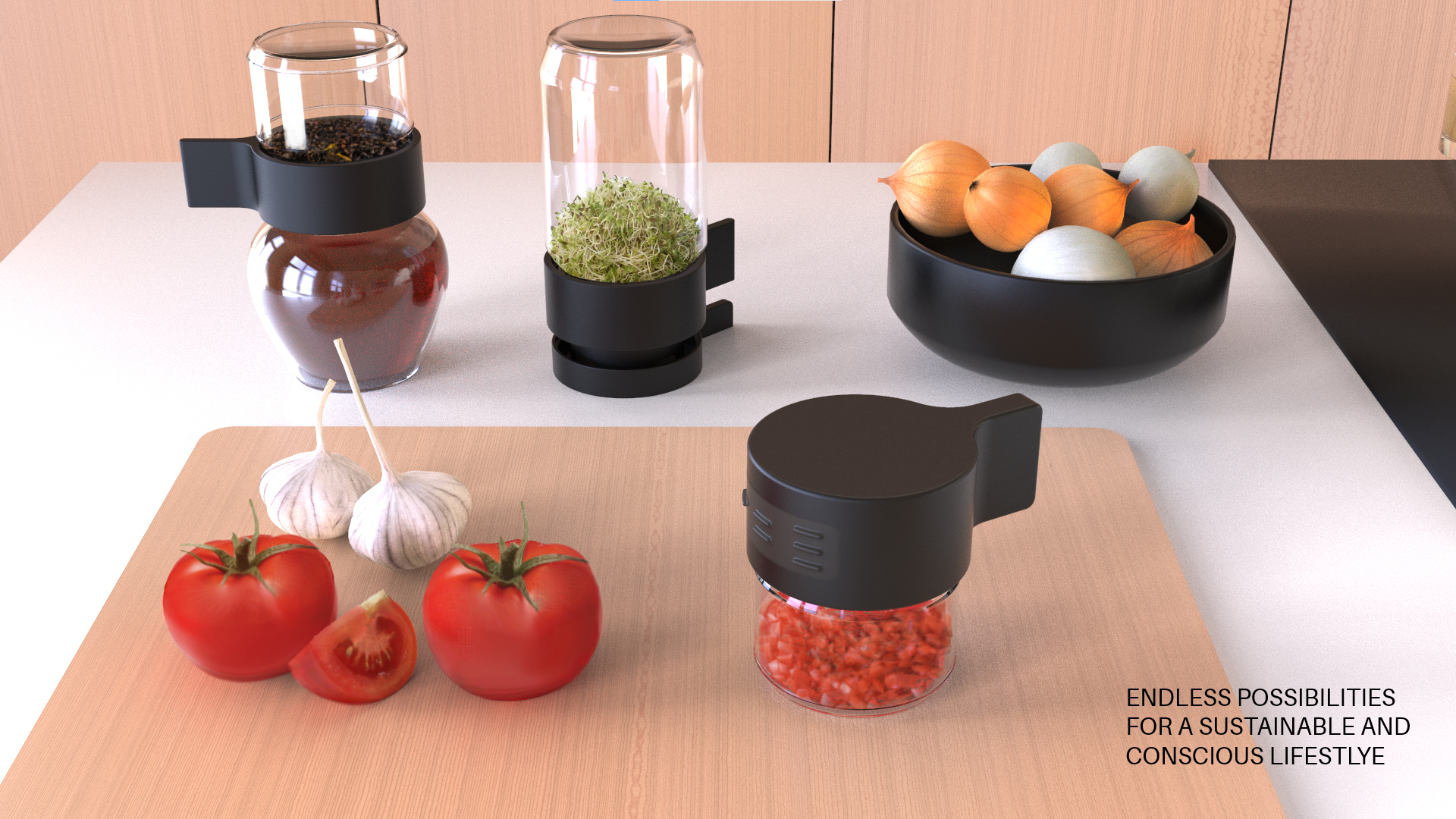
As the electric components of most of these appliances offer two main functions - heating and rotating -, using these as separate modules with different attachments can offer a versatile usage, while reducing the number of components needed. Instead of unique connections and container elements that are usually designed for the different appliances, utilizing already existing, standard connections in the system can result in a smaller waste volume, as the elements can be replaced and combined with each other. Blades and other food preparing attachments connect to the rotating module with bit head, making it possible to create other attachments for than only one manufacturer. Moreover, both the rotating and heating modules are designed to be used in combination with mason jars, which are prevalent, affordable and available objects. These can be an integral part of a healthy and sustainable lifestyle and they can be utilized for zero waste shopping, storing, preparing, consuming and carrying food as well. 3D printable extra elements can also give additional functions to these jars, such as a drinking lid, a jug top, a strainer, funnel, a fermenting and a sprouting top. A website can be used by a community to share the design of these elements, which can be uploaded, downloaded, customized and printed.
My diploma project at MOME is a vision an alternative consumer behavior, that creates and uses objects in a sustainable way.
Key objectives for sustainability
With a modular design, the system uses less components and they can be combined, which altogether reduces the amount of the waste volume of electric and electronic appliances. The modules containing electronics are designed in a way that the can be assembled and disassembled easily, letting the user replace a part with ease if needed. This aspect of repairability aims to be in line with the European Union's 'Right to repair' movement and it makes the products last longer. The housing of the electronic components is made from recycled and recyclable PP material, apart from PP the lid that gets in contact with food, which can be also recycled. The 3d printable elements are printed from PLA. PP is a durable material and PLA is biodegradable.
Key objectives for aesthetics and quality
The black color balances the white that is usually prevalent in the kitchen, giving an innovative aesthetic to the objects. This color can also be achieved relatively easily for the recycled PP materials and it fits well with the minimalist lifestyle. On the other hand, hedonism is present by the versatility of the usage and the variations of the modules and jars that have different shapes and sizes. The positive qualities of both minimalism and hedonism can be combined, owning less objects can result in a better quality of life.
Key objectives for inclusion
Mason jars are affordable, available objects, that are prevalent in many households and are usually used by many people all over the world. The open-source sharing makes it possible for everyone to access the design of the 3D printable elements. The user interfaces are user-friendly, the rotating module can be operated at three speed level by three buttons that reflect the different speeds in a visual and a tactile way as well. The heating module can be easily operated by a turning knob, using this is a common interaction in the kitchen. The main movement of the usage, the twisting is made easier by the elongated, handle shape of the objects.
Innovative character
Dealing with an actual and relevant topic, the concept offers actionable and tangible solution that is a combination of existing technologies, yet it is an innovative system overall. The heating module that can be mainly used for boiling water, cooking simple water-based food and reheating food and drinks does not resemble to a usual kettle, and the rotating module does look like a usual blender. The heating is executed by induction, the heating platform heats the disk that is put in the glass from the outside. Part of the elements are designed for 3D printing technologies that can be seen as innovative, localized production methods.