A Vila do Mañá
Basic information
Project Title
Full project title
Category
Project Description
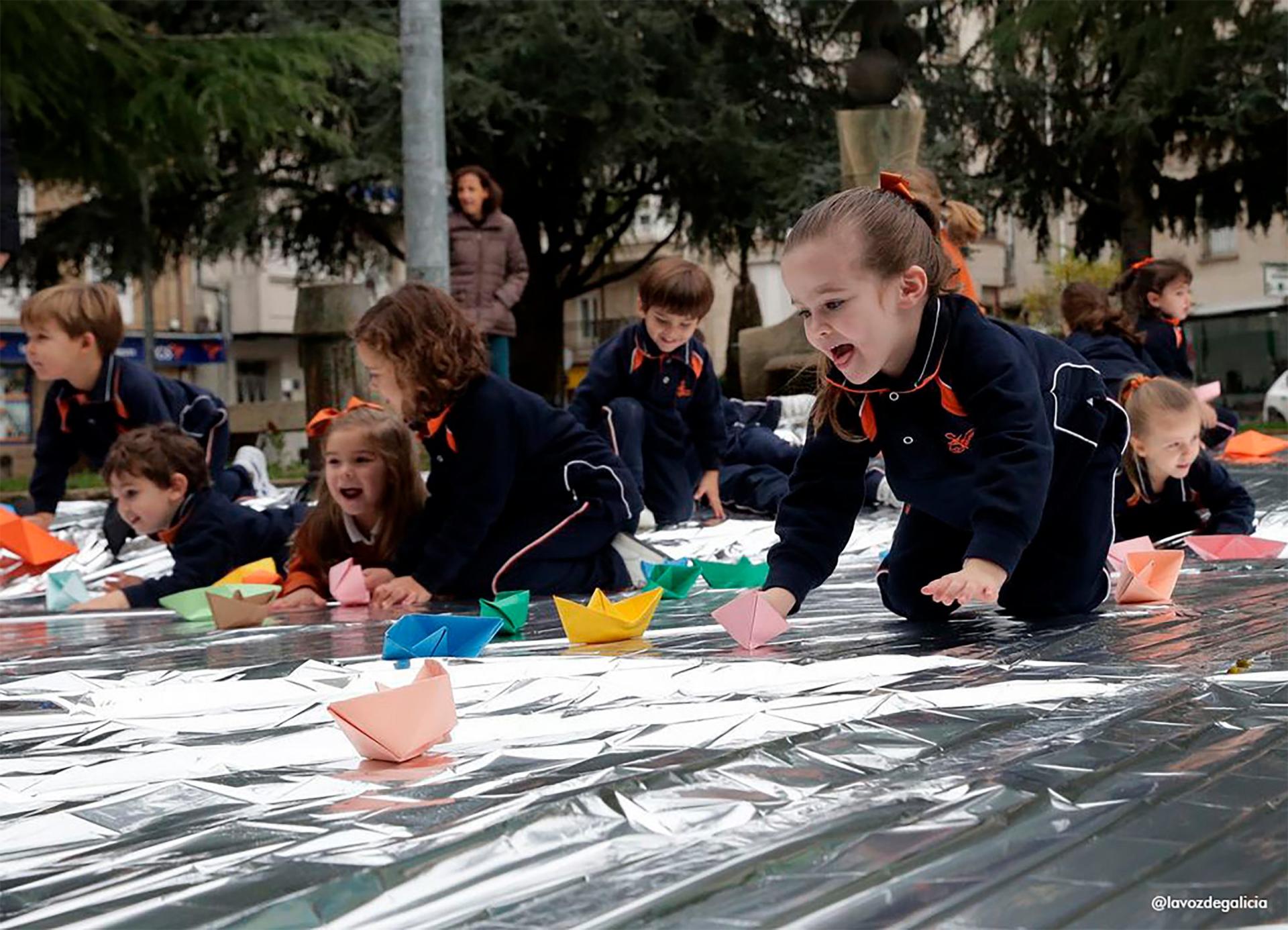
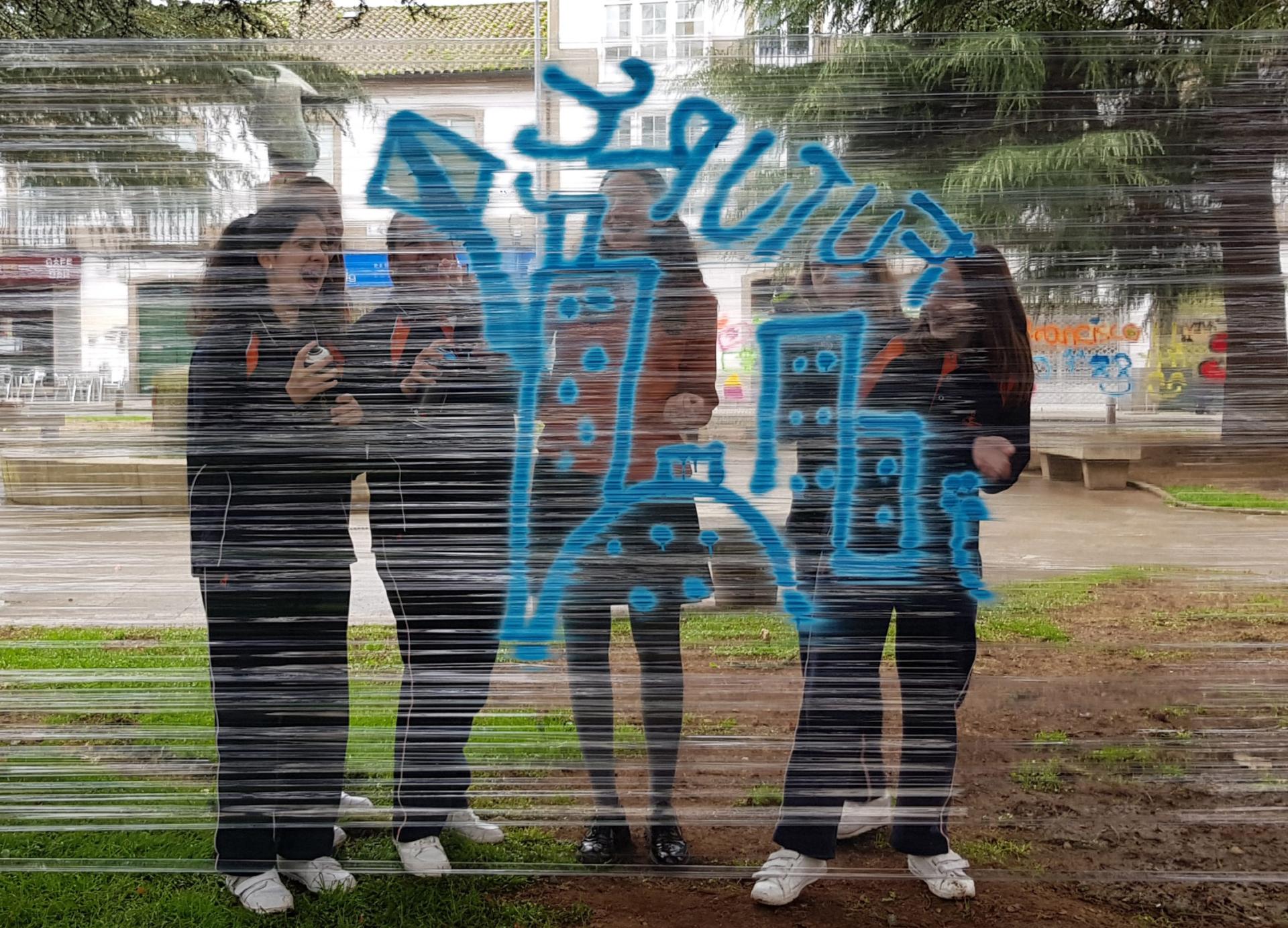
How can we recover the identity of the city?... how can we do so that our heritage is not lost? ... how could the city be that place of meeting and exchange again?... how to return to make the city our place?... these are the issues that lead us to create the project of "A Vila do Mañá". It’s an innovative educational workshop whose goal is to make children and adolescents aware of the city in which they live through games. What if for a week our cities belonged to children?
Project Region
EU Programme or fund
Description of the project
Summary
How can we recover the identity of the city?... how can we do so that our heritage is not lost?... how could the city be that place of meeting and exchange again?... how to return to make the city our place?... these are the issues that lead us to create the project of "A Vila do Mañá". "A Vila do Mañá" is an educational and outreach project, whose goal is that from childhood and through play you become aware of all the scales of the common: tangible and intangible heritage, architecture, urbanism and landscape. At the same time that from the architectural discipline becomes aware of a new vision of the city, which is what those who will be the inhabitants of tomorrow contribute to us.
We believe that it is necessary that childhood and adolescence be actively present in the processes of construction of the common space (square, neighbourhood, city, landscape...) providing them with the necessary tools to know the value of their environment and develop their creativity, from art and architecture. The objective is to provoke in them the awakening of a new look on the spaces in which they develop their life.
This project is being developed through different workshops in the City Councils of Galicia/Spain (Arteixo, Arzúa, Bertamiráns, Bueu, Cambados, Carballo, Ferrol, Malpica, Milladoiro, A Pobra, Rianxo, Ribeira, Santiago, Verín and Vilagarcía) , it is carried out by the PØSTarquitectos team, financed from different councils, and receives the support of the ETSAC (Higher Technical School of Architecture, University of A Coruña), COAG (Official College of Architects of Galicia), and APATRIGAL (Association for Defense of the Galician Cultural Heritage). March 2019, the project was put to the test, making the leap from the Galician villages to a large metropolis such as São Paulo, with the collaboration of the City, Gender and Early Childhood Research Group of the Mackenzie Presbyterian University.
Key objectives for sustainability
The new generations, the inhabitants of tomorrow, are totally unaware of the town or city they inhabit, they live in a "little box" they move into another smaller "box" and they arrive at a bigger "box" (call school, shopping center... or sports center), this is their relationship with your environment. The reality of today is that the natural connection between children and their habitat, the place where they grow and develop, the city or the village in which they live, is diluted, is barely existent.
In front of this image of the public space of today, "A Vila do Mañá” starts from understanding the city as an educational tool, not neutral, to which we approach from the game.
“A Vila do Maña” has worked with more than 5.500 child and adolescence, with ages between 3 and 16 years old, spreaded throughout the Galician territory and his different cities and villages.
We works with two types of sustainability: a social dimension, understood as the inclusion of child and adolescence in ours cities, because we can consider them as a “vulnerable group”. We want to give voice to those who normally do not have it, children and adolescents, promoting their right to form their own judgment about the habitat in which they live and to be able to express it and make it manifest. We seek to stimulate a critical attitude to promote their development as an active citizenship, as they will be responsible for the city of the future. Forming, therefore, the foundations of a critical citizenship.
And the second, an environmental sustainability, as a search of a different “City Model”, We want to reflect on the way in which we relate to the planet. Make us aware that what sustainable consists in a balance between what allows us to develop our life and what commits us to the survival of future generations.
We work with the inclusion of green in the cities, for this we will use the system of urban gardens and vertical orchards.
Key objectives for aesthetics and quality
The activities carried out in the workshops: "A Vila do Mañá", are structured through six fundamental concepts: PERCEPTION, SCALE, SPACE, CITY, LANDSCAPE and SUSTAINABILITY, and five necessary tools: Point, Line, Plane, Natural Element and 3D Element. To develop these six concepts, strategies of Art and Architecture are used.
We work with PERCEPTION. First of all we need to know how children see the city they inhabit, we need to answer the question: what is your city like? For this, based on Guy Debord, we go out to the "drift" accompanied by a large golden frame, so that in our wanderings they can frame those elements of the city that are important to them. Why a great golden frame? Like O'Grady in her performances, she makes us question what is inside or outside. Traditionally this was delimited by the frame, now that the line is broken, and what is outside the frame coexists with what is inside.
Continuing with the work of perception, we try to provoke in children/adolescents a new vision of their environment, seeking to break with the known and that they can perceive the same places with different eyes. We base this experience on the concept of "defamiliarization", a literary concept developed by Viktor Shklovski.
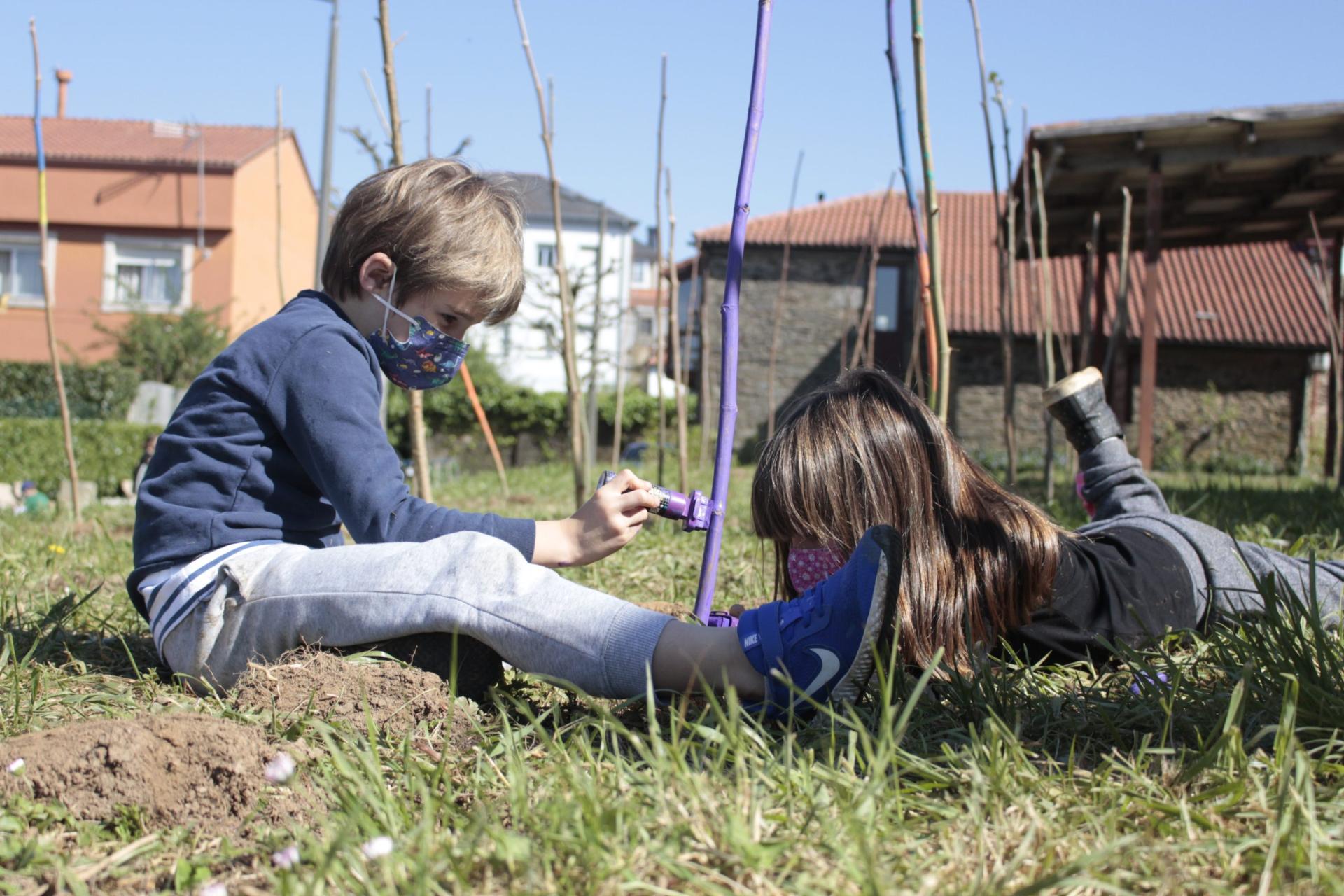
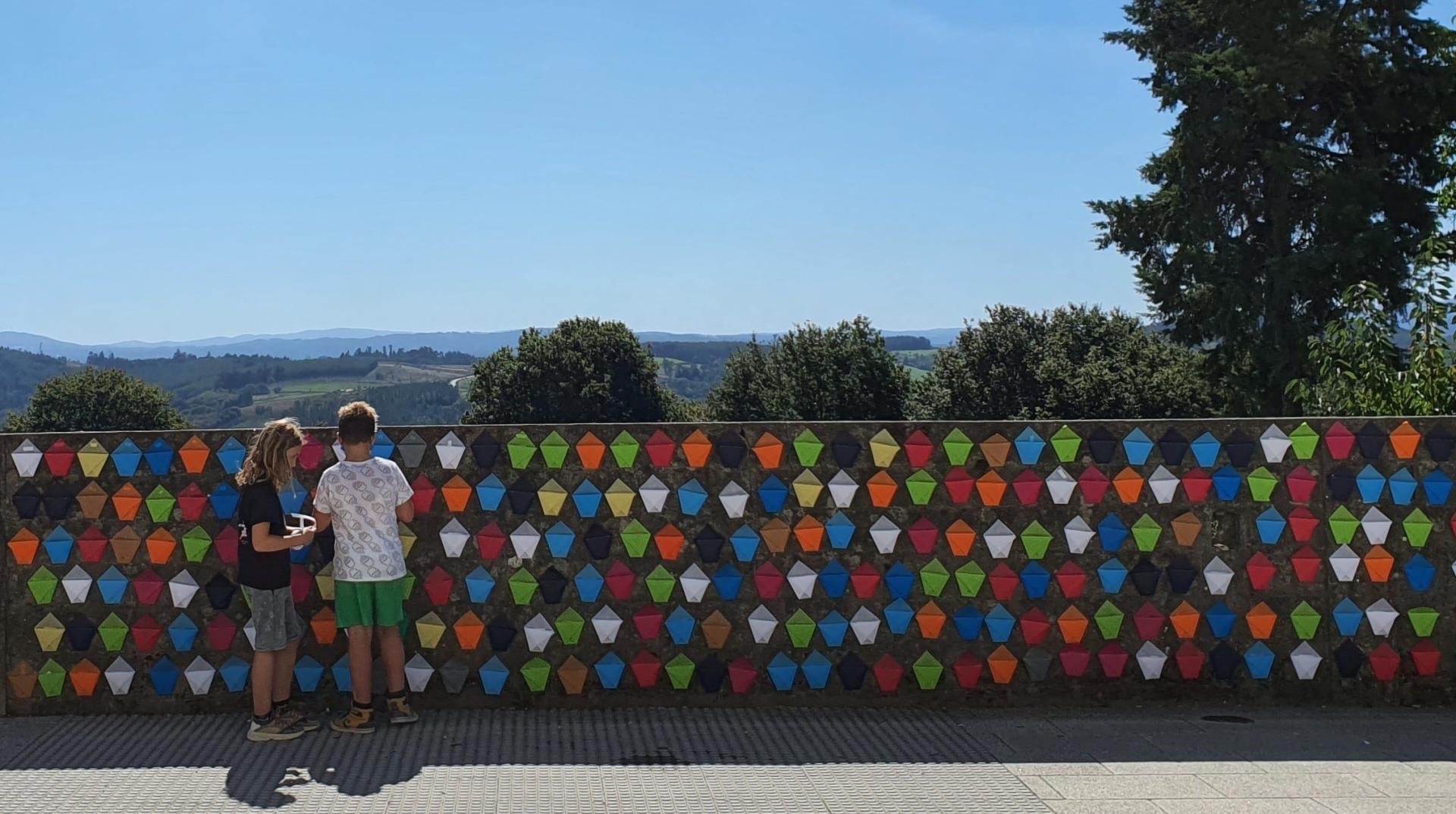
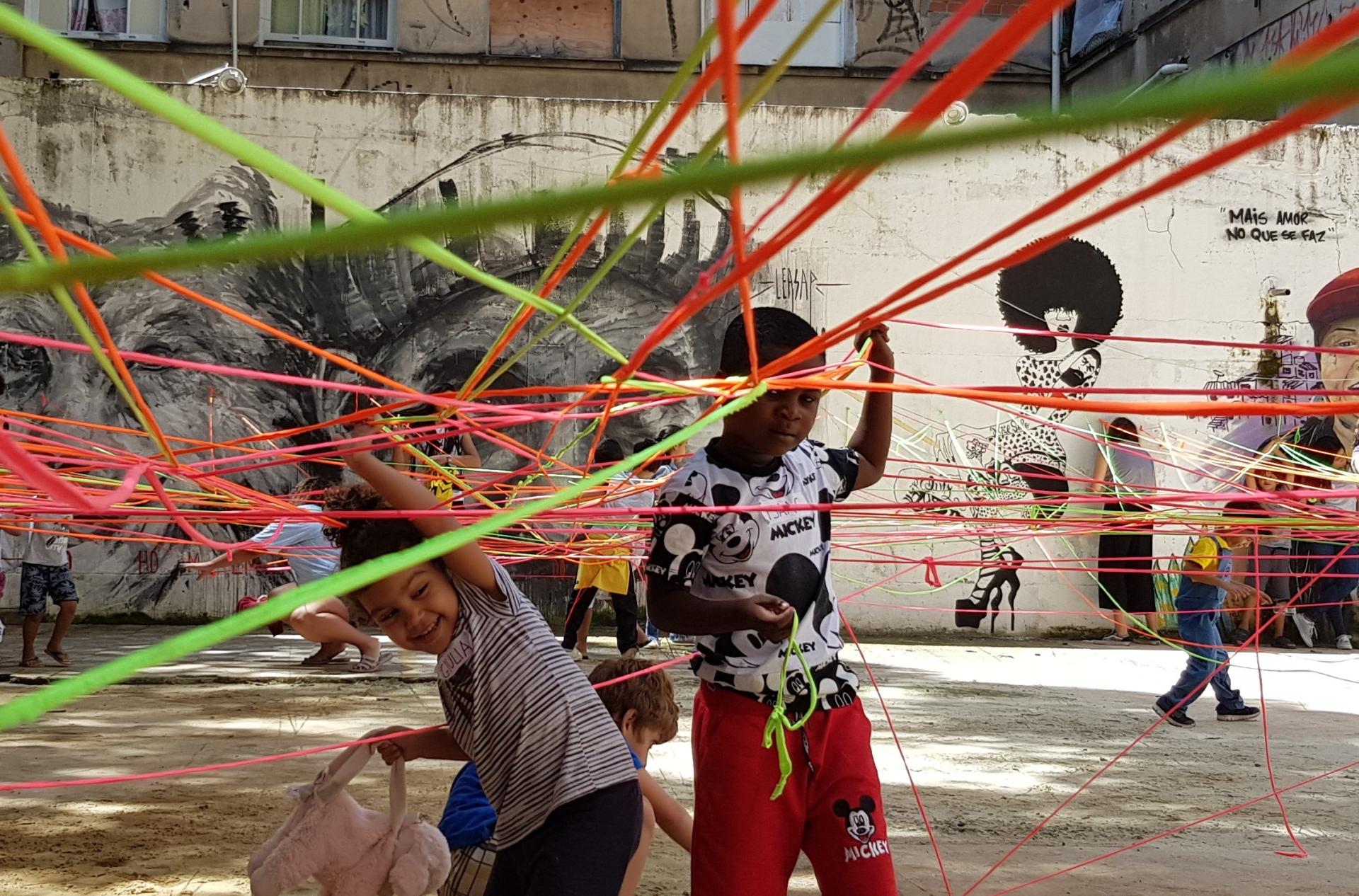
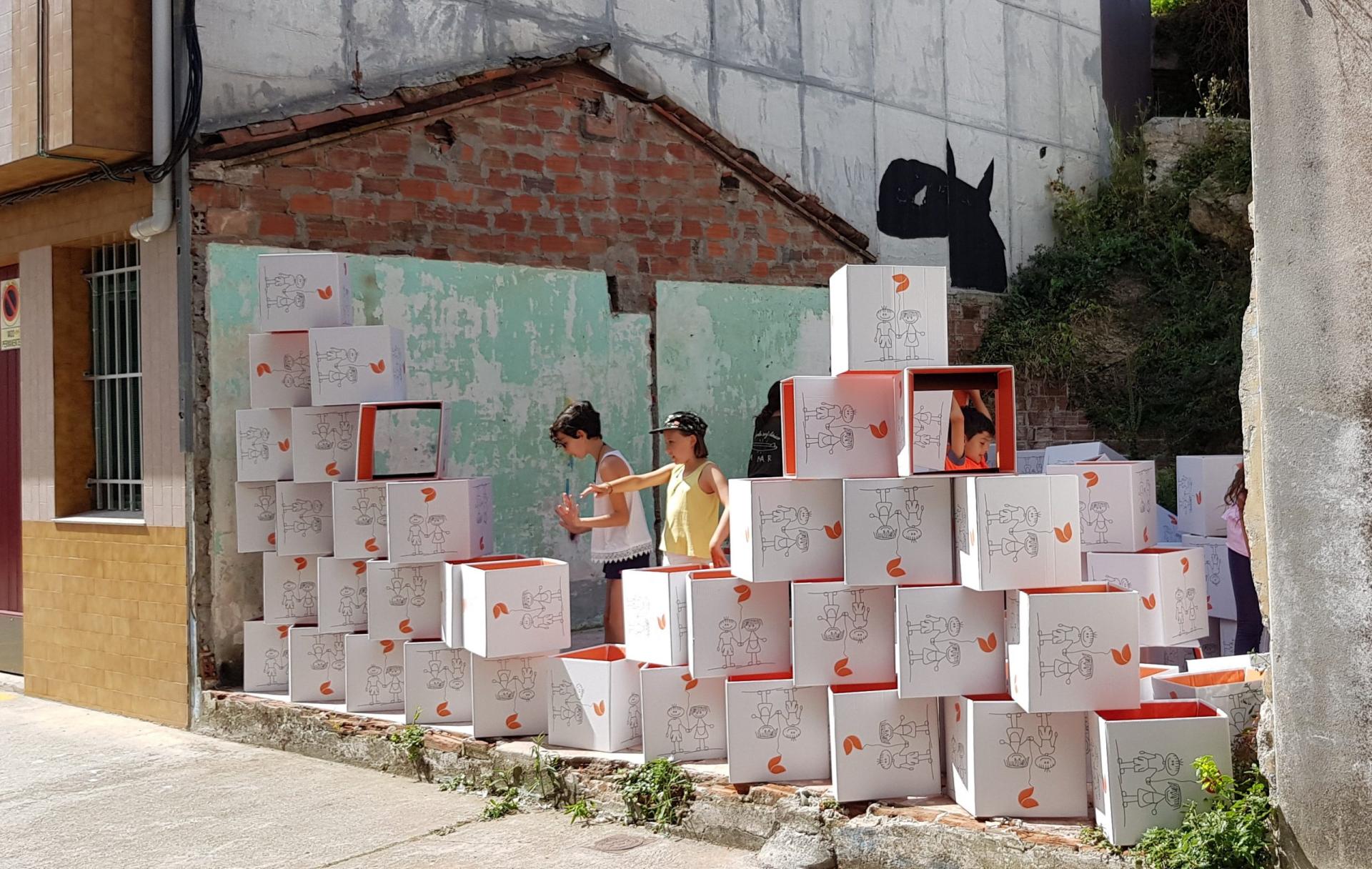
LANSCAPE, CITY, SPACE: The instrument is the body, which travels and plays in space with all the senses deployed. In a few days the children / adolescents become thinkers of the city, they appropriate the spaces, they make them their own. They devise and invent their own play spaces, modify the city, live it, enjoy it and generate an identity with him. With what elements are we going to work? What elements of architecture will we use as tools to appropriate the spaces?: Point, Line, Plane those defined by Kandinsky, we work with the 3D Element, for this we will build on the "third gift" of Froebel.
SCALE: We present the concept of human scale relating it to the urban scale. Some interventions are based on the Yves Klein or Schlemmer experiences.
Key objectives for inclusion
Nowadays, and after working with aproximately 5500 child and adolescence, we can ensure that they are at an exclusion risk as colective in our cities.
The city is a hostile medium for them, they have lost their freedom, which is limited to certain enclosures considered safe and controlled by adults. We are transmitting the message of fear that is currently being felt in society, and as a consequence, the place where they live, the town or the city, is not safe for them, making them value more a private space without history, rooting and identity, just a commercialized space with a defined use of entertainment, than the public spaces that their city can offer them in which the activities they can perform are only limited by their imagination and create a development in children in a particular way in each city making them individual, unique and with the ability to value their homeland.
In front of this image of the public space of today, "A Vila do Mañá” starts from understanding the city as an educational tool, not neutral, to which we approach from the game. We recover some of the ideas proposed by Aldo van Eyck, in which the child was given the opportunity to discover the city from his own movement, which has to be developed through his games which is his natural way to know the world. What happens when the spaces of our cities are occupied by children playing? How do the children feel? How do adults react? From this conflict, we want to transform the image of the city that children and adolescents have and, at the same time, make them visible in those spaces in the eyes of adults.
Another idea that bases our project of arises from the right to the city, as defended by Henri Lefebvre (1901-1991), by which the people who live in it have the right to its enjoyment, transformation and that reflects their way of understanding life in community. From this point of view, how not to include the right of boys and girls to the city.
Results in relation to category
We are going to use two quantitative and qualitative indicators of social impact of the Project: 1: The scientific production (https://www.xn--aviladomaa-19a.com/divulgacion-2/), 2: The media tracking of the Project (https://www.xn--aviladomaa-19a.com/blog/)
In his trajectory “A Vila do Mañá” was part of the exhibition of the Spanish Pavilion in the Bienal de Venecia 2018 (16. Mostra Internazionale dei Architettura), and won the Honor Mention on the Methodologies category, “Educative Projects” Ludantia Contest. I Bienal Internacional of Education in Architecture for Childhood and Adolescence.
The results obtained from the workshops were published on the following books:
https://www.xn--aviladomaa-19a.com/wp-content/uploads/2020/11/A-Vila-do-Ma%C3%B1%C3%A1-Ferrol.pdf
The presence of “A Vila do Mañá” in scientific papers:
https://www.xn--aviladomaa-19a.com/wp-content/uploads/2021/05/22_AViladoMa%C3%B1a_EIRPAC-3%C2%BA.pdf
https://www.ietm.org/en/system/files/publications/ietm_art_in_rural_version_4b.pdf
https://www.xn--aviladomaa-19a.com/wp-content/uploads/2021/05/09_AViladoMa%C3%B1a_INTED-.pdf
https://www.xn--aviladomaa-19a.com/wp-content/uploads/2021/05/03-LUDANTIA-PUBLICACION.pdf
The work developed in the workshops was displayed and explained on the following congresses and seminaries: https://www.xn--aviladomaa-19a.com/divulgacion-2/
How Citizens benefit
When “A vila do mañá” was conceived, was hard to imagine a future as uncertain as it has been. Covid-19 broke in our lives, leaving us with and unpredictable future. This restlessness translates also in our spaces, the places we inhabit, in which we work, in which we relate to others…
“A vila do Mañá” took out kids to the streets in order to make them explore this spaces through game, turning them into “homo ludens”, which, with a limited quantity of elements, are gonna organize freely their enviroment, their own New Babilonia, the utopy of Constant Nieuwenhuys in which a wanderer society adapts constantly their surroundings. Their experience is not only a one-day city/village feast, but and opportunity to re-conquer this spaces as their own, generating new synergies that splash the rest of the society.
Historically after big crisis, Architecture always knew how to give creative answers for the new society. We need a new reference of Qualitative Society which don’t succumb to the justified limitations of a health condition and fight to transform them into opportunities of an improvement. In this area we should work today from Architecture, and without any doubt, this is what “A Vila do Mañá” is aimmed.
With the completion of the workshops we have made children aware of their own city, its cultural and architectural heritage. The impact of the project has gone beyond the young participants, inspiring all citizens. The realization of interventions in different public places involved the whole society, causing an intergenerational dialogue that enriches the experience, on the other hand, the repercussion in the local media (television and newspapers) and the elaborated publications have allowed a greater dissemination, transmitting to society a deeper knowledge of its heritage and a strong impulse in the revaluation of it.
In some specific cases, the analyzes and conclusions drawn from the workshops have even inspired specific urban actions.
Innovative character
"A Vila do Mañá" is an innovative project, not only because of the issues it deals with, not because of who it is addressed to, but because of the way it is carried out. In the first place, it is aimed at children, as future citizens of "The City of Tomorrow", generally forgotten in the processes of transformation of cities. It is childhood that will be in charge of taking care of our material and immaterial heritage and transmitting it. If the future inhabitants do not know the environment they inhabit, tomorrow will repeat the mistakes that have occurred with previous generations, pieces of heritage of incalculable value will be destroyed, or the identity of our cities will be forgotten.
The workshops have been carried out with groups of approximately 150 children (today reduced by the pandemic), whom for 5 days the town they inhabit becomes their game board, in their laboratory of experimentation. 5 days in which spaces of patrimonial, architectural or landscape interest are studied, they are recovered, they are lived and what is more fundamental, they are enjoyed, generating with it a feeling of identity. The city in which they live has changed for these children, it is their city, they are their spaces.
The fundamental tool to reach childhood is the game, so the activities are based on it. The children play, have fun, and discover elements of their city unknown until now. Learn playing.
In "A Vila do Mañá" students from the ETSAC (High Technical School of Architecture of A Coruña) and the FAU Mackenzie (School of Architecture and Urbanism of Mackenzie Presbyterian University) participate, looking for ways to outline the concepts of heritage, architecture, urbanism and landscape to transmit them to children; at the same time that they themselves learn from the little ones, they break with the regulated education forgetting the figures, the norms and the urbanistic techniques, and they learn to focus on the needs of the citizens of tomorrow. Learn by teaching.