RIBALTIAMOCI
Basic information
Project Title
Full project title
Category
Project Description
RIBALTIAMOCI (Let's overturn) is the manifesto of the project:
To overturn a system that proposes "top-down" solutions and actively include citizens in decisions concerning the transformation of places in one's community. The project does this by creating synergies and collaborative networks between public administration, associations and citizens in the belief that we must overcome a static vision of their respective roles and foster practices of greater sharing and co-responsibility.
Project Region
EU Programme or fund
Description of the project
Summary
The RIBALTIAMOCI project has the objective of stimulating reflections on the meanings of disability and community through an action carried out in the public green area "PARCO I CENTO PASSI - PEPPINO IMPASTATO" located in S. Giovanni Valdarno in the Fornaci district, Arezzo, Italy. The park is names after Giuseppe Impastato, known as ‘Peppino’, who was a famous Italian activist and journalist, who fought against the Italian Mafia and lost his life (1948 - 1978).
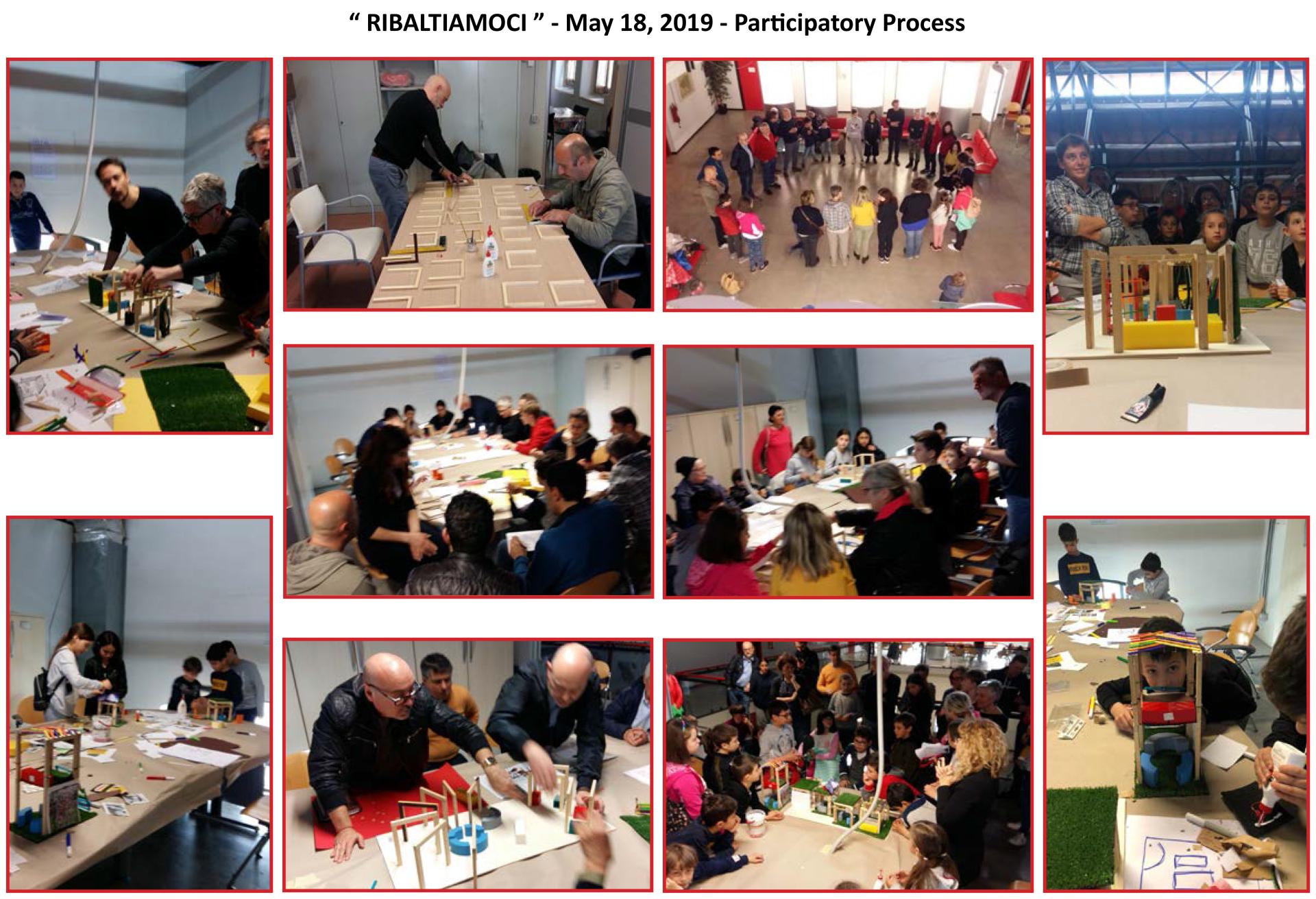
A plann was devised through a participatory process, to install furniture structures in this green area to respond to various needs of the citizens that have emerged through the direct involvement of citizens.
The initiative aimed to promote:
- A new collaborative culture through the creation of networks between active subjects, associations of the territory, administrations and free citizens;
- A new approach to disability that becomes not a passive subject (assisted) of the process, but a central pivot of the same with an active role that works to make its resources and skills available to the community to which it belongs;
- The recovery of the identity of the places, including recounting the life story of person to whom the park is dedicated. We believe the reconstruction of our communities mustn also pass through the recovery of collective memory.
The drafted project defined the general actions envisaged (infrastructures and socio-cultural activities) and, in particular, it was structured in such a way as to respond to three of the most significant needs that emerged from a series of meetings and a questionnaire:
- The creation of accessible shading structures to be able to experience the park, especially in spring and summer;
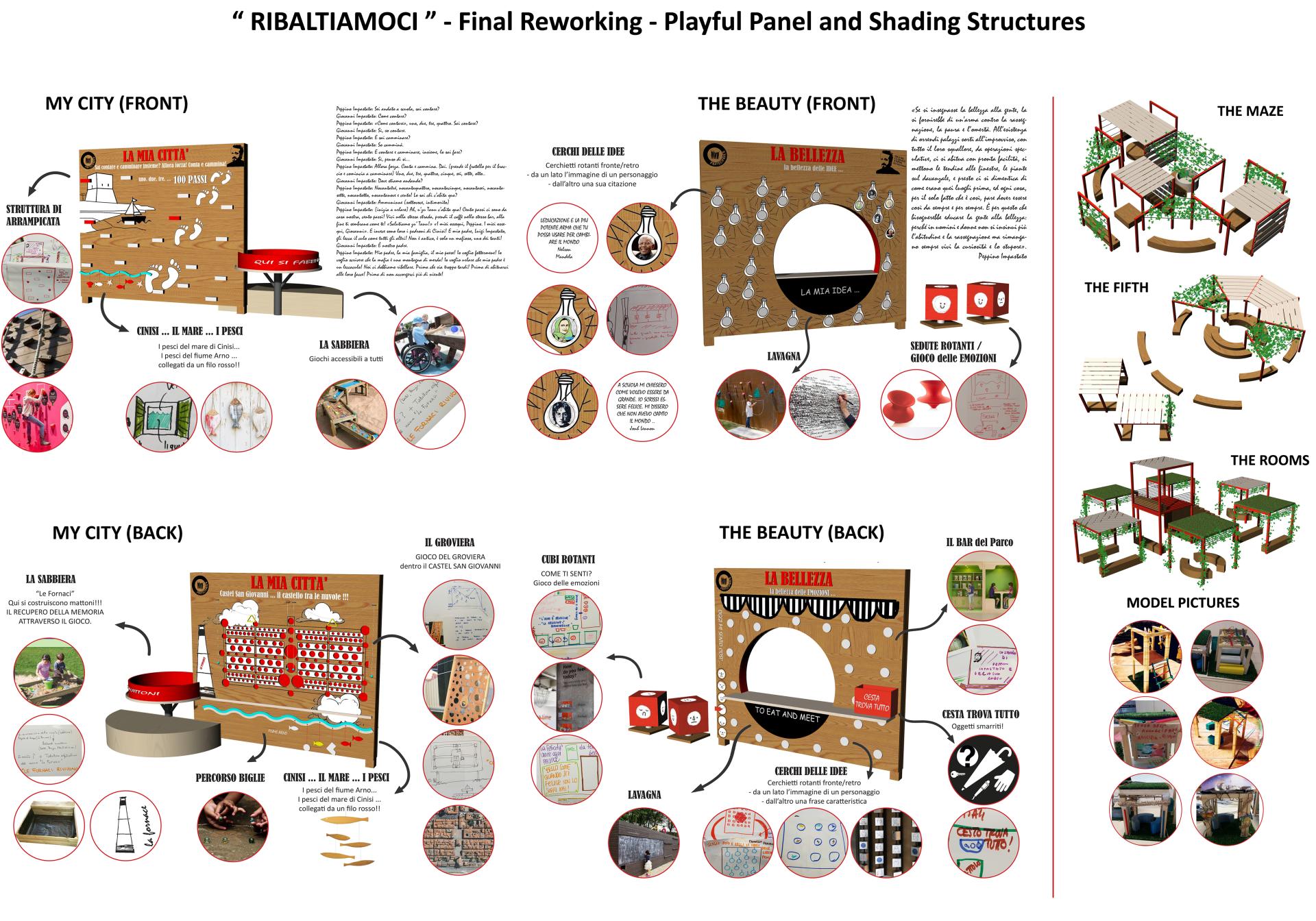
- The creation of an inclusive playful path that arises from the absence of sui-generis equipment in the entire city;
- The creation of a space for sharing, exchange and socialization where the community can meet.
Key objectives for sustainability
Sustainability is the common thread that connects all aspects of this project:
- Through the regeneration of a green area, strategically chosen because it is adjacent to the historical center, and can be reached in a short time, either on foot or bicycle, from all over the town. To date, the park has been a "waste" green area, structurally poorly equipped, absent of any maintenance, used very rarely by citizens, and a site for a lot of undesirably behaviour(waste abandonment, vandalism, consumption of drugs and alcohol).
- Through a collective design, not imposed from any hierarchical structure, but the result of an innovative, creative and inclusive participatory process, we have established an easily replicable process for others to promote sustainability for other urban spaces.
- The information and planning meetings were managed and facilitated by facilitation experts who emphasized not only the "what", but also the "how", generating a sustainable method that creates consensus among all actors in the process.
- The final project includes structures that will o be built with local, natural, recycled and non-polluting, therefore sustainable products.
- The final equipment will be made through sustainable methods of self-construction thanks to the participating associations.
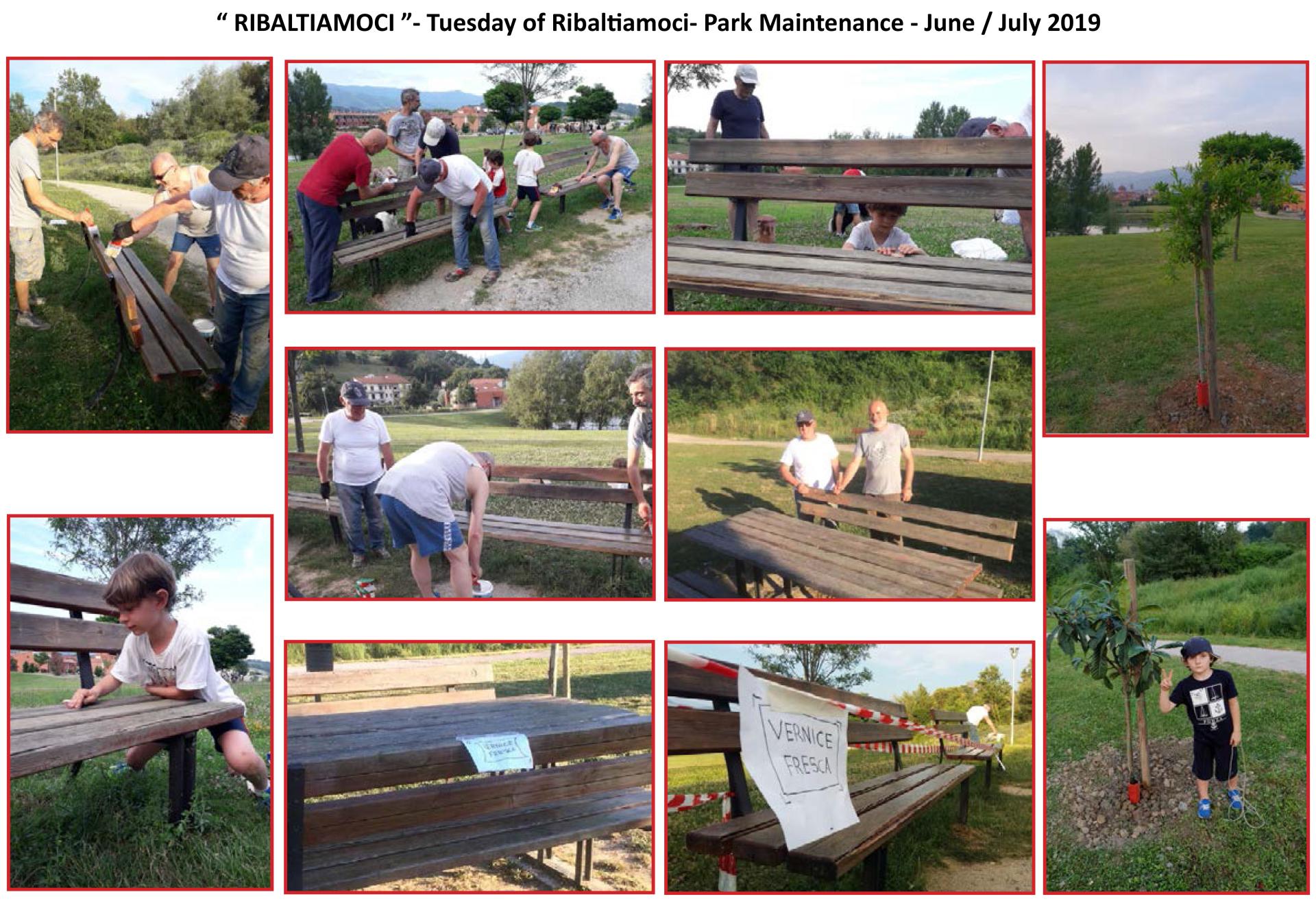
- The maintenance of the park will be supported through days of common work, thus promoting the idea of caring for the "common good" and relieving any burden from public administration.
- A park designed by everyone for everyone send a strong message of social inclusion and participation; each individual contributes ideas and skills.
- Through the involvement of citizens in socio-cultural activities and events, the funds raised will be reinvested in the park itself.
- Co-responsibility of citizens towards a culture of right and duty (in memory of Peppino Impastato) as an example of civic action.
Key objectives for aesthetics and quality
RIBALTIAMOCI aims to express a new concept of aesthetics and a high quality experience through the word "ability":
- Ability to shape the specific needs of the community;
- Ability to connect the concept of beauty to that of care, and therefore of individual and collective responsibility (the emotion of doing);
- Ability to strengthen the sense of belonging to the community not in the perspective of closure, but in the openness to create networks, synergies and sharing;
- Ability to generate a model that can be replicated in other contexts but which always produces unique results.
So far, RIBALTIAMOCI has completed the preparatory stages for 3 shading structures and 1 playful path composed of 6 interactive play panels. These results were achieved through a participatory process that involved contributions from administrations, associations, citizens and children, thus enabling the project to respond to the needs of citizens.Playful panels and shading structures are the result of the vision, imagination and work of a community, therefore they represent it in a unique and concrete manner. Other experiences will produce different results both from an aesthetic and functional point of view. Memory also becomes a promoter of beauty. The values of Peppino Impastato's life sets a good example for how the people of S. Giovanni Valdarno can be involved, active and care about their own community.
The aesthetics of the artefacts acquires greater value with the quality of the experience through participatory planning and implementation: this process offers the possibility to respond to the needs of citizens, to create communities and conviviality through play and being comfortable together. The furnishing structures, and in particular those of the designed play path, include elements (images, phrases) linked to Peppino Impastato to instill an identity to the place and allow citizens to reflect on the fundamental themes of our society (legality, community, civil responsibilty).
Key objectives for inclusion
The green area, located near the center, becomes a meeting place accessible to all citizens, with high social inclusion by providing a recreational service that does not require any economic contribution.
Participatory planning includes citizens and associations in planning and decision-making processes, which are normally delegated only to administrations.
The final projects of both the furnishing structures and the socio-cultural activities were defined through specific Working Gruops open to citizens and associations, together with the local administration, with the aim of increasing the community’s feeling of participation and belonging to the project.
In the information and planning meetings, the use of the facilitation technique allowed everyone to express themselves, ensuring that all participants, regardless of their experience or age to contribute to the realization of the final project.
The associations that took part in the process, and are in the process of creating their own network, are: the Ass. Valdarnese Parents Handicapped Children, the Parteciparco Group, ARCI Valdarno, Ass. Valdarnese di Solidarity, Ass. Free, as well as free citizens and other citizen associations, thus creating a collaborative and inclusive network of local actors . The materials used in the workshops were made by the carpentry services of the Valdarnese Handicapped Parents Association, and they will also be involved with the minor processing and finishing of the final products.
The installation of the artefacts will be carried out by the citizens with the help of the municipal administration staff, always with the priority objective of full identification in the project by all the participating subjects.
Results in relation to category
RIBALTIAMOCI has foreseen a series of actions focused simultaneously on the action, "the what", and the relationship, "the how", that led to the achievement of the regeneration of the space and, at the same time, trigger social cohesion and a sense of belonging to the community.
The socio-cultural actions of the project were:
- One Project Presentation Event: promotion, definition and involvement of people. These activities established the core team of the project;
- Two Meetings for the organization of Working Groups in which administrations, associations, free citizens, promoters / architects and facilitators participated. The results of these meetings were twofold: bringing together different associations and organizations for a common purpose, and the design of the working tables;
- Eight official meetings to design the street furniture and tables for organising events: they made it possible to create drawings and prototypes which were then developed by the architects for the final graphic visualization of the project. Urban furniture and play paths have been co-designed in order to guarantee maximum accessibility to the most fragile/vulnerable categories. The participatory process involved with the planning of the tables was a moment of community creation and reflection in which the story of the figure of Peppino Impastato was shared. The choice of the themes to be addressed and of the events was democratic. The citizens had the opportunity to design their park together, to reflect on the history of Peppino Impastato and their city.
- Two Events to provide feedback to the stakeholders of the project-process carried out in the park itself, where the prototypes, after being re-elaborated by the architects, were shown to all participants. During these two days, citizens and organizations had the opportunity to see the result of their work, as well as review the design process in videos and photographs.
How Citizens benefit
Initially a coordination kickoff meeting was held, to share the direction and development of the project with the promoters, the municipal offices, the associative subjects and spontaneous groups of active citizens. For the social path, the above-mentioned associations were involved, and subsequently the following groups joined: Engineering of Buon Sollazzo, Ideation, Valdarnese Music Academy, Municipal Band, Liberarte, Cineclub, Aice Valdarno, Terzo Tempo, Orti Sociali SGV, Ass. Cultural Masaccio, Fotoclub il Palazzaccio, as well as free citizens.
Open laboratories were created for the collaborative planning and management phase: structured through Working Groups that saw the involvement of a variety of subjects and skills (architects, facilitators, associations, citizens, representatives of public services in the area, etc.), and who were responsible not only for designing the structures, but also for co-creating moments of sociality and civic education.
The impact of citizen involvement on the project produced a unique result because each of the subjects involved in the participatory process were able to bring their own ideas, skills and needs: from the elderly who needed shade structures, to children who wanted games. The involvement of the administration, who actively participated throughout the process, was extremely valuable and provided concrete advice on what was realistically achievable. All the associations played an active role, also contributing with their own activities during the events: finding materials, sharing wooden games, musical entertainment, donating books, yoga lessons. All the phases of the project were accompanied by an adequate communication and promotion activity also by the associations themselves, necessary to participate and to promote the story of the activities carried out; the resonance of the project has grown exponentially with the expansion of the network of subjects involved.
Innovative character
Each community is composed of two interdependent components: the tangible aspects which consist of the physical spaces in which the community moves and operates, and the intangible aspects which were made up of the people and the relationships they develop.
These two components affect distinct spheres in the complexity of human action. The first, which has more to do with the "what", is aimed at achieving transformations and measurable and quantifiable results. The second, which has to do with the "how", concerns the emotional sphere and the ability to create healthy and lasting relationships.
Often participatory projects have dealt more with the "what", rather than the "how" which often results in, little participation because to some extent they are top-down and do not ask directly or engage with the actual community to priorities their needs.
The innovative character of the project is to start from a series of actions born within the community that emphasises the "relational" part of the process. This involves a series of mechanisms in which citizenship finds a way to become a leading actor, defining within a deliberately flexible reference mesh, the specific results to be obtained for the satisfaction of one's needs. Innovative aspects also concern:
- Approach to disability: disability is a matter of perception, every person beyond their condition possesses resources that constitute a heritage to be valued for the good of the community;
- Ability to combine simple practices and complexity of thought: the ability to quickly obtain objective results of transforming places to meet the needs expressed by the community, is recognized as a propagator of new and ever-increasing energies;
- Identity of the places inserted in the games: the value of collective memory integrated in playful paths is thus lived, cultivated and told, made tangible to recreate a sense of belonging that is based on healthy values in which the community can recognize itself.