DIY - Design in you
Basic information
Project Title
Full project title
Category
Project Description
The project explores a designer's relationship to the "do it yourself" phenomenon. It shows that self-made production does not have to be perceived only as a low-cost, alternative, and unaesthetic solution - on the contrary, it highlights its benefits for both individuals and society. In addition to environmental aspects (such as reduction of transport, packaging, and commercial overproduction), it brings the human approach to products and makes their users understand and appreciate hidden ideas
Project Region
EU Programme or fund
Description of the project
Summary
The project explores a designer's relationship to the "do it yourself" phenomenon. It shows that self-made production does not have to be perceived only as a low-cost, alternative, and unaesthetic solution - on the contrary, it highlights its benefits for both individuals and society. In addition to environmental aspects (such as reduction of transport, packaging, and commercial overproduction), it brings the human approach to products and makes their users understand and appreciate hidden ideas. The creation process thus becomes an integral part of the final product, a shared experience.
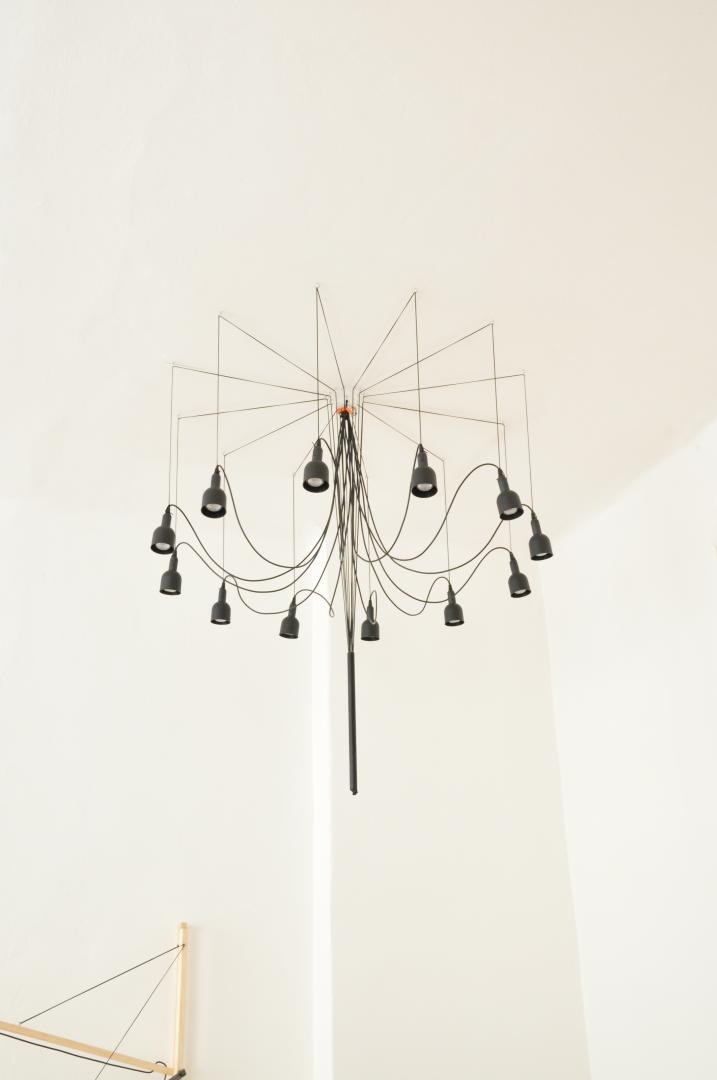
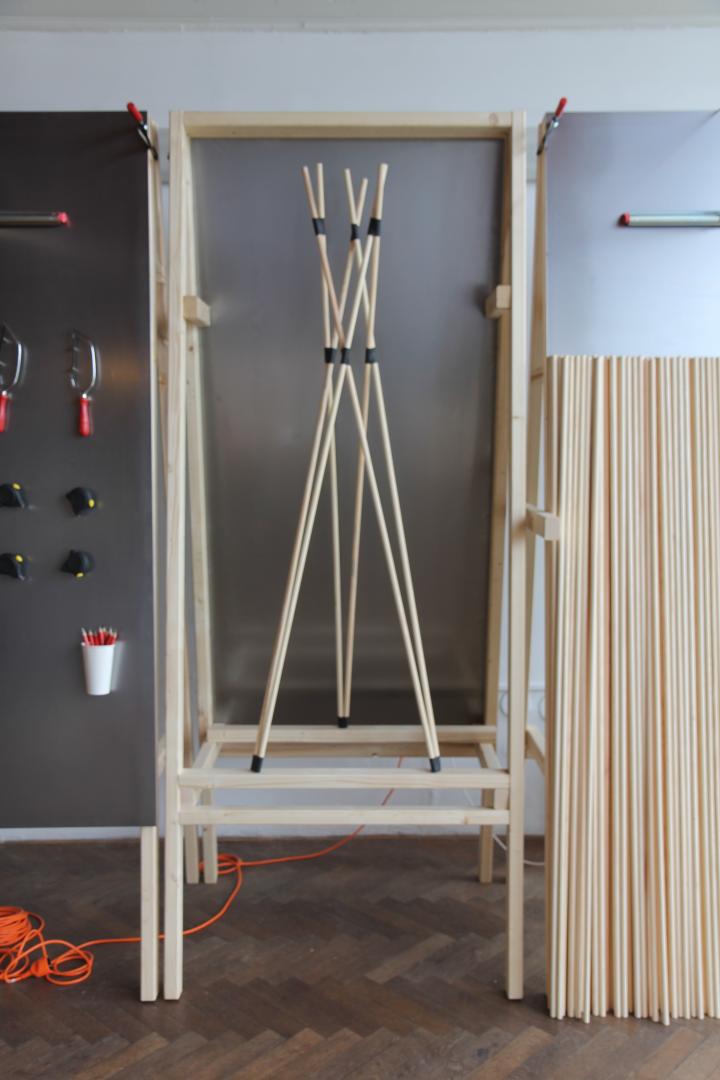
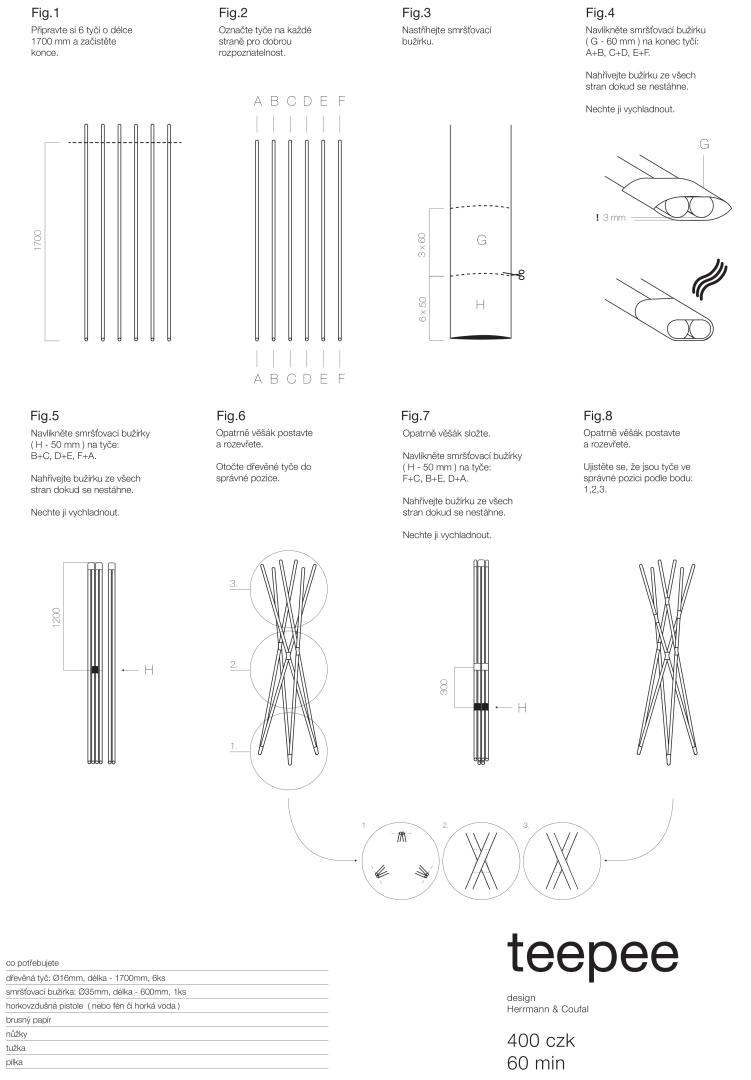
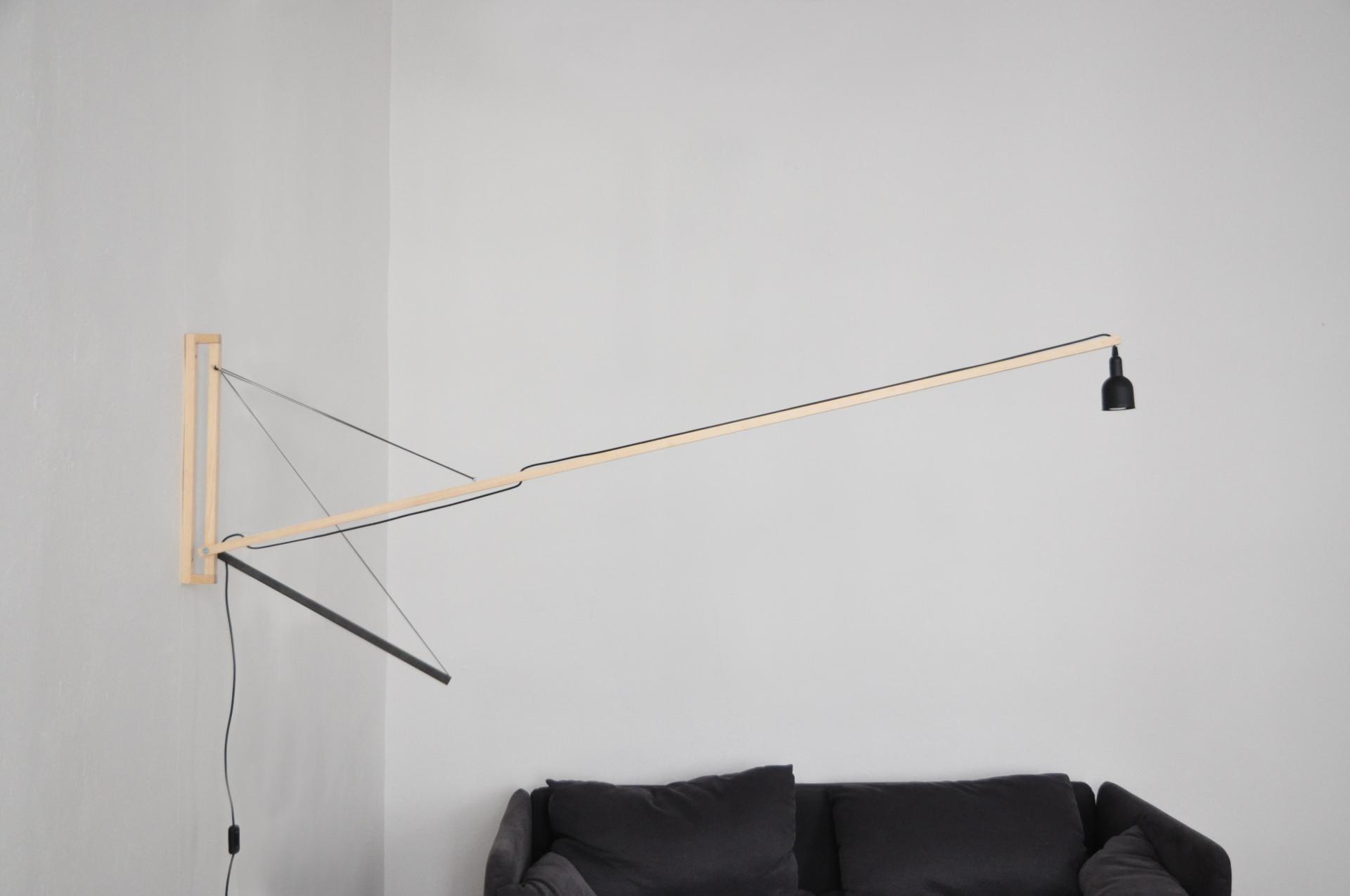
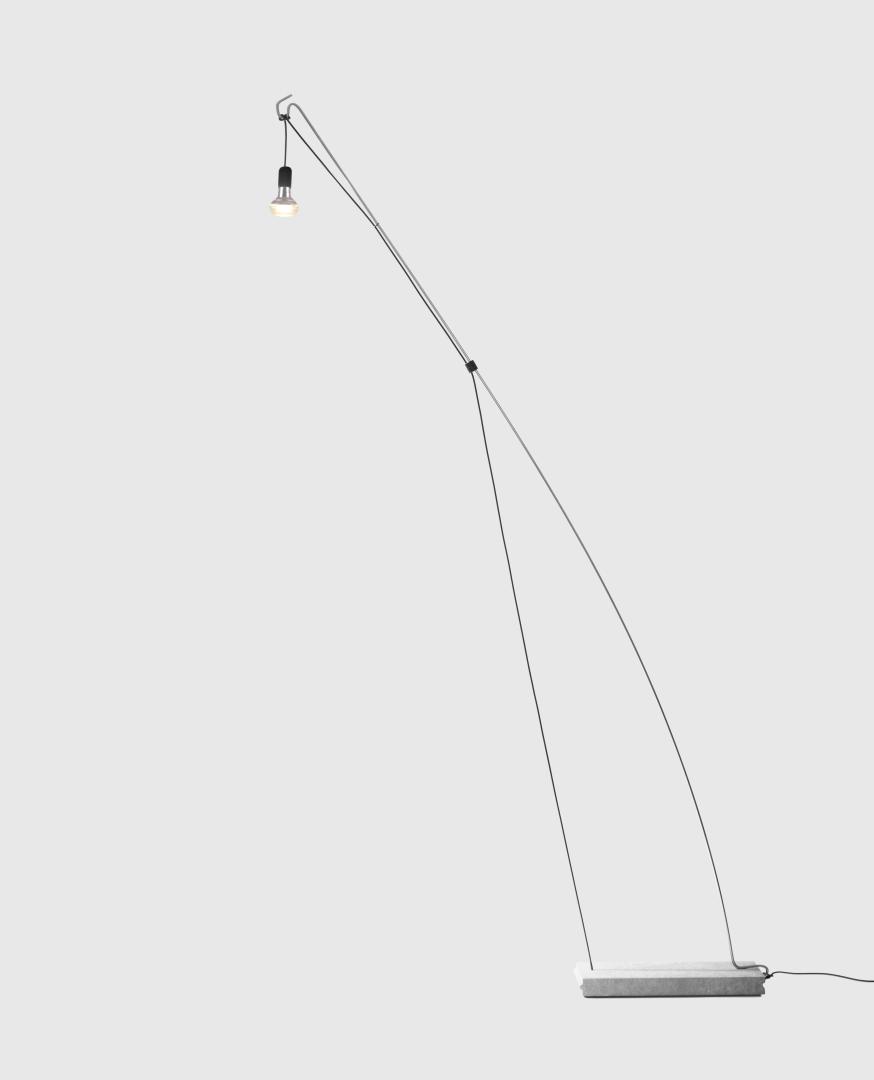
We designed not the products but the process of how to make them and the instructions are free to download. All of them are designed on a common basis - self-made manufacturability with common tools, low initial costs, element reduction. Each of them plays with a different mechanical principle that visually stands out thanks to its minimalist aesthetics.
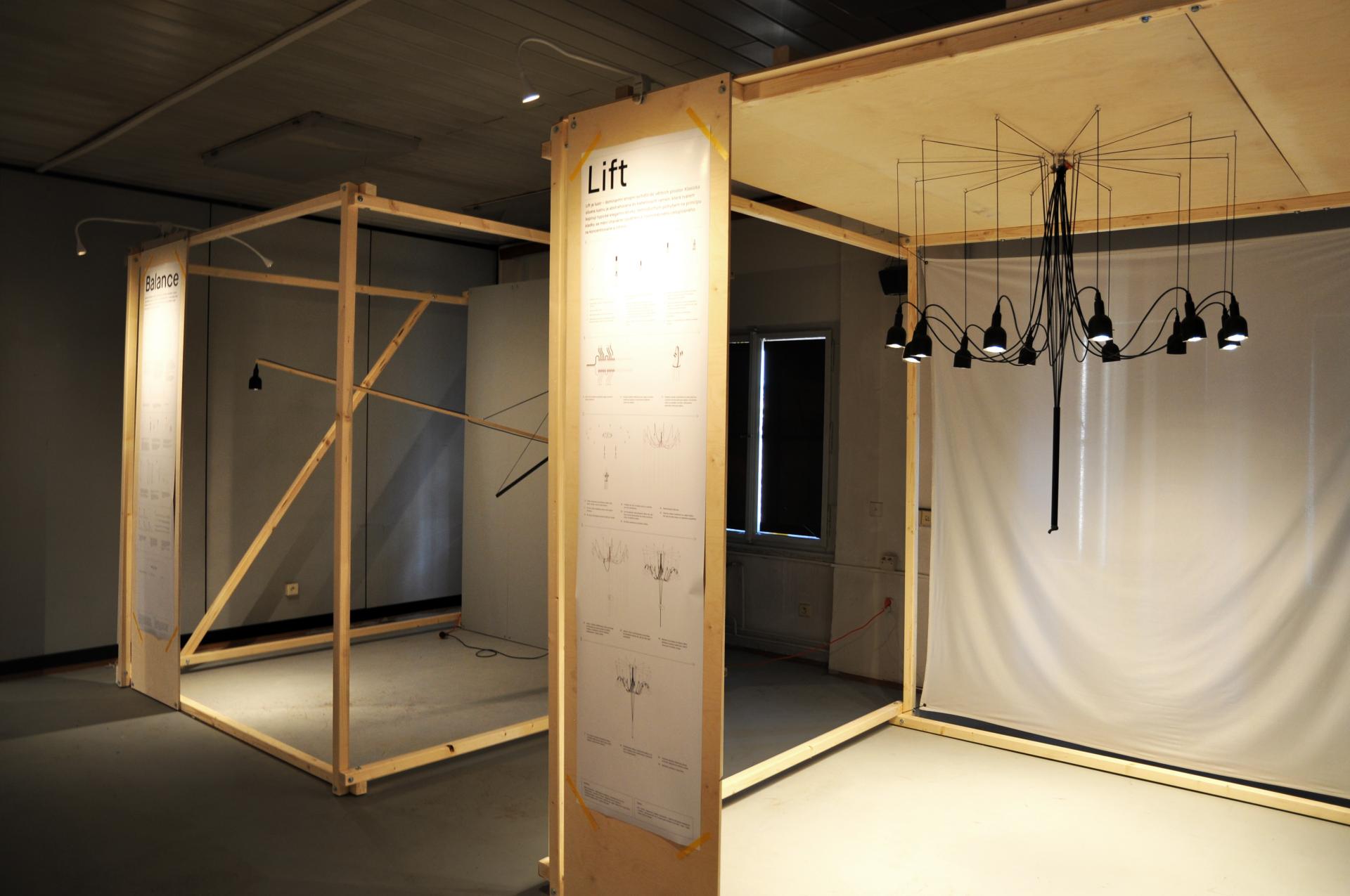
Part of the project is an ongoing traveling exhibition, which forms an exhibition frame for the individual products as well as for itself - it is possible to disassemble and reassemble it using the instruction manual. The whole space can be thus easily packed, moved, and built anywhere else - it starts on Designblok 2020 in Prague and will continue to Berlin, Madrid, London, Tel Aviv, Tokyo and more. The design of the installation is partly based on the ideas of Victor Papanek in the book Nomadic Furniture.
But it does not end there – since the exhibition started, we continue developing new instructions and possible ways to implement them.
pdf manuals:
https://herrmanncoufal.com/tension
https://herrmanncoufal.com/lift/
https://herrmanncoufal.com/balance/
video instructions:
https://www.hornbach.cz/aktuality/projekt-svitidlo-lift/
https://www.hornbach.cz/aktuality/projekt-lampa-balance/
Key objectives for sustainability
Main points:
- only local materials = minimizing transport = reducing carbon footprint
Instead of buying a piece of furniture from the other part of the globe, we think locally – we search either for some leftover material or we visit the nearest hobby market. Thus the products does not have to travel around the world – from the fabric to our home.
- package-free concept
As we build the products ourself – locally – they don't have to travel from the producer to our home, so there is no need for packaging.
- minimizing production waste and materials used
Manufacturing and fabrication are one of the biggest pollutants on Earth. By building with our own hands, we have the whole process under control.
- introduction of the designer process - public education
When we create something, we also learn a bit about the processes that are behind the manufacturing of other things and we start to appreciate them more. By appreciating things, we think twice before throwing them away.
- producing only what the consumer needs for their own needs (surplus goods are not produced, supply and demand are in synergy, which is naturally indicated by consumer needs and not by artificial market instruments)
We think twice before we start to make something with our own hands, thus we could say, that we build only what we need.
- the possibility of disassembling the products for the reuse of materials
All the instructions of our products could be used backward, thus all products could be easily dismantled.
- Deepening the relation:
Making a table on our own makes us understand and appreciate its hidden story as well as form a relationship - we start to care. And the world can only be saved when we start to truly care about it.
Key objectives for aesthetics and quality
Potentially all self-made things are beautiful. We sow the relationship to them, by doing them ourself. And if we own the right instructions it can be also more functional, effective or beautiful. It can save the cost of acquisition but also the environment.
The “Do it Yorself ” phenomenon is not just a low-cost, alternative and unsightly solution if we look at the topic in more detail and at a distance.
The relationship of the designer to this phenomenon is a topic that we decided to analyze. From history to sustainability in the current environment and possible use in the future.
Each of our products plays with a different mechanical or construction principle that visually stands out thanks to its minimalist aesthetics.
The imperfection and plain look of home-made bookshelves, armchairs or lamps may have a special charm and strong authenticity, but the important thing is that when you make them yourself you can realise all that is connected with the creation of things an you can build a responsible relationship to their existence and use.
Key objectives for inclusion
The instructions are as simple as possible, using only minimal amount of elements and material. Thus the products, which are the output of those manuals, are made for anyone who wants to make them – regardless of income, gender, age or nationality.
DIY could be a quick and low-cost sollution for places affected by disasters or a fast answer for migrants without home.
All the manuals could be downloaded from our website – free of charge.
Results in relation to category
Although design (at least as a commonly used term) has established itself in our everyday life, it is still perceived as something extraordinary, expensive and, consequently, inaccessible. Moreover, in the majority point of view the designer is considered an educated expert because of whom a nice chair costs more than a standard one. We turn this cliché upside down when we do not consider design merely a form that makes an object on offer more interesting and attractive. Rather than aesthetics we are concerned with the process of creating things, why they are created, what is needed for their creation and what purpose and how the new things serve.
How Citizens benefit
By involving the user of the things in the design process, we encourage them to build a relationship with the thing. One that is responsible and considerate. We also urge them not to hesitate and try to bypass the whole process and design the new thing themselves or at least produce it.
During our traveling exhibition we organized a series of workshops for the public. Anyone could learn the basics of DIY thanks to the instructions, tools and materials we provided. In the course, we acquainted those interested not only with the process of production of the thing, but also with the process of the design itself. The workshop thus becomes an educational element of the project, thanks to which we can communicate our ideas. For us, however, it is also a form of direct feedback, thanks to which we can find out first-hand the needs and desires of the users for whom we design the products themselves. We incorporate our newly acquired experience both into future proposals and into the workshop itself.
Innovative character
When we talk about DIY, we talk about human self-reliance. The word manual comes from latin manus, meaning a hand – not coincidentally, the word man comes from the same base. The ability to do something by our own hands is deep-rooted in us humans and goes millions of years back in time when the first proto-human used his hands as the first proto-tools which enabled him to create more sophisticated tools, leading eventually to the origin of civilization.
In the project DIY, we turn back to these roots and in the form of an exhibition, we offer a space to think – about beauty, purpose and utility of things surrounding us, and thus indirectly about design as such.
Making a table on our own makes us understand and appreciate its hidden story as well as form a relationship - we start to care. And the world can only be saved when we start to truly care about it.
From a greater distance, we hope that the project can contribute in shifting the common perception of design from a superficial styling to a more comprehensive and responsible approach, which could lead to a positive transformation with regard to the current climate instability.