BASIS RHO
Basic information
Project Title
Full project title
Category
Project Description
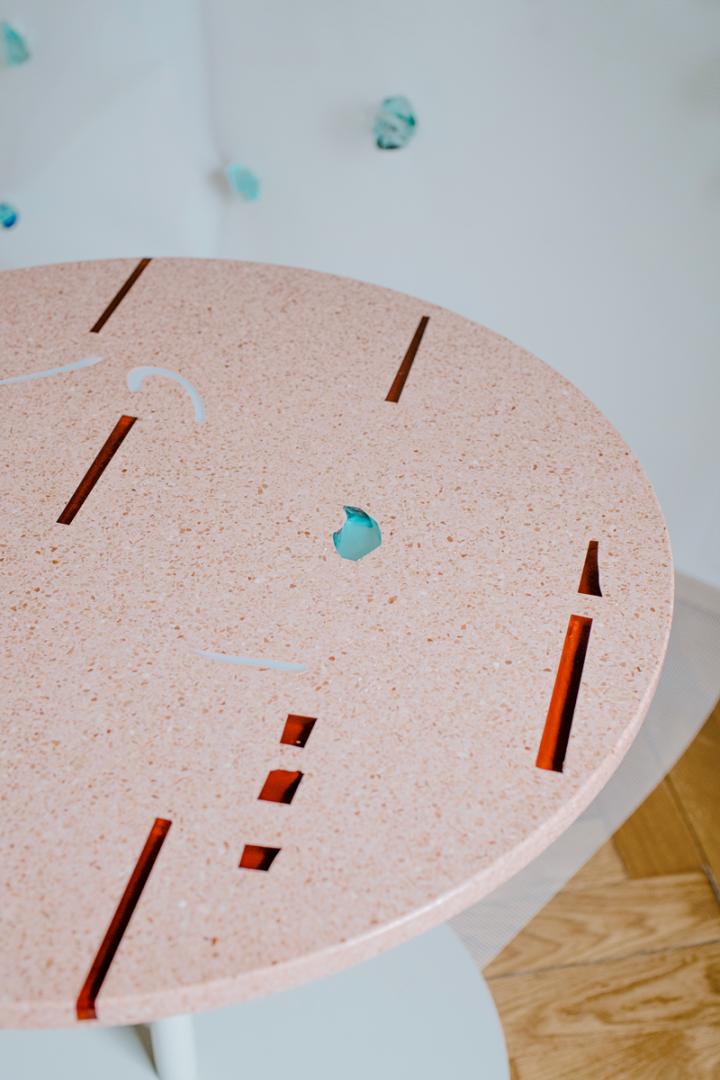
Every day, tons of waste from art and architecture projects accumulate in traditional European glass workshops. This waste is more than just colored raw material - it is shaped by the visions of many cultural creators. These leftovers are true gems. They live on in the first artistic surface material, BASIS RHO. With its durable and resource-saving form, it represents a complex contribution to sustainable material design. Its appearance develops great aesthetic qualities even in a small areas.
Project Region
EU Programme or fund
Which funds
Other Funds
Berlin Startup Scholarship at the University of Fine Arts Berlin: Creative Prototypingyear: 2019
Germany's Material Award 2020 by raumprobe: awarded 1st prize category designyear: 2020
GründungsBONUS - Funding scholarship for creative or particularly sustainable business models of companies based in Berlinyear: 2020/21
Description of the project
Summary
"It is not just an anonymous material. It is a generation-spanning neoterrazzo with an artistic soul!" artistic duo Jeschkelanger
BASIS RHO is a cultural hybrid project. It combines visual arts with architecture and is anchored, as it were, in material research and art history on the base idea of working with the leftovers of international art productions arising in Germany. The developers and artists Anja Langer and Marie Jeschke (together as the internationally successful Jeschkelanger artist duo since 2016) have their material, BASIS RHO, as more than an aesthetic and innovative approach. It is a multifunctional material developed for cross-disciplinary collaboration with architects, interior and product designers, builders, and project planners for private and public projects.
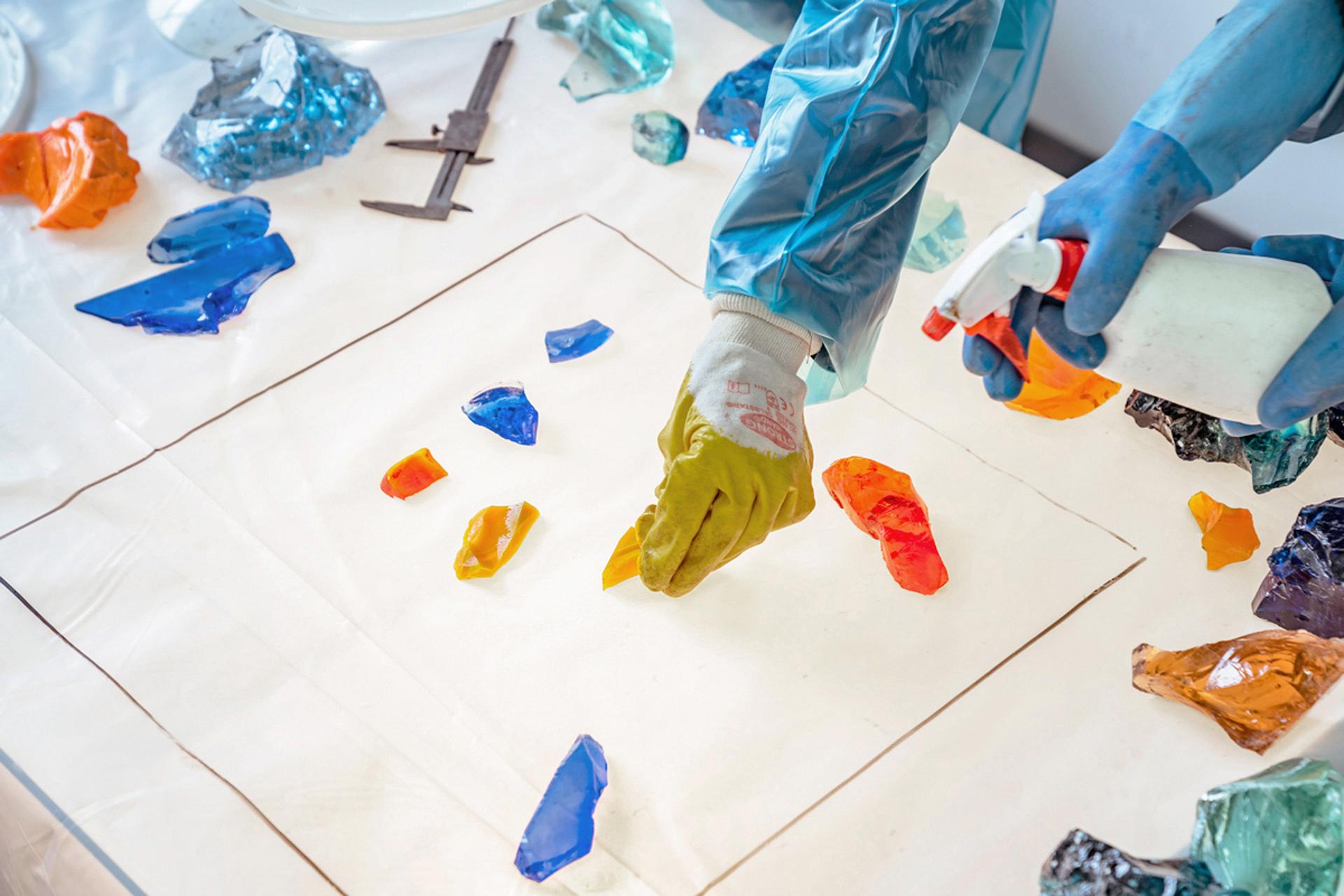
The concept of Circular Economy is at the same time the material and aesthetic determination of BASIS RHO. Jeschkelanger use the glass waste like liquid paint - each chunk of glass becomes a significant mark in their characteristic stone canvases. The glass scraps of other artists give the concrete matrix its basic structure and serve simultaneously as the artists' thousand-colored palette for their lithic paintings. This material is comparable to natural stone, extremely high quality and durable. Reworked many number of times, it can outlast many generations with its radiant surface. Here we follow the centuries-old terrazzo craft. This allows us to produce locally and use regional raw materials. The other components of concrete are still conventional and are to be replaced by regional, exploitation-free alternatives with a better CO2 balance. Currently, the first surrogates for BASIS RHO are being tested as part of a joint research project with the Federal Institute for Materials Research and Testing in Berlin.
Key objectives for sustainability
The concept of Circular Economy is at the same time material and aesthetic determination of BASIS RHO. The glass scraps of other artists give the concrete matrix its basic structure and serve simultaneously as the artists' thousand-colored painting palette for their stone picture surfaces. This stone material is comparable to natural stone, extremely high quality and durable. Reworked any number of times, it can outlast many generations with its radiant surface. The other components of the concrete are still conventional and are to be replaced by regional, exploitation-free alternatives with a better CO2 balance. Currently, the first surrogates for BASIS RHO are being tested as part of a joint research project with the Federal Institute for Materials Research and Testing in Berlin.
To 'paint on' with the art production leftovers of other artists, designers and architects is more than just pure upcycling. Here, a holistic appreciation is given to all creative people on a representative basis. In BASIS RHO, generations join together to form an artistic community. The glass remnants that shape the characteristics of BASIS RHO's artistic material come from art/architecture projects by renowned artists such as Olafur Elliasson, Gerhard Richter or Emi Knöbel, but also from restoration projects for medieval stained glass windows, for example, that were created under the supervision of artists and builders who have already passed away, and from many art in construction, design and architecture projects. BASIS RHO also unites, without hierarchy, the artist's craft, architecture, and visual arts - it unites the domains that compete in the present in one physical matter.
It is a long overdue attitude that the artists Jeschkelanger and their work represent - WE ARE ALL CULTURE and the time of egoistic individualism can no longer be supported by society as a whole.
Key objectives for aesthetics and quality
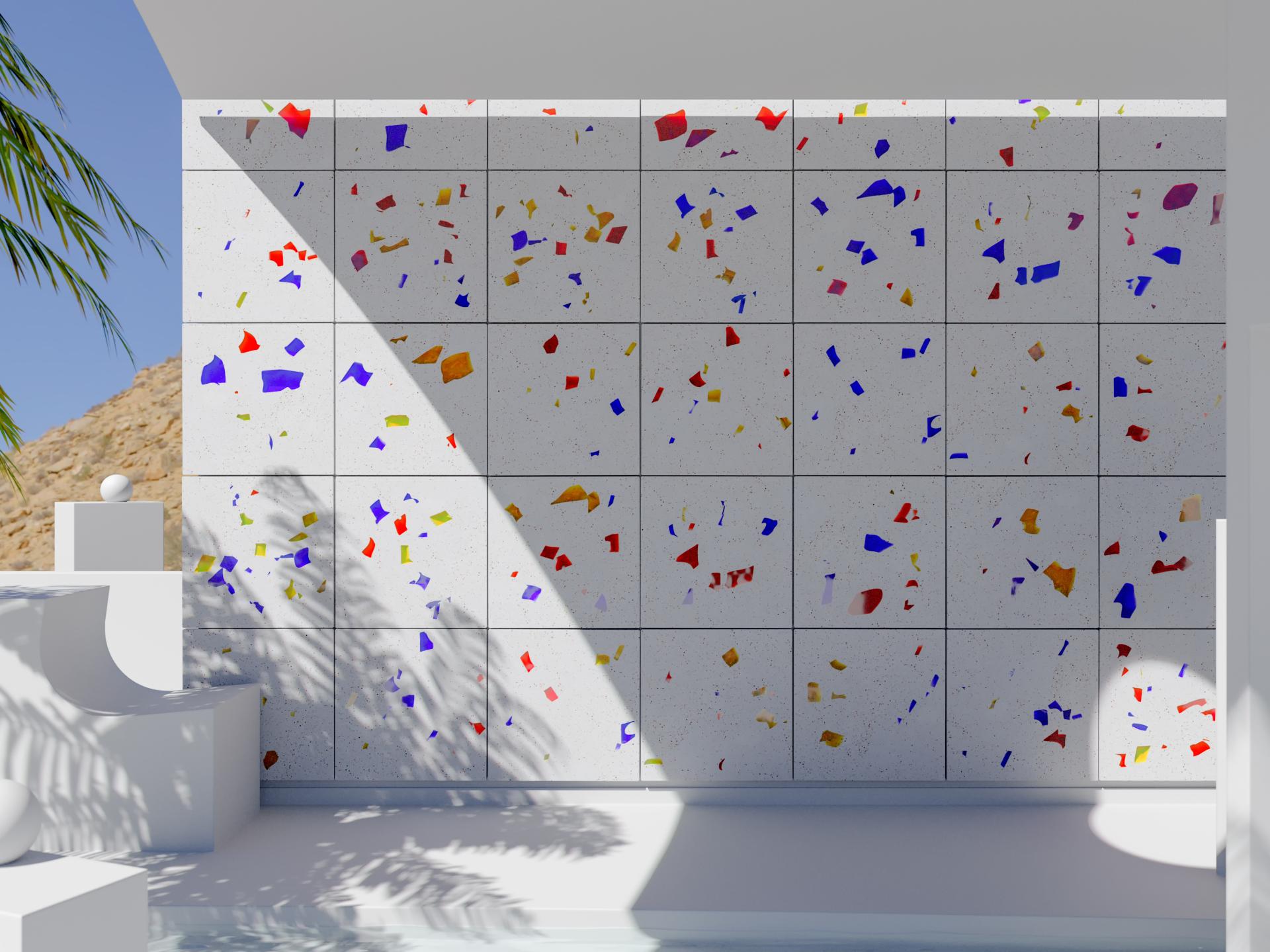
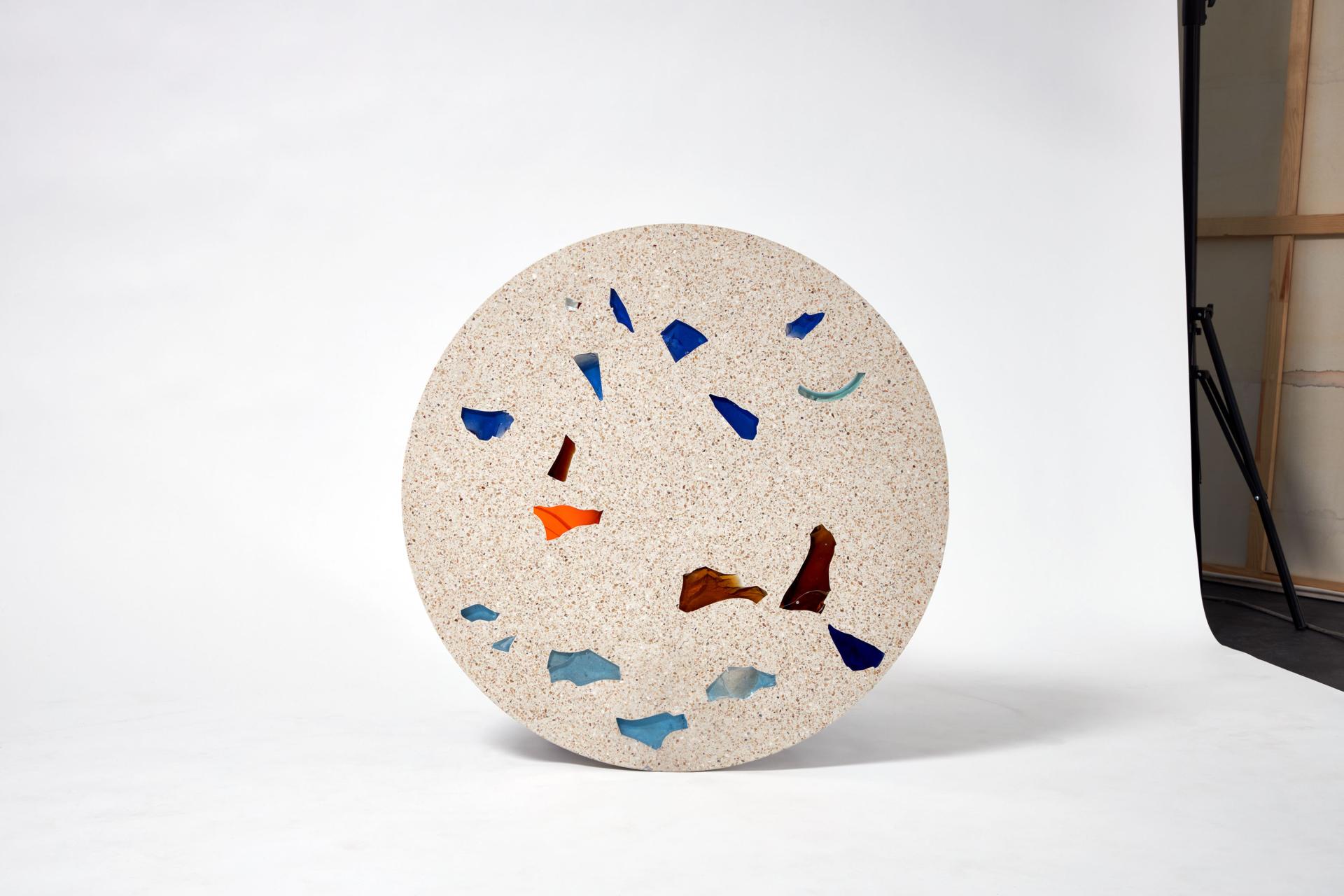
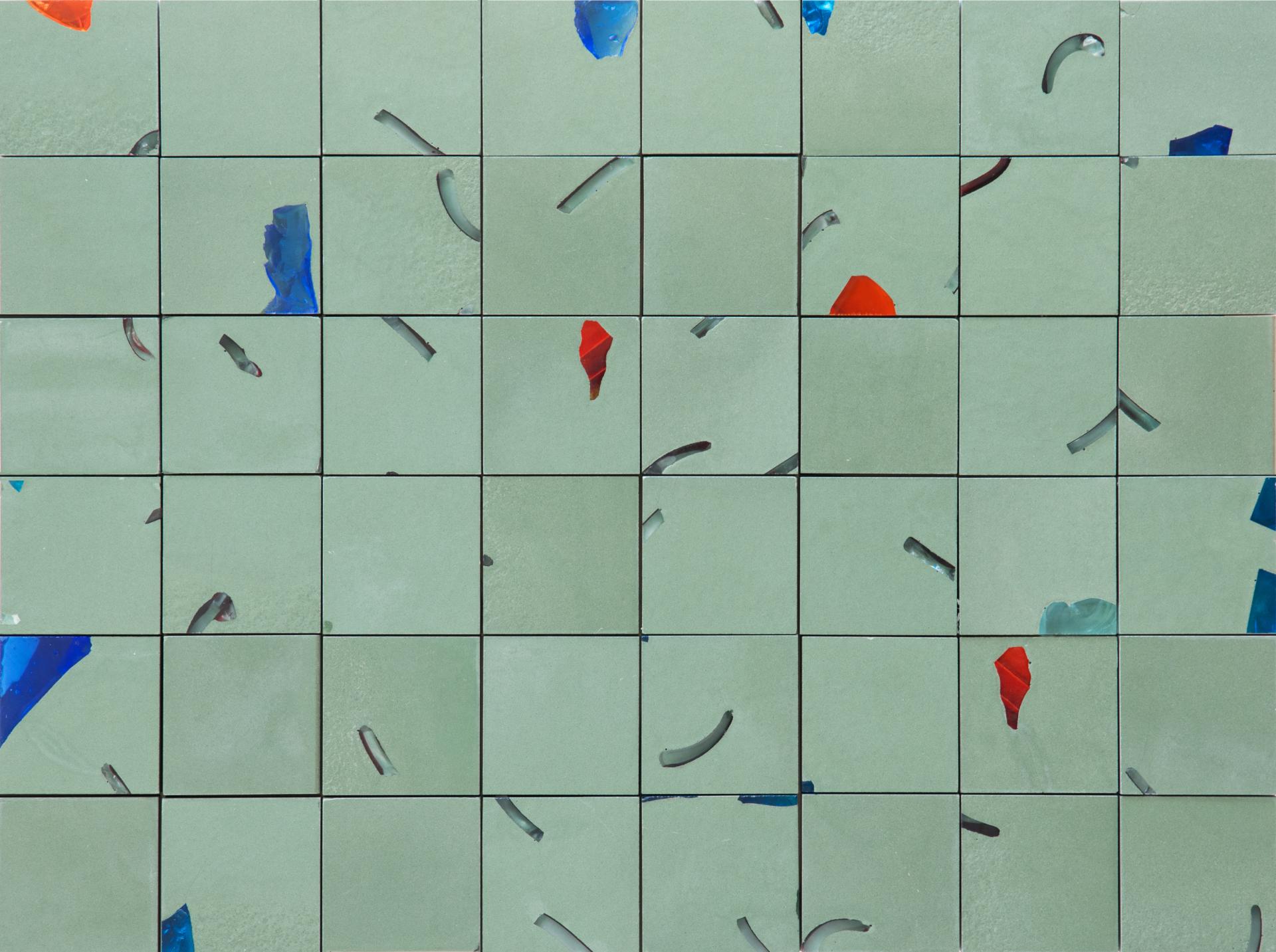
Each glass remnant is a unique found object. We give it a stage and embed it in a durable material - stone canvases for art and living spaces.The accruing glass waste we fall back on for BASIS RHO is dyed in up to 5000 colors. Like dots of color, graphic lines and colored surfaces, the glass chunks unfold their painterly qualities embedded in robust stone workstones. The glass color spots also open up an unprecedented insight into surfaces. Like mismatched windows or oversized colored pores, the glass chunks reveal the view.
BASIS RHO thus has two aesthetic qualities - on the one hand, the overall painterly effect in the surfaces and, on the other, captivating details - peepholes into works of art, tabletops, floors and walls.
Like prisms, the integrated glass fragments penetrate the surfaces and enable a world of experience all on their own. The view of the surfaces that constantly surround us in everyday life is blocked while BASIS RHO allow us to penetrate and to look though the object. This visual perforation of the surface slows down time - reminds us of natural experiences and removes spatial boundaries.
For each project that is created with BASIS RHO, an individual selection of glass pieces is made. Each found piece is selected for color, shape and size to fit the project.This careful selection leads to the fact that with artistic care, a completely original pictural language can develop - suits the installation placement and its concept. Since BASIS RHO is created in a manufacturing process, it is possible to respond individually in an aesthetic way, unlike with ordinary material manufacturers - so every square centimeter that is created is already of artistic value and uniqueness.
Since BASIS RHO is art that can be built on, the material can also be touched, walked on and used. This functional artistic approach also breaks down the usual boundaries between art and application and enables a much larger radius of experience.
Key objectives for inclusion
The initial spark for the development of BASIS RHO came from the irregular, multicolor heterogeneous glass remnants. No two remnants are alike. These unique glass fragments embody for us an inclusive basic attitude for a social togetherness. Each remnant is worth to be included, with all the others it forms a diverse unit.
As the development process progressed, it became apparent that we needed to approach non-art professionals in order to achieve a long-lasting, robust formula. Thus began an interdisciplinary, networking collaboration with stone, concrete and glass specialists, architects, designers, but also clients from hotels, retail and other sectors.
We can also observe a very strong heterogeneity among interested parties, customers and collectors. Since we design our material in a scalable way, it is already available in a small area and thus accessible to many people. BASIS RHO has a very high aesthetic quality - it can be directly experienced by everyone. It does not require background knowledge, language or an understanding of complex interrelationships. BASIS RHO can be experienced directly and very low-threshold by many people. In exhibitions we could observe that children (even toddlers) move purposely towards the BASIS RHO surfaces and interact with them by touching and looking at them directly.
We have developed the material as artists and have acquired all the necessary background information and techniques on our own with the help and advice from specialized local producers. This leads to the fact that we can involve people with different levels of knowledge and educational backgrounds in the work both practically and theoretically.
BASIS RHO's great potential is to set visual fixed points in space - these can function for public institutions, for example, as a barrier-free piece.
Results in relation to category
In the visual arts, too, it is unavoidable to conceive, produce, and present in cycles. Artists should be aware of their responsibility that even the materials they need and use to produce their artworks are often neither sustainably obtained nor produced. Until now, artworks have not been evaluated or interpreted from this perspective. It is time for art to also broaden its field of vision and act in a more holistic way. The development and use of BASIS RHO demonstrates this holistic approach. As a pioneering project, it can inspire other art and culture makers and sensitize their own materials, their origins and sourcing. This is not only true for the artists themselves; museums, galleries and exhibition venues and their staff must also be sensitized to holistic art-making. Only in this way can they continue to fulfill their mediating mission for future generations.
Every piece of glass that becomes part of our color palette is unique. In our BASIS RHO color palette, each color and shape exists only once. In times of convenience food, standardized RAL color shades and mass products, a general understanding of norms has been established in society that irregularities and deviations from the norm are expelled from cycles and devalued. The project BASIS RHO enables a shift and debates normative values. This inclusive basic idea could already be communicated in many places in Europe and worldwide in exhibitions, fairs, seminars and workshops.
With BASIS RHO as an interdisciplinary material, a large number of people can be reached. The hybrid art material has been used, for example at the 2020 Surface Design Show in London, at the Direktorenhaus - Museum for Design&Crafts in Berlin, in a contemporary art exhibition in Munich (2021) in a showroom for 'functional art' in Brussels and in private homes and restaurants.
How Citizens benefit
BASIS RHO is created and aesthetically designed by the artists Jeschkelanger. At the same time, it is a raw material for diverse applications and invites interdisciplinary collaborations: since 2019, surfaces and objects made of BASIS RHO - which can even be touchable and functional - have been developed for public areas in collaboration with architects, interior designers and builders. From restaurant's tabletops to walls to floors to artworks, BASIS RHO acts as a functional material and that is presented to spectators as abstract, touchable paintings, blurring the line of art as an element exclusive of function and everyday life.
This material can be seen in places ranging from Koblenz´s State Investigation Office building to Berlin´s Purgal Deli restaurant to Vienna´s German Embassy or to Munich´s We melt before it forms exhibition (2021, curated by London´s Serpentine Gallery´s Joseph Constable). BASIS RHO is a material that not only becomes a building block for projects and installations, it also allows for the existence of a local and exploitation-free building material that is available and interactive to all.
Since 2020, there has been collaboration with the Federal Institute for Materials and Space Research for the creation and distribution of a more sustainable material. The artists have also held seminars and talks in places like France, Germany, and Singapore to further share their research and constantly find new ways to make BASIS RHO more accessible. Jeschkelanger are always open for collaborations and conversations to all in order to further improve their material. The first research results of this collaboration and functional artworks from BASIS RHO will be on display at the Long Night of Science in 2022 in Berlin where this new interdisciplinary idea will be presented with both a scientific and artistic focus.
Innovative character
The innovation of BASIS RHO consists of the combination of artistic work and tradition as well as modern crafting technology. Together, these result in the unique BASIS RHO manufacturing process: a specially developed concrete formula with glass stones placed in it precisely by the artist duo Jeschkelanger - which themselves are remnants of other artists and their projects. These remnants of art become the raw material, which are transformed into new art in a unique circulation process.
In order for BASIS RHO to be producible at all, new craft as well as artistic processes had to be developed by Jeschkelanger:
On the one hand, a specific concrete recipe had to be worked out that allows the bonding of glass and concrete. This formula was developed by the artists themselves and consists of a specific type of cement, gravel aggregates and limestone powder, which must be mixed in a precisely determined ratio.
Another important challenge was to find a method that would allow the exact positioning of the stones in the overall surface and their light transmission from the front to the back. To do this, the large glass remnants had to be cut into slices. However, there was no technical possibility for this at the beginning. As a result, Jeschkelanger were able to develop their own saw for this purpose.
BASIS RHO is thus an innovative work of art with a sustainable background and can be used as a surface material to create unique surfaces in any interior or exterior space.
The many, artistically placed glass stones, as pointillistic groups of shapes of each BASIS RHO image, convey the inclusive character of the material.