Acropolis more accessible to all
Basic information
Project Title
Full project title
Category
Project Description
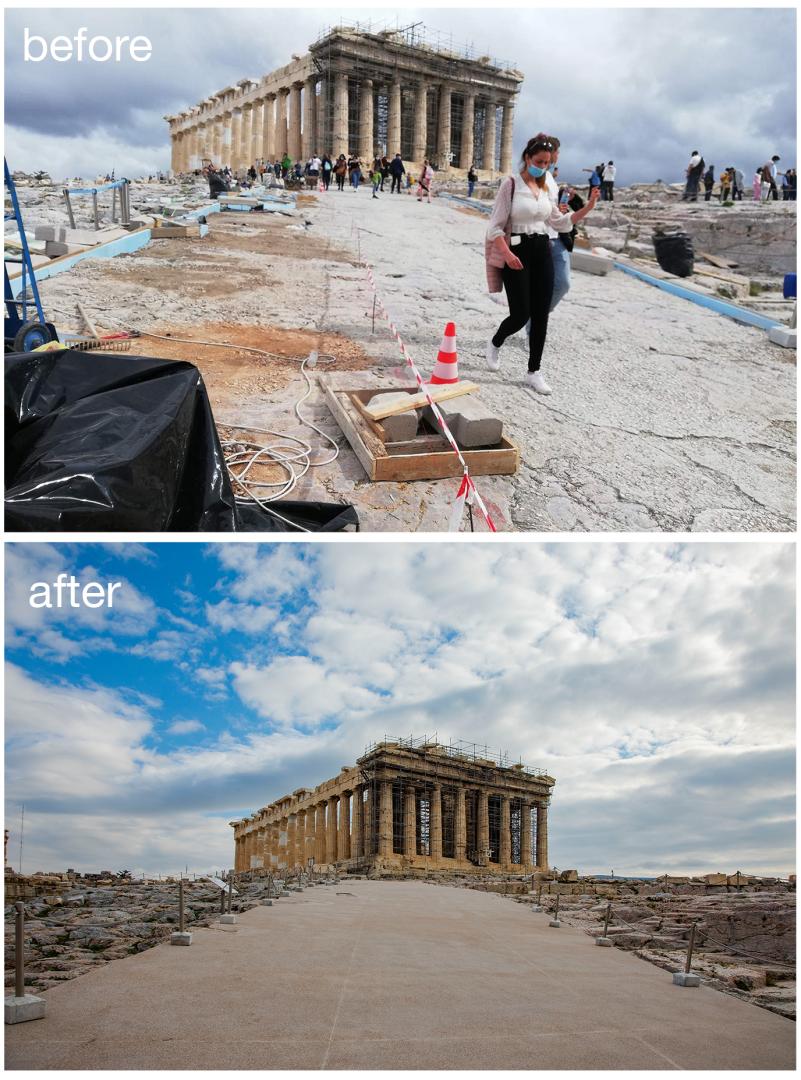
On December 3, 2020 the Greek State presented the upgraded Acropolis facilities for persons with disabilities: the project included the installation of a new state-of-the-art Inclined Elevator and the refurbishment of two walkways, redesigned by the Hellenic Ministry of Culture and Sports and donated by the Onassis Foundation. The program of upgrading all utilities and services on the Acropolis, also included new Lighting, Lightning Protection, Vulnerability Study and Site Risk Management.
Project Region
EU Programme or fund
Description of the project
Summary
The Acropolis of Athens is a monumental complex that embodies the universal values on which the European Model is founded, while its most important structure – the Parthenon – is regarded as the symbol of Western civilization. A cultural tourism industry of high caliber has developed around the citadel, which also acts as a crucial parameter in the measured and sustainable development of the Greek capital. It therefore constitutes an exemplary model for making best use of cultural heritage on the basis of such principles as sustainability, viability, and inclusion.
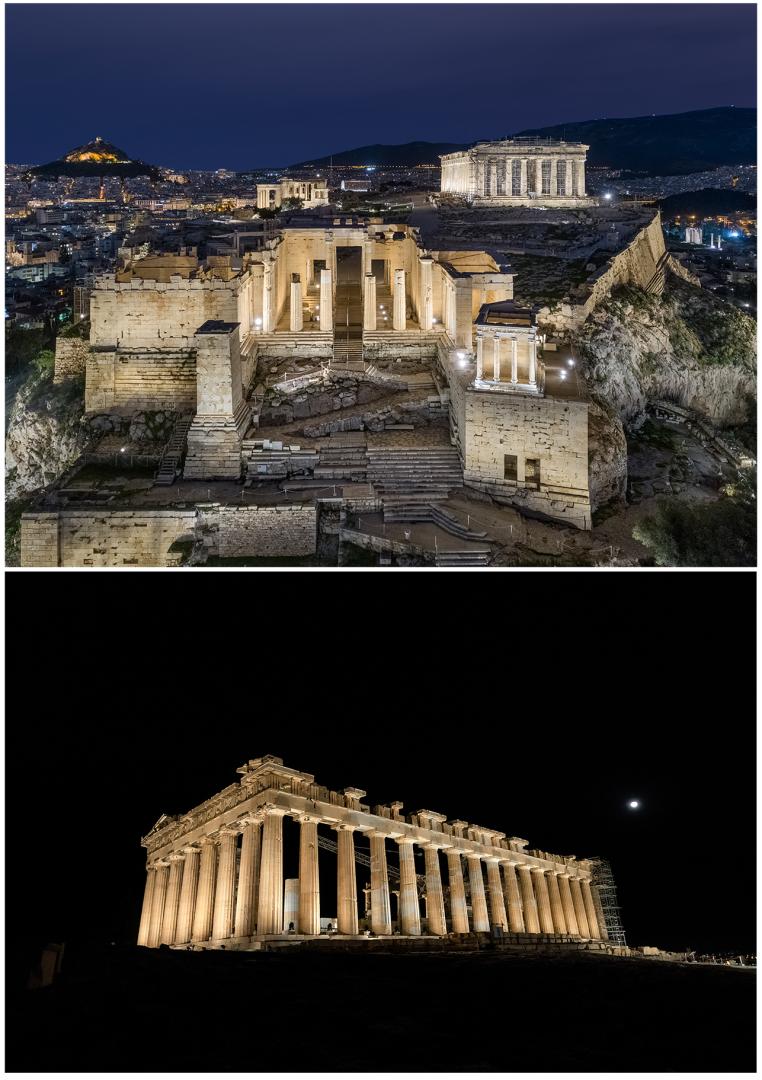
The new lighting of the Acropolis citadel and its monuments (September 2020) – which conforms to energy saving principles, and meets the aesthetic criteria set by the structures themselves – unveiled a monument reborn, images of which were beamed around the globe. The new walkways have made the Acropolis accessible, in line with inclusion principles. And the cutting-edge inclined elevator up the slopes of the citadel shows how innovation can be used to facilitate the daily lives of citizens.
As a monument with universal appeal, the contemporary profile of the Acropolis concerns, besides Greece, all Europe, and open society in generally. Maximizing engagement with the cultural sphere bolsters both social cohesion and the well-being of citizens. It brings a sense of belonging, of equality and dialog, and constitutes the very essence of sustainable development, since the cultural repertory is thus handed down – protected and elevated – to coming generations.
The involvement of civil society, which has allowed for greater access to the monument, has proven itself a unifying force, particularly in the traumatic wake of the Covid-19 pandemic. The monumental complex, -more easily accessible, and open to all – is already a case study for inspiring further action.
Key objectives for sustainability
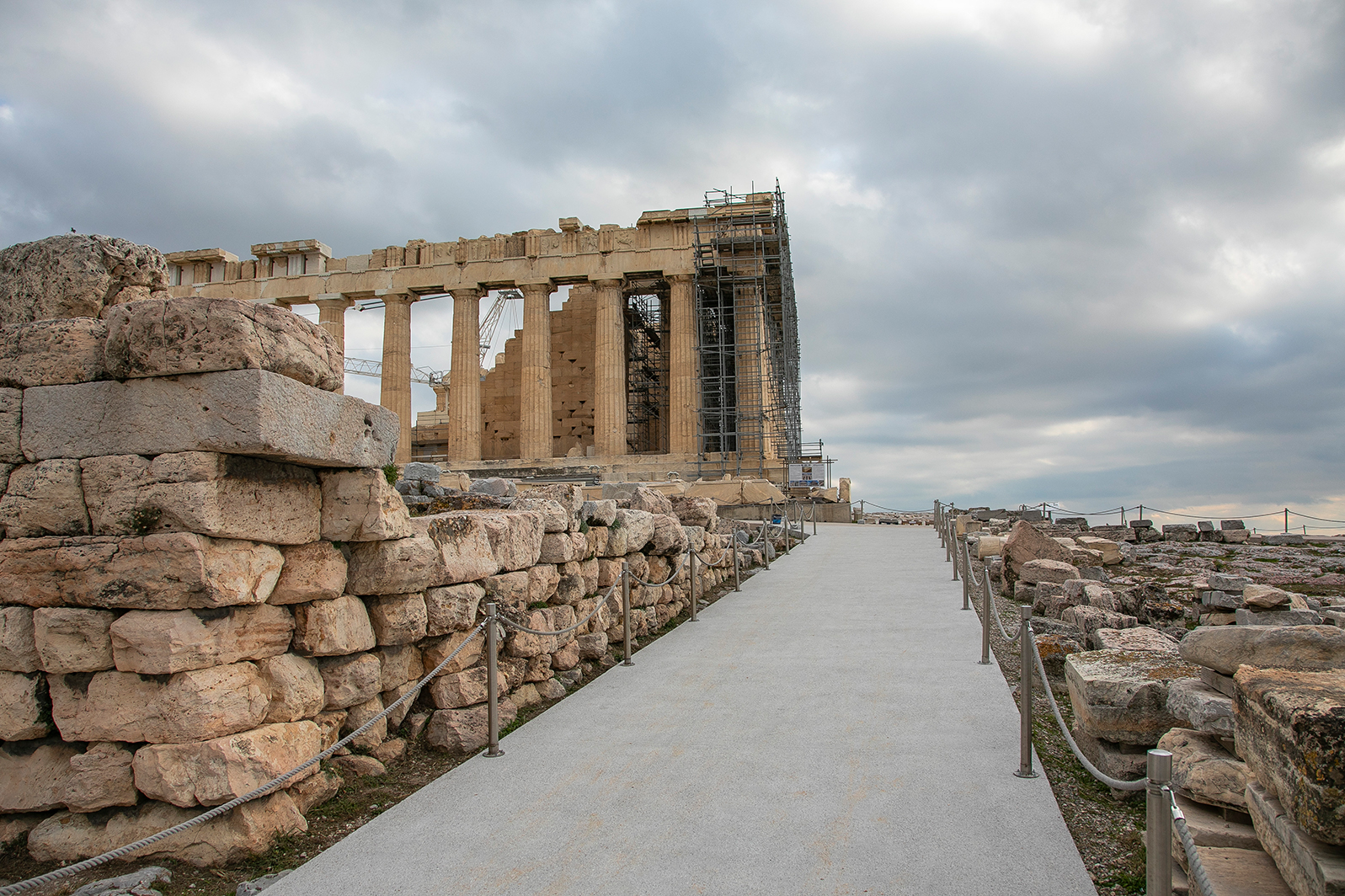
Upgrading accessibility to the Acropolis fully responds to cultural, economic, environmental, and social objectives. Old walkways with afresh pavement of artificial stone, totally reversable means that the natural bedrock is left unscarred and, with the proper treatment, allows for the constant repair and replacement of these materials over the years to come. As regards of the illumination of the monumental complex, the new lighting fixtures mean the system will run without issue for twenty years while delivering energy savings of more than 65%. Light pollution has also been reduced through improved target alignment with the monuments.
The broader program upgrading all utilities and services on the Acropolis includes Lightning protection for the citadel, and the completion of a Vulnerability assessment report that takes in security considerations, conservation planning, and risk management. Through in-depth analysis of vulnerabilities, and the study of all on-site hazards, it has recommended a series of proposals that have been adopted by the Greek State. A broad range of possible risks have been considered, including natural phenomena – particularly in these times of climate change – and human factors. Hydraulic engineering works have in large part been completed to prevent flooding events caused by heavy rainfall, as observed on the citadel over the last decade. The study covers the Acropolis and its environs, the Odeon of Herodes Atticus and the Dionysiou Aeropagitou pedestrian street, the Areopagus, the Pnyx and the environs, the Ancient Agora, the Roman Agora, and the Library of Hadrian.
The restoration works on the Parthenon and fortification walls, the stabilization of the rock mass, and reconstruction projects undertaken at various points round off the works are being conducted on the Acropolis.
Key objectives for aesthetics and quality
The interventions undertaken in the environs of the Acropolis strive both to improve functionality, and to highlight the aesthetics of the monumental complex. All interventions meet high aesthetic standards. The walkways follow the major courses laid out in the 1970s using concrete and gravel. Traces of ancient remains found alongside this core route have been preserved, so that researchers retain access to artefacts that attest to the site’s ongoing use through time. This surfacing project sought not only to repair surface damage, but also forms part of the study for the restoration of the site’s ancient levels by professor Manolis Korres, who is the President of the Committee for the Preservation of the Acropolis Monuments, and a National Technical University of Athens scholar internationally recognized expert on the monuments of the Athenian Acropolis.
The most widely visible element of the aesthetic enhancement works is the modern lighting program of the Acropolis, overseen by the international award-winning designer Eleftheria Deko. Clean lines of white light harmoniously pick out nine landmarks: the Acropolis rock, the fortification walls, the Parthenon, the Propylaia, the Temple of Athena Nike, the Erechtheion, the sanctuary of Dionysos, the Stoa of Eumenes. Five more monuments have been illuminated for the first time: the Monument of Thrasyllos, , the Asklepieion, the Cave of Apollo and Aglauros / Klepsydra, and the Shrine of Aphrodite. This approach signals a return to a certain austereness, and to a respect for the surrounding area – elements that lie at the very heart of this architectural complex.
The Acropolis forms part of a broader monumental lighting scheme, one that highlights the wider geographic area as a single unity and includes the Temple of Hephaistos in the Ancient Agora and the Philopappos monument, which have now also been illuminated on the basis of these principles.
Key objectives for inclusion
Access to the Acropolis has long been called for by its Greek and international visitors with disabilities. Up to 2004, their only way of accessing the Acropolis was in the arms of friends and relatives. Visiting was also difficult, however, for the aged, families with young children in pushchairs, pregnant women, and people with breathing difficulties or heart problems, all of whom struggled to get up onto the Acropolis.
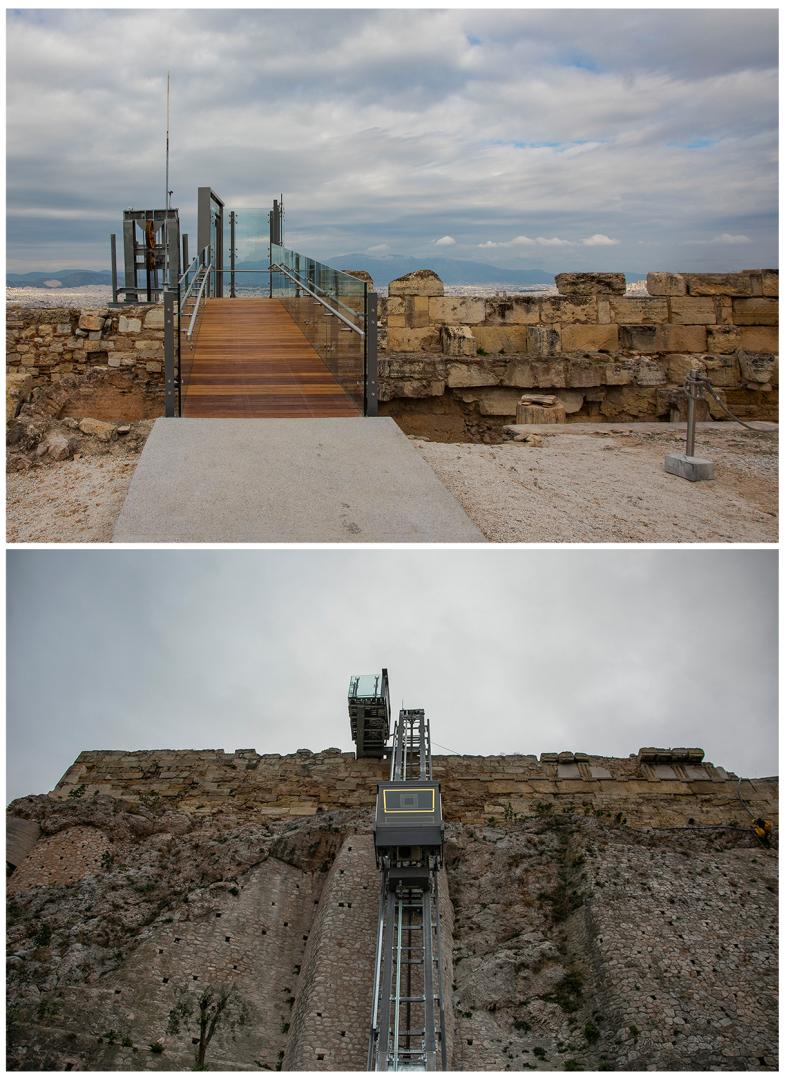
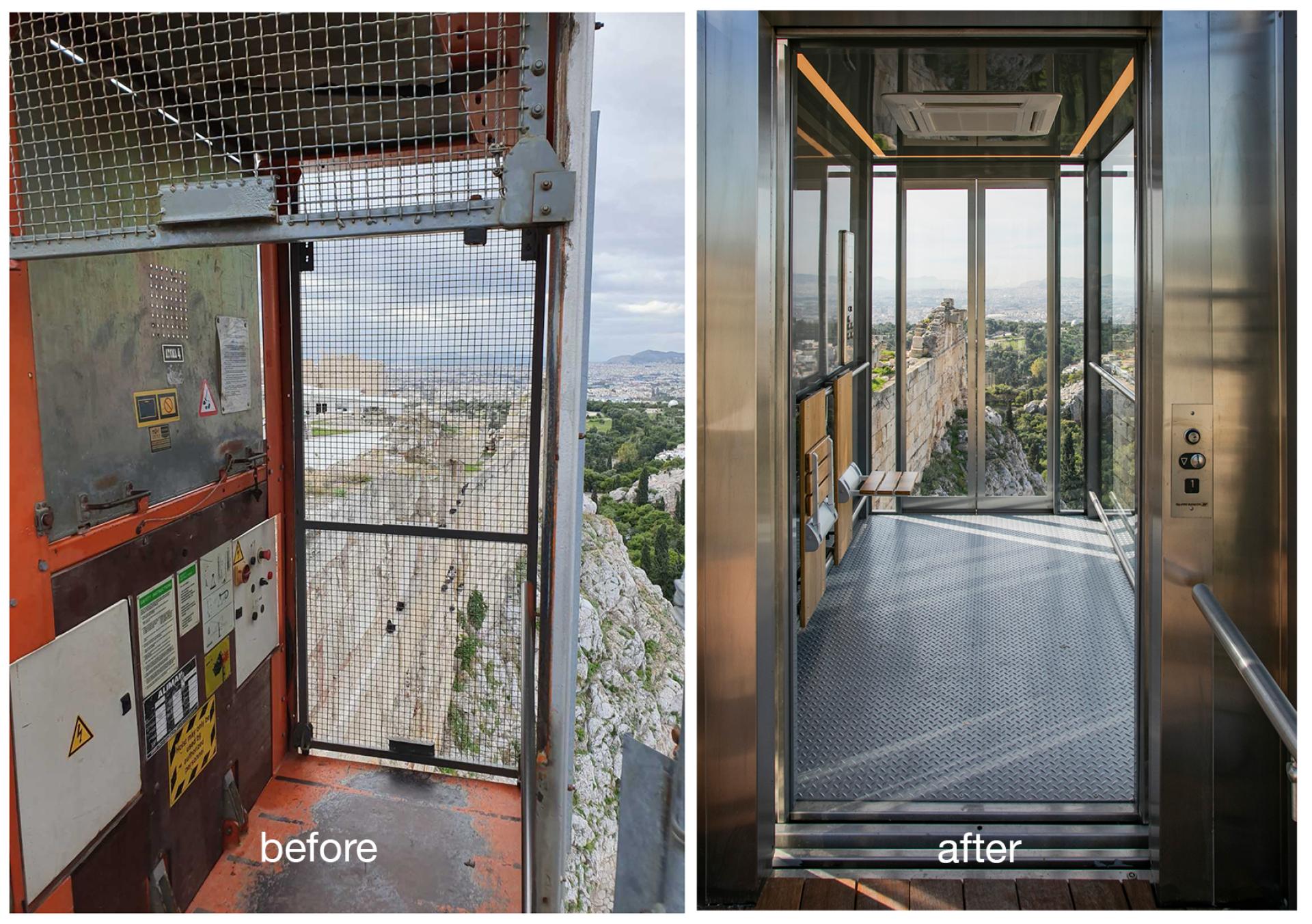
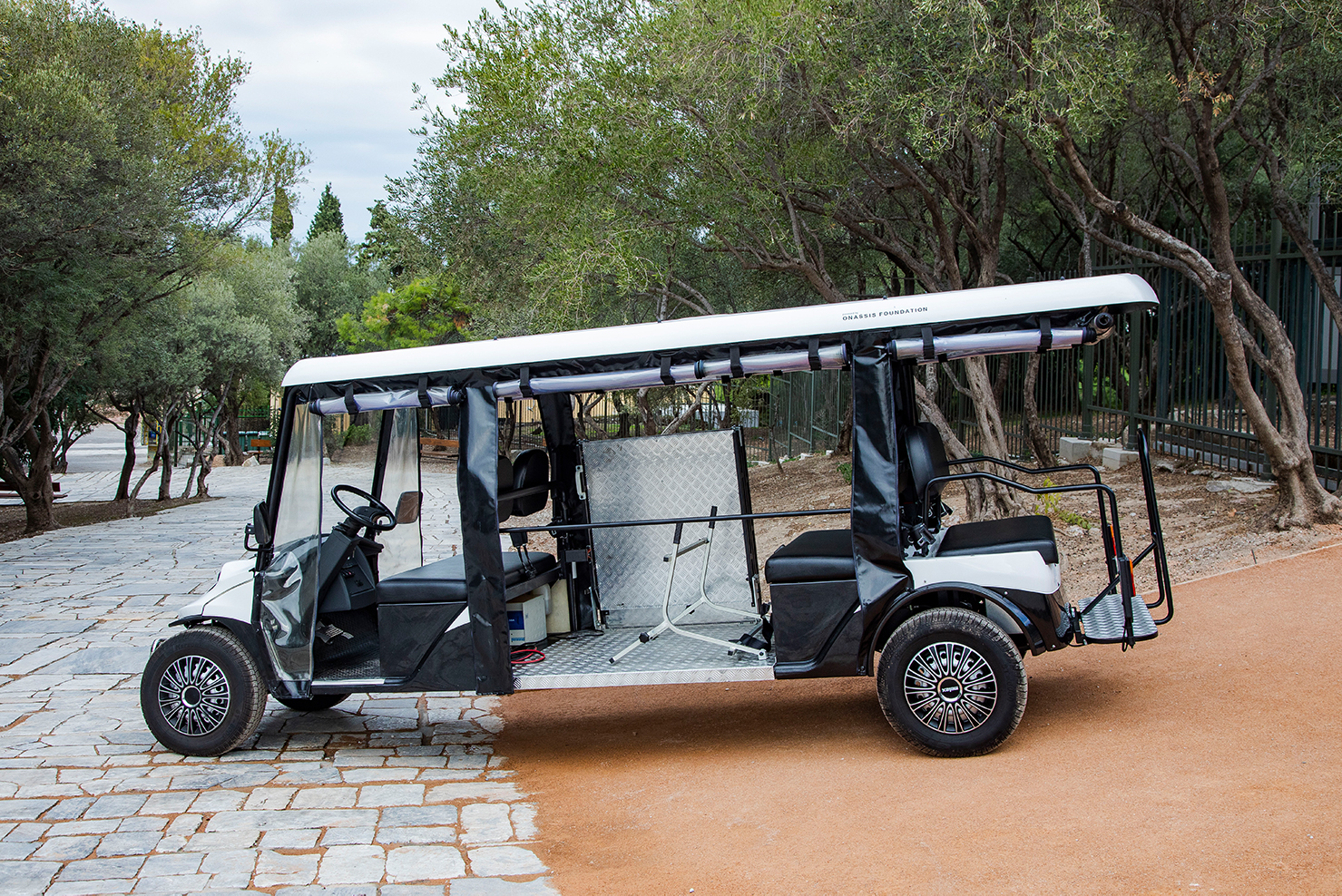
In 2004, on the occasion of Athens hosting the Olympic and Paralympic Games, a series of complicated interventions were implemented that included a staircase leading from the Peripatos (the ancient pathway circling the Acropolis) to the foot of the citadel, fitted with a platform stairlift capable of transporting one wheelchair user at a time and persons with reduced mobility. From there, a vertical lift took them up to the top of the Acropolis. Once there, they still faced the problem of damaged and slippery walkway surfaces, limiting those persons to a small section of the route, and requiring them to take particular care depending on a personal assistant. The resurfacing of the route along the Peripatos means it is now fully viable both for wheelchair users and persons with reduced mobility. But the decisive intervention here is the high-capacity inclined elevator that whisks visitors from the lowest level of the Peripatos to the highest point on the citadel in complete safety and dignity. In addition to its capacity to transport two wheelchairs, it also offers two seats. Up on the citadel, the new walkways are broad, smooth, and unjointed, allowing for the concurrent movement of all persons with disabilities and reduced mobility without obstacle. Furthermore, two golf carts (for six and eight people or one wheelchair user) are now available to assist transportation to the elevator.
Results in relation to category
The first images of the newly-lit Acropolis were presented via live streaming on September 30, 2020, at a time when the world was in the throes of the Covid-19 pandemic. These were images of optimism and hope, inextricably linked to the universal values symbolized by the monument itself. The project has already won three [D]ARC 2020 Awards, considered the “Oscars” of lighting design: Best Exterior Lighting Scheme in the Structures – High Budget category, Best Creative Lighting Event, and the Best of the Best Award (given to the project garnering more votes than any other category winner).
The importance of this message was reported on by some of the world’s most major news outlets. Reuters, for example, noted that the “New Acropolis lighting system brightens Athens’ ‘eternal compass’”, while Le Figaro wrote that “Athens shines new light on its Acropolis – a beacon of civilization”.
With regard to the new accessible walkways on the Acropolis, the Greek National Confederation of Disabled People conducted a site visit and concluded the following:
- “the texture of the surfacing applied to the historic Peripatos is suitable for the movement of persons with disabilities of all kinds”;
- “the new inclined elevator functions perfectly, offering safe transport and unparalleled views”; and
- “up on the Acropolis, the constructed walkways present a suitably non-slip and continuous unjointed surface”.
In November 2021, the Hellenic Ministry of Culture and Sports will be hosting an international academic conference, where it will be presenting all works carried out since 2019 and everything to be implemented by 2025.
How Citizens benefit
Acropolis hill with its monuments is a landmark that distils the values that created it. It is a heritage that concerns us all, without exception. Mindful of the principle of sustainability, we designed interventions with a minimal energy footprint that are of universal interest to society. The monumental complex can now be accessed by all social groups thanks to the provision of a dedicated elevator for persons with disabilities and the elderly. This is why the Greek National Confederation of Disabled People has been providing us with assistance throughout, and has already conducted a site visit to ensure the facilities are properly configured to meet real needs, and all within a sustainable development framework.
In the same vein, certain facts and figures speak for themselves: views of the Acropolis lighting launch event on social media platforms (including Greek prime ministerial accounts) reached 475,000, with around 187,000 of those happening on the YouTube channel of the Onassis Foundation, which funded the new lighting project. Posts on the Onassis Foundation’s social media accounts were engaged with 420,000 times, with 92% of comments and reactions indicating a positive reception. In the media, the project’s positive impact is reflected in 210 mentions in daily and Sunday newspapers, 2,155 on news websites, 45 on the radio, and 56 on television programs. After many years, now day visitors can again stroll on the walkways, facing-up and admiring the monuments anxious- free of falling down.
Innovative character
For the first time, the lighting of the Acropolis distinguishes the monuments on the citadel from the fortification walls, and from each other. 609 cutting-edge, high color fidelity LED lighting fixtures have been installed (that’s 40% fewer than before), delivering energy savings of more than 65%.
The material selected for the walkways is an artificial stone containing just 12% cement, and is equivalent to the supplemental composite used to conserve the monuments themselves. All materials were tested during on-site application trials conducted by the Committee for the Preservation of the Acropolis Monuments.
The new state-of-the-art inclined elevator, certified by TÜV HELLAS (TÜV NORD), was constructed by the internationally renowned Italian company MASPERO ELEVATORI. No elevator like it serves any other monument worldwide. It is unique in its class thanks to its construction, with an angle of ascent that – ranging from 38 to 78 degrees – approaches the vertical. It also offers numerous safety features. Back-up battery power is available in the event of a power cut. A dual GSM computerized signaling system is connected to five sensors programed to detect any fault or emergency situation (seismic shocks, strong winds, ice, or sudden stops). In the event of low temperatures, the lift automatically activates to prevent ice forming on its rails. The elevator completes its ascent or descent in just 32 seconds.
And for the first time, hydraulic engineering works have been undertaken on the Acropolis, in accordance with project studies that began in October 2019. This has resulted in the construction of a gully on the east side of the Parthenon, and an overflow and drainage channel on its south-east side. These hydraulic engineering works constitute the first time that longstanding issues of flooding – on the Acropolis and in the Ancient Agora – have been dealt with comprehensively.