Edinburgh Apartments & Lofts
Basic information
Project Title
Full project title
Category
Project Description
New life for a Soviet sanatorium. The Edinburgh Apartments & Lofts illustrate the value of creative thinking in the context of sustainability, among others. A neglected building has become family friendly housing, which respects the local vernacular while also addressing contemporary needs. This isn’t a formal transformation to improve a building’s energy efficiency, but value-adding adaptive reuse. The apartment complex fosters community spirit and encourages appreciation for nature.
Project Region
EU Programme or fund
Description of the project
Summary
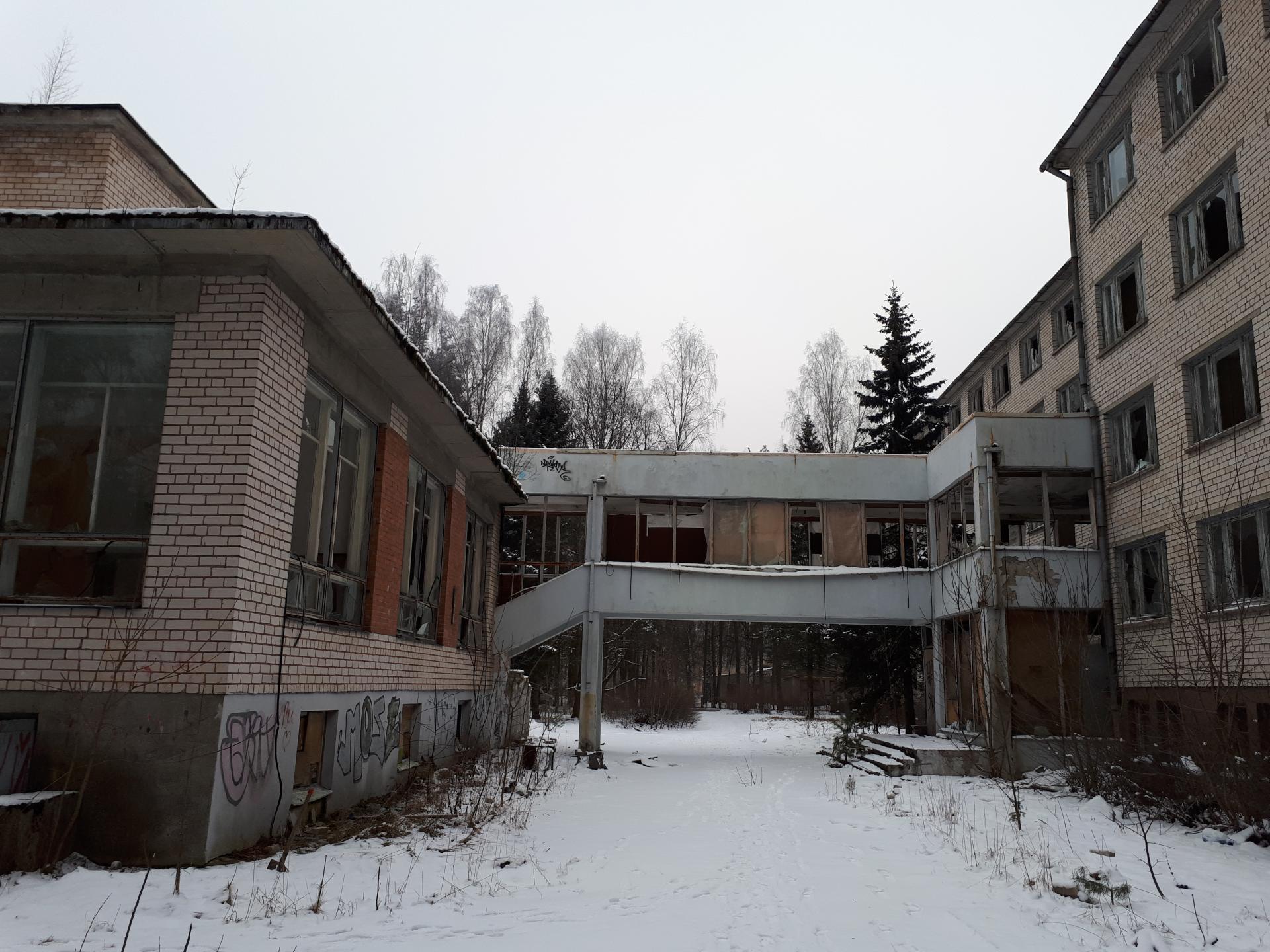
Extending the lifespan of a building through adaptive reuse, by considering form and function. Before becoming Edinburgh Apartments & Lofts, the complex was a neglected Soviet sanatorium. Located in the residential and resort town of Jūrmala, it caught the eye of developers. OpenAD agreed to transform the property.
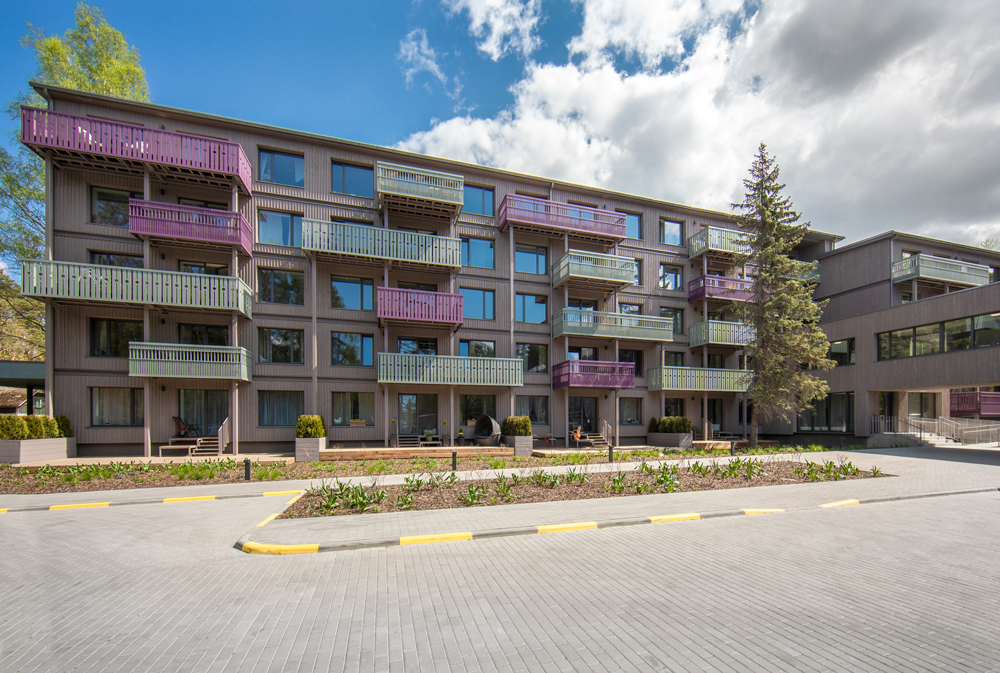
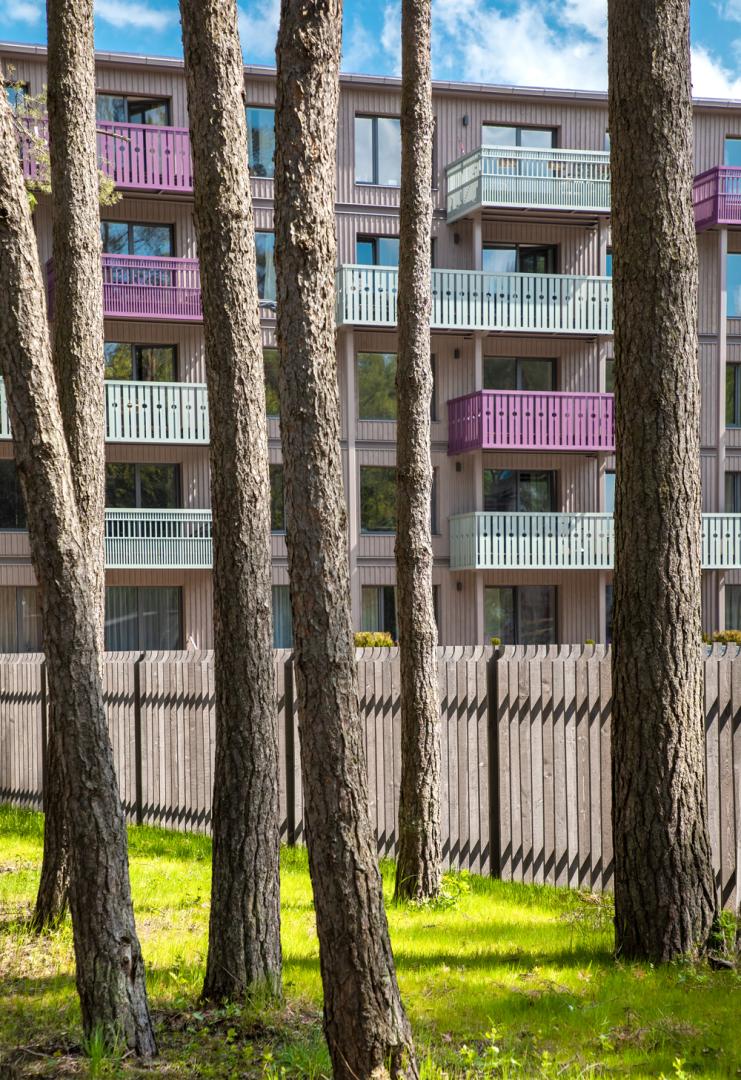
Though Latvia has witnessed the renovation of many Soviet buildings, the approach is often functional, without considering aesthetics, users’ wellbeing and broader effects of architecture on society. In this case, we not only adapted the building to residential purposes, but also ensured it caters to the needs and expectations of today’s society. We gave it a completely new look, inspired by the vernacular architecture, provided outdoor space for personal and shared use to foster community spirit and respect towards the natural surroundings. The result underlines the role of architects in creating a more inclusive, collaborative and beautiful future.
We see this as a sensible way to deal with controversial heritage. In respect of our environment and future generations, knocking down should be the last option. Instead, rejuvenation and adaptive reuse can help solve challenges. It encourages critical and creative thinking at a time when so many decisions on personal, municipal, national and international levels seem to be based on short term and financial reasoning.
Unfortunately, this was also a first-hand experience of sustainability succumbing to the realities of the current market. The Baukultur was a compromise while we had to respect the developer’s budget. This was a full-on confrontation with the situation that sustainable construction is expensive and therefore out-of-reach for many.
We will use the project as an example for the future. With major construction work completed, but work still underway on interiors and landscaping, it has already received public attention, guiding conversations towards the real meaning of sustainability.
Key objectives for sustainability
Our primary concern was to recycle at least some of the resources from the original sanatorium building. Once the team had evaluated the structural integrity, quality and state of the building, we concluded that it was possible to save the shell, rather than razing it and starting from scratch. Soviet heritage is a sensitive topic in Latvia, as everywhere in the territory of the former USSR, but we think we need to move on from the idea that knocking down is the only way of dealing with an uncomfortable past.
A shared intention between us and the developer was to create a safe and family friendly living environment. The idea of encouraging community spirit and a sense of belonging was not an afterthought. From the start, the plans included shared space such as a functional garden, playground and pergola for events.
We also wanted the architecture and design to encourage residents’ connection with the surrounding environment, hence every apartment has its own outdoor space along with the shared parkland and garden. In short, community and nature were key considerations. One could say we were guided by two Latvian sayings: “viss jaunais ir labi aizmirsts vecais” (everything new is the well-forgotten old) and “pastāvēs, kas pārvērtīsies” (that which transforms, will survive), because we think the past holds many clues to a more sustainable future, and that solutions are not always technical and complicated. Many answers are actually related to human behaviours on an individual and societal level, so we should work with those.
Where possible, we worked with local suppliers and contractors. Materials such as the pine cladding, paving and timber for the fence are locally sourced. Elements like the fence, playground, outdoor furniture and balconies are locally made.
Key objectives for aesthetics and quality
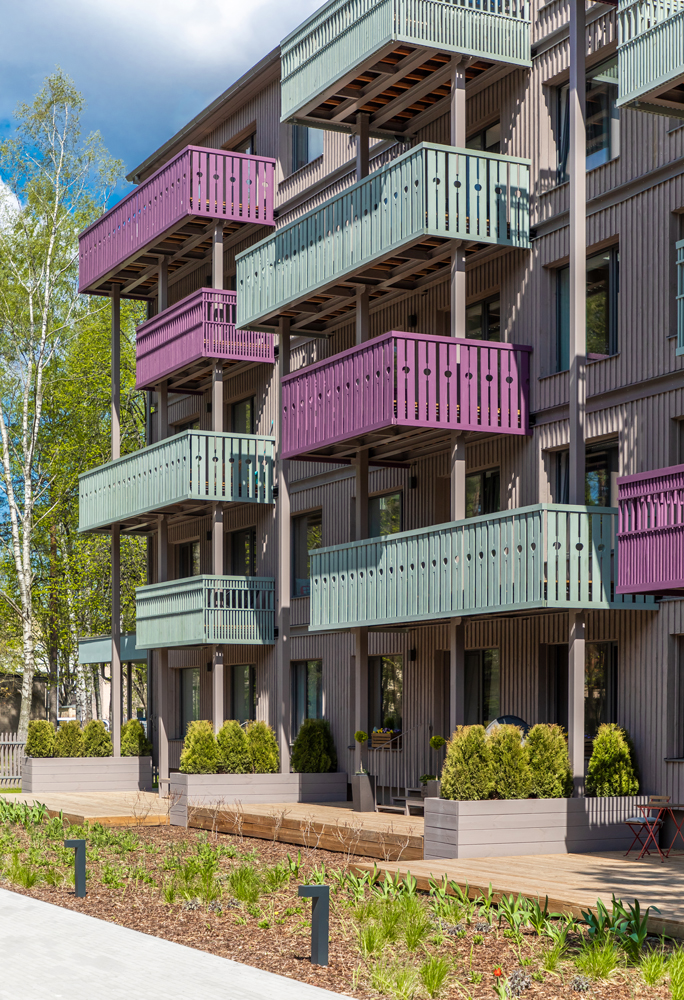
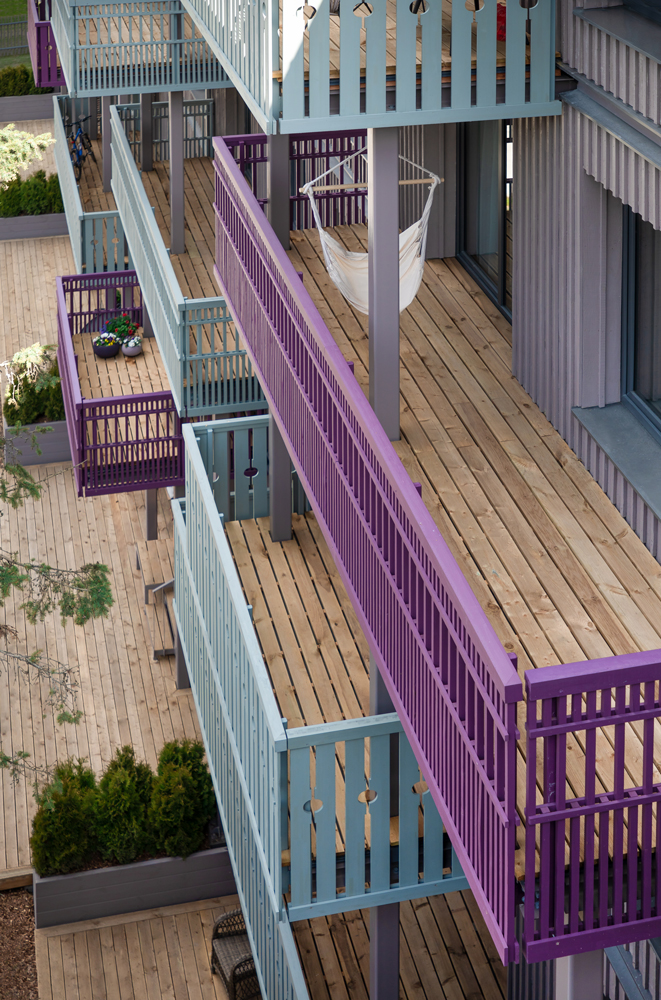
Jūrmala draws people with its historical architecture – the wooden villas and cottages associated with its development as a resort town. Instead of competing for attention, we chose to respect the context and reference the town’s past in our design. This is one reason why we opted for timber for the cladding and balconies, which are colourful. They nod to the vernacular architecture and its intricate carved wooden latticework.
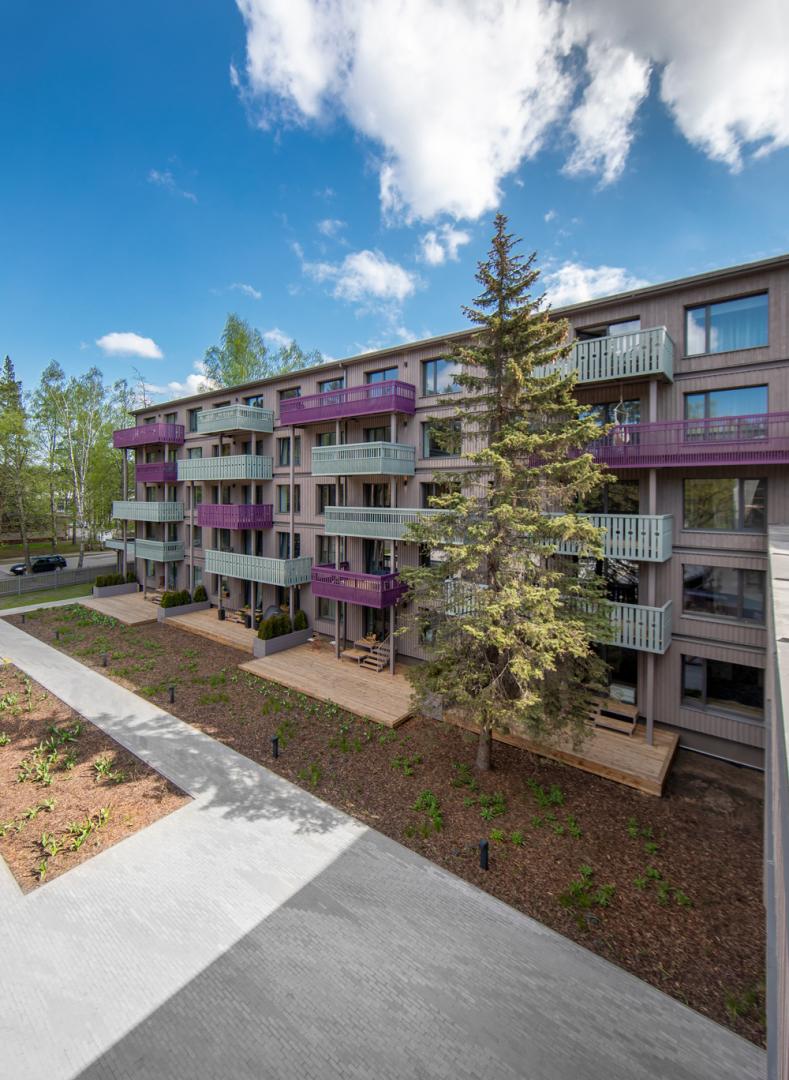
Our intention was also to embrace the natural surroundings. The floorplan affords an outdoor space to every single apartment, to encourage residents’ physical and emotional connection to nature. The balconies provide ample space for growing plants and setting up furniture, blending the indoors with the outdoors. Thanks to the proximity of the sea and Jūrmala’s historical pine trees, the quality of air is said to be high throughout the town.
While each apartment has its own outdoor space, there is also a large shared park with a pergola for events, plots for gardening, a playground and sports area. Part of it is forested and local planning documents required it be kept that way. We kept intervention to a minimum, establishing only nature trails with a pine mulch covering. In the built area, the paving, granite gravel and planting were chosen to fit in with the coastal setting.
The residential complex should strike a balance between privacy and community. Indoors, the apartments will cater to individual tastes, while the exterior spaces encourage the creation of a shared experience among neighbours.
On a basic level, we think that, if we provide an enjoyable, functional and aesthetic environment from the start, we shouldn’t feel the need to change it as much; a reaction that is usually expressed through consumption.
Key objectives for inclusion
In recent years, Jūrmala has developed a reputation for luxurious and therefore expensive properties. Due to its development as a resort town, a proportion of the properties are kept as second homes where residents only spend the summer months. This conflicts with Jūrmala’s everyday identity as a functional city with infrastructure and conditions for year-round living, easy access to capital city Riga by train, as well as Riga International Airport. Edinburgh Apartments & Lofts is designed with permanent residents in mind. This is reflected in the size and layouts of the apartments as well as the facilities available.
Since this is not a luxury development, it may encourage former Jūrmala residents to return or attract new residents such as young professionals and families looking for an accessible alternative to life in the capital city. This is therefore a step towards ensuring a positive future for Jūrmala as a whole.
Considering that the residents of Edinburgh Apartments & Lofts are likely to come from different backgrounds, we think it’s important to encourage mingling between neighbours. To develop common ground for communication, which, among other benefits, will lead to easier decision making in future in relation to building maintenance and development. Hence we invested much thought in the landscaping, as well as the architecture and interiors, so that residents have the chance to cross paths and collaborate, finding ways to spend time together organically.
Results in relation to category
Through applying the principles of adaptive reuse, the project brings new, affordable housing to Jūrmala without taking up any additional space, thus safeguarding part of the environment, which the resort town is known and desired for. It shows that newbuilds are not the only expression of progress.
We have spoken of the project via OpenAD’s social media channels throughout the construction process, receiving multiple comments and feedback, which indicates the need for dialogue in local circles and society’s readiness to be involved in decision making. The response has been appreciative, with people congratulating the creative approach and being grateful to see an example of a transformation, which combines form and function. Our research, experience and intuition led to a timely and context-aware result, which has sparked conversation.
Architect Zane Tetere-Sulce gave an interview to real estate website City24.lv raising questions on the development and urban planning of Jūrmala, whose council is plagued with a reputation for controversial decision making. The Edinburgh Apartments & Lofts contribute to the discussion on what the town should aspire to.
Having submitted the project to the New European Bauhaus collaborative platform, we were honoured to see it featured on the programme’s Instagram channel. We’re pleased to have reached an international audience, including countries with a similar historical background and challenges.
We will continue sharing the story of Edinburgh Apartments & Lofts via architecture platforms and media in Latvia and abroad.
How Citizens benefit
Our concept is fundamentally inspired by an individual’s need for belonging and security. We always keep our finger on the pulse of societal trends, since they can inform future-proof ideas. Listening to current discourses led to our balcony solution and features like the shared garden, because we hear people’s desire for community and a connection to nature.
We have also considered the current topicality of sustainable transport, and the public’s push for cycling infrastructure. Residents of the apartment complex will have access to bicycle storage facilities to encourage their use of the nearby cycle path connecting the different neighbourhoods of Jūrmala with Riga.
The project shines a light on the power of architecture to affect more than just the building in question. It will have a positive impact on the town, by providing housing for permanent residents, who, in their turn, help local businesses thrive throughout the year, not just in the active tourism season. For Jūrmala residents living nearby, Edinburgh Apartments & Lofts has led to the rejuvenation of a once-neglected property, improving the neighbourhood as a whole.
Any media coverage of the project is beneficial to civil society since it provokes discussion and may result in an attitude shift or policy change on a municipal or national level.
Innovative character
In Latvia, it’s common to take a formal approach to restoring Soviet era architecture, which has not been designated a cultural monument. For example, in the case of block housing and standard school models of the time, a common catalyst for renovation is the need to upgrade energy efficiency and the availability of funding to do so. In such cases the architect is seldom consulted on creative grounds. The work is done, funding used – check. Now, Latvia has a collection of buildings which contribute no aesthetic value and do little to improve residents’ and users’ wellbeing other than save money on heating. Can this be considered long-term thinking in regards to sustainability? It raises many questions on the meaning of sustainability and how differently it can be interpreted. How does such a functional approach help future generations understand the value of design and architecture?
At Edinburgh Apartments & Lofts we took a more holistic approach to transforming Soviet heritage. We considered more than function in respect of the location, future residents, environment and Jūrmala town as a whole.
First of all, we saw the potential to adapt a former sanatorium to residential needs, which involved playing around with the floorplan, identifying and preventing issues, and reframing supposed flaws. For example, rather than unifying the apartments in terms of size, layout and ceiling height, we embraced the diversity offered by the original building. The high ceilings of the once-club area of the sanatorium contributed to the Lofts part of the complex. One loft even occupies the bridge that connected two volumes.
In short, the project stands out in the way that we applied creativity to the topical question of what to do with our inherited built legacy.