CAN GUINEU
Basic information
Project Title
Full project title
Category
Project Description
CAN GUINEU is an ephemeral architecture project to enable sustainable community building through arts and culture. Through this temporary intervention, a relevant local heritage site is made accessible to citizens for the first time since its public acquisition. Supporting artistic events, cultural performances and social gatherings, CAN GUINEU becomes a local hub to bring communities together, fostering social cohesion and prompting a sense of belonging and of shared ownership of the place.
Project Region
EU Programme or fund
Description of the project
Summary
CAN GUINEU: Ephemeral Architecture for Sustainable Community Building Through Arts and Culture.
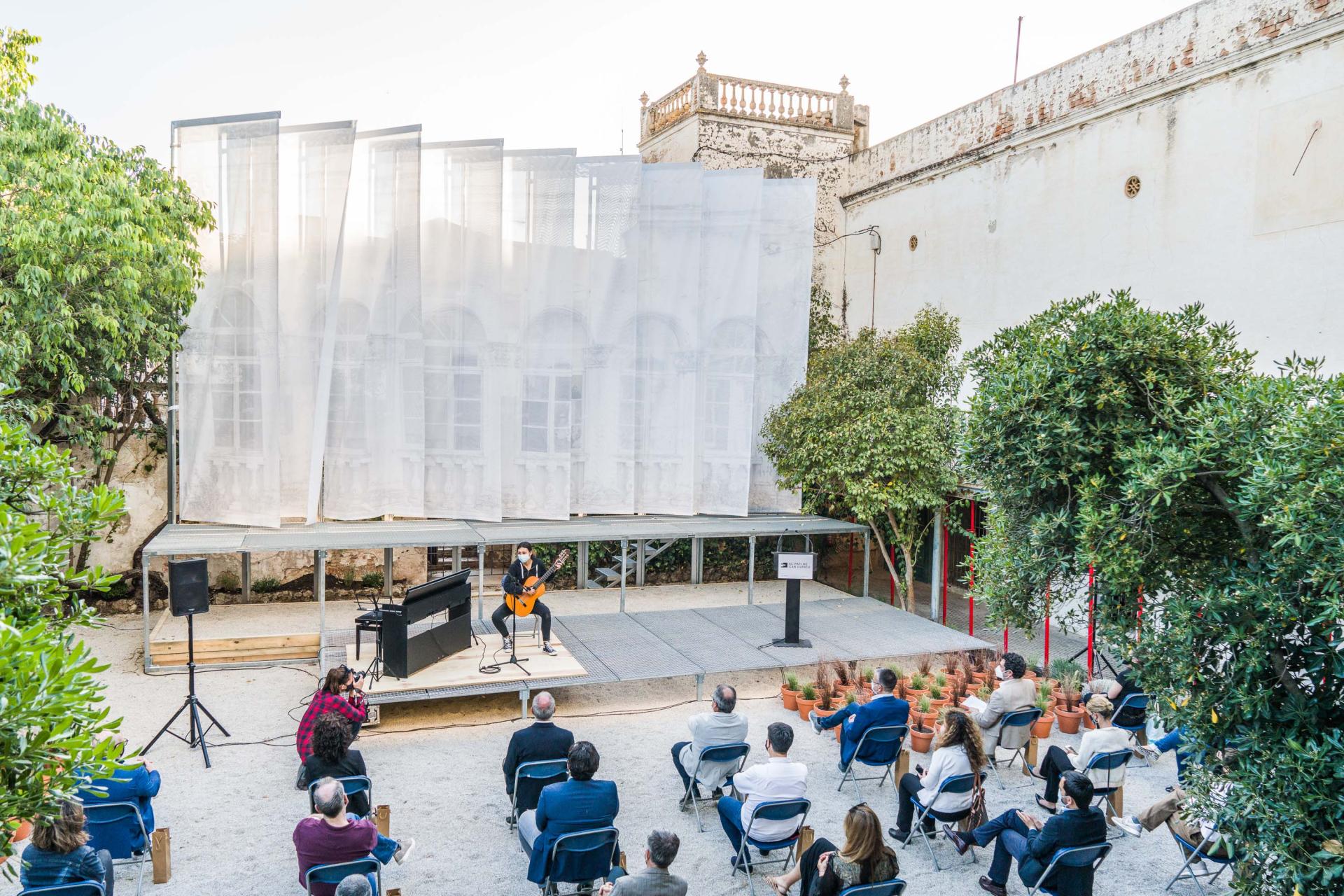
CAN GUINEU (CG) is an ephemeral architecture project to enable sustainable community building through arts and culture. Through this temporary intervention, a relevant local heritage site is made accessible to citizens for the first time since its public acquisition. Supporting artistic events, cultural performances and social gatherings, CG becomes a local hub to bring communities together, fostering social cohesion and prompting a sense of belonging and of shared ownership of the place.
CG was promoted by Sant Sadurní City Hall to house events that trigger social cohesion through arts, culture and solidarity. It was designed and built by a multidisciplinary team of faculty and students from ELISAVA Barcelona School of Design and Engineering, supported by local associations and NGOs working on solidarity and cooperation projects.
CG creatively transforms a stately manor house through a simple, effective and inexpensive temporary intervention. The heritage house, located in the centre of a town of 12,000 inhabitants, had been unused since 2000. It was purchased by the public administration in 2018 in a state of disrepair, with the intention of turning it into a public facility. CG is the first step towards a collective and citizen-participated decision on this relevant heritage’s the future role in community-building and public life.
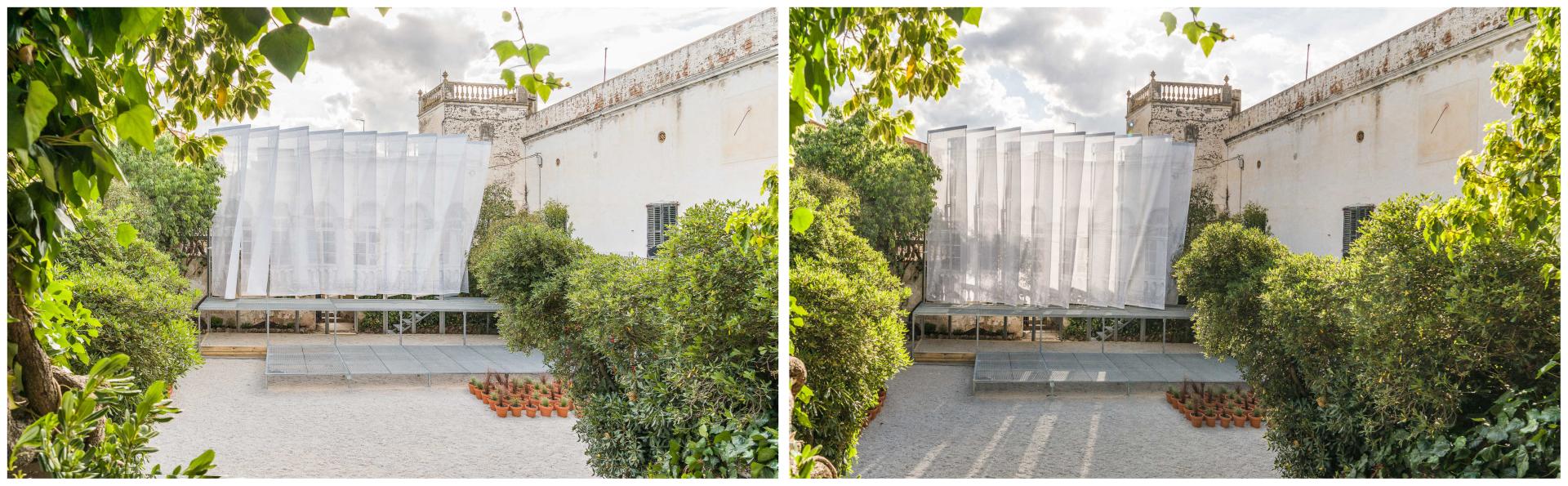
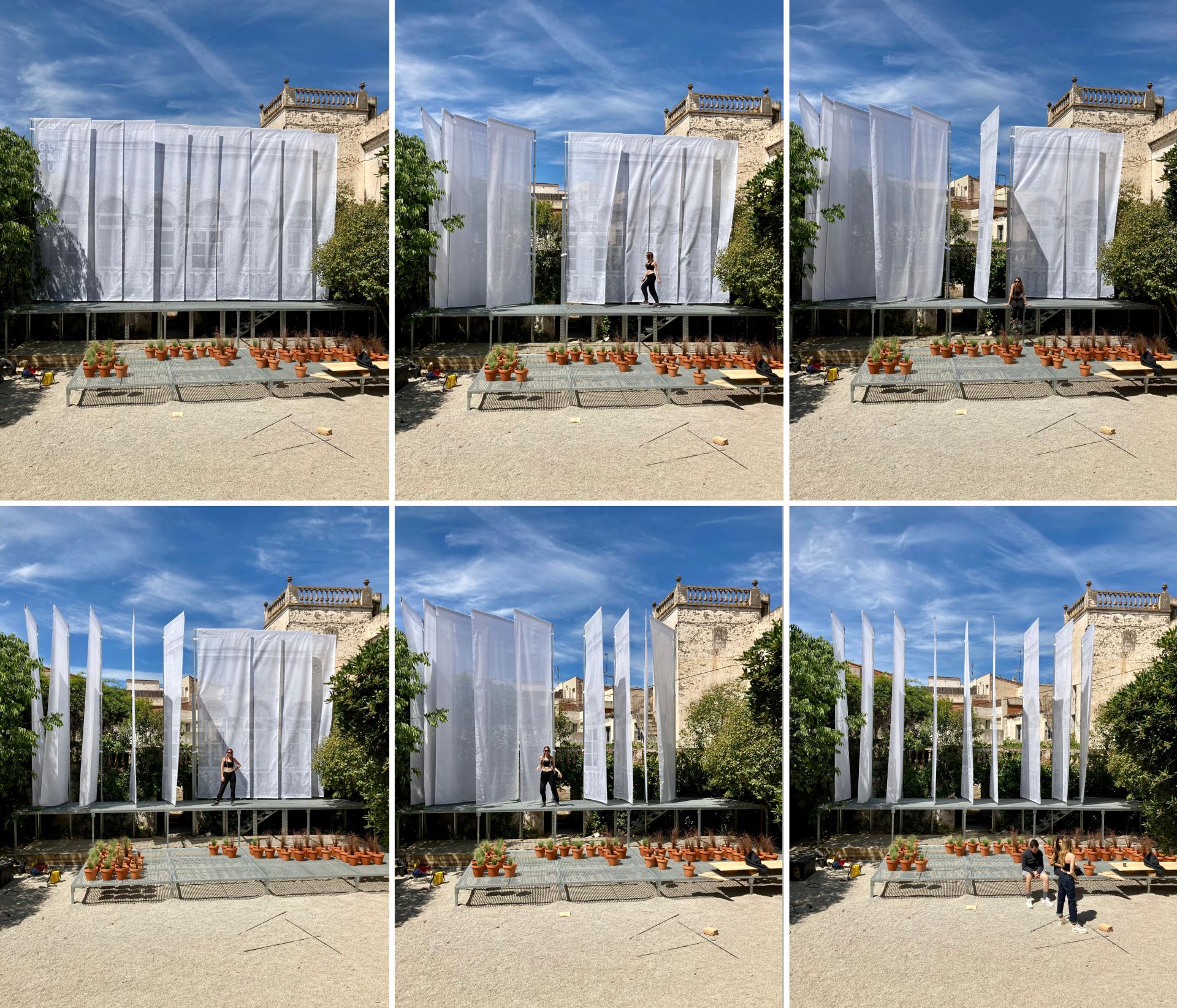
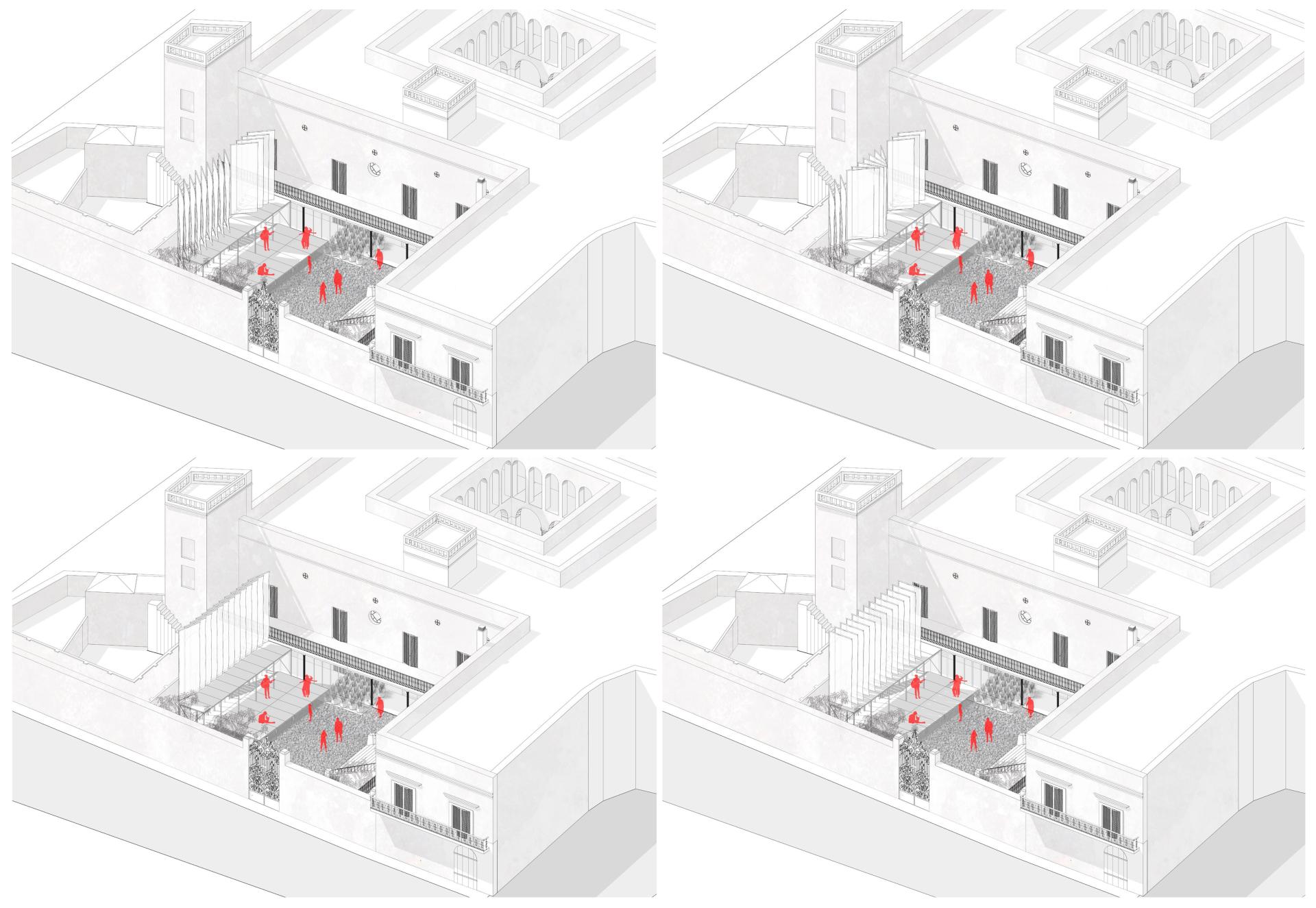
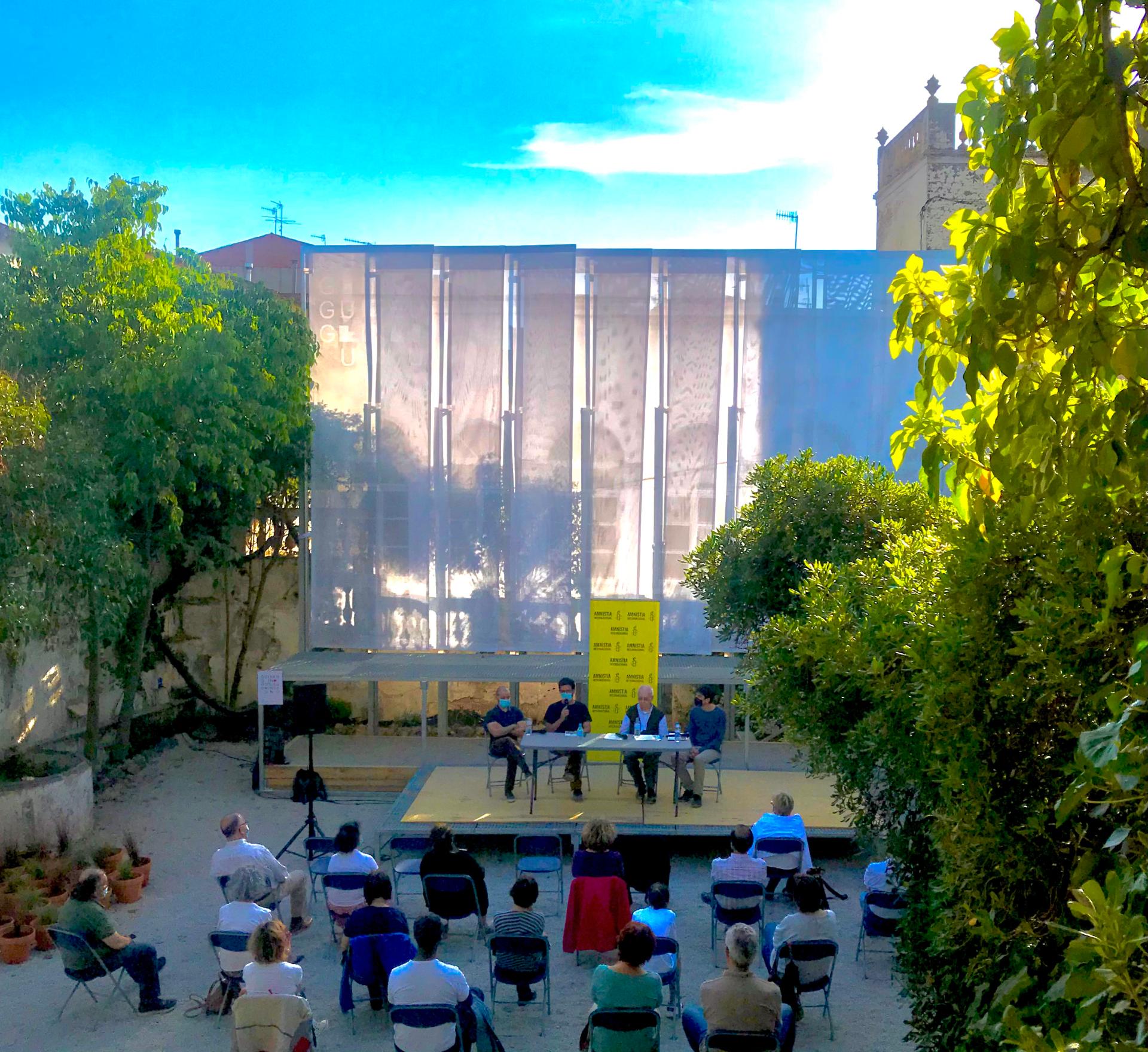
In order to achieve this aim, the project is composed of four main moves: clearing rubble and overgrowth to make the patio of the manor house accessible; installing large-scale textile flags to identify the intervention; building two-level stages to facilitate its use for arts and culture; and introducing a large number of potted plants to enhance the environmental quality of the place.
CAN GUINEU is a design proposal that strategically uses temporality to simultaneously address arts and culture, heritage and community building.
Key objectives for sustainability
CAN GUINEU’s key objectives in terms of social, environmental and economic sustainability can be summarised as heritage recuperation, material reuseability/recyclability and temporality.
CG’s objective to recover abandoned public heritage responds to the general aim of rebuilding and reusing existing constructions, especially when they have not only a material value but also a cultural, historical or social significance. Sustainability starts with using existing abandoned structures and updating them to adapt them to desirable new uses. CAN GUINEU’s manor house is of major importance for the inhabitants of Sant Sadurní and its hinterland, not only because of its central location, large size and architectural quality, but also because it embodies, more than any other built structure, the history of winemaking which so profoundly defines the region today. Indeed, the property used to belong to the Mir family, who were crucial in the pan-European phylloxera crisis of 1880s, as well as pioneers in the making of ‘cava’, the now world-famous Catalan sparkling wine.
CG’s objective to use reused, recycled or recyclable materials for its construction responds to the general aim of reducing waste and limiting the carbon footprint of built elements. Specifically, the reused materials are wood and metal grating, the recycled materials are gravel and steel structures, while the steel structure joints are both reusable and recyclable. None of the materials used are non-recyclable.
Finally, CG’s objective to promote temporality in architecture relates to its efficiency in terms of the material, labour and economic resources used to achieve a beneficial social impact. Temporal solutions offer a huge social impact with very limited resources and help foster citizen engagement at all stages of the project, from its inception to its multiple final uses. Moreover, the reversibility of temporary solutions allows for addressing complex and contested issues in an experimental way.
Key objectives for aesthetics and quality
CAN GUINEU’s key objectives in terms of aesthetics can be summarised as style, hybridity and variation.
CAN GUINEU’s objective to offer high-quality design style for temporary interventions purposefully aims to offer an alternative to the dominant flashy aesthetics usually associated with temporary space design. More subdued aesthetics favour a better integration of ephemeral architecture interventions within public space, while high-quality temporary solutions reinforce the intrinsic value of temporality and break down the still common association between temporariness and low quality.
CAN GUINEU’s objective to seek a hybrid design that is open to interpretation by end users aims at offering an alternative to excessively specialised design for public use. This is a very important question, as publicly accessible spaces need to be appropriable by all and co-opted by none. Pursuing subtly hybrid aesthetics reinforces the active role of citizens in creatively relating to the design, free from predetermined expectations based on its supposed nature and urban function. Simultaneously a backdrop, a stage and a climate refuge, CAN GUINEU purposefully navigates this carefully curated indeterminacy to leave the design open to multiple citizen interpretations.
Finally, CAN GUINEU’s objective to pursue beauty in variation and change responds to the aim of integrating temporality as an aesthetic horizon. CAN GUINEU’s degrees of variation include at least three different modes. First, its stage configuration is not stable or fixed, but can be adapted at any given moment. Second, its backdrop configuration can be rapidly and easily modified to adapt to the desired function, re-arranging the flags’ positions with a simple mechanism. Third, the whole space of CAN GUINEU, including the potted plants, the bar and the sound and light system, can be customised and personalised by any interested party to better address their needs for every specific event.
Key objectives for inclusion
CAN GUINEU’s key objectives in terms of inclusion can be summarised as citizen engagement through participation and shared ownership. A crucial general aspect of inclusion is CAN GUINEU’s extreme affordability both in terms of resources (material, labour, economic) and time, due to its temporary nature.
CAN GUINEU’s objective to promote active participation from citizens to define and use their spaces of socialisation relates to the general aim of triggering citizen engagement through participatory and collaborative frameworks. This objective is met through the active involvement of the community in the definition of CAN GUINEU’s uses and its day-to-day management. The community participates through four main bodies: citizen’s associations, e.g., neighbour’s associations; the Municipal Cooperation Council, i.e., local NGOs devoted to national and international cooperation and solidarity projects; public bodies, e.g., municipal music school, the Cava Regulation Board; and commercial stakeholders, e.g., restaurants and wine-makers. Some of the main events include ‘Solidarity Fortnight’, ‘Refugee Day’ (social); ‘Traditional Neighbourhood Festivities’, ‘Phylloxera Feast’, (cultural); ‘Poetry in Cellars’, ‘Gost Performing Arts Cycle’ (artistic); ‘Gastronomical May’, ‘Cava Week’ and farmer’s markets (commercial).
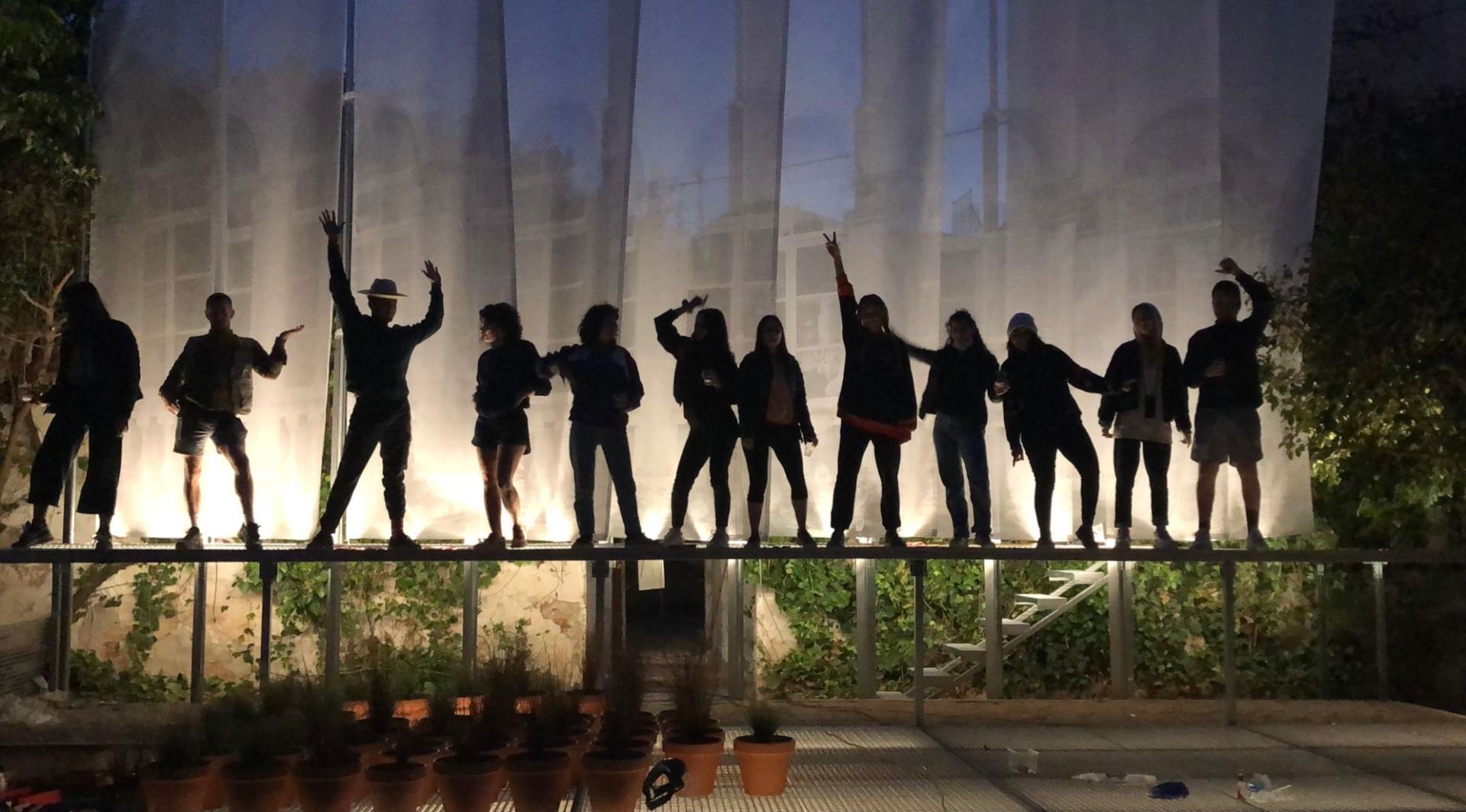
CAN GUINEU’s objective to promote a positive sense of shared ownership if and responsibility for public space is met through an organic balance between programmed activities (see paragraph above) and unprogrammed activities. CAN GUINEU fosters a sense of care for common goods and spaces by organising programmed events, mostly related to arts and culture. At other moments, CAN GUINEU acts as a social hub, triggering relations between local residents and acting as a meeting point for the town. Especially during weekends, CAN GUINEU becomes an available space where children, adults or elderly people, depending on the time of day, share experiences.
Results in relation to category
CAN GUINEU’s has 3 main results: an temporary structure to enable arts and culture; availability of a new public space; and organic community-building. CG’s impact in mobilising arts and culture for sustainable and solid community-building is, and certainly will continue to be, very strong.
CG’s ephemeral architecture has triggered and sustained a complex process of turning an abandoned building into a thriving local community hub, temporally activated by different age and interest groups, which often share the space. The impact of using simple, quick and affordable temporary space design mechanisms to turn an unused courtyard into a complex public space that houses events, festivals, cultural performances and social gatherings, is huge. Rather than a generic left-over marginal space, this beautiful heritage courtyard is now a hub for both programmed and spontaneous transformational activities supporting inclusion, cohesion, positive social exchange and community-building through a shared sense of common ownership.
The first weeks of CG’s use have shown a clear success in achieving the project’s desired impact, and the impressive rate at which CAN GUINEU is being booked by associations, NGOs and other citizen groups from now until its closure in October 2021 points to a resounding success story. All stakeholders involved are planning to replicate CAN GUINEU in the next three years to consolidate the availability of this new public space and cement the communities built around its multiple initiatives.
Formal written reports from the city council and NGOs reinforce the desirable results of CG in terms of fostering social interaction and organic community-building through a carefully designed ephemeral architecture intervention with a strong social purpose, a solid social, environmental and economically sustainable approach and a clear replicability in towns of between 5,000-50,000 inhabitants. CG has had a significant impact in press and social media.
How Citizens benefit
The involvement of citizens and civil society benefiting from CAN GUINEU has taken place in three different stages.
First, before the design phase, the NGOs organised as the Municipal Cooperation Council spear-headed the project of creating a temporary beacon to mobilise arts and culture events and activities to showcase solidarity and foster international and national cooperation projects with a strong social impact. CAN GUINEU is the direct result of this grassroots civil society initiative
Second, during the design phase, a collaborative format was established during which the design team, the public administration and civil society shared the objectives of the project and the difficulties encountered. Three different design strategies were developed so they could be discussed and modified during public collaborative working sessions. Once the final CAN GUINEU proposal was chosen, control sessions with municipal technical services and civil society representatives were held to troubleshoot specific problems and to align the proposal with the overall aim of using ephemeral architecture to enable sustainable community building through arts and culture in Sant Sadurní.
Third, after the construction phase, CAN GUINEU’s temporary structure was tested with different end users and stakeholders, to be subsequently fine-tuned to meet the requirements of the specific interest-groups that most actively benefit from it during its five-month lifespan before it is dismantled in October 2021. Some changes were applied before the final installation in public space, and some during the first weeks of useful life of the structure, when unforeseen situations arose.
Most importantly, the direct use of CAN GUINEU by citizens and their response through anonymous surveys and direct observation is a crucial source of feedback to adjust the project for further iterations and variations of its basic configuration.
Innovative character
CAN GUINEU’s innovative character can be summarised as temporality, co-creation and modular/adaptable solutions.
First and foremost, CG’s innovative character lies in positing temporality to achieve citizen engagement and community building. It proposes adding temporary space design to the already existing architectural, planning and city-making formats. We strongly believe that, in the current situation of global emergencies, including health (e.g., COVID), environmental (e.g., climate) and social (e.g., refugees) challenges, towns and cities need to use time-based strategies to achieve the level of resilience and sustainability we all need to meet UN SDG11 (to make cities inclusive, safe, resilient and sustainable).
CG’s innovative character also appears in its progressive and open-ended co-creation process. CG explores inclusive design processes that foster the integration of expert/end user/stakeholder points of view and decision-making capacities. Well beyond conventional participatory processes based on consensus, the project is built around a collaborative approach developed through specifically designed methodologies that allow for actively working with positive dissent to enrich design solutions and ensure their feasibility and applicability.
Finally, CG’s innovative character is also displayed in the use of modular, adaptable and mobile solutions that respond to temporary needs with high aesthetic and sustainable standards. CG uses dimensional coordination of building elements to maximise their adaptability both in its present configuration and in future re-uses. It also uses an innovative metal joinery so construction is reversible and can be carried out by unskilled people under skilled supervision.
Actively using these modular, adaptable and reversible systems is an innovative way to consolidate on-demand manufacturing, local citizen engagement and capacity building as well as maximising the reusability of temporary structures.