U-DATInos
Basic information
Project Title
Full project title
Category
Project Description
A datapoietic sculpture of a digital plant unites the citizens of Palermo around the health of the Oreto river. Collaboratively fed by citizens, the plant informs us about the health of the water – creating unexpected alliances among humans, artificial intelligence, data and computation to make us more sensitive.
In the middle of pandemics a next step of citizen science is born, enabled by art and innovation: to self-organize, share, connect and take care of the environment in new poetic ways.
Project Region
EU Programme or fund
Description of the project
Summary
U-DATInos is a project supported by the Creative Living Lab program of the Italian Ministry of culture, aimed at creating an innovative and participatory urban regeneration process through art, data and technology. The selected location was the Oreto river, which cuts the city of Palermo in half and in the past has been the center of many environmental issues.
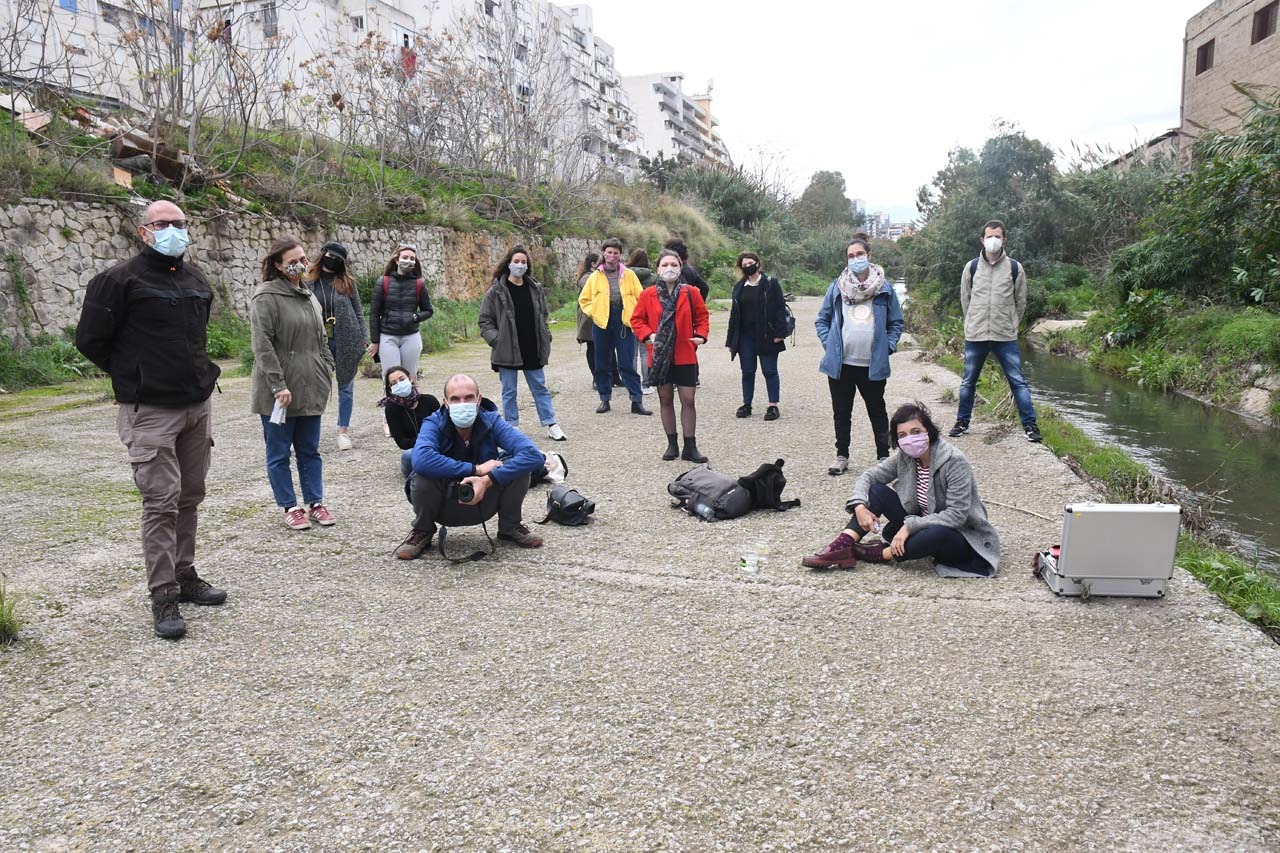
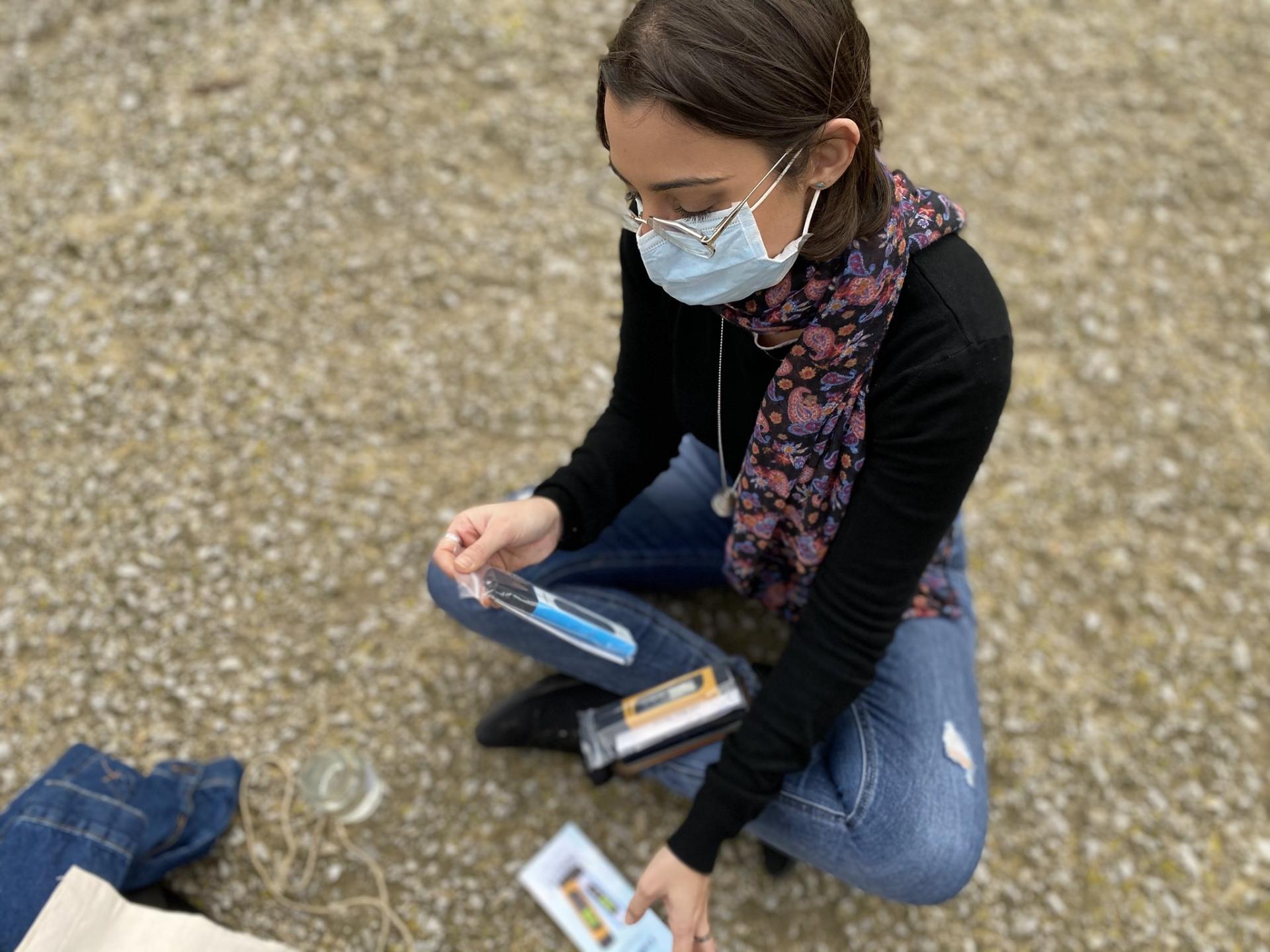
A participatory data collection process has been created through a public call for "Custodi dell'Acqua" (CdA, water custodians), a new social role to which citizens, students, researchers and activists responded. The CdA have invented a new ritual "andare al fiume a prendere i dati" (going to the river to collect data), which was very successful even in the middle of lockdowns pandemics: in a world in which data about COVID created separation, adding the data to the database of the river's health united people in a common goal.
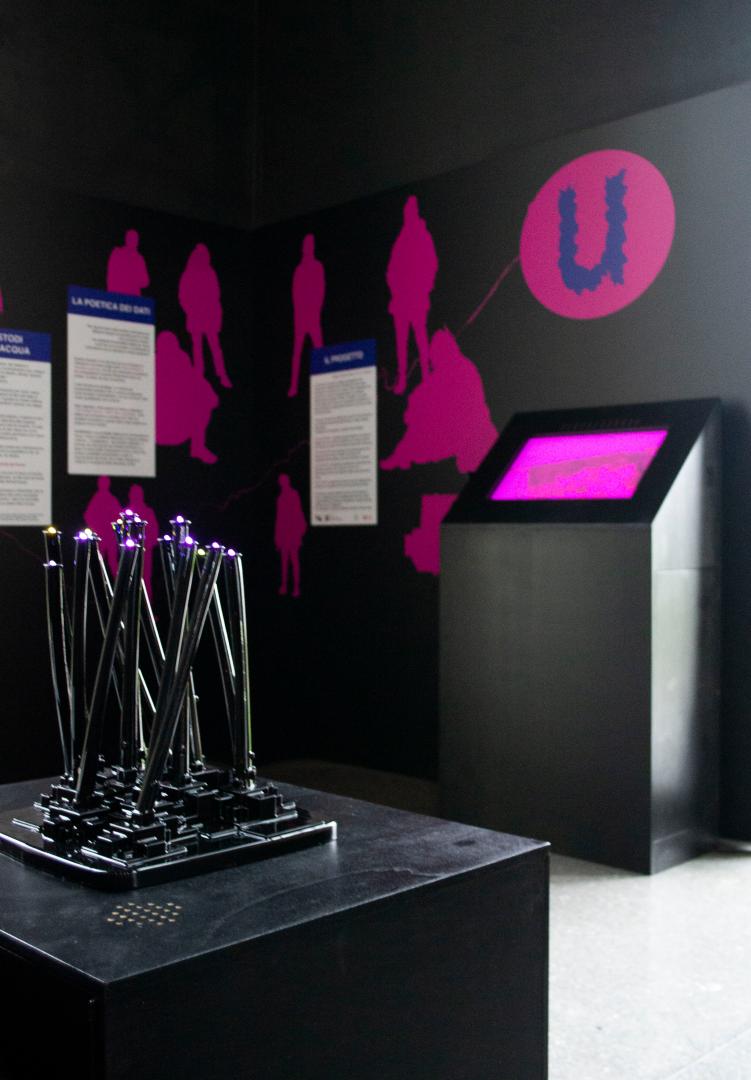
A digital sculpture animated by the data of the river's well being – transformed into generative visuals, sounds and lights – was created for Ecomuseo Mare Memoria Viva that rises at the estuary of the river. In the Ecomuseum, children, schools and general visitors can visit the sculpture and experience the condition of the river in this aesthetic, emotional way, reaching multiple innovative formats: multimedia educational experiences, workshops, data collection tourism/hikes along the river, a unique data-meditation format animated by the sounds and lights of the digital plant and, of course, the possibility to take part in the CdA, becoming custodians themselves.
The unison of the new social role, the ritual, the innovative museum exhibits and formats (which are also used towards the economic sustainability of the project), the possibility to replicate the project creating local and international networks, have created a livelihood, a diffused, inclusive, accessible sensibility towards the river's health – and the ways we can take of our environment.
&#
Key objectives for sustainability
ENVIRONMENT
- augment inclusive awareness about the health of the river
- establish innovative education processes and formats about environmental sustainability, impacts, the use of data and technologies
- inclusive activation and participation through creative citizen science approaches
- peer-to-peer activation: citizens and students (the Custodians) can transfer the knowledge to their peers, create new formats, use it to reinvent their political activism, research, expression
- results: happening with the Custodi dell’Acqua and with the increased museum visitors
COMMUNITY
- become a hub for the associations of activists for the Oreto river
- establish new partnerships with universities, associations and institutions
- results: Palermo University, the city administration and ARPA Sicilia - Regional Agency for Environmental Protection
INNOVATION
- promote digital inclusion in creative ways, by designing inclusive and accessible digital experiences
- promote data literacy in creative ways
- augment the knowledge of both museum staff and the public, by experimenting with new technologies
- create a reusable platform which will be able to host other data, different artworks and different museum experiences
- results: all achieved, including the creation of a partnership with the local Fablab
ECONOMIC
- produce new museum formats and experiences: the Ecomuseo can now offer new cultural experience and services for different audience to feed the plant and take care of the river (visits, data-driven guided tour, workshop for kids, researchers, students, elderly…) generating revenues and new local economies
- a replicable and extensible prototype: the project is designed to create networks of rivers and cities that can share data and practices about water; the mechanism can be extended to other phenomena
- results: experiences are available; new projects are being designed
- &#
Key objectives for aesthetics and quality
The heart of the installation is the digital plant.
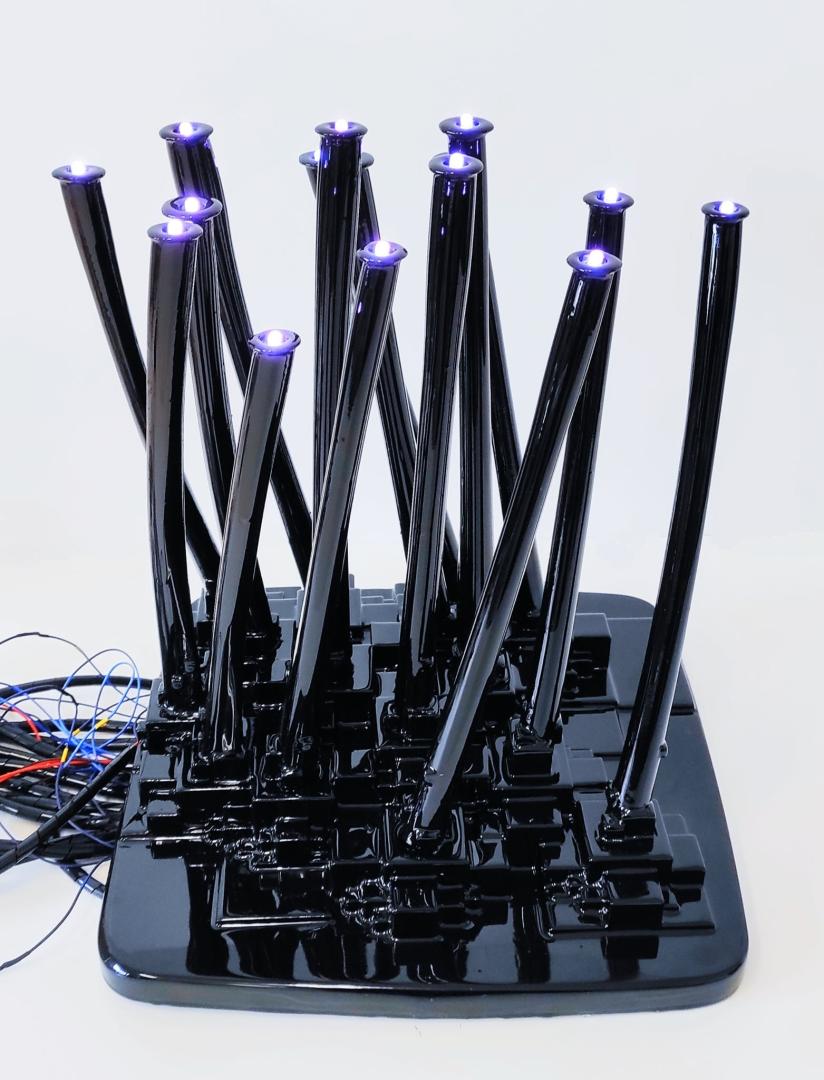
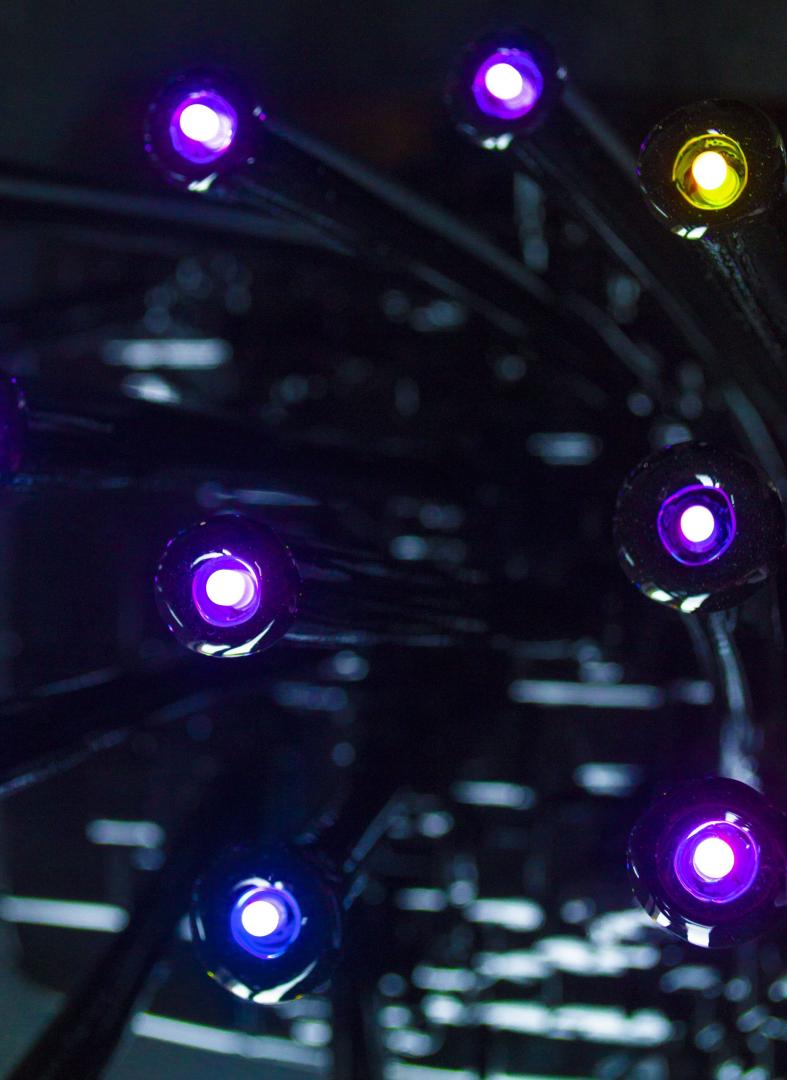
Formed by fifteen glowing cylinders, ending with a small pulsating light, its alien organic shape is inspired by the Dianthus Rupicula (a typical riparian plant of the region). As wild plants grow on rocks, its 3D printed body emerges from a black pixelated block of wood hiding the roots: if you open it, the tangle of cables and electronics from which the computational organism draws data and electricity (its nourishment), reveals itself.
The sculpture, which occupies an entire corner of the museum, is a living creature constantly trying to communicate with human beings. It emits sounds and lights, transforming the data generated by Custodians into understandable signals, informing visitors about the health of the river: bleu/violet lights and clean sounds tell us that water is in good shape; red light and “dirty/noisy” sounds are an alarm for pollution. A data-generative altar to madidate about water and celebrate new rituals of knowledge is born, in which art helps us to perceive and understand complex phenomena and intertwin new relationships with nature.
U-DATInos’ plant is a fragile form of digital life.
If nobody “waters” it providing fresh data, the plant progressively dies in front of us. One will not see green leaves turn yellow or flowers fall, but slowly the sounds and lights that U-DATInos emits will fade – up until one day they completely stop. As all living creatures on earth, this technology embraces mortality. Its survival is constantly threatened, like us it relies on relations, caring, interconnection and well-being of the environment.
Designing a vulnerable technology (that depends on us, as well as depend on artificial intelligences, algorithms, machines) is the beginning of new possible alliances among human beings, computational agents and the environment – based on empathy and co-existence.
Key objectives for inclusion
U-DATInos is a generator of inclusivity placed in a strategic location.
Ecomuseo Mare Memoria Viva is an iconic structure of social inclusion built to activate dynamics of change in a complex territory, where the historical center of Palermo ends and the outskirts of the city begins. Here, Ecomuseo organizes workshops, invites citizens and artists to use the spaces for socializing, cultural production, events, promoting civic and political activation to protect the environment.
In this perfect habitat, U-DATInos’ free cultural program was a transgenerational experience bringing together two different audiences:
- students from the Art Academy of Palermo;
- citizens (researchers, activists, professionals) involved in the “River’s Pact”: a wide coalition of civil society fighting to regenerate the Oreto River.
Despite the computational nature of the project, workshops were designed with no tech barriers: for 15 positions we received 38 applications. We designed the education process so that participants from all backgrounds could access it, use sensors and manage data collection. Each phase of the project was designed with maximum accessibility in mind, starting from the communication which was designed to be inclusive and comprehensible, to the calibration and usage of the technologies, to the design of the hikes, the maps of accesses the river and all the other elements.
The other component of the installation (the U-DATInos datapoietic plant) was designed and implemented so that even children could access it and interpret the visuals. The color schemes have been designed to minimize the effects of color blindness, and the sounds also convey the same information.
A multimedia education experience completes the exhibit: created for any type of audience, from elderly to kids, using an interactive touch-screen visitors can learn about the flora and fauna of the river and read the story of the U-Datinos project.
Results in relation to category
U-DATInos is the first datapoietic object designed for the Oreto River in order to make us sense-able to the wellbeing of water in Palermo.
Datapoietic objects are totemic objects designed to gather people around them, bringing an augmented sensibility about our planet’s complex issues into the public space. Their goal is to raise of new types of awareness, knowledge, cooperation and shared action, allowing human being and societies to shape contemporary of rituals driven by and around data. This new type of art and design objects (furniture, wearables, gadgets and devices for private and public spaces, sculptures and installations for public space…) are animated by data, transforming the most extractive business of the planet in a privileged space to think, share, discuss, take responsibility and participative action, bringing together indivisuals and societies.
This is what is happening in Palermo, where Custodians of Water and museum's visitors are gatering around U-DATInoscreating new social ritual, such as "going to the water to collect data": a new life style emerged in town to take care about a polluted, problematic river.
The first datapoietic object is OBIETTIVO (2019): a lamp animated by global data source on poverty, that will not stop lightening until the world extreme poverty level falls below 500,000. The sculpure was aquired by Farnesina Collection as an ecample of art that che hepl international cooperation.
In a world where data and computation modify our physical reality and our relations, art can helps us to reposition ourselves, and can hence have a revolutionary role in stimulating new social, economical and political opportunities. As we can see in Palermo, IoT, Big Data and AI can lead not only to efficiency gains, but also to poetry and sense-making, meeting the cultural and psychological challenges brought about by the Fourth industrial revolution.
How Citizens benefit
As told by the “Custodians of Water” themselves:
"This project is a precious resource that sees active citizenship, taking on the roles of warriors and healers. It sees us as protagonists in the preservation of the environment, discoverers of a historical and cultural heritage linked to water. In this case, a river that crosses the city of Palermo and has been the bearer of life for centuries. The Oreto River was forgotten before, but now, thanks to this project, it is seeing its slow rebirth."
The “Custodians of Water” are citizens who experience new social rituals discovering a hidden nature with their bodies and technologies as well. The database they feed by accessing the rivers’ waters is the spot of a collective experience.
At a time when human contact is the most dangerous ever, we rethought other ways to activate the vital connection among people, create sharing (community), rehabilitate sensitivity (through art) and awareness (about data and the environment). The whole project was built in these liminal spaces between what was possible and what was not, yellow and red zones, online and offline, where teams and Custodians moved, challenging the current situation.
This project was performed during the COVID pandemics and its global lockdowns.
This made things more difficult, as all activities had to be performed remotely, from community engagement to actually and physically making the digital plant, the exhibit, the hardware etc.
This fact has also been an enormous driver for innovation.
We were able to support a local economy of fablab and artisans, to share different approaches and techniques, and to search for new ways of being together.
In a world in which data was used to separate (as during the pandemics, for example, in which data signaled if you could or could not go to school, to the movies, to your wedding, or to your loved ones’ funerals ), this data united.
Innovative character
DATAPOIESIS
U-DATInos is a datapoietic artwork which lets us experience a complex phenomenon of our environment (the dynamic state of health of the river and its ecosystem) through data, computation and social and psychological activation, triggered by Art that is able to bring together Science, Technology and Society.
That’s why U-DATInos represents something that did not exist before.
INNOVATIVE ENGAGEMENT STRATEGIES
The creation of a new social role, complete with its technologically supported rituals, allows building novel interactions and relationships with and among people that are more meaningful and persistent. Through their technological elements such as Apps, they can also be better monitored and facilitated, to further augment their impacts.
INNOVATIVE EDUCATION FORMATS
Accessible and inclusive education formats have been designed throughout the project, allowing participants to enhance their digital literacy and data cultures, and to experience and learn the ways in which technologies can work for the environment. The p2p methodologies that have been used also allow autonomous knowledge transfer among participants and in the future.
INNOVATIVE MUSEUM FORMATS
The Ecomuseo can now benefit from innovative formats and experiences like multitouch kiosks, data-hikes, online and physical/sculptural data visualizations.