The Aalborg Model
Basic information
Project Title
Full project title
Category
Project Description
How can a strategic collaboration model change a socially vulnerable housing area? The Aalborg Model focus on large scale renovations based on partnerships and cooperation. The model is focusing on environmental and social sustainability, and it resolves technical and social issues connected to both construction and housing. The project has realized major changes for the benefit of a large residential area in Denmark, and a lot of knowledge has been generated based on thourough research.
Project Region
EU Programme or fund
Description of the project
Summary
The Aalborg model is collaboration model focusing on large scale renovations in socially vulnerable housing areas. It is led by the non-profit housing organization that cooperated with the local business community, the municipality and social enterprises. It’s a long-term strategy based on co-creation which key objectives is long term social, environmental and economical sustainability. Many positive changes have already been documented due to significant physical improvements of the housing stock, a new health house with public and private offers, engagement from the local business community, focus on ensuring diversity in the area and support from a social enterprise and the association community.
The results speak for themselves: The average household income has increased by 33 % in the period 2011-2019 and a higher educational level amongst the youths of the area has also been realized. The amount of persons with only a basic education as the highest level of completed education and who isn’t currently enrolled in education has fallen 27%
Employment has increased significantly, and the proportion of persons on social care/unemployment assistance has been decreased by 29% in the same period. The positive trends have kept on, and we have seen a continue with better stats in every category. The last newly renovated dwellings will be done in 2021, and then we can get a complete overview over the development
As a result, crime has fallen. For every 1000 resident the amount of criminal judgement in selected categories has decreased with 59 % in the period 2015 - 2020.
Last, the total energy consumption in the buildings has been reduced by 50 %, there is a more than 30 different housing types rather than 3 and collaboration with municipality and universities and business will make sure that all knowledge gathered will be used to inspire other projects and to shape future policy development.
Key objectives for sustainability
Environmental and social sustainability has been key objectives from the start and at the initial and core part of every decision-making process within in project. The goal has been to include and involve residents and to make sure they are represented on a political level in the dialogue with the municipality.
The total energy consumption in the homes has been reduced by up to 50% after the renovation. There has been a collaboration in research partnerships REBUS (Renovating Buildings Sustainably) aiming to ensure 50% lower energy consumption after renovation, 30% lower resource consumption during renovation and 20% increased productivity while taking into account the users' well-being and need for functionality.
The knowledge gathered during the project is used to raise the construction industry's efficiency nationally. Also, there is a research collaboration with Aalborg University on intelligent meters (IoT) to increase the level of knowledge about consumption among residents. A course "Become your own energy advisor" has been held for residents and has had a great impact on the residents' finances. Furthermore, we have inspired the residents to shared economy with bicycles, electric cars, tools and more. Most recently, we have received foundation support for electric sharing bikes, where volunteers ride trips with the elderly citizens with dementia.
Politically an energy partnership with Aalborg Municipality is established, and in addition, the housing organization is part of the board in Green Hub Denmark, where important opinion leaders and large companies within the green and sustainable industry are represented. In this way, the interests of the residents are represented and included in policy development as well as practical end-user discussions.
Key objectives for aesthetics and quality
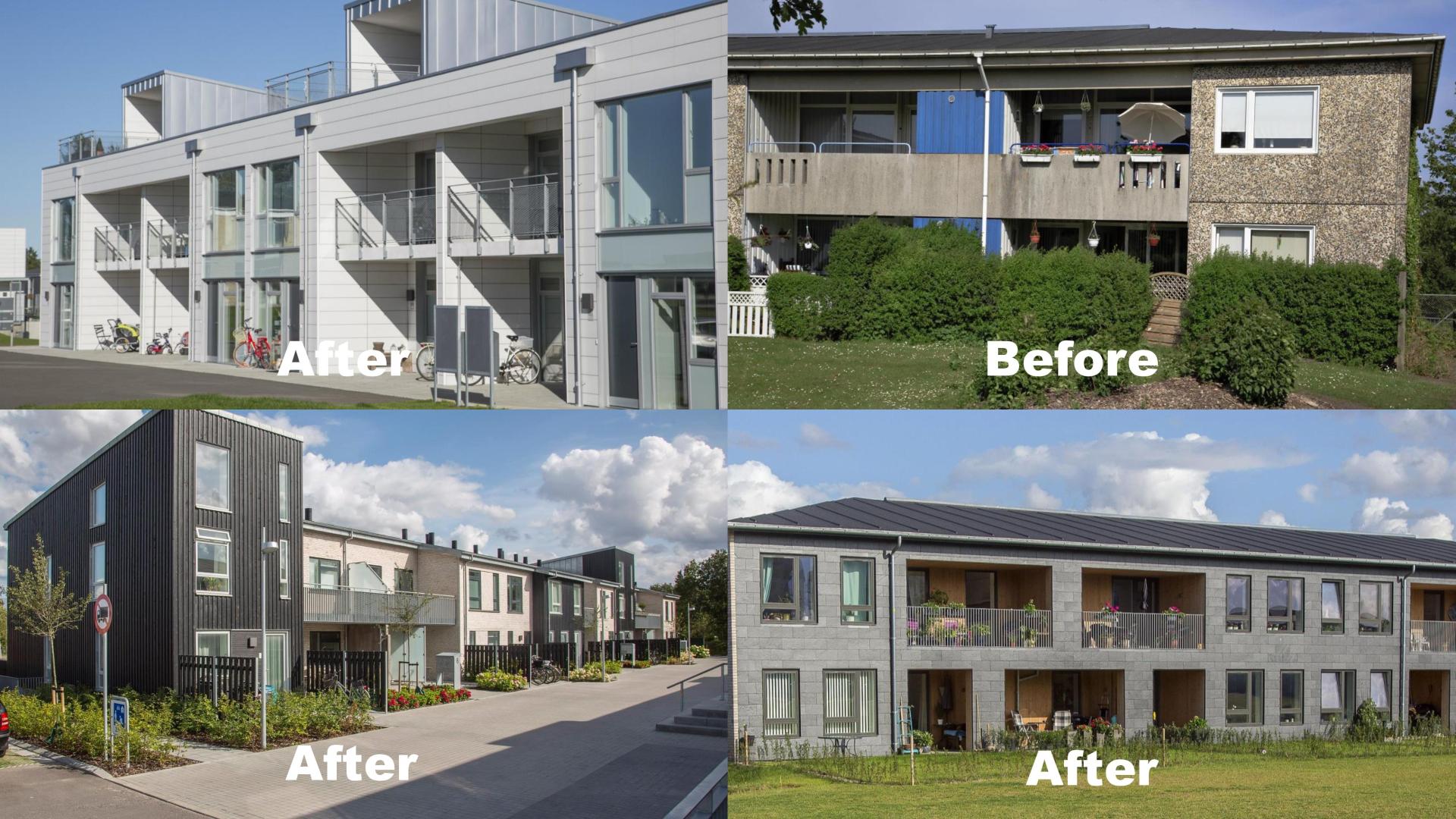
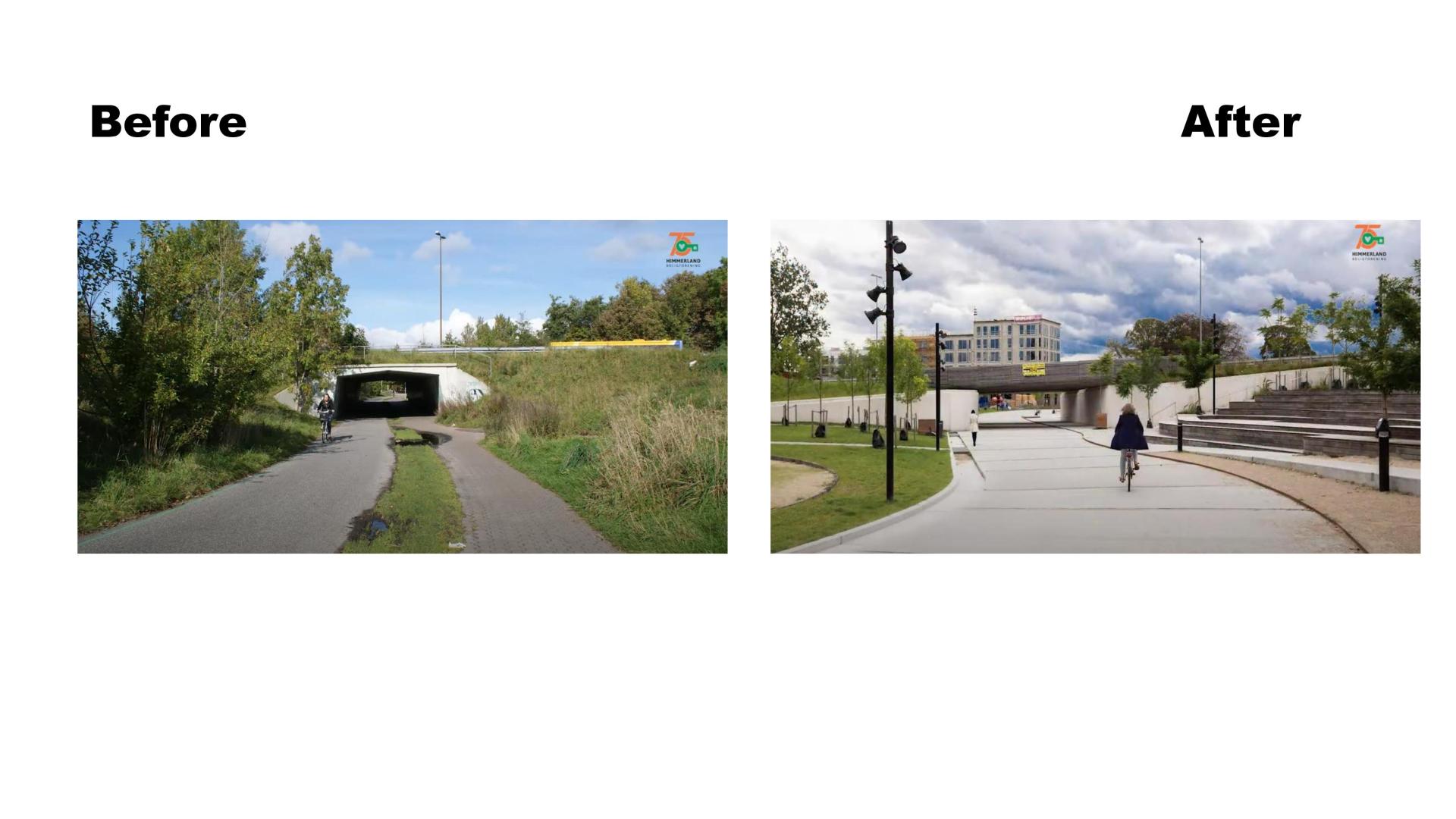
The central challenge of the architecture was that it was monotonous, sad, grey, and uninspiring and it contributed to closing the area off from the rest of Aalborg city. Therefore, one of the first steps was to remove ramparts from the roads so that the area was more visible and transparent from the outside. In addition, trail systems have been improved so that access into the area is significantly better.
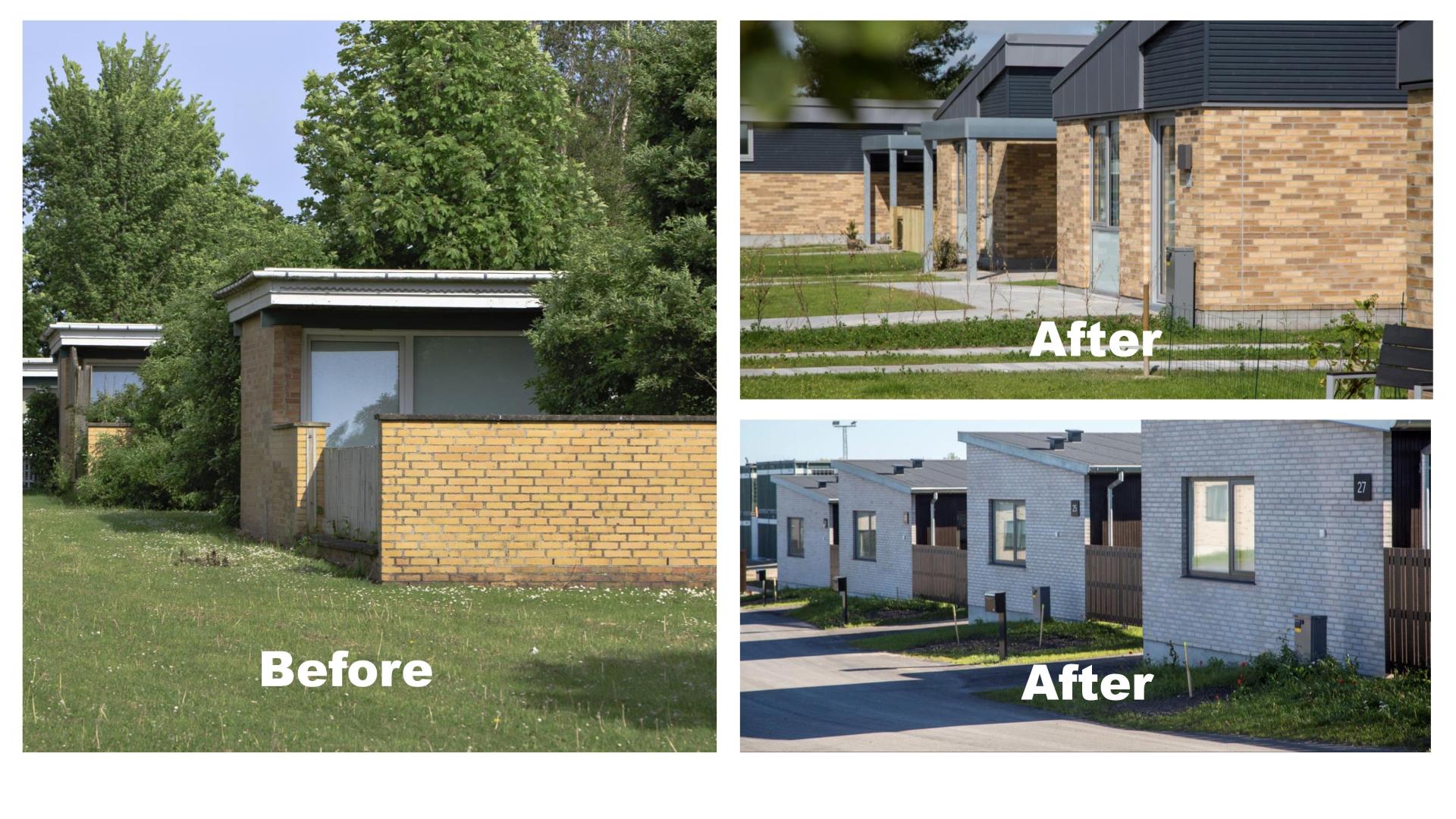
As the housing areas stretches over three main roads, three different architectural tenders were held, where the residents from each road have been involved in the design of the project. This has ensured a diverse building stock and type and given residents a special form of ownership to the process. Where there were 73 completely identical blocks before, there are now many different facade materials, and much more characteristic has been created - not only for the roads, but also the individual buildings. Choice has been on facade materials that patinate nicely for long-lasting results. The architectural and aesthetical results have been recognized both locally and nationally, the area is open an inviting and housing quality is similar to a newly built home, but CO2 emissions have been significantly lower as existing structures in the old blocks have been recycled.
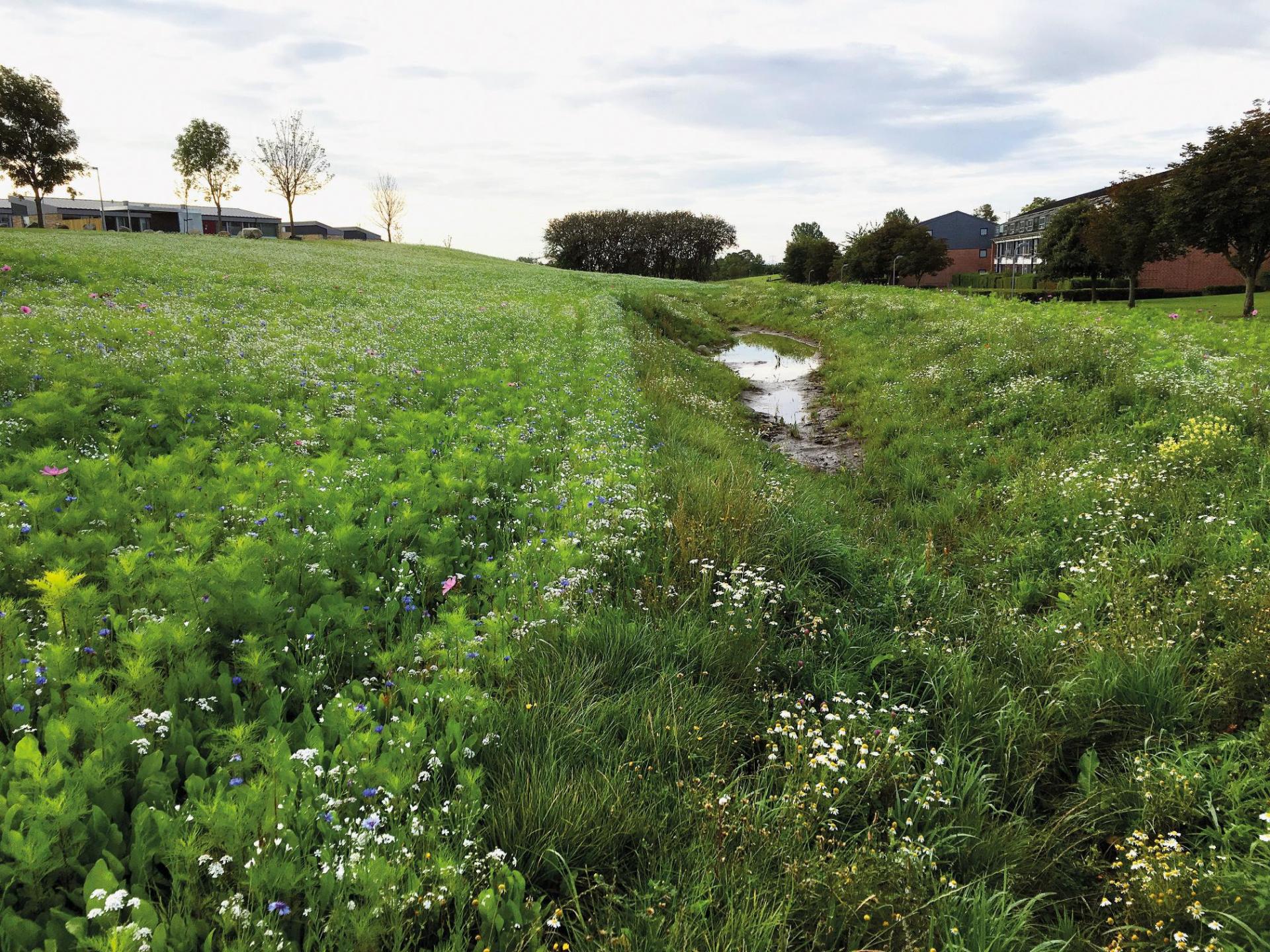
The green areas have also been upgraded so that they are more open and inviting. Sustainable solutions have been considered with local drainage of rainwater, which also provides lively jumps in the landscape.
Further development is underway with the project "The Green Arena", where sports associations and residents are invited as co-creators of a new green common area. This project is funded by local foundations as well as the developer and is an extension of the original project.
Key objectives for inclusion
The project has interpreted inclusion as a combination of technical and social issues connected to construction and housing. One of the main actions has been securing several housing types. Before, there were 3 different, monofunctional housing types, but the three architectural offerings and the close dialogue with the residents have contributed to the fact that now there are over 30 different housing types. This means that a 3-room home can be between 65 and 110 m2 and thereby match many different household budgets. A large part of the homes are also accessible for both the elderly and the disabled.
The improved housing offer has also been handled through rehousing. Personal conversations have been completed with all residents to understand their needs and the basis of which they were given at least 3 different offers for a home that fit their life situation, their budget and preferences.
Furthermore, social efforts centered around health, job creation and education of residents have been implemented. These efforts have been coordinated in active partnerships with the local business network and with the municipality's job center.
The district has just gotten a free driverless electric bus that goes through the entire housing area, which increases mobility within the housing area, but also beyond as it connects to infrastructure connecting the rest of the city of Aalborg.
Results in relation to category
As a result, crime has fallen. For every 1000 resident the amount of criminal judgement in selected categories has decreased with 59 % in the period 2015 - 2020.
These figures are partly due to the social efforts on employment, education and crime prevention, but it is also due to the fact that the area, due to its boost, can now attract more resourceful residents. Among other things, there has been an influx of seniors selling their ownership house in the province and moving in to the Aalborg Øst.
In addition to the direct positive effects on the residents of Aalborg Øst the project has also benefited the city and municipality as the investments were the first in the area. These investments have led to further growth in the area and have resulted in a sale of building plots for 73 new private leases - something that has never been seen before in Aalborg Øst. After many years of closing shops and poor opportunities, the area has developed with new grocery shops, cafés, restaurants and a town center.
How Citizens benefit
None of these results could have been achieved without a very large degree of participation from residents and local area. The first part of the involvement was to present a concept paper at residents' meetings and then ensure a democratic basis for further work. The residents have been willing to accept a complete change of their area from an urban and housing strategic perspective, and this has been achieved by the fact that in addition to joint meetings, the housing organization has had have had a dialogue with each of the more than 1,000 households. In this way, we have been able to understand concerns and find concrete solutions. A key tool has been that it is our own employees who have had the dialogue, so that it is the same people the residents meet every time, building a trustworthy relation and “putting a face” on the housing organization. The housing organization has been responsible for rehousing during the renovations, where all residents have been invited to a personal conversation with a rental assistant who has helped them in the best way both before, during and after renovation.
Building committees representing the residents have been established, so residents have been involved in the construction project on an equal footing with the housing organization, consultants and contractors.
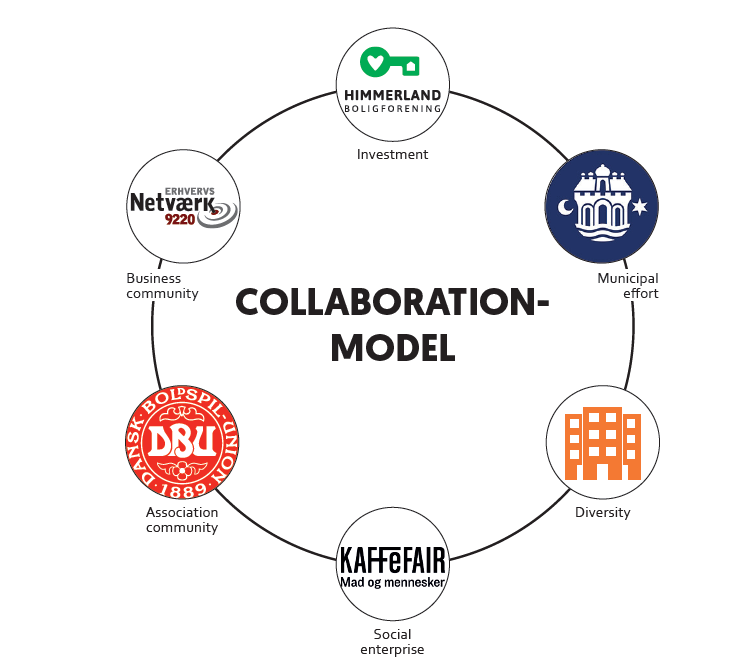
In addition to involving residents, the entire city of Aalborg and the municipality have been close partners. The housing organization has taken over the secretariat of a local business network, where even more focus has been placed on local job creation for the residents. In addition, there is close collaboration with local associations, the school system, and institutions, as it strengthens both residents and the district as a whole.
Innovative character
We have set the bar extremely high for how and when we can think in partnerships. Co-creation is the way to create results. Inspired by how large and scalable corporations are run, we decided as the first Danish social housing company to adopt an advisory board with members from the biggest local organizations with international outsight. We knew that this could drive a huge change to think in an untraditional way about renovation. In addition to an interdisciplinary advisory board, we set up a local steering committee that could ensure, that the visions were handed on a practical level, and that ideas were implemented in the daily life.
We have kept the original block buildings, but it looks completely new, and it’s the same quality as a new apartment – but it’s still more than 25% cheaper than the market rent in Aalborg. That is because of clever decisions and great building committees including the tenants. Our model has had the outcome, that private and public organizations work closer, and we don’t meet the same challenges as in normal urban renewal, because people work together with the same goals.
The changes have meant that the district can now attract new resident groups while at the same time succeeding to a large extent in retaining and embracing the original residents. Therefore, we believe that the technical and social knowledge should be widespread to other cases. The unique aspect of the model is, that even though it has been used in a concrete case, it can be used in other projects and in other countries. It’s innovative in the way we organize stakeholders, and how we build bridges between technical experts and daily life experts (tenants). It has the outcome: better life for the citizens, growth for businesses and less public expenses – everyone benefits in the end.