Sports hall De Roomley
Basic information
Project Title
Full project title
Category
Project Description
Enhancing the sustainability and preserving future use by modernizing an outdated sports hall using straw as an upscalable after-isolation product.
Project Region
EU Programme or fund
Which funds
Other Funds
The project benefited from the Interreg Up-straw project.
https://www.nweurope.eu/projects/project-search/up-straw-urban-and-public-buildings-in-straw/
Description of the project
Summary
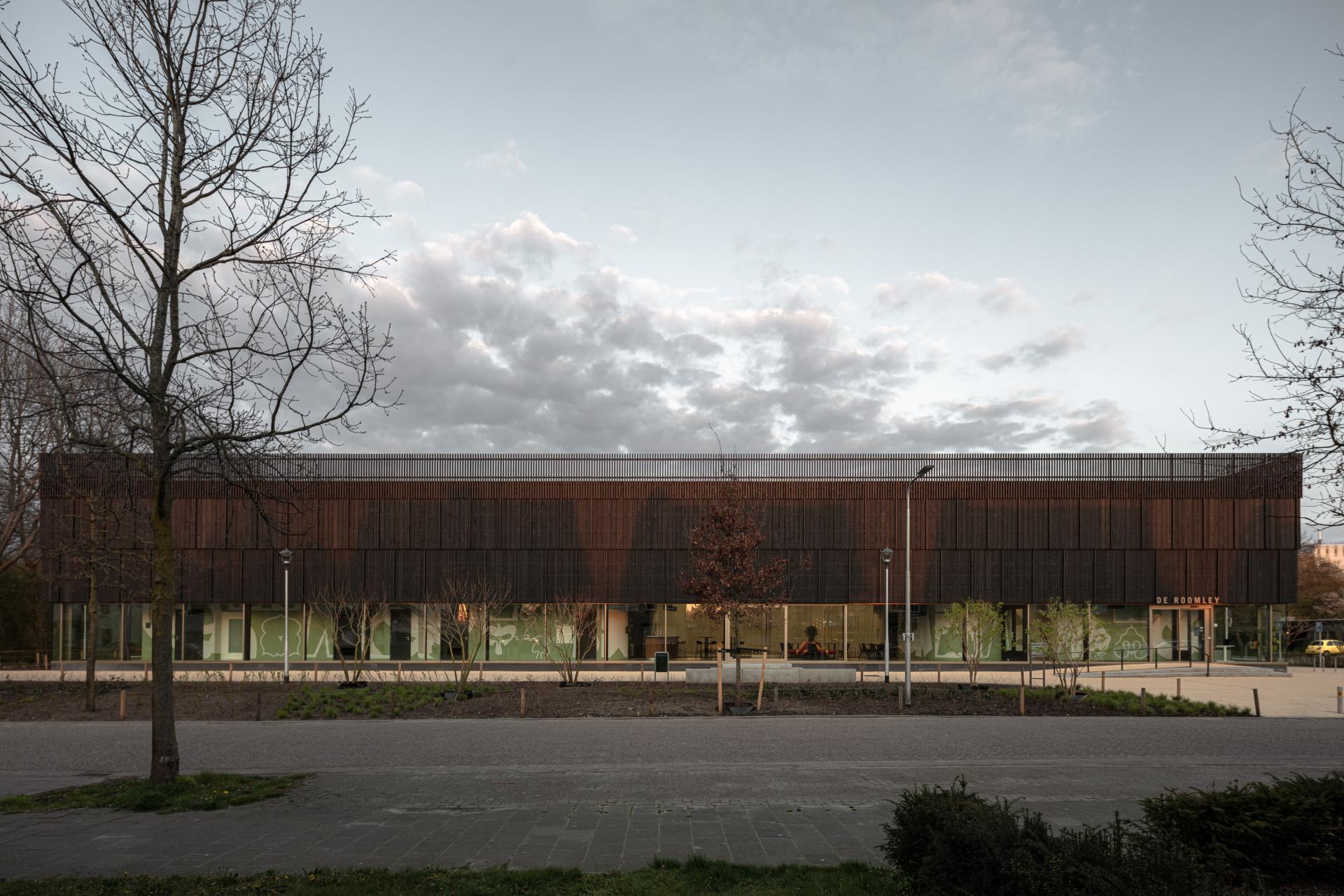
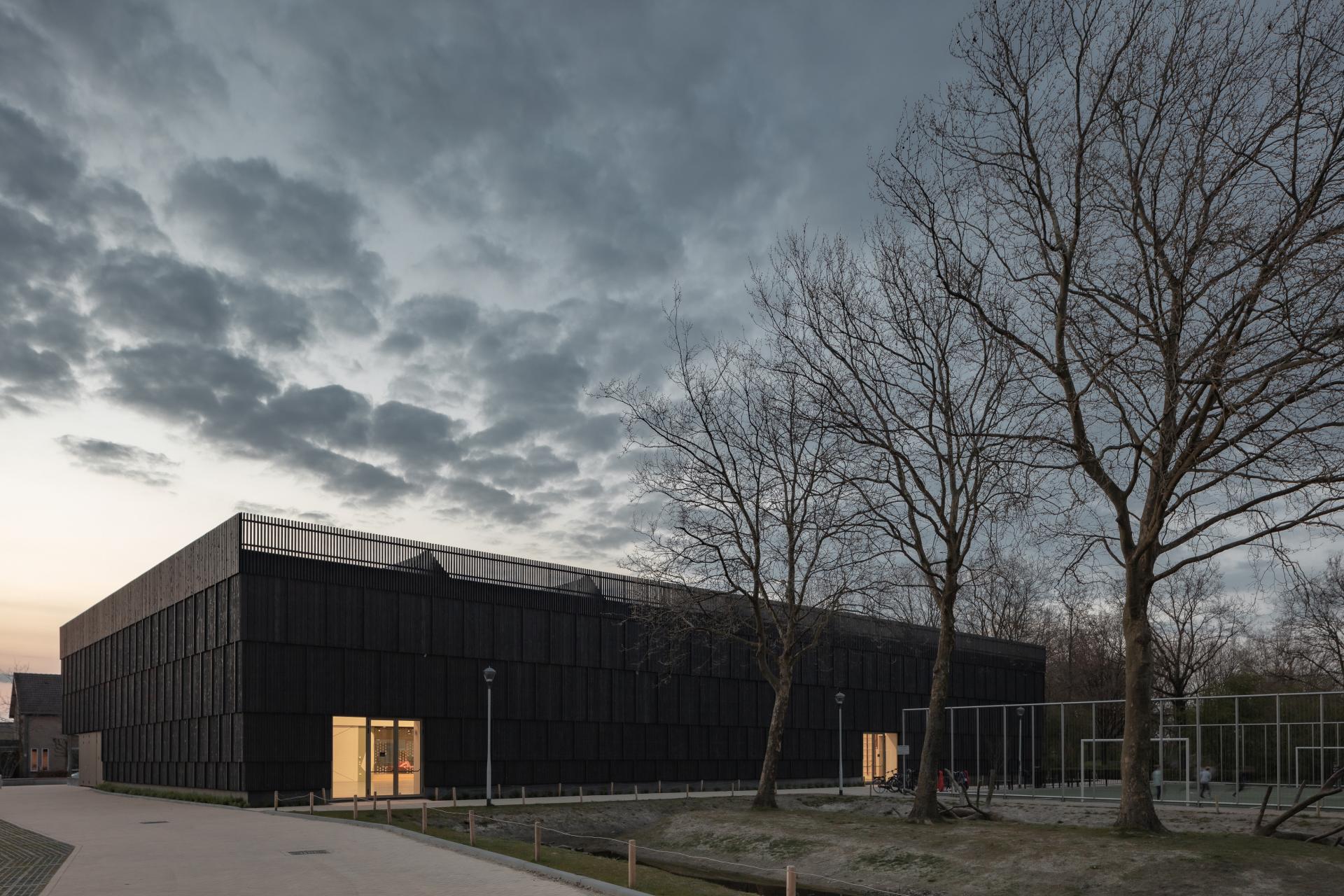
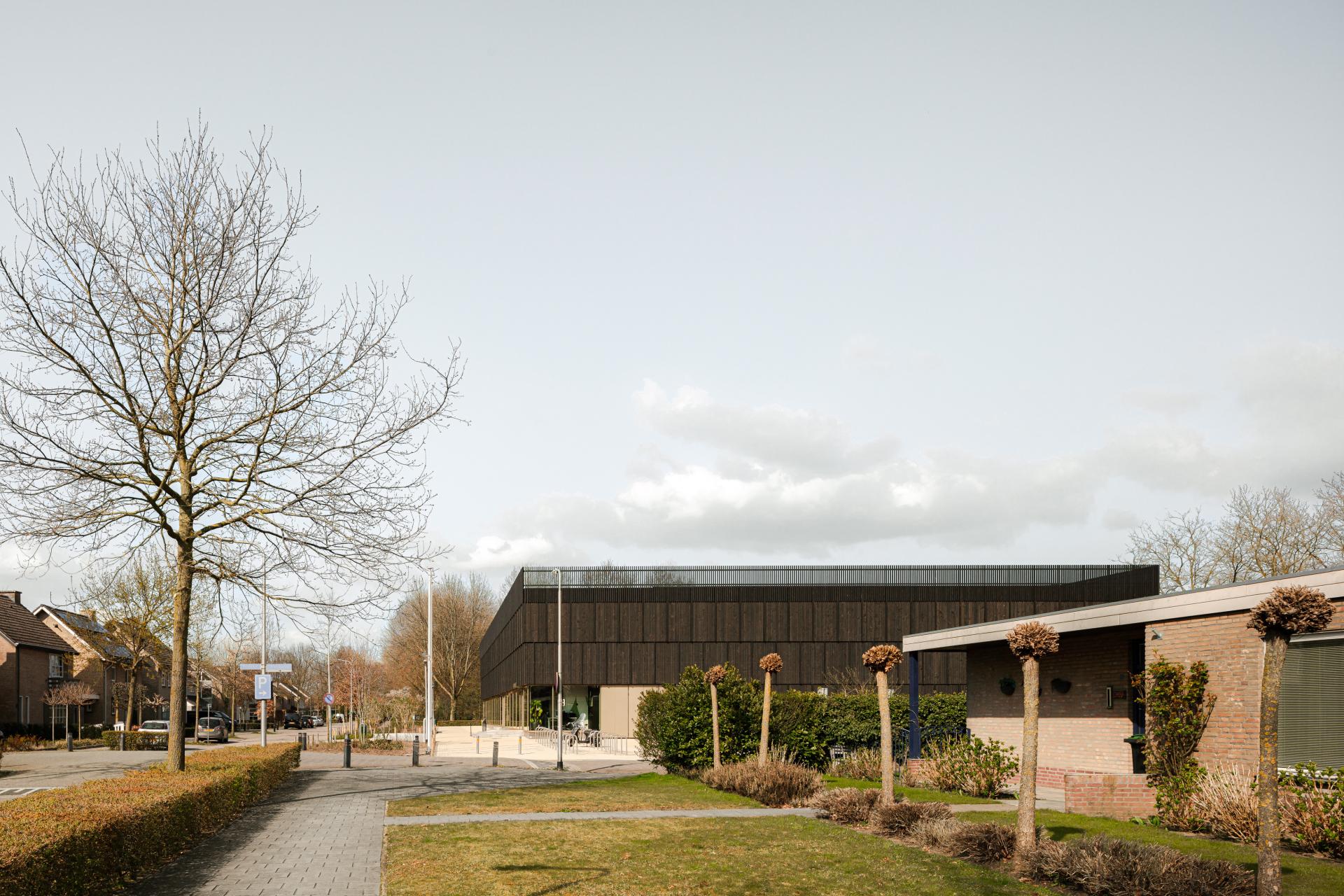
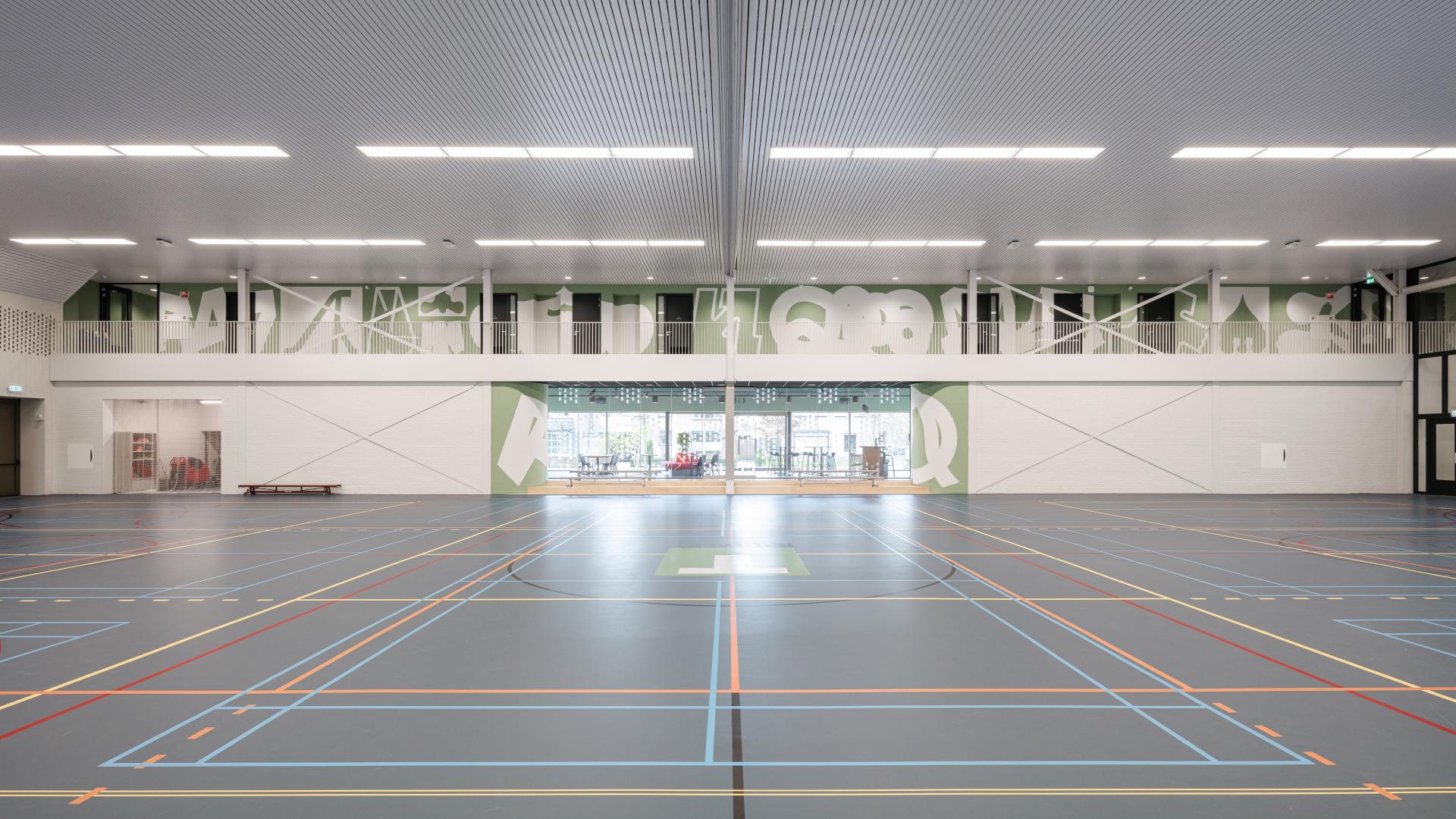
Sports hall the Roomley was an old fashioned and outdated building built in the late 70’s and it didn’t fit the current needs of a modern sports building. It’s main characteristic was introvert and the building was full of long, narrow and dark hallways giving its users an uncanny feeling. It’s need of a more energy efficient façade has led up to a complete metamorphizes of the sports hall into a modern and transparent building that opens up to its surroundings and welcomes people in. While kept in use, it was possible to transform the Roomley into an easy to read, open space layout that offers it’s user a warm welcome and has turned the building into an example for many other outdated sportsbuildings in the Netherlands. The Roomley has been turned into a gas-free energy+ building making more energy than it and all its sporters use year-round. It has been transformed with circular and biobased materials making it healthy for all people that use it. It has been set up for maximum accessibility making sports available for everyone in society. It has offered local artists chances of enhancing the interior enhancing its regional bonding. It has given more space for greenery in its surroundings with use of native plants for biodiversity gains. Its waterretention system (wadi) houses a playing space for local children and helps in climate adaptation stresses. And last but not least the Roomley has given after-isolation with straw a modern and progressive face in being the largest building in Europe to be isolated with prefab units filled with strawfibres.
Key objectives for sustainability
The key objectives of the modernization of sports hall the Roomley were in making it future proof. It needed to be updated to a worry-free future of at least another 40 years. The main goals were as follows;
Making it energy +
Before the transition into a modern futureproof building the energy use of the Roomley was 125.000kWh and 32.000m3 of gas annually. After choosing for energy efficient systems and adding isolation the building will need 94.000kWh in total. Implementing circa 700m2 of photovoltaic cells generates 95.000kWh annually giving it an energy efficiency score A++.
Using healthy biobased and circular products
In all materialization thought went out to choosing maximum sustainable and easy in maintenance materials. This lead up to choosing many sustainable products such as;
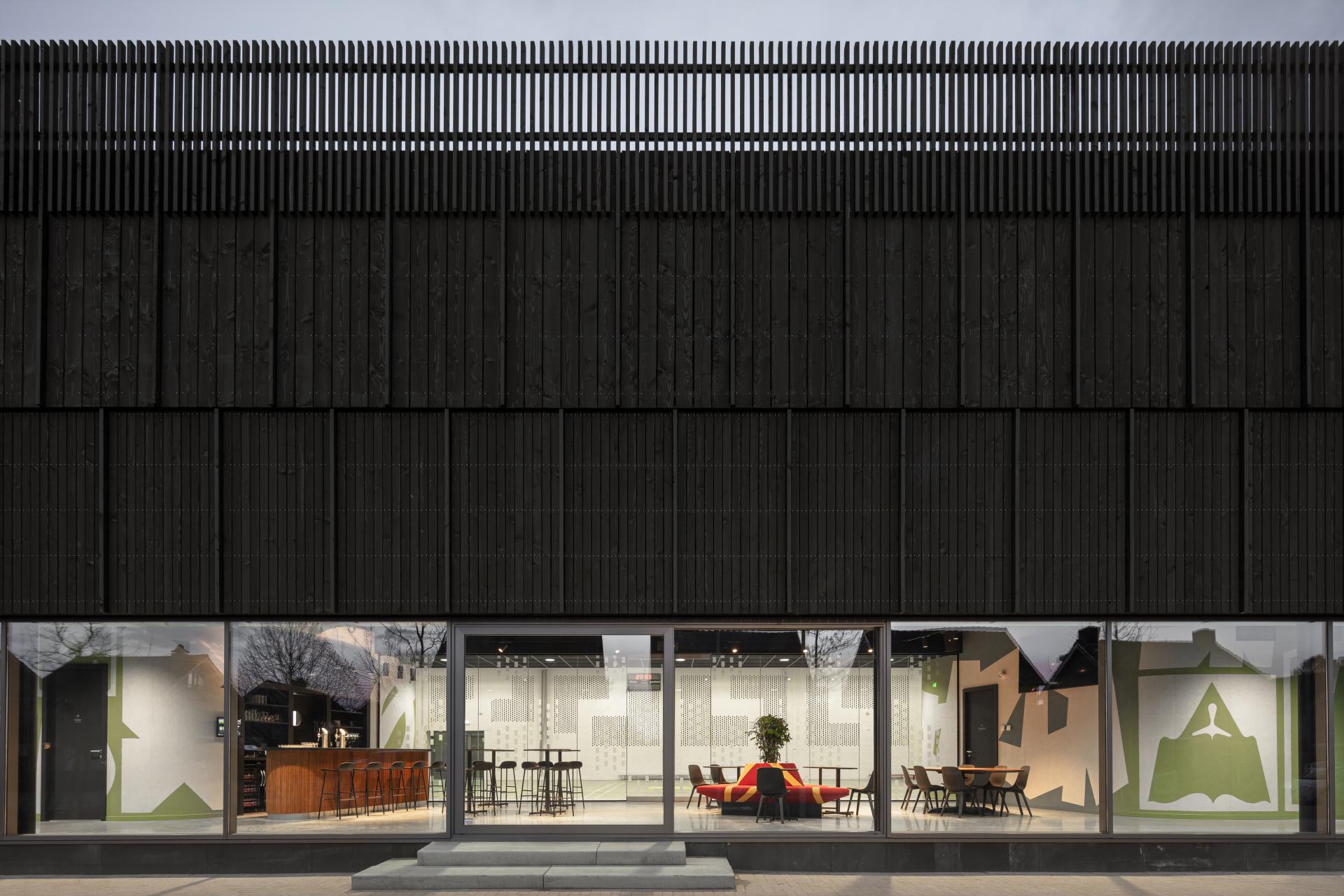
outerwalls made of prefab wooden units filled with strawfibres, façades made of regional wood treated with a biobased aging stain, glass facades C2C silver certification and NIBE class 2A,innerwalls made of wooden chipboardpanels free of formaldehyde, wallpaints with the high Dubostandard (most environmental building materials) by NIBE, biobased castflooring (made of vegetable oils), crystalline treatment of concrete in using sodiumsilicate, walltiles with a C2C silver certification, mineral ceilings, and reuse of old materials in its interior
Making the building all-inclusive/accessible
The sports hall has been made accessible for people that are disabled, visually and/or hearing impaired. It has been certified by the ITstandaard which has been officially recognized by the American Disability Act, WELL and BREEAM as equal criteria.
Adapting the building in its surroundings
Changing the layout has made the building footprint smaller which has offered more space for greenery and wadi (water retention) for climate change adaption. Changing the layout has opened up the building to its neighborhood and offers an easy accessible place of gathering and sports.
Key objectives for aesthetics and quality
The Roomley was outdated dark and extremely introvert with no relationship to its direct surroundings. These characteristics do not fit current society where public buildings should be transparent and welcoming to its civilians. Our key objectives and how they were in terms of aesthetics were as follows.
- turn an introverted sports hall into an extravert sports hall. The first floor has a grand glass façade which shows the functionality of the redesign. It now offers fantastic views of places of interest in the building.
- give the sports hall a visual relationship with its surroundings, let it connect. The glass façade and glass opening in the back of the building have given the Roomley a connection with its outdoor space. Its landscape design has added playing spaces and has redirected unpleasurable outdoor spaces.
- get rid of all dark hallways with dead ends for they are responsible for an uncanny feeling. A clear circulation with no dead endings has led to a light and natural flow through the building.
- bond the region and its society to the building by making the design specific. Regional artists have added local art to walls, signing and lighting bonding the redesign to its municipality. Thoughts and reactions from sporters and local community were used in designing the building and its interior.
- give the sports hall a broader role in its community. The redesign has led to an open and accessible building that can be used for more functions and meetups then sports. It can be a place to meet up for all generations and its healthy interior can inspire all.
- bond diversity in society. Because of the complete accessibility of the Roomley this modernized building can offer a broad spectrum of new sports and health treatments.
- make the canteen a centrepoint in the design. By repositioning the canteen into the centre of the building it fulfills a role as focus- and meetingpoint. It is a modern, healthy and approachable place to be.
Key objectives for inclusion
The Roomley has added tot the objectives of inclusion in diverse fields starting in the designprocess but also during its build and also aiming for long term inclusion. How our objectives were met in terms of inclusion are as follows.
- 5% of the building contractors working hours have been fulfilled by people with distance towards the job market
- The Roomley is fully accessible for disabled, visually and/or hearing impaired
- Erasmus students have fulfilled a practical school programme with the Roomley and its after insulation with straw as their projectcase
- Community and sporters: Both local community and the sporters using the sports hall have participated in the design phase of the modernization, both interior and exterior
- By building in phases made it possible to keep the sports hall in use during the complete metamorphosis which meant that all elementary school use and all sports did not need to be relocated
- Adding a playing wadi (water retention) has incorporated a pleasurable place of fun for small children
- By adding transparency to the back façade the Johan Cruijf court, used by many kids and teens, has a more prominent position and relationship with the Roomley
- By adding sitting places and more greenery to its surroundings the new building offers the community a nice new hangout
- Artists: Regional artist have added their views on its functionality and have added their talents to the new design by bonding it in its community
Results in relation to category
In addition to all other answers which explain the use of materials, techniques, circularity and other fields of sustainability the renewal of the sports hall has other impacts regarding category Techniques, materials and processes for construction and design.
The municipality of Tilburg in the Netherlands has a very ambitious Roadmap for a sustainable transition of their buildings. Their goals can be seen as ‘outstanding buildings in relationship to energy transition, to use of biobased & circular materials, to Dutch climate adaption (drought, heat, biodiversity) and to an inclusive society’. Sports hall Roomley has been an model project that answers to all aspects required in their Roadmap for the future. Where the project started as an pilot for using straw as after-insulation the course changed into a complete transition of an outdated building that sets an example for the opportunities that can be created with such buildings. The development of the complete process was open and in full collaboration and partnership with external advisors in a well working design team. The process was structured lean and the team was extremely committed to making the transition of this building exceed expectancies. A great deal of trust between municipality, designers and builders was expected for the process was new and the method in using straw already was a challenge on its own. Working with a loyal team of experts (civil servants and market players), working with athletes and local citizens has now proven that in the end, the result is embraced by all. The renewed sports hall has offered the village Udenhout (municipality Tilburg) a building that offers them new perspectives within its local society. The Roomley’s accessibility has given the Roomley a new role within its larger urban surroundings. It now shows that an outdated and old fashioned building can make the new durable transition and amplifies the healthy bonding that sports can give to all.
How Citizens benefit
In redesigning the Roomley users of the building and inhabitants of its surrounding were asked for their opinion and their remarks were taken into the design process. The municipality of Tilburg has planned diverse moments with its users and have offered them a role in the design phase. All remarks that were made by the diversity of sporters have been included in the redesign. The group of sporters were also extra involved in the interior of the canteen area.
Inhabitants of its close surroundings have been in involved in diverse sessions where they were able to speak up and share their opinion on the look and feel of the new design. Inhabitants were a bit in doubt at first but they proved to be well opinionated and outed their worries but also their enthusiasm.
Inhabitants and sporters were extremely glad that their sports hall was getting updated and with a lot of communication between municipality and citizens it has turned out to be a well excepted process and the end result has positively surprised many.
Innovative character
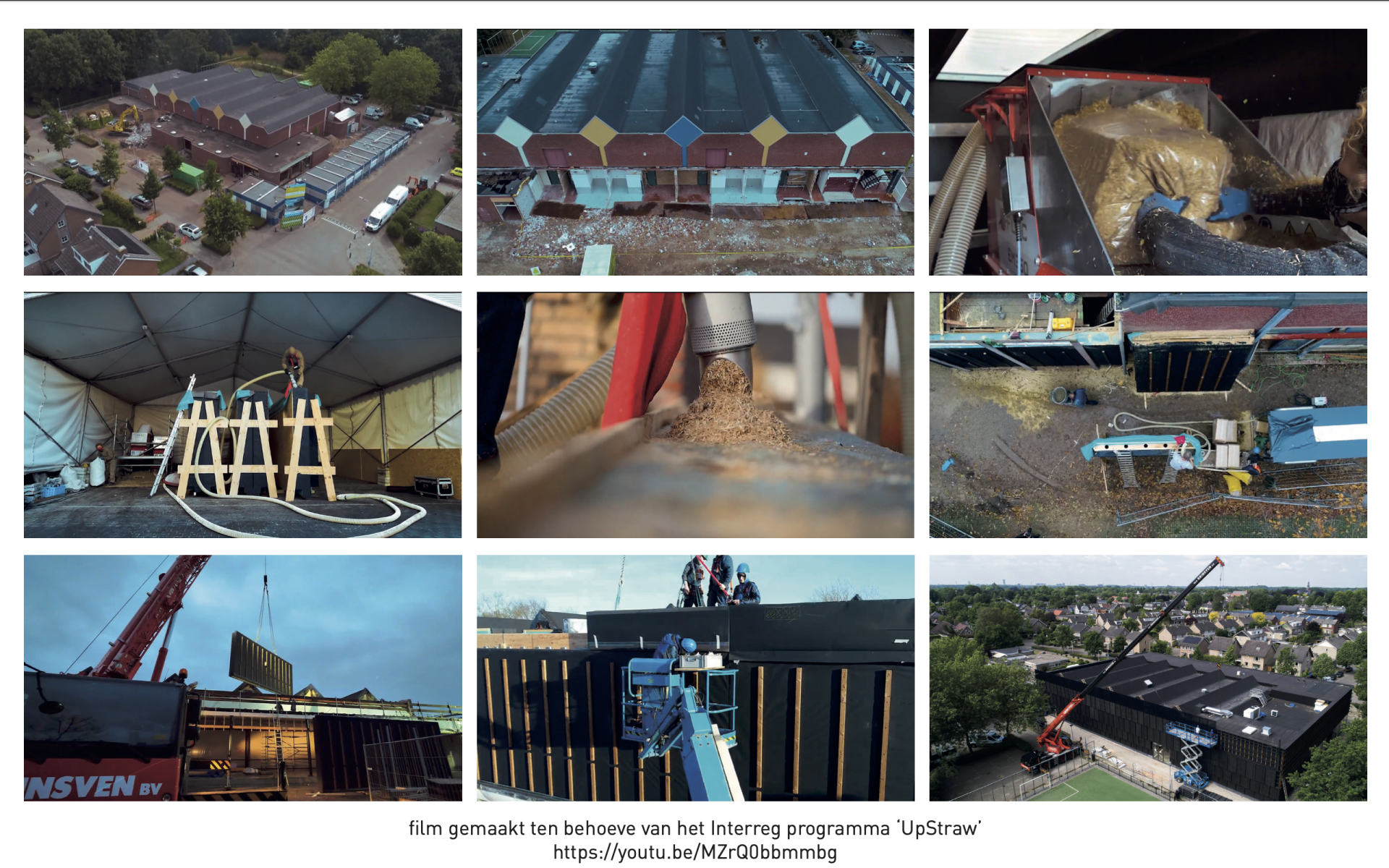
The metamorphosis of the Roomley has two innovative aspects. First, the Roomley has been innovative in the use of strawfibres as after-insulation of an outdated building. It is the largest after-insulation project currently finished in the EU. The goal of Interreg Upstraw is upscaling the use of straw as a building material in the EU. When using straw in the modernization of the Roomley another goal was added by the designteam, using straw should be an easy and accessible and can answer to the building efficiency that contractors need. This goal led to an industrial method of using straw by designing prefab wooden structures that were filled by blowing in strawfibres as insulation. Making prefab units generates a higher efficiency and adds to the quality of the product. In the rainy Dutch climate builders were not bound by weather whereas traditional straw buildings are made on site and the process is very sensitive to rainfall. Installation of the prefab units was not bound by weather as the units were closed off and waterproof.
Secondly, the largest innovative character of the build was the total approach and the consequences of the design choices made. Every municipality in the Netherlands will recognize the problem the Roomley had. It was in need of an enormous metamorphosis but it is nearly impossible to close down a sports hall for there are no alternative places for the sporters involved. The redesign of the Roomley has made it possible for the sports hall to stay in use while being transformed. There was no alternative location necessary for its users. This solved the largest problem for its sportsdivision and for local elementary schools and users. For most a total new build seemed the only answer to all sustainability requirements necessary but this metamorphosis has overruled a new build in all environmental impact classifications and in doing this it meant a 40% reduction of invest when comparing the modernization to a complete new building.