CONJUNTOS (SETS)
Basic information
Project Title
Full project title
Category
Project Description
CONJUNTOS is a project at Carlos III University to promote interdisciplinarity in higher education, providing spaces for meeting and dialogue between different areas of knowledge. University education has traditionally been organized around disciplines that are too compartmentalized. This project is based on the need for pedagogical innovation models that promote synergies between specialties, social inclusion and the interconnection of the artistic and scientific communities.
Project Region
EU Programme or fund
Description of the project
Summary
CONJUNTOS is a project at Carlos III University to promote interdisciplinarity in higher education, providing spaces for meeting and dialogue between different areas of knowledge. University education has traditionally been organized around disciplines that are too compartmentalized. This project is based on the need for pedagogical innovation models that promote synergies between specialties, social inclusion and the interconnection of the artistic and scientific communities.
The project started in November 2017 and aims to generate a permanent change of the university environment. Through practical laboratories and active emergent pedagogies, CONJUNTOS connects scientists and artists through creative processes and project-based learning.
Project objectives
- Interdisciplinarity: to make the University a participatory space in which the interaction of different disciplines enriches educational processes.
- Innovation: To generate in the university environment a space for experimentation that leads to new ways of thinking and composing education in the present.
- Inclusion: Opening the doors of the University to citizens and linking to society through the transfer of knowledge and activating spaces of participation.
CONJUNTOS has two main methodologies:
- Dispares: pairs of art students + science student to jointly develop a creative project.
- Omnivores: collective processes with students from different disciplines to link art, science and education.
Some examples of these projects (video playlist: t.ly/opTy)
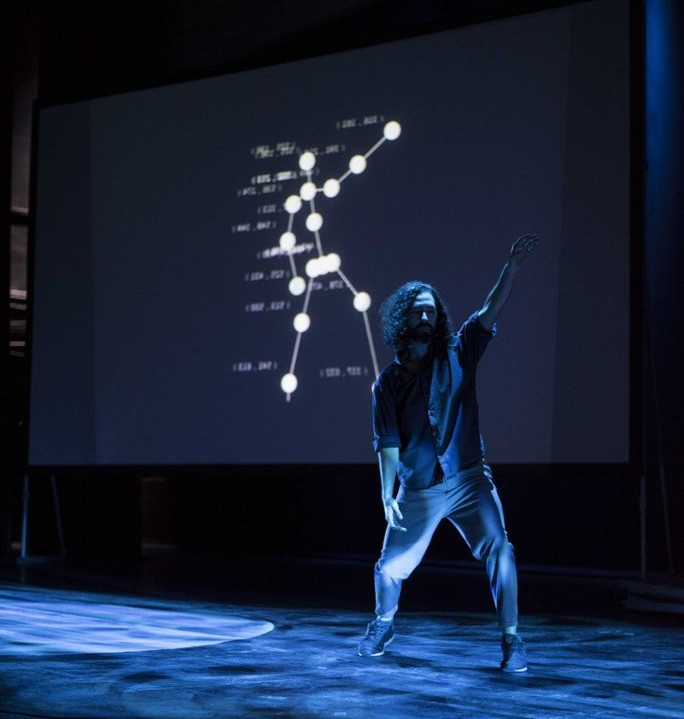
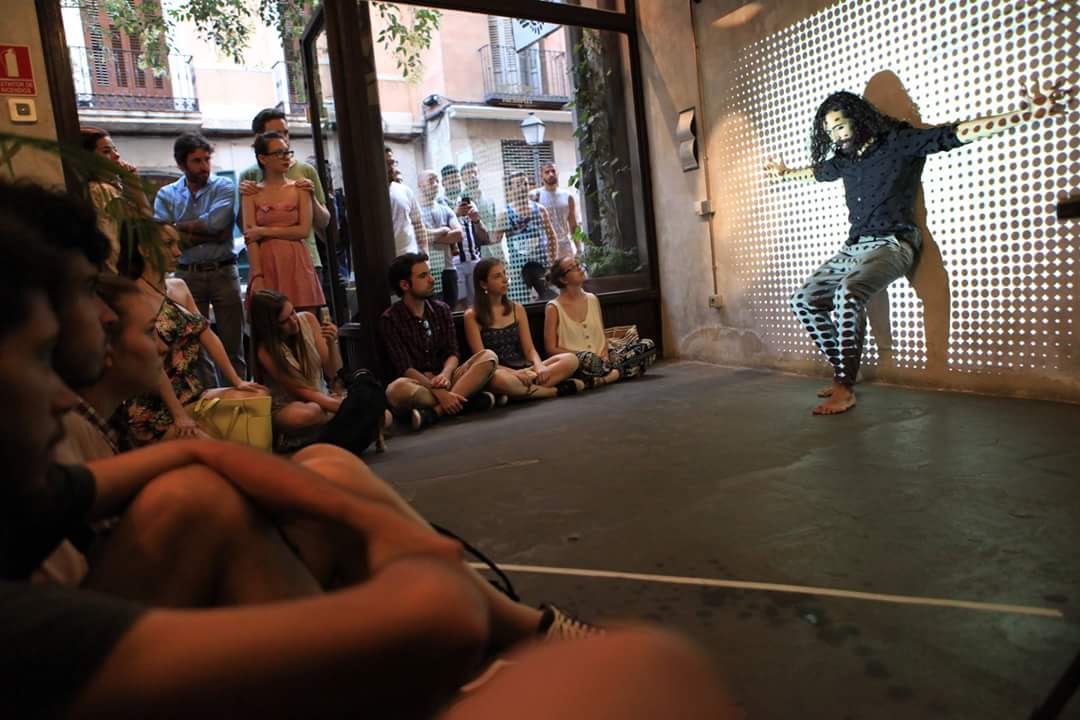
- Dance piece with real time interactive audiovisuals with kinect sensor (programming + dance)
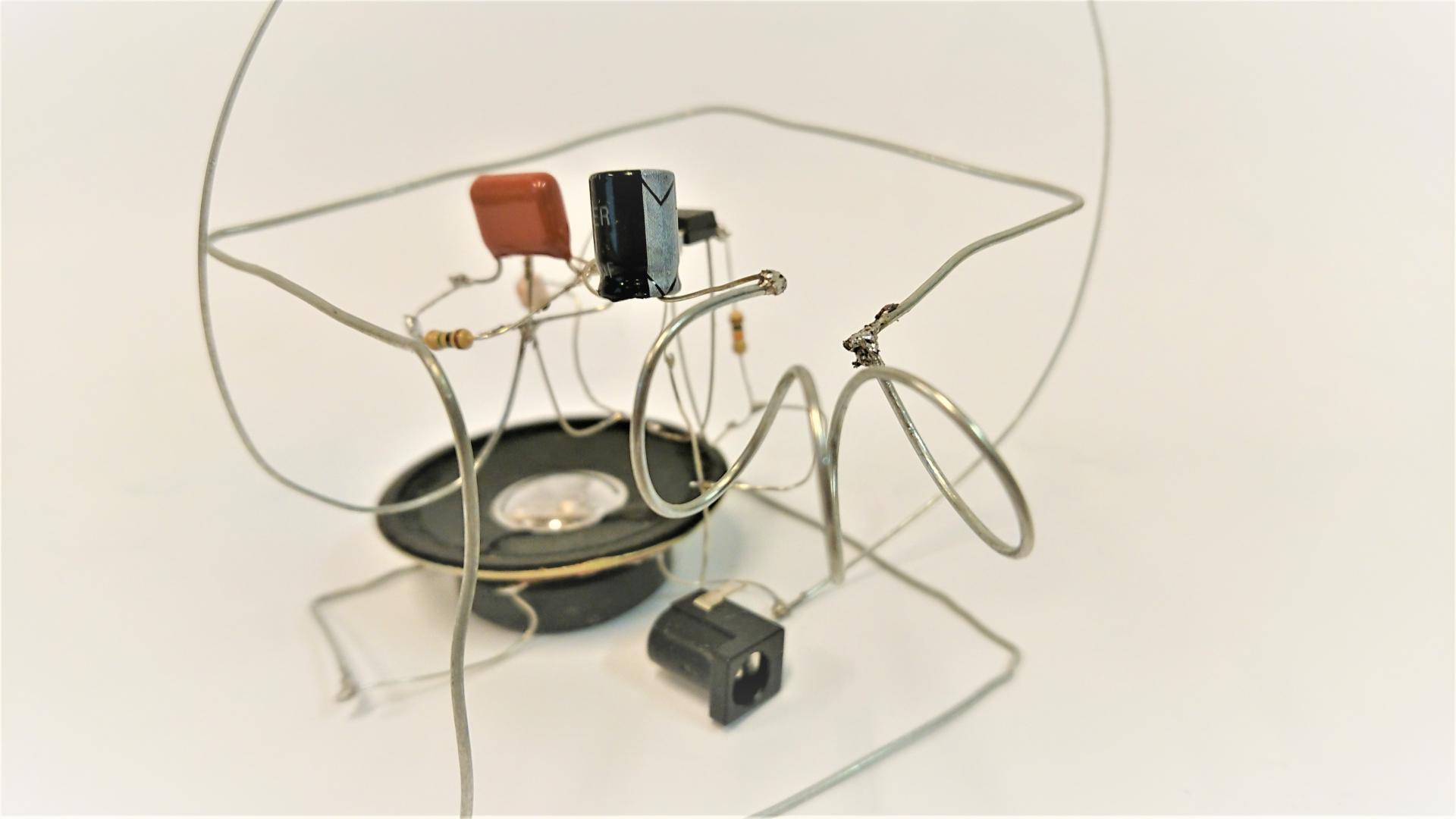
- Interactive sound sculptures with analog electronics (electronics + sculpture)
- Interactive poetry installation (computing + literature) that thanks to an algorithm composes a sound poem for each body.
- Dance and scientific dissemination piece to live the concepts of physics from the body (physics + dance).
Key objectives for sustainability
One of the CONJUNTOS projects in which we work more expressly on the goal of sustainability is "E.COnnect: art and science connections for environmental education".
The current climate crisis situation is well known. However, we seem to fail to make an emotional connection to the overwhelming data. We live a great detachment and lack of empathy . Art as a tool for environmental education has the power to generate affection and work with emotions to seek real involvement and commitment, sensitive observation and a bond with nature. The purpose of this project is to use artistic creation tools to work with young people on environmental awareness and to promote a more sustainable way of life.
Three of the ways in which art can be a good contribution to a paradigm shift are related to the formation of people with critical thinking, with a sensitive look and with a high creativity to seek solutions and imagine new worlds. Through art, human beings ask themselves questions and approach complex problems.
The climate crisis shows that it is not possible to find a solution from a single discipline. Through art we generate bridges that cross different knowledge, that connect disciplines and that erase frontiers. Art generates an integrating work framework, in which different knowledge, critical thinking and the speculation of another possible future come together in the same creative process.
Within this branch of the project we have worked on creative workshops with young people:
- Sound art and acoustic ecology. With an exhibition at the International Museum Day.
- Theater and climate change, for its premiere at the European Researchers' Night.
- Artivism.
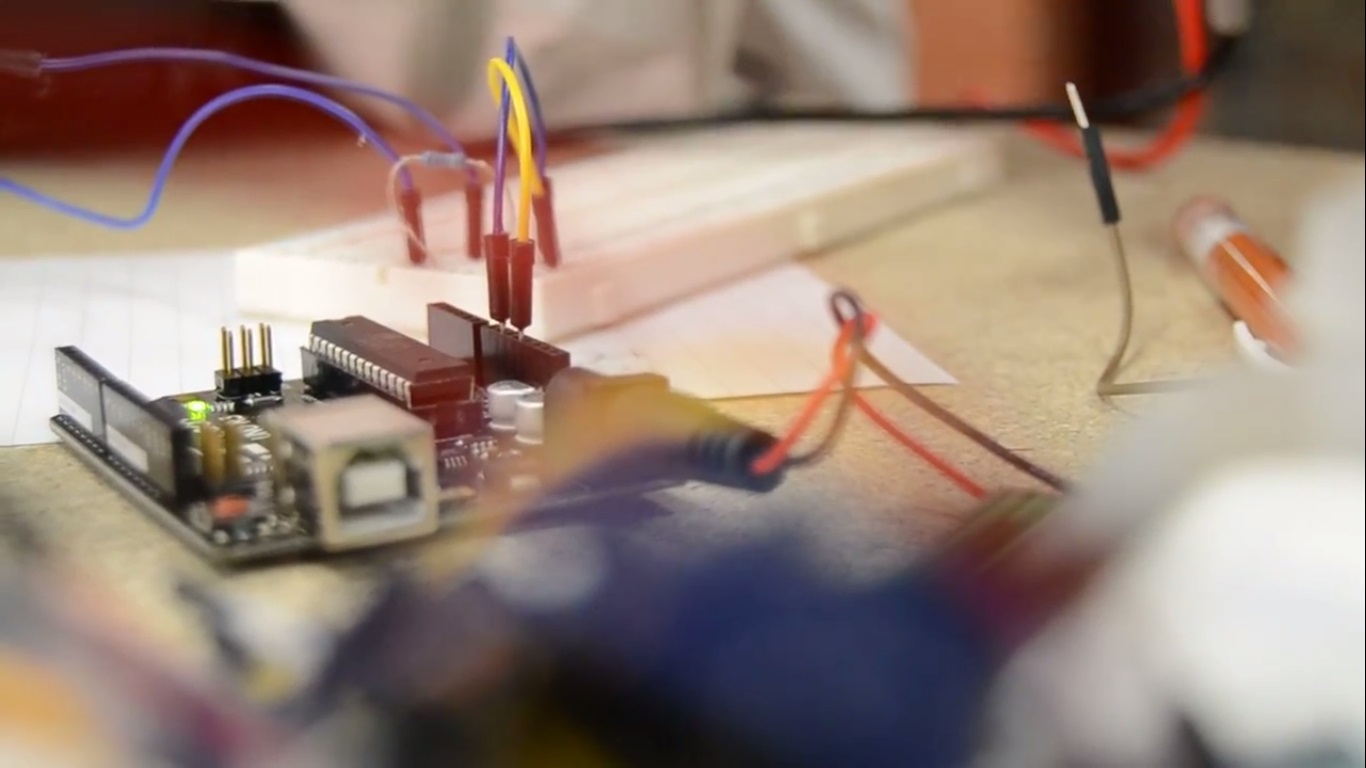
- Maker creation of interactive devices with pollution sensors.
Key objectives for aesthetics and quality
The CONJUNTOS project aims to generate a space for dialogue and feedback between artists and engineers with a dual purpose. On the one hand, creativity and the introduction of art in the training of future scientists and technologists. An educational innovation project to bring the training of young people closer to the skills of the 21st century: critical thinking, creativity and emotional intelligence. These competencies are often forgotten in science education, and through these interdisciplinary projects with artists, we manage to train these aspects in science students.
At the same time, working with technology allows artists to incorporate new poetics in their aesthetic practice, thanks to the incorporation of interactivity, immersion, etc. The artists participating in this project increase the possibility of generating with their works of art experiences for the spectators beyond the passive and traditional consumption of a work of art.
In addition, the joint work of art and technology makes it possible to creatively and critically address current issues of the socio-technological framework that surrounds us. For example, the show "Tracking" worked from the performing arts on the monitoring of the data generated by our body in relation to technological devices. In the show "5G a escena", a theater show about the internet of things.
Technology allows us to approach new formats of presentation of the plays that better include the participation of the spectators and also generate a framework conducive to reflect together on the changes that technology introduces in our societies.
Key objectives for inclusion
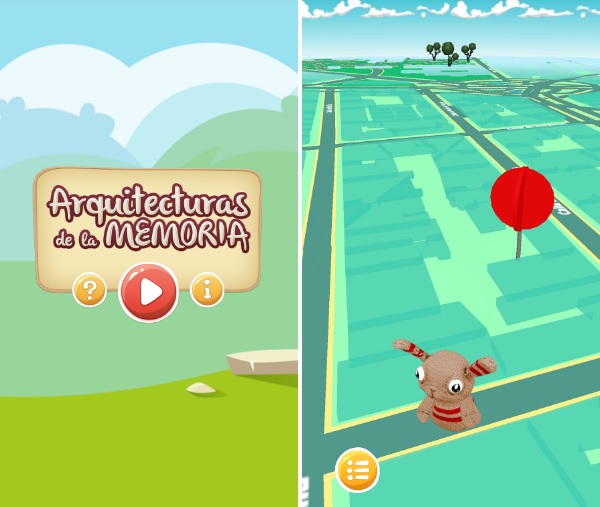
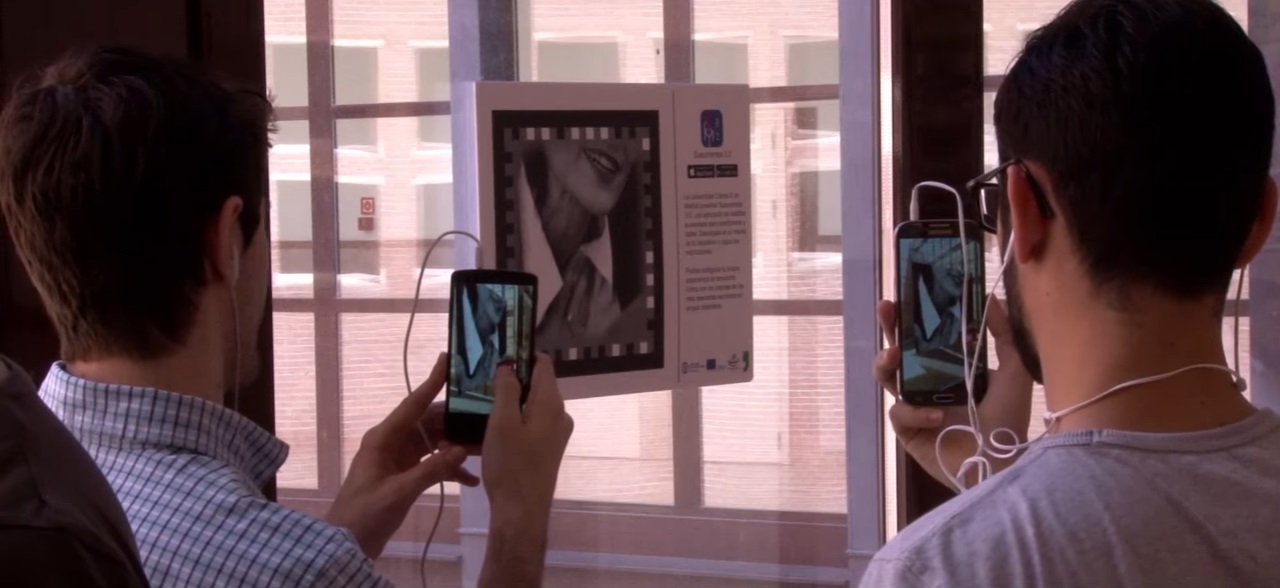
New technologies are often inaccessible to the general public. And there are groups that are particularly affected by the digital divide. Specifically in the CONJUNTOS project we have dedicated one of the laboratories to the elderly and rural areas. Together with several students from different disciplines (telematics engineering, journalism, etc.) we have developed a geolocation app for augmented reality called "Architectures of memory".
The user of the app is walking down the street and an avatar accompanies him on a map on the smartphone, with which he can access various audios about the memory of the elderly and their memories linked to certain spaces. In this way the voices of the elderly are collected and sound in different spaces, a way of recovering orality and the transmission of intangible cultural heritage. At a time when we no longer sit and listen to the stories of our elders, this app tries to recover that spirit through new technologies to bring the oral story to the youngest.
In addition, this app is used to attract a new type of technological tourism that is not usually present in the rural world.
To provide content for the app we have worked with various communities throughout the Spanish geography: from Monterroso, in Galicia to Garrovillas de Alconétar, in Extremadura. Always attending to local collectives that work from the community art to create links between the elderly and the new generations. An app to promote intergenerational dialogue.
Results in relation to category
Since November 2017 we started to test ways of interdisciplinary work at the university. In the beginning, participation in these laboratories was voluntary and wasn't part of the official curriculum of the degrees, but of the university extension program. Currently, we have achieved the consolidation of this project by making it part of the curricular offer of all the studies of the Higher Polytechnic School of the University, which is an institutional recognition of the value of an education that trains our students in interdisciplinary dialogue. This is precisely the objective that the project sought to achieve: to include art in scientific training as a vehicle for working on the key competencies of the future. In addition to this achievement, several TFGs and TFMs have been generated within the practical laboratories, which are the works with the highest ECTS load of the career and the possibility of elaborating them jointly with students from different disciplines has been incorporated.
The recognition in the cultural world has also been remarkable, generating much interest in the works of art created in the laboratories by important festivals and cultural institutions. Some of our students have presented their works in relevant institutions in our cities such as the Reina Sofia Museum or the Conde Duque and in countries such as India, Portugal or Italy.
This has also facilitated the connection between university projects and civil society. The presentation of the interactive shows and exhibitions is usually accompanied by informative meetings so that citizens have the opportunity to get to know the technologies behind the works of art, try them with their own bodies and learn what an automatic control system for an interactive work is like.
In addition, the project has gained the trust and support of the Daniel and Nina Carasso Foundation, a French sponsorship foundation that seeks the best educational innovation projects in art and science.
How Citizens benefit
Part of the results of the art and technology laboratories of the CONJUNTOS project are presented at festivals and cultural institutions to show interactive works and performances to the general public. In addition, these presentations are accompanied by informative talks to explain the basics of the automatic control systems.
Thanks to the interactivity, moreover, citizens can try out the various prototypes with their own bodies and have a direct experience of immersion in the technology.
Part of the program of shows is specifically designed for scientific dissemination through the performing arts. Performances are presented in the university auditorium, where schools come with their students to see the work and then talk with the researchers about the concepts and technologies presented. We develop this part of the project in connection with the European Researchers' Night and the Madrid Science Week.
We also try to incorporate various groups into the laboratories so that they can work together with the university students on specific projects. Examples of this are some prototypes such as the App Arquitecturas de la Memoria, which incorporates elderly people from rural areas or the creation of a fanzine called "Por la calle, ¿a quién ves?" about the legality and illegality of bodies, developed together with AMAL (Asociación de mujeres árabes en lucha) and the Fundación 26D de mayores LGTB+.
Innovative character
The innovation of the project is the incorporation of art in the training of future engineers at the university, in order to bring education closer to the key competencies of the 21st century: critical thinking, creativity and emotional intelligence. This is achieved through training in interdisciplinary processes that facilitate dialogue between different areas of knowledge, given that contemporary challenges require coordinated work between professionals from different fields.
In addition, practical laboratories allow the incorporation of other educational innovations such as active and emerging methodologies (service-learning, project-based learning, maker learning, etc.). These methodologies are based on constructivist and connectivist learning theories that propose an innovation in contrast to the traditional way of transmitting knowledge through direct instruction, to which universities have been accustomed for years.
The innovative spirit of the project impacts, in addition to the educational system (main objective), on artistic creation. This project allows participating artists to design artworks that incorporate the construction of an interactive and immersive experience. It creates new poetics for their creative practice thanks to the incorporation of new technologies, sensors and dialogue with scientists about the current concerns of our society.