Kleiner Kiel-Kanal
Basic information
Project Title
Full project title
Category
Project Description
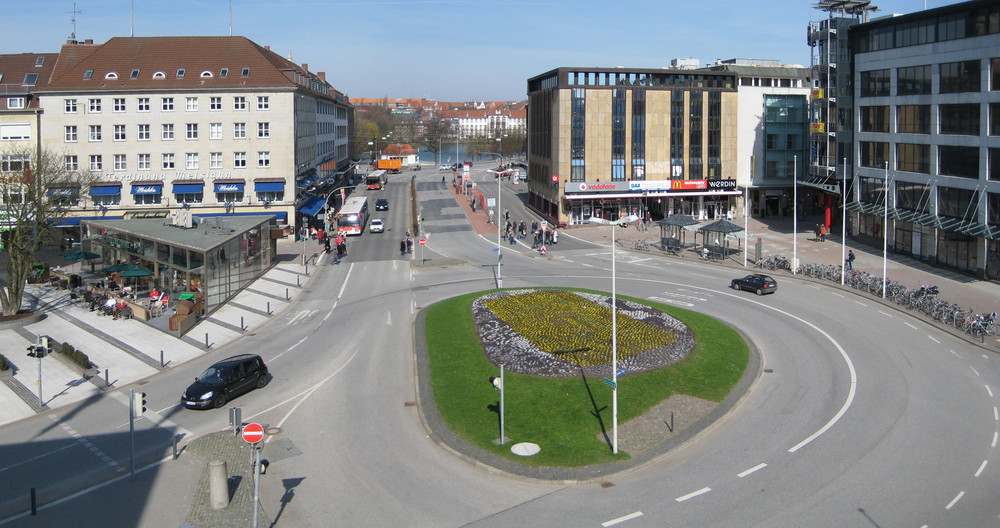
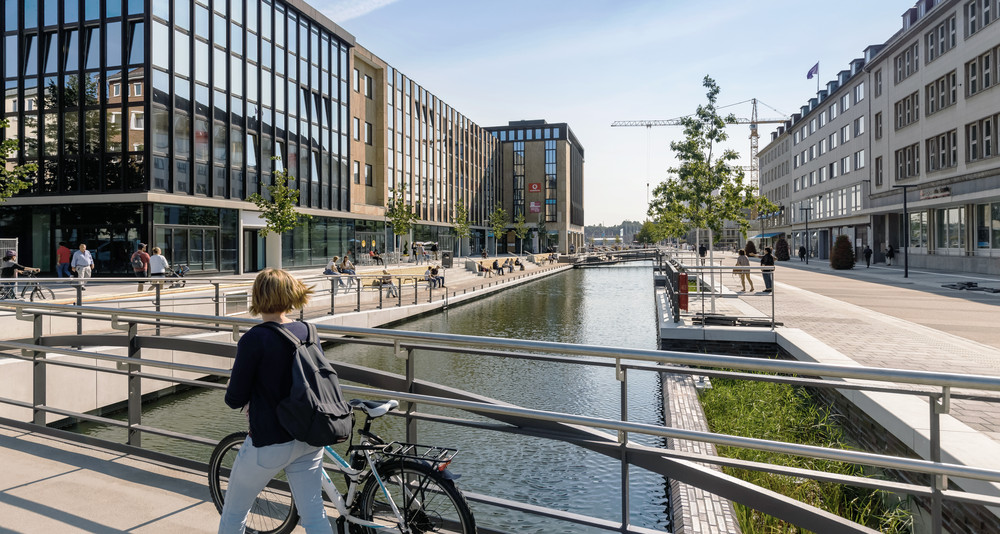
The City of Kiel wants to make its inner city more attractive. Therefore a former busy street is transformed into an urban space which connects through several water planes to the fjord. Planning was accompanied by intensive citizen’s participation. The new space attracts people, has high amenity and offers a nice sojourn, improves the microclimate and helps cleaning the water. The course of the project recurs to a former moat around the city core, thus strengthening the identity of the place.
Project Region
EU Programme or fund
Description of the project
Summary
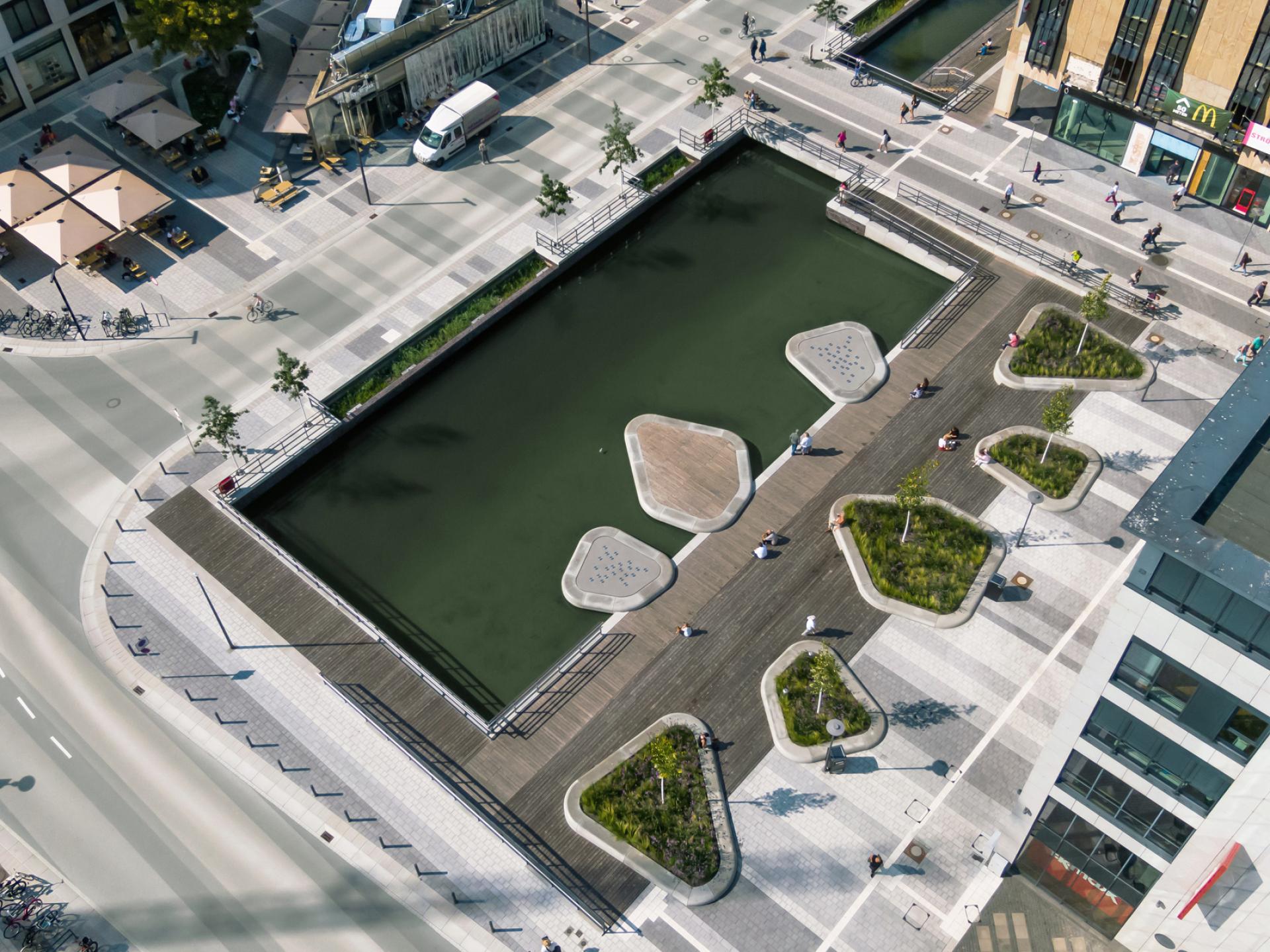
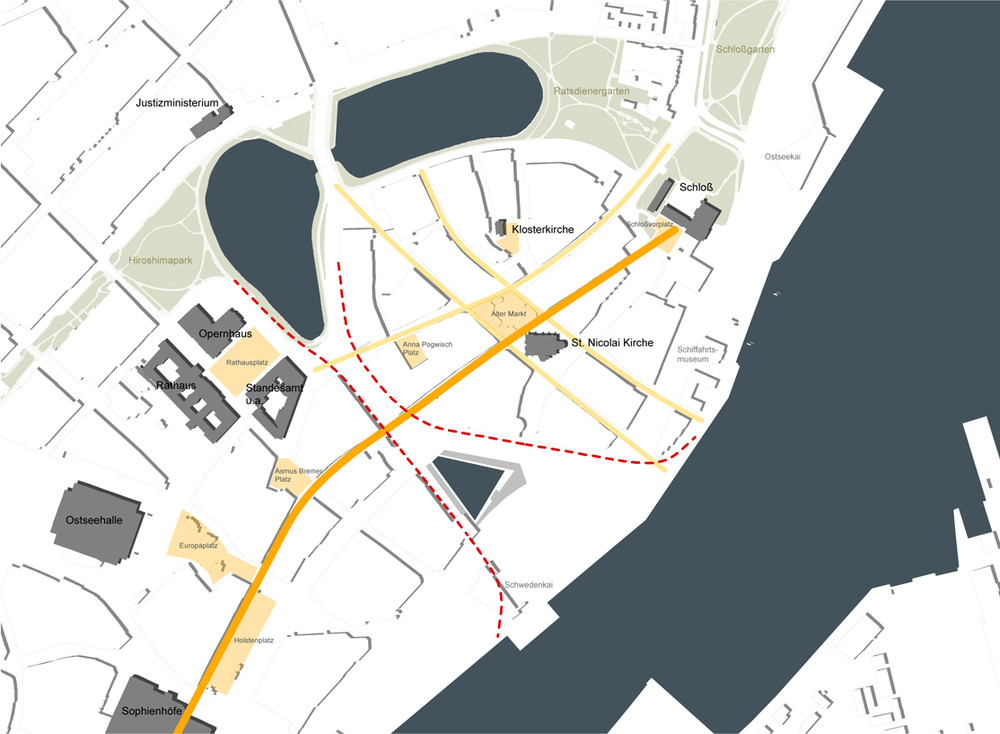
The City of Kiel wants to make its inner city more attractive by several urbanistic projects near the core of the old city. The redesign of the Holsten Bridge and its surroundings is a key project for the strengthening of public space. The former heavily frequented street was transformed into an urban inner city square with high sojourn value. The former moat around the old town became a new waterfront situation in the inner city of Kiel, called “Kleiner Kiel-Kanal” (little Kiel Canal). Together with the existing “Kleiner Kiel” and the boat harbour he forms a string of water basins which connects the inner city to the Kiel fjord. The water elements relate to each other by sight axes, material and interweaving uses. Comfort zones for pedestrians trace the main movement lines and areas of sojourn near the water line. The water is cleaned through a soil filter two meters wide and planted with reeds. Thereby the costs for maintenance are reduced. The reed filter also secures water quality and is effective as an evaporation surface for bettering the micro climate in the inner city of Kiel. The traffic surfaces for the tram (in planning), buses, bicycles and pedestrians are interpreted as one big square surface whereon low key markings give orientation.
Key objectives for sustainability
Main objectives are: bettering the micro climate and air quality, improving water quality, reducing noise.
The water is cleaned through a soil filter two meters wide and planted with reeds. Thereby the costs for maintenance are reduced. The reed filter also secures water quality. Additional measures for cleaning water added in case of sinking water levels are provided. The water is in constant cleaning circulation.
Furthermore the water surfaces are effective as an evaporation surface for cooling the air in heat periods and bettering the micro climate in the inner city of Kiel. By reducing motorized individual traffic CO² emissions are reduced as well as other noxious substances emitted by motor vehicles. Noise is lessened too.
Also more plants are introduced in the project zone thus providing futhrt amenities.
Key objectives for aesthetics and quality
The project aims at creating a relaxed and attractive atmosphere where people like to dwell, unique to the city of Kiel.
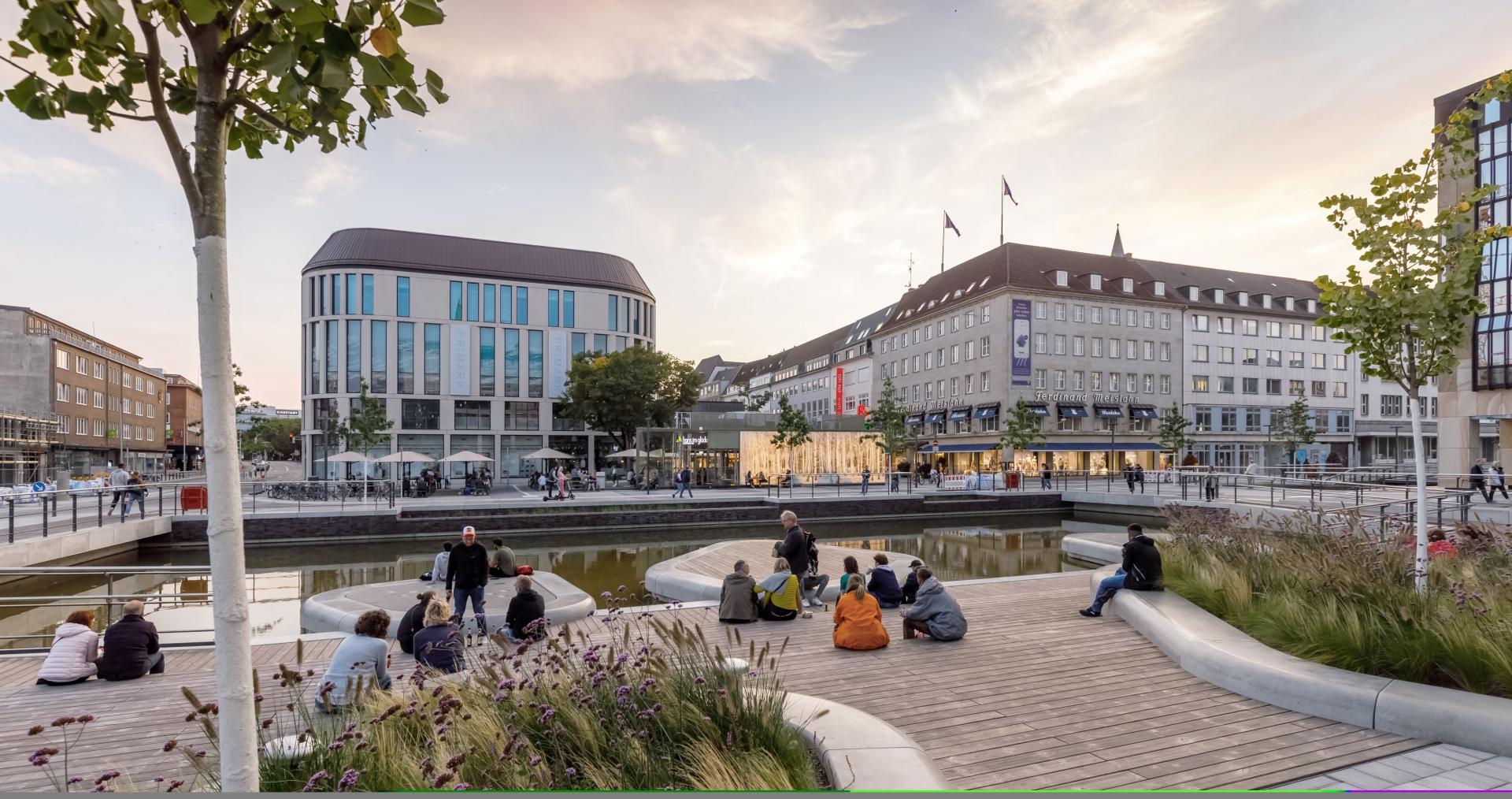
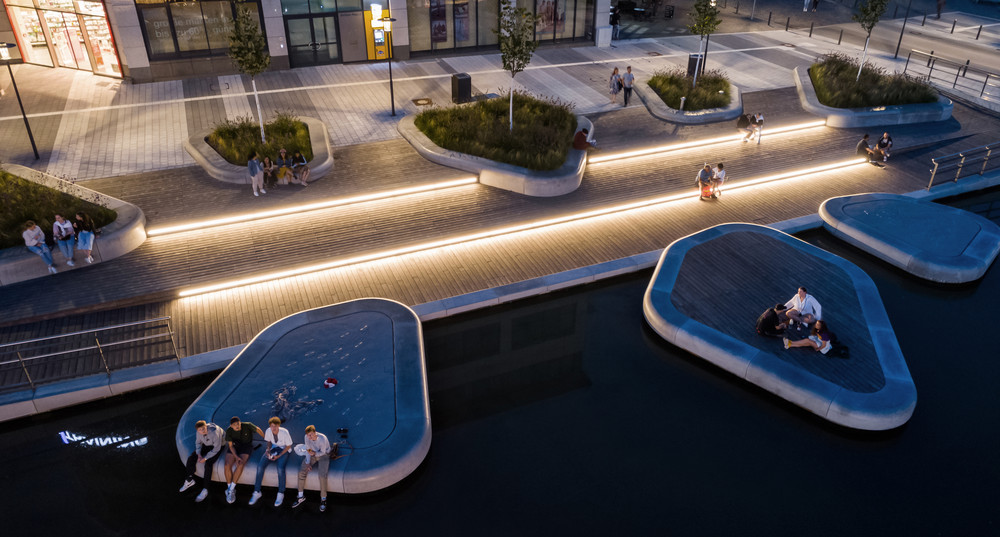
Instead of busy streets, squares with an interesting surface, many green elements and attractive street “furniture” are provided. The stripes in the pavement make for a lively and structured surface. Where pavement was not possible because of bus traffic the asphalt was coated with special materials to make the surface appearance uniform. Rounded jutties, like a sort of balcony, are projected into the water spaces and offer the possibility to stay very close to the water, perhaps even to put your feet into the water. These “islands” offer also associations to geological elements from the ice age, like erratic boulders.
With the introduction of water basins into the space attractive and calming elements are created. Many waterfronts with different kinds of seating elements offer an agreeable sojourn. Buildings materials like wood and naturals stones create a warm atmosphere. Also they are reminders of the maritime environment. Islands of many plants, flowers and grass, and trees also contribute to a relaxed ambience and offer further aesthetic experiences.
Remnants of the city’s history are traced by tree lines and lighting along the stairs at the waterfronts, showing were the border between the old city and subsequently built up areas was. This promotes also a stronger sense of identity and distinctiveness of the site by making it un-interchangeable.
Key objectives for inclusion
The planning process was accompanied by an intensive participatory process. After the first design there were several assemblies, exhibition and discussion in a market place, discussions and art projects in schools and discussions with stake holders around the site. There were some concerns about the project, especially about reducing individual motor traffic and also costs. These could be dispelled by a well thought out concept for public transport. Also the project was subsidized to a considerable degree by the federal ministry of building and the federal state.
Also people wanted more green elements, less straight edges and more organic forms. Lighting was also wished for. Better quality cafés and restaurants were another demand. The design was influenced by all this as far as possible and changed accordingly. Meanwhile public approval is strong. The process and all the wishes are documented: kleiner_kiel_kanal_dokumentation_2015.pdf
Barrier free access was another important issue. The whole square can now be crossed without steps.
The planning and building process was in constant teamwork with others disciplines, engineers for water, traffic and support structure planning, light planners and architects.
Results in relation to category
Reinvented places to meet and share:
The site was changed completely from traffic use to a multifunctional square and water zone. After traffic was significantly reduced the amenity value rose considerably. Many opportunities for sitting on benches, steps and artificial stones were created and immediately accepted. A relaxed atmosphere allows for people to sit, stroll on the waterfront or visit neighbouring cafés which came along with the new site. Informal meetings are possible; perception of others in public space is much heightened. Groups of people can come together, by purpose or through happenstance. The site was truly newly invented but with recourse to its history.
How Citizens benefit
The citizens benefitted by a vastly improved public space and better environmental conditions. Higher amenity values and a relaxed atmosphere enrich the city life considerably. Also the sense of history and the readability of historic traces were improved, thus furthering the identification of people with their city.
As described before, the planning process was accompanied by an intensive participatory process. After the first design there were several assemblies, exhibition and discussion in a market place, discussions and art projects in schools and discussions with stake holders around the site. There were some concerns about the project, especially about reducing individual motor traffic and also costs. These could be dispelled by a well thought out concept for public transport. Also the project was subsidized to a considerable degree by the federal ministry of building and the federal state.
Also people wanted more green elements, less straight edges and more organic forms. Lighting was also wished for. Better quality cafés and restaurants were another demand. The design was influenced by all this as far as possible and changed accordingly. Meanwhile public approval is strong.
The neighbouring enterprises were encouraged by the new public space to invest in their buildings and their enterprises. High quality restaurants, hotels and retail shops developed. The impulse by the new high quality public space is estimated by the city to have generated private investment up to 100 Mill. €. This in course betters the tax revenue and employment chances in the city.
Innovative character
Innovation was taking place through the participatory planning process as well as interdisciplinary working process. Thereby new ways of cleaning water were installed. Also relatively new is the successful implementation of shared space in Germany.
Furthermore the reference to history translated into truly modern aesthetics is remarkable.