Arnold
Basic information
Project Title
Full project title
Category
Project Description
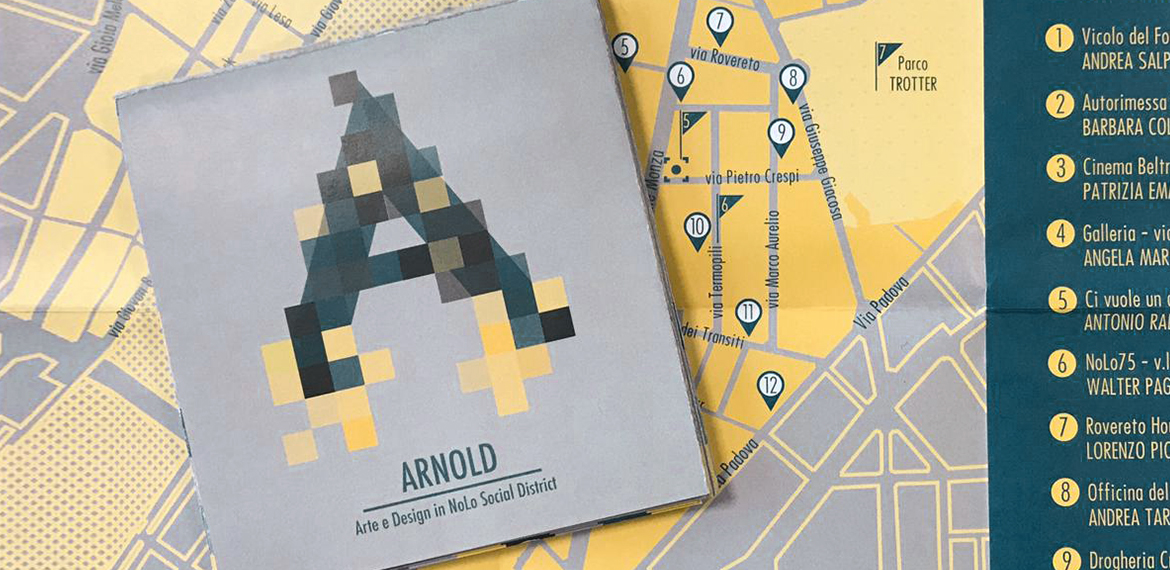
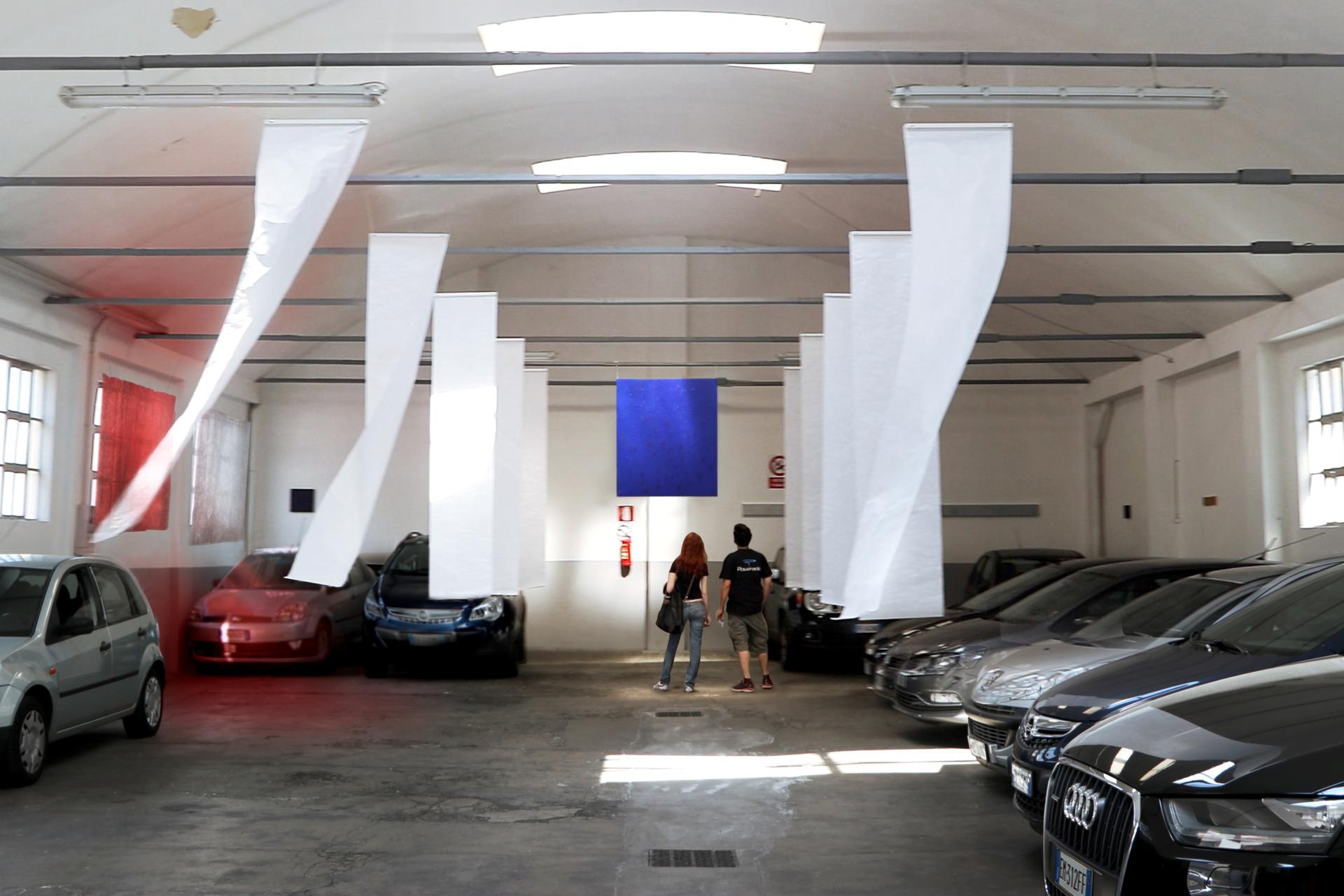
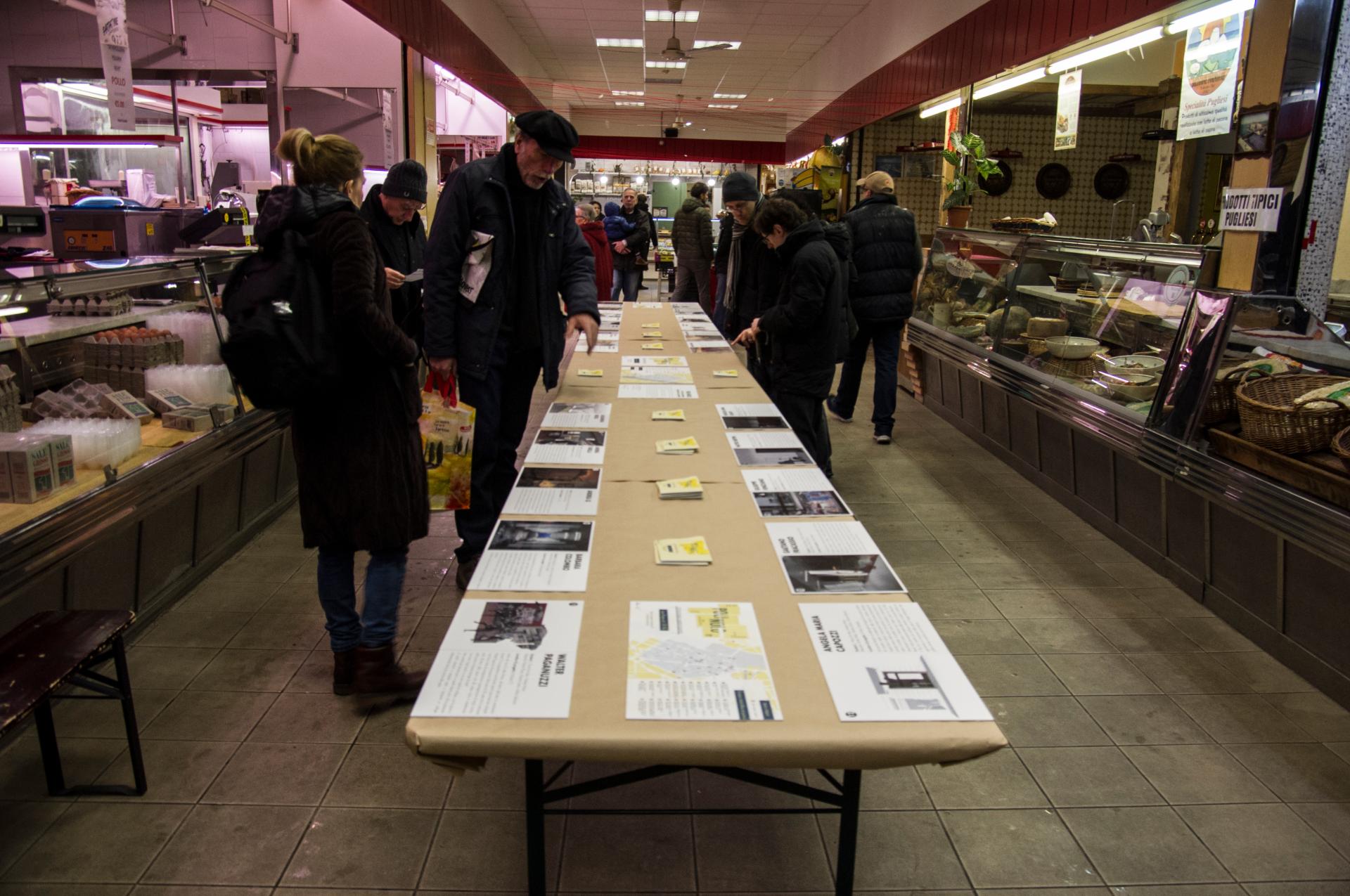
Arnold is an event done on 9-11 June 2017 that exhibited 12 artists in 12 non-conventional places for art in the Nolo neighbourhood (Milan) after 6 months of co-design activities run by 50 students of the master’s degree in Interior Design of the Politecnico di Milano. They investigated, imagined and experimented with local artists and locations owners to get a larger audience, support local shops and discover a district far from being a tourist place.
Project Region
EU Programme or fund
Description of the project
Summary
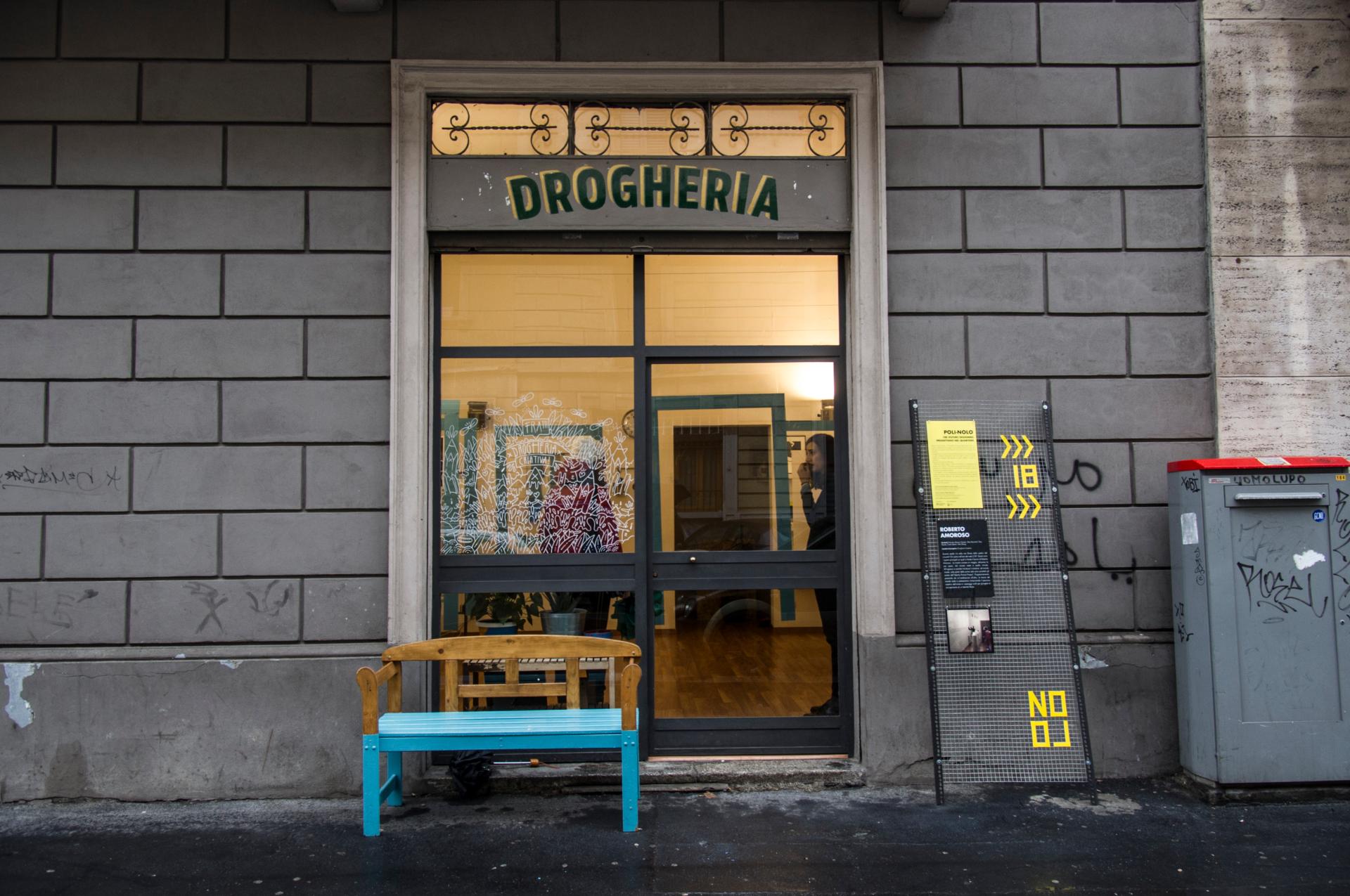
50 students of the master’s degree in Interior Design from the Politecnico di Milano have collaborated with 12 artists in 12 places of NoLo District investigating, imagining and experimenting with spaces supporting the neighbourhood. The result was a travelling event on 9, 10 and 11 June 2017 that showcased works of art in unconventional contexts: commercial activities, residual public places, spaces of creativity. Arnold focused on public spaces, both indoor and outdoor, by establishing connections and relationships with the local citizens – connected to shops, associations, informal groups and neighbourhood committees – and with a specific local community: contemporary artists who own their art gallery, exhibition and workspaces in the Milan NoLo District.
The projects highlighted a renewed perception of this area by enhancing its emerging qualities and have also been developed in collaboration with NoLo Creative District and with Polimi DESIS Lab through a process of participatory research and co-planning. During the days of the event, it was possible to (re)discover the neighbourhood with “GiraNolo”, a guided tour by a group of inhabitants of the Nolo Social District in places of architectural and artistic interest.
The project's focus resonated with the most advanced fields of research and experimentation that the European Commission is fostering through research and innovation programmes. More specifically: 1) how “public spaces” both shape and are shaped by cultural activity, including art, and how this can bring about the integration of people, including at the political and economic levels; and 2) how the co-creation of public goods (services, spaces and strategies) can actually become a way to engage citizens and stakeholders of all kinds in shaping the European identity.
Key objectives for sustainability
Arnold’s event took place in June 2017, approaching the strategy “from prototyping to mise-en-scene” and, together with his collateral initiatives, had a precise role as a temporary event (and its construction) with a mean of creating scenarios for long term and creative use of spaces to improve the quality of the neighbourhood. The input artists and designers involved gave to reach the action prototyping was the shift from being object maker to maker of experiences, to impact the future of the area. The output was read through the legacy left to the neighbourhood, the impact of the actions and the sustainability of the event making. It was a sustainable event from the environmental and economic point of view and let the visitors have a social interaction aimed at improving their level of satisfaction.
Furthermore, Arnold created a system of actors related to art and design in the area creating an event format to be possibly used even in future as an annual appointment for the city. It involved a substantial number of stakeholders, including professionals, artist, citizens and caught the attention of several media thanks to the synergy with a collateral event such as “ZuArt -Looper fest”- a temporary art event happening each year in the area - and “GiraNolo”, the guided tour by a group of inhabitants of the Nolo Social.
Key objectives for aesthetics and quality
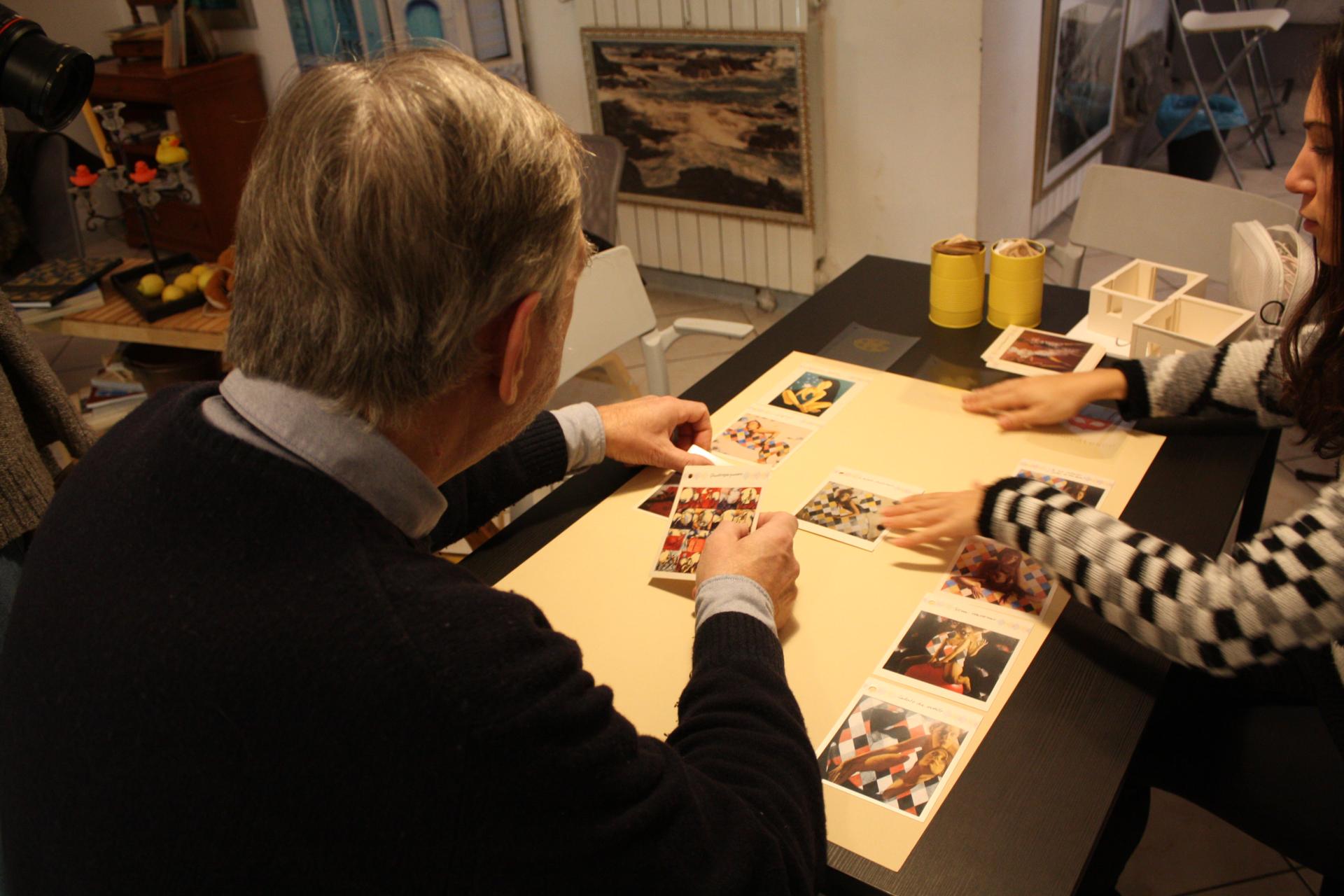
Arnold first key objective was about urban activation through design interventions through co-designed solutions in unconventional locations for art and design, with the aim of catching the huge potentialities of the neighbourhood itself and the fertile collaboration with local communities. To (co)design spatial solutions for an exhibition about local artists in unconventional spaces for art within the Nolo neighbourhood (Milan), the 54 students were divided into teams and each one was teamed with two artists and two locations. Twenty-two unconventional places (piano shop, butcher’s shop, cinema, co-working space, tavern, etc.) and their owners and twenty-two local artists were introduced by the research team leaders of the Politecnico di Milano to the Master’s students to work with and co-design the spatial solutions. For the preliminary phases of the design of the event, students were required to do research in the context though: a background analysis of the spaces, exploring spatial flows, dimensions with visualizations and mock-ups; a “getting to know” process through video interviews of owners and artists; co-design activities with artists, owners and communities; a consequential concept definition of the exhibition through different ways of visualization. The designing phase revealed the interdisciplinary character of the event, breaking the silos of design approaches and adding a diverse perspective where the possibility to improve the aesthetic and experience in the involved spaces was also considered as a fundamental goal. Whit local communities willing to participate in collaborative actions made it much easier to design, produce and activate solutions for a better way of living. The chosen approach to the whole event considered these locations on service, systemic and spatial design perspectives, focusing on interactions in the shaping of spaces through art.
Key objectives for inclusion
Enabling community synergy was one of the main goals of Arnold's project. The design education approach during the different phases of the project between the university environment and the social one was considered a strategy that enabled community synergies. The relationship between the context and all people involved was carried out by the “Polimi Desis Lab” research group (who dealt with the Arnold project). The event became a field of experimentation for topics and methodologies in design education, which nourishes theoretical research development. In this framework, the NoLo neighbourhood has been the appropriate place to experiment with new frontiers (new societal needs - inclusive and participative, and new forms of citizen interactions) to implement the positive aspects of the gentrification in progress. By using co-design tools and methods, it has been possible to include users-citizens in the design process; thus, designers (the students) and the people involved worked together across the whole span of the design process. Despite selecting specific core groups for the co-design activities, due to the Politecnico di Milano course topic and scope, the field exploration and output involved a wide audience, avoiding a strict focus on a group of experts for a more democratically oriented application of Participatory Design. The event was based on the idea to develop some of the exhibitions co-designed during the previous phase of the project, not only to physically build them but also to make people interact with them, connecting with the artist’s realm and having a personal experience through the visit. Arnold had a role in the NoLo neighbourhood not only to display pieces of art in unconventional places but also as a mean of improving the relationships among the different kinds of users (local inhabitants, city dwellers, art-events fans, visitors).
Results in relation to category
Arnold dealt with the relationships between design and inclusion, urban interiors, arts and transformation of public space, using retail spaces to reach community identity. The project has worked to make possible that a cultural event designed by the “creative class” and active citizens can improve the perception of an emerging neighbourhood in Milan. Specifically, it dealt with how cultural events, when designed for, in, and with the city, help make the social and spatial environments more hospitable and attractive. They can also improve social cohesion when the neighbourhood comprises a social and cultural mix of all ages, traditions and nationalities. The project goals were specifically related to host and foster social proximity relationships in the Nolo neighbourhood and communicate an open, transparent, interpretable idea. The collaboration among artists, designers and location owners underlined the very different approaches to creating the output. If designers were guided using some design tools and methods to come to a result in both phases with a systems approach (guided brainstorming, mind-mapping, functional spatial layout, customer journeys, technical drawings), the artists offered important input to allow the designers to understand their “world”, the meaning of their artworks and how to add value to them in the exhibition. While on the one hand, the location owners underlined some restrictions to the use of the space (due to ongoing activities at the locations), on the other hand, they helped the artists and designers to make the exhibitions achievable (by letting them make slight changes to the space layout, offering their time, and giving small financial aid). The results of the planned activities made the event a success. Arnold had brought the result of designing public spaces through art and with local communities, with the possibility to impact urban activations by art interventions.
How Citizens benefit
Arnold took advantage of an interdisciplinary approach – employing theories and tools from spatial, service and event design – and a systemic design method to involve local citizens in the scenario development and get to fast prototyping of the results. Community-centred Design and Participatory Design laid the foundations for a context-based approach and structured the data collection and analysis for a systemic view. The open-ended steps, artefacts and outcomes along the process allowed a mutual development of reflections and ideas both for the design students and the citizens involved, up to prototyping. The final event represented a 1:1 test and mise-en-scène of co-designed scenarios in the context itself.
This is the first step of a long process that envisages long-term strategies to be set with structured models for an improvement embedded in a set – but likely to be implemented – network in the local community. This kind of experimentations, in fact, can contribute to the growing awareness of specific problems and opportunities in the local inhabitants in the short-term, while acting as a trigger for future implemented networks, including not only a larger group but institutional stakeholders, to hopefully, set up a shared, structured and progressive development programme. This last is possible if an implementation process in a complex environment, as the one considered, is approached trying not to solve problems but to open new issues to be understood before, in order then to be enough acknowledged to set up a strategic action.
Innovative character
Even if the design process using several co-design sessions is not something new, the methodology used and the connection among researchers, students, citizens, artists and locations owners can have some innovative characters. The connection between contemporary arts and the bottom-up transformations of urban spaces has a multi-faceted role in establishing brand new social innovations and place-making processes.
The prototyping and the mise en scene referred to participatory action research methodology and creative placemaking to generate social innovation. In this way, all the actors involved collaborated inclusively for a transformative process and systemic change. Actors, researchers and participants did not have the same role, but they influenced mutually each other. In the Designing phase, the ideas generation occurred with a methodological dialectic: the findings of the Investigation phase informed first the objective spatial analysis, then the critical representation of the spaces with interpretive diagrams, expanded by the spatial experience with the owners the artists. All of this was supported by the design of co-design activities based on Participatory Design (PD): the direct involvement during the design process of the users, i.e. those who will be affected by the design output.