Naturally Dramatic: Sustainable Costume
Basic information
Project Title
Full project title
Category
Project Description
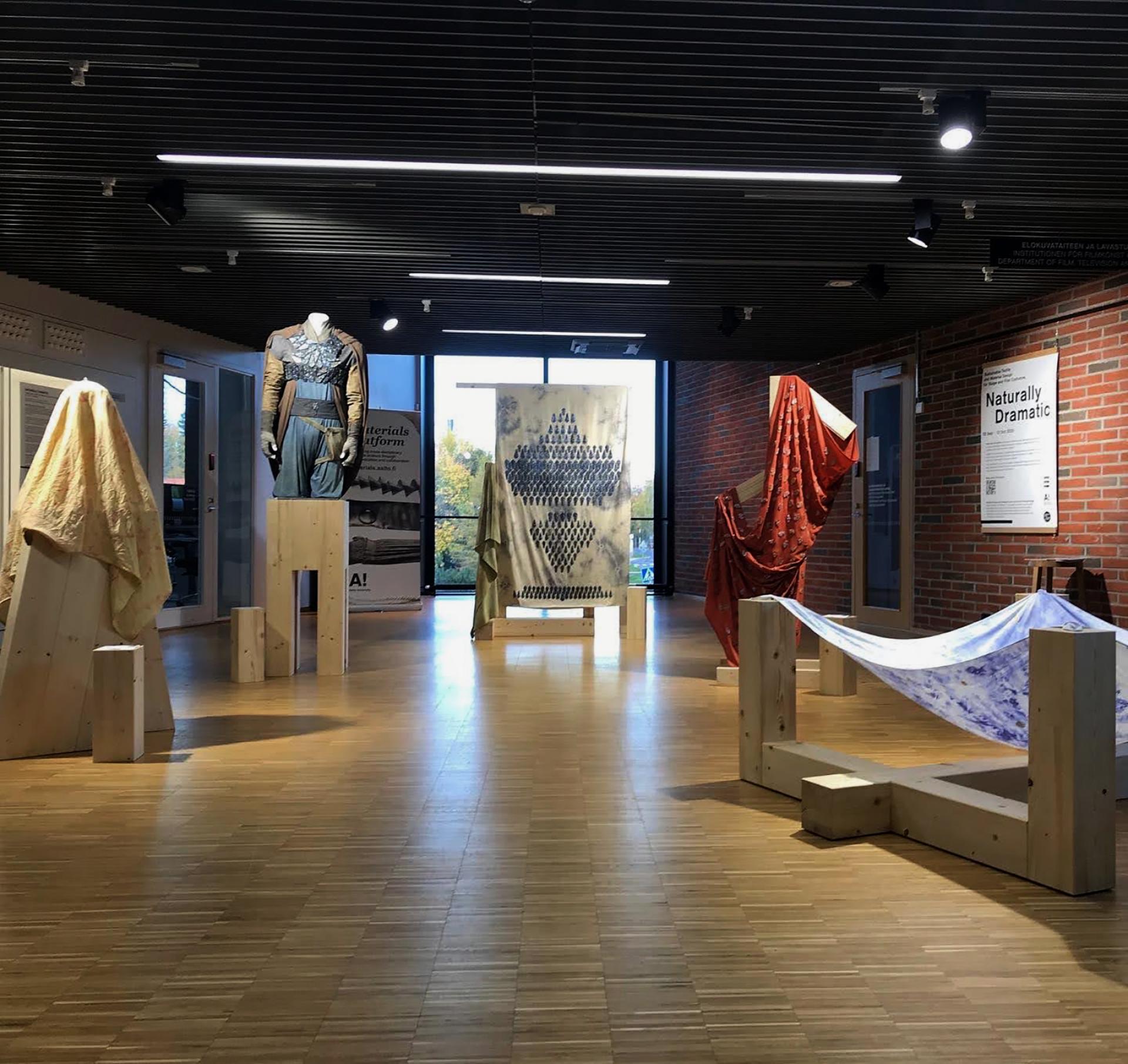
Naturally Dramatic is an interdisciplinary project between the Biobased Colloids and Materials (BiCMat) research group at Aalto University in Finland and textile designer Urs Dierker. It showcased solutions for sustainable costume design with a focus on biomaterials. The project is part of the Circular Costume Design project, founded by Dierker to foster systemic change within the entertainment industry. Naturally Dramatic was part of the 2020 Helsinki Design Week.
Project Region
EU Programme or fund
Description of the project
Summary
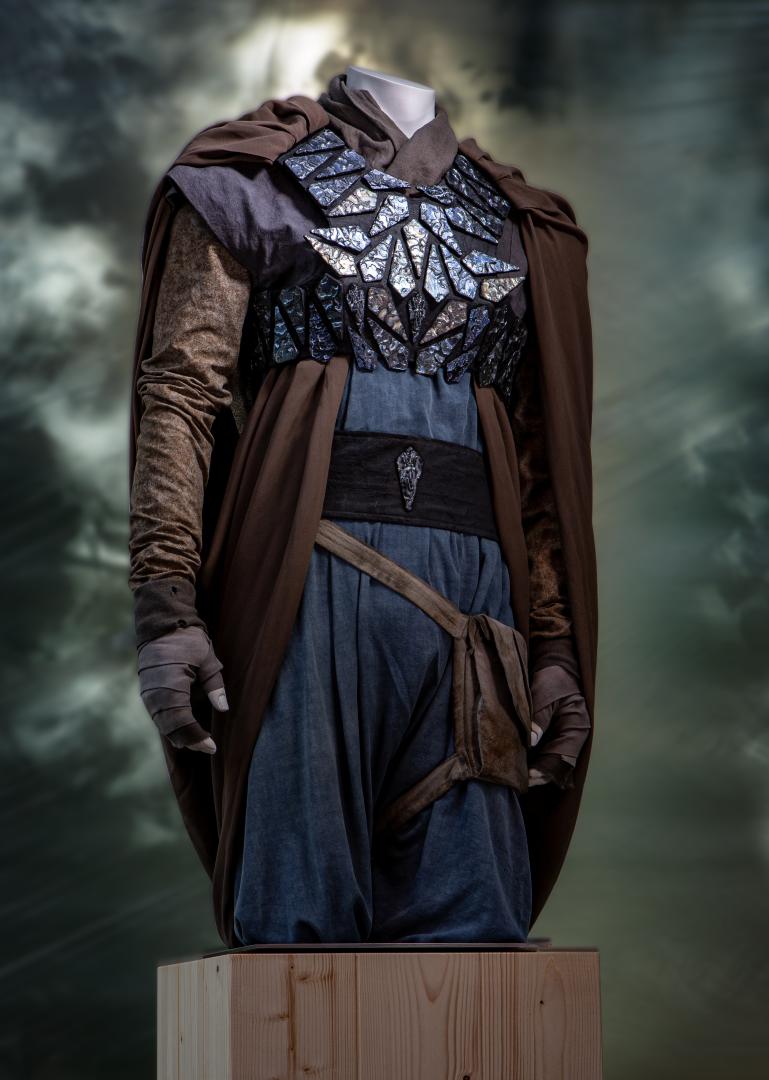
Naturally Dramatic is an interdisciplinary project between the Biobased Colloids and Materials (BiCMat) research group at Aalto University in Finland and textile designer Urs Dierker. Naturally Dramatic involved designing innovative applications with biomaterials developed at BiCMat, such as cellulose nanomaterials, bacteria and mycelium, essentially moving sustainable materials from petri dish to performance. The results included a selection of textiles showcasing stunning surface effects and a complete costume to inspire audiences and costume designers. Naturally Dramatic exhibited as part of the Aalto University’s Designs for a Cooler Planet event at the 2020 Helsinki Design Week.
The BiCMat group, led by Prof. Orlando Rojas, works toward supporting global sustainable development through research on the development and application of renewable resources to discover competitive alternatives for fossil materials. The BiCMat group is part of the Department of Bioproducts and Biosystems at Aalto University, Finland. The research group consists of scholars at various stages of their careers -- from MSc students to postdoctoral researchers -- attracting collaborations with other academic and research institutions around the world.
German-born Urs Dierker creates surface designs and effects for film costumes, and critically investigates the meaning and making of costumes past and present. Dierker has worked on films including The Hunger Games: Mockingjay (2015), and Suicide Squad (2016), and on TV shows including The Handmaid’s Tale (2017), The Boys (2019) and Star Trek: Discovery (2021). Dierker relocated from Toronto, Canada, to the Helsinki area in 2019.
Key objectives for sustainability
Naturally Dramatic focused on one specific area to create change in film and TV production: bio colours and materials for costume. The aim of the collaboration between the BiCMat research group and Dierker was to examine if bio-materials could outperform toxic materials in terms of aesthetics and quality.
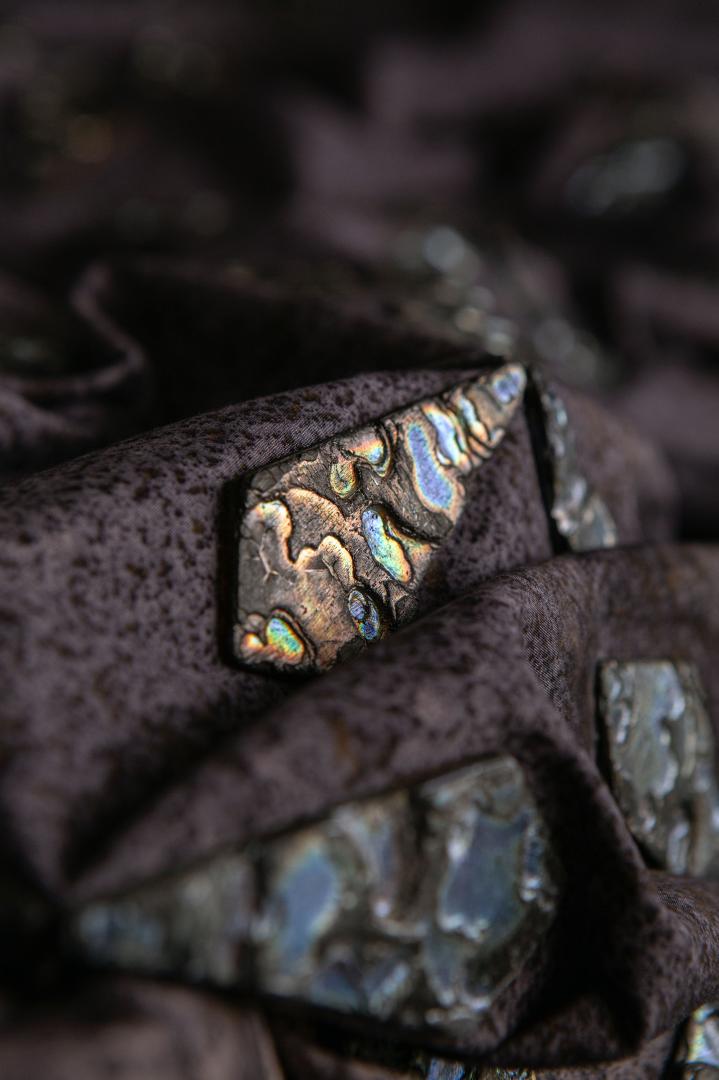
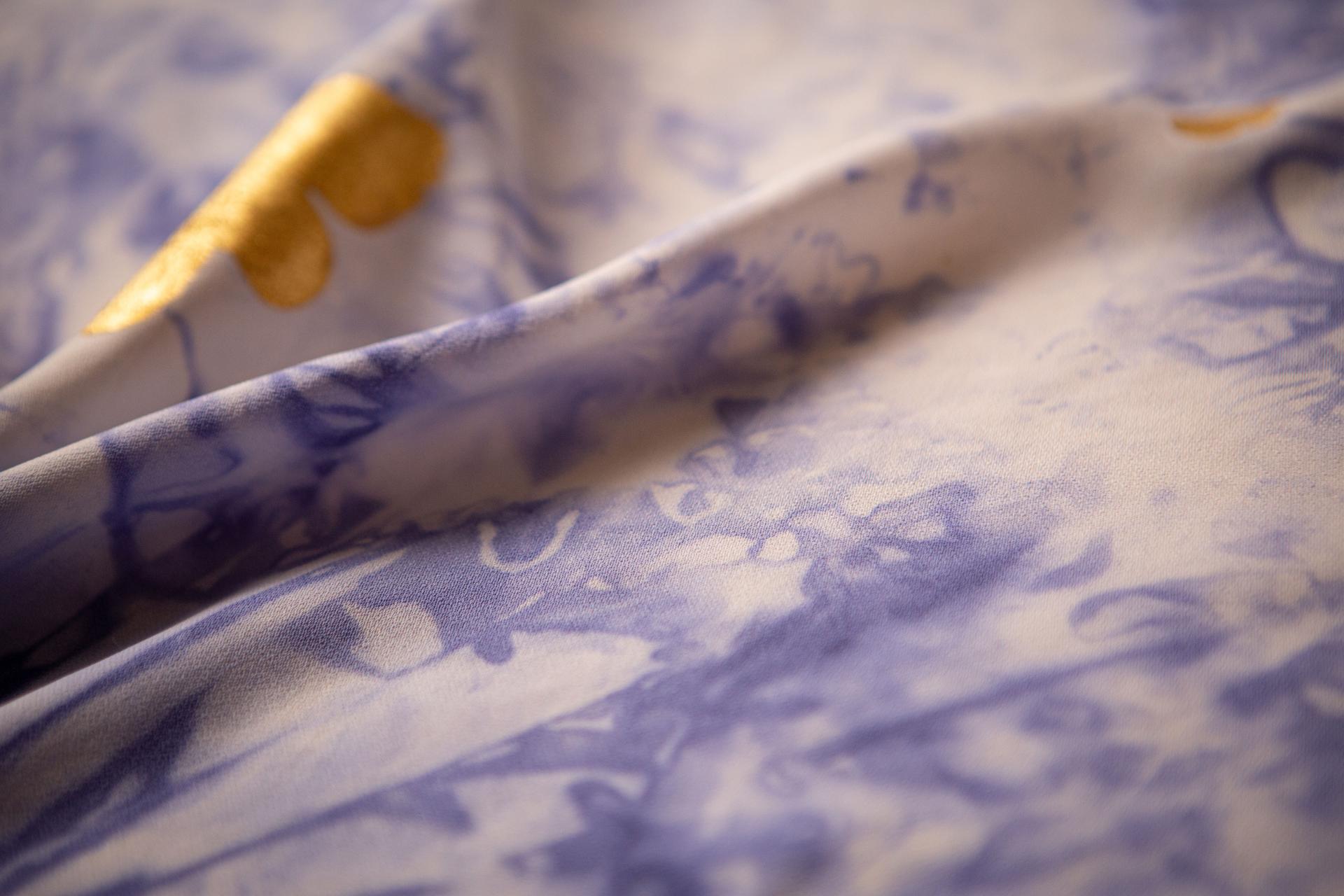
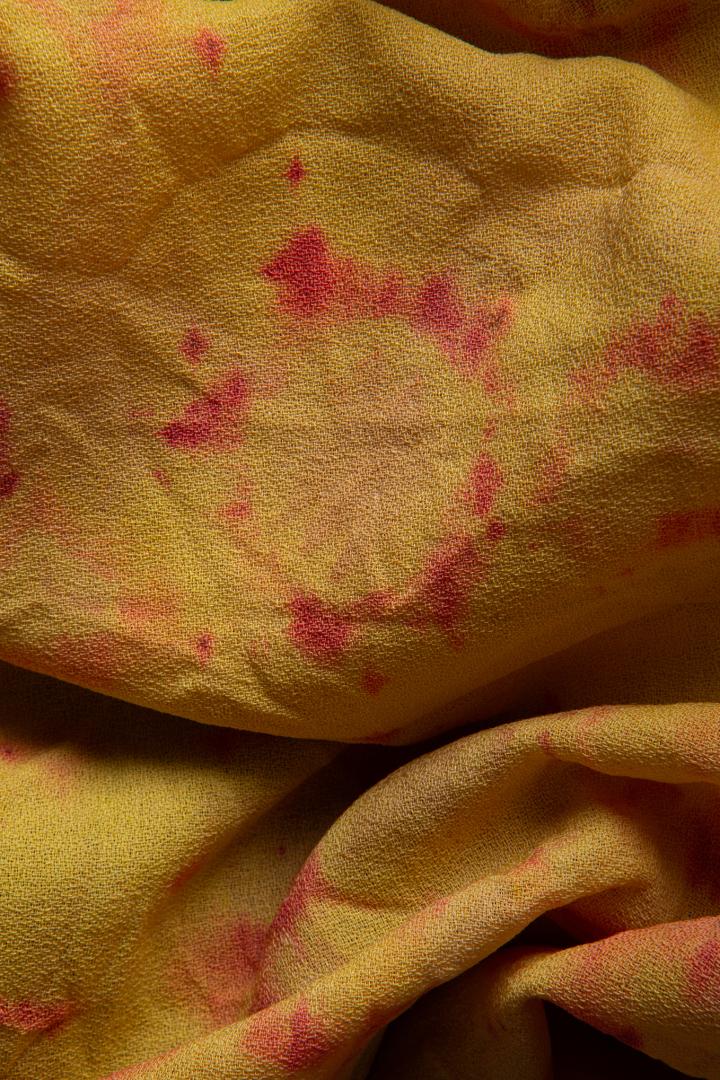
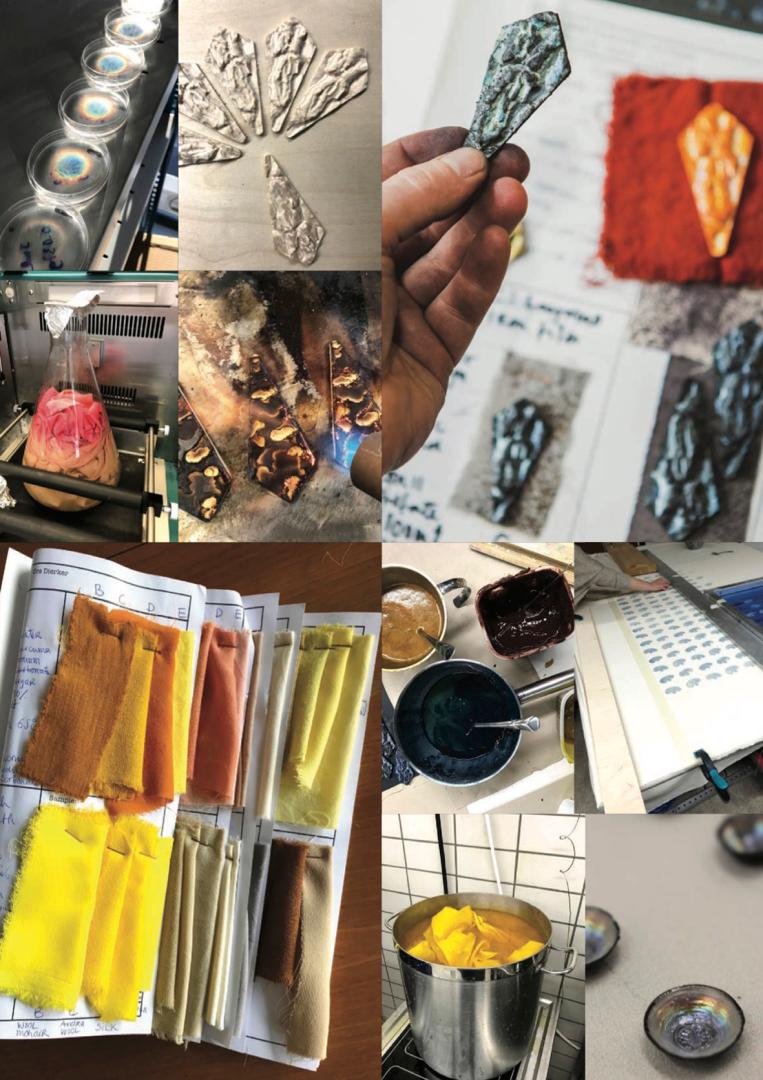
We created a new aesthetics of sustainability for costume design: textiles dyed with the radiant purple-blue from the bacteria Janthinobacterium lividum, red textures grown on textiles by mycelium of Ganoderma lucidum, and the shimmering beauty of cellulose nano structures creating structural colours made 100% of wood. Dyes made from bacteria or mycelium offer natural solutions to create colours which can be grown directly on textiles without any harmful chemicals or mordants, needing only sugars to feed the growing and colour producing organisms. Structural colours are light reflecting nanostructures that, in contrast to conventional pigments, generate rainbow-like colours without the need for chemicals or substitutes.
Costume design has substantial impact on the economy and environment. In 2019, the global film and TV industry generated $US 42.2 billion in box office sales worldwide, along with a significant carbon footprint. One big-budget movie (over $US 70 million) is estimated to produce 2,840 tonnes of CO2e (Matthews et al., 2020). Many of the materials currently used to create costumes are composites of fossil-based materials like polyester or acrylic blends and plastic or silicone for moulding costume details and prosthetics. These combinations of non-recyclable fossil-based materials lead to non-recyclable composites and unwanted waste. Biomaterials differ because they are less toxic, biodegradable and generate less waste. In addition, they have their own aesthetic: growing bacteria to create colours on textiles produces uniquely varied patterns and shades.
Key objectives for aesthetics and quality
The aesthetic of the textiles shown in Naturally Dramatic were driven by finding design processes using advanced biomaterials for sci-fi inspired storytelling. Dierker had just worked on a television project creating costumes for different aliens and thought that the shimmering wood material would be particularly suitable for creating otherworldly looking textile designs.
Besides the look, it was important to find practical solutions that could create lasting textile designs. The quality of the new material applications needed to be wearable and withstand the act of performance, like action scenes and stunts. It was also important to create designs and find material solutions that could be easily reproduced and cleaned in common costume workshops.
The initial experiments were wide-ranging, and included ideas about cellulose-based 3D printable bio-ink, and soft and flexible cellulose-based bio-plastics. Both materials showed great potential and will be further developed for future projects. We focused on bio-colours using three methods that showed promising results. The bacteria Janthinobacterium lividum grew lasting purple-blue colours; the fungi Ganoderma lucidum coloured protein-based fibres in red tones; and cellulose materials formed beautiful structural colours on different wooden shapes.
The aesthetic and quality of the textiles invented at Naturally Dramatic aimed to inspire costume professionals, students and interested members of the public. The exhibition was publicly available to members of Aalto University to visit in person and through online tours for the wider public. Through the tours, we explained the making process of the textiles and how biomaterials function and react when used. Visitors asked many questions related to the aesthetics and quality of the textiles shown, for example, about how to grow specific patterns on textiles using bacteria and their colourfastness and washability.
Key objectives for inclusion
Naturally Dramatic is a project intended to create sustainable solutions for costume design in film, TV and stage productions in terms of materials, processes and storytelling. The material solutions shown in Naturally Dramatic are, at their core, applicable to any cultural interpretation of performance and narrative. Costumes cross cultures as communicative devices.
Inclusivity defined this project in terms of the international and interdisciplinary research team. Naturally Dramatic was the result of work by people from Great Britain, Canada, China, Finland, Germany, and Iran. The team included a diverse group of experts, from masters students to senior researchers, representing chemistry, biology and costume design.
Furthermore, despite the pandemic, a diverse audience was reached through online tours given to groups in 9 countries in Europe and North America. Interested participants came from academic institutions, museums, theatres and opera houses, and film and TV productions. The topic was of interest to people ranging from senior academic administrators to secondary students for whom a follow-up, interactive workshop was created. The online tours and talks demonstrated that the topics of sustainable textiles and costume design are of interest to many. In addition, these audiences are interested to learn about strategies and tools for the implementation of sustainable practices in the field of costume design.
Overall, we believe that Naturally Dramatic was successful in fostering a dialogue about sustainability and costume design between diverse cultures, disciplines and ages.
Results in relation to category
Naturally Dramatic was a starting point for imagining circular costume design. In particular, we demonstrated the potential for state-of-the-art bio- and bio-based materials like cellulose derivatives such as micro/nano fibers in the development of sustainable textile concepts. The aim of this interdisciplinary collaboration was to investigate which biomaterials are suitable and scalable in the process of costume design.
Naturally Dramatic delivered impactful results on four levels:
- The collaboration concretely demonstrated that some cellulose biomaterials developed at BiCMat are scalable, in particular the work with shimmering wood. This means that results achieved in laboratory tests could be repeated successfully at a larger scale.
- The project demonstrated that state-of-the-art biomaterials research can be applied to beautiful effect for creating new textiles for costume design.
- The project initiated a conversation about biomaterials with costume professionals in Europe and North America. The success of the online tours made evident that professional costume designers, makers and students are aware of the need for change in the field of costume design and are interested in learning about newly developed biomaterials and their applications. Digital surveys, completed as part of the online tours, revealed that costume professionals feel uncertain about how to implement sustainable practices in the hierarchies of film productions and in their daily workflows.
- These results shaped further strategies about how best to transfer knowledge about promising biomaterials to costume professionals. This includes a follow-up project which aims to test one specific biomaterial in film productions with the participation of costume professionals.
How Citizens benefit
Research at Aalto University develops new, state-of-the-art cellulose materials like shimmering wood, that can substitute and outperform many common fossil-based materials. These materials will change how costumes are made and used, and how stories will be told on screens and stages worldwide. But first, costume designers, makers and audiences need to learn about their potential.
Naturally Dramatic aimed to interest a broad audience in the topic of biomaterials and costume design. During the run of Naturally Dramatic we offered online tours to an international audience, and in the process, we created a network of costume professionals, academics, students and interested citizens, and an ongoing discussion of the benefits of biomaterials. The online tours led to follow-up presentations about circular costume design at trade organizations like Reel Green in Canada, GTKos in Germany and Modeco in Switzerland. They also led to the next step of our collaboration, a biomaterial product trial with Aalto University and participating film productions. A further goal of the exhibition was to give first-hand, practical examples and advice about how biomaterials can be used for costume design. As a result, two costume students were inspired to use biomaterials for their thesis costumes.
The entertainment industry, and with it costume design, is moving to implement sustainable practices. This will have ripple effects for other sectors. This year, Netflix published its second Sustainable Accounting Report, illustrating how a global corporation, whose online streaming service has grown to 200 million members, is adjusting its physical production and cooperative operations to reduce its carbon footprint to achieve zero emissions (Netflix, 2020). Audience interest is growing in stories about sustainability and in shows made sustainably. Naturally Dramatic looked at both sides of costume design: sustainable production and storytelling.
Innovative character
Naturally Dramatic is an example of successful interdisciplinary collaboration between science and design to further sustainable modes of production and consumption. The entertainment industry would like to transition to more sustainable ways of making but lacks the expertise and infrastructure to conduct scientific research. The university is generating new knowledge about bio-materials and seeking opportunities to collaborate with industry to test these materials in new applications. Naturally Dramatic proved that the film and television industry offers a unique platform to co-create and showcase sustainability research to designers and the public.
Naturally Dramatic was innovative in showing:
- How the integration of a textile designer and costume maker in a materials science lab allowed for new possibilities for collaboration and interdisciplinary knowledge creation. Working side by side, the designer and scientists created proof-of-concept textiles and costumes that captured the imagination of costume designers and others.
- How new developments in bio-colour and cellulose nano technology research can be scaled and applied to textile designs for costumes.
- That online exhibition tours are an effective tool to reach international audiences and that these interactions can lead to lasting network relations.
- Through targeted surveys, that costume professionals and students are very interested in the topic and their most frequent questions regarded the implementation of sustainable practices in their work.
The textile and fashion industry is changing and with it how costumes are made, used and perceived. Naturally Dramatic put a spotlight on innovative biomaterial developments suitable for costume design.