PARO
Basic information
Project Title
Full project title
Category
Project Description
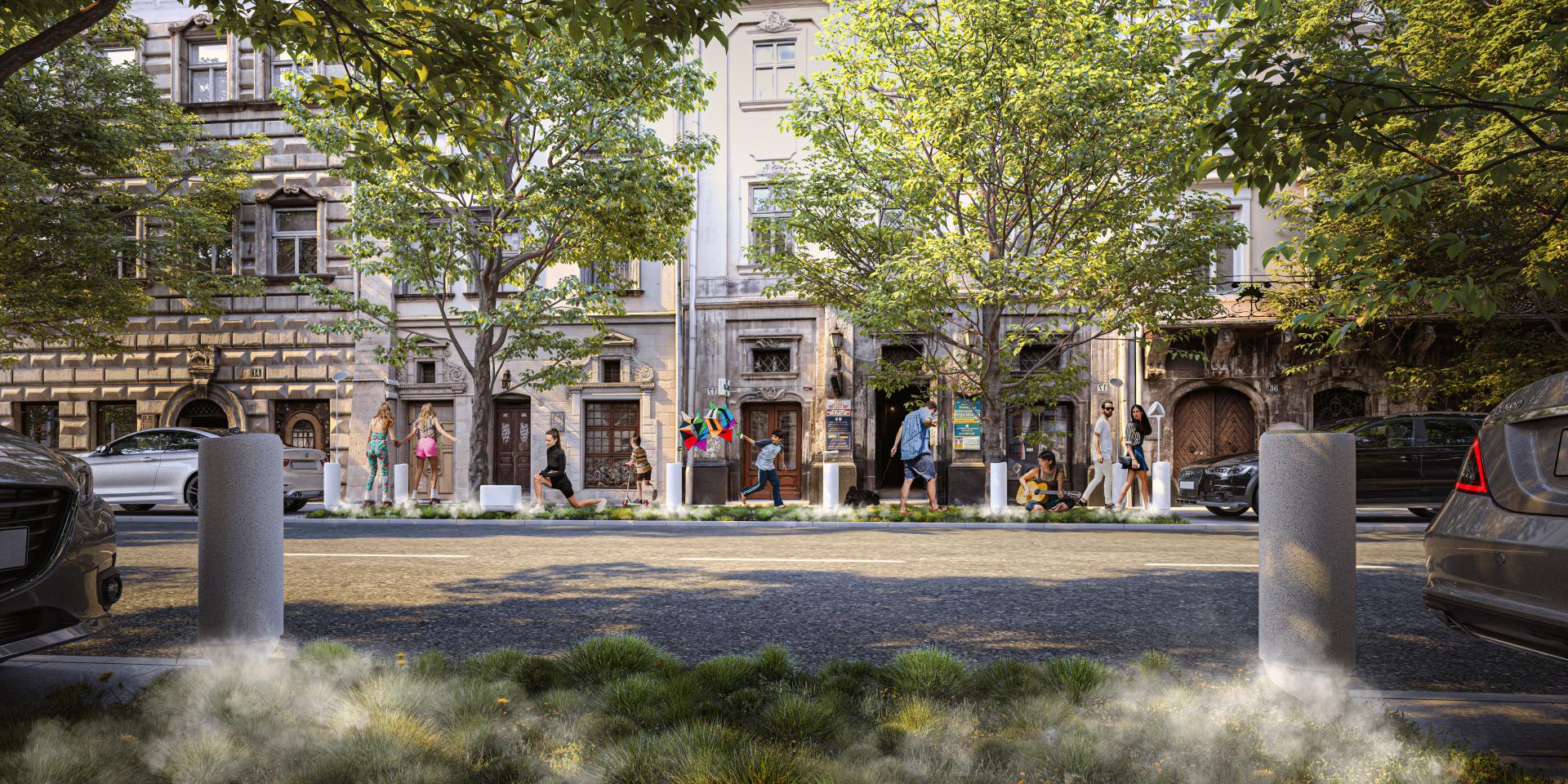
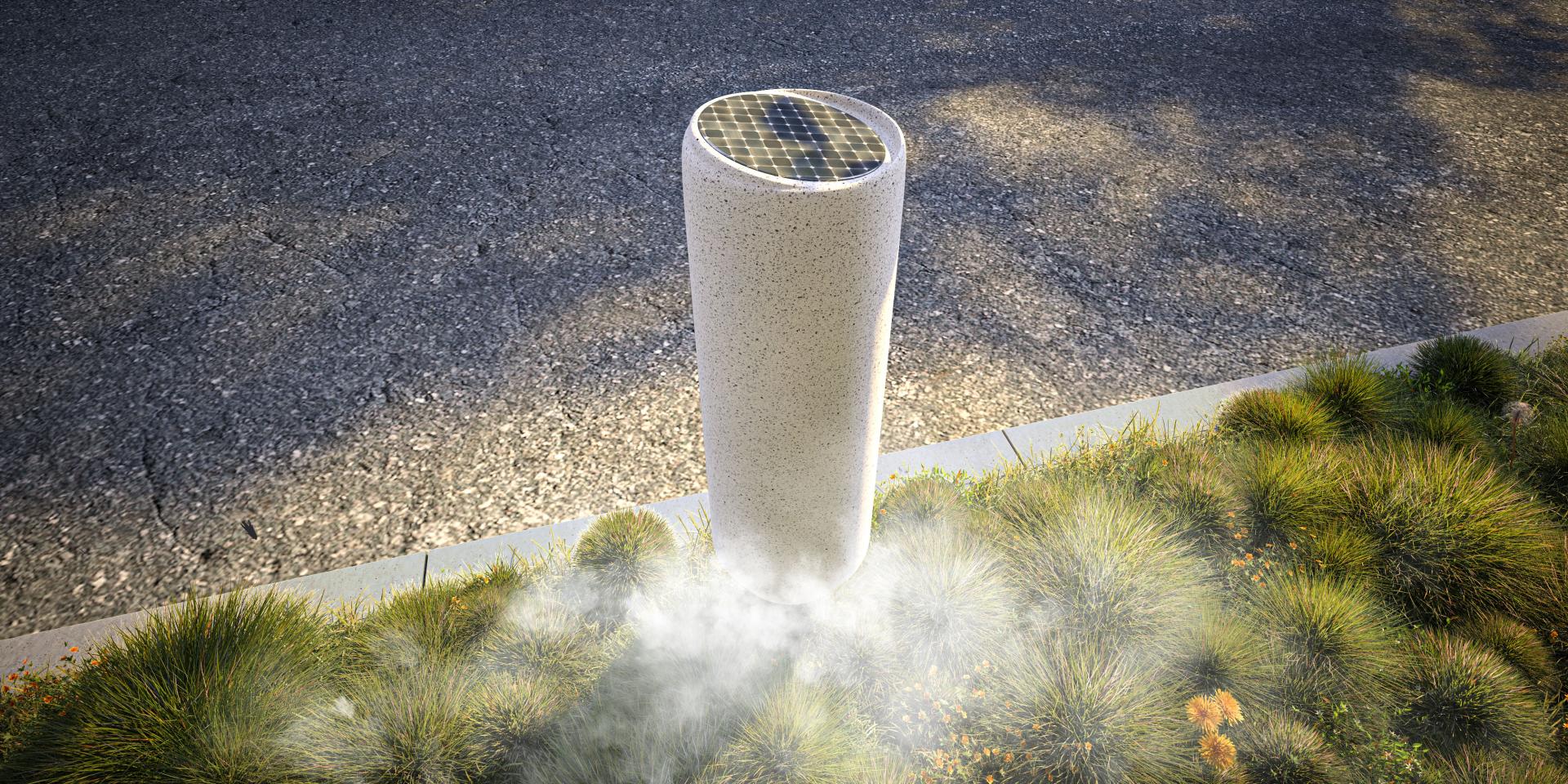
PARO is a street furniture securing and caring for green areas along the city's communication routes. The object protects from the degradation of city greenery, and through the steam supply of moisture, supports its regeneration. It is an expression of concern for the protection of nature.
Project Region
EU Programme or fund
Description of the project
Summary
PARO is astreet furniture, which protects from the degradation of greenery, and through the steam supply of moisture, supports its regeneration. The spot locating form ensures flexibility in use in areas with different surfaces, preventing the entry and parking of vehicles in prohibited places.
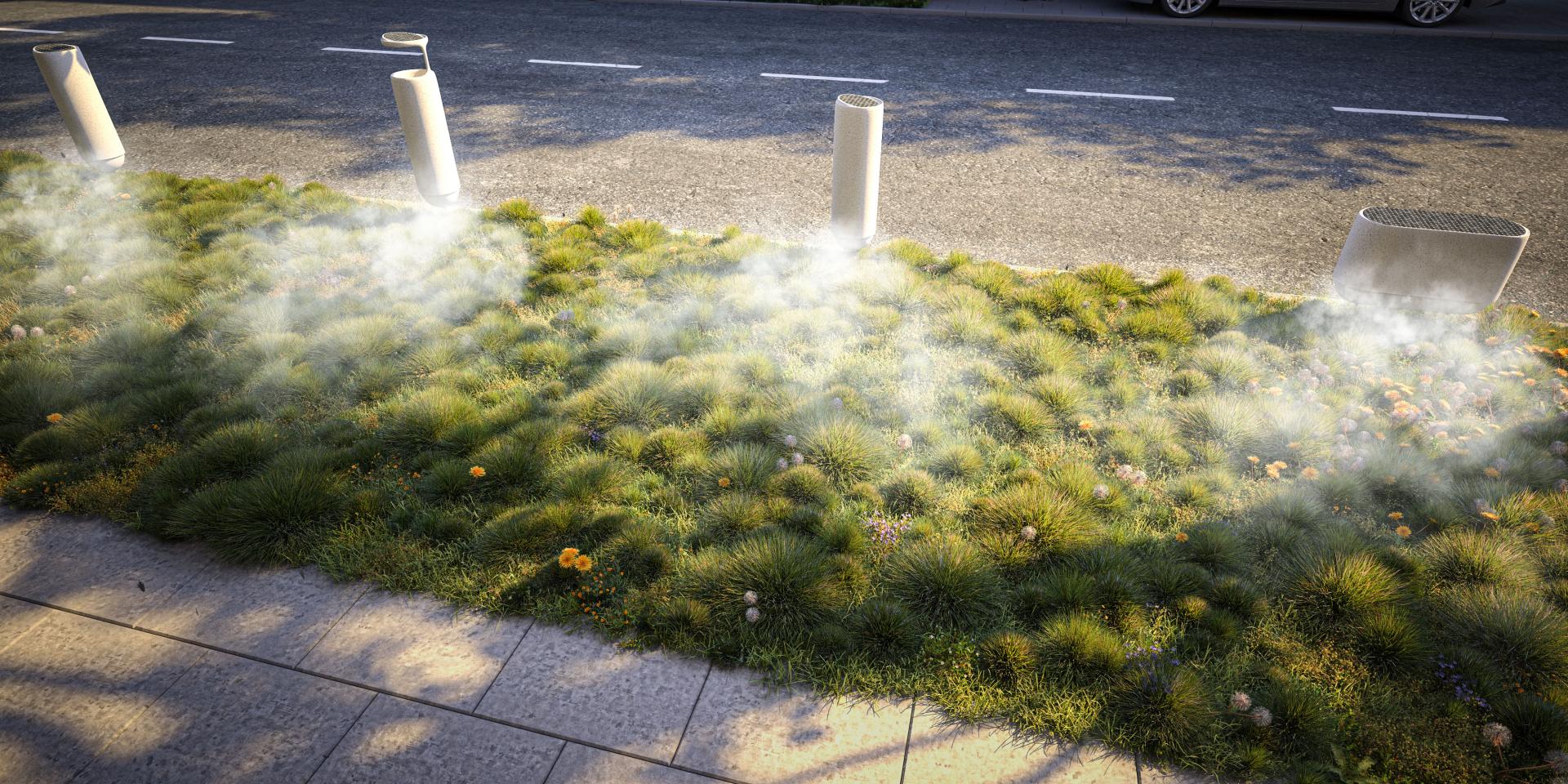
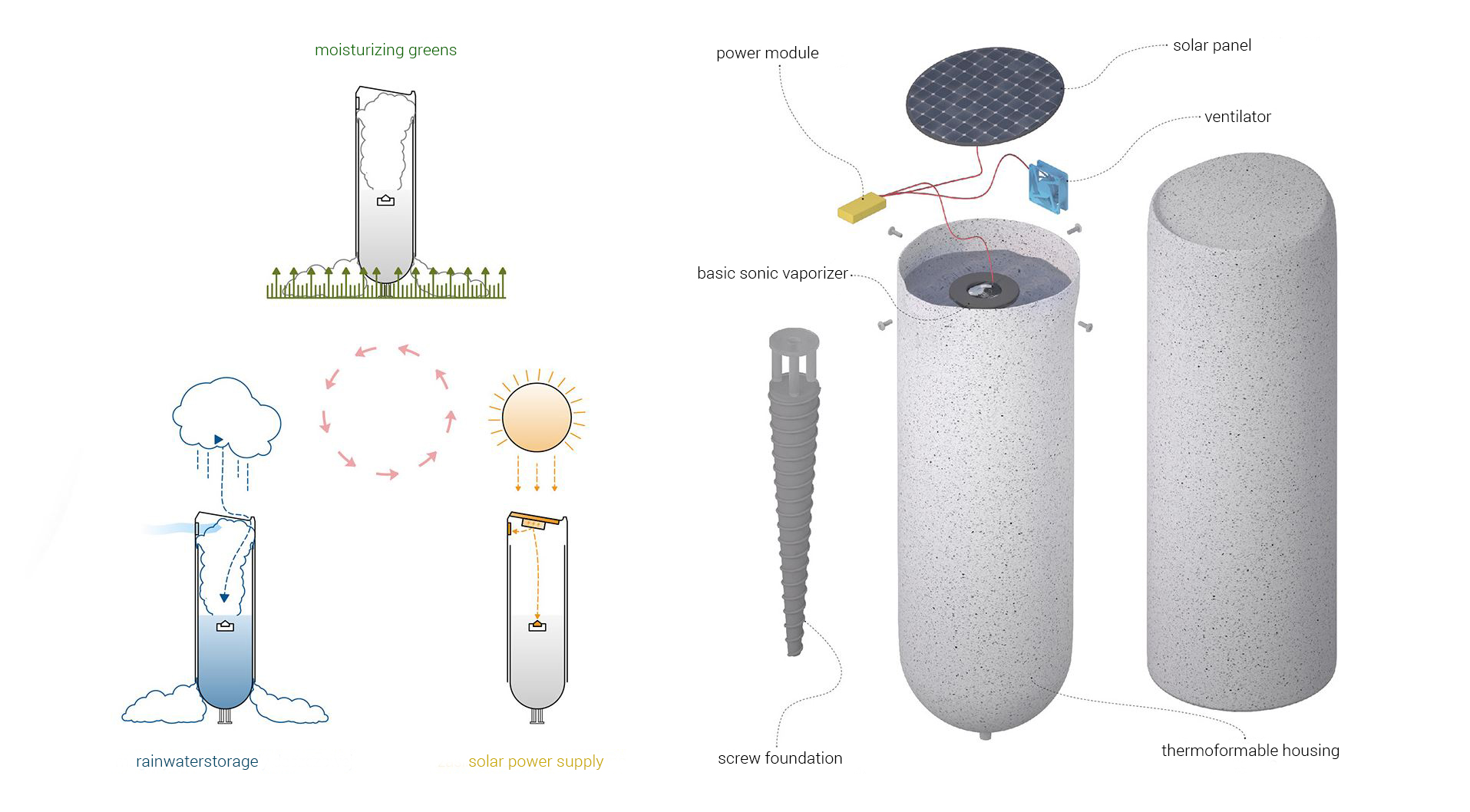
PARO is made of two overlapped shells put one on another. The object is placed in the ground through a compatible bolt foundation. With the help of a simple ultrasonic evaporator, the collected water is converted into mist, released and then evenly distributed. The cyclical activation of the device allows for regular moistening of lawns, creating a favorable biotope and an interesting visual phenomenon. Whole device is powered by a small photovoltaic panel.
PARO has been developed in various forms, creating a collection of street furniture with varied functions. The whole range of possibilities of arrangement of these elements allow for the creation of configurations tailored to the needs of a given place. PARO is a response to one of the many problems faced by city dwellers. It is the result of the need to care for common space and solicitude for the environment in a micro scale.
Key objectives for sustainability
PARO tries to achieve several goals in the field of sustainable development, which is based on the natural environment.
- Retention. Climate change causes an increased frequency of torrential rainfalls, while a decrease in the regularity of mild rainfall is observed. It generates water resource problems in Poland. The soil is unable to absorb such a large amount of rainwater during heavy rains. In addition, through a large amount of paved surfaces in the city, the formation of heat islands are observed. Except that there are some difficulties in maintaining urban greenery in good condition. PARO helps to alleviate the effects of these unfavorable conditions. It collect water during heavy rainfall and releases it as moisture steam during dry periods. It supports urban greenery and generates a positive impact on the users of urban space.
- Renewable energy sources. The design assumption is to use solar energy to power the PARO heart - ultrasonic vaporizer. It is also possible to connect to the electricity network when PARO is located near city lamps and street furniture.
- Recycling. The Paro cover is constructed from recycled plastic and formed by thermoforming.
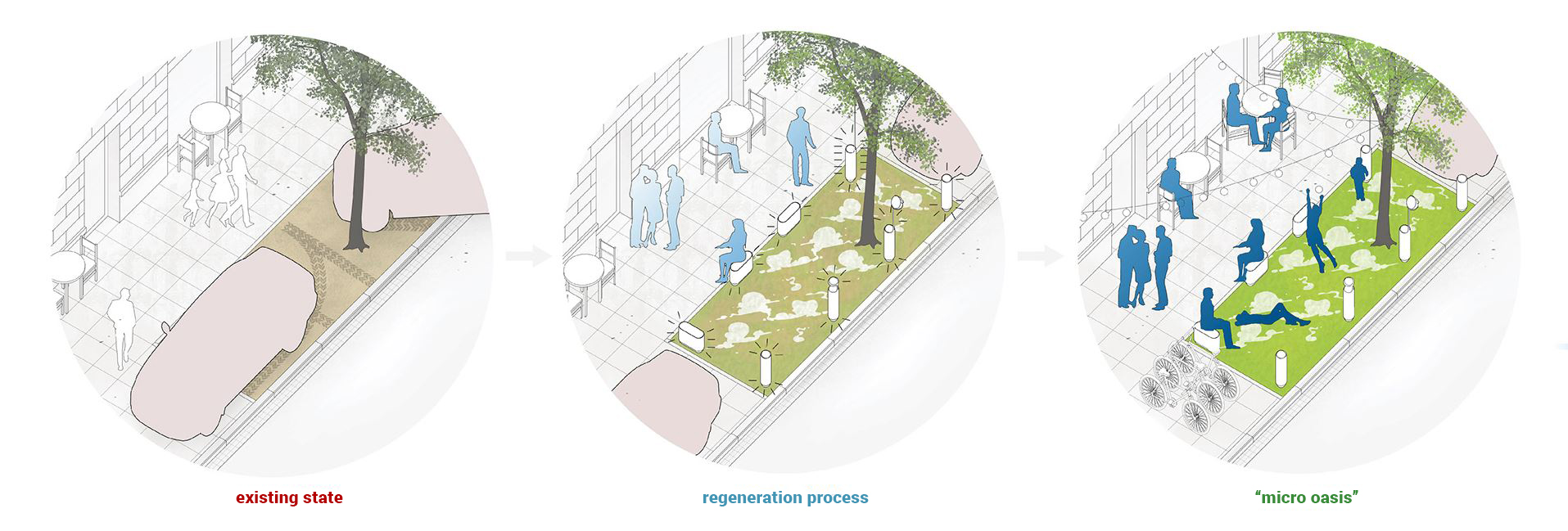
- municipal greenery. The genesis and inspiration for the creation of PARO was the problem of incorrect parking of cars in forbidden places. This urban facility was designed to prevent parking on green squares, with the addition of rainwater retention function.
- City squares, squares, roadside greenery. PARO bollards were created to limit the run-over of urban greenery and support its regeneration in difficult weather conditions. We currently know that PARO can take various forms - seats, garbage cans, lamps etc.
PARO can be one of the many elements we need to support inhabiting and the natural environment in cities. It is an element of urban facility, a city furniture with various functional functions, promoting the physical, mental and social health of city users.
Key objectives for aesthetics and quality
PARO has a simple, minimalist cover in the form of a tablet - two overlapping cylinders forming a rainwater collector and a tank. The form follorws the function and production process of thermoforming recycled plastic. Simplicity in terms of the method of operation allows free adapting and changing the form of PARO for specific variations - bench, garbage can, lamp etc. The material and adopted production technology enable the choice of colors depending on the existing context of the environment. An unusual element enhancing the visual effect is the release of steam from the PARO. It creates a pleasant mist which gives relief during warmer days. The project attracts attention, thus introducing residents to the issues of climate change and the role of water and greenery in the city.
Key objectives for inclusion
PARO is currently at the stage of prototyping. It is a time of solving design assumptions and checking them in real. We try to maintain the main expectations and the principle of operation that will create a product that is easy to manufacture and maintain. This is crucial because it indicates its availability and the possibility of implementation. Maintaining high flexibility through a simple principle of operation will allow PARO to be adapted to urban spaces (parks, squares, roadside greenery), as well as private and community area (housing estates, private gardens, etc.). The publication of information about Paro in online and social media met with a huge response and interest in the product. We hope that it will allow us to reach investors and engineers interested in the implementation and production of PARO.
Innovative character
PARO, as an element of the city's infrastructure, is innovative in terms of the protection of green areas in build-up spaces because it not only performs protective functions, but also has reconstruction capabilities. The object is an evolution of well-known and proven solutions such as metal posts and concrete forms. What distinguishes PARO from other, traditional solutions are properties that help to cultivate greenery and accelerate its regeneration. The designed elements meet the main assumptions of greenery protection, additionally having the features of a city-forming factor that can arrange various social interactions. The object, apart from its basic form, may have the following variants, such as: a seat, a waste bin, a lantern and a feeder. The simplicity of the design ensures the budget of the project. Thanks to the flexibility of the used materials, the coverings can be adapted to the different types of urban space.