Laudato si’: Franciscan monastery
Basic information
Project Title
Full project title
Category
Project Description
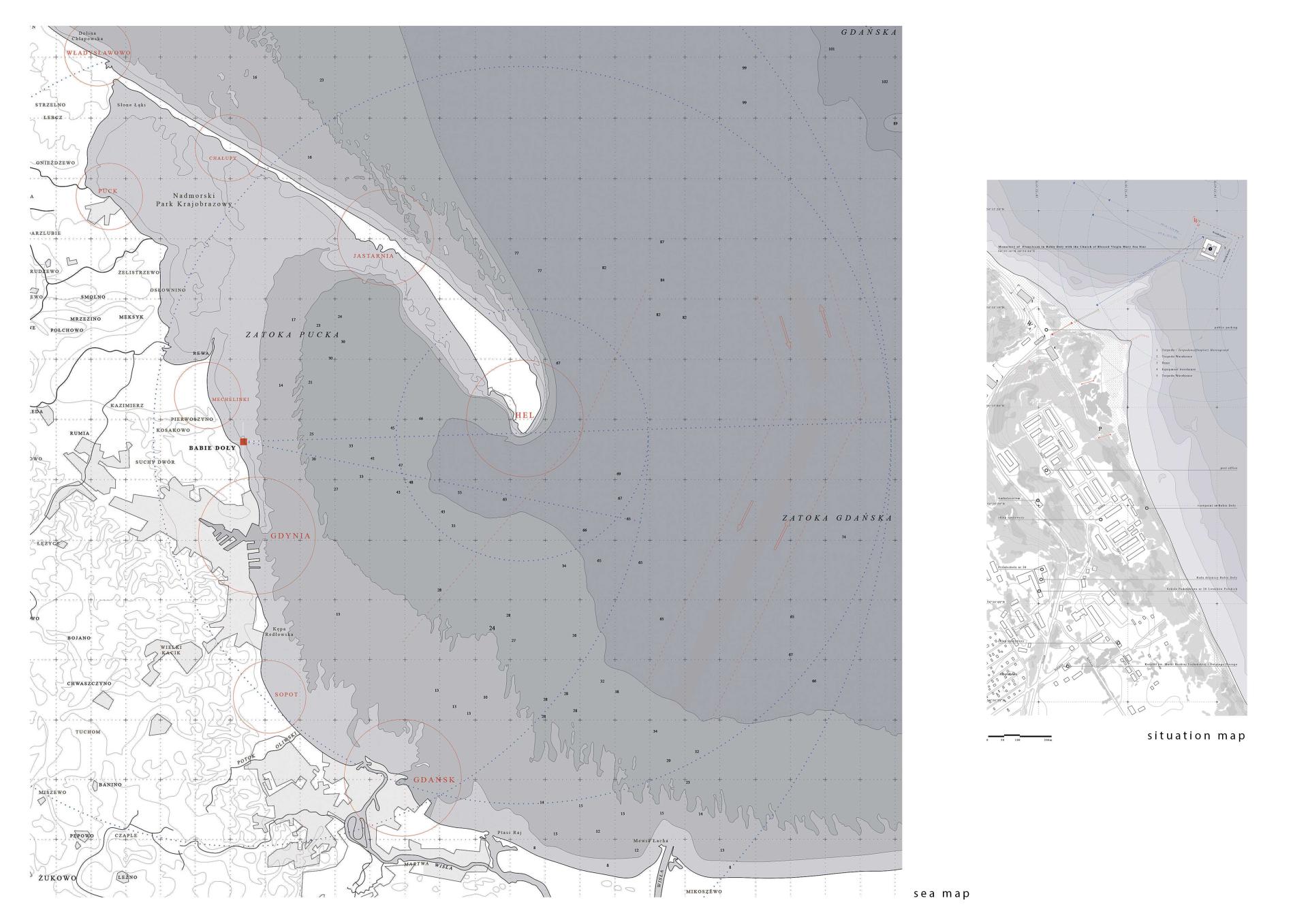
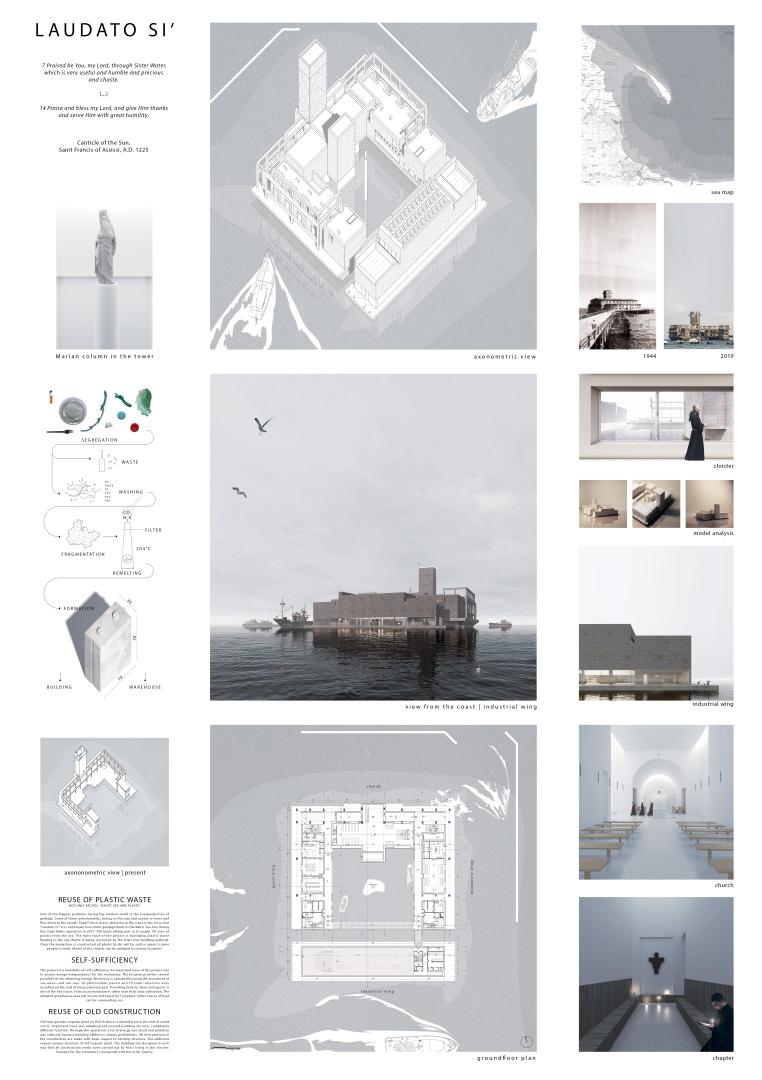
The project focuses on environmental issues - pollution of the sea with plastic. The impulse to search was an encyclical of Pope Francis entitled "Laudato si: on care for our common home". Self-sufficient monastery uses the construction of the former Nazi torpedo plant in Gdynia. It is designed for Franciscan monks who devote themselves to God and organic work to improve the purity of the Baltic Sea by catching, collecting, and reusing plastic waste used to produce bricks filling the structure.
Project Region
EU Programme or fund
Description of the project
Summary
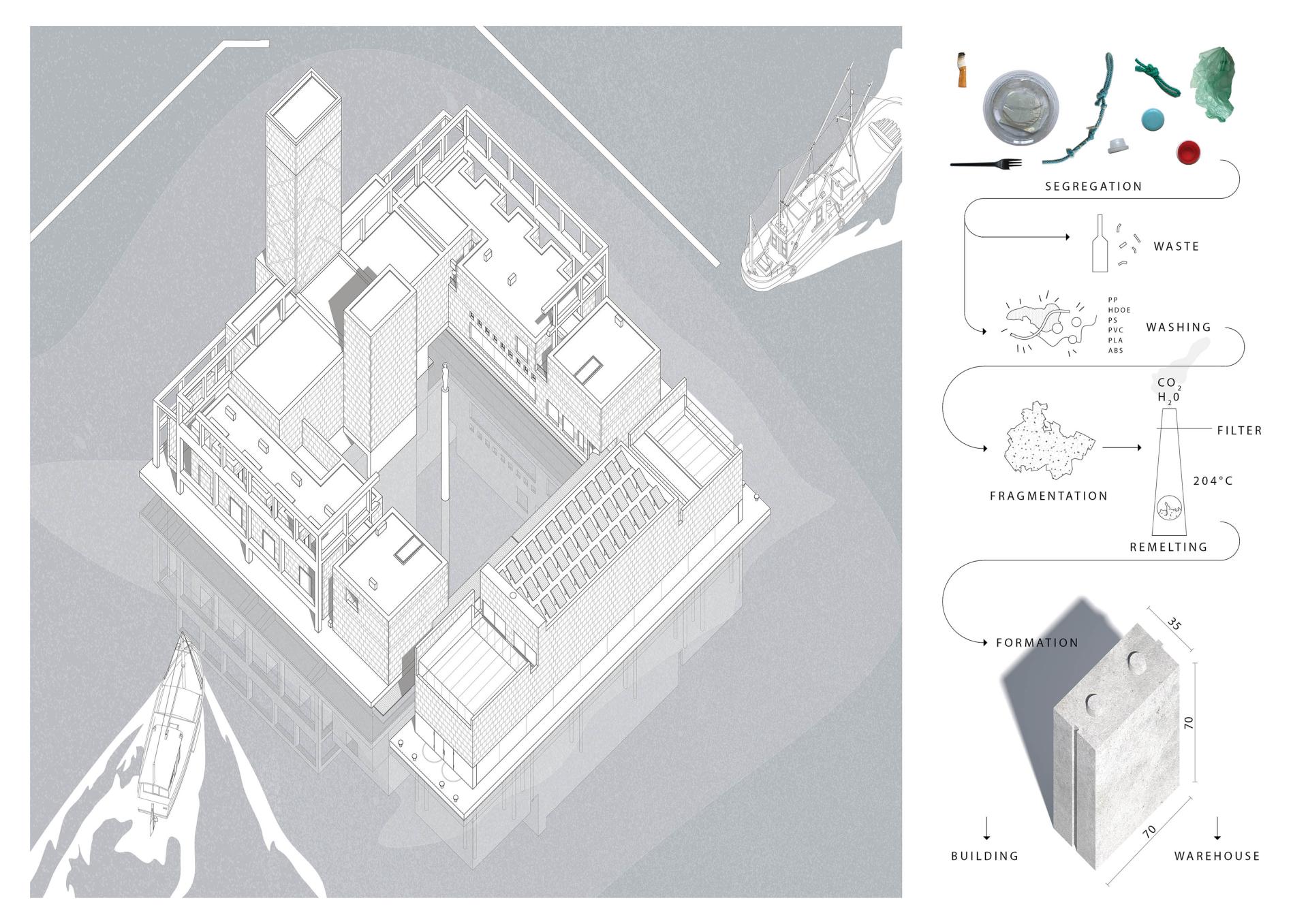
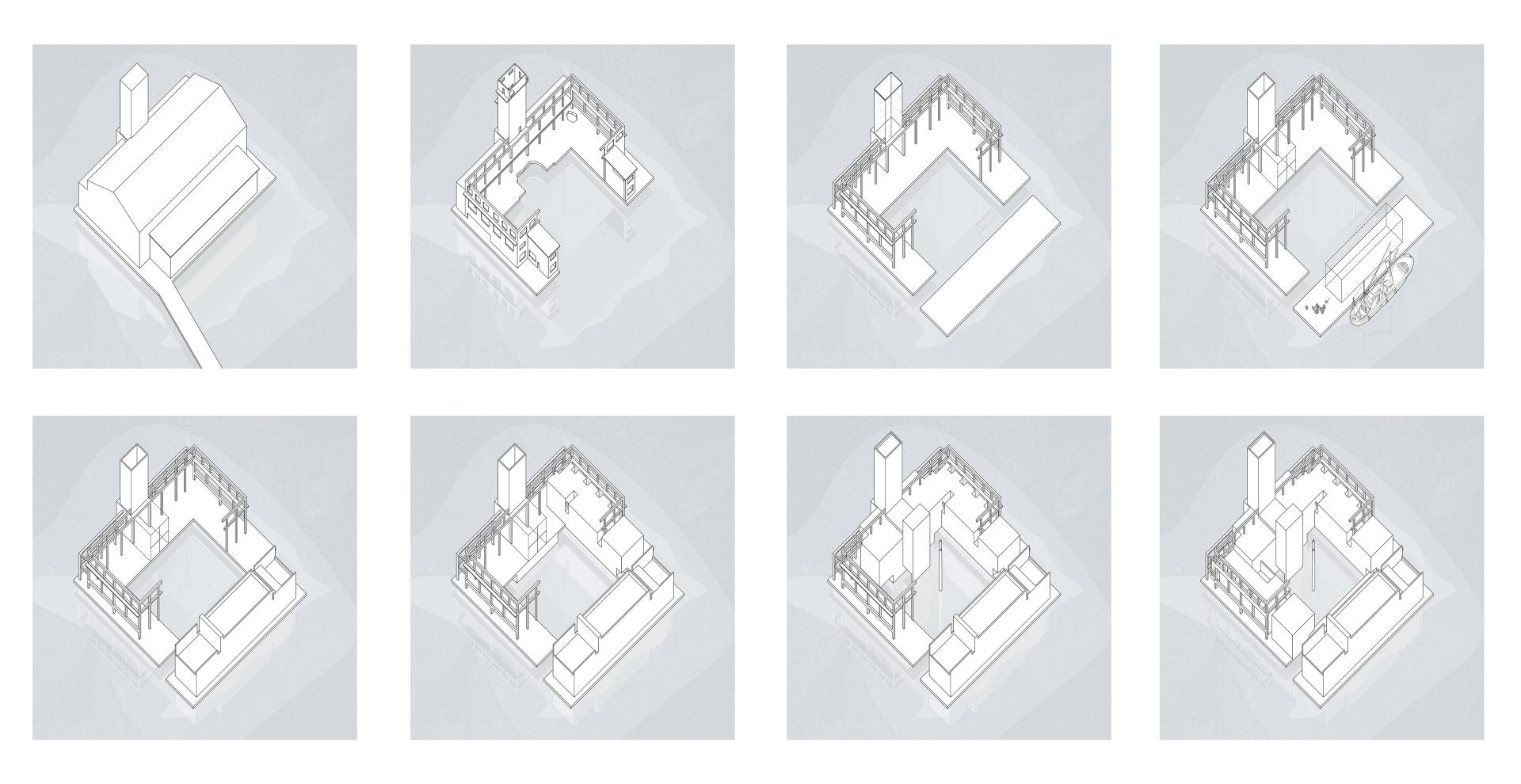
Former Nazi-German torpedo plant was used to construct the monastery for Franciscans who devote themselves to God and organic work of reusing plastic waste from the Baltic Sea. The scenario for the monastery corresponds with the order history. In the 13th century in Italy Franciscans also occupied abandoned places and renovate them for their own purpose. The monks spend a few hours a day hiking into the sea and on the beaches, clearing the environment of plastic. Friars use the collected garbage to produce building material supplementing the run-down structure. Production of the basic project material was based on the technology used to produce RPL (recycled plastic lumber). The project is also a vision of transforming dystopia (death tools factory) into utopia. An important issue was to ensure self-sufficiency for the community by using renewable energy sources and own cultivation.
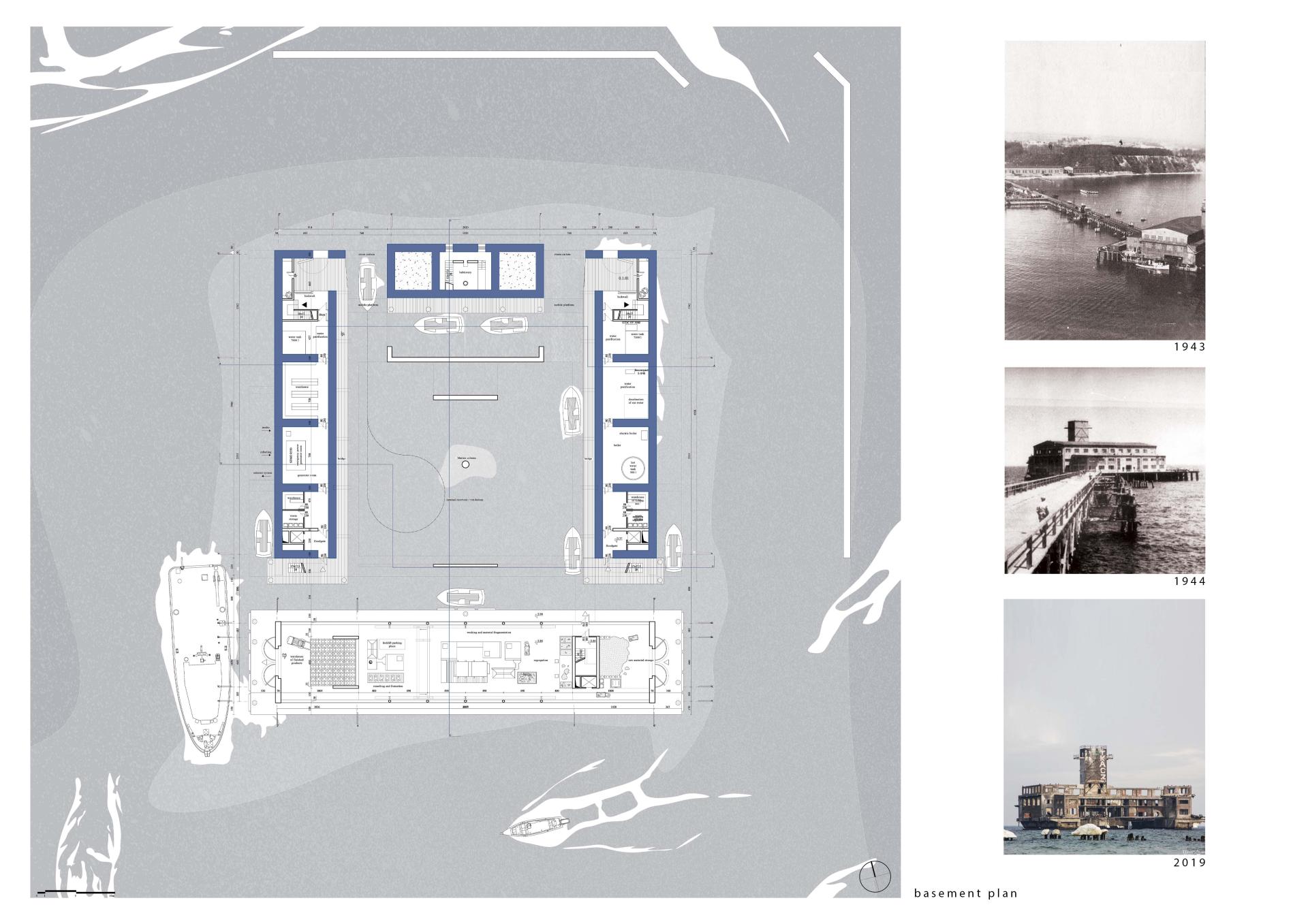
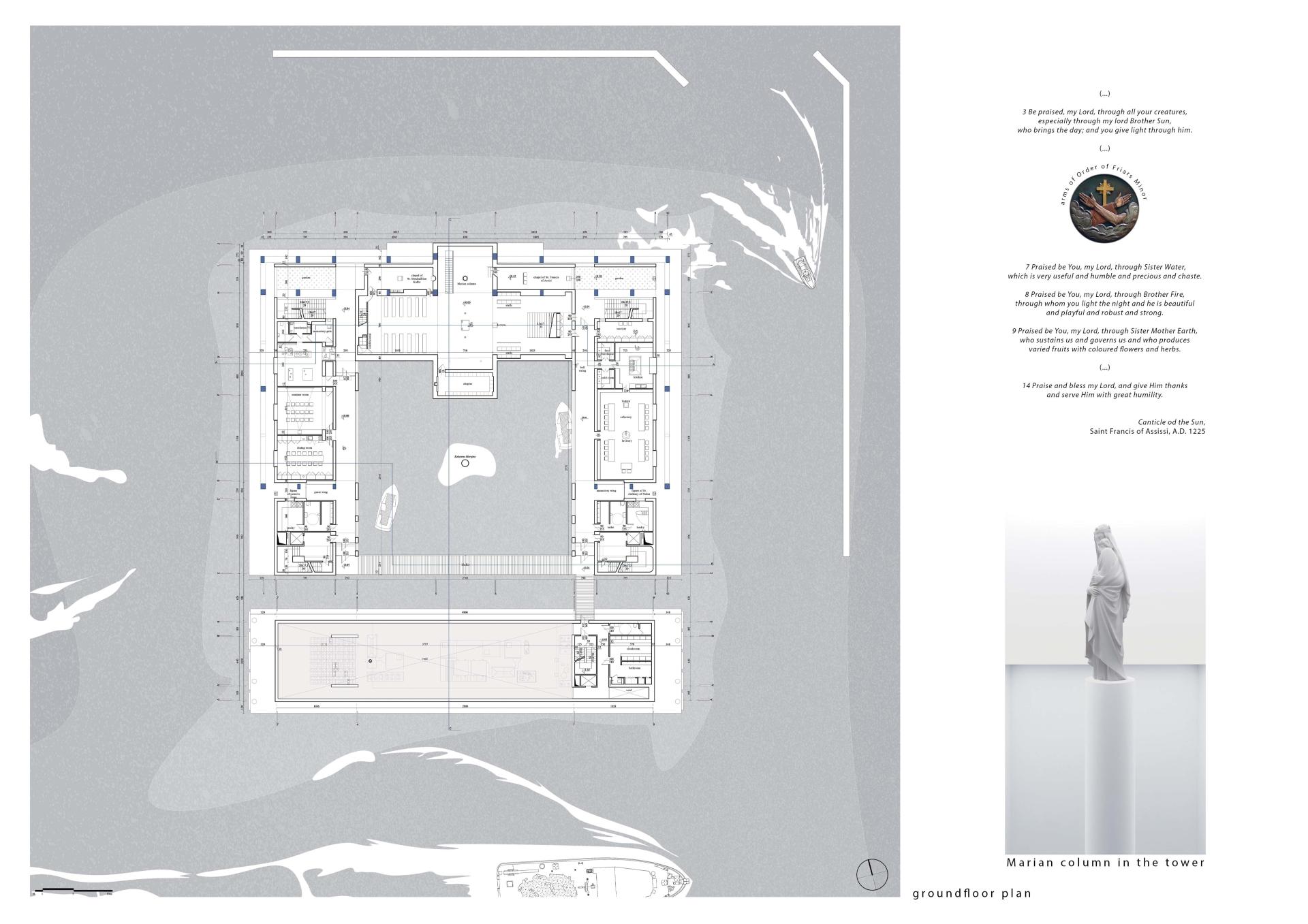
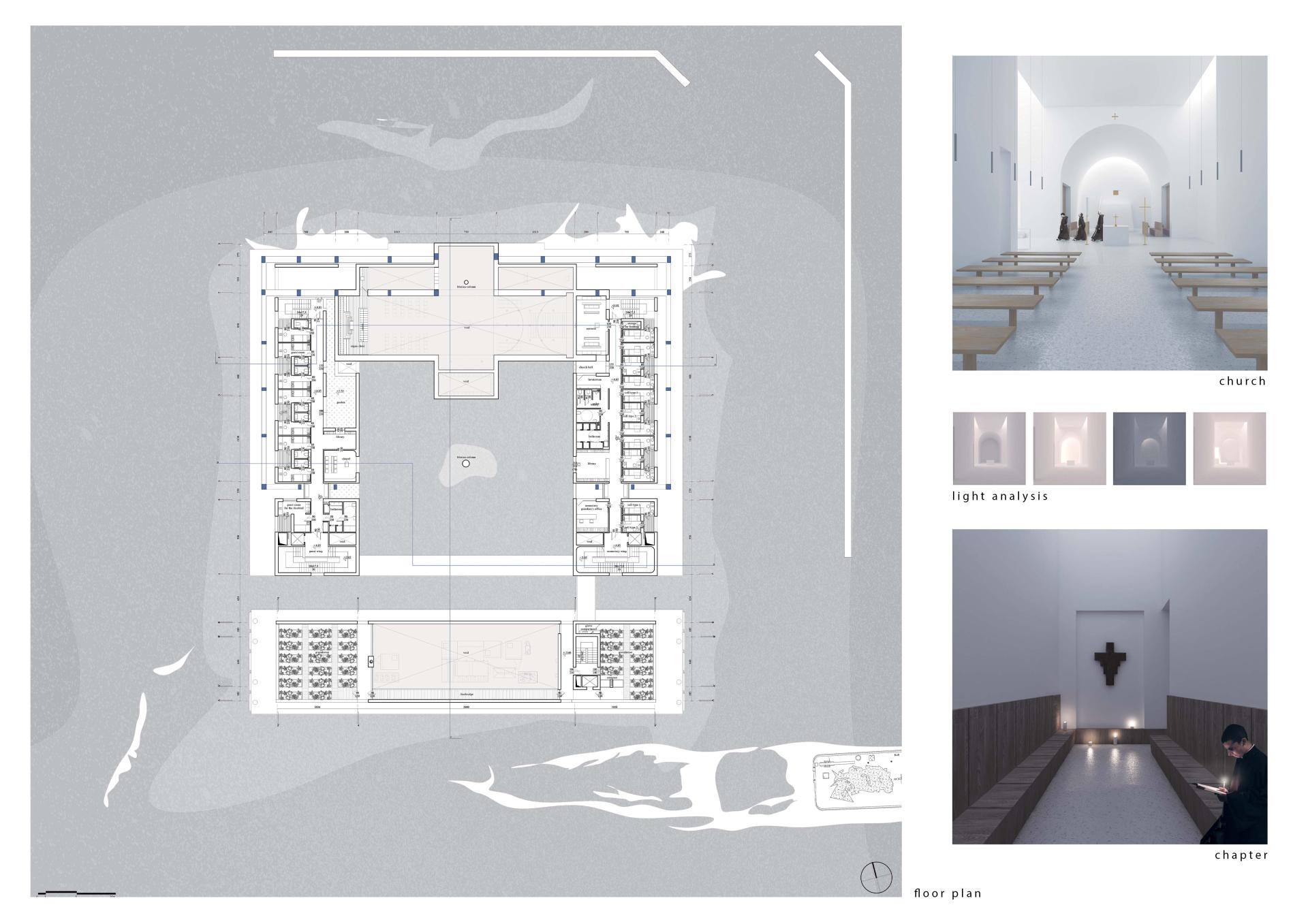
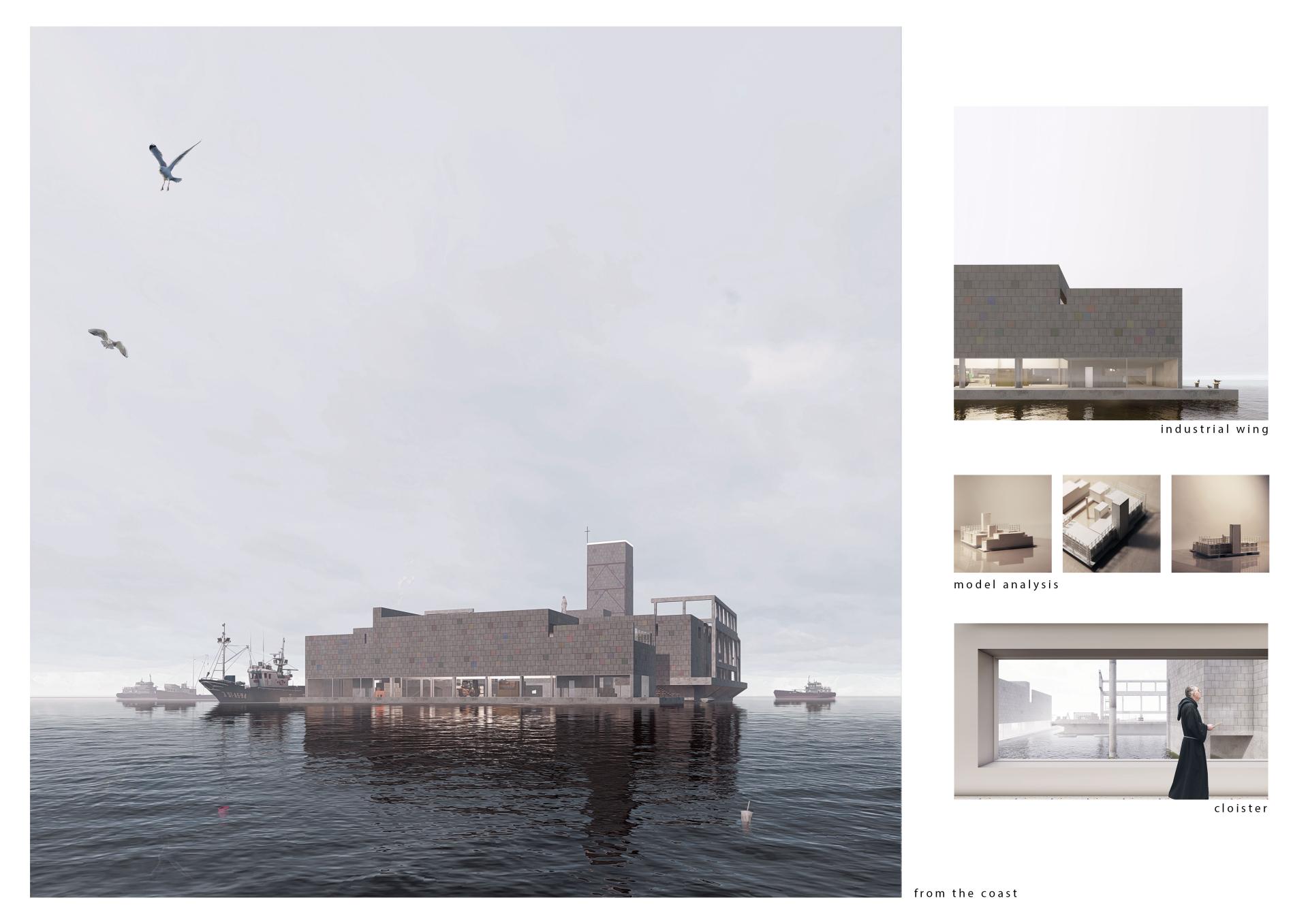
The monastery was laid out around the traditional patio. Instead of the garden, it is covered with seawater with the Marian column in the center. The complex is surrounded by a breakwater. The north part with the former foretop observatory was dedicated to the orientated church flanked by two towers. The western part is a Franciscan convent, the east - guest house. The building was designed in such a way that all construction works were carried out by friars living in the cloister. Façade is offset from the remains of the old wall to highlight its beauty. The newly built southern part is a place of work for monks. There are made simple and ecological plastic blocks with a low value of built-in energy, as the raw material is obtained from recovery. Bricks subsequent could be donated to help the poor and needy people. The proposed concept could in the future also be applied in other locations with different characteristics and struggling with other nuisances.
Key objectives for sustainability
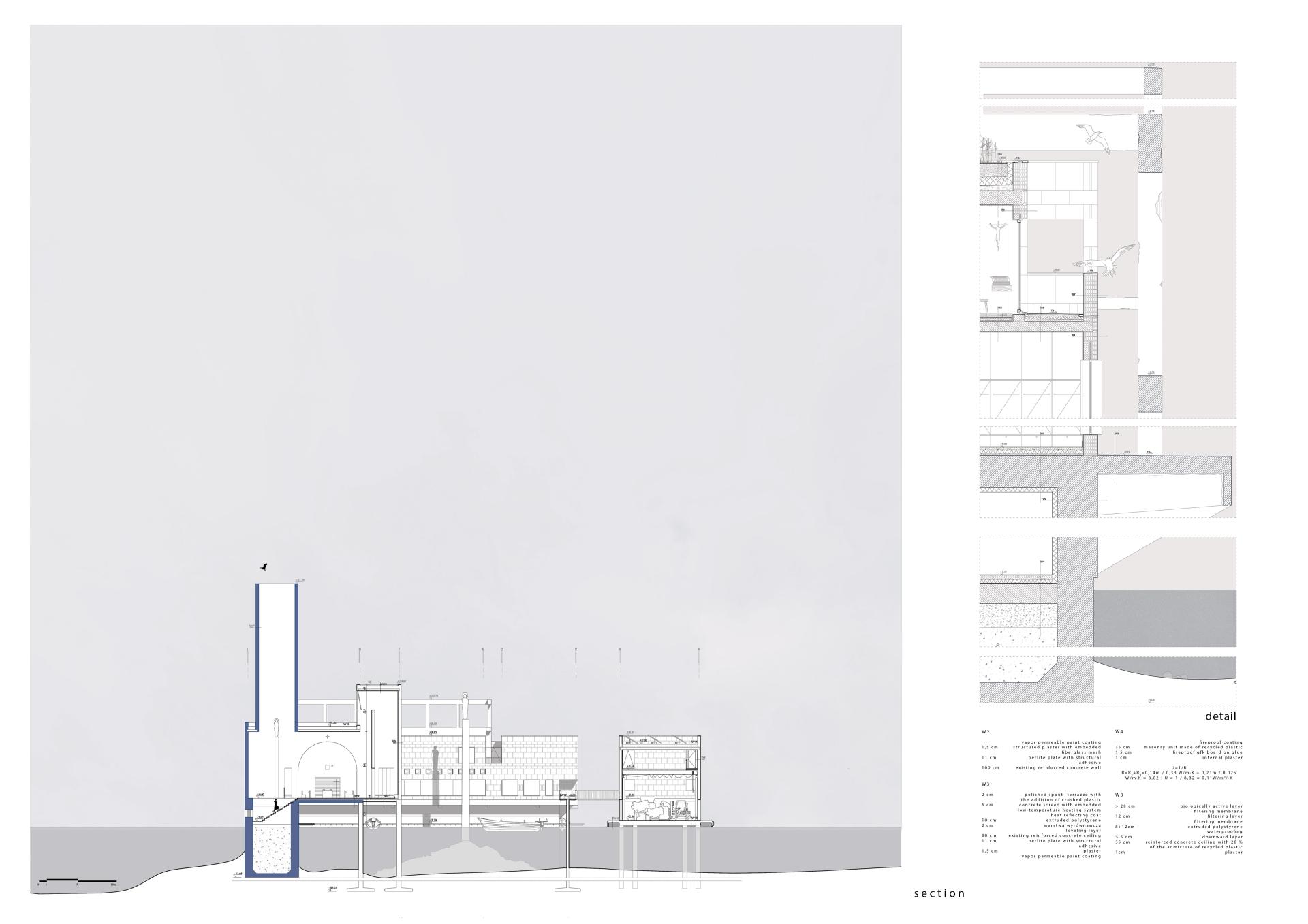
One of the biggest problems facing the modern world is the overproduction of garbage. Some of them, unfortunately, end up in the seas and oceans or rivers and flow down to the mouth. From the perspective of Central Europe, the problem seems remote, associated mainly with the Pacific and the Atlantic oceans. However during the Clean Baltic operation in 2017, 147 tons of plastic were caught offshore, in 2015 it was 268 tons. The main issue of the project is managing plastic waste floating in the Baltic Sea. Waste is being converted by the friars into building material. The material is ecological and cheap, has a low built-in energy value as the raw material is recovered. The hollow bricks are manufactured on-site, which reduces transport costs. The basic module measures 70 x 70 x 35 cm. The blocks are joined together with a tongue and groove. The joint is additionally reinforced with glue. Individual modules differ in color, it results from the differences in the mixture used in a given batch. This gives the facade an interesting pattern. Plastic is a material that does not trap moisture, it is salt-resistant, and the plastic wall construction is resistant to very strong winds. Therefore, it is ideal for use in a difficult offshore location. The material also has good construction properties. It has a shear resistance of 5.7 MPa. The thermal transmittance of a 35 cm thick brick filled with air is 0.11 W / m2 *K.
The project is a manifesto of self-sufficiency. An important issue of the project was to ensure energy independence for the monastery. The location provides several possibilities for obtaining energy - by using the movement of sea waves and sun rays. 20 photovoltaic panels and 20 solar collectors were installed on the southern part roof. Providing food for friars and guests is one of the key issues. Franciscan monasteries often have their own cultivation. The adopted greenhouse area will ensure full board for 12 people and enrich the sea diet.
Key objectives for aesthetics and quality
This is due to the need to illuminate the interior of the building. The project tries to operate with mass and emptiness, spaces are a play of light and shadow. This architectural language seems to be appropriate to the function of the object. The recesses also emphasize the contact between the old and new structures. The new, simple structure is largely sculpted. Simple architecture is a direct reference to the construction of mendicant orders - simple, functional solids devoid of unnecessary details. The openings of the building build a relationship with the surroundings - the landscape of Gdańsk Bay. At the same time, the viewing openings are planned so as not to disturb the atmosphere of concentration inside. Cutting off the monastery from the mainland is to allow the audience a deeper feeling of the architecture and atmosphere of the place. The raw material of the building emphasizes the austerity of religious life, dedicated to God and the Earth. The only inhabitants of the monastery, apart from the monks and guests, are sea birds, which now also feed there.
Light analysis was an important step in the design process. It was created, among others, a church interior. Much of the work was done on physical and computer models. One of the design decisions was to add a second symmetrical to the other side of the tower. Generally, the light inside the temple is not direct and reflects off the smooth white walls.
The Church is the only one that cuts itself off from the outside world because it is cut off from the world. The rest of the rooms are open to the endless sea.
Key objectives for inclusion
The building serves to promote the idea of a clean environment. The inclusiveness of the project consists of involving other social groups in the activities for the environment. The stay in the monastery for guests is free. The guests and the religious can take part in waste collection actions. It also seems inclusive to reintegrate discarded objects - garbage into the circulation of matter. A new life for plastic, a virtually non-degradable material, is welcome. The plastic enclosed in the bricks of the monastery was given a new life.
Innovative character
The innovation of the project is related to the wide use of recycled material. The material is obtained from the surroundings by the building users themselves. The project is also a manifesto of self-sufficiency. Its form, like a floating ruin, emphasizes this aspect. The monastery is like a sculpture at sea, a society's remorse built from abandoned waste. The attempt to reconcile the Franciscan tradition with contemporary ecological trends also seems innovative. The building is trying to find an answer to the question of what the Church should look like today.