Depopulation Observatory
Basic information
Project Title
Full project title
Category
Project Description
The document consists of a rural business analysi,s done with a local and European database, which may provide a market intelligence on startups for the EU long-term rural vision policy at all scales. The list is categorized depending on the solutions.
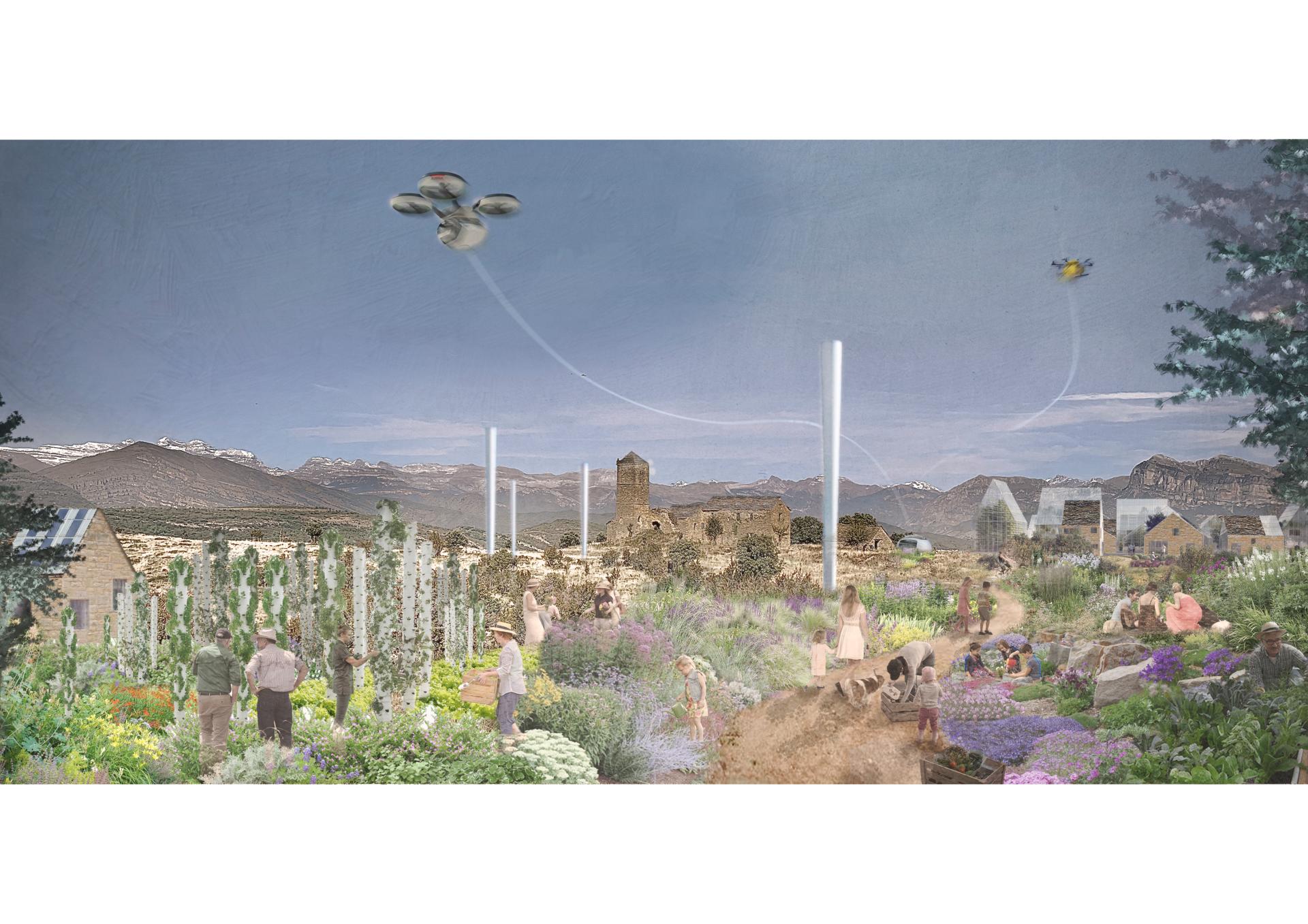
Techniques, technologies and materials that work to maintain traditional ways of life that can function and grow with current technologies were valued in a potential dialogue between the past, the present and the future.
Project Region
EU Programme or fund
Description of the project
Summary
The document consists of a rural business analysi,s done with a local and European database, which may provide a market intelligence on startups for the EU long-term rural vision policy at all scales.
To identify these startups, the first step has been to use a neural network / algorithm with a metric that combines the financial health of a company, the amount of traction it has and the strength of the market it operates. In this way, the report will work to predict the health of the startup, as well as the overall impact of climate change it has on rural settings and its long-term success in rural policy. If viewed from a holistic architectural point of view, this list will help build and rebuild a new model of habitats necessary for a stronger European Union; For this, new conversations were carried out with relevant entities to help locate the disruptive and enriching projects necessary for the final report. A more focused, but more diverse approach to data collection will help develop the report in a multi-dimensional and multi-scalable way.
The compiled list is categorized after studying their work in sustainability, 2030 policy, gender equality, transparency, entrepreneurship and its social impact on communities, as well as its opportunities for scalability and its adaptability to focus on the population for sustainable growth. Techniques, technologies and materials that work to maintain traditional ways of life that can function and grow with current technologies were also valued in a potential dialogue between the past, the present and the future.
Key objectives for sustainability
The President of the European Commission announced that the Commission will develop a long-term vision for rural areas to enable them to realize their full potential and help them tackle their own unique set of problems, from demographic change to connectivity. the risk of poverty and limited access to services. This should be done in close consultation with people living in rural areas, as well as with local and regional authorities
Key objectives for aesthetics and quality
The idea is partly developed in digital infrastructure and partly developed in physical infrastructure. The design thinking behind this decision is the understanding that nowadays, almost all process of innovation and research is done through our computers, while looking for scattered data which is already subjected to our bias of what is necessary for our investigation, in order to verify and support possible solutions which possibly already developed with specific layers of information. Gathering and mapping a wide scope of information and data regarding the multiscalar and multidisciplinary problem which supposes climate change through the lens of rural depopulation will help students, researchers, designers, and entities develop more focused and efficient conclusions sensible to specific environmental and social contexts such as rural villages or towns.
Key objectives for inclusion
Rural towns are dispersed across Spain and constantly neglected in terms of water, energy, and digital infrastructure, resulting in a phenomenon called "Empty Spain".
According to the latest Eurostat data, the density of Spain as a whole stood in 2016 at 92 people per square kilometer, below the EU average of 177 people/km, and in countries like Germany, with 233 people/km; However, of the 8,131 municipalities in Spain, 3,926 municipalities, have a density lower than 12.5 inhabitants / km2, the threshold that the EU considers to be of demographic risk.
These small municipalities continue to lose inhabitants due to lack of energy and water infrastructures, lack of opportunities for the youth, and remoteness to activity hubs, even though they are hubs of Spanish tradition and culture, vernacular (circular) systems of production and consumption, and representation of the intersection between the past and the future in Spain.
Through a digital platform, the opportunities and space (digitally) to safely create new focused and innovative solutions for rural areas around the world will be present regardless of your location or distance to an urban city, or activity hub. Understanding our countries as networks of ideas, population, materials, and traditions may help us achieve a new conception and state of resiliency where we are not only our megacities. The youth will not need to move to the capital cities in order to grow and work on their dreams; WE will be able to do it where we choose to do it, because of the set of opportunities, the digitalization of infrastructures, and the support to innovate will be active around the country disregarding the size of their home town, village, city, or so forth.
Innovative character
Addressing a multi-scale problem requires a combined study of methodologies and tools that cross different study areas and ecosystems. The complexity of the problem and its history indicate the need for new approaches where both thought and action build a responsive ecosystem that englobes different disciplines, perspectives, societies, and traditional (possibly circular) technology with new technology. One on hand, the digital platform that functions as a real-time mapping tool of data related to the causes and consequences of depopulation and abandonment of rural villages. On the other hand, after visualizing the information, gathering the relevant data, and developing conclusions, the platform will also work as an ecosystem of startups and entities working towards sustainable and resilient goals; This is essential to work towards long-term solutions as it also creates a space for collaborations and creative thinking where the environmental, social and economical impact of new ideas are constantly on trial through external support and criticism from other entities, universities, startups, researchers, designers, and anyone who can contribute towards a better overall development of new businesses. Connection of ideas and solutions may be developed in collaboration with a neural network. Additionally, the Laboratory will give presence and space to new creators and designers in a rural area, aiming to live and develop their design near the context for which it is created, and boosting the collaborations between actors.