BASIS
Basic information
Project Title
Full project title
Category
Project Description
In order to understand and use vacancy, an accessible and affecting structure is needed. The basis draws attention to vacancies, through its infrastructure undefined spaces can easily be used in a variety of scenarios. The potential of space is understood by users and made visible as such to spectators. Its simple design and the multifunctionality of the individual elements make it a kind of construction kit. Spatial potentials are perceived playfully and appropriated at a low threshold.
Project Region
EU Programme or fund
Description of the project
Summary
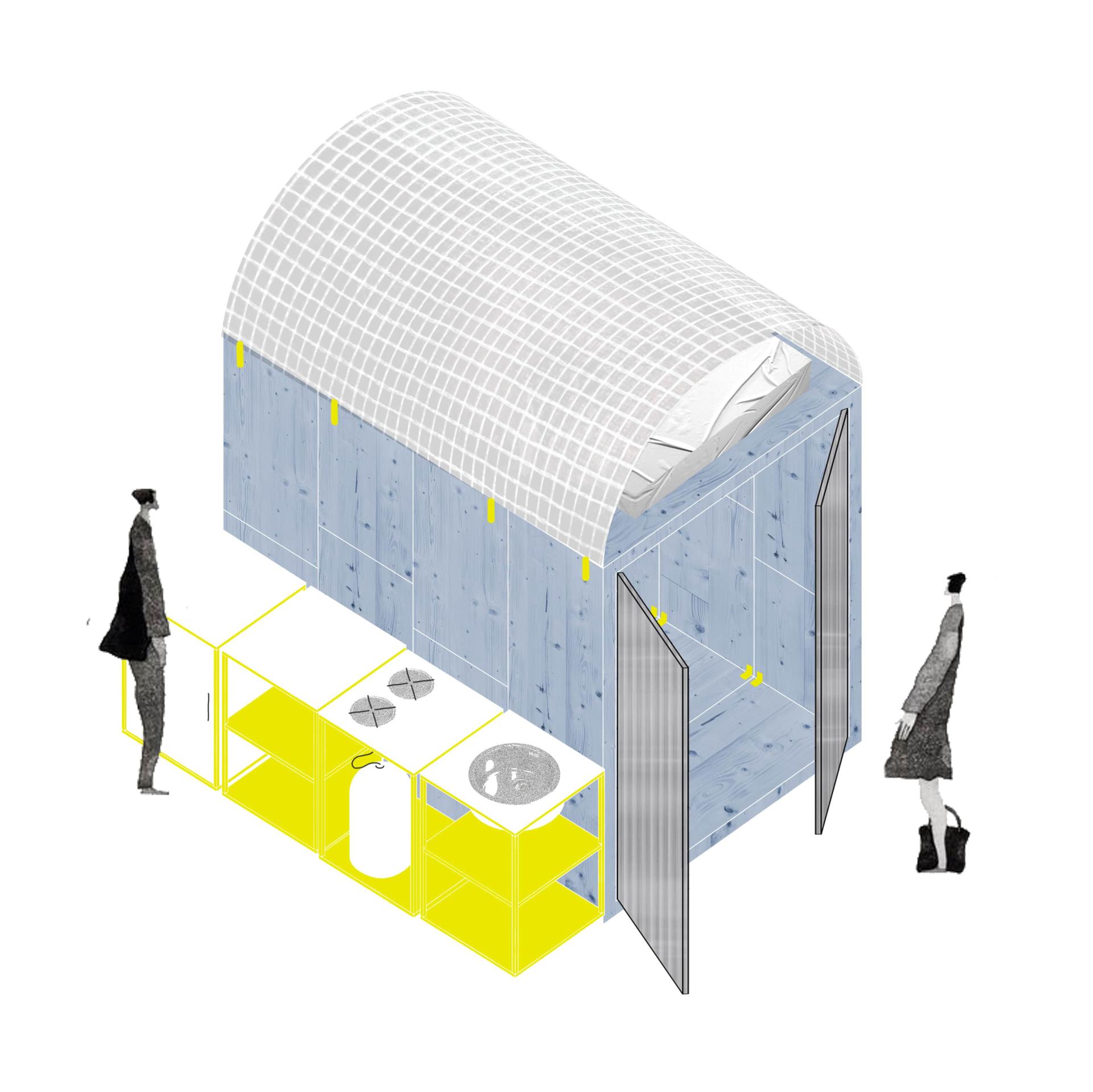
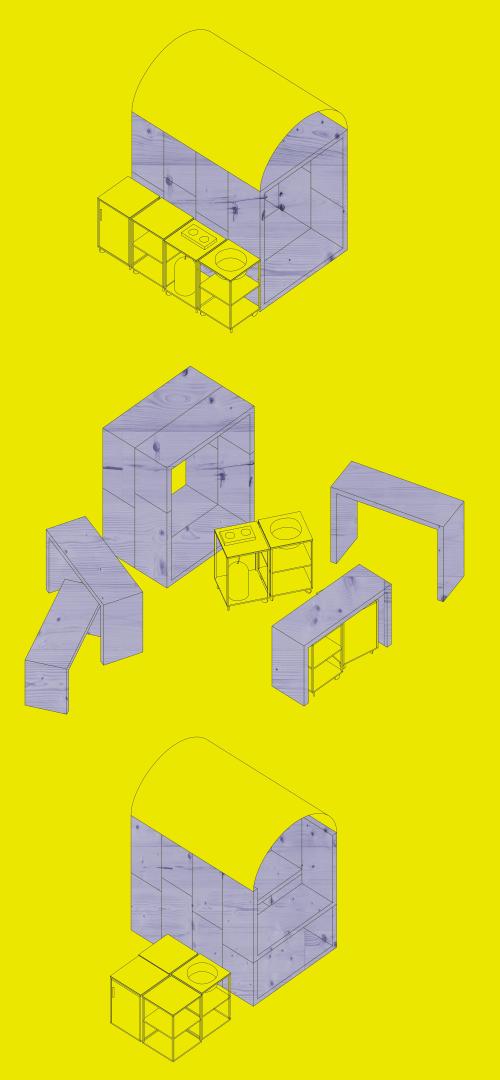
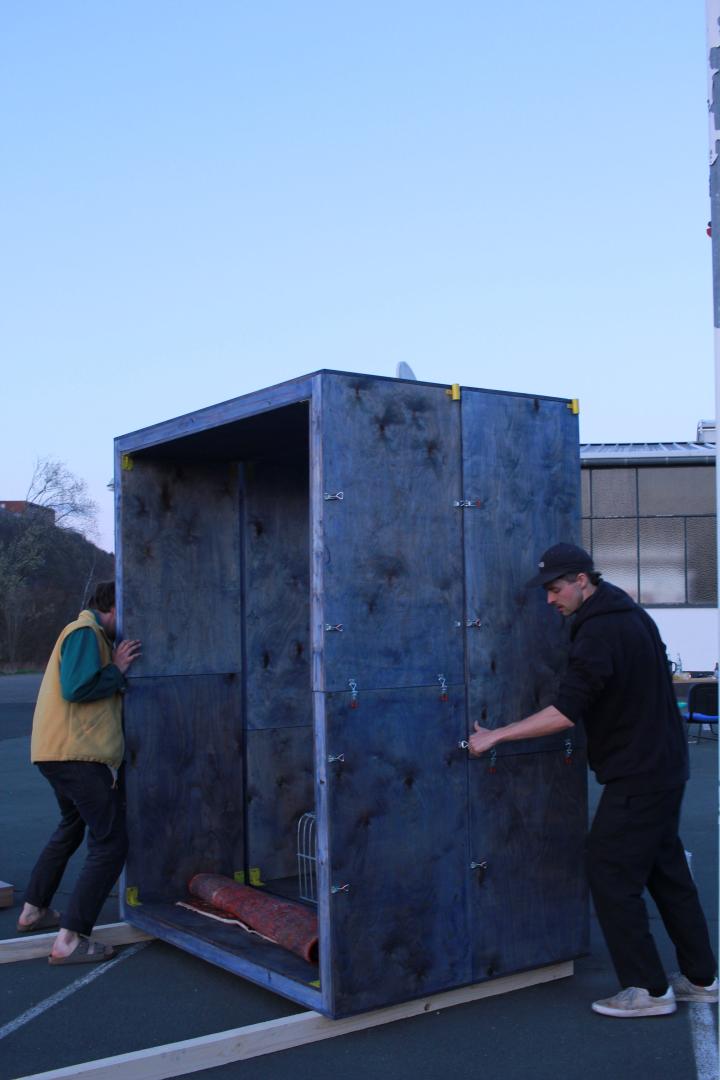
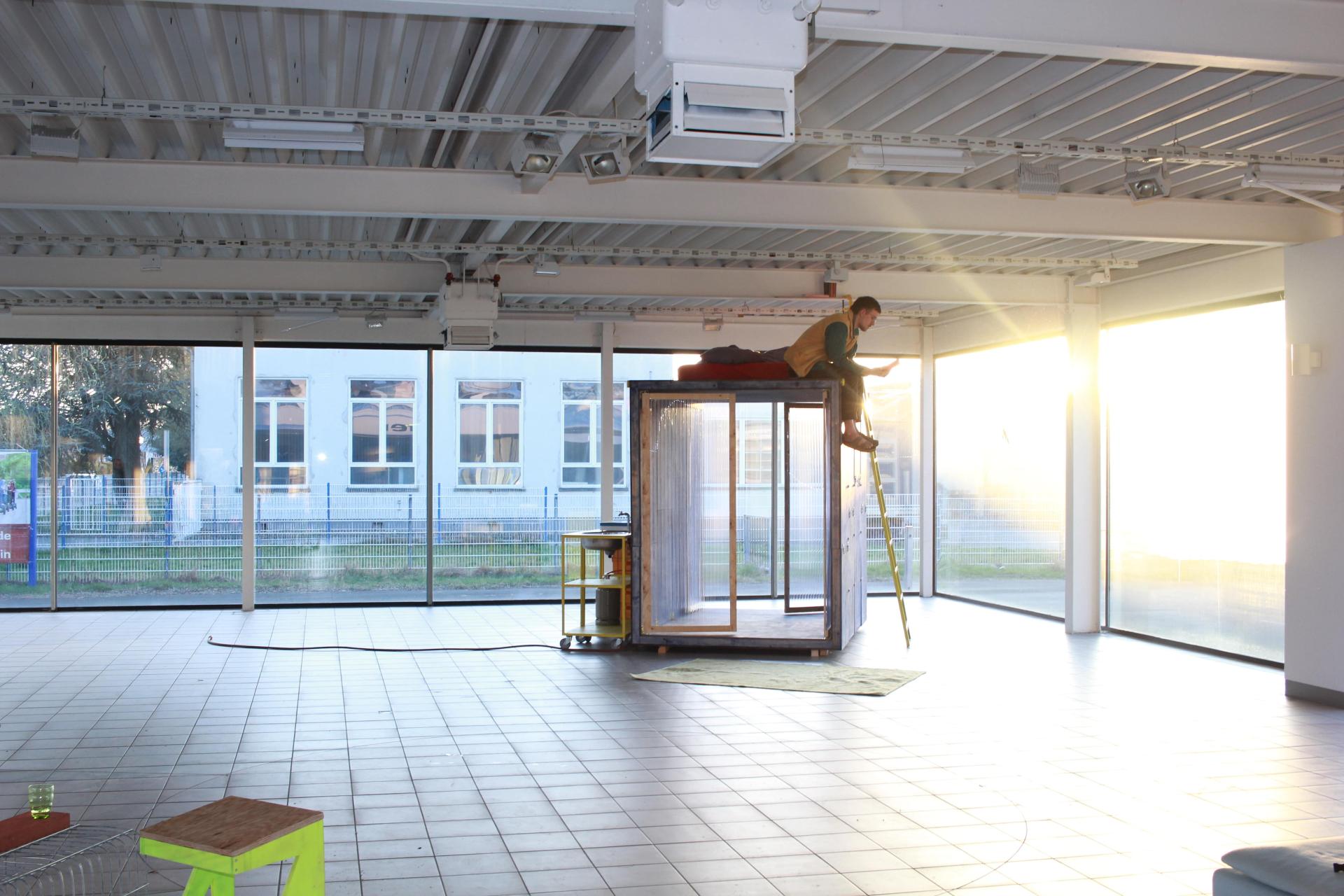
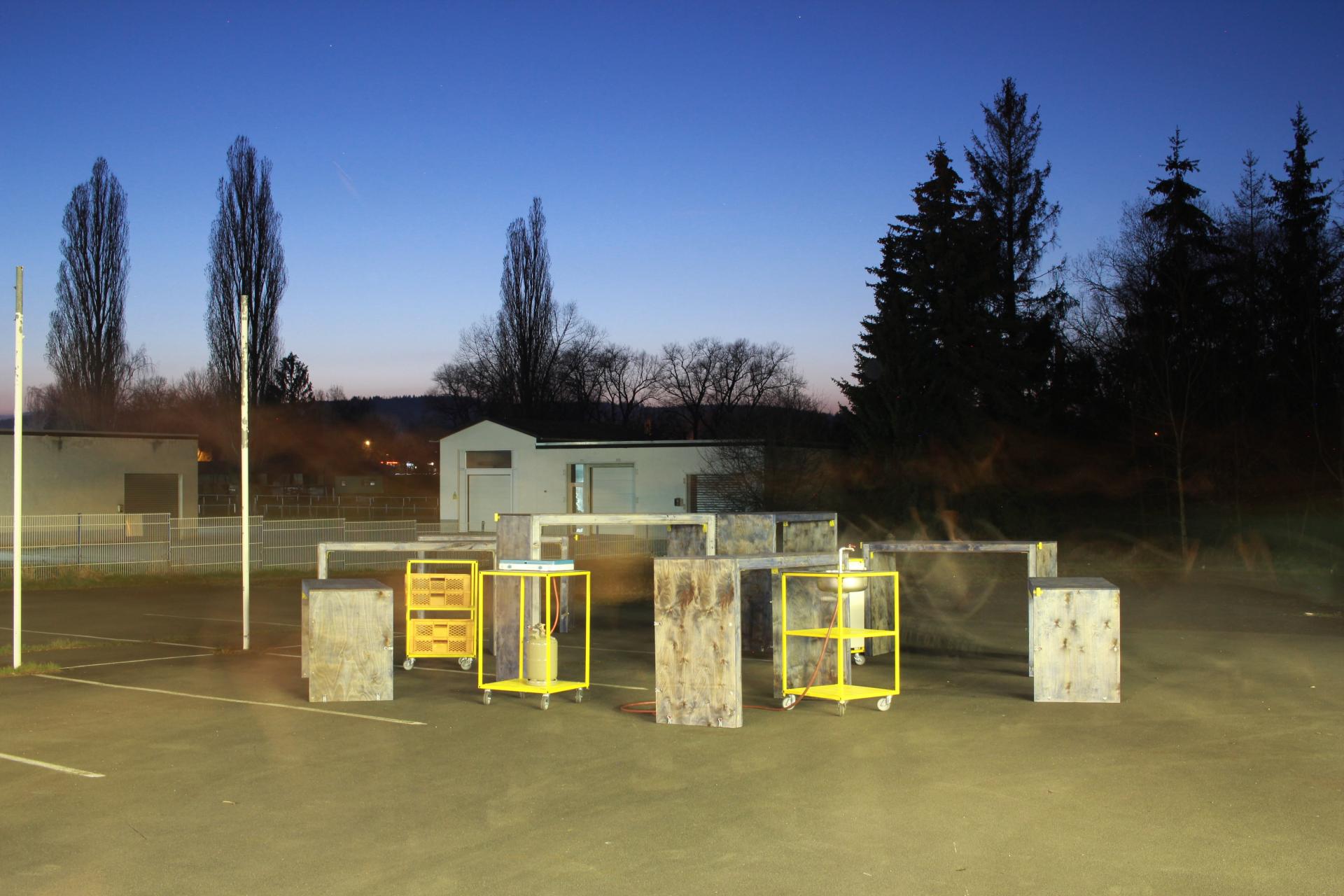
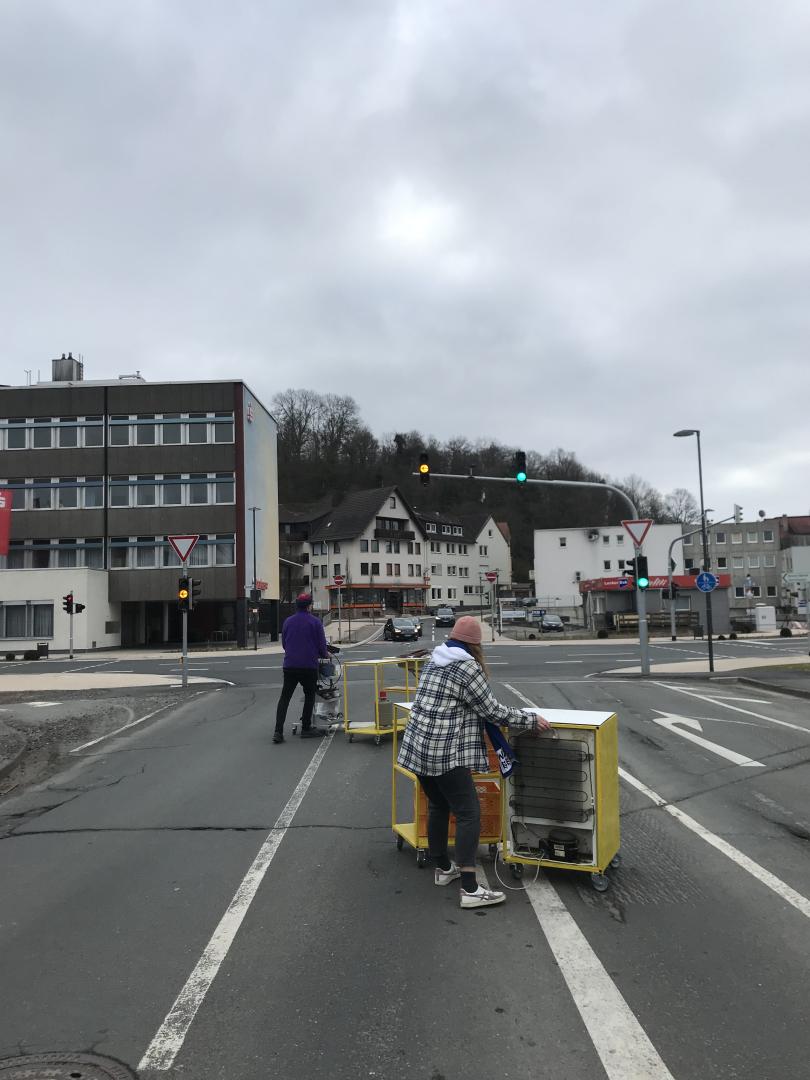
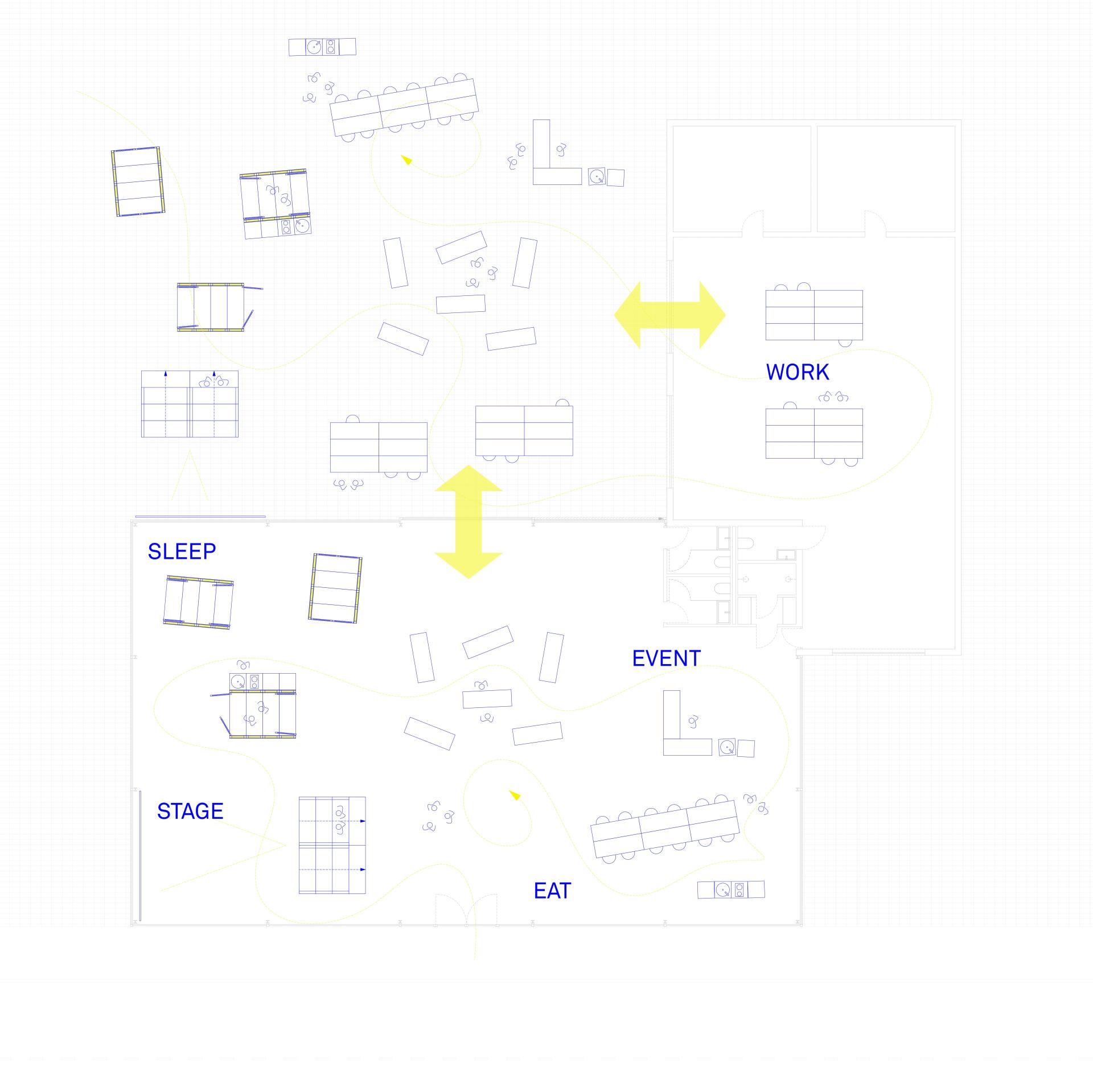
The basis is a movable modular structure to occupy vacancies. It provides an initial infrastructure to work and live in. To make spaces viable in a fast and simple way, even for a short period of time, we designed the modules to be multifunctional. The structure can adapt from a closed room to an open display. It can be situated inside an existing structure as well as outside. The space is joined through multiple stacked table-like elements and makes up a closed off unit, setting up a microclimate. The dimensions are reduced to the necessary. It can fit two people sleeping and up to four people working at a desk. A kitchen composed of four mobile counters is added as well as a tent roof. According to demand the structure can be spread out through the varying occurence of vacant spaces. Each element works on its own, there are three different heights: a work desk, a standing desk and a stage. They are stackable and can be combined to make up a grandstand.
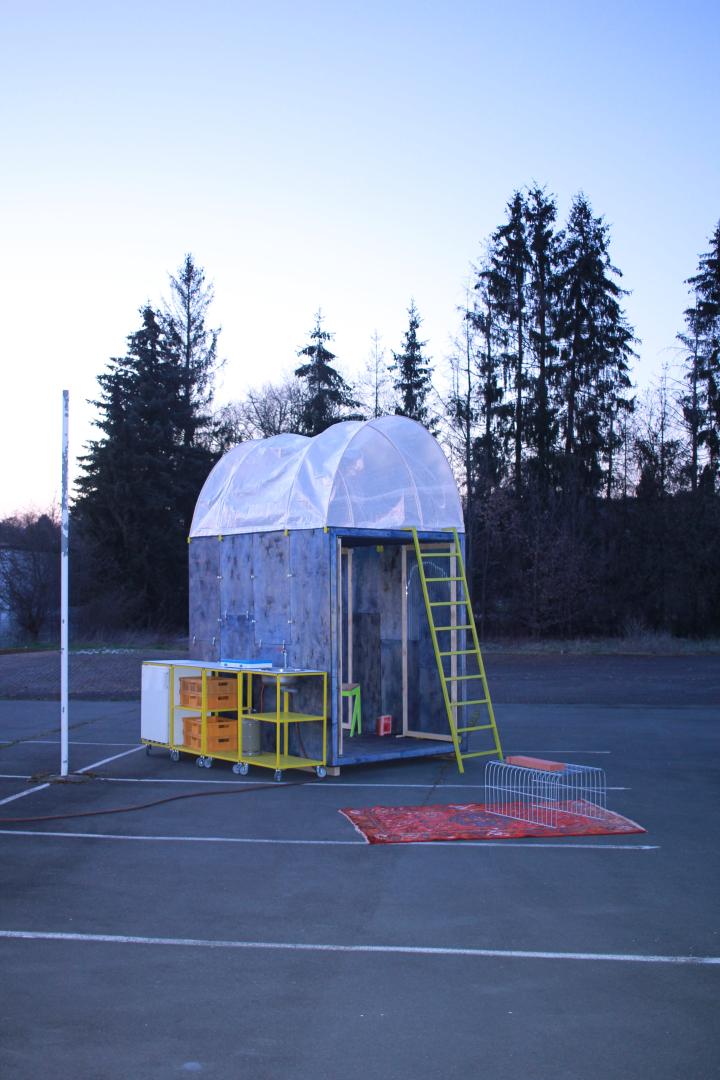
We have built a prototype and used it living in an abandoned car dealership. Prospectively multiple units can be combined to set up more complex structures. The basis tries to reduce fixtures to allow an experienced negotiation of needs. It is intended to be used as a kind of measuring station, therefore the design is kept plain.
Key objectives for sustainability
Our main objective is to preserve sound structures.
Preservation through utilisation, the possibility of temporarily activating abandoned buildings creates a new awareness for already existing structures, it highlights the current condition while at the same time envisioning a desired condition. The basis makes reactivation possible by meeting fundamental needs. Its multifunctional design aims at using minimal efforts to achieve an understanding of vacancy and show possible usage.
With changing professional environments the co-production of space needs to be tested. Specifically with vacancies, we have the possibility to experience collective placemaking rather than define it in advance. Therefore the structure needs to be modifiable in order to enable users.
Energetically we work with setting up a microclimate inside a macroclimate, this limits energy consumption. We cannot rely on efficient thermal shells in vacancies, therefore we distinguish between weatherproof and warm areas. We consider the expansion of living grounds due to weather conditions as a logical behaviour.
The aspect of low cost production is vital to our process, as we are trying to create an alternative to rebuilding. In order to be competitive our design needs to be affordable as well as reproducible, which excludes technically complex detailing.
In this specific case, the vacancy was scheduled to be torn down, so we reused insulation we unbuilt.
Key objectives for aesthetics and quality
We rely on high contrasts and signal colours in order to oppose the already existing, whereby we are giving a distinct expression to the ongoing appropriation. The users are making empty space visible.
We have a brutalist approach, not in style but in the way of joining. Everything that is present and usable is visible. Our detailing is elementary and easily understood. The design is defined by the demand to remain cheap and realisable, measurements are derived from industrial standards. Our design wants to stimulate imitation, empower users to design and adjust. The independent arrangement of the object and its individual components creates a claim to use. We create quality through appropriation.
Key objectives for inclusion
We want to engage the user. The basis allows users to become architects and encourages them to negotiate the co-creation of space. Its setup is simple and easily changeable.
Setting up the Prototype we experienced ourselves the connective effect of defining our own environment.
We have no claim on the way of construction, which is why an appropriation of the process becomes possible.
The critical aspect of the basis is whether or not we manage to indulge bystanders in the discussion about building requirements. We believe that updating the existing to meet current needs empowers us to reflect on possession. We want to indulge everyone in a discussion about what is necessary.
Innovative character
Temporality defines the basis as a reactive structure. It relates to the needs of its users, giving space to a discussion about collective understanding of necessity. In correlation with the defined space of the vacancy the basis becomes a tool to debate appropriation.
It facilitates co-creation by opposing structural presets. Each variation of the initial setup displays a negotiation of space. The size of the Group as well as the needs can and will vary over time.
The multifunctional elements the basis is composed of are designed to facilitate different modes of interaction, they can create a barrier as well as a gathering spot.
The design of a microclimate as well as a macroclimate also extends to a social aspect. The appropriation of space through a group will entail a determination of private and public or semi-public spaces. Through its aesthetic contradiction to the existing structure it visualises an alignment of the group currently occupying the vacancy.